
Dussehra 2026 – History, Significance, Vijayadashami and Celebrations
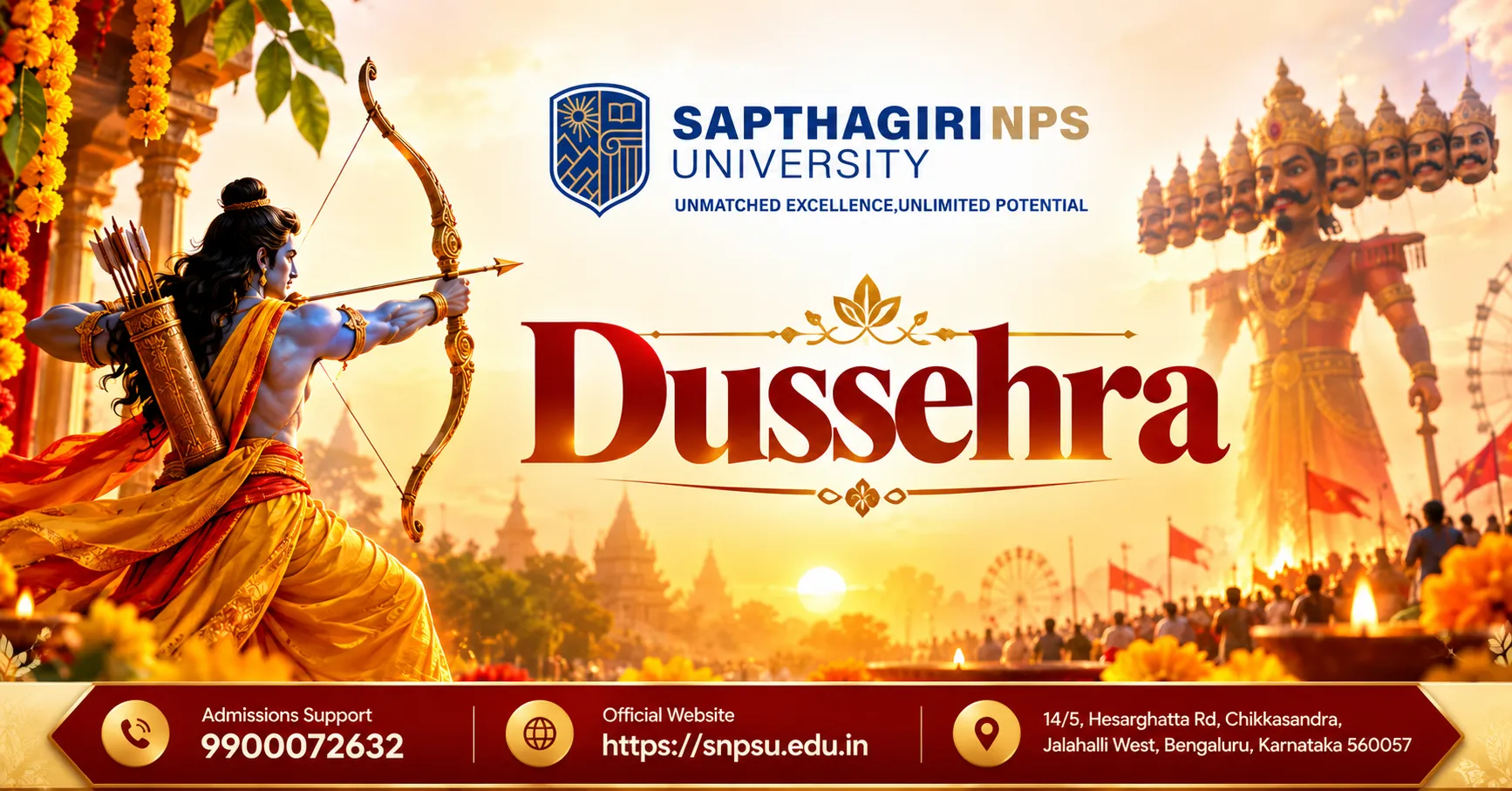
Dussehra 2026 – History, Significance, Vijayadashami and Cultural Celebrations
When Tradition Meets the Spirit of Victory
Dussehra is one of India's most widely observed festivals and carries a deep connection with cultural traditions, religious stories and community celebrations. Also known as Vijayadashami, the festival is observed on the tenth day following the Navratri period and is traditionally associated with the victory of good over evil. Dussehra 2026 will be observed on Tuesday, 20 October 2026, according to the Government of India Tourism portal. The Dussehra festival is celebrated differently across various parts of India, with each region bringing its own traditions, stories, rituals and cultural expressions to the occasion. In many parts of the country, the festival is associated with the story of Lord Rama's victory over Ravana, while in eastern India, Vijayadashami marks the conclusion of Durga Puja and is connected with Goddess Durga's victory over Mahishasura. Ramlila performances, cultural programmes, traditional processions, prayers, fairs and Ravan Dahan are among the practices associated with Dussehra in different regions. The occasion brings families and communities together and provides an opportunity to celebrate India's diverse cultural heritage. For students, the festival can also become a meaningful opportunity to learn about traditional stories, regional customs, performing arts and the values associated with the celebration. Dussehra is therefore not limited to a single style of observance; instead, it represents a broad cultural tradition expressed differently throughout the country. Its arrival after Navratri creates a festive transition towards renewal, reflection and new beginnings. Through its stories and customs, the festival continues to connect generations with India's cultural heritage while allowing communities to preserve traditions in their own distinctive ways.
Tracing the Cultural Roots of Dussehra
The History of Dussehra is connected with several longstanding Indian traditions and narratives, with the Ramayana providing one of the most widely recognised foundations of the festival. The traditional story of Lord Rama's victory over Ravana forms the central theme of Dussehra in many regions, where the occasion symbolises the victory of good over evil. Over generations, this narrative has been expressed through Ramlila, storytelling, theatre, music, public performances and festive gatherings. In eastern India, the same period is observed through the traditions of Durga Puja, with Vijayadashami marking the conclusion of the celebration and the victory of Goddess Durga over Mahishasura. Other regions have developed their own distinctive historical and cultural expressions. Kullu Dussehra, for example, has traditions connected with Lord Raghunath and a week-long gathering that begins on Vijay Dashmi. Bastar Dussehra has an especially distinctive cultural history, with its traditions centred on Maa Danteshwari and local tribal and religious customs rather than the conventional Ravan Dahan associated with many other Dussehra celebrations. These regional variations show that the history of Dussehra is not represented by one single cultural practice. Instead, the festival has developed through different communities, traditions and historical experiences. Understanding this background allows students to appreciate why Dussehra continues to have such a prominent place in India's cultural calendar and why its celebrations can look very different from one region to another.
The Meaning Behind Vijayadashami
Vijayadashami is a name closely associated with Dussehra and represents the tenth-day conclusion of the Navratri festive period. The term is connected with victory, and the day is traditionally linked with narratives of triumph and renewal. In many northern and central Indian traditions, Vijayadashami is associated with Lord Rama's victory over Ravana, while in eastern regions it marks the conclusion of Durga Puja and the victory of Goddess Durga over Mahishasura. The different interpretations of Vijayadashami demonstrate the cultural diversity of India while retaining a common emphasis on positive values and victory. In some communities, the day is marked by temple visits, prayers, processions and cultural programmes, while others observe it through family gatherings and traditional activities. The day can also represent a transition from the devotional atmosphere of Navratri towards a new phase of the year. Students can understand Vijayadashami as an example of how a shared cultural occasion can acquire different regional identities while retaining its broader significance. Learning about these differences encourages cultural awareness and respect for diverse traditions. The festival also provides an opportunity to explore Indian literature, mythology, theatre, music, art and community practices. Through these dimensions, Vijayadashami becomes both a festive occasion and a window into India's cultural history. Its continuing relevance comes from the way communities adapt traditional celebrations while maintaining their cultural connections across generations.
Why Dussehra Holds a Special Place in Indian Culture
The Significance of Dussehra can be understood through the traditional themes of victory, courage, righteousness, perseverance and renewal. The festival is commonly associated with the triumph of positive forces over evil, although the stories and interpretations vary between regions. In the Ramayana-based tradition, the victory of Lord Rama over Ravana forms the central narrative, while several Durga Puja traditions connect Vijayadashami with Goddess Durga's victory over Mahishasura. These stories have been preserved through generations through oral traditions, literature, theatre, music, religious observances and community celebrations. The festival can encourage reflection on values such as determination, responsibility and the importance of making constructive choices. For young people, these ideas can be connected with education, personal development, respect for others and responsible participation in society. Dussehra also has significance as a community occasion because families and groups come together to participate in celebrations and cultural activities. Its regional diversity further highlights the richness of India's cultural landscape. By learning about the significance of Dussehra, students can understand how festivals preserve historical narratives while continuing to evolve in contemporary society. The occasion therefore offers both cultural and educational value. It provides a meaningful opportunity to appreciate traditional heritage while reflecting on values that remain relevant in everyday life.
Stories and Traditions That Shape the Festival
The Dussehra festival is shaped by a variety of stories and traditions that have developed across India. Ramlila is one of the most recognised forms of cultural expression associated with the festival, presenting episodes from the Ramayana through dramatic performances. In many communities, these performances continue for several days before culminating in Dussehra. Ravan Dahan is another familiar tradition in which effigies associated with Ravana and other characters are symbolically burned as part of the celebration. In eastern India, Vijayadashami forms the concluding day of Durga Puja, with traditions connected to Goddess Durga and the immersion of her idols. Mysuru Dasara offers another distinctive expression, with celebrations connected to Goddess Chamundeshwari and elaborate cultural programmes and processions. Kullu Dussehra brings together deities and communities in a week-long cultural gathering following Vijay Dashmi. Bastar Dussehra provides another example of regional diversity, where the festival follows distinctive tribal and religious traditions and does not centre on burning a Ravana effigy. These examples show that Dussehra traditions are shaped by local history, beliefs, art forms and community practices. Understanding these variations makes the festival an excellent subject for cultural learning and encourages appreciation of India's diverse heritage.
A Tenth-Day Celebration Across Diverse Regions
The Dussehra celebrations observed across India reflect a remarkable range of regional customs. In Delhi and several northern regions, Ramlila performances and Ravan Dahan are prominent parts of the festival experience. Incredible India describes Delhi's celebrations as featuring Ramlila performances followed by the traditional burning of the Ravana effigy. In Kolkata and other eastern regions, Vijayadashami concludes the Durga Puja period and includes immersion ceremonies associated with Goddess Durga. Mysuru's Dasara combines religious traditions with processions, cultural performances and public festivities, while Kullu observes a distinctive gathering of deities beginning on Vijay Dashmi. Kota's Dussehra Fair combines religious traditions with cultural performances and a large public fair, with the 2026 edition scheduled from 20 October to 6 November. These celebrations demonstrate that there is no single format for observing Dussehra. Local communities contribute their own music, art, food, costumes, rituals and performances, creating distinctive festive experiences. The variety also shows how cultural traditions can be preserved while taking forms that reflect the identity of individual regions. For students, exploring these celebrations can provide a valuable understanding of India's cultural diversity and the role of festivals in bringing communities together.
From Ramlila Stages to Festive Grounds
One of the most visible aspects of Dussehra is the transformation of public spaces into centres of cultural activity. Ramlila grounds, temple surroundings, festival grounds and community spaces may host performances, prayers, fairs and traditional programmes during the celebration. Ramlila brings the Ramayana to life through dramatic storytelling and allows audiences to engage with the narrative through performance. Ravan Dahan, where observed, traditionally forms a dramatic conclusion to many northern celebrations and symbolises the victory associated with the festival. Other regions create equally distinctive environments through decorated temples, processions, artistic displays and community gatherings. Kota's Dussehra Fair, for instance, combines cultural performances, traditional activities, festive markets and the symbolic burning of effigies. Such public celebrations also create opportunities for local artists, performers, craftspeople and community organisations to participate. The festival therefore supports not only religious and cultural expression but also forms of community interaction. Students can observe how public spaces become platforms for storytelling, artistic expression and cultural learning during Dussehra. This makes the festival relevant not only to religious traditions but also to India's performing arts and community heritage.
Regional Expressions of a Shared Cultural Tradition
The diversity of Dussehra celebrations is one of the most interesting features of the festival. Although many people associate Dussehra with Lord Rama and Ravana, the festival has numerous regional interpretations. Incredible India notes that Kolkata observes Vijayadashami as the conclusion of Durga Puja, while Mysuru celebrates Dasara around Goddess Chamundeshwari and Kullu follows a distinctive local tradition beginning on Vijay Dashmi. Bastar Dussehra presents another cultural tradition centred on Maa Danteshwari and the region's tribal heritage. These examples demonstrate that cultural festivals can share a common name or period while carrying different local meanings. Such diversity provides students with an opportunity to learn that India's heritage is made up of many interconnected traditions rather than one uniform cultural practice. Exploring regional Dussehra traditions can encourage curiosity about history, literature, art, music and community life. It can also promote respect for different forms of cultural expression. The festival's regional variety is therefore an important part of its identity and helps explain why Dussehra remains significant across such a large and diverse country.
The Symbolism Behind Ravan Dahan
Ravan Dahan is among the most recognisable traditions associated with Dussehra in several regions of India. During the practice, large effigies representing Ravana and, in some places, Kumbhakarna and Meghnad are ceremonially burned. The tradition is connected with the Ramayana narrative and symbolises the victory of good over evil. Incredible India identifies the burning of Ravana's effigy as a prominent expression of this traditional theme in northern Dussehra celebrations. The event is often accompanied by large gatherings, cultural performances and festive programmes. For many communities, it represents the conclusion of the public Dussehra celebration and creates a powerful visual expression of the festival's central message. However, Ravan Dahan is not a universal feature of every Dussehra celebration. Bastar Dussehra, for example, follows a distinct tradition in which a Ravana effigy is not burned. This difference is important when understanding the festival as a whole because it demonstrates the diversity of regional customs. Students can learn from such differences by exploring how cultural traditions adapt to local history and community practices.
Dussehra Through Art, Performance and Community Life
Dussehra has a strong connection with artistic and cultural expression. Ramlila uses theatre and storytelling to present episodes from the Ramayana, while many regional celebrations include music, dance, processions, decorations, traditional costumes and public performances. Mysuru Dasara, for example, includes decorated processions and musical and dance performances, while Kota's Dussehra Fair features folk artists, musicians, poets and cultural groups. Such activities allow traditional knowledge to be shared through engaging forms that can be appreciated by different generations. Festivals also provide opportunities for families and communities to spend time together and participate in shared cultural experiences. Students can learn about the relationship between storytelling and cultural preservation by studying the way Dussehra narratives continue to be presented through performances. Creative activities associated with the festival can also help young people explore traditional art forms while developing their own forms of expression. Dussehra therefore represents an intersection of history, culture, literature, performing arts and community participation. Its continued celebration demonstrates how traditional stories can remain part of contemporary cultural life while being expressed through changing forms.
Learning India's Heritage Through Vijayadashami
For students, Vijayadashami offers an opportunity to explore India's cultural heritage through a combination of history, literature, performing arts and regional traditions. The Ramayana narrative, Durga Puja traditions and regional forms of Dasara provide different pathways for understanding the cultural background of the festival. Students can study how communities preserve stories through theatre, music, visual art and public celebrations. They can also compare regional practices and understand why the same festival period can have different cultural expressions in different parts of India. Our university can use such occasions to encourage cultural awareness, respectful learning and meaningful student participation. Activities such as cultural presentations, traditional art displays, educational discussions and creative programmes can make the festival an engaging learning experience. Such participation can help students appreciate India's cultural diversity while developing awareness of the historical traditions surrounding important festivals. Dussehra can therefore serve as an opportunity to connect classroom learning with cultural heritage. It can also encourage students to recognise the importance of preserving traditions while understanding that regional communities may observe them in different ways.
Dussehra 2026 – Date and Festival Observance
Dussehra 2026 will be observed on Tuesday, 20 October 2026. The official Incredible India festival listing gives 20 October 2026 as the Dussehra date, and the Government of India Tourism public-holiday listing also records Dussehra on that date. The wider Navratri period in 2026 runs from 11 October through 20 October in the cited Maharashtra Tourism calendar, concluding with Dussehra. Regional observances can differ because Dussehra has distinct cultural and religious traditions across India. Some celebrations may begin earlier with Ramlila or Navratri activities, while others focus on the tenth-day Vijayadashami observance. Local temple calendars, Panchang calculations and community traditions may determine specific ritual timings and programmes. The date therefore provides a common reference point, while the actual manner of celebration depends on local customs. Dussehra 2026 is expected to be marked through a wide range of cultural activities across the country, including traditional performances, prayers, fairs, processions and community celebrations. The variety of observances will continue to reflect India's diverse cultural heritage.
Creating Cultural Connections on Campus
Our university can mark Dussehra through meaningful cultural learning, student participation and respectful festive activities. A campus programme can introduce students to the History of Dussehra, explain the cultural meaning of Vijayadashami and highlight the different ways communities celebrate the festival. Students may participate in suitable cultural presentations, creative activities, traditional art displays and educational programmes that encourage appreciation of India's heritage. Such activities can help create opportunities for students from different backgrounds to share their knowledge and experiences. The campus can also highlight the diverse regional expressions of Dussehra rather than presenting the festival through only one tradition. This approach can encourage students to understand the importance of cultural diversity and respectful participation. Dussehra can become a meaningful occasion for learning about literature, theatre, music, art and community traditions while maintaining a positive festive atmosphere. Through appropriate activities, our university can encourage students to connect cultural heritage with values such as responsibility, cooperation, perseverance and respect. The occasion can therefore contribute to an engaging and culturally aware campus environment.
Carrying Cultural Values Into Everyday Life
The broader message associated with Dussehra can inspire reflection on values such as courage, perseverance, responsibility and positive action. The traditional stories connected with the festival provide opportunities to discuss how communities understand the victory of good over evil and why such themes have remained significant through generations. For students, these ideas can be connected with determination in academic work, responsible decision-making, respect for others and the importance of working towards constructive goals. The festival also demonstrates the value of cultural continuity, as stories and traditions are passed from one generation to another through families, communities, literature and performing arts. At the same time, regional variations show that cultural heritage can be expressed in many different ways. Learning about these differences can encourage students to appreciate India's diversity and approach cultural traditions with curiosity and respect. Dussehra is therefore both a festive occasion and an opportunity for reflection. As communities celebrate Vijayadashami, the occasion can also represent renewal and the beginning of a new phase after the Navratri period.
Dussehra Celebrations at Our University
Our university can make Dussehra celebrations meaningful by combining cultural awareness with student engagement. The occasion can be marked through festive greetings, educational content, cultural presentations and suitable student activities that introduce the background and traditions of Vijayadashami. Students can explore the different narratives associated with Dussehra and learn how communities across India have developed distinctive forms of celebration. Such programmes can encourage appreciation of India's cultural heritage while creating opportunities for collaboration and creative expression. The celebration can also provide a platform for students to learn about Ramlila, regional Dasara traditions, Durga Puja's Vijayadashami observance and other cultural practices associated with the festival. By focusing on learning as well as celebration, the campus can create a more meaningful connection between students and India's diverse traditions. Dussehra can thus become an occasion for cultural education, community participation and positive reflection. The festival's message of renewal and perseverance can also encourage students to approach their academic and personal goals with confidence and responsibility.
A Festive Occasion for Reflection and Renewal
Dussehra marks an important point in India's festive calendar and carries different meanings for different communities. Its association with victory, cultural heritage and renewal gives the occasion continuing relevance. Whether observed through Ramlila, Ravan Dahan, Durga Puja's Vijayadashami traditions, regional processions, fairs or community gatherings, the festival provides a space for people to connect with cultural practices that have developed over generations. The regional diversity surrounding Dussehra also demonstrates the richness of India's cultural landscape. For students, learning about these traditions can encourage curiosity, cultural awareness and respect for different practices. The occasion can serve as a reminder that heritage is preserved not only through historical records but also through participation, storytelling, art and community life. As Dussehra 2026 approaches, families and communities across India will once again observe the festival through their own distinctive customs. The shared festive period creates connections between different cultural traditions while allowing each region to retain its unique identity. Dussehra therefore remains an important occasion for celebration, learning, reflection and cultural continuity.
Dussehra 2026 – History, Significance, Vijayadashami and Cultural Celebrations
1. What is Dussehra 2026 and why is it celebrated?
Dussehra, also known as Vijayadashami, is one of the major Hindu festivals celebrated in India. It marks the victory of good over evil and is observed at the conclusion of the Navratri period in many traditions. In the widely known Ramayana tradition, Dussehra commemorates Lord Rama’s victory over Ravana, symbolizing the triumph of righteousness over arrogance and wrongdoing. In other traditions, the day is associated with Goddess Durga’s victory over Mahishasura. Dussehra 2026 will provide an opportunity for families and communities to participate in prayers, cultural programmes, traditional performances and celebrations while reflecting on the values associated with the festival.
2. When will Dussehra 2026 be celebrated?
Dussehra is observed on Vijayadashami, the tenth lunar day of the Hindu month of Ashvin. The exact Gregorian calendar date changes every year because the Hindu calendar follows lunar calculations. In 2026, Dussehra will be observed in October. The exact date and timings of Vijayadashami observances can vary according to regional calendars and local traditions. Families and religious institutions generally follow their local Panchang when determining the appropriate time for prayers and ceremonies.
3. What is the history of Dussehra?
The history of Dussehra is connected with several Hindu traditions and regional interpretations. One of the most prominent traditions comes from the Ramayana, according to which Lord Rama fought Ravana and defeated him after a prolonged conflict. Rama’s victory is traditionally understood as the triumph of righteousness over evil. In several eastern and northeastern traditions, Vijayadashami marks the conclusion of Durga Puja and is associated with Goddess Durga’s victory over Mahishasura. These different traditions have contributed to the rich cultural diversity surrounding Dussehra across India.
4. Why is Dussehra also called Vijayadashami?
The name Vijayadashami comes from Sanskrit-derived terms associated with Vijaya, meaning victory, and Dashami, referring to the tenth lunar day. The name reflects the festival’s association with victory and the tenth day of the Navratri period. In many traditions, Vijayadashami represents the victory of righteousness over destructive forces. The festival is therefore connected with ideas of courage, justice, perseverance and the restoration of moral order. Although the stories and customs differ across regions, the theme of victory remains central to the observance.
5. What is the significance of Dussehra?
Dussehra has religious, cultural and social significance. The festival is widely associated with the triumph of good over evil, with different regions commemorating different religious narratives. The celebration of Lord Rama’s victory over Ravana is particularly prominent in many parts of India, while the conclusion of Durga Puja is central to the festival in several eastern regions. Dussehra also represents the importance of courage, righteousness, perseverance and responsible conduct. For families and communities, the festival is an opportunity to come together, participate in traditional celebrations and pass cultural knowledge from one generation to another.
6. What is the connection between Dussehra and Lord Rama?
The connection between Dussehra and Lord Rama comes primarily from the Ramayana tradition. According to the traditional narrative, Rama went to Lanka to rescue Sita and fought Ravana, the ruler of Lanka. After a significant battle, Rama defeated Ravana. Dussehra is observed in many parts of India as a commemoration of this victory. The story is traditionally interpreted as a representation of righteousness overcoming wrongdoing and is retold through religious programmes, theatrical performances and Ramlila during the festival period.
7. What is Ramlila and how is it connected with Dussehra?
Ramlila is a traditional theatrical presentation based on episodes from the Ramayana, particularly the life and journey of Lord Rama. It is performed in many parts of India during the period leading up to Dussehra. Performances may include scenes depicting Rama’s exile, the abduction of Sita, the search for Sita, the battle in Lanka and the eventual defeat of Ravana. On or around Dussehra, some communities traditionally stage the final episodes and burn large effigies representing Ravana, along with those of Kumbhakarna and Meghnada in certain regions. These performances form an important part of the cultural heritage associated with Dussehra.
8. How is Dussehra celebrated in different parts of India?
Dussehra celebrations vary considerably across India. In northern and central India, communities commonly organize Ramlila performances and public events featuring the burning of Ravana effigies. In West Bengal and several eastern regions, Vijayadashami marks the conclusion of Durga Puja, with rituals associated with the immersion of Durga idols. In Mysuru, Karnataka, Dussehra is associated with grand cultural and traditional celebrations. In parts of Himachal Pradesh, the Kullu Dussehra tradition has its own distinctive religious and cultural practices. These regional variations demonstrate how a common festival can be expressed through different local customs, arts, rituals and community traditions.
9. What cultural activities are associated with Dussehra?
Dussehra is accompanied by a wide range of cultural activities depending on the region. Traditional events may include Ramlila performances, religious processions, music, dance, fairs, storytelling, community gatherings and cultural programmes. In some places, large effigies of Ravana are created and ceremonially burned as part of the celebration. Families may also visit temples, exchange greetings and prepare traditional foods. Educational institutions can use the occasion to organize cultural programmes and discussions that introduce students to the history, mythology and regional diversity associated with Vijayadashami.
10. What can students learn from Dussehra and Vijayadashami?
Dussehra provides students with an opportunity to learn about Indian history, mythology, literature, traditions and cultural diversity. The stories associated with Vijayadashami introduce themes such as courage, perseverance, responsibility, righteousness and the consequences of destructive behaviour. Students can also explore how the same festival is celebrated differently across various parts of India. Through cultural programmes, storytelling, art, theatre and educational discussions, students can develop a deeper appreciation of India's diverse heritage while understanding the broader message traditionally associated with Dussehra: the triumph of good over evil and the importance of choosing responsible and righteous actions.
Dussehra 2026 – Contact Our University
| Contact Category | Details | Purpose |
|---|---|---|
| Dussehra / General Enquiries | 9900072632 | 👉 Festival & General Information |
| admissions@snpsu.edu.in | 👉Admission & Course Enquiries | |
| Campus Address | #14/5, Chikkasandra, Hesarghatta Main Road, Bengaluru | 👉Visit Our University |
| Online Admission | admissions@snpsu.edu.in | 👉Apply for Admission |
Warm Dussehra Wishes From Our University
Our university extends warm Dussehra wishes to all students, parents, faculty members and the entire university community. May Vijayadashami bring happiness, positivity, peace and new beginnings to every family. May the spirit of Dussehra inspire courage, perseverance, responsible choices and respect for India's rich cultural heritage. Wishing everyone a joyful, meaningful and memorable Dussehra 2026.
Happy Dussehra 2026!
Leave a Comment