
Engineering University in Bangalore | Sapthagiri NPS University
Engineering University Bangalore: A Future-Ready Destination for Engineering Education
Engineering university Bangalore is an important choice for students who want to build a strong academic foundation, develop practical capabilities and prepare for meaningful professional opportunities in engineering and technology. Bangalore has established itself as a major educational, technological and innovation-driven destination, creating an environment where students can experience a combination of academic learning and exposure to a rapidly developing professional ecosystem. Our university provides an engineering education environment designed to encourage students to understand concepts, apply knowledge, develop practical skills and become confident in addressing real-world challenges. Students searching for an engineering university in Bangalore often consider several factors before making their decision, including academic quality, learning methodology, faculty support, infrastructure, laboratories, technology-enabled education, student development, industry interaction, career guidance and campus facilities. Our university focuses on bringing these elements together to create a comprehensive educational experience. Engineering education today requires students to develop more than subject knowledge because employers increasingly value problem-solving, analytical thinking, communication, teamwork, creativity, adaptability and professional responsibility. Our learning environment therefore encourages students to participate actively in academic activities, technical projects, practical exercises, presentations, workshops and collaborative learning. Bangalore provides an additional advantage because students study within an ecosystem closely associated with technology companies, engineering organisations, startups, research initiatives and innovation. This environment can encourage students to understand the relationship between academic knowledge and professional applications. For students and parents exploring engineering university Bangalore options, selecting the right institution is an important long-term decision. The right university should provide an environment that supports academic growth while also encouraging students to discover their interests, develop their strengths and prepare for changing career requirements. Our university aims to provide students with such an environment through a balanced approach to engineering education, practical exposure, skill development, student engagement and career preparation.
Engineering Programmes at Our University
Our university provides students with opportunities to explore engineering education through a range of technology-focused academic areas. The engineering learning environment is designed to help students build strong foundations while exploring emerging fields that are increasingly relevant to modern industries. Students can explore areas such as computer science, artificial intelligence, data science, electronics, communication and electrical technologies according to their academic interests and career aspirations. Each academic area provides a distinct learning pathway, allowing students to identify the field that best matches their interests and long-term goals. Practical learning, technical projects, laboratory exposure and academic guidance contribute to the overall engineering experience. Students can also explore the individual department pages to understand the academic focus, learning opportunities and programme-specific information available through our university.
Explore Engineering Departments at Our University
| Engineering Course | Explore More |
|---|---|
| Engineering | Click Here to Engineering |
| CSE | Click Here to Computer Science and Engineering |
| AIML | Click Here to Artificial Intelligence and Machine Learning |
| CSE Data Science | Click Here to CSE Data Science |
| AIDS | Click Here to Artificial Intelligence and Data Science |
| ECE | Click Here to Electronics and Communication Engineering |
| EEE | Click Here to Electrical and Electronics Engineering |
Engineering University in Bangalore With a Connected Campus Experience
An engineering university in Bangalore should provide students with an environment where everyday academic life is supported by facilities that make learning convenient, accessible and engaging. Our university has developed its campus with attention to the practical needs of students, creating an environment that brings academic spaces, student services and everyday amenities together. The School of Engineering and Technology campus includes instructional areas, laboratories, workshops, research centres, a computer centre, library and seminar halls, while the wider campus infrastructure includes Wi-Fi connectivity, parking, residential facilities, sports spaces, an auditorium and student amenities. This integrated approach allows students to spend more of their university life within a connected academic environment rather than treating each facility as a separate part of campus. For engineering students, convenience can make a meaningful difference because academic schedules may involve lectures, practical sessions, project work, seminars and independent study at different times of the day. Having learning resources and essential services within the campus can help students manage their schedules more effectively. Our university also provides clearly marked campus pathways and accessible administrative areas, helping students navigate the institution with greater ease. The campus infrastructure has been planned to accommodate both academic and everyday student requirements, supporting a university experience that is organised without becoming restrictive. Students can move between learning spaces, research areas, recreational facilities and student services while remaining connected to the wider university community. This creates an environment where engineering education becomes part of a complete campus experience rather than being limited to classroom instruction. For students comparing engineering universities in Bangalore, the everyday usability of a campus can be just as important as its academic facilities because students spend several years developing their education, skills and independence within that environment.
Student Recognition Ceremony at Our University – Celebrating Achievement and Academic Participation in an Engineering University Bangalore.
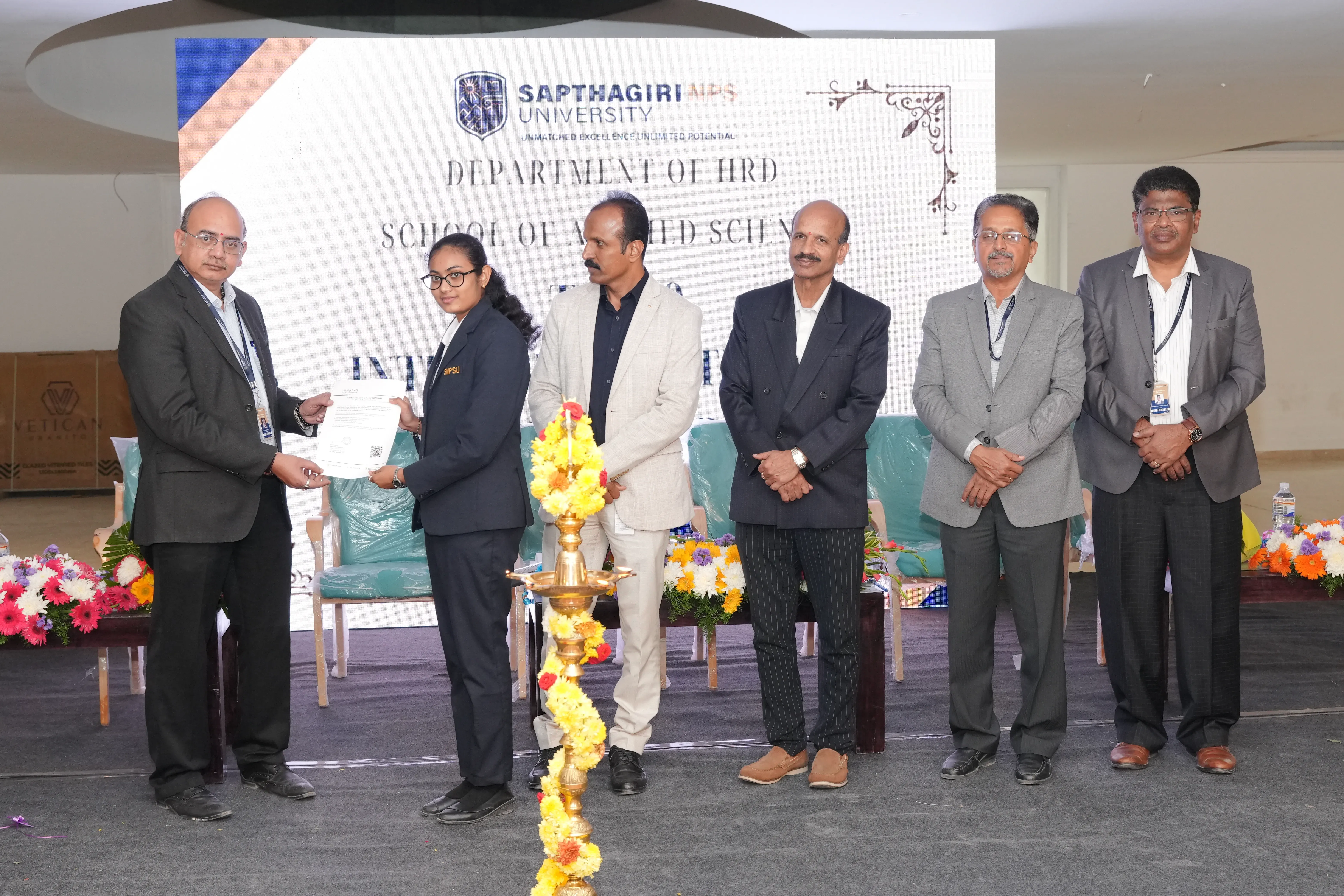
The image reflects an academic recognition moment at our university, highlighting the importance of achievement, encouragement and student participation within the higher-education environment. The event is organised by the Department of HRD and School of Applied Sciences, as visible on the backdrop, and features a student receiving a certificate in the presence of university representatives and faculty members. Such occasions represent an important part of the learning experience at an engineering university in Bangalore, where academic development is complemented by opportunities to recognise student accomplishments. The presentation of a certificate provides encouragement for students to continue pursuing excellence and participating actively in academic and institutional activities. The formal stage setting, university branding and participation of faculty members reflect a professional academic atmosphere. At our university, recognition programmes can motivate students to set goals, demonstrate commitment and make the most of opportunities available during their university journey. Events of this nature also strengthen interaction between students, faculty and university leadership, creating a supportive environment for achievement. For students searching for an engineering university Bangalore, an institution's academic culture includes not only classroom learning but also the encouragement and recognition of student participation and accomplishments. The image therefore represents a moment of appreciation within our university's broader educational environment, where students are encouraged to develop confidence, pursue their interests and participate meaningfully in university life.
A Digitally Connected Engineering Campus
Digital connectivity has become an essential component of modern university education, particularly for engineering students who increasingly work with online academic resources, digital tools, collaborative platforms and technology-based learning. Our university provides a Wi-Fi-enabled campus as part of its engineering infrastructure, supporting students in accessing digital resources across their academic environment. Digital connectivity can make it easier for students to access learning materials, conduct research, communicate with project teams and explore resources beyond conventional textbooks. Engineering education increasingly involves the use of software platforms, digital documentation, online references, simulations and collaborative technologies, making reliable access to digital resources an important part of student life. Our university encourages students to use technology as a learning resource rather than simply as a convenience. A digitally connected campus can support independent learning because students can investigate concepts beyond classroom discussions and access information relevant to their projects and assignments. It can also support collaboration when students work together on presentations, technical projects or research activities. Digital learning encourages students to become more self-directed because they can identify resources, compare information and develop their own understanding of a topic. Our university's engineering environment combines digital access with physical learning facilities such as laboratories, workshops, research centres and the library, allowing students to move between different forms of learning according to their academic requirements. This combination is important because engineering education requires both physical experimentation and digital exploration. Students can use laboratory environments to understand practical systems while using digital resources for research, analysis and preparation. By providing a connected campus environment, our university supports students as they develop the digital habits required for contemporary academic and professional life.
Library as a Space for Independent Engineering Learning
Independent learning is an essential part of university education, and our university provides library resources that allow students to continue their academic exploration beyond scheduled classes. The university library is described as a spacious learning centre with academic textbooks, reference materials, journals, research publications and competitive examination resources, together with digital resources including e-books and online journals. For engineering students, a library can become an important space for preparing assignments, reviewing concepts, conducting project research and developing deeper subject knowledge. Classroom teaching provides direction, but independent study allows students to investigate subjects according to their individual interests and academic needs. Our university's library includes different areas for individual study and group discussions, giving students flexibility in how they approach their work. Students preparing a project may need a quiet environment for research, while a project team may require a collaborative space for discussion and planning. The availability of both physical and digital resources helps students develop research habits that can remain useful throughout their careers. Engineering professionals frequently need to locate technical information, compare approaches, understand new developments and learn unfamiliar concepts. Developing these habits during university can help students become more independent and adaptable learners. The library also includes magazines, newspapers, novels and general knowledge resources, giving students opportunities to read beyond their immediate academic subjects. Our university encourages students to make the library part of their regular academic routine rather than using it only during examinations. Consistent reading, research and independent study can strengthen understanding and encourage intellectual curiosity. For an engineering university in Bangalore, a strong library environment provides an important foundation for students who want to develop both academic depth and lifelong learning habits.
Engineering University Bangalore: Advantages of Choosing Our University
For students searching for an engineering university Bangalore, choosing the right institution involves looking at more than academic programmes. Our university provides a broader learning environment that brings together engineering education, practical infrastructure, research opportunities, innovation, industry interaction and student support. Located in Bengaluru, our university gives students the opportunity to pursue engineering education within a city known for its technology and professional ecosystem. The university's School of Engineering and Technology focuses on academic excellence, hands-on learning, research and emerging technologies, supported by laboratories, workshops and computing facilities. Students can also benefit from the wider university environment, which encourages interdisciplinary learning and professional development. Our university aims to help students build strong technical foundations while developing the confidence, adaptability and practical mindset required for future opportunities. The following table highlights some of the key advantages students can consider when choosing our university for engineering education.
| Advantage | How It Benefits Students at Our University |
|---|---|
| Engineering Education in Bangalore | Students can pursue engineering education in Bengaluru, a major technology, innovation and professional hub. |
| Future-Focused Learning | Our university combines engineering fundamentals with contemporary technologies and evolving industry requirements. |
| Practical Learning Environment | Laboratories, workshops and computing facilities support hands-on learning and application-based education. |
| Research and Innovation | Students have opportunities to explore research, innovation, interdisciplinary projects and idea development. |
| Industry Interaction | Industry-oriented activities, expert interactions and professional exposure help students understand workplace expectations. |
| Career Development Support | Career-focused initiatives support students in developing professional skills and preparing for future opportunities. |
| Experienced Faculty | Faculty members provide academic guidance and support students in their learning, projects and professional development. |
| Interdisciplinary Environment | Students can experience a broader university ecosystem involving engineering, applied sciences, management and health sciences. |
| Modern Campus Infrastructure | The university provides academic, practical, digital, library, seminar and student-support facilities within the campus. |
| Digital Learning Support | Technology-enabled resources and campus connectivity support research, independent learning and collaborative academic work. |
| International Exposure | International collaborations and global academic initiatives provide opportunities to develop broader academic perspectives. |
| Entrepreneurial Opportunities | Innovation and entrepreneurship initiatives encourage students to explore ideas, prototypes and technology-based solutions. |
| Student Development | Academic and extracurricular opportunities encourage communication, leadership, teamwork and confidence. |
| Library and Learning Resources | Students can access physical and digital academic resources to support assignments, projects, research and independent study. |
| Residential Facilities | Hostel facilities provide accommodation options for students coming from outside Bengaluru. |
| Sports and Fitness Facilities | Students have access to sports, fitness and recreational facilities that complement their academic routine. |
| Supportive Campus Environment | Health, safety, student-support and campus services contribute to a comfortable university experience. |
| Professional Skill Development | Training and development initiatives help students strengthen communication, employability and workplace-oriented capabilities. |
| Innovation-Oriented Culture | Students are encouraged to question, experiment, develop ideas and approach real-world challenges creatively. |
| Complete University Experience | Our university brings academics, practical learning, research, professional preparation and student life together within one campus ecosystem. |
Seminar and Academic Presentation Spaces
Engineering education involves frequent presentations, seminars, project demonstrations and academic discussions, making dedicated spaces for these activities an important part of the university environment. Our university's engineering infrastructure includes seminar halls and an auditorium/amphitheatre that can support academic, institutional and student activities. These spaces provide students with opportunities to move beyond individual study and communicate their ideas to larger groups. Presenting a technical project requires students to understand their subject thoroughly and explain it in a structured manner. This process can strengthen both subject understanding and communication ability. Seminar environments also allow students to listen to different perspectives, ask questions and engage with topics beyond their regular classroom schedule. Our university encourages students to develop the confidence to communicate technical information clearly, an ability that can become important in future professional settings. Engineers may eventually need to present designs, explain project progress, discuss technical recommendations or communicate solutions to clients and colleagues. University presentations provide an early environment in which students can practise these skills. The amphitheatre and auditorium also create space for broader university activities, allowing academic and student events to take place within the campus. Such facilities contribute to the wider educational environment by supporting interaction between students, faculty members and guests. A presentation is not simply a performance; it can be an opportunity to receive questions, consider alternative viewpoints and improve an idea. Our university aims to encourage students to approach such activities as learning experiences. Over time, repeated participation can help students become more confident, organised and precise when communicating their ideas. This supports the broader objective of developing engineering graduates who can combine technical knowledge with effective communication.
Experienced Engineering Faculty at Our University in Bangalore
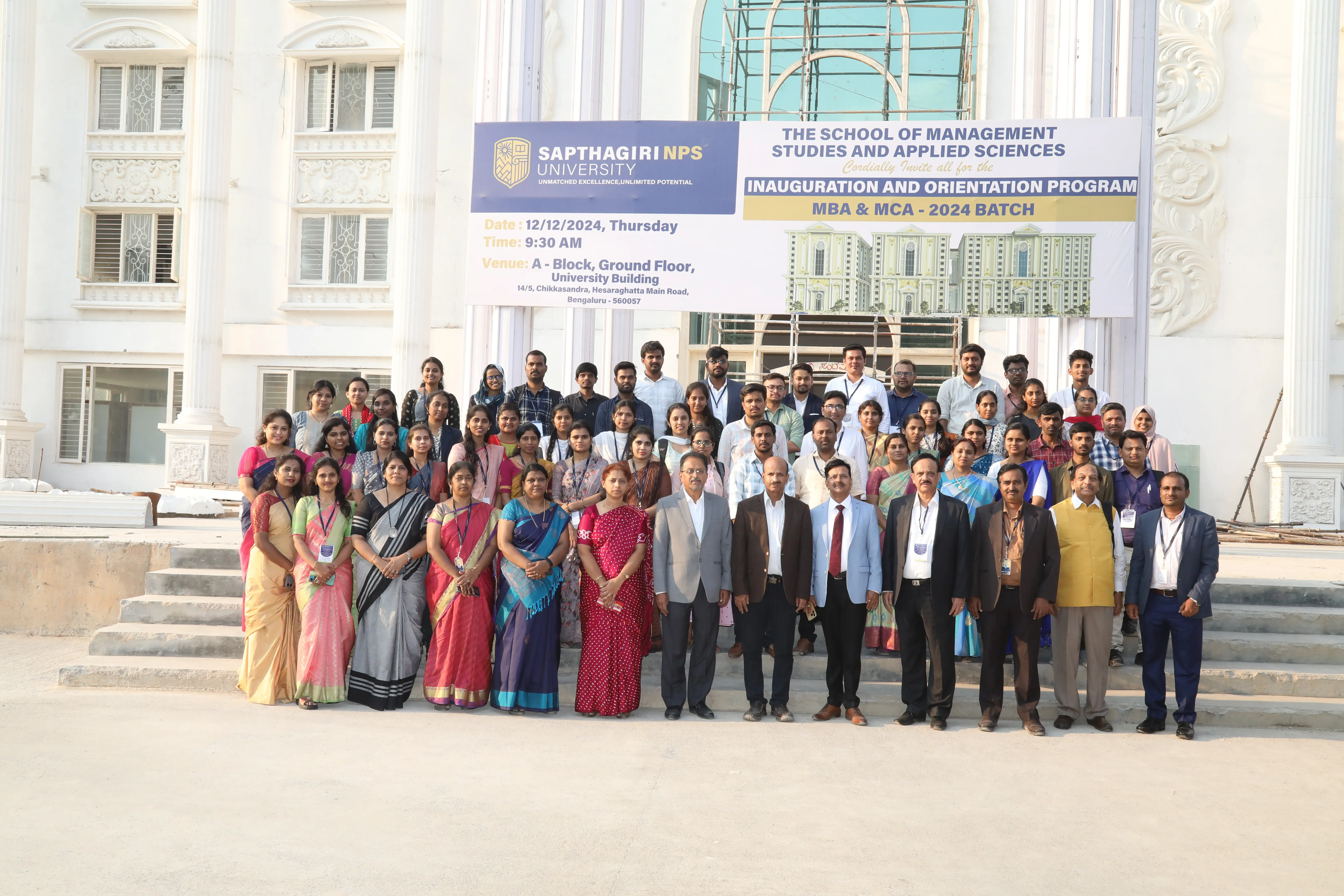
Our university provides students with the guidance of experienced and knowledgeable faculty members who contribute to a strong engineering learning environment. Faculty members support students in understanding engineering concepts, developing technical knowledge and applying classroom learning to practical situations. For students searching for an engineering university Bangalore, expert faculty guidance is an important part of the academic experience. Our faculty encourage students to ask questions, participate in discussions, explore technical ideas and develop independent problem-solving abilities. Engineering education requires a strong understanding of fundamentals as well as awareness of emerging technologies, and faculty guidance helps students progress through both areas with greater confidence. Faculty members can guide students through laboratory activities, technical projects, seminars, research work and academic assignments. They also encourage students to think critically and approach engineering challenges from different perspectives. The academic environment at our university promotes interaction between students and faculty, creating opportunities for learners to seek clarification and receive appropriate academic guidance. The image reflects a professional university environment in which faculty members and students come together, representing the collaborative academic culture that supports learning at our university. For engineering students, this environment can encourage meaningful interaction, knowledge sharing and continuous improvement. Our university focuses on developing students through a combination of faculty expertise, practical learning and academic engagement. With knowledgeable faculty members supporting students throughout their engineering journey, our university aims to provide an environment where learners can strengthen their technical capabilities, develop confidence and prepare themselves for future opportunities in engineering and technology.
Campus Safety and Student Support
A student's academic experience is influenced by how secure and supported they feel within the university environment. Our university's engineering infrastructure includes CCTV security, a public announcement system, fire-safety provisions and an urban health centre with first-aid, medical and counselling facilities. These provisions are part of the campus environment designed to support students during their day-to-day university life. Safety infrastructure can provide reassurance while allowing students to focus on their academic responsibilities and campus activities. Engineering education involves practical environments such as laboratories and workshops, where awareness of safety procedures is particularly important. A culture of responsible behaviour can help students understand that safety is part of professional engineering practice. The availability of first-aid and health support also provides students with access to assistance when necessary. Counselling support adds another dimension by recognising that university life involves academic, personal and social transitions. Our university aims to create an environment where students can seek appropriate support when they encounter difficulties. The objective is to ensure that students are not expected to manage every challenge alone. Security systems, health facilities and clear campus procedures contribute to an organised environment where students can concentrate on learning. These facilities also support parents' confidence when their children move into university life. For students coming from outside Bangalore, knowing that the campus has structured support systems can make the transition to university more comfortable. Our university therefore considers safety, health and student support to be important components of the overall campus experience rather than secondary facilities.
Residential Experience for Students From Outside Bengaluru
For students arriving from other cities and states, university accommodation can become an important part of their educational journey. Our university provides hostel facilities for students from outside Bengaluru, creating a residential environment where students can live alongside peers while continuing their academic activities. The hostel environment is designed to encourage students to share, coordinate and live harmoniously while developing confidence and independence. Students living away from home experience a gradual transition towards greater personal responsibility, including managing schedules, maintaining their living spaces and adapting to a shared community. Our university's hostel management includes wardens and maintenance staff who support day-to-day operations, while a hostel management committee involving management and student representatives contributes to the functioning of the residential environment. This structure encourages students to become active participants in maintaining a healthy hostel community. Residential life can also create opportunities for students from different regions to interact and develop friendships. Living with peers can expose students to different languages, food preferences, traditions and perspectives, contributing to a broader university experience. The hostel also has access to indoor and outdoor sports facilities nearby, encouraging residents to participate in recreational activities. The residential environment therefore supports more than accommodation; it becomes another setting where students develop independence, communication and community-living skills. For an engineering university in Bangalore, hostel facilities can be especially valuable for students who want to focus on their education without the daily challenges of long-distance commuting.
Dining and Everyday Student Convenience
Everyday facilities can have a significant influence on student comfort, particularly for students who spend most of their day on campus. Our university's hostel provides a dedicated kitchen and dining hall, with food prepared by experienced cooks and an emphasis on hygiene, quality and cleanliness. The menu includes a mix of North Indian and South Indian vegetarian food to accommodate students from different parts of India. This approach recognises that students arriving in Bangalore may have different food preferences and dietary habits. Shared dining spaces can also become informal social environments where students interact after classes and develop friendships. Beyond residential dining, the campus infrastructure includes a cafeteria serving food and beverages, as well as a stationery shop for immediate student requirements. Banking and ATM facilities are also listed among the campus amenities. Having everyday services within or close to the campus can reduce the need for students to travel outside for routine requirements. This can be particularly convenient during busy academic periods when students are managing projects, practical sessions and examinations. Our university aims to create a campus where essential academic and everyday requirements are supported within an organised environment. Convenience does not replace academic quality, but it can contribute to a smoother student experience. When students have access to food, stationery, basic services and residential facilities, they can devote more attention to their academic responsibilities and campus activities. This integrated approach supports the idea of a university as a complete learning and living environment.
Parking, Roads and Campus Navigation
Physical accessibility within the university is another aspect of everyday campus life. The engineering campus has a maintained road running through the campus, parking facilities for two-wheelers and four-wheelers, and signage intended to help students and visitors navigate different areas. Clear campus navigation can be particularly useful for new students during their first weeks at university. Students need to locate classrooms, laboratories, administrative offices, examination areas, libraries and other facilities as they become familiar with the campus. Well-planned internal movement can make the transition easier. Parking facilities can also support students and visitors who use private vehicles, while public transport accessibility provides another option for commuting students. The university's location on Hesaraghatta Main Road connects it with the broader Bengaluru urban environment. For students choosing an engineering university in Bangalore, accessibility can be considered alongside academic and campus factors. A convenient location can help students manage daily travel while remaining connected to the city's wider educational and professional environment. Our university seeks to make campus movement straightforward through organised infrastructure and clear navigation. This practical aspect of university life may appear simple, but it can make a difference to students who spend several hours on campus every day. A well-connected physical environment supports punctuality, convenience and ease of access to academic resources.
Engineering Education Supported by a Complete Campus Ecosystem
The strength of an engineering university is not determined by classrooms alone. It is the combination of academic resources, student services, practical facilities and the surrounding learning environment that shapes the university experience. Our university's engineering campus brings together laboratories, workshops, research centres, computer facilities, library resources, seminar spaces, residential facilities, sports areas, health support and everyday amenities. This creates an ecosystem in which students can move naturally between different modes of learning and daily life. A student may attend a lecture in the morning, complete practical work in a laboratory, continue research in the library, participate in a seminar and later use recreational or fitness facilities before returning to the hostel or home. Such a routine demonstrates how university education extends beyond scheduled classes. Our university aims to support students throughout these different parts of the day. The campus is designed to provide spaces for concentration as well as interaction, for individual study as well as teamwork, and for academic development as well as recreation. This balance can help students build a university experience that is productive without becoming one-dimensional. Engineering students particularly benefit from an environment where theoretical learning, practical experimentation, independent research and collaborative work can coexist. The wider campus ecosystem makes it possible for students to develop these capabilities gradually. For students searching for an engineering university in Bangalore, evaluating this complete environment can provide a better understanding of what university life will actually feel like. Our university focuses on creating a campus where infrastructure serves a clear educational purpose and where students can access the resources needed to make their university years productive, comfortable and meaningful.
Engineering University Bangalore: Student Participation and Campus Engagement

The image showcases active student participation in a university event, reflecting the engaging campus environment at our university. Students are seen taking part in a ceremonial activity alongside university representatives, creating a sense of involvement and shared participation. For an engineering university Bangalore, campus engagement can add an important dimension to the student experience by providing opportunities to interact, participate and develop confidence outside regular academic activities. Such events allow students to become familiar with the university community and take part in programmes that bring learners and faculty members together. Participation in institutional activities can also encourage students to develop communication, coordination and teamwork skills. The image captures a moment where students are actively involved rather than simply attending as spectators. This type of participation can help students become more confident in taking responsibility and contributing to university programmes. Our university encourages students to make their campus experience meaningful by participating in academic, technical and institutional activities. These opportunities can help students develop a stronger connection with their peers and the university community. For engineering students, involvement in campus activities can complement technical education by providing experiences that develop interpersonal and organisational abilities. The image therefore represents student engagement, participation and community interaction as important elements of life at an engineering university in Bangalore.
A University Ecosystem Designed for Broader Learning
Our university is designed as a multidisciplinary academic environment where engineering forms one important part of a wider ecosystem of education and professional development. The presence of multiple schools creates an opportunity for students to understand how different fields contribute to solving complex problems. Engineering increasingly intersects with management, science, healthcare, entrepreneurship and digital technologies, and students benefit when they are encouraged to appreciate these connections. Our university's academic ecosystem includes the School of Engineering & Technology, School of Management Studies, School of Applied Sciences and School of Medicine & Health Sciences, along with healthcare infrastructure through Sapthagiri Hospital. This broader setting can provide an environment for interdisciplinary thinking, where students begin to understand that modern challenges rarely belong to one academic discipline alone. An engineer working on a technology solution may need knowledge of business requirements, scientific principles, user needs, sustainability or healthcare applications depending on the problem being addressed. Our university therefore focuses on developing students who can look at challenges from multiple perspectives. The engineering learning environment is supported by practical facilities and a curriculum intended to integrate core engineering principles with emerging technologies. Students can use their university years to build technical foundations while gradually developing the ability to collaborate with people from different areas. This approach can be particularly valuable in a city such as Bangalore, where technology and professional ecosystems increasingly depend on multidisciplinary teams. The university experience is consequently designed not simply around completing academic requirements but around developing the intellectual curiosity, practical confidence and adaptability required for a changing professional environment.
Learning That Connects Knowledge With Application
Engineering education becomes more meaningful when students understand how concepts learned in classrooms can be applied to practical situations. Our university places emphasis on experiential learning through modern laboratories, workshops and advanced computing facilities that support students as they move from theoretical understanding towards practical application. This approach encourages students to observe, experiment, analyse and develop solutions rather than relying exclusively on theoretical study. Practical learning can also help students understand the importance of accuracy, testing, documentation and systematic problem-solving. An engineering student may understand a principle academically, but applying that principle to a project introduces additional considerations such as design requirements, available resources, technical limitations and user expectations. Our university seeks to create learning experiences where students can encounter these dimensions during their academic journey. Project work can encourage students to identify problems, investigate possible solutions, collaborate with peers and communicate their outcomes. Laboratory activities can provide a structured environment for experimentation, while workshops can help students become familiar with practical processes and technologies. Computing resources further support students working with software, simulations, data and digital engineering applications. This combination allows students to develop a more complete understanding of engineering. Practical learning also encourages students to learn from unsuccessful attempts. Engineering rarely involves finding the perfect solution on the first attempt; testing, evaluation and improvement are often essential parts of the process. Our university encourages students to approach such experiences as opportunities for learning. By connecting classroom knowledge with application, students can gradually develop the confidence required to approach unfamiliar technical challenges.
Research and Innovation as Part of the University Experience
Research and innovation provide another important dimension to engineering education at our university. The Research and Innovation Cell serves as a platform for research, interdisciplinary collaboration, innovation, entrepreneurship and intellectual development across the university. Students are encouraged to look beyond existing solutions and develop the ability to investigate problems systematically. Research-oriented learning can introduce students to methods of inquiry, experimentation, analysis, documentation and knowledge sharing. Innovation encourages them to consider how ideas can be transformed into practical solutions. These two areas can complement engineering education by giving students opportunities to explore problems without limiting themselves to predefined classroom exercises. Our university's Research and Innovation Cell supports fundamental, applied and interdisciplinary research and encourages collaborative projects involving students and faculty. It also focuses on prototype development, entrepreneurship, intellectual property, publications, conferences and research funding opportunities. Such an ecosystem can encourage students to develop a mindset in which questions become starting points for exploration. A student may identify an issue through a classroom project and later develop it into a research investigation or prototype. Another student may become interested in entrepreneurship and explore whether a technical idea can be transformed into a product or service. Research also helps students understand the importance of evidence and systematic evaluation. Instead of assuming that an idea works, students learn to test, measure, compare and refine it. This way of thinking is valuable across engineering careers. Our university seeks to build a culture where innovation is connected with practical relevance and responsible problem-solving. Students interested in higher education and research can also use these experiences as a foundation for future academic work. Through research, innovation and interdisciplinary collaboration, the university environment encourages students to become creators of knowledge and solutions rather than passive recipients of information.
Industry Connect and Professional Exposure
An engineering university in Bangalore has an opportunity to connect students with a city recognised for its technology, business and innovation ecosystem. Our university complements this environment through dedicated structures focused on industry interaction and career development. The Human Resource Development department includes Corporate Relations and Industry Partnerships, Placements and Career Support, Learning and Development, the Industry-Institute Interaction Cell, Institution's Innovation Council, Campus Recruitment Training, Centre for Life Skills, Consultancy Services and a Global Career Centre. This structure reflects an approach in which career preparation is integrated into the broader university experience. Students can benefit from exposure to industrial visits, hackathons, technology talks and guest lectures, while career mentoring includes areas such as resume development, mock interviews and expert-led guidance. These activities can help students understand professional expectations before they graduate. Industry exposure is valuable because classroom learning and workplace environments operate in different ways. Professional projects often involve deadlines, collaboration, client requirements, documentation, communication and continuous adaptation. Students who experience these dimensions during university can develop greater awareness of what professional life may require. Our university also recognises that employability depends on more than technical knowledge. Communication, teamwork, professional behaviour and the ability to learn continuously are increasingly important. The HRD structure therefore supports learning and development alongside placement and industry engagement. Students can use these opportunities to identify areas where they need additional development and gradually build professional confidence. Industry interaction also helps students understand emerging technologies and changing career expectations. For students considering an engineering university Bangalore, this connection between academic education and professional development can be an important part of the overall university experience.
Student Activities and Campus Life at an Engineering University in Bangalore
Student activities and campus life are an important part of the overall experience at an engineering university Bangalore students choose for their higher education.Our university, education is viewed as a journey that extends beyond classrooms, laboratories, assignments and examinations. Students need opportunities to interact, participate, communicate, collaborate, create and explore their individual interests throughout their university years. A vibrant campus environment can help students develop confidence while giving them opportunities to discover talents that may not always emerge through academic learning alone. Our university encourages students to take an active role in campus life through academic activities, technical initiatives, student communities, cultural programmes, sports, competitions, celebrations, workshops, seminars and social activities. Such opportunities can complement engineering education by helping students develop communication, leadership, teamwork, creativity and organisational abilities. Student clubs and communities can also provide an informal environment where students with similar interests can learn from one another and work together on activities and projects.
Across engineering campuses in Bangalore, student clubs commonly extend from technical and innovation-focused groups to cultural, literary, sports and social communities. Our university believes that participation should be encouraged alongside academic responsibility so that students can experience a balanced university life. Engineering students spend considerable time developing technical knowledge, but professional life also requires interpersonal skills, confidence, adaptability and the ability to work effectively with different people. Campus activities provide a natural environment for developing these qualities. Students can take responsibility for organising events, coordinating teams, presenting ideas, participating in competitions and representing the university in different activities. These experiences can gradually help students become more independent and confident. For students searching for an engineering university in Bangalore, campus life is therefore an important factor to consider because the university experience is shaped not only by academic programmes but also by the opportunities students receive to participate, connect and grow.
Cultural Events at Sapthagiri NPS University Bangalore
Cultural events at Sapthagiri NPS University Bangalore form an important part of the vibrant student experience and provide opportunities for students to celebrate traditions, express creativity, build confidence and develop meaningful connections across the campus. Our university believes that education extends beyond classrooms, laboratories and examinations, and cultural participation gives students another platform through which they can learn, collaborate and grow. The university's official campus highlights include Kannada Rajyothsava 2025, Aurafesta 2025, Mega Fashion Show 2025, Avalokana 2025 and other student-focused events. These programmes bring together students from different academic backgrounds and create opportunities to experience music, dance, performances, fashion, regional traditions, celebrations and creative expression. Cultural events also contribute to the development of communication, teamwork, leadership, organisation and presentation skills because students often participate not only as performers but also as organisers, volunteers, coordinators and creative contributors. Our university encourages students to actively participate in campus activities while maintaining a strong focus on academics and professional development. The cultural environment at our university reflects the diversity of Bangalore and the different traditions represented within the student community. Students can experience regional celebrations while also participating in contemporary programmes that encourage modern creative expression. Kannada Rajyothsava, for example, provides an opportunity to celebrate Karnataka's language, heritage and cultural identity, while events such as the Mega Fashion Show provide a platform for contemporary creativity and confidence. Through these experiences, our university seeks to create a campus where students can learn from one another, appreciate diversity and build memories that extend beyond their academic journey.
Celebrating Culture and Diversity
Cultural events at our university create opportunities for students from different regions, languages and backgrounds to come together in an inclusive campus environment. Bangalore attracts students from across India, and this diversity becomes an important part of university life. Our university encourages students to appreciate different traditions while sharing their own cultural experiences with their peers. Cultural celebrations can include traditional attire, music, dance, performances, food, regional customs and student-led activities. Such programmes encourage students to understand that diversity can strengthen a university community when it is accompanied by mutual respect and meaningful interaction. The university's approach to cultural exchange includes opportunities for students to experience different traditions, performances and celebrations within the campus. These activities can help students develop cultural awareness while building friendships across different backgrounds. A student may participate in a celebration representing their own heritage and then become an audience member or volunteer at another cultural programme, creating opportunities to experience traditions beyond their personal background. This exchange can make campus life more engaging and educational. Our university believes that cultural awareness is increasingly important in professional environments because graduates may eventually work with colleagues, clients and organisations from different regions and countries. Learning to respect different perspectives begins with everyday interaction, and campus cultural activities provide a natural setting for developing this understanding.
Kannada Rajyothsava at Our University
Kannada Rajyothsava is one of the significant cultural celebrations associated with our university campus and provides an opportunity to recognise the language, heritage and cultural identity of Karnataka. Our university's campus gallery lists Kannada Rajyothsava 2025 as a celebration, reflecting its place within the university's cultural calendar. The celebration brings together the university community in an atmosphere of cultural appreciation and shared participation. The event has also featured prominent guests and cultural personalities, adding further significance to the celebration. The university's published account of Kannada Rajyothsava describes the occasion as a celebration of Karnataka's rich culture and heritage, with participation from university leadership and well-known personalities. For students, such an event can provide an opportunity to learn more about Karnataka while participating in performances, presentations and cultural activities. It also helps students from outside Karnataka understand and appreciate the cultural environment of the state in which they are pursuing their education. Our university welcomes students from diverse backgrounds, and Kannada Rajyothsava contributes to this broader culture of inclusion by celebrating regional heritage while encouraging everyone to participate respectfully. The celebration can also provide students with opportunities to develop stage confidence, event-management skills and teamwork. Preparing for cultural performances often requires coordination, practice and commitment, making the experience valuable beyond the event itself. Through Kannada Rajyothsava, our university seeks to celebrate Karnataka's cultural heritage while strengthening the sense of community among students, faculty and the wider university family.
Aurafesta and Campus Celebrations
Aurafesta is another cultural event featured among the official campus activities of our university. Such events add energy and excitement to campus life by creating opportunities for students to participate in performances, creative activities and shared celebrations. A university cultural festival can bring together students who may otherwise spend most of their time within their respective academic environments. Students can interact with peers from different programmes, participate in activities and develop a stronger sense of belonging to the university community. Our university views cultural festivals as opportunities for students to express themselves while developing practical skills. Organising a campus event involves multiple responsibilities, including planning, communication, coordination, stage management, promotion, scheduling and teamwork. Students who participate in these responsibilities can gain experience that may later prove useful in professional environments. Cultural festivals can also provide opportunities for students who are not regular performers. Some students may contribute through photography, design, event coordination, technical support, social media, anchoring or backstage management. Every contribution can play a role in creating a successful event. Our university encourages this broad participation because cultural life becomes stronger when students with different talents and interests contribute to it. Aurafesta and similar programmes therefore represent more than entertainment; they provide a platform for community building, creativity and student development.
Mega Fashion Show
The Mega Fashion Show 2025 is featured among the cultural and campus events of our university and represents a contemporary dimension of student creativity and expression. Fashion programmes can provide students with opportunities to explore presentation, styling, confidence, stage presence and creative concepts. Participation also requires preparation and teamwork because successful performances involve coordination between participants, organisers, creative teams and technical support. For students, appearing before an audience can be an opportunity to overcome hesitation and become more comfortable with public presentation. Students involved in organising the event can develop additional skills in planning and coordination. Our university encourages students to explore contemporary forms of creativity alongside traditional cultural celebrations. This balance allows campus life to reflect both heritage and modern student interests. The Mega Fashion Show demonstrates how cultural activities can create platforms for students to express individuality while participating as part of a larger university community. It also shows that cultural participation is not restricted to conventional forms such as music and dance. Fashion, visual presentation, stage performance and creative direction can all contribute to the cultural character of a university campus. Our university provides opportunities for students to discover these different forms of expression and develop confidence through participation.
Music and Dance Performances
Music and dance remain important forms of cultural expression within university life. Our university encourages students to explore their interests in performance and creative arts through campus activities and cultural programmes. Music can bring students together through different genres, languages and traditions, while dance can provide opportunities to celebrate both classical and contemporary forms of expression. Group performances can be particularly valuable because they require students to practise together, coordinate movements, maintain timing and support one another. These activities can strengthen teamwork and discipline while providing an enjoyable creative experience. Individual performances can also help students develop confidence and stage presence. Students who participate in music and dance can gradually become more comfortable performing before audiences, while students involved in organising performances can develop event-management and coordination skills. Cultural performances can also create opportunities for students to share their regional traditions with the wider campus community. Our university believes that such exchanges make campus life richer and encourage students to appreciate different forms of artistic expression. Whether a student performs on stage, supports a performance behind the scenes or participates as an audience member, each experience contributes to the cultural atmosphere of the university.
Theatre, Drama and Creative Expression
Theatre and drama provide students with another avenue for creative expression and communication. A stage performance requires students to work with scripts, understand characters, practise delivery, coordinate with fellow performers and communicate effectively with an audience. These activities can strengthen confidence and public-speaking abilities while encouraging creativity. Our university encourages students to explore different forms of artistic expression as part of a broader campus experience. Drama can also help students understand different perspectives because performing a character often requires students to consider emotions, situations and viewpoints beyond their own experiences. Behind every successful performance is a team that may include actors, directors, writers, costume coordinators, stage managers, technical teams and event volunteers. This makes theatre an excellent environment for developing collaboration and responsibility. Students who may not wish to perform can still participate in production-related roles. Through such activities, our university creates opportunities for students with different interests and abilities to contribute to cultural life.
Student-Led Cultural Activities
Student participation is central to creating an active cultural environment at our university. While the university provides platforms and support, students contribute much of the energy, creativity and enthusiasm that make cultural programmes meaningful. Student-led activities can involve planning events, suggesting programme ideas, coordinating participants, preparing performances, managing publicity and supporting event execution. These responsibilities can develop leadership and organisational skills in practical ways. Students learn how to communicate with team members, work within deadlines and respond to unexpected challenges. They also learn that successful events depend on cooperation rather than individual effort. Our university encourages students to take initiative and contribute ideas that can enrich campus life. Student-led cultural activities can also help students build confidence because they take responsibility for turning an idea into an actual programme. Such experiences can become valuable examples of leadership and teamwork that students carry into internships and future professional environments. The skills developed through event organisation are transferable to many careers, including planning, communication, project management and team coordination.
Cultural Events and Holistic Student Development
Cultural events contribute to holistic student development by creating opportunities to develop qualities that complement academic knowledge. Our university believes that students should graduate with more than technical qualifications. They should also develop confidence, communication, teamwork, leadership, creativity, cultural awareness and adaptability. Cultural activities provide practical situations where these qualities can develop naturally. A student preparing for a performance learns discipline and commitment, while a student organising an event develops planning and coordination skills. A student participating in a group activity learns how to communicate and cooperate with others. These experiences can contribute to personal development while also preparing students for professional environments. Employers increasingly value graduates who can work effectively in teams, communicate ideas and adapt to changing situations. Cultural activities provide students with opportunities to practise these qualities during their university years. Our university therefore considers cultural participation a valuable complement to academic learning.
Cultural Events and Communication Skills
Communication is an important skill for every professional, including engineers, managers, researchers and entrepreneurs. Cultural events provide students with numerous opportunities to develop communication skills in practical situations. Hosting an event, introducing a performance, participating in a debate, performing on stage or explaining an activity can help students become more comfortable communicating with audiences. Group planning also requires students to communicate clearly with team members. These experiences can gradually improve confidence and reduce hesitation when speaking in public. Our university encourages students to use cultural activities as opportunities to strengthen communication while enjoying campus life. The ability to communicate clearly can later support students during interviews, presentations, internships, professional meetings and workplace collaboration. Cultural participation therefore has value beyond entertainment because it can contribute directly to personal and professional development.
Creating Lasting Campus Memories
University years are often remembered not only for academic achievements but also for friendships, celebrations, performances and shared experiences. Cultural events create many of these memorable moments. The excitement before a performance, preparation for a festival, rehearsals with friends, participation in a cultural celebration and the atmosphere of a campus event can become important memories for students. Our university seeks to create opportunities where students can experience these moments while developing valuable skills. Photographs and campus records can preserve these experiences and provide students with memories of their university journey. The official campus gallery highlights events such as Kannada Rajyothsava, Aurafesta and the Mega Fashion Show as part of the university's moments from campus life. These occasions become part of the broader story of student life at our university.
A Vibrant Cultural Environment at Our University
Cultural events at Sapthagiri NPS University Bangalore contribute to a campus environment where academic learning, creativity, tradition and student participation can come together. From Kannada Rajyothsava and Aurafesta to the Mega Fashion Show and other cultural programmes, our university provides platforms through which students can celebrate, express themselves and develop valuable personal skills. These activities encourage students to appreciate diversity, participate confidently, work collaboratively and develop a stronger sense of community. Our university believes that the university journey should provide opportunities to learn both inside and outside the classroom. Cultural events help create that balance by giving students space to celebrate traditions, explore creativity, build friendships and develop confidence. For students looking for a university in Bangalore that values a comprehensive campus experience, cultural participation can become an important part of their journey. Through every celebration, performance, creative programme and student-led initiative, our university continues to build a campus culture where students can learn, participate, express themselves and create meaningful memories.
Yoga and Fitness Activities at Sapthagiri NPS University
Yoga and fitness activities at Sapthagiri NPS University are an important part of the university's approach to holistic student development. Our university believes that higher education should support students not only academically but also physically, socially and personally. A balanced university experience gives students opportunities to focus on their studies while also maintaining an active lifestyle, participating in recreation and developing healthy routines. Our university provides a dedicated yoga and aerobics studio, along with a fully equipped fitness centre containing cardio and strength-training equipment. The sports environment also includes an open-air gym and a wide range of indoor and outdoor sporting facilities. These facilities give students different ways to remain active according to their interests, schedules and fitness preferences. Yoga can provide a calmer form of physical activity focused on flexibility, balance, controlled movement and body awareness, while aerobics provides a more energetic activity that encourages continuous movement and fitness. Students who prefer individual exercise can make use of the fitness centre, while those who enjoy group participation can explore sports and recreational activities across the campus. Our university encourages students to discover activities that they enjoy and participate consistently while maintaining their academic responsibilities. Fitness activities can also become an opportunity for students to interact with peers, develop discipline and take constructive breaks from their academic routine. The objective is not to expect every student to become a competitive athlete, but to create an environment where every student can find meaningful ways to remain active. Through yoga, fitness, sports and wellness activities, our university aims to encourage students to develop habits that can support a balanced and engaging university experience.
Yoga Facilities at Our University
Yoga has an important place within the wellness environment at our university. The university's official sports facilities information confirms the availability of a dedicated yoga and aerobics studio as part of the indoor sports infrastructure. This provides students with a dedicated space where yoga and related wellness activities can be incorporated into campus life. Yoga can be particularly appealing to students who prefer activities based on controlled movement, flexibility, balance and relaxation. Engineering, management, computer applications and other university programmes can involve long periods of classroom learning, laboratory work, assignments, project development and screen-based activities. Having access to a dedicated yoga environment gives students another option for introducing physical activity and movement into their routine. Our university encourages students to participate according to their own interests and capabilities rather than approaching fitness in a one-size-fits-all manner. Students can explore yoga as an individual wellness activity or combine it with other sports and fitness practices. Yoga can also complement more physically intensive activities by providing an opportunity to focus on controlled movement and flexibility. The university's wider sports philosophy is to encourage an active lifestyle and provide students with opportunities to participate in fitness and wellness programmes. Through this approach, yoga becomes part of a broader campus culture that values physical activity and personal well-being. Students can use their university years to develop healthy routines that can remain useful beyond graduation. Our university therefore views yoga not simply as an extracurricular activity but as one of the options available to students who want to include wellness and physical activity within their campus lifestyle.
Yoga and Student Wellness
Student wellness is an important part of creating a positive university experience, and yoga can provide students with a structured opportunity to focus on movement, flexibility, balance and relaxation. Our university encourages students to maintain a healthy routine alongside academic commitments. Students may have demanding schedules involving classes, assignments, practical sessions, projects, examinations and other responsibilities. Regular participation in physical activities can provide a constructive change from academic work and encourage students to maintain a balanced routine. Yoga offers a form of activity that can be adapted to different levels of experience and personal preferences. Students can approach yoga as part of their regular fitness routine or use it as a complementary activity alongside sports, gym sessions and other forms of exercise. The dedicated yoga and aerobics studio contributes to the range of wellness options available on campus. Our university encourages students to focus on consistency and responsible participation. Rather than treating wellness as an occasional activity, students can gradually develop routines that fit comfortably around their academic schedules. Yoga can also provide opportunities for students to spend time away from screens and concentrate on controlled physical movement. This can contribute to a more balanced campus routine. The university's approach to student development recognises that academic achievement and personal well-being can work together. Students who take care of their physical well-being can create healthier routines that support their broader university experience. Our objective is to make wellness accessible through different options so that students can identify activities that suit their interests and continue participating in them throughout their university journey.
Fitness Centre at Sapthagiri NPS University
Our university provides a dedicated fitness centre with cardio and strength-training machines, giving students an environment for structured individual exercise and physical conditioning. The fitness centre provides another option for students who prefer gym-based activities rather than team sports or group fitness programmes. Cardio equipment can support activities focused on endurance and conditioning, while strength-training equipment provides opportunities for students interested in developing muscular fitness and physical strength. Students can use the facility according to their individual goals, experience levels and schedules while following applicable university guidelines. Having a fitness centre within the university environment can make regular physical activity more convenient because students can incorporate exercise into their campus routine without needing to travel elsewhere. Our university encourages students to use fitness facilities responsibly and understand the importance of appropriate exercise practices. Students can combine gym-based activities with yoga, outdoor sports, indoor games or other recreational activities to create a varied fitness routine. The purpose of providing multiple options is to allow students to find activities that they genuinely enjoy. Regular participation can encourage students to develop discipline and consistency, qualities that can also support academic and professional development. The fitness centre forms part of a wider sports infrastructure that includes outdoor games, indoor sports, yoga, aerobics and an open-air gym. This range of facilities reflects our university's commitment to creating an active campus environment where students can participate according to their individual interests.
Aerobics and Active Fitness
Aerobics provides an energetic option for students who enjoy active, movement-based fitness activities. Our university has a dedicated yoga and aerobics studio, giving students access to both wellness-oriented and energetic forms of physical activity within the same indoor sports environment. Aerobics can provide an engaging way for students to remain active while participating alongside peers. Group-based fitness activities can also encourage social interaction and create a sense of community among students with similar interests. Students can explore aerobics as part of their wider fitness routine or combine it with other activities such as gym workouts, outdoor sports and yoga. Our university believes that fitness should be accessible and enjoyable, allowing students to select activities that match their preferences. An energetic activity such as aerobics can provide a useful break from classroom and computer-based work while giving students an opportunity to move and remain active. Participation can also encourage students to develop consistency and discipline. Fitness routines are most meaningful when students can maintain them over time, and providing different activity options can make it easier for students to find a routine they enjoy. Through the aerobics studio and other fitness facilities, our university aims to create opportunities for students to incorporate physical activity naturally into their campus lifestyle.
Open-Air Gym and Outdoor Fitness
The open-air gym adds another dimension to the fitness opportunities available at our university. The university's official sports facilities list includes an open-air gym alongside outdoor sports such as cricket, football, hockey, athletics, basketball, volleyball, kabaddi, kho-kho and tennis. Outdoor fitness gives students an alternative environment for exercise and can be combined with other outdoor activities. Students who enjoy being outside may find an open-air fitness space particularly useful as part of their regular activity routine. Outdoor exercise can also be incorporated into a broader lifestyle that includes walking, running, sports and recreational activities. Our university encourages students to choose activities according to their individual interests and physical capabilities. The availability of both indoor and outdoor fitness options means students are not restricted to a single form of exercise. They can explore different activities and create routines that remain enjoyable and sustainable. The open-air gym is therefore part of our broader objective of promoting an active campus environment. Students can combine outdoor fitness with team sports or individual activities depending on their schedules and preferences. Such variety can encourage greater participation because students have multiple ways to remain active. Our university believes that fitness should be a positive part of student life, supporting personal development while complementing academic responsibilities.
Fitness Activities and Student Discipline
Regular participation in fitness activities can encourage students to develop discipline and consistency. A fitness routine requires students to make time for physical activity and maintain their commitment over a period of time. These habits can complement the discipline required for academic success. Our university encourages students to approach fitness responsibly and select activities appropriate to their interests and capabilities. Students who participate in sports, gym activities, yoga or aerobics can learn the value of practice and gradual improvement. Progress in physical activity often requires patience, and students can apply a similar mindset to academic learning. Instead of expecting immediate results, they can develop their abilities step by step. Sports and fitness can also teach students how to manage their time effectively. Students need to balance classes, assignments, projects, examinations, social activities and recreation. Developing this balance can contribute to greater independence and responsibility. Our university's sports department aims to encourage every student to adopt an active lifestyle and provides opportunities for competitions, fitness challenges and wellness-related programmes. Through such opportunities, students can discover activities that motivate them to remain active. The university environment can therefore become a place where students develop habits that support both academic and personal growth.
Yoga and Fitness for a Balanced Campus Life
A vibrant campus is one where students have opportunities to learn, participate, interact and maintain a balanced lifestyle. Our university provides a broad range of sports and wellness facilities so that students can choose activities that match their individual interests. The combination of yoga, aerobics, gym facilities, open-air fitness and indoor and outdoor sports creates a varied environment for physical activity. Students can choose between individual activities and team-based participation. Some may prefer the focused environment of the fitness centre, while others may enjoy the social aspect of team sports. Yoga provides another option for students who prefer controlled movement and wellness-oriented activity. This variety is important because students have different personalities, interests and levels of experience. Our university does not view fitness as a single activity; instead, we encourage students to discover approaches that fit naturally into their lifestyle. A student who enjoys sports can combine team games with strength training, while another student may prefer yoga, aerobics and regular gym sessions. Students can also change their activities as their interests develop. The availability of multiple facilities makes it possible to explore different forms of physical activity throughout the university journey.
Special Wellness and Fitness Activities
Our university's sports and wellness calendar includes special activities that encourage students to explore fitness and active living. The official sports programme lists World Yoga Day, National Sports Day, World Bicycle Day, adventure camps and wellness workshops among its special events. These activities provide opportunities to highlight different aspects of physical activity and wellness beyond routine sports participation. World Yoga Day can encourage students to explore yoga and understand its place within a balanced lifestyle. National Sports Day can create awareness about sporting participation, discipline and sportsmanship. World Bicycle Day can encourage students to think about active mobility and healthy routines. Wellness workshops can introduce students to different approaches to maintaining an active and balanced lifestyle. Such events also create opportunities for students to participate together and strengthen the sense of community on campus. Our university aims to use these occasions to encourage wider participation rather than limiting sports and fitness to students who already have strong sporting interests. Students can discover new activities through special events and may choose to continue participating afterwards. These programmes contribute to a campus culture in which physical activity, recreation and wellness are recognised as meaningful components of student life.
Sports, Yoga and Social Interaction
Fitness activities can also contribute to social interaction among students. Team sports naturally encourage students to communicate, cooperate and work towards shared objectives, while group activities such as aerobics can create opportunities for students to participate together. Yoga and individual fitness activities may be more personal in nature, but they still take place within a wider campus environment where students can meet and interact with peers. Our university provides a variety of sports and recreational spaces that encourage students to spend time together outside academic settings. The official sports infrastructure includes an indoor stadium, multi-purpose sports hall, badminton courts, table tennis arena, chess and carrom rooms, yoga and aerobics studio, outdoor sports facilities and fitness spaces. This variety gives students opportunities to interact with peers who may have different interests. A student may meet classmates during a yoga session, make friends through badminton or develop stronger teamwork skills through a football or basketball team. These interactions can contribute to a sense of belonging and make campus life more engaging. Our university encourages students to participate respectfully and support one another while maintaining healthy competition. Sportsmanship and cooperation can become valuable life skills that students carry into professional environments.
Fitness and Overall Student Development
Fitness activities are an important component of the broader student-development philosophy at our university. Academic education develops knowledge and technical capabilities, while sports, yoga and fitness can contribute to discipline, confidence, teamwork, resilience and personal balance. Our university's official sports objectives include encouraging every student to adopt an active lifestyle, organising intra- and inter-university sports competitions, training athletes and offering academic and skill-based programmes in sports, fitness and wellness. This reflects a broad approach in which sports are connected with education and personal development. Students can learn valuable lessons through participation, whether they are training for a competition or simply attending a regular fitness session. Physical activities can encourage students to set goals, practise consistently and evaluate their progress. Team activities can develop cooperation and leadership, while individual activities can encourage self-discipline and personal responsibility. Yoga can provide an additional focus on balance and controlled movement. Together, these activities create opportunities for students to develop different aspects of themselves. Our university aims to provide an environment where students can explore these opportunities while pursuing their academic goals.
Why Choose Our Engineering University in Bangalore?
Our university provides students with an opportunity to pursue engineering education in Bangalore while experiencing a learning environment focused on knowledge, innovation, practical development and professional growth. Choosing an engineering university Bangalore students can trust requires careful consideration because the quality of the educational environment can influence a student's academic experience and future development. Our university believes that students should receive an education that prepares them not only to complete a degree but also to approach professional challenges with confidence and responsibility. The academic environment encourages students to understand fundamental principles, ask questions, participate in discussions and connect classroom concepts with practical situations. Students can benefit from interactions with faculty members who guide them throughout their academic journey and encourage them to develop independent thinking. The university environment also provides opportunities for students to participate in activities beyond regular classroom instruction. Technical events, academic projects, workshops, seminars, student clubs, competitions and collaborative activities can help students explore their interests and develop additional capabilities. Being located in Bangalore also places students within a broader ecosystem of technology, innovation and entrepreneurship. This can help students gain awareness of changing industry trends and emerging professional opportunities. Our university understands that every student has different aspirations, strengths and learning preferences, so we encourage students to approach their education with curiosity and commitment. The objective is to create a supportive academic environment where students can gradually develop technical competence, communication skills, confidence and professional awareness. For students looking for an engineering university in Bangalore, our university represents an environment where academic learning and personal development can progress together. The focus remains on helping students become capable graduates who can continue learning and adapting throughout their professional journey.
Engineering Education in Bangalore
Engineering education in Bangalore has evolved significantly as technology, industry and innovation continue to influence the professional landscape. Students choosing Bangalore for engineering education can benefit from studying in a city associated with a wide range of technology-driven industries and professional communities. Our university recognises the importance of this environment and seeks to provide students with an academic experience that reflects the changing expectations of engineering careers. Engineering education is not simply about memorising concepts or completing examinations. It involves understanding principles, applying them to problems, evaluating possible solutions and communicating technical ideas effectively. Our university encourages students to approach learning as a continuous process in which curiosity, experimentation and practical application play important roles. Classroom learning provides the foundation, while laboratories, projects, workshops and technical activities can help students strengthen their understanding. Students are encouraged to participate in academic activities that allow them to apply what they have learned and develop confidence in handling practical challenges. Bangalore's professional ecosystem can further motivate students to understand the importance of continuous skill development. Technology changes rapidly, and engineering professionals need to remain updated throughout their careers. Our university therefore encourages students to develop a learning mindset that extends beyond their immediate academic requirements. Students can explore new technologies, participate in technical communities and work on projects that encourage independent thinking. Communication and teamwork are also integrated into the broader educational experience because modern engineering projects often involve multidisciplinary teams. An engineering university Bangalore environment should prepare students to function effectively in such collaborative settings. Our university aims to develop graduates who understand their technical responsibilities while also appreciating the importance of ethics, communication, creativity and professional discipline. Through this approach, engineering education becomes a broader process of preparing students for the opportunities and challenges of a technology-driven world.
Academic Excellence and Learning Environment
Academic excellence is an important consideration when students compare engineering universities in Bangalore. Our university focuses on creating a learning environment where students can build strong conceptual understanding while developing the ability to apply their knowledge. A good engineering education begins with fundamentals because advanced technologies and specialised applications depend on a clear understanding of core principles. Faculty members play an important role in helping students develop this foundation by explaining concepts, guiding projects, encouraging questions and supporting academic progress. Our university encourages students to remain actively involved in their education rather than depending entirely on classroom instruction. Reading, experimentation, discussion, project development and independent learning can all contribute to academic growth. Students can use academic resources to explore subjects in greater depth and develop an understanding that goes beyond examination requirements. The university environment is designed to encourage discipline and consistency while allowing students to explore their interests. Academic projects can provide opportunities to investigate problems, develop ideas, test solutions and present outcomes. Such activities can strengthen analytical thinking and help students understand the process through which engineering solutions are developed. Faculty guidance can further help students identify areas where they need improvement and encourage them to develop stronger learning habits. An engineering university Bangalore should also create opportunities for students to interact with peers from different backgrounds and perspectives. Collaborative learning can encourage students to exchange ideas and approach problems in different ways. Our university values this interaction because engineering increasingly requires professionals to work across disciplines and teams. Academic excellence is therefore viewed not only through examination performance but also through understanding, application, curiosity, creativity and the ability to learn continuously. Our objective is to create graduates who possess a strong educational foundation and the confidence to continue developing their capabilities after completing their university education.
Practical Learning and Engineering Skills
Practical learning forms an important part of the engineering education experience at our university. Students searching for an engineering university Bangalore often want an institution where theoretical knowledge can be connected with practical applications. Engineering concepts become more meaningful when students have opportunities to observe, experiment, analyse and develop solutions. Our university encourages practical learning through laboratory activities, academic projects, technical assignments, demonstrations and hands-on exercises. These experiences can help students understand how principles learned in classrooms operate in practical situations. Students can also learn from mistakes and experimentation, which are valuable parts of the engineering problem-solving process. Practical education can strengthen technical confidence because students become familiar with analysing problems and considering different approaches to solving them. Project-based learning can also encourage students to work collaboratively, manage responsibilities and meet deadlines. These experiences can resemble some of the challenges students may encounter in professional environments. Our university encourages students to approach projects with creativity and attention to detail rather than treating them simply as academic requirements. Students can learn how to research a problem, identify requirements, develop possible solutions, test their ideas and communicate the results. Such processes contribute to the development of engineering thinking. Practical learning can also help students understand the importance of safety, accuracy, documentation and professional responsibility. The engineering university Bangalore environment provides an appropriate setting for this approach because the city is closely connected with technology and innovation. Our university aims to ensure that students develop a balance between conceptual understanding and practical capability. This balance can help graduates approach internships, placements, higher studies and professional projects with greater confidence. Practical learning also encourages students to become more comfortable with uncertainty and experimentation, qualities that can be valuable when working in industries where technologies and requirements continue to change.
Modern Infrastructure and Learning Facilities
Infrastructure plays an important role in creating an effective engineering university Bangalore experience. Students need suitable academic spaces, laboratories, technology resources and learning facilities to support their education. Our university aims to provide an environment where students can study, collaborate, experiment and participate in academic activities comfortably. Engineering education requires access to practical facilities because students need opportunities to understand concepts through experimentation and application. Laboratories can support technical learning by allowing students to perform experiments, observe results and understand engineering principles in practical contexts. Classrooms can support interactive learning through presentations, discussions and technology-enabled teaching methods. Academic resources can help students undertake research, assignments and project work. Beyond academic facilities, a university campus should also provide an environment where students can develop interpersonal skills and participate in extracurricular activities. Our university recognises that student development is broader than academic performance. Campus spaces, student activities, technical clubs, cultural programmes, sports and collaborative events can contribute to a balanced university experience. A positive campus environment can encourage students to build friendships, develop confidence and learn how to work with people from different backgrounds. Modern engineering education also increasingly involves digital resources, online learning materials, simulation technologies and technology-enabled academic practices. Our university encourages students to use available resources responsibly and develop independent learning habits. Infrastructure should ultimately support the educational objectives of the university rather than exist only as a collection of facilities. Our focus is therefore on creating an environment where infrastructure contributes meaningfully to learning, practical development, innovation and student engagement. Students evaluating engineering universities in Bangalore can consider how effectively the academic and campus infrastructure supports their overall educational journey.
Faculty Guidance and Mentoring
The quality of faculty interaction can significantly influence the university experience, particularly in engineering where students encounter subjects that require consistent conceptual development and practical understanding. Our university's School of Engineering and Technology highlights the role of qualified and experienced faculty members in guiding students throughout their academic journey. Faculty members are involved not only in classroom teaching but also in research projects, internships and industry collaborations. This broader role creates opportunities for students to receive guidance across different stages of their development. Academic mentoring can help students understand difficult concepts, identify areas for improvement and develop better approaches to learning. Project guidance can help students structure their work, evaluate technical choices and communicate their findings effectively. Faculty interaction can also encourage students to explore subjects beyond the immediate requirements of examinations.
Our university believes that students benefit when they develop curiosity and become independent learners. Teachers can provide direction, but students are encouraged to take responsibility for their own academic progress. This combination of mentoring and independence can help students become more confident in handling challenges. Faculty members can also expose students to research, industry practices and emerging areas, helping them understand how engineering knowledge evolves over time. Regular seminars, technical workshops and guest lectures involving industry professionals further broaden the learning environment. Such interactions can help students connect academic concepts with real-world applications and professional expectations. The objective is to create a supportive environment where students can ask questions, discuss ideas and seek guidance while gradually becoming more self-reliant. For an engineering university in Bangalore, strong faculty engagement is an important part of creating a meaningful and future-oriented educational experience.
Research and Innovation as Part of the University Experience
Research and innovation provide another important dimension to engineering education at our university. The Research and Innovation Cell serves as a platform for research, interdisciplinary collaboration, innovation, entrepreneurship and intellectual development across the university. Students are encouraged to look beyond existing solutions and develop the ability to investigate problems systematically. Research-oriented learning can introduce students to methods of inquiry, experimentation, analysis, documentation and knowledge sharing. Innovation encourages them to consider how ideas can be transformed into practical solutions. These two areas can complement engineering education by giving students opportunities to explore problems without limiting themselves to predefined classroom exercises. Our university's Research and Innovation Cell supports fundamental, applied and interdisciplinary research and encourages collaborative projects involving students and faculty. It also focuses on prototype development, entrepreneurship, intellectual property, publications, conferences and research funding opportunities. Such an ecosystem can encourage students to develop a mindset in which questions become starting points for exploration. A student may identify an issue through a classroom project and later develop it into a research investigation or prototype.
Another student may become interested in entrepreneurship and explore whether a technical idea can be transformed into a product or service. Research also helps students understand the importance of evidence and systematic evaluation. Instead of assuming that an idea works, students learn to test, measure, compare and refine it. This way of thinking is valuable across engineering careers. Our university seeks to build a culture where innovation is connected with practical relevance and responsible problem-solving. Students interested in higher education and research can also use these experiences as a foundation for future academic work. Through research, innovation and interdisciplinary collaboration, the university environment encourages students to become creators of knowledge and solutions rather than passive recipients of information.
Student Development Beyond the Classroom
A strong engineering university Bangalore experience should provide students with opportunities to develop beyond academic subjects. Our university recognises that professional success depends on a combination of technical knowledge, interpersonal skills, confidence and personal discipline. Students therefore benefit from participating in activities that encourage communication, teamwork, leadership and creativity. Technical clubs can provide opportunities to explore engineering concepts through projects, competitions and peer learning. Cultural activities can encourage students to express themselves and interact with people from different backgrounds. Sports and recreational activities can support teamwork, discipline and healthy competition. Student-led events can also provide opportunities to develop organisational and leadership skills. These experiences can become valuable when graduates enter professional environments where collaboration and communication are part of everyday work. Our university encourages students to participate actively in campus life while maintaining a balanced focus on academics. Students can discover interests that may not have been visible during their school years and develop confidence through new experiences. Public speaking, presentations and group discussions can gradually improve communication skills, which are increasingly important for engineers working in multidisciplinary teams. Leadership opportunities can teach students how to coordinate responsibilities, manage time and work towards common goals. Peer interaction can also help students learn how to resolve differences and cooperate effectively. An engineering university in Bangalore should provide a campus environment where students feel encouraged to explore, participate and grow. Our university seeks to create such opportunities through student engagement and a supportive campus culture. The objective is to help students graduate not only with engineering knowledge but also with the maturity, confidence and professional behaviour required to contribute positively to organisations and society.
Career Preparation at Our University
Career preparation is an important part of the engineering university Bangalore journey because students want to understand how their education can translate into future professional opportunities. Our university encourages students to prepare for careers progressively rather than waiting until the final stage of their programme. Career readiness can involve technical skills, communication abilities, aptitude development, interview preparation, resume development, project experience and professional awareness. Students can strengthen their technical profiles through academic projects, practical learning, certifications and participation in technical activities. Communication skills can be developed through presentations, group discussions and collaborative work. Aptitude and reasoning skills may also support students during recruitment processes that include assessment stages. Our university encourages students to understand their own strengths and identify areas where additional development is needed. Career preparation should not focus exclusively on immediate employment; it should also help students understand long-term professional growth. Engineering graduates may enter different sectors depending on their interests, skills and opportunities. Some may begin professional careers immediately after graduation, while others may pursue postgraduate education, research, entrepreneurship or specialised professional training. The Bangalore location provides a broad professional context in which students can become familiar with different industries and career directions. Our university aims to provide guidance that helps students make informed decisions about their future. Placement-oriented preparation can be supported through professional development activities, technical practice and interview readiness. Students are encouraged to take responsibility for their own career development because individual effort remains an important factor in professional success. A university can provide resources, guidance and opportunities, but students must actively use them. Our approach therefore focuses on developing students who are prepared to learn, adapt and present their abilities confidently. For those searching for an engineering university Bangalore, career preparation is an important area to evaluate because employability is influenced by both the educational environment and the student's willingness to develop relevant skills.
Engineering University Bangalore for Future-Ready Students
The future of engineering is closely connected with technology, innovation, sustainability, automation, digital transformation and interdisciplinary problem-solving. Students choosing an engineering university Bangalore today are therefore preparing for professional environments that may look very different from those of previous generations. Our university understands the importance of preparing students for this changing environment through a combination of strong fundamentals, practical learning and continuous skill development. Engineering graduates need to be comfortable learning new technologies and adapting to changing professional requirements. A future-ready education should therefore encourage curiosity and independent thinking rather than focusing only on information that may become outdated. Our university promotes learning approaches that help students understand principles while exploring their practical applications. Students can develop their abilities through projects, technical activities, collaboration and exposure to contemporary engineering challenges. Sustainability is also becoming increasingly important across engineering fields because professionals need to consider environmental impact, resource efficiency and responsible development. Students can benefit from understanding how engineering decisions affect communities and the environment. Ethical thinking is another important aspect of future-ready engineering education because technology can have significant social and economic consequences. Our university encourages students to approach their professional responsibilities with integrity and awareness. The future will also require engineers to work across disciplines, meaning that communication and collaboration skills will remain important alongside technical expertise. Students who develop these capabilities during university can be better prepared to adapt to different roles and industries. Bangalore's technology ecosystem creates an appropriate context for this forward-looking approach, while our university provides the academic structure and student support needed to develop it. Our objective is to help students graduate with the confidence to continue learning and the ability to apply engineering knowledge responsibly. A future-ready engineering university Bangalore education should ultimately prepare students not just for the first job after graduation but for a long-term professional journey.
Choosing the Right Engineering University Bangalore
Choosing the right engineering university Bangalore requires students and parents to look beyond promotional claims and evaluate the complete educational experience. Academic curriculum should be examined carefully to understand whether it provides strong fundamentals and opportunities for contemporary learning. Faculty experience and student support are also important because meaningful academic guidance can influence a student's ability to understand challenging concepts and progress confidently. Infrastructure and laboratories should be considered because practical learning is an essential part of engineering education. Students should also evaluate opportunities for projects, internships, industry exposure, technical activities, innovation and professional development. Campus culture is another important factor because students spend several years within the university environment. A supportive and inclusive campus can contribute to both academic and personal growth. Career preparation should also be considered because students need opportunities to develop employability skills throughout their programme. Our university encourages students to make informed decisions based on their own interests and goals. We believe that the right engineering university is one that provides a balanced combination of education, practical exposure, guidance, infrastructure, student development and career preparation. Location can also matter because studying in Bangalore places students within a city with a strong technology and professional ecosystem. However, location alone should not determine the decision. Students should understand what the university itself offers and how effectively its academic environment supports their aspirations. Our university seeks to provide a student-focused engineering education experience where students can build knowledge, develop skills and explore opportunities. The decision to choose an engineering university is an important step, and students should take time to compare programmes, facilities, learning approaches, student support and future opportunities. With careful evaluation and a clear understanding of personal goals, students can select an institution that provides a strong foundation for their academic and professional journey.
Admissions and Beginning the Engineering Journey
Admission to an engineering university Bangalore is the beginning of a new academic phase where students move from school-level education towards professional and specialised learning. Our university aims to make this transition structured and supportive by providing students with information about eligibility, application requirements, documentation and other admission-related procedures. Students and parents are encouraged to understand the admission requirements carefully and ensure that all necessary information is submitted correctly. Choosing an engineering programme is an important part of the admission journey because students should consider their academic interests and future goals before finalising their choice. Our university encourages applicants to seek appropriate guidance when they have questions about programmes, eligibility or the admission process. The transition into university can also require students to develop new learning habits because engineering education often involves regular assignments, practical work, projects and technical subjects. Students can prepare themselves by developing consistency, time management and independent learning skills. Once students begin their engineering journey, they become part of an academic environment where they can interact with faculty members, peers and a wider university community. The first stage of university life can involve adapting to new responsibilities, but students can gradually develop confidence through participation and regular academic engagement. Our university seeks to support students throughout this process and encourage them to make constructive use of the opportunities available on campus. Engineering education is a multi-year journey, and the skills students develop during this period can influence their future professional direction. Students should therefore approach university with an open mind and willingness to learn. The goal is not simply to obtain a qualification but to develop the knowledge, practical abilities, professional behaviour and confidence required to continue growing after graduation. For students looking for an engineering university in Bangalore, beginning this journey at the right institution can provide an important foundation for future development.
Our Commitment to Engineering Education
Our university is committed to creating an engineering education environment that combines academic knowledge, practical learning, student development and future-oriented thinking. We understand that students entering university have different aspirations and that engineering careers can take many directions. Our role is to provide an environment where students can explore their interests while developing the fundamentals and professional capabilities required for future opportunities. We encourage students to learn through classroom interaction, practical activities, projects, discussions, technical events and independent study. We also recognise the importance of communication, teamwork, leadership and adaptability in modern engineering careers. These skills are developed gradually through participation in academic and extracurricular activities. Our university aims to create a campus culture where students can ask questions, experiment with ideas, seek guidance and learn from their experiences. The Bangalore location provides an additional dimension to this educational experience because students are surrounded by a dynamic ecosystem of technology and innovation. We encourage students to observe developments around them and consider how engineering knowledge can contribute to solving practical problems. At the same time, we emphasise the importance of strong fundamentals because lasting professional capability depends on a clear understanding of engineering principles. Our commitment extends beyond graduation because we want students to develop a mindset of lifelong learning. Technologies, industries and professional roles will continue to evolve, and graduates need to remain adaptable. By developing curiosity, discipline, technical confidence and professional responsibility during university, students can prepare themselves for this changing environment. Our university strives to provide an engineering education that is meaningful, practical and aligned with the needs of future professionals. Students choosing an engineering university Bangalore can therefore look for an institution that supports both immediate academic requirements and long-term development. Our focus remains on helping students build a strong foundation today while preparing them to learn, innovate and contribute tomorrow.
Admission Process to Engineering at Our University
The engineering admission process at our university is designed to give students and parents a clear pathway from selecting an engineering programme to completing university enrolment. Students who are planning to study engineering in Bangalore can begin their journey by understanding the academic opportunities available at our university and identifying the programme that matches their interests, academic background and future plans. Before submitting an application, students should carefully review the latest eligibility requirements, admission guidelines, important dates and documentation requirements applicable to the selected programme. Our university encourages applicants to provide accurate information throughout the admission process so that their application can be evaluated correctly. The process includes programme selection, eligibility verification, application submission, document submission, admission evaluation and completion of enrolment formalities. Students should also keep their academic records and supporting documents ready in advance to avoid delays during the application process. Depending on the programme and applicable admission route, additional requirements may apply, so students are advised to confirm the current requirements directly with our university. The admission team can assist prospective students and parents with questions regarding applications, eligibility, programme selection and other admission-related matters. For students searching for an engineering university Bangalore, understanding the admission process in advance can make the transition from school education to university education more organised and convenient. Our objective is to provide students with the information and support they need to make informed decisions and begin their engineering journey with confidence.
Step 1: Explore Engineering Programmes
The first step in the engineering admission process is to understand the academic options available at our university. Students should explore the engineering programmes carefully before making their selection because the chosen programme will influence their academic journey and future areas of interest. Our university provides engineering education across technology-focused areas, giving students opportunities to explore fields such as Computer Science and Engineering, Artificial Intelligence and Machine Learning, Data Science, Artificial Intelligence and Data Science, Electronics and Communication Engineering and Electrical and Electronics Engineering. Students should read the programme information available on the respective department pages and understand the academic focus before submitting their application. It is useful for students to consider their interests, strengths, preferred subjects and long-term career objectives when selecting a programme. Students who enjoy computing and programming may consider technology-oriented areas, while those interested in electronics or electrical systems may prefer other engineering pathways. Parents and students should also discuss the student's academic interests rather than selecting a programme only because it is popular. Our university encourages applicants to make an informed programme choice so that they can remain engaged throughout their academic journey. Students can explore the engineering section of our university website to understand the available academic opportunities and obtain programme-specific information. This initial stage is important because a clear understanding of the available options can make the remaining admission process easier.
Step 2: Check Engineering Eligibility
After identifying a preferred programme, students should carefully check the applicable eligibility requirements. Eligibility is an important stage because students must meet the academic requirements specified for admission to the selected engineering programme. Requirements may relate to the qualifying examination, subjects studied, minimum marks or other criteria applicable to the admission route and academic year. Our university encourages students to verify the latest eligibility information directly before submitting an application because admission requirements can vary depending on the programme and applicable regulations. Students should not rely solely on information from unofficial sources when making admission decisions. Parents and students can contact our admission team if they require clarification regarding eligibility. Having the required academic documents available can also make this stage easier because students can verify their qualifications before proceeding with the application. Students who are awaiting final examination results should follow the university's current instructions regarding applications and document submission. It is important to provide truthful and accurate academic information because the university may require document verification during the admission process. Checking eligibility before applying helps students avoid unnecessary delays and ensures that they are applying for a programme for which they are academically qualified. This step should therefore be completed carefully rather than treated as a formality.
Step 3: Complete the Engineering Application
Once the student has confirmed eligibility and selected the preferred programme, the next step is to complete the engineering admission application. Students should enter their personal, academic and contact information accurately and ensure that the details provided match their official documents. Errors in names, dates of birth, academic information or contact details can create difficulties during subsequent verification, so applicants should review their information carefully before submitting the form. Students should also provide the information requested by our university within the specified fields and follow the application instructions applicable to their programme. If supporting documents are required at the application stage, students should ensure that the copies provided are clear and readable. Applicants should use their active contact information so that they can receive important communication regarding the admission process. Parents or guardians can assist younger applicants in reviewing the information before submission. Our university encourages students to complete applications carefully rather than rushing through the process. After entering all required information, applicants should review the application once again before final submission. Keeping a record of the submitted application or acknowledgement, where provided, can also be useful for future reference. If students experience difficulty while completing the application or are unsure about a particular requirement, they can seek assistance from the admission team. Completing the application accurately is an important step towards ensuring that the student's admission journey progresses smoothly.
Step 4: Submit the Required Documents
Document submission is an important part of the engineering admission process because the university needs to verify the information provided by applicants. Students should prepare the documents requested by our university and submit them according to the applicable instructions. These may include qualifying examination marksheets, transfer or migration certificates where applicable, identity documentation, photographs and other supporting records. The exact list can vary depending on the student's academic background and admission category, so applicants should confirm the current requirements with the university. Students should ensure that the information on their application corresponds with their official documents. If there are differences in names or other important details, applicants should seek clarification rather than submitting inconsistent information. Students should also keep their original documents safely available because verification may require the presentation of original records. Applicants should not submit incomplete or unclear documents because this may delay the verification process. Our university encourages students to prepare their documentation in advance so that the admission process can proceed efficiently. Students coming from outside Bangalore should also plan their documentation and travel arrangements appropriately if physical verification or campus-based formalities are required. Maintaining a simple checklist of required documents can help students ensure that nothing important is missed. The admission team can provide guidance regarding programme-specific documentation requirements where necessary.
Step 5: Application and Document Verification
After the application and required documents have been submitted, the information may be reviewed according to the applicable admission requirements. Verification helps ensure that the applicant's academic qualifications and submitted information meet the criteria for the selected programme. Students should remain attentive to communications from our university during this stage and respond to any request for additional information or clarification within the specified time. Applicants should avoid submitting inaccurate information because admission decisions depend on the authenticity and correctness of the information provided. If additional documents are requested, students should arrange them promptly. Parents can also remain involved during this stage, particularly when students are completing their first university admission process. The verification stage is important because it provides an opportunity to confirm that the student's application is complete and appropriate for further admission consideration. Our university aims to guide students through the required formalities so that applicants understand what is expected from them. Students should remember that different programmes and admission routes may involve different procedures, and therefore they should follow the instructions provided specifically for their application. Regular communication with the admission team can help resolve questions and prevent avoidable delays. Once the necessary requirements have been completed, students can proceed to the next stage of the admission process.
Step 6: Admission Decision and Confirmation
After the relevant application and verification procedures have been completed, eligible students can receive further information regarding admission and the next steps for confirmation. Students should carefully read all communication received from our university and understand any deadlines associated with confirming their admission. If an admission offer or confirmation communication is issued, students should follow the instructions provided by the university. This may include completing applicable fee payments, submitting additional documents or fulfilling other enrolment requirements. Students should retain copies of relevant receipts, acknowledgements and admission communications for their records. Parents and students can contact the admission team if they need clarification about any part of the confirmation process. It is important not to delay actions after receiving admission-related instructions because some formalities may have specified timelines. Our university aims to make the process clear so that students know what they need to complete before joining the academic programme. Students should also ensure that all personal and academic information remains consistent throughout the admission and enrolment stages. Once the required confirmation formalities have been completed, students can begin preparing for their transition to university life.
Step 7: Complete Fee and Enrolment Formalities
Completing the applicable fee and enrolment formalities is an important stage in confirming the student's place in the selected engineering programme. Students should follow the payment and documentation instructions provided by our university and ensure that all required formalities are completed within the specified period. Applicants should use the official payment and communication channels provided by the university rather than relying on unofficial sources. After completing the applicable formalities, students should retain payment receipts and other admission records for future reference. Enrolment may also involve verification of original documents and completion of university records. Students should carefully follow the instructions provided because requirements can vary depending on the programme and admission route. Our university encourages students and parents to clarify any uncertainty with the admission team before making payments or submitting important documentation. Completing these formalities marks an important transition from being an applicant to becoming a university student. Students can then begin preparing for the academic year, including understanding the campus environment, academic schedule and other joining instructions. A well-organised approach at this stage can help students begin university life with fewer administrative concerns.
Step 8: Prepare for the Start of University
Once admission and enrolment have been completed, students can begin preparing for their engineering journey at our university. Joining university represents a significant transition from school education, and students may need to adapt to a new academic structure, greater independence and different learning expectations. Students should familiarise themselves with the university campus, academic facilities and available student resources. Those coming from outside Bengaluru may also need to plan accommodation and travel arrangements. Students can organise their academic materials and prepare themselves for a learning environment that may include lectures, practical sessions, projects, assignments, seminars and other activities. Our university encourages students to approach this transition with curiosity and a willingness to learn. The first few weeks can be used to understand academic expectations, meet faculty members and classmates and become familiar with university facilities. Students should also make use of appropriate support services whenever they need assistance. Developing good habits from the beginning can help students manage their academic responsibilities effectively. Time management, regular study, active participation and consistent attendance can contribute to a productive university experience. Students should also remain open to exploring activities beyond academics because university provides opportunities for personal and professional development. Beginning with the right mindset can make the transition smoother and help students make meaningful use of their engineering education.
Engineering Admission Support at Our University
Our university recognises that choosing an engineering programme and completing the admission process can raise questions for students and parents. Admission requirements, documentation, application procedures and programme-specific information may sometimes appear complex, particularly for students applying to university for the first time. Our admission team is available to guide prospective students through the relevant stages and provide information regarding current requirements. Students can enquire about programme options, eligibility, application procedures, documentation and other admission-related matters. We encourage students to obtain current information directly from our university so that they can make decisions based on accurate and up-to-date requirements. Students should also communicate clearly with the admission team if they have questions about their individual circumstances. Our objective is to make the transition from prospective applicant to enrolled student as straightforward as possible. Parents can participate in the process and seek clarification where necessary, ensuring that important information is understood before decisions are made. Students should remember that admission requirements may differ between programmes and admission categories, so individual guidance can be useful. The official university website remains an important source for current information about engineering education and admissions.
Documents Students Should Keep Ready
Preparing documents before beginning the engineering admission process can make the application journey more organised. Students should maintain their academic marksheets and certificates, identification documents, photographs and other records that may be requested by the university. Depending on the applicant's circumstances, transfer certificates, migration certificates, entrance examination details or other supporting documents may also be required. The exact documentation should always be confirmed according to the latest university instructions. Students should keep both physical originals and appropriate digital copies where useful. Digital copies should be clear and readable, while original documents should be stored safely for verification. Students should also ensure that names and other personal details are consistent across their documents. If there is a discrepancy, it is better to seek clarification before completing the admission process. Preparing a document folder in advance can reduce last-minute stress and make it easier to respond quickly when documents are requested. Students coming from different educational boards or states may have additional documentation requirements, so checking with the admission team can be helpful. Our university encourages applicants to treat document preparation as an important part of admission rather than leaving it until the final stage.
Important Points for Students and Parents
Students and parents should approach engineering admission with careful planning and attention to official information. The first priority should be understanding the programme and confirming eligibility. After that, applicants should complete the application accurately, prepare the required documents and follow the university's instructions for verification and enrolment. Students should maintain active communication details throughout the admission process because important updates may be sent through the contact information provided in the application. Applicants should also keep copies of their submitted information and payment records for reference. It is advisable to avoid making decisions based only on unofficial websites or third-party information when specific admission requirements are involved. Our university encourages students to contact the admission team whenever they need clarification. Students should also pay attention to deadlines because missing a required date can affect the progress of an application. Planning in advance gives students sufficient time to collect documents, understand requirements and complete each stage without unnecessary pressure. Parents can support students by helping them review information and ensuring that important documents are available. Ultimately, the admission process becomes easier when students remain organised, provide accurate information and communicate with the university whenever necessary.
Begin Your Engineering Journey in Bangalore
For students searching for an engineering university Bangalore, the admission process is the first step towards building an academic foundation for the future. Our university provides an environment where engineering education can be pursued alongside practical learning, research, innovation, professional development and student engagement. Students can begin by exploring the available engineering programmes, checking their eligibility and understanding the applicable admission requirements. They can then proceed with the application, document submission, verification and enrolment formalities according to the current instructions provided by our university. Throughout the process, students are encouraged to make informed decisions and seek clarification whenever required. Choosing an engineering university is an important decision, and students should consider their academic interests, learning expectations and long-term aspirations before completing their admission. Our university aims to support students from the initial enquiry through the admission process and into their university journey. Once enrolled, students can begin exploring the academic environment, campus resources and opportunities available to them. The transition to university marks the beginning of a new stage where students can develop knowledge, skills, confidence and professional awareness. With careful planning and the right guidance, the admission process can become a smooth starting point for this journey. Students and parents interested in engineering admission can connect with our university through the official channels for the latest information and personalised assistance.
Engineering Admission – Quick Process
| Stage | What the Student Needs to Do |
|---|---|
| 1. Explore | Explore engineering programmes available at our university. |
| 2. Check Eligibility | Review the latest eligibility requirements for the selected programme. |
| 3. Apply | Complete and submit the engineering admission application accurately. |
| 4. Documents | Submit the required academic and supporting documents. |
| 5. Verification | Complete application and document verification as instructed. |
| 6. Confirmation | Follow the instructions provided for admission confirmation. |
| 7. Enrolment | Complete applicable fee, documentation and enrolment formalities. |
| 8. Join | Follow joining instructions and begin your engineering journey at our university. |
Admission Support
Admission Team: Click Here to Contact Our Admission Team
Engineering: Click Here to Explore Engineering at Our University
Official Website: Click Here to Visit Our University
Frequently Asked Questions About Engineering University Bangalore
1. Why should I choose an engineering university in Bangalore for my higher education?
Choosing an engineering university in Bangalore can provide students with the opportunity to study in a city known for its strong education, technology, innovation and professional ecosystem. Bangalore offers an environment where students can develop their academic knowledge while becoming familiar with the changing requirements of the engineering and technology sectors. Our university provides students with an educational environment that combines academic learning, practical exposure, research, innovation and professional development. Students can use their university years to build technical knowledge, strengthen problem-solving abilities, improve communication and explore their individual interests. The location also provides a broader environment in which students can become aware of emerging technologies, professional opportunities and changing industry expectations. For students planning a long-term career in engineering, studying in Bangalore can therefore provide an academic and professional setting that supports continuous learning and development.
2. What makes our university a preferred choice for engineering education in Bangalore?
Our university focuses on creating a comprehensive engineering education experience rather than limiting learning to classroom instruction. Students can benefit from academic facilities, practical learning environments, faculty guidance, research opportunities, innovation initiatives, industry interaction and professional development support. The university's School of Engineering and Technology is focused on academic excellence, hands-on learning, research and emerging technologies. This approach allows students to develop a strong academic foundation while gradually gaining confidence in applying their knowledge. Our university also provides a wider multidisciplinary environment, enabling students to experience interaction with different academic areas. The objective is to help students develop into technically capable and adaptable graduates who can continue learning throughout their professional journey. Students and parents considering an engineering university in Bangalore can therefore evaluate our university based on its complete educational ecosystem rather than focusing on a single feature.
3. Does our university provide practical and hands-on learning for engineering students?
Yes, practical learning is an important part of the engineering education environment at our university. Students can use laboratories, workshops, computing facilities and project-based activities to connect academic concepts with practical applications. Engineering requires students to understand not only how a principle works but also how it can be applied to solve a problem. Practical activities give students opportunities to experiment, analyse results, identify challenges and improve their solutions. Project work can also encourage students to collaborate with peers and manage responsibilities within a team. Through such experiences, students can gradually develop technical confidence and problem-solving abilities. Our university encourages students to approach practical learning as an opportunity to explore and understand rather than simply complete an academic requirement. This approach can help students become more comfortable with experimentation and develop the ability to apply theoretical knowledge in practical situations.
4. What opportunities are available for research and innovation at our university?
Research and innovation form an important part of the academic environment at our university. Students can explore research activities, interdisciplinary projects, innovation initiatives and entrepreneurship opportunities according to their interests. The university's Research and Innovation Cell provides a platform for research, collaboration, innovation, entrepreneurship and intellectual development. Students can develop the ability to identify problems, investigate possible solutions, evaluate ideas and work towards practical outcomes. Innovation activities can also encourage students to think creatively and consider how engineering knowledge can be used to address real-world challenges. Students interested in research can gain exposure to research-oriented thinking, while those interested in entrepreneurship can explore how technical ideas may be developed into practical solutions. These opportunities can be particularly valuable for students considering higher education, research careers, technology development or entrepreneurship after graduation.
5. How does our university help students prepare for future careers?
Career preparation at our university is approached as a continuous process rather than something that begins only during the final year. Students can participate in professional development, industry-oriented activities, training programmes, expert interactions and career-support initiatives. These activities can help students understand workplace expectations and identify the skills they need to strengthen. Technical knowledge remains an important part of engineering employability, but students also need communication, teamwork, presentation, problem-solving and professional skills. Our university encourages students to develop these capabilities throughout their academic journey. Career-oriented activities can help students become more familiar with professional environments and recruitment expectations. Students are also encouraged to take responsibility for their own career development by building technical skills, participating in projects and continuously improving their knowledge. The aim is to help students approach internships, placements, higher education and other professional opportunities with greater confidence.
6. Does our university provide opportunities for industry interaction?
Our university supports industry interaction through initiatives designed to connect academic learning with professional requirements. Students can benefit from activities such as expert sessions, industry-oriented workshops, guest lectures, technical events and other professional-development programmes. Such interactions allow students to understand how engineering concepts are applied in real organisations and how professional teams approach technical challenges. Industry exposure can also help students become aware of changing technologies and emerging career expectations. Interacting with professionals gives students an opportunity to ask questions and gain perspectives that may not always be available through textbooks. Our university encourages students to use these experiences to identify areas of interest and develop relevant skills. The purpose of industry interaction is to create a meaningful connection between education and the professional world while helping students become more aware of the expectations they may encounter after graduation.
7. What kind of campus environment can engineering students experience at our university?
Our university provides a campus environment designed to support academic learning, practical work, independent study, collaboration and student development. Engineering students have access to learning infrastructure that includes laboratories, workshops, computing facilities, library resources and seminar spaces. The wider campus also provides sports, fitness, residential and student-support facilities. This creates an environment where students can manage different aspects of university life within a connected campus setting. Students can spend time working on academic projects, conducting research, participating in seminars or using recreational facilities according to their schedules. The campus environment also encourages students to interact with peers and develop relationships across different academic areas. Our university believes that a positive campus environment can contribute to students' confidence, independence and overall university experience.
8. Are there opportunities for students to develop skills beyond academics?
Yes. Our university encourages students to participate in activities that support personal and professional development beyond their regular academic curriculum. Students can engage in technical activities, innovation initiatives, research projects, student communities, cultural programmes, sports, fitness activities, seminars and other campus opportunities. These experiences can help students develop communication, teamwork, leadership, creativity, organisation and time-management abilities. Such skills can complement technical education and become valuable in professional environments. Students may also discover interests and talents that they had not previously explored. Our university encourages students to participate according to their interests while maintaining a healthy balance with academic responsibilities. The broader objective is to help students become well-rounded graduates who can combine technical knowledge with interpersonal and professional capabilities.
9. Does our university offer facilities for students coming from outside Bangalore?
Yes. Our university provides hostel facilities for students who require accommodation while pursuing their education in Bengaluru. Residential facilities can be particularly useful for students arriving from other cities or states because they provide an environment where students can live closer to the academic campus. Hostel life can also help students develop independence, responsibility and social skills as they interact with peers from different regions. Our university's residential environment includes dining facilities and support systems intended to make student life more convenient. Students living on campus can also access university facilities and participate in academic and extracurricular activities without the challenges associated with long-distance daily commuting. For students considering an engineering university Bangalore option from outside the city, residential facilities can therefore be an important factor when evaluating their university choice.
10. How can I contact our university for engineering admission and further information?
Students and parents who want to learn more about engineering admission at our university can contact the admissions team through the official university website. The admission team can provide guidance regarding available engineering programmes, eligibility requirements, application procedures, important admission information and other queries. Students can also explore the School of Engineering and Technology section of the university website to learn more about engineering education and the academic environment. We encourage prospective students to obtain current information directly from our university before completing their admission process because admission requirements, schedules and other details may change. Students can also enquire about campus visits and other admission-support services where applicable. For students searching for an engineering university Bangalore, connecting directly with our university is a useful first step towards understanding the available academic opportunities and planning the next stage of their education.
Your Engineering Journey in Bangalore
Engineering university Bangalore represents more than a search for a degree; it represents the beginning of an academic and professional journey that can shape a student's future. Bangalore provides a strong environment for engineering education because of its connection with technology, innovation, entrepreneurship and diverse professional opportunities. Our university seeks to make the most of this environment by providing students with an educational experience focused on academic foundations, practical learning, innovation, professional development and personal growth. Students can use their university years to strengthen technical knowledge, participate in projects, develop communication abilities, explore new ideas and understand their own career interests. The engineering journey requires commitment because students must continuously learn, practise and adapt. Our university provides guidance and opportunities, while students are encouraged to take an active role in their own development. A successful engineering education should prepare graduates to approach problems logically, work collaboratively, communicate effectively and continue learning throughout their careers. These capabilities can support students across different professional paths and help them respond to changes in technology and industry. For students and parents exploring an engineering university in Bangalore, our university offers a learning environment where education is viewed as a comprehensive process rather than simply a qualification. From academic learning and practical activities to campus engagement and career preparation, each part of the university experience can contribute to student development. Our university remains focused on creating opportunities that help students discover their potential and prepare for future responsibilities. Choosing an engineering university is an important decision, and students should consider their goals, interests and expectations carefully. With the right academic environment, consistent effort and a willingness to learn, students can build a strong foundation for their future. Our university welcomes students who are ready to learn, explore, innovate and grow, and we remain committed to supporting them throughout their engineering education journey in Bangalore.
Contact Details
| Admissions Support | Click Here |
|---|---|
| Admission Support | Click Here to Contact Our Admission Team |
| Official Website | Click Here to Visit Our Website |
| Click Here to Email Our Admission Team | |
| Address | 14/5, Hesarghatta Rd, Chikkasandra, Jalahalli West, Bengaluru, Karnataka – 560057 |
The Next Chapter of Student Life at Our University
Our university continues to develop its identity as a multidisciplinary institution with a focus on learning, innovation and student development. The university describes its institutional framework through the inspire approach, representing Infrastructure, Nurturing Students, Processes, Identity, Research and Expert Teachers. This framework reflects an intention to connect physical infrastructure with student support, academic processes, institutional identity, research and faculty expertise. For engineering students, such a framework provides a broader context in which technical education can develop alongside personal and professional growth. The campus environment gives students access to spaces and resources, while academic and support systems provide direction for using those resources effectively. Our university seeks to create an environment where students can become increasingly independent as they progress through their education. The first stage of university life may involve adapting to new academic expectations and campus routines, while later years can involve greater involvement in projects, research, professional preparation and independent decision-making. The campus infrastructure supports this progression by providing students with places to study, collaborate, experiment, present ideas, participate in activities and build relationships. The result is an engineering university experience that is not limited to obtaining a qualification but is built around developing the capabilities needed for the next stage of life. For students considering an engineering university in Bangalore, our university offers a setting where academic resources and everyday campus facilities work together to support this journey. The emphasis remains on creating opportunities for students to make meaningful use of their time, resources and learning environment. Through this connected campus experience, our university continues to build an educational environment in which students can pursue their ambitions while developing the confidence and independence required for the future.
Leave a Comment