

Sapthagiri NPS University Learning Environment
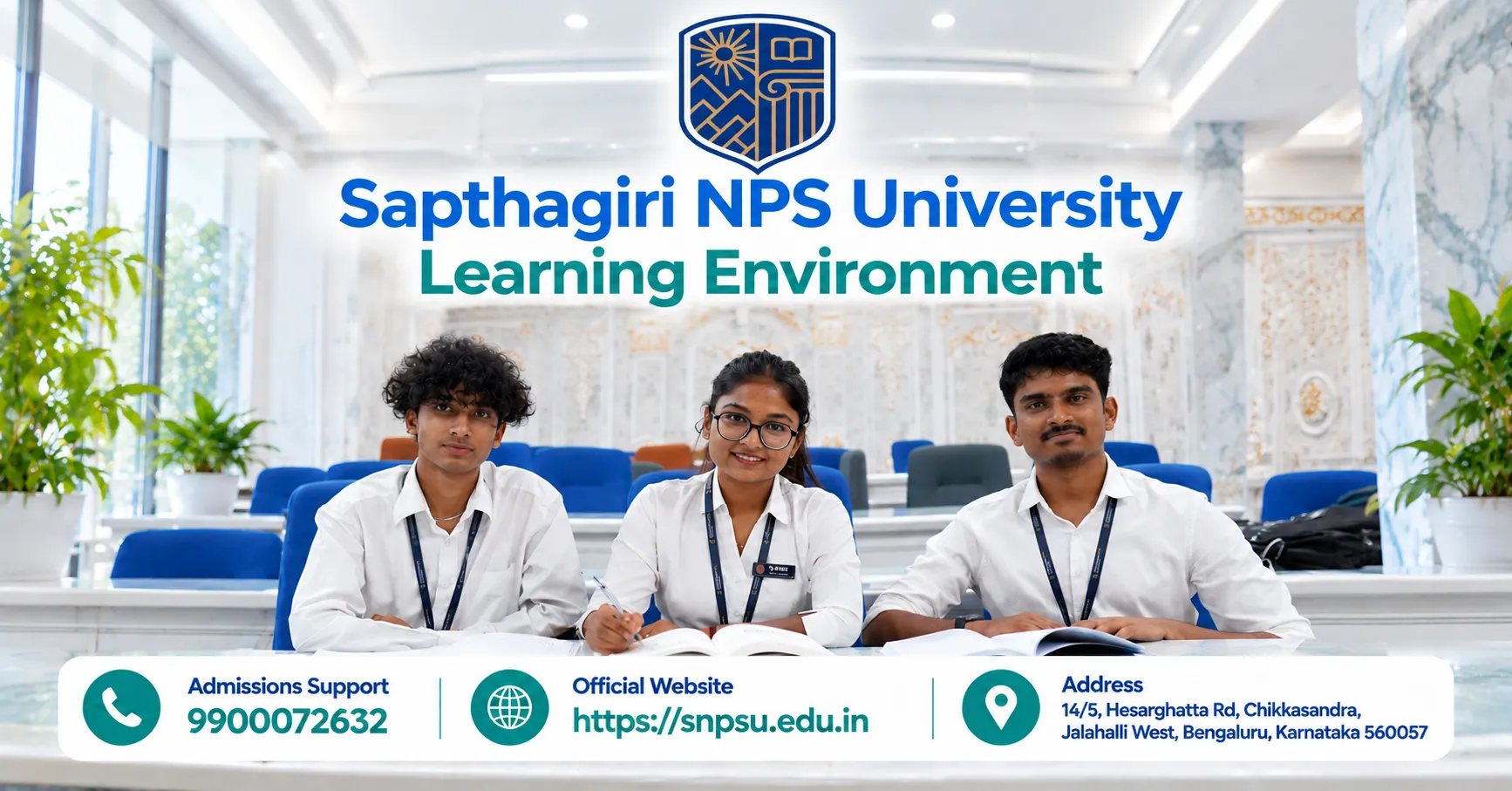
Sapthagiri NPS University Learning Environment: Our Commitment to Student Growth and Academic Excellence
A positive learning environment is one of the most important elements of a meaningful university experience. It influences how students understand academic concepts, develop confidence, communicate with others, and prepare for their future careers. We believe that higher education should provide more than classroom instruction and examinations. It should encourage curiosity, creativity, collaboration, practical understanding, and a lifelong interest in learning. Our educational philosophy focuses on creating opportunities for students to explore their interests, strengthen their knowledge, and develop the abilities required to meet future challenges. Sapthagiri NPS University learning environment represents our commitment to supporting academic development, student participation, personal growth, and professional readiness. We recognise that every student brings different experiences, strengths, expectations, and ambitions to university life. Therefore, we encourage learners to participate actively, ask questions, exchange ideas, and seek guidance whenever they need support. We believe that students learn more effectively when they feel encouraged to explore new concepts and take responsibility for their progress. A supportive academic atmosphere can also help learners develop discipline, patience, respect, and confidence. Our University values the relationship between effective teaching, practical learning, suitable facilities, and meaningful student engagement. We encourage students to make thoughtful use of academic resources and participate in activities that complement their classroom education. Through structured learning, collaborative experiences, and opportunities for personal development, we aim to help students build a strong foundation for their chosen academic and professional pathways. Our goal is to encourage every learner to approach education with curiosity, integrity, enthusiasm, and a willingness to improve.
Our Vision for a Student-Focused Learning Environment
Our vision is to encourage an educational atmosphere where students can explore knowledge, develop their abilities, and work towards meaningful academic goals. We believe that effective learning depends on a combination of good teaching, student participation, relevant resources, and a willingness to improve continuously. Student-focused learning at Sapthagiri NPS University places importance on helping learners understand their subjects while developing independent thinking and practical problem-solving abilities. We encourage students to approach their studies with curiosity instead of relying entirely on memorisation. Asking questions, participating in discussions, reviewing concepts, and applying knowledge can help learners develop a deeper understanding of their subjects. We also recognise that students may face different challenges while adapting to university life. Some learners may need additional practice with technical concepts, while others may want to improve their communication, presentation, or research skills. A positive learning environment should encourage students to seek appropriate guidance and work steadily towards improvement. We believe that respectful communication between students and educators contributes to a more productive academic experience. Our educational approach also values teamwork, responsibility, honesty, and consideration for different perspectives. These qualities support students in their academic activities and prepare them for professional responsibilities. We encourage learners to establish realistic goals, monitor their progress, and remain open to constructive feedback. Our aim is to support an environment where academic learning and personal development complement one another, helping students build confidence and become more responsible participants in their educational journey.
Our Academic Culture and Learning Standards
A strong academic culture encourages students to take their studies seriously while remaining curious and open to new ideas. It provides a structured framework for classroom participation, assignment completion, practical activities, research, and assessment. Academic learning at Sapthagiri NPS University is connected to our broader commitment to knowledge, responsibility, and continuous improvement. We encourage learners to understand the principles behind each subject and recognise how different concepts connect with one another. Regular attendance, thoughtful preparation, timely assignment submission, and consistent revision can help students develop effective academic habits. We also believe that students should feel comfortable asking questions when they encounter unfamiliar topics. Seeking clarification can prevent misunderstandings from affecting their progress in later subjects. Academic standards involve more than achieving examination marks; they also include honesty, critical thinking, responsible research, and the ability to explain ideas clearly. We encourage students to use feedback constructively and identify specific areas where they can improve. Academic progress may take different forms for different learners, so patience and consistent effort are important. Our University aims to encourage an environment where students understand their responsibilities and recognise the value of disciplined learning. Faculty guidance, appropriate learning resources, and student participation can work together to support this process. By developing strong study habits and maintaining a responsible approach to education, students can build a foundation that supports further learning and professional development.
Our Multidisciplinary Learning Opportunities
Our multidisciplinary academic environment allows students to explore different areas of knowledge and pursue programmes suited to their interests and ambitions. Our published academic offerings include areas such as engineering and technology, applied sciences, management studies, and medicine and health sciences. The available programmes and specialisations should be confirmed through current official university information. Multidisciplinary learning at Sapthagiri NPS University encourages students to develop specialised knowledge while recognising the wider skills needed for personal and professional growth. Engineering and computing students may strengthen analytical thinking, technical understanding, and structured problem-solving. Management and commerce students may develop business knowledge, communication, planning, and decision-making abilities. Students in scientific disciplines can build skills in observation, investigation, analysis, and evidence-based reasoning. Each academic area has different learning requirements, so applicants should review the curriculum carefully before choosing a programme. We encourage students to consider their interests, previous academic preparation, and long-term goals when comparing courses. Learning also becomes more meaningful when students recognise how their subjects relate to practical situations and wider professional developments. Collaboration between learners with different interests can encourage the exchange of ideas and introduce new perspectives. We believe that a well-informed academic choice helps students establish realistic expectations and approach university life with greater confidence. Our aim is to support students as they explore their chosen disciplines and develop the knowledge and skills needed for future opportunities.
Our Teaching Approach and Classroom Experience
The classroom is an important space for explaining concepts, discussing ideas, asking questions, and developing a shared understanding of academic subjects. We believe that effective teaching should encourage students to participate actively rather than simply receive information. Classroom learning at Sapthagiri NPS University can be understood through our emphasis on academic engagement, student participation, and meaningful understanding. Students benefit from preparing for lessons, taking organised notes, and reviewing concepts after class. Discussions can help learners examine different viewpoints and explain their reasoning. Presentations allow students to organise information and communicate ideas to an audience. Case studies can encourage them to analyse situations, identify challenges, and consider possible solutions. Depending on the programme, demonstrations and practical exercises can also help make complex concepts easier to understand. We encourage students to participate respectfully and listen carefully when classmates express different opinions. Active engagement can improve confidence and help learners recognise areas that require further attention. Teachers and students both contribute to a productive classroom experience through preparation, communication, and responsible participation. We also recognise that different subjects may require different teaching approaches. Technical concepts may need demonstrations and practice, while theoretical subjects may benefit from discussion and critical analysis. Our aim is to encourage students to develop a deeper understanding of their subjects and become confident participants in their academic journey.
Our Commitment to Faculty Guidance and Mentoring
Faculty guidance can make an important difference to the way students understand their subjects and manage academic challenges. Teachers can explain complex ideas, recommend suitable resources, review assignments, and provide feedback that helps learners improve. Faculty support at Sapthagiri NPS University forms part of our wider commitment to student learning and academic development. We encourage students to communicate respectfully with educators and ask for clarification when they encounter difficulties. Seeking help at the right time can prevent confusion from continuing into more advanced topics. Academic discussions may also help students explore their interests and identify areas they would like to study in greater depth. Depending on the programme and departmental arrangements, guidance may support laboratory work, assignments, presentations, projects, and research activities. We encourage learners to prepare questions before seeking assistance and to review any feedback they receive. Applying suggestions to future work can help students strengthen their understanding and improve their academic performance. Mentoring can also encourage students to establish realistic goals and develop more effective study routines. Students should remember that guidance works best when combined with personal effort and consistent practice. Our University values the role of educators in supporting a responsible and encouraging academic atmosphere. We aim to help students recognise the value of asking questions, accepting constructive feedback, and taking ownership of their progress.
Our Practical Learning Environment
Practical learning helps students connect theoretical concepts with activities and problems related to their chosen disciplines. It may involve laboratory experiments, software practice, technical exercises, demonstrations, case studies, presentations, or project work, depending on the course. Practical learning at Sapthagiri NPS University is an important part of helping students understand how knowledge can be applied in relevant situations. Engineering learners may explore technical concepts through experiments and project-based activities. Computing students may practise programming, data handling, software development, and systematic problem-solving. Management students may examine business scenarios, financial examples, and decision-making exercises. Students in scientific fields may learn through observation, experimentation, and analysis. The exact opportunities available depend on the curriculum and facilities associated with each programme. We encourage students to approach practical sessions with preparation, curiosity, and attention to detail. Following instructions, maintaining appropriate records, and asking questions can help learners get more value from these activities. Practical work also teaches students that mistakes can become useful learning opportunities when they are examined carefully and corrected responsibly. Group projects can develop collaboration and communication while allowing students to combine different strengths. Our aim is to encourage learners to use practical experiences to strengthen their understanding, build confidence, and develop skills that complement their academic knowledge.
Our Laboratories and Programme-Specific Facilities
Programme-specific facilities can support students as they explore technical subjects, conduct experiments, and develop practical abilities. Laboratories provide opportunities to observe concepts, test ideas, and understand how equipment or software is used for academic tasks. Laboratory learning at Sapthagiri NPS University is a relevant consideration for students comparing programmes that include practical or technical components. We encourage applicants to enquire about the facilities available for their preferred course and understand how those resources relate to the curriculum. Engineering students may wish to ask about laboratory equipment, technical exercises, and project opportunities. Computing students may enquire about access to relevant software, systems, and development tools. Students in applied sciences can ask about facilities supporting their specific academic requirements. The usefulness of a facility depends not only on its availability but also on how it supports learning objectives and practical instruction. We encourage students to follow safety procedures, use equipment responsibly, and seek guidance before undertaking unfamiliar activities. Preparation before laboratory sessions can help learners understand the purpose of each exercise and interpret their results more accurately. Practical facilities can also encourage curiosity by allowing students to investigate questions and compare theoretical expectations with observed outcomes. Applicants should confirm current laboratory arrangements with the relevant department. Our aim is to encourage purposeful engagement with programme-specific resources and help students understand the practical dimensions of their education.
Our Library and Independent Learning Culture
Independent learning encourages students to explore academic subjects beyond scheduled classes and develop responsibility for their own progress. Reading, reviewing notes, researching questions, and practising difficult concepts can strengthen understanding over time. Independent learning at Sapthagiri NPS University complements classroom teaching by encouraging curiosity, discipline, and self-directed study. We encourage students to make effective use of relevant books, reference materials, and reliable digital resources. Academic reading can introduce learners to different explanations, perspectives, and developments within their chosen disciplines. Research assignments can help students learn how to locate information, compare sources, organise findings, and present conclusions clearly. Students should evaluate the reliability of their sources and acknowledge references appropriately. Maintaining organised notes can make examination preparation easier and help learners identify areas that need additional practice. A regular study schedule can also reduce last-minute pressure and improve time management. We encourage students to set realistic weekly goals and review their progress regularly. Independent learning does not mean studying without support; students can still ask faculty members for clarification when they encounter difficult concepts. Rather, it means taking an active role in identifying learning needs and seeking suitable resources. Our aim is to encourage habits that help students become more confident learners and remain curious throughout their academic and professional lives.
Our Digital Learning Environment
Digital tools have become an important part of education because they support access to information, communication, collaboration, and specialised academic activities. Students may use digital resources to prepare assignments, organise notes, develop presentations, research topics, or practise programme-related skills. Digital learning at Sapthagiri NPS University connects with the broader need for students to develop relevant knowledge and responsible technology habits. Learners in computing and engineering may need to work with software, programming tools, or technical systems. Management students may benefit from understanding digital communication, business applications, and data-related tools. Students across disciplines can use online resources to explore academic subjects and organise their work. However, access to information does not automatically make it accurate or suitable for academic use. We encourage students to evaluate sources carefully, protect personal information, and follow academic integrity requirements. Digital tools should support learning rather than replace independent thinking or the student's own effort. Students should also understand the rules governing the use of technology in assignments, research, and examinations. Responsible digital habits include acknowledging sources, protecting account details, and communicating respectfully online. We encourage learners to develop digital confidence alongside subject knowledge. Applicants can ask the relevant department about current platforms, software access, and technology facilities associated with their chosen programme. Our aim is to help students use technology thoughtfully as part of a balanced learning experience.
Our Research and Innovation Culture
Research encourages students to ask questions, examine evidence, test ideas, and develop reasoned conclusions. It helps learners understand how knowledge grows through observation, analysis, investigation, and continued exploration. Research and innovation at Sapthagiri NPS University are relevant to our broader focus on curiosity and problem-solving. Published university information describes research-related initiatives and a research centre, which students interested in scholarly work may wish to explore further. Research activities vary according to discipline and level of study. They may involve reviewing academic publications, conducting supervised experiments, analysing information, preparing reports, or developing project ideas. Innovation involves using knowledge creatively to examine challenges or investigate possible improvements. We encourage students to approach research with patience, accuracy, honesty, and respect for intellectual property. Keeping clear records and acknowledging sources are important parts of responsible academic work. Students should also understand that unexpected results can help generate new questions and improve understanding. Faculty guidance may assist learners in refining research questions and selecting suitable methods. Students interested in research should enquire about current projects, supervision arrangements, available facilities, and eligibility requirements. Our aim is to encourage learners to develop analytical thinking and an evidence-based approach to academic questions. These abilities can support advanced study, professional development, and lifelong learning.
Our Commitment to Career-Ready Learning
A meaningful learning environment should help students develop the knowledge and abilities needed to explore future opportunities. Career readiness involves subject knowledge alongside communication, teamwork, problem-solving, time management, adaptability, and professional responsibility. Career-ready learning at Sapthagiri NPS University encourages students to connect their academic experiences with the skills that may be useful in their chosen fields. Technical students can strengthen analytical reasoning and practise explaining their work. Computing students can develop programming, documentation, testing, and structured problem-solving skills. Management students can practise planning, communication, and decision-making. Students across disciplines can build confidence through presentations, group assignments, and practical projects. Where available, internships, workshops, seminars, industry interactions, or career guidance activities may provide additional opportunities to understand professional expectations. The availability and eligibility requirements of such activities should be confirmed with the relevant department. We encourage learners to begin career preparation during their studies rather than waiting until graduation. Developing a résumé, maintaining a record of projects, researching suitable roles, and practising interviews can support this process. Career outcomes depend on individual skills, academic performance, preparation, employer requirements, and market conditions. Our aim is to encourage students to take responsibility for their professional development and approach future opportunities with realistic expectations and a willingness to keep learning.
Our Student Support and Guidance Environment
Students may face academic, personal, or practical challenges while adjusting to university life. Clear information, respectful communication, and appropriate guidance can help them navigate these experiences more confidently. Student support at Sapthagiri NPS University is an important consideration for applicants evaluating the overall learning environment. We encourage students to ask questions about course requirements, academic procedures, examinations, and campus activities whenever clarification is needed. Contacting the appropriate department promptly can help resolve misunderstandings and provide accurate information. Peer interaction can also help students build connections and become more comfortable in a new educational setting. Respectful behaviour and consideration for different backgrounds contribute to a positive learning community. Students should understand the official channels available for raising concerns and follow the relevant procedures. Support arrangements may vary, so applicants should confirm current services and processes directly with the University. We encourage learners to take responsibility for their studies while seeking help when necessary. Academic support can be especially valuable when students identify difficulties early and develop a plan to address them. Our aim is to encourage an environment in which students can participate responsibly, develop confidence, and make informed use of available academic resources.
Our Campus Culture and Student Interaction
Campus culture influences how students interact, share ideas, participate in activities, and develop a sense of belonging. A positive environment encourages respectful communication, cooperation, curiosity, and responsible participation. Campus life at Sapthagiri NPS University can complement academic learning through appropriate student activities, collaborative projects, seminars, cultural programmes, and sports where available. These experiences can help students meet peers with different interests and perspectives. Group activities may encourage learners to divide responsibilities, coordinate tasks, manage deadlines, and resolve disagreements constructively. Cultural activities can provide opportunities to express creativity and appreciate different traditions. Sports may encourage discipline, teamwork, perseverance, and respect for rules. Student participation can also help learners develop organisational and communication skills. We encourage students to select activities that match their interests while maintaining a healthy balance with their academic commitments. A supportive campus culture depends on the contributions of students, faculty members, and staff. Respecting different opinions and treating others fairly can make academic and social interactions more productive. Students should also follow campus guidelines and use shared facilities responsibly. Our aim is to encourage a university experience where learning extends beyond scheduled classes and students can develop confidence, cooperation, and a sense of responsibility.
Our Focus on Communication and Leadership
Communication and leadership are important skills in higher education, professional life, and community participation. Students need to explain ideas clearly, listen carefully, share information responsibly, and work with people who may have different viewpoints. Communication skills at Sapthagiri NPS University can be strengthened through presentations, discussions, written assignments, and group projects. We encourage students to organise information logically and express their ideas with clarity and respect. Presentations can help learners develop confidence when speaking to an audience. Group discussions allow students to practise listening, responding thoughtfully, and considering alternative perspectives. Written assignments can improve structure, accuracy, and the ability to support arguments with evidence. Leadership involves more than holding a formal position; it can also mean taking responsibility, helping a team stay organised, and supporting shared objectives. Collaborative projects can provide opportunities to practise planning, coordination, and decision-making. We encourage students to seek feedback and continue improving their communication habits. These abilities develop through regular practice rather than a single workshop or event. Our aim is to support students in building interpersonal skills that complement academic knowledge and prepare them for future responsibilities.
Our Approach to Assessment and Feedback
Assessment helps students and educators understand how well learning objectives have been achieved. Depending on the programme, it may include examinations, assignments, practical evaluations, presentations, projects, or other approved methods. Academic assessment at Sapthagiri NPS University should be understood through the current academic regulations and course-specific requirements. We encourage students to familiarise themselves with examination schedules, assignment deadlines, assessment criteria, and applicable academic rules. Regular preparation can help learners develop a deeper understanding of their subjects and reduce the pressure associated with last-minute study. Reviewing notes, practising relevant questions, revisiting difficult concepts, and seeking clarification can support preparation. Feedback helps students identify strengths and understand where further effort may be needed. We encourage learners to use feedback constructively and apply suggestions to future work. Academic integrity is equally important because fair assessment depends on honesty and compliance with relevant rules. Students should submit their own work, acknowledge sources, and follow examination instructions. Our aim is to encourage learners to view assessment as an opportunity to demonstrate understanding and continue improving. Students should consult the relevant department for current details about evaluation procedures, examination policies, and available academic guidance.
Our Commitment to Continuous Quality Improvement
A strong learning environment requires ongoing attention to academic practices, teaching resources, curriculum relevance, student feedback, and institutional development. Continuous improvement involves reviewing existing processes, identifying opportunities for change, and taking appropriate steps to strengthen the educational experience. Quality assurance at Sapthagiri NPS University is supported by quality-related initiatives described in the University's official information, including its Internal Quality Assurance Cell. Quality assurance may involve academic reviews, feedback mechanisms, research development, governance, and the evaluation of student services. These activities can help an institution understand which practices are effective and where further improvement may be needed. Student feedback can provide useful perspectives on teaching, facilities, communication, and academic support when collected through appropriate channels. Academic reviews can help departments evaluate programme delivery and consider opportunities to strengthen learning outcomes. We encourage students to contribute constructively and participate responsibly in the academic community. Continuous improvement is a shared responsibility that involves institutional processes, faculty engagement, administrative coordination, and student participation. Our University recognises that educational quality requires sustained attention rather than a single initiative. Applicants interested in institutional quality processes should consult current official information and relevant documentation to understand the arrangements that apply to their selected programme.
Our Commitment to a Respectful and Inclusive Learning Environment
A respectful learning environment encourages students to participate, express ideas, and learn from others without fear of unnecessary hostility or exclusion. Students bring different experiences, interests, strengths, and perspectives to higher education. These differences can enrich discussions and help learners understand subjects from multiple viewpoints. An inclusive learning environment at Sapthagiri NPS University is an important consideration when students evaluate their university experience. We encourage respectful communication, fair participation, academic honesty, and consideration for others. Classroom discussions become more productive when students listen carefully and respond to ideas rather than attacking individuals. Group assignments also require patience, cooperation, and respect for different working styles. Students should follow university policies, respect shared spaces, and use appropriate channels when raising concerns. They should also recognise the importance of personal responsibility in maintaining a healthy learning community. Faculty guidance and clear procedures can help students understand academic expectations and seek assistance when necessary. We believe that respect and accountability support better collaboration and meaningful learning. Our aim is to encourage students to contribute positively to the academic community and develop interpersonal habits that remain valuable in professional and social settings.
Our Guidance for Parents and Prospective Students
Choosing a university is an important decision for students and their families. We encourage applicants to evaluate academic programmes carefully and consider how each option aligns with their interests, strengths, and future plans. Choosing Sapthagiri NPS University should involve reviewing current course information, eligibility requirements, curriculum details, faculty information, facilities, fees, and relevant institutional policies. Families may wish to ask about practical learning, laboratory access, library resources, academic support, assessment procedures, and student activities. Applicants should also understand the requirements of their intended career and determine whether the selected programme provides an appropriate academic foundation. Claims about placements, scholarships, rankings, collaborations, and accreditation should be verified through current official documentation. Families should consider the total cost of education, including tuition and any applicable accommodation, transport, or other expenses. Speaking with the relevant department can help clarify questions that are not fully answered by published information. We encourage students to make decisions based on reliable details rather than assumptions or pressure from others. Our aim is to help prospective learners approach higher education with clear expectations and a thoughtful understanding of their options. A well-informed choice can support a more purposeful academic journey.
Creating a Meaningful Learning Experience
We believe that a positive learning environment develops through the combined efforts of students, faculty members, academic departments, and the wider university community. It requires meaningful teaching, relevant learning resources, practical understanding, research curiosity, responsible assessment, and opportunities for personal development. Sapthagiri NPS University learning environment reflects our commitment to encouraging academic growth, student participation, practical learning, and continuous improvement. We aim to help students understand their subjects, develop confidence, communicate effectively, and approach challenges with a problem-solving mindset. Our multidisciplinary academic environment offers opportunities for learners to explore different fields and pursue programmes suited to their interests and aspirations. We encourage students to participate actively, seek guidance, use academic resources responsibly, and remain committed to improving their abilities. We also recognise the importance of institutional quality processes and the need to evaluate educational practices regularly. Every student's journey is different, and academic progress depends on individual effort, programme requirements, and the opportunities available. Our University encourages learners to approach higher education with curiosity, discipline, integrity, and a willingness to grow. By connecting academic knowledge with practical learning and responsible development, we seek to help students prepare for further study, professional opportunities, and meaningful contributions to society. We invite prospective students and families to explore our academic programmes, understand the available opportunities, and contact our team for current admission information.
Frequently Asked Questions
1. What makes the learning environment at Sapthagiri NPS University valuable for students?
We believe that a valuable learning environment combines academic guidance, student participation, practical understanding, and opportunities for personal development. Students need a setting where they can explore concepts, ask questions, exchange ideas, and develop confidence in their abilities. Our educational approach encourages learners to take responsibility for their progress while making appropriate use of teaching and academic resources. Classroom discussions, assignments, presentations, and programme-related practical activities can help students strengthen their understanding. A supportive academic atmosphere also encourages discipline, respectful communication, teamwork, and independent thinking. Students can improve their learning experience by attending classes regularly, reviewing concepts, seeking clarification, and applying feedback. Prospective students should also examine course details, facilities, faculty information, and support arrangements before choosing a programme. Our aim is to encourage meaningful learning that supports academic progress and prepares students for future responsibilities.
2. How does Our University support students in developing academic knowledge and practical skills?
We encourage students to build a strong foundation in their chosen subjects while learning how to apply concepts to relevant situations. Academic learning may include classroom instruction, assignments, presentations, research activities, and practical exercises, depending on the programme. These experiences can help students develop analytical thinking, problem-solving, communication, and independent study habits. Practical activities are especially useful when they allow learners to connect theoretical principles with observation, experimentation, or real-world examples. We encourage students to prepare for sessions, follow instructions, maintain appropriate records, and ask questions when they need guidance. Faculty feedback can help learners identify strengths and understand which topics require further attention. The specific facilities and practical opportunities available may differ between courses, so applicants should confirm current arrangements with the relevant department. Our goal is to encourage students to become active learners who can connect knowledge with practical understanding and continued improvement.
3. What role do faculty guidance and academic resources play in the learning environment?
Faculty guidance and academic resources can help students understand complex concepts, develop effective study habits, and explore their subjects in greater depth. Teachers may explain difficult topics, review assignments, recommend learning materials, and provide feedback according to the programme and departmental arrangements. Students can benefit by preparing questions, communicating respectfully, and applying suggestions to future work. Books, reference materials, suitable digital resources, and independent study can complement classroom instruction. Research assignments may also help learners locate information, compare sources, and present conclusions clearly. We encourage students to seek clarification early when they encounter difficulties rather than allowing misunderstandings to continue. Applicants should enquire about the current library facilities, academic resources, faculty arrangements, and support services available for their preferred course. Our aim is to encourage a learning culture where teaching, resources, and student effort work together to strengthen academic understanding.
4. How can students make the most of campus life and collaborative learning opportunities?
Students can make the most of campus life by participating responsibly in academic activities and suitable extracurricular opportunities. Group assignments, presentations, seminars, cultural programmes, sports, and other activities may help learners develop communication, teamwork, organisation, and leadership skills. These experiences can introduce students to different perspectives and encourage them to work towards shared objectives. We encourage learners to divide responsibilities fairly, respect different opinions, manage deadlines, and communicate clearly with teammates. Participation should also be balanced with academic commitments and personal wellbeing. Students should enquire about current clubs, activities, facilities, and participation procedures to understand which opportunities are available. A positive campus culture depends on respectful interaction and responsible use of shared resources. Our aim is to encourage students to develop confidence, build constructive relationships, and gain experiences that complement their academic learning.
5. How does the learning environment prepare students for future careers and professional development?
A supportive learning environment can help students develop subject knowledge and the broader skills required in professional settings. Communication, teamwork, problem-solving, adaptability, digital literacy, time management, and ethical responsibility can complement academic qualifications. Projects, presentations, assignments, and practical activities may provide opportunities to practise these abilities. Where available, workshops, internships, seminars, industry interactions, and career guidance activities may help students understand professional expectations. Students should confirm the current availability and eligibility requirements of these opportunities with the relevant department. We encourage learners to prepare gradually by developing a résumé, maintaining a record of projects, researching suitable roles, and practising interviews. Employment outcomes depend on individual preparation, academic performance, skills, employer requirements, and market conditions; completing a degree does not guarantee a job. Our aim is to help students take responsibility for their professional development and prepare thoughtfully for employment, entrepreneurship, or further study.
6. How can parents evaluate the learning environment and education quality before admission?
Parents and prospective students should review several factors before selecting a university and academic programme. These include the curriculum, eligibility requirements, faculty information, practical facilities, library resources, assessment procedures, student support, fees, and relevant institutional documentation. We encourage families to ask course-specific questions instead of relying only on general promotional statements. Applicants may wish to understand how practical learning is organised, what academic resources are available, and how students can seek guidance when challenges arise. Claims about placements, scholarships, rankings, collaborations, and accreditation should be checked against current official information. Families should also consider the overall cost of education, including tuition and any applicable accommodation, transport, or other expenses. Contacting the relevant department can help clarify questions that are not fully answered by published material. Our aim is to help students and families make informed decisions based on academic goals, practical needs, and reliable information.
Contact Our University
|
Information |
Details |
|---|---|
|
University Name |
Sapthagiri NPS University |
|
Address |
#14/5, Chikkasandra, Hesaraghatta Main Road, Bengaluru, Karnataka – 560057 |
|
Admissions Email |
admissions@snpsu.edu.in |
|
Contact Number |
9900072632 |
|
Official Website |
|
|
Admissions Portal |
Our University is dedicated to fostering academic excellence, practical learning, innovation, and holistic student development. We empower students to enhance their knowledge, develop essential skills, explore their potential, and prepare confidently for future academic and professional opportunities. For admissions enquiries and the latest programme information, please contact our team at 9900072632.
Leave a Comment