
Colleges in Bangalore With Highest Placements | Sapthagiri NPS University
Colleges in Bangalore With Highest Placement – Complete Career & Career-Readiness Guide for Our University
Students and parents researching colleges in Bangalore with highest placement are increasingly looking beyond classroom education and examination results when evaluating a university for higher studies. Career opportunities have become an important part of the higher-education decision because students want an institution that can help them develop knowledge, practical abilities, professional confidence, communication skills and workplace awareness before they graduate. Our university provides a career-oriented academic environment in which learning is connected with practical application, industry interaction, internships, professional development and placement preparation. The university's official information states that its Placement division reports 100% placement for eligible students, with 200+ companies regularly visiting the campus; these figures should be understood in relation to eligibility requirements, employer criteria, student performance and available recruitment opportunities. The purpose of a strong placement ecosystem is not simply to arrange recruitment drives but to help students become prepared for the different stages of professional selection. Our university supports this process through resume development, interview readiness, company-specific preparation, campus recruitment training, communication development, skill-gap identification, industry interaction and career guidance. Students can also strengthen their professional profiles through practical projects, internships, innovation activities, industry visits, networking forums and expert sessions. The learning environment is supported by modern classrooms, laboratories, workshops, research facilities, library resources, seminar halls and student-support infrastructure. For students who want their university experience to contribute directly towards future employability, this combination of academic education and professional preparation can provide a structured pathway from learning to career readiness. The most important consideration is therefore not simply a placement number, but whether students receive continuous opportunities to develop the knowledge, skills and confidence required to participate successfully in professional opportunities.
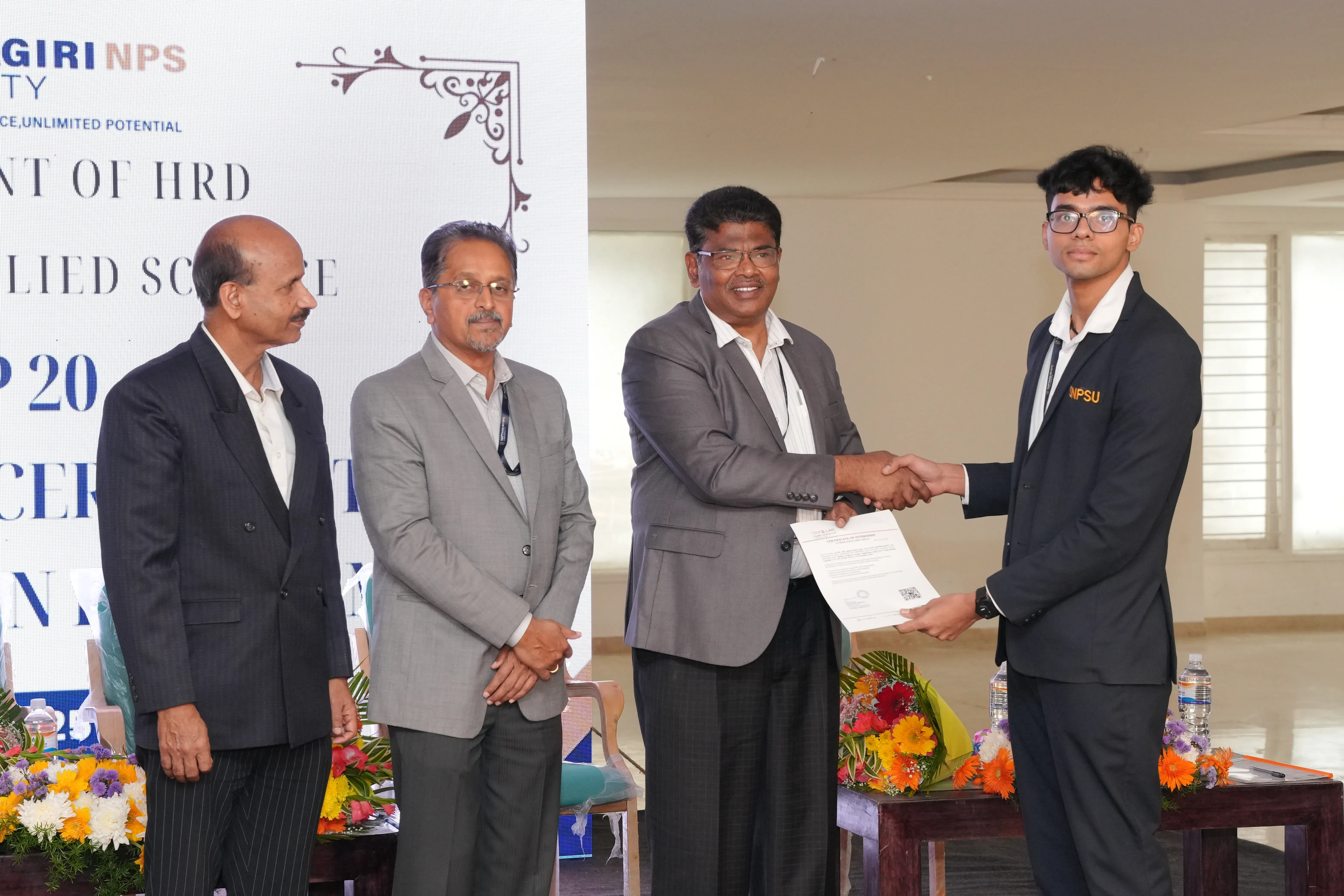
The image captures a formal university event featuring a student receiving recognition in a professional and celebratory setting. A student in formal university attire is seen receiving a certificate while participating in a handshake with a university representative, reflecting an important moment of academic or professional achievement. Other dignitaries are present on the stage, adding to the formal nature of the occasion. The certificate presentation highlights the recognition of student accomplishments and the importance of appreciating academic, professional or extracurricular achievements. The student’s formal attire and university identification further reflect the professional environment of the event. The decorated stage, floral arrangements and presentation backdrop create an appropriate setting for the ceremony. Such occasions can provide students with opportunities to celebrate their efforts, receive recognition and gain confidence in their abilities. The event also represents the interaction between students and university leadership in a formal academic environment. Moments of recognition like this can encourage students to continue developing their skills, participating actively in university activities and working towards their future goals. Overall, the photograph represents student achievement, recognition, professional presentation and meaningful participation in university life.
Understanding What Placement Success Really Means
Placement success should be understood as a complete process rather than a single percentage displayed on a website or brochure. Students looking for colleges in Bangalore with highest placement may initially focus on the number of students placed, but a more meaningful evaluation also considers how those students were prepared, what type of industry exposure they received, whether internships were available, how interview preparation was conducted and whether students developed the professional skills required by employers. Our university approaches career preparation through multiple interconnected activities that support students throughout their academic journey. The Placement Cell provides resume-building and interview-readiness support, customized company-specific training, campus recruitment training, communication development and opportunities for industry interaction. This approach recognises that students enter recruitment processes with different strengths and different areas requiring improvement. Some students may need stronger aptitude skills, while others may need additional interview practice or communication confidence. Some may have strong academic knowledge but limited practical experience, making internships and projects particularly valuable. By addressing different aspects of employability, the university gives students opportunities to build a more balanced professional profile. Placement success can also involve the ability to adapt to changing employer requirements, understand workplace expectations and continue learning after recruitment. Students should therefore look at the systems that support career development rather than treating placement as a final event occurring only at the end of university. A well-structured placement ecosystem can help students understand recruitment procedures, prepare relevant documents, practise professional communication and gain exposure to employers. This broader approach gives career preparation greater depth and helps students understand that their own participation and consistent effort remain important parts of the placement journey.
The Foundation of a Career-Oriented University Experience
A career-oriented university experience begins with strong academic foundations and gradually introduces students to practical application, professional interaction and workplace expectations. Our university creates an environment where students can move from classroom learning to laboratory work, project development, presentations, industry exposure and professional preparation. This progression is particularly useful for students researching colleges in Bangalore with highest placement because employability is generally developed through repeated experiences rather than a single training programme. The university provides classrooms, laboratories, workshops, research centres, a computer centre, library facilities and seminar halls that support different forms of learning. Students can use academic resources to strengthen conceptual understanding and then apply that knowledge through practical activities. Project work can encourage students to analyse problems, develop solutions and present outcomes, while seminars and workshops can expose them to different perspectives. Career training can then help students translate these experiences into professional profiles, resumes and interview discussions. This creates a connection between what students learn and how they eventually communicate their abilities to employers. A career-focused environment should also encourage students to develop interpersonal qualities such as teamwork, confidence, communication and adaptability. Our university provides opportunities for students to participate in professional events, innovation initiatives, cultural programmes, sports and other activities that can contribute to these abilities. Career preparation therefore becomes part of the overall student experience instead of remaining separate from academic life. This integrated environment allows students to gradually develop the confidence and professional awareness required when they begin interacting with employers and exploring career opportunities.
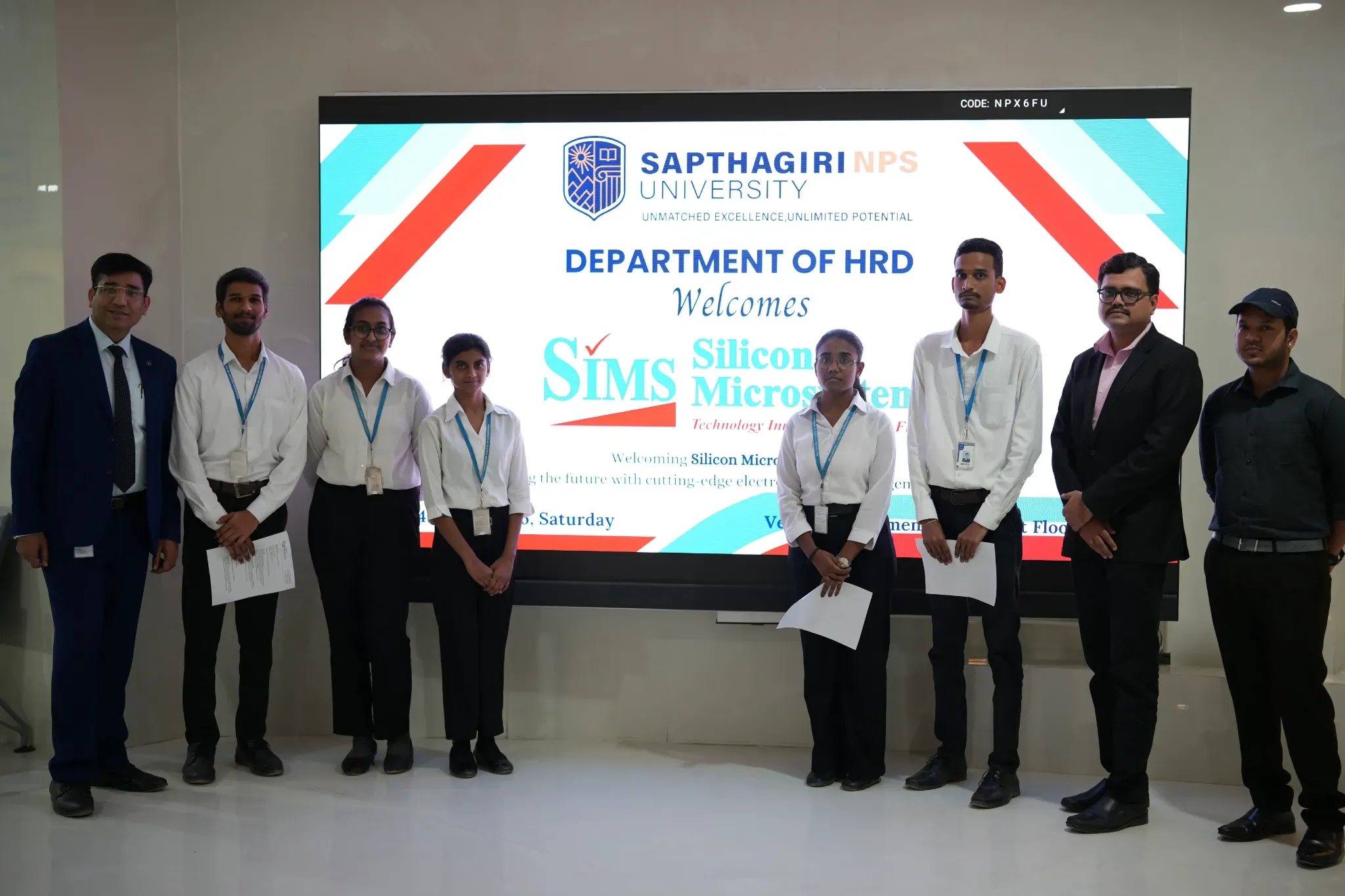
The image captures a formal placement and industry interaction event involving students, university representatives and industry professionals. Students are seen dressed in professional formal attire with identification cards, reflecting their participation in a structured career-oriented activity. The digital display behind the group highlights a programme organised by the Department of HRD, creating a professional setting focused on industry engagement and employment-related exposure. The presence of industry representatives alongside students reflects an opportunity for interaction between academic and professional environments. Such events can help students understand workplace expectations, professional communication and the importance of preparing for career opportunities. Students participating in these activities can gain exposure to professional settings while developing confidence in interacting with representatives from organisations. The event also reflects the role of the university’s career and placement activities in connecting students with industry-oriented opportunities. Overall, the photograph represents placement preparation, industry interaction, professional exposure, student participation and career development within the university environment.
Turning Classroom Knowledge Into Workplace Capability
Academic knowledge becomes more valuable when students learn how to apply it in practical situations. Our university provides students with opportunities to connect classroom concepts with laboratory activities, projects, demonstrations, internships and industry-oriented learning. This practical connection is important for students searching for colleges in Bangalore with highest placement because employers often expect graduates to demonstrate not only what they know but also how they can use that knowledge to solve problems. Practical learning encourages students to experiment, analyse results, identify mistakes and improve their approach. Project-based activities can require students to work collaboratively, manage responsibilities and meet deadlines, thereby introducing workplace-like expectations. Presentations can further develop the ability to communicate technical or practical information clearly. The university's infrastructure includes laboratories, workshops, research centres and computer facilities that support practical education. Students can also participate in industry-related activities that provide additional context about professional practices. When practical learning is combined with internships, students can gain a clearer understanding of how academic concepts relate to actual workplace responsibilities. This experience can make interviews more meaningful because students have genuine examples to discuss when recruiters ask about problem-solving, teamwork or project involvement. Practical capability also contributes to confidence because students become familiar with applying knowledge rather than depending entirely on theoretical explanations. Our university's approach therefore supports a gradual transition from academic understanding to professional application, helping students build capabilities that can remain relevant throughout their careers.
Developing Employability Before Recruitment Begins
Employability preparation becomes more effective when students begin developing relevant abilities well before campus recruitment starts. Our university's placement ecosystem includes learning and development initiatives designed to identify and address skill gaps, along with campus recruitment training that focuses on up-skilling, re-skilling and cross-skilling. This approach is relevant for students researching colleges in Bangalore with highest placement because last-minute preparation may not provide enough time to develop genuine capabilities. Students can begin by strengthening academic performance and gradually adding practical experiences such as projects, internships, presentations and industry interactions. Communication skills can be improved through group discussions and public presentations, while analytical abilities can be developed through aptitude practice and problem-solving exercises. Resume preparation can begin by maintaining records of projects, internships, certifications and achievements throughout the university journey. Interview preparation can then build on these genuine experiences rather than relying on memorised answers. Early career preparation also gives students time to identify weaknesses. A student who finds difficulty in public speaking can participate in more presentations, while someone who struggles with aptitude assessments can dedicate additional time to practice. Our university's professional-development environment provides opportunities for students to receive guidance and participate in activities that address these areas. The responsibility, however, remains shared: the university creates opportunities and provides support, while students need to participate consistently and work towards improvement. Starting early can make the transition into recruitment less stressful and can help students approach professional opportunities with greater confidence and preparation.
Industry Exposure as a Bridge Between Two Worlds
Industry exposure can help students understand the differences between academic environments and professional workplaces. Our university provides opportunities involving industrial visits, live industry projects, networking forums, industry conclaves and professional interactions through its placement and career-development structure. For students researching colleges in Bangalore with highest placement, these activities can be valuable because they introduce students to professional expectations before graduation. Industry exposure allows students to observe how teams operate, how responsibilities are distributed and how organisations approach practical problems. Expert sessions can provide insight into current industry trends, while networking events can help students become more comfortable interacting with professionals. Live projects can create opportunities to apply academic knowledge to practical situations. These experiences can also help students understand the importance of communication, punctuality, teamwork, documentation and professional behaviour. Students may discover that workplace problem-solving often requires collaboration across different areas of knowledge, encouraging them to develop broader skills. Industry exposure can also influence career decisions by helping students understand different professional environments and expectations. Our university encourages students to participate actively in these opportunities rather than treating them simply as attendance-based activities. Students can prepare questions before industry sessions, observe professional practices carefully and reflect on what they learn afterwards. This makes industry exposure more meaningful and helps students connect university education with the professional world they will eventually enter.
Internships That Add Real Experience to Student Profiles
Internships can provide students with one of the most direct opportunities to experience workplace environments before graduation. Our university's official admissions information highlights internship opportunities as part of its practical and career-oriented educational environment, while its placement system also supports industry interaction and professional development. For students searching for colleges in Bangalore with highest placement, internship exposure is worth considering because workplace experience can strengthen practical understanding and professional confidence. During an internship, students may need to work within a team, follow schedules, communicate with colleagues, complete assigned responsibilities and adapt to organisational processes. These experiences can reveal the differences between academic projects and professional assignments. Internships can also help students identify the type of working environment they prefer and the skills they need to develop further. A meaningful internship can contribute to a resume when students can clearly explain their responsibilities, learning outcomes and contributions. It can also provide examples for interviews, allowing students to discuss actual workplace situations rather than hypothetical scenarios. Our university encourages students to view internships as learning experiences rather than merely as certificates. Students can use internship opportunities to observe professional behaviour, ask questions, understand processes and develop practical skills. They can later reflect on the experience with faculty members or career mentors to identify further areas of development. This makes internships an important part of the journey from academic education towards professional readiness.
Resume Development That Reflects Genuine Experience
A resume should communicate a student's actual abilities and experiences in a clear, professional and truthful manner. Our university's Placement Cell provides resume-building support as part of its career assistance activities. This is particularly useful for students researching colleges in Bangalore with highest placement because a resume often forms an early part of the recruitment process. Students can build stronger resumes when they maintain a record of academic achievements, practical projects, internships, certifications, presentations, competitions and other meaningful experiences throughout their university years. Instead of waiting until recruitment begins, students can progressively document their work and reflect on what they have learned. A project can demonstrate problem-solving, while an internship can show workplace exposure. Participation in a professional event may demonstrate communication and networking, while leadership responsibilities can illustrate initiative and teamwork. The resume should present these experiences clearly without exaggeration. Students should also be prepared to explain everything included in their resume because recruiters may ask detailed questions about projects, responsibilities or achievements. Our university's career guidance can help students understand how to organise information professionally and highlight relevant experiences. Resume development can also act as a self-assessment tool because students may notice areas where they need additional experience. If a student has strong academic performance but limited practical exposure, projects and internships can help address that gap. If practical experience is strong but communication is limited, presentations and professional activities can provide additional development opportunities. A well-maintained professional profile therefore grows naturally from the student's overall university experience.
Interview Confidence Through Continuous Practice
Interview preparation is more effective when students have opportunities to practise, receive feedback and improve over time. Our university provides interview-readiness support through its Placement Cell, helping students prepare for professional recruitment conversations. Students searching for colleges in Bangalore with highest placement should consider whether interview preparation is treated as a structured skill rather than a last-minute exercise. Interviews may involve questions about academic knowledge, practical projects, internships, teamwork, professional goals and personal experiences. Students need to understand their own background well enough to explain it naturally. Mock interviews can help students become familiar with formal conversations and identify areas that need improvement. Practice can also improve body language, listening, response structure and confidence. Students should avoid depending entirely on memorised responses because professional interviews can involve unexpected questions. Instead, they should understand the experiences they have accumulated and be able to explain what they learned from them. Project work can provide examples of problem-solving, while internships can provide examples of workplace behaviour and teamwork. Career mentors can help students understand how to present these experiences professionally. Our university's broader career-development environment supports this preparation through practical learning, communication training and professional exposure. Over time, students can become more comfortable discussing their abilities and goals. This confidence is valuable not only during placement interviews but also throughout future professional interactions, presentations, meetings and networking situations.
Aptitude Skills for Structured Problem Solving
Aptitude and logical reasoning abilities can support students during recruitment assessments and also contribute to broader analytical thinking. Our university's campus recruitment training includes professional up-skilling and skill-development activities designed to prepare students for industry requirements. For students researching colleges in Bangalore with highest placement, aptitude preparation can be an important part of the career-development process because recruitment assessments may require students to solve problems within limited time. Regular practice can help students understand numerical reasoning, logical patterns, analytical questions and time-management techniques. Students often have different strengths in these areas, so identifying specific weaknesses can make preparation more efficient. Some students may need additional numerical practice, while others may need to improve logical reasoning or speed. Consistent preparation can gradually improve familiarity with different question formats. Aptitude development also supports decision-making because it encourages students to break problems into smaller components and evaluate information systematically. These habits can be useful in academic projects and professional environments as well. Our university's career-oriented approach combines aptitude development with technical learning, communication training and practical experience, creating a broader employability foundation. Students should treat aptitude preparation as a skill that develops through repeated practice rather than expecting immediate improvement from a short training session. Regular participation and self-practice can help students become more comfortable with assessments and approach recruitment processes with greater confidence.
Communication Training for Professional Situations
Professional communication involves much more than speaking confidently. It includes listening, organising ideas, responding appropriately, presenting information, participating in discussions and adapting communication to different audiences. Our university's Placement Cell identifies communication training and confidence building as important components of its career-development activities. For students searching for colleges in Bangalore with highest placement, communication development can be an important part of employability because recruitment often involves interviews, presentations, discussions and professional interactions. Students can strengthen these abilities through academic presentations, project demonstrations, seminars, workshops, group activities and industry sessions. Repeated participation helps students become more comfortable expressing their ideas in front of others. Communication also supports teamwork because students need to explain responsibilities, listen to peers and resolve misunderstandings. During internships and industry interactions, professional communication becomes even more important because students may need to communicate with people at different levels of an organisation. Our university provides a broader campus environment where students can practise communication in both academic and extracurricular settings. Cultural activities can improve stage confidence, while project presentations can develop the ability to explain technical or practical information. Professional sessions can introduce workplace communication expectations. By combining these experiences, students can develop communication skills gradually and naturally. Strong communication does not replace technical knowledge, but it can help students present their knowledge more effectively and build professional relationships.
Learning Professional Etiquette Through Experience
Professional etiquette includes the everyday behaviours that help individuals function effectively in workplaces. Punctuality, respectful communication, appropriate presentation, responsibility, listening, teamwork and professional conduct can all influence how individuals are perceived in professional settings. Our university's career-development environment addresses workplace-oriented capabilities through life-skills development and communication training. For students researching colleges in Bangalore with highest placement, professional etiquette is worth considering because recruitment preparation should extend beyond technical and aptitude skills. Students can begin developing workplace behaviour through group projects, internships, industry visits, professional sessions and campus responsibilities. Working with peers teaches students to coordinate tasks and respect different viewpoints. Internships introduce students to organisational structures and professional schedules. Industry sessions expose them to professional communication and expectations. Career training can then help students understand how these experiences relate to recruitment. Professional etiquette also includes digital communication, email writing, meeting behaviour and appropriate responses to feedback. These habits may seem small, but they can contribute to professional credibility. Our university encourages students to develop confidence while maintaining respectful and responsible behaviour. Students can use feedback from faculty, mentors and industry professionals to identify areas for improvement. Developing professional etiquette during university helps students enter the workplace with greater awareness and reduces the gap between academic life and professional expectations.
Skill-Gap Identification and Personal Improvement
Every student enters university with a different combination of strengths, interests and development needs. A strong career-support system should therefore help students identify individual skill gaps instead of assuming that every learner requires the same preparation. Our university's Learning and Development activities specifically include identifying and addressing skill gaps while supporting continuous learning and professional growth. For students searching for colleges in Bangalore with highest placement, this personalised approach can be valuable because career readiness is not identical for every student. One student may need stronger communication skills, another may require additional technical practice, while another may benefit from more interview exposure. Identifying these areas early allows students to work on them systematically. Feedback from project evaluations, mock interviews, aptitude tests, presentations and internships can provide useful information about areas requiring improvement. Students can then create personal development goals and monitor their progress. Our university provides opportunities for up-skilling, re-skilling and cross-skilling, allowing students to broaden their capabilities. Continuous improvement also helps students adapt to changing industry expectations. Instead of viewing a skill gap as a weakness, students can treat it as an area for development. This mindset encourages learning and reduces the fear of making mistakes. Career mentors and faculty members can provide guidance, while students remain responsible for consistent practice. The result can be a more balanced professional profile developed through deliberate effort over time.
Company-Specific Preparation for Recruitment
Different employers may use different recruitment methods and evaluate different combinations of skills, which is why students can benefit from preparation that considers the requirements of individual recruitment opportunities. Our university's Placement Cell provides customized company-specific training as part of its career-support activities. For students researching colleges in Bangalore with highest placement, this can be useful because recruitment is not always conducted through a single standard process. One employer may focus strongly on aptitude, another may conduct technical assessments, while another may place greater emphasis on communication, interviews or practical problem-solving. Students need to understand the selection structure and prepare accordingly. Company-specific preparation can help students become familiar with the types of assessments and expectations associated with a particular recruitment opportunity. However, students should also develop broad capabilities because employer requirements can change and new opportunities may emerge. Our university combines customised preparation with general skill development, creating a balanced approach. Students can research employers, understand job descriptions and identify relevant skills while continuing to strengthen communication, aptitude and practical knowledge. This helps them approach recruitment opportunities with greater awareness. Preparation should remain authentic, and students should avoid attempting to memorise answers based solely on perceived recruiter preferences. Genuine understanding of academic concepts and practical experiences remains important. Company-specific training is most useful when it builds on a strong foundation of transferable abilities.
Live Projects and Practical Problem Solving
Live industry projects can provide students with opportunities to work on practical challenges and understand how professional problems differ from textbook exercises. Our university's Placement Cell highlights industrial visits and live industry projects as part of its industry-oriented activities. For students searching for colleges in Bangalore with highest placement, live projects can provide valuable experiences because they require students to work with practical constraints, deadlines and expectations. Students may need to understand a problem, research possible solutions, divide responsibilities and communicate progress. They may also encounter situations where an initial solution does not work as expected, requiring them to adjust their approach. These experiences can develop adaptability and problem-solving abilities. Live projects can also strengthen communication because students may need to explain technical decisions to people who have different levels of expertise. Working in teams introduces students to coordination, responsibility and professional accountability. Such projects can become useful examples during interviews because students can describe actual challenges they faced and how they responded. Our university's practical learning environment supports this connection between academic concepts and professional application. Students should approach live projects with curiosity and a willingness to learn rather than focusing only on completing assigned tasks. The ability to reflect on what went wrong, what worked and what could be improved can make the learning experience more valuable.
Networking Forums and Industry Conclaves
Professional networking creates opportunities for students to interact with individuals outside their immediate academic environment and learn about career pathways. Our university's Placement Cell includes networking forums and industry conclaves among its industry-oriented activities. For students researching colleges in Bangalore with highest placement, these opportunities can help develop professional confidence and awareness. Networking does not necessarily mean asking for a job; it involves building professional relationships through meaningful conversations, questions and shared interests. Students can learn how professionals developed their careers, what skills they consider important and how organisations approach workplace challenges. Industry conclaves can also expose students to broader discussions about technology, business, innovation and employment trends. Students who regularly participate in professional events may gradually become more comfortable introducing themselves and communicating with experienced professionals. This confidence can later support interviews, presentations and workplace meetings. Our university encourages students to participate in professional activities and use them as opportunities for learning. Students can prepare by researching the event, understanding the speakers or themes and thinking of relevant questions. Following up on useful insights can also strengthen learning. Networking should remain professional and respectful, with students focusing on building knowledge and relationships rather than expecting immediate employment outcomes.
Continuous Learning for Long-Term Employability
Career readiness does not end when a student receives a first employment opportunity. Professional environments change continuously, and graduates may need to learn new technologies, adapt to new responsibilities and develop new skills throughout their careers. Our university's Learning and Development structure focuses on continuous learning and includes up-skilling, re-skilling and cross-skilling within its career-development approach. For students searching for colleges in Bangalore with highest placement, this long-term perspective is important because the skills relevant at graduation may evolve over time. Students should therefore develop a mindset of continuous improvement rather than relying on one set of skills. Exposure to emerging technologies can encourage students to explore new areas, while practical projects can teach them how to learn through experimentation. Industry interactions can provide information about changing professional expectations. Internships can demonstrate how workplace practices evolve in real organisations. Our university's career-oriented environment encourages students to remain curious and develop the ability to learn independently. Cross-skilling can help students understand complementary areas, while re-skilling can prepare them for changing professional requirements. These capabilities can become increasingly valuable as graduates progress through their careers. A university's responsibility is not simply to prepare students for their first job but to help them develop the learning habits required for sustained professional growth.
Innovation as a Career-Building Experience
Innovation activities can help students develop creativity, problem-solving abilities and the confidence to experiment with new ideas. Our university's Industry-Institute Innovation Council supports startup-oriented initiatives, research collaborations, innovation challenges and participation in national and international hackathons. For students researching colleges in Bangalore with highest placement, innovation exposure can complement conventional placement preparation by developing transferable capabilities. Hackathons can require teams to understand a problem quickly, generate ideas, develop a solution and present it within a limited period. Innovation challenges can encourage students to consider problems from different perspectives. Entrepreneurship-oriented activities can introduce students to concepts such as identifying opportunities, understanding users, testing ideas and communicating value. Even students who do not plan to start a business can benefit because innovation activities develop initiative and creative thinking. Employers may value candidates who can approach problems independently and suggest practical solutions. Our university provides opportunities for students to participate in these activities alongside academic learning. Students can use innovation projects as evidence of their ability to work in teams, manage uncertainty and develop solutions. The important outcome is not simply winning a competition but learning how to approach unfamiliar problems with curiosity and persistence.
Research and Analytical Thinking
Research-oriented learning can strengthen students' ability to investigate questions, evaluate information and develop evidence-based conclusions. Our university provides research centres, library resources and opportunities connected with research collaborations and innovation initiatives. For students searching for colleges in Bangalore with highest placement, research exposure can be valuable because analytical thinking is relevant across many professional environments. Students involved in research learn to define problems, gather information, evaluate alternatives and communicate findings. These skills can also support project work and technical interviews. Research encourages students to move beyond memorising information and develop the ability to ask meaningful questions. A research project can involve uncertainty, requiring students to revise their approach when new information emerges. This develops patience and adaptability. Library and digital resources can support independent learning, while faculty guidance can help students structure research activities. Our university's broader environment encourages students to explore ideas through projects, innovation and practical learning. Research experience can also help students understand how knowledge develops and why evidence matters when making decisions. These abilities can contribute to professional maturity and support students who later pursue advanced learning or research-oriented careers.
Technology Exposure and Changing Industry Expectations
Technology continues to influence professional roles across sectors, making technology awareness an important component of career preparation. Our university states that students receive exposure to emerging areas including Big Data, Data Analytics, Cloud Computing, Artificial Intelligence, Quantum Computing, Edge Computing, Blockchain, Cyber Security, Internet of Things, Robotics, Computer Vision and Augmented Reality. For students researching colleges in Bangalore with highest placement, exposure to emerging technology can provide opportunities to understand how professional requirements are evolving. Students should recognise, however, that technology changes quickly, so the goal should not simply be to learn a fixed list of tools. Instead, students should develop the ability to understand concepts, experiment with technologies and learn new systems when required. Practical projects can help students move from theoretical understanding to application. Industry sessions can provide context about how technologies are being used professionally. Innovation activities can encourage students to explore creative applications. Our university's technology-oriented learning environment supports these different forms of exposure. Students can also use projects and internships to understand how technology interacts with teamwork, communication and organisational processes. Developing technical knowledge alongside adaptability can help students build a more flexible professional foundation. The ability to learn new technologies throughout a career can become as important as knowledge of the technologies learned during university.
Academic Infrastructure That Supports Professional Growth
Infrastructure influences the way students learn, practise, collaborate and prepare for professional responsibilities. Our university provides well-equipped classrooms, tutorial rooms, laboratories, workshops, research centres, a computer centre, library facilities and seminar halls, with many classrooms equipped with LCD projectors. For students searching for colleges in Bangalore with highest placement, infrastructure should be evaluated in terms of how it supports learning rather than simply how modern a building appears. Laboratories provide opportunities for practical work, while workshops can support hands-on learning. Research centres can encourage deeper exploration, and libraries can support assignments, projects and independent study. Seminar halls can host professional sessions, presentations, workshops and academic events. These facilities can contribute to the development of technical knowledge and professional confidence when students use them actively. A strong infrastructure environment can also encourage students to spend more time learning, collaborating and experimenting. Our university's campus combines academic facilities with sports, residential and student-support amenities, creating a connected environment for different aspects of university life. Students should therefore view infrastructure as one component of a broader educational ecosystem. The real value comes from how facilities support practical learning, independent study, professional interaction and student development.
Project Presentations That Build Professional Confidence
Project presentation experiences can help students develop the ability to explain their work clearly, answer questions and respond to feedback. The supplied visual showing students presenting a practical model to an evaluator represents this type of academic and professional development. Our university encourages practical learning and project-based activities that allow students to demonstrate how they apply knowledge. For students researching colleges in Bangalore with highest placement, project presentations can become valuable preparation for interviews because recruiters may ask students to explain their academic or practical work in detail. Students need to understand the purpose of their project, their individual contribution, the methods used, challenges encountered and outcomes achieved. Presenting this information requires both subject understanding and communication ability. Group projects also teach students how to coordinate responsibilities and explain their contributions accurately. Feedback from evaluators can help students identify technical or presentation weaknesses and improve their work. Repeated presentations can gradually build confidence and reduce hesitation when speaking before others. This experience can later transfer to workplace presentations, team meetings and professional discussions. Our university's combination of practical learning and professional preparation gives students opportunities to develop these abilities progressively. The emphasis should remain on genuine understanding and clear communication rather than memorising a presentation. Students who can explain their work naturally demonstrate both knowledge and professional confidence.
Recognition That Encourages Student Participation
Recognition of student achievements can encourage learners to participate actively in academic, practical, professional and extracurricular opportunities. The supplied visual showing formal recognition of a student illustrates how achievement can become part of the university experience. Our university provides opportunities for students to participate in projects, innovation activities, competitions, presentations, professional events and other initiatives where achievements can be demonstrated. For students searching for colleges in Bangalore with highest placement, these experiences can contribute to professional profile development when they reflect genuine effort and learning. A certificate or award becomes more meaningful when a student can explain the work that led to it. Participation in competitions may develop problem-solving and teamwork, while presentations may strengthen communication. Leadership activities can demonstrate initiative, and innovation challenges can show creativity. Students can maintain records of these achievements and use them appropriately when building professional profiles. Recognition can also motivate students to continue developing their abilities. Our university encourages students to participate beyond conventional academic requirements, creating opportunities for broader development. The important consideration is not the number of certificates but the quality and relevance of the experiences behind them. Students should focus on learning, participation and meaningful contribution. These experiences can provide useful examples during interviews and can help students understand their own strengths more clearly.
Professional Technology Engagement
Technology-focused professional engagement can provide students with exposure to industry practices and evolving technology environments. The supplied image showing a formal technology-oriented leadership event illustrates how professional interactions can become part of the student experience. Our university highlights industry collaborations and technology-linked learning initiatives, including engagement with organisations such as IBM and Cisco, as part of its broader career and skill-development ecosystem. For students researching colleges in Bangalore with highest placement, such interactions can provide additional context around professional technologies and industry expectations. Students can learn from experts, understand current developments and explore areas that may be relevant to future careers. Professional technology events can also help students understand the importance of continuous learning. Technology evolves quickly, and professional environments often require individuals to adapt to new tools and processes. Exposure to industry perspectives can encourage students to explore emerging areas through projects, certifications and further learning. Our university combines such exposure with academic education and practical facilities, creating opportunities for students to connect theory with application. Students should use professional events actively by asking questions, understanding the context and exploring topics that interest them afterwards. These experiences can help develop curiosity, confidence and awareness of the professional environment.
Leadership Skills Through Campus Responsibilities
Leadership can develop through ordinary university responsibilities as much as through formal leadership positions. Students who coordinate a project, organise an event, lead a team activity or take responsibility for completing a shared objective can develop important professional abilities. Our university provides opportunities through academic projects, student activities, cultural events, sports, innovation initiatives and professional programmes. For students searching for colleges in Bangalore with highest placement, leadership development can be useful because employers may value candidates who demonstrate initiative, responsibility and the ability to work with others. Leadership involves communication, planning, decision-making and accountability. A student leading a project must understand the objective, divide responsibilities, monitor progress and address problems. Organising a campus activity requires coordination, scheduling and communication. Participating in sports can develop teamwork and discipline. Innovation activities can encourage students to take ownership of ideas and work towards practical solutions. Our university's campus environment provides different settings where these abilities can develop. Students should take opportunities to participate rather than waiting for formal titles. They can also reflect on their experiences and identify what they learned about teamwork, responsibility and decision-making. Such reflections can become useful during interviews because students can provide authentic examples of leadership situations.
Teamwork Developed Through Collaborative Learning
Teamwork is a fundamental workplace capability because professional responsibilities often require people to coordinate with colleagues, communicate clearly and contribute towards shared objectives. Our university provides numerous opportunities for collaborative learning through projects, practical activities, student events, innovation challenges, sports and professional programmes. For students researching colleges in Bangalore with highest placement, teamwork experience can be an important part of career preparation because employers may assess how candidates interact with others. Collaborative projects require students to divide responsibilities and respect different perspectives. Team members may disagree about approaches, requiring communication and compromise. Students also learn that completing their individual responsibility affects the progress of the entire group. These experiences can develop accountability and time management. Sports activities provide another environment for teamwork, where coordination and shared objectives are essential. Innovation challenges and hackathons can involve intense collaboration under time constraints. Our university encourages students to participate in such activities and learn from them. Teamwork also contributes to leadership because effective leaders need to understand the needs and abilities of team members. Students who develop teamwork skills during university can enter professional environments with greater awareness of how collaborative work functions. The ability to communicate respectfully, contribute consistently and resolve disagreements constructively can remain valuable throughout a professional career.
Adaptability for a Changing Professional Environment
Adaptability has become an important professional capability because workplaces, technologies, responsibilities and organisational structures can change over time. Our university's emphasis on up-skilling, re-skilling, cross-skilling and emerging technology exposure encourages students to remain open to learning and change. For students searching for colleges in Bangalore with highest placement, adaptability should be considered alongside immediate recruitment opportunities because career development continues long after the first job. Students can develop adaptability by participating in projects with different requirements, learning unfamiliar technologies, working with diverse teams and taking part in internships. Industry interactions can also show students how professional expectations evolve. Innovation activities encourage experimentation and the ability to respond when an initial idea does not work. Cultural activities and campus responsibilities can similarly require students to adjust to different people and situations. Our university provides a variety of experiences that can help students become more comfortable with change. Adaptability does not mean accepting every change without thought; it means being willing to understand new circumstances, learn what is required and respond constructively. Students who develop this mindset can become more prepared for evolving professional environments. Continuous learning and self-assessment are important parts of adaptability because students need to recognise when their existing skills require improvement.
Professional Networking as a Learning Opportunity
Professional networking can begin during university through industry events, internships, expert sessions, seminars, workshops and recruitment interactions. Our university provides networking forums and industry conclaves as part of its placement and career-development activities. For students researching colleges in Bangalore with highest placement, networking can provide opportunities to understand professional pathways and become more comfortable communicating with experienced individuals. Students can learn about workplace expectations, career journeys and emerging professional areas through conversations with industry participants. Networking should be approached professionally and with realistic expectations. The objective is to learn, ask relevant questions and build respectful professional relationships. Students can prepare a brief introduction about themselves and their interests before attending professional events. They can also research the organisation or topic being discussed so they can ask informed questions. These experiences can improve confidence and communication. Over time, students may become more comfortable approaching professionals and participating in discussions. Networking can also help students discover internships, projects or learning opportunities, although specific opportunities depend on availability and eligibility. Our university's professional events provide students with settings where they can practise these skills while gaining exposure to the broader professional environment.
Career Mentoring That Guides Individual Growth
Career mentoring can help students understand their strengths, identify development needs and make more informed decisions about professional preparation. Our university provides career counselling, mentorship and skill-development support as part of its broader educational environment. For students searching for colleges in Bangalore with highest placement, individual guidance can be especially useful because students do not all follow the same career pathway. Some may have clear professional goals from the beginning, while others may discover their interests through projects, internships or industry interaction. A mentor can help students reflect on these experiences and identify appropriate next steps. Guidance can include discussions about resumes, interviews, internships, professional skills and career preparation. Students can also use mentoring to understand how their academic performance connects with recruitment eligibility and professional expectations. Mentoring should not replace individual decision-making; instead, it can provide information and perspective that helps students make their own choices. Our university's career-development structure encourages continuous learning and growth, allowing students to seek support when they encounter challenges. Regular mentoring can also help students monitor progress and adjust their development plans. This creates a more personalised approach to career preparation and can help students remain focused on long-term goals.
Recruitment Exposure Across Different Professional Areas
Professional opportunities can exist across different sectors, and students benefit from understanding that recruitment requirements may vary according to role and industry. Our university's Placement Cell states that opportunities can extend across IT, core engineering, management, life sciences and other professional areas. For students researching colleges in Bangalore with highest placement, this breadth can be useful because students have different interests and professional aspirations. A career-oriented university should provide opportunities for students to understand different employment environments and develop transferable capabilities. Communication, analytical thinking, teamwork, practical problem-solving and professional behaviour can support multiple career pathways. Students can use internships and industry interactions to understand which areas align with their interests. Projects can help them develop relevant practical abilities, while professional sessions can provide broader industry context. Recruitment preparation can then be adapted according to specific opportunities. Students should not assume that every employer will follow the same selection process. Instead, they should develop broad capabilities and remain prepared to learn new skills. Our university's combination of general career training and company-specific preparation supports this flexibility. The objective is to help students become adaptable professionals who can evaluate opportunities based on their skills and interests.
Understanding Recruiter Participation Responsibly
Recruiter participation can provide students with access to professional opportunities, but recruiter lists should always be interpreted responsibly. Our university publishes a list of organisations associated with its recruitment activities, and its main website states that more than 200 companies regularly visit the campus. For students searching for colleges in Bangalore with highest placement, this information can provide useful context, but the presence of an organisation does not mean every student will be recruited by that organisation. Employers may establish different eligibility conditions, assessment processes, role requirements and selection criteria. Students should therefore review individual recruitment notifications carefully and understand the specific requirements before applying. Recruiter engagement is nevertheless valuable because it creates opportunities for students to interact with organisations and experience professional selection processes. The university's Placement Cell supports students through preparation and employer engagement. Students can improve their chances of making effective use of these opportunities by maintaining academic discipline, developing relevant skills and participating in career training. Recruiter participation should therefore be viewed as one component of a broader career ecosystem. Students should focus on developing capabilities that can be demonstrated across different recruitment opportunities rather than relying on the presence of a particular company.
Interpreting Placement Statistics With Context
Placement statistics can provide useful information, but they need context to be understood accurately. Our university currently reports 100% placement for eligible students and states that more than 200 companies regularly visit the campus. For students researching colleges in Bangalore with highest placement, these figures may be an important reference point, but students and parents should review the conditions associated with them. The phrase “eligible students” is significant because recruitment opportunities can depend on academic requirements, employer criteria and other applicable conditions. Similarly, the number of visiting companies does not mean every organisation recruits every student. Employers determine their own selection processes and available positions. Students should therefore use placement statistics as one part of their evaluation rather than as a guarantee of a particular outcome. It is also useful to examine the training infrastructure behind the statistics. Our university's placement system includes resume development, interview preparation, company-specific training, campus recruitment training, communication development, skill-gap identification and industry interaction. These activities provide context for understanding how students are prepared. Families should review the latest official information, ask relevant questions during admission discussions and consider individual career goals. Responsible interpretation of placement information helps students develop realistic expectations while still understanding the opportunities available through the university.
The Connection Between Campus Facilities and Career Readiness
Campus infrastructure can influence career preparation because students need appropriate spaces for learning, practical work, research, presentations and professional interaction. Our university provides classrooms, laboratories, workshops, research centres, a computer centre, library resources and seminar halls, along with sports, residential and student-support facilities. For students searching for colleges in Bangalore with highest placement, infrastructure should therefore be considered as part of the learning ecosystem rather than as an isolated feature. Laboratories provide opportunities to experiment, while workshops can support practical activities. Research facilities can encourage deeper learning, and libraries provide resources for assignments and projects. Seminar halls can host expert sessions, presentations and professional events. These facilities create opportunities for students to practise skills that later become relevant during recruitment. A student preparing a project may use laboratories and library resources, then present the outcome in a seminar environment. Another student may attend an industry session and later apply the knowledge through an internship. The value of infrastructure comes from these connections. Our university's campus also includes sports, fitness, hostel and student-support facilities that contribute to a balanced university experience. Students can therefore develop academically while participating in activities that strengthen teamwork, confidence and communication. A complete campus environment supports the broader objective of preparing students for professional and personal growth.
Digital Learning and Independent Skill Development
Digital learning resources can support students by giving them opportunities to explore information beyond scheduled classroom sessions. Our university provides computer facilities, library resources, digital learning support and technology-enabled classrooms as part of its academic environment. For students researching colleges in Bangalore with highest placement, access to digital learning can contribute to independent skill development. Students can use digital resources to research project topics, explore emerging technologies, prepare presentations and deepen their understanding of academic concepts. Independent learning is important because professional environments increasingly require individuals to learn new information without depending entirely on formal instruction. Students can develop this habit during university by exploring subjects that interest them and seeking additional resources. Digital tools can also support collaboration by allowing students to work on documents, presentations and projects more efficiently. However, students should develop the ability to evaluate information carefully and distinguish reliable sources from inaccurate material. Our university's academic environment provides opportunities for students to combine classroom guidance with independent exploration. This can strengthen curiosity and encourage students to take greater ownership of their learning. Independent learning can also help students prepare for interviews because students who explore beyond the syllabus may develop broader perspectives and stronger understanding of emerging areas.
Student Life That Complements Career Preparation
University life includes much more than academic classes and recruitment training. Our university provides opportunities for cultural activities, sports, innovation, leadership initiatives, professional events and student participation, creating a broader environment for personal development. For students searching for colleges in Bangalore with highest placement, this broader experience matters because employers value transferable qualities such as communication, teamwork, confidence, responsibility and adaptability. Cultural participation can improve stage confidence and coordination. Sports can strengthen discipline and teamwork. Innovation activities can encourage creativity and problem-solving. Professional events can develop networking skills and industry awareness. Student responsibilities can create opportunities for leadership and organisation. These experiences can complement academic and technical learning and help students develop a more complete professional profile. Our university encourages students to participate actively so they can discover their interests and develop capabilities outside the classroom. Student life can also help students build relationships and become more comfortable working with people from different backgrounds. These interpersonal experiences can contribute to professional maturity. A balanced university experience therefore supports placement preparation indirectly by developing the personal qualities students may need when entering the workplace.
Hostel Life and Independent Development
Residential life can contribute to student development by encouraging independence, responsibility, communication and community living. Our university provides hostel facilities for students coming from outside Bengaluru, supported by hostel management, wardens, maintenance staff and student participation. The university also provides dining, medical, Wi-Fi, purified drinking water, hot water and power-backup facilities within its hostel environment. For students researching colleges in Bangalore with highest placement, residential facilities can be considered as part of the broader university experience because students living away from home develop practical responsibilities alongside their academic work. Hostel life can require students to manage schedules, respect shared spaces, communicate with peers and adapt to different routines. Students from different parts of India may live together, creating opportunities to understand different cultures and perspectives. Sports facilities near the hostel also provide opportunities for recreation and interaction. The hostel management structure encourages students to participate in maintaining a healthy residential environment. These experiences can contribute to confidence and independence, qualities that can later support professional life. Students and parents should verify current hostel availability, rules, fees and facilities directly with the university before making accommodation decisions. Residential life is not simply about convenience; it can become another environment where students develop interpersonal and organisational skills.
Wellness, Recreation and Balanced Development
A balanced university experience should provide students with opportunities to maintain physical well-being and participate in recreational activities alongside academic responsibilities. Our university provides sports and fitness facilities including a sports room or gymnasium, outdoor basketball and football courts, cricket nets and an auditorium or amphitheatre. For students searching for colleges in Bangalore with highest placement, these facilities may appear separate from career development, but they can contribute to qualities that support professional life. Sports can encourage teamwork, discipline and perseverance, while fitness activities can provide opportunities for maintaining an active routine. Cultural and recreational activities can support confidence and social interaction. A balanced campus environment can also help students manage the pressures associated with academic responsibilities. Students who participate in recreational activities may develop stronger relationships with peers and discover interests beyond their academic field. Our university's broader approach to student development recognises the importance of activities outside the classroom. Career preparation becomes more sustainable when students develop healthy routines and maintain balance. Students should therefore consider the complete campus environment when evaluating their university options, including academic resources, professional support, residential facilities, recreation and student services.
Safety and Student Support Within the Campus
A supportive campus environment can help students concentrate on their education while providing access to essential services when they need assistance. Our university's infrastructure information highlights CCTV security, a public announcement system, fire-safety provisions, an urban health centre, first-aid services, medical support and counselling facilities. For students researching colleges in Bangalore with highest placement, safety and student support may not directly determine recruitment outcomes, but they contribute to the overall quality of the university experience. Students can face academic, personal or adjustment challenges during university, particularly when they are living away from home. Access to appropriate support can help students address difficulties responsibly. A structured campus environment can also help parents feel more comfortable about students living and studying away from home. Our university combines academic facilities with health, safety and student-support services, creating a connected environment where students can focus on learning. Students should remain aware of campus procedures and use support services when required. A university's role extends beyond academic instruction, and providing a supportive environment can contribute to student confidence and well-being. These factors can indirectly support career development because students are better positioned to participate actively in academic and professional opportunities when they have access to appropriate support.
The Value of Seminar Halls and Professional Events
Seminar halls and event spaces provide settings where students can participate in expert sessions, workshops, project presentations, conferences, orientation activities and professional interactions. Our university provides seminar halls and auditoriums that support academic and student activities. For students searching for colleges in Bangalore with highest placement, these spaces can become important learning environments because professional development often involves activities that cannot be limited to ordinary classroom instruction. A student may attend an expert lecture and gain insight into an emerging technology, participate in a workshop and practise a new skill, or present a project and receive feedback. Professional events can also help students become comfortable in formal environments. Students can learn how to listen to speakers, ask questions and communicate appropriately. Presentations can strengthen public-speaking abilities, while conferences can expose students to different ideas and professional perspectives. Our university encourages students to participate actively in such activities rather than treating them as passive events. Students can prepare before sessions and reflect on what they learned afterwards. This makes professional events more valuable and helps students connect them with their academic interests and career goals. The availability of suitable event spaces therefore contributes to the university's broader career-development ecosystem.
Learning Through Demonstration and Evaluation
Demonstration-based learning gives students opportunities to show how they have applied their knowledge and respond to questions from evaluators. The supplied project-demonstration image reflects this type of experience, where students present practical work and communicate their ideas in a formal setting. Our university encourages practical learning, project development and presentation activities that help students move beyond theoretical understanding. For students researching colleges in Bangalore with highest placement, these experiences can be particularly useful because recruiters may ask candidates to explain projects, practical work and individual contributions. A student who has repeatedly demonstrated projects may become more comfortable explaining objectives, processes and results. Evaluation also teaches students to accept feedback and improve their work. This is important because professional environments often involve review, revision and continuous improvement. Group demonstrations additionally develop teamwork because students need to coordinate their explanations and ensure that each member understands the project. Students can use these experiences to develop professional presentation habits such as clear structure, concise explanations and appropriate responses to questions. Our university's combination of practical facilities and career preparation provides opportunities for these skills to develop progressively. Demonstration-based learning therefore contributes to both academic understanding and professional communication.
Building Confidence Through Recognition and Participation
Confidence develops through experience, participation and constructive feedback rather than simply through encouragement. Our university provides opportunities for students to participate in academic activities, professional events, projects, innovation challenges, cultural programmes and other campus initiatives. Recognition of student achievements can further encourage participation, as illustrated by the supplied formal recognition image. For students searching for colleges in Bangalore with highest placement, confidence can be an important part of career preparation because students need to communicate their abilities effectively during interviews and professional interactions. Students who participate in presentations can gradually become more comfortable speaking before others. Those who take responsibility for projects can develop confidence in decision-making. Students involved in sports and cultural activities can learn to perform under pressure. Innovation activities can encourage students to present ideas and respond to questions. Recognition can provide encouragement, but the real source of confidence is the experience behind the achievement. Our university encourages students to take part in opportunities where they can practise, receive feedback and improve. Confidence should remain grounded in genuine capability because professional situations require students to demonstrate what they know and can do. A balanced combination of experience, preparation and reflection can help students become more comfortable presenting themselves professionally.
Professional Readiness Through Multiple Experiences
Professional readiness develops through the combination of many experiences rather than through a single placement programme. Our university provides academic learning, practical education, internships, industry interaction, career training, communication development, innovation opportunities, professional networking and student activities. For students researching colleges in Bangalore with highest placement, this combination provides a broader understanding of what career preparation can involve. A student may begin with classroom learning, apply concepts through laboratory work, participate in a project, present the project, complete an internship, attend an industry session and later use these experiences during an interview. Each stage contributes something different. Academic learning builds knowledge, practical work develops application, internships provide workplace exposure, presentations improve communication and interviews require students to bring these experiences together. Our university's Placement Cell supports this journey through resume development, interview readiness, company-specific preparation, recruitment training and skill development. Students also have access to infrastructure and campus activities that support personal development. This integrated approach means that career preparation is not isolated from university life. Students can develop professionally while continuing their academic education. The outcome depends on active participation, consistent effort and individual performance, but the university provides multiple opportunities for students to build the necessary foundation.
Choosing a University Based on the Complete Picture
Students and parents making a university decision should consider multiple factors rather than relying on a single promotional statement. For students searching for colleges in Bangalore with highest placement, relevant factors include academic quality, faculty support, infrastructure, practical learning, internships, industry exposure, placement training, recruiter engagement, communication development, student activities, accommodation and campus support. Our university provides infrastructure that includes classrooms, laboratories, workshops, research centres, computing facilities, library resources and seminar halls. Its Placement Cell supports resume building, interview readiness, company-specific training, campus recruitment training, skill development and industry interaction. The university also reports 100% placement for eligible students and more than 200 companies regularly visiting the campus. These facts provide useful information, but students should also understand the conditions associated with recruitment and consider their own goals. A good university decision should align academic interests, career aspirations, financial considerations, location preferences and expectations from campus life. Students should review official information, ask questions during admission discussions and understand the opportunities relevant to their individual profile. The complete picture is more informative than a single placement statistic because career outcomes depend on both institutional opportunities and individual effort.
How Students Can Maximise Career Opportunities
Students can make the most of the opportunities available through Our University by taking an active and consistent approach to their development. They should maintain academic discipline, participate in practical projects, seek internship exposure, attend industry sessions, practise communication, develop aptitude skills, prepare professional resumes and participate in interview training. For students researching colleges in Bangalore with highest placement, this active approach is essential because university support becomes more valuable when students use it consistently. Students should also maintain a record of their projects, achievements, internships and professional activities so they can build a credible profile. Participating in innovation challenges and professional events can provide additional experiences that strengthen problem-solving and confidence. Students can seek feedback from faculty and career mentors when they identify areas requiring improvement. They should also remain informed about recruitment opportunities and carefully check eligibility requirements before applying. Continuous learning is important because industry expectations can change. Students can use university facilities, library resources, laboratories and professional events to develop additional knowledge beyond scheduled classes. The goal should be steady improvement rather than waiting for recruitment season. By treating every semester as an opportunity to build another part of their professional profile, students can gradually develop stronger preparation for future opportunities.
Our University’s Complete Career Ecosystem
Our university brings together academic education, practical learning, industry exposure, career training, internships, professional interaction, innovation and student development within a connected university environment. For students searching for colleges in Bangalore with highest placement, this integrated ecosystem provides several opportunities to build professional capabilities before graduation. The Placement Cell supports resume building, interview readiness, company-specific preparation, campus recruitment training, communication development, skill-gap identification and industry interaction. The university's infrastructure provides classrooms, laboratories, workshops, research centres, computer facilities, library resources and seminar halls that support different forms of learning. Students can participate in internships, live projects, industry visits, networking forums, professional events, innovation challenges and other career-oriented activities. Technology exposure further supports awareness of emerging professional areas. Cultural activities, sports and student participation provide opportunities to develop confidence, teamwork and leadership. This combination creates an environment where students can develop academically while also preparing for professional life. The university provides the resources and opportunities, while students need to participate actively and develop their skills consistently. This shared responsibility is an important part of meaningful career preparation.
A Practical Path From Admission to Professional Life
The transition from admission to employment can be viewed as a series of stages in which students gradually build their knowledge, experience and professional confidence. At the beginning, students establish academic foundations and become familiar with university resources. As they progress, they participate in laboratory work, projects, presentations and collaborative activities. They can then explore internships, industry interaction and professional workshops to understand workplace expectations. Career training can support aptitude, communication, resume preparation and interview readiness. Innovation activities can develop creativity and problem-solving, while leadership and extracurricular participation can strengthen confidence. For students searching for colleges in Bangalore with highest placement, this progression demonstrates why career preparation should begin early and continue throughout university. Our university provides opportunities across these stages through its academic environment, Placement Cell, infrastructure, industry interaction and student-development activities. Students can use each stage to identify strengths and improve areas that need attention. By graduation, a student can potentially have a combination of academic knowledge, project experience, internship exposure, professional training and communication practice that provides a more complete foundation for recruitment. The exact outcome will depend on individual eligibility, performance and employer requirements, but continuous preparation can help students approach opportunities with greater awareness and confidence.
A Future-Focused Learning Environment at Our University
Our university aims to create an environment in which students can develop knowledge, practical skills, professional confidence and adaptability for a changing employment landscape. The university highlights modern classrooms, laboratories, industry-linked skill development, emerging technology exposure, placement support and student development as important components of its educational ecosystem. For students researching colleges in Bangalore with highest placement, a future-focused environment can provide advantages beyond immediate recruitment preparation because graduates may need to continue learning throughout their professional careers. Exposure to emerging technologies can encourage students to explore new areas, while innovation initiatives can develop creativity. Industry interactions can help students understand changing professional expectations. Internships can provide workplace experience, while career training can help students communicate their abilities. The university's focus on up-skilling, re-skilling and cross-skilling further reflects the importance of continuous professional development. Students should therefore view university education as the beginning of a longer learning journey rather than its conclusion. Developing curiosity, adaptability and confidence can help students respond to future changes. Our university provides a range of resources and opportunities that support this broader perspective while maintaining a strong focus on professional readiness.
Why Our University Can Be Explored for Placement-Focused Education
Our university offers students a broad environment in which academic education and career preparation can progress together. For students searching for colleges in Bangalore with highest placement, the university provides several relevant components, including placement training, career support, internships, industry interaction, practical projects, professional networking, communication development, skill-gap identification and recruiter engagement. The university also publishes placement information reporting 100% placement for eligible students and more than 200 companies regularly visiting the campus. Students should interpret these figures responsibly and understand that individual outcomes depend on eligibility, employer requirements and performance. Beyond placement statistics, the university provides modern academic infrastructure, laboratories, research centres, library resources and professional event spaces. Students can also participate in innovation, cultural, sports and leadership activities that contribute to personal development. The supplied images further represent different aspects of this environment, including industry interaction, formal student recognition, technology-focused professional engagement and practical project presentation. Together, these experiences demonstrate how career preparation can become part of a broader university journey. Students who want to build their professional profile can use the available resources actively, seek guidance when necessary and continue developing their skills throughout their education.
Final Perspective for Students and Parents
When evaluating colleges in Bangalore with highest placement, students and parents should look beyond a single placement number and examine the complete educational and career-development environment. Our university provides academic facilities, practical learning opportunities, internships, industry interaction, professional training, career guidance, resume support, interview preparation, communication development, innovation activities and student-development opportunities. The university officially reports 100% placement for eligible students and more than 200 companies regularly visiting the campus, while also providing a dedicated Placement Cell focused on career readiness and professional development. Students can strengthen their professional profiles through projects, practical demonstrations, internships, industry visits, networking forums and professional events. The campus infrastructure provides laboratories, workshops, research centres, computer facilities, library resources and seminar halls that support these activities. Students can also develop communication, leadership, teamwork and confidence through cultural activities, sports and other forms of campus participation. The most important factor remains active student participation. A university can provide facilities, training and opportunities, but students need to use those resources consistently and take responsibility for their own development. Academic performance, practical experience, communication, adaptability and professional behaviour can all contribute to career readiness. Students should review the latest official information, understand eligibility conditions and evaluate opportunities according to their individual goals. Our university provides a connected environment in which academic learning, professional preparation and personal development can take place together. For students seeking a career-focused university experience in Bengaluru, exploring Our University can provide a clearer understanding of how academic education and professional preparation are brought together.
Admission and Career Guidance – Our University
| Requirement | Our University Information | Action |
|---|---|---|
| Admission Enquiry | Dedicated admissions support | 👉Click Here to Contact Our University |
| Application | Official online admission portal | 👉Click Here to Apply |
| Career Guidance | Placement and career-development support | 👉Click Here to Contact Our University |
| Placement Support | Resume, interview, recruitment and skill-development support | 👉Click Here to Know More |
| Before Visiting Campus – Required Documents | University campus and infrastructure information available officially | 👉Click Here to Contact Our University |
Placement Achievements
Our university's placement journey reflects the steady growth of students through academic performance, practical exposure and professional participation. Students are encouraged to build career confidence by taking part in industry-oriented activities throughout their academic journey. Real-world projects give learners opportunities to apply classroom concepts to practical challenges and demonstrate their ability to develop solutions. Internship experiences help students become familiar with workplace responsibilities, team coordination and professional timelines. Industry visits provide valuable exposure to organisational environments and allow students to understand how professional teams operate. Expert interactions and industry sessions introduce students to current workplace expectations and evolving professional practices. Students also receive opportunities to participate in networking forums and professional events that encourage meaningful interaction beyond the classroom. Project demonstrations help learners improve their ability to explain ideas, present solutions and respond to questions. Innovation activities encourage creativity, independent thinking and a problem-solving mindset.
Participation in hackathons and other challenges can further strengthen collaboration and decision-making abilities. Recognition of student accomplishments provides encouragement for learners to pursue academic and extracurricular excellence. Leadership opportunities through campus activities help students develop responsibility, coordination and organisational skills. Cultural programmes and sports activities contribute to confidence, discipline and teamwork. The university's modern learning facilities support practical work, presentations, experimentation and collaborative learning. Career counselling helps students understand their strengths and plan their professional development more effectively. Continuous skill development encourages learners to remain adaptable as workplace requirements evolve. Industry engagement also gives students greater awareness of professional standards and expectations. These experiences collectively contribute to building well-rounded graduates who can approach professional opportunities with greater preparation. For students exploring colleges in Bangalore with highest placement, Our University offers a learning environment where career development is strengthened through practical experience, industry exposure, innovation, student participation and continuous professional growth.
Frequently Asked Questions
1. What should students look for when choosing a college based on placement opportunities?
Students should consider more than placement numbers when selecting an institution for higher education. Important factors include the strength of the placement support system, industry interaction, internship opportunities, practical learning, career guidance, skill development, project exposure and the overall learning environment. A strong placement ecosystem should help students understand workplace expectations and gradually develop the professional abilities required to participate confidently in recruitment processes. Students can also review the institution’s placement information, career-support activities, industry engagement and opportunities for practical exposure before making an informed admission decision.
2. How does our university support students in preparing for employment?
Our university provides structured career support designed to help students move from academic learning towards professional opportunities. The placement division supports students through career guidance, recruitment activities, industry interaction and skill-development initiatives. Students can receive support related to professional profiles, interview readiness, communication, workplace expectations and other areas that contribute to career preparedness. The university also focuses on identifying skill gaps and providing opportunities that help students strengthen their capabilities throughout their academic journey.
3. Does practical exposure contribute to better placement preparation?
Practical exposure can help students connect classroom knowledge with workplace situations. Our university provides opportunities such as industrial visits, live industry projects, project demonstrations, internships and interactions with professionals. These experiences allow students to understand how knowledge is applied in practical environments and can help them develop problem-solving, teamwork, adaptability and professional responsibility. Such exposure also gives students opportunities to discuss real-world challenges and gain a clearer understanding of expectations beyond academic examinations.
4. What role do internships play in developing career readiness?
Internships can provide valuable exposure to professional environments before students enter full-time employment. Our university integrates internship opportunities into many programmes to provide practical industry exposure and help students understand workplace processes. During such experiences, students may become familiar with professional communication, teamwork, deadlines, project responsibilities and organisational practices. Internship exposure can therefore complement academic learning while helping students build practical experience that can be discussed during future recruitment interactions.
5. How does industry interaction benefit students seeking placement opportunities?
Industry interaction gives students an opportunity to understand professional expectations directly from people working in relevant sectors. Our university facilitates industrial visits, networking forums, industry conclaves, expert interactions and live projects as part of its broader industry engagement. These activities can expose students to workplace practices, emerging technologies, professional responsibilities and real business requirements. Regular interaction with industry can also help students develop a more practical understanding of the transition from academic life to employment.
6. Does our university provide career guidance in addition to campus recruitment?
Yes. Career development at our university extends beyond recruitment drives. Students receive opportunities for career counselling, mentorship, skill development and professional preparation. The placement division works to help students understand career opportunities and prepare for different stages of the recruitment process. This broader approach is intended to help students make informed career decisions while gradually building the confidence, professional awareness and practical abilities needed for employment.
7. What skills can students develop to improve their professional readiness?
Students can work on a combination of technical, interpersonal and professional skills during their academic journey. Our university focuses on areas such as communication, confidence building, workplace behaviour, professional development, practical problem-solving and continuous learning. Campus activities, projects, industry interactions, competitions and other forms of participation can also give students opportunities to strengthen teamwork, leadership and presentation abilities. Developing these capabilities alongside academic knowledge can help students approach professional opportunities with greater preparation.
8. How does the campus environment contribute to placement preparation?
A supportive campus environment can give students the facilities and opportunities required to develop both academic and professional capabilities. Our university provides modern classrooms, laboratories, workshops, computer facilities, research spaces, seminar halls, a library and other learning infrastructure. Students also have opportunities to participate in academic activities, clubs, competitions, cultural programmes and other campus experiences. This combination of learning facilities and student participation can contribute to a broader educational experience that supports personal and professional development.
9. What placement information does our university officially report?
Our university states on its official website that the placement division reports 100% placement for eligible students, with more than 200 companies regularly visiting the campus. These figures are university-reported and should be understood specifically in the context of eligible students rather than as a guarantee of employment for every student. Students should also consider eligibility requirements, recruitment conditions, individual preparation and the specific opportunities available to them when evaluating placement information.
10. Why is it important to consider the complete career ecosystem rather than placement numbers alone?
Placement figures are one part of evaluating career opportunities, but students can gain a more meaningful understanding by looking at the complete career ecosystem. This includes industry engagement, internships, practical projects, career counselling, skill development, mentorship, recruitment support, learning infrastructure and opportunities for professional participation. Our university combines these areas through its placement and career-support activities to help students progress from academic learning towards professional readiness. Students and parents can review these facilities, understand eligibility requirements and speak with the admissions team before making an informed decision about their educational journey.
Begin Your Career-Focused Journey With Our University
Students and parents exploring colleges in Bangalore with highest placement can discover Our University as a comprehensive academic environment where learning, practical exposure, professional preparation and student development come together. The university provides career-support activities including resume development, interview preparation, company-specific training, campus recruitment training, communication development and industry interaction. Students can also benefit from modern academic infrastructure, practical facilities, research resources, professional events, internships, innovation activities and a vibrant campus environment.
Admissions Open
Begin your journey towards academic excellence, practical learning and meaningful career opportunities with Our University. Explore your admission options today and take a confident step towards a successful future.
👉Admissions Helpline: +91 9900072632
👉Email: admissions@snpsu.edu.in
👉Address: #14/5, Chikkasandra, Hesaraghatta Main Road, Bengaluru, Karnataka – 560057
Leave a Comment