
Sapthagiri NPS University Modern Infrastructure | Future-Ready Campus
Sapthagiri NPS University Modern Infrastructure: Creating a Future-Ready Learning Environment
Our Sapthagiri NPS University modern infrastructure reflects our commitment to creating a professional, comfortable and future-ready learning environment for every student. Our university campus represents much more than a collection of classrooms, laboratories, lecture halls, corridors and common facilities. We consider every academic space and student facility an important part of the complete educational experience. Our campus environment is designed to support learning, practical exposure, collaboration, technology, research, communication, innovation and professional development. Our students spend several important years developing their knowledge, confidence, skills and aspirations within our university environment, so we understand the importance of providing spaces that support both academic and personal growth. Our approach to modern infrastructure focuses on creating an integrated ecosystem where physical spaces and contemporary learning requirements work together. Our classrooms provide structured environments for academic instruction. Our lecture spaces support large-scale academic engagement. Our practical learning environments help students connect theoretical concepts with real applications. Our seminar and presentation spaces encourage communication and professional interaction. Our common areas provide opportunities for collaboration and informal student engagement. Our dining environment contributes to everyday campus life, while greenery and thoughtfully developed interiors create a distinctive atmosphere. Our infrastructure philosophy is based on the understanding that modern higher education requires more than conventional classroom learning. Our students need opportunities to explore ideas, work with technology, complete projects, participate in discussions, conduct research, communicate their knowledge and prepare for professional responsibilities. Our Sapthagiri NPS University modern infrastructure is therefore developed around a broader vision of education where the campus becomes an active part of the learning journey. Our objective is to create an environment where students can learn with focus, participate with confidence, collaborate effectively and prepare themselves for an evolving professional world.
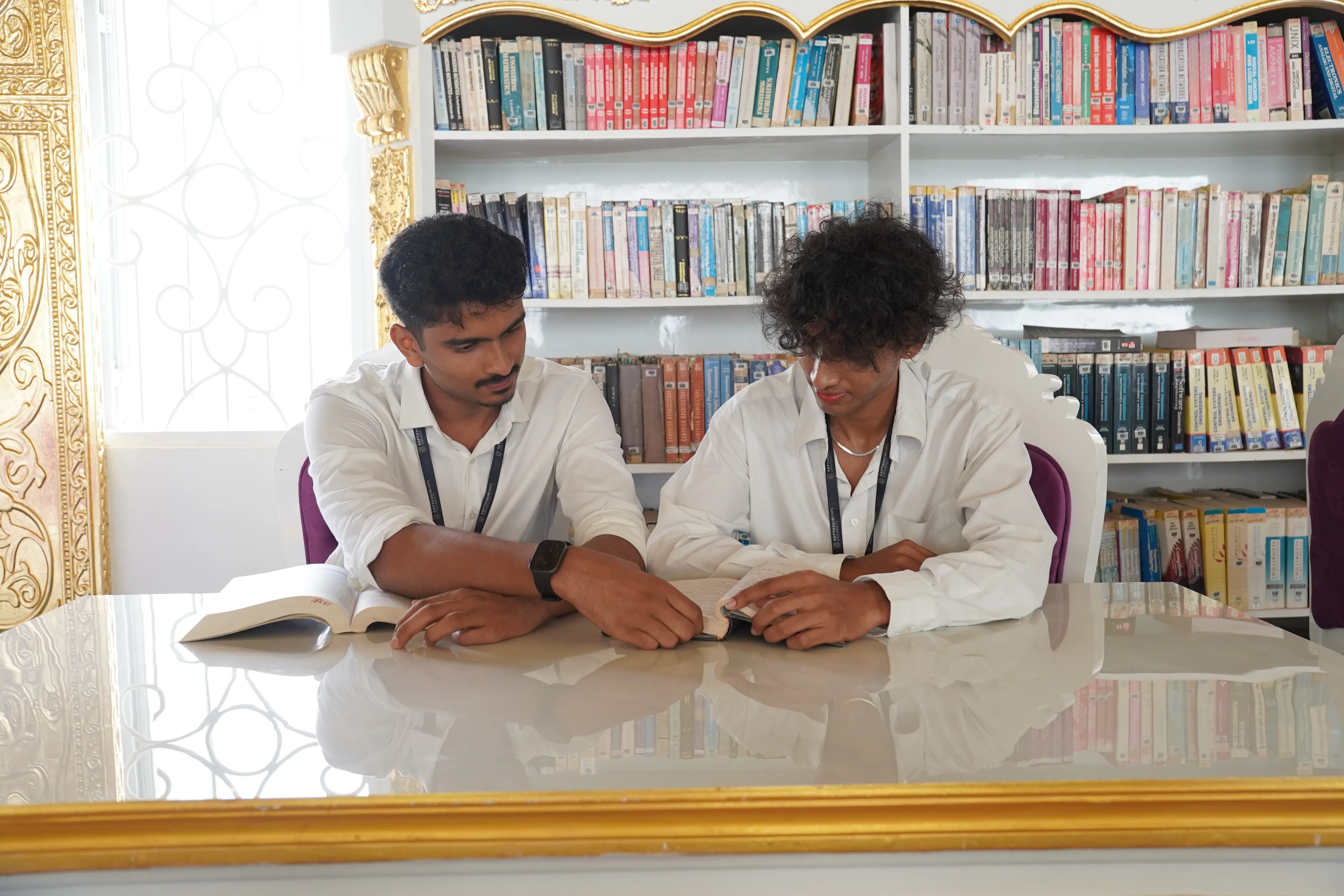
The image showcases two university students engaged in collaborative learning inside a well-equipped library. They are carefully studying books and discussing academic content together. The extensive collection of books in the background reflects a rich and resourceful learning environment. The bright and spacious interior creates a comfortable atmosphere for reading and focused study. The students’ interaction highlights the importance of teamwork, peer learning, and knowledge sharing. The elegant library design adds a welcoming and sophisticated character to the academic space. The large study table provides ample room for reading, writing, and group discussions. The organized bookshelves offer students access to a wide range of academic and reference materials. Overall, the image represents a positive culture of learning, collaboration, and intellectual development.
Our Vision for Modern University Infrastructure
Our vision for modern university infrastructure begins with our understanding of how higher education is evolving. Our students today have access to digital information, advanced technologies, online learning resources and global knowledge platforms. Our academic environment therefore needs to provide opportunities for students to move beyond traditional methods of learning. Our infrastructure supports a combination of classroom instruction, practical activities, collaborative projects, presentations, seminars, research, technology-enabled learning and independent study. Our university environment is planned around the different ways students learn and develop. Our classrooms support focused academic sessions, while our larger lecture spaces accommodate seminars, presentations and institutional programmes. Our practical facilities provide opportunities for application-based learning. Our common areas support peer interaction and informal discussions. Our library and knowledge resources encourage independent study and research. Our technology-enabled environment supports digital learning and modern academic requirements. Our infrastructure is therefore not viewed as separate buildings or isolated facilities. We consider our campus a connected learning ecosystem where each space contributes to student development. Our objective is to create an environment that feels professional, purposeful and welcoming while remaining adaptable to changing educational requirements. Our approach to Sapthagiri NPS University modern infrastructure is based on this long-term vision.
Our Academic Learning Environment
Our classrooms form the foundation of our academic environment. Our students spend a significant part of their university life attending lectures, participating in discussions, completing academic activities and interacting with faculty members. We therefore place importance on creating classroom environments that support concentration, participation and comfortable learning. Our classroom imagery reflects spacious academic arrangements, organised seating and a structured teaching environment. Our classrooms can support lectures, presentations, demonstrations, discussions, academic activities and student presentations. We believe that contemporary classrooms should encourage students to become active participants in learning rather than passive listeners. Our faculty members can use these environments to explain concepts, conduct discussions and encourage student participation. Our students can use the same spaces to develop subject knowledge while strengthening communication and presentation abilities. Our classroom infrastructure also needs to accommodate modern teaching approaches that may include digital presentations, visual resources and technology-supported explanations. Our approach to Sapthagiri NPS University modern infrastructure therefore considers the classroom a dynamic learning environment where knowledge can be introduced, discussed, questioned and applied.
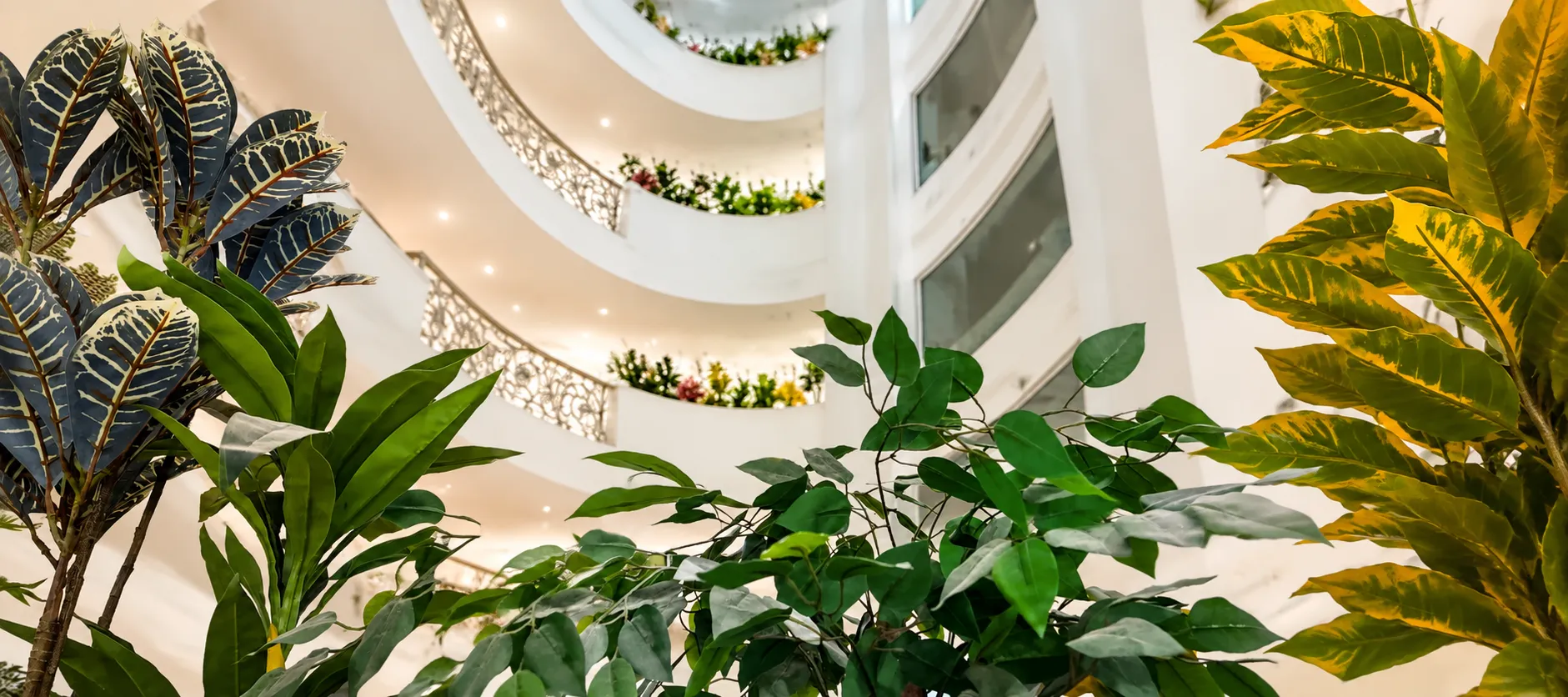
Our Sapthagiri NPS University, we believe that a thoughtfully designed campus environment plays an important role in creating a positive and inspiring learning experience. This beautiful interior atrium reflects our commitment to providing students with a modern, welcoming, and vibrant campus atmosphere. The elegant curved architecture, spacious design, and bright interiors create a sense of openness and comfort throughout the space. Carefully integrated greenery brings a refreshing natural element into the campus, making the surroundings more pleasant for students, faculty, and visitors. The combination of contemporary architecture, natural elements, and ample lighting reflects our focus on creating spaces that support both learning and well-being. Every detail of the campus is planned to provide students with an environment that is comfortable, engaging, and conducive to personal and academic growth. Through modern infrastructure and thoughtfully developed spaces, Sapthagiri NPS University continues to create a campus experience that combines education, innovation, sustainability, and aesthetics.
Our Spacious Lecture Environments
Our spacious lecture environments provide opportunities for large-group academic engagement. Our university requires suitable spaces for orientation programmes, academic seminars, expert lectures, workshops, institutional presentations, faculty interactions and other educational events. Our lecture environment shown in the supplied imagery demonstrates a formal academic arrangement with structured seating and a dedicated teaching area. Our larger learning spaces allow students to participate in collective academic activities in an organised environment. Our lecture facilities can also become platforms for interactions with industry professionals, researchers, entrepreneurs, academic experts and guest speakers. Our students can gain exposure to perspectives that extend beyond their regular classroom curriculum through these experiences. Our objective is to provide environments where academic knowledge can be connected with professional realities. Our lecture spaces therefore contribute to intellectual engagement, professional awareness and institutional activities. Our Sapthagiri NPS University modern infrastructure supports both everyday academic instruction and larger educational experiences through appropriately planned learning environments.
Our Technology-Enabled Learning Environment
Our university recognises the importance of technology in contemporary education. Our students use digital resources for academic research, assignments, communication, project development and independent learning. Our faculty members also use technology to enhance teaching, presentations, demonstrations and academic communication. Our infrastructure therefore needs to support the connection between physical learning spaces and digital education. Our technology-enabled learning environment can support multimedia presentations, digital resources, computing activities, online academic platforms and technology-based projects. Our objective is not to replace human interaction with technology. Our objective is to use technology as a tool that strengthens academic understanding and provides students with access to wider learning opportunities. Our students can explore concepts through visual resources, digital demonstrations and additional academic material. Our technology-oriented environment also helps students become familiar with digital tools that are increasingly relevant in professional workplaces. Our approach to Sapthagiri NPS University modern infrastructure recognises digital readiness as an important part of future-focused education.
Our Practical Learning Philosophy
Our educational philosophy places strong importance on practical learning because theoretical knowledge becomes more meaningful when students understand how it can be applied. Our students need opportunities to experiment, analyse, test ideas, complete projects and solve problems. Our practical learning environments support this transition from theory to application. Our engineering students can connect classroom concepts with practical experimentation. Our technology students can develop technical projects and work with software and computing resources. Our data-oriented students can analyse information and develop practical applications. Our management students can participate in case discussions, presentations and business-oriented activities. Our practical learning approach encourages students to understand processes rather than simply memorise information. Our students can learn from experimentation, observation, mistakes and improvements. These experiences help them become more confident when approaching unfamiliar professional challenges. Our Sapthagiri NPS University modern infrastructure therefore supports application-based learning as an important component of student development.
Our Infrastructure for Engineering Education
Our engineering programmes require an educational environment that combines theoretical instruction, practical experimentation, project work, teamwork and professional communication. Our infrastructure supports this interconnected learning process through academic classrooms, practical environments, computing facilities, project areas and presentation spaces. Our engineering students may begin a project with a classroom discussion, conduct research through academic resources, develop their ideas through practical activities and finally present their outcomes. Our infrastructure allows different stages of learning to connect naturally. Our students can work independently when they need focused study and collaborate with peers when projects require teamwork. Our engineering learning environment therefore supports technical knowledge while also encouraging problem-solving, communication and collaboration. Our objective is to help students understand how academic principles can be applied to real situations. Our Sapthagiri NPS University modern infrastructure provides an important foundation for this approach to engineering education.
Our Environment for Artificial Intelligence and Emerging Technologies
Our university recognises the growing importance of artificial intelligence, machine learning, data science, automation, cloud computing, cybersecurity, Internet of Things and other emerging technologies. Our students preparing for these fields require opportunities to explore concepts through practical work and project-based learning. Our infrastructure philosophy therefore emphasises adaptability and technology readiness. Our students can develop their understanding through computing activities, academic projects, technical workshops, research and collaborative learning. Artificial intelligence education requires knowledge of programming, mathematics, statistics, algorithms and data. Machine learning requires students to understand datasets, develop models and analyse results. Data science requires analytical thinking combined with technological skills. Our academic environment should support these interconnected requirements. Our Sapthagiri NPS University modern infrastructure is aligned with the broader objective of creating an environment where students can develop skills relevant to rapidly changing technology industries.
Our Learning Environment for Computer Science
Our Computer Science students require regular opportunities to practise programming, software development, algorithms, databases, computing concepts and emerging technologies. Our academic environment supports the connection between theoretical instruction and practical application. Our students can learn a concept in the classroom and then strengthen their understanding through practical activities and projects. Our project-oriented environment also encourages students to work collaboratively on larger technical assignments. Our students gradually learn that technology education is not limited to understanding theoretical concepts. It involves creating solutions, testing ideas, identifying problems and improving outcomes. Our infrastructure supports this learning process by providing environments where technical knowledge can be transformed into practical capability. Our objective is to help our Computer Science students develop both academic confidence and professional readiness.
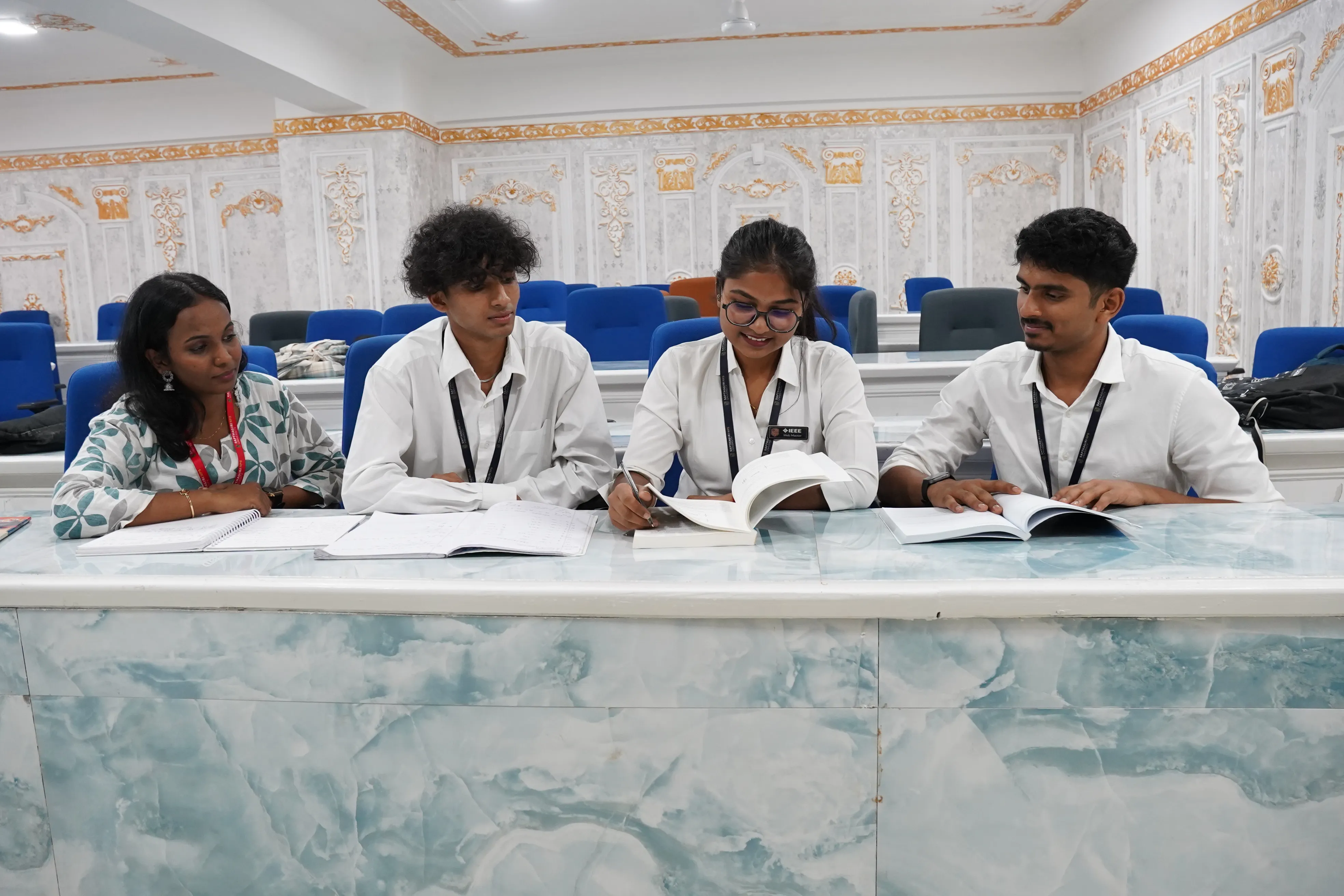
This image presents a collaborative classroom learning environment where four university students are actively engaged in their studies. The students are seated together at a spacious desk with open textbooks, notebooks, and study materials, reflecting a focused academic atmosphere. The central student is reading and taking notes, while the others appear to be following the discussion and reviewing their materials. The rows of comfortable blue seating provide a well-organized setting suitable for lectures, discussions, and group learning. The bright white interior, elegant decorative details, and spacious layout create a modern and welcoming academic environment. The image highlights peer learning, teamwork, classroom engagement, and active participation. It also reflects how a thoughtfully designed classroom can encourage students to communicate, exchange ideas, and learn together. Overall, the image represents a vibrant learning space that supports academic collaboration and student development.
Our Environment for Artificial Intelligence and Machine Learning
Our approach to artificial intelligence and machine learning education focuses on creating opportunities for students to develop both conceptual and practical knowledge. Our students need a strong foundation in mathematics, programming, statistics, data analysis and computational thinking. Our academic environment can support their progression from fundamental concepts to advanced projects. Our students can explore data, models, algorithms and practical applications through structured learning activities. Our faculty guidance supports the academic process, while our infrastructure provides the environment where students can practise and experiment. Our future-ready infrastructure needs to remain adaptable because artificial intelligence technologies continue to evolve rapidly. Our objective is to encourage our students to remain curious, flexible and willing to continue learning throughout their professional lives.
Our Environment for Data Science and Analytics
Our data science and analytics learning environment supports the development of analytical thinking, technological capability and communication skills. Our students can work with data, analyse information, identify patterns and develop meaningful conclusions through academic projects. Our infrastructure provides spaces for independent learning as well as collaborative project development. Our students may work individually while learning technical concepts and then collaborate with peers when developing larger projects. Our data-oriented education emphasises not only calculations but also interpretation and communication. Our students should be able to explain what their findings mean and how those findings can support decisions. Our Sapthagiri NPS University modern infrastructure therefore supports a learning environment where technical analysis and professional communication can develop together.
Our Infrastructure for Management Education
Our management education environment encourages active participation, discussion, analysis and presentation. Our students can participate in case studies, group assignments, business discussions, presentations, workshops and professional interactions. Our classrooms can become interactive environments where students analyse business situations and develop recommendations. Our seminar spaces can provide opportunities for expert sessions and industry interactions. Our project areas can support collaborative assignments and management activities. Our students develop communication, leadership, teamwork and decision-making abilities through these experiences. Our management infrastructure therefore supports education that extends beyond theoretical concepts. Our objective is to help our students become comfortable with professional communication and collaborative decision-making before they enter the workplace.
Our Collaborative Learning Environment
Our university recognises collaboration as an important component of modern education. Our students frequently work together on academic projects, research activities, presentations, competitions and practical assignments. Our campus provides opportunities for students to interact formally and informally. Our collaborative spaces can support project discussions and academic preparation, while our common areas encourage peer interaction. Our students can exchange ideas, divide responsibilities, discuss challenges and develop solutions together. These experiences help them understand the importance of teamwork in professional environments. Our infrastructure therefore supports both individual learning and collaborative development. Our goal is to create an environment where students can learn from faculty members as well as from one another.
Our Library and Knowledge Infrastructure
Our library represents an important part of our academic ecosystem because independent learning is essential to university education. Our students require access to books, reference materials, journals, research resources and digital academic content. Our library environment provides a space where students can read, conduct research, prepare assignments and explore subjects beyond regular classroom discussions. Our students can strengthen their academic understanding by using multiple sources of information. Our modern knowledge environment combines physical resources with digital learning opportunities. Our objective is to encourage students to become independent learners who can identify reliable information, analyse knowledge and develop their own academic perspectives. Our library therefore contributes significantly to the broader learning environment created through Sapthagiri NPS University modern infrastructure.
Our Research and Innovation Environment
Our university believes that research encourages curiosity, analytical thinking and the development of new knowledge. Our students can benefit from opportunities to investigate questions, conduct projects, analyse information and communicate findings. Our infrastructure supports research through academic resources, practical environments, computing facilities, project spaces and seminar areas. Our students involved in research can learn how to identify problems, review information, develop approaches, analyse results and present conclusions. Our innovation environment also encourages students to explore ideas and develop solutions. Our objective is to create a culture where students feel encouraged to ask meaningful questions and experiment with new approaches. Our infrastructure provides the physical environment for these activities, while academic guidance supports their development.
Our Distinctive Architectural Identity
Our campus architecture creates a distinctive visual identity for Sapthagiri NPS University. Our infrastructure imagery showcases spacious academic interiors combined with detailed architectural elements, refined finishes and carefully structured layouts. Our decorative ceilings, wall treatments, polished surfaces and formal seating arrangements create a distinctive institutional atmosphere. Our objective is to provide an environment that feels professional and academically purposeful. Our architectural identity should complement educational functionality rather than compete with it. Our students should experience spaces that are visually distinctive while remaining suitable for learning, interaction and academic activities. Our approach to Sapthagiri NPS University modern infrastructure therefore balances aesthetics with practical usability.
Our Academic Corridors and Campus Connectivity
Our corridors and circulation spaces form an important connection between different parts of our university. Our students move through these spaces while travelling between classrooms, laboratories, offices, libraries, seminar areas and common facilities. Our supplied corridor imagery demonstrates an expansive interior environment with distinctive architectural detailing and a clear sense of spatial continuity. Our circulation areas support convenient movement and can also become informal interaction spaces. Our students may meet classmates, exchange information and communicate with faculty members between academic sessions. Our objective is to create a campus environment where different academic areas connect naturally. Our circulation infrastructure contributes to both campus functionality and the overall visual identity of the university.
Our Canteen and Student Dining Environment
Our canteen and student dining environment is an important part of our modern campus infrastructure, providing students with a comfortable and welcoming space to enjoy meals, relax, and spend time with their friends. We have thoughtfully designed our dining area to create a pleasant atmosphere where students can take a refreshing break from their academic activities. The spacious layout, contemporary interiors, comfortable seating, attractive lighting, and natural greenery contribute to a fresh and inviting ambience. Our canteen provides students with a convenient space within the campus where they can enjoy their meals without interrupting their academic schedules. We understand that a comfortable dining environment contributes to the overall student experience. Therefore, our dining space is planned to support both convenience and social interaction. Students can gather with their peers, have conversations, enjoy their meals, and take a short break between classes in a relaxed setting.
Our modern cafeteria is designed to provide students with a comfortable, welcoming, and enjoyable space to take a break from their academic routine. We have created a spacious dining environment with contemporary interiors, comfortable seating, attractive lighting, natural greenery, and thoughtfully planned spaces that encourage students to relax and interact with their friends. The combination of modern design and greenery creates a fresh and pleasant ambience, making the cafeteria an inviting part of our campus. It serves as more than just a place to enjoy meals; it also provides students with an opportunity to socialise, refresh themselves, and spend quality time with their peers. Through our well-planned cafeteria facilities, we aim to support a vibrant campus lifestyle while maintaining comfort, cleanliness, and convenience for our students. This facility is an important part of our modern infrastructure, reflecting our commitment to creating a student-friendly campus environment that complements academic learning with comfortable and engaging everyday spaces.
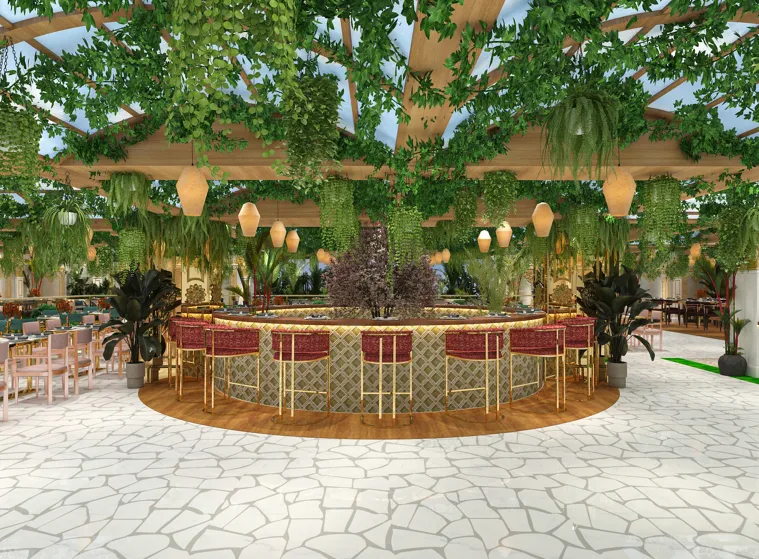
The presence of greenery and natural elements adds a refreshing character to our canteen environment. The combination of modern architectural features, wooden elements, indoor plants, and well-arranged seating creates a balanced atmosphere that feels both contemporary and comfortable. These design elements help make the dining area more than just a place for meals. It becomes a vibrant student space where learners can unwind and connect with their campus community. Our canteen also complements the wider vision of our modern infrastructure. We focus on creating campus facilities that support students throughout their daily university life. Along with classrooms, learning spaces, laboratories, and other facilities, our dining environment contributes to a well-rounded campus experience. We aim to ensure that students have access to comfortable spaces where they can relax and recharge during their busy academic routines.
Student interaction is another important aspect of our dining environment. Mealtimes provide opportunities for students from different programmes and backgrounds to meet, communicate, and build friendships. A welcoming dining space encourages informal conversations and helps create a stronger sense of campus community. Our canteen therefore supports not only everyday convenience but also the social experience that forms an important part of university life. With its spacious design, contemporary appearance, greenery, and comfortable seating arrangements, our canteen reflects our commitment to providing a pleasant student-friendly environment. We continue to focus on creating facilities that combine functionality, comfort, and modern design. Our canteen and student dining environment is an integral part of Sapthagiri NPS University Modern Infrastructure, helping us create a campus where students can learn, connect, relax, and enjoy a positive university experience.
Our Green Campus Elements
Our use of greenery within selected campus environments creates a connection between architecture and natural elements. Our supplied imagery shows substantial plant integration within common and dining spaces. Our green elements introduce freshness and visual balance into formal architectural environments. Our students can experience a more welcoming atmosphere when natural elements are integrated into the built environment. Our approach to modern campus development also recognises the importance of environmental responsibility. Our greenery contributes to the aesthetic character of our spaces while supporting a broader vision of sustainable campus development. Our objective is to create environments that feel professional while remaining connected with natural surroundings.
Our Focus on Student Comfort
Our students spend many hours within our classrooms, laboratories, libraries, seminar spaces and common facilities. Our infrastructure therefore places importance on comfort, organisation and accessibility. Our spacious arrangements and structured seating environments are designed to support sustained academic use. Our students should be able to focus on their learning without unnecessary environmental distractions. Our common spaces provide opportunities for short breaks and informal interaction. Our dining areas support everyday convenience. Our greenery and interior design contribute to the overall atmosphere. Our objective is to create a campus where academic productivity and student comfort can exist together.
Our Faculty and Student Interaction
Our faculty members play an important role in student development, and meaningful faculty-student interaction forms an essential part of our academic environment. Our students may require guidance related to academic subjects, projects, research, internships, career preparation and professional development. Our campus provides opportunities for interaction through classrooms, academic spaces, meetings and other university activities. Our objective is to create an environment where students can communicate with faculty members and seek appropriate academic guidance. Our infrastructure supports these interactions by providing environments where discussions can take place beyond regular lecture sessions.
Our Seminar and Conference Environment
Our seminar and conference spaces provide platforms for academic and professional interaction. Our university can use these environments for expert lectures, workshops, industry sessions, academic presentations, faculty development activities and student seminars. Our students benefit from listening to professionals and academic experts because these interactions can introduce perspectives beyond regular coursework. Our students can also develop presentation skills by participating in seminars and academic events. Our objective is to provide an environment where knowledge exchange and professional communication become part of university life. Our seminar infrastructure therefore contributes to both academic enrichment and career preparation.
Our Entrepreneurship and Innovation Environment
Our university encourages students to think creatively about their future opportunities. Our students may choose traditional professional careers, entrepreneurship, research, innovation or other pathways. Our infrastructure supports entrepreneurial thinking through collaborative environments, project spaces, academic interaction and opportunities for idea development. Our students can discuss problems, explore solutions and work together on innovative concepts. Our objective is to encourage a mindset where students see challenges as opportunities for learning and problem-solving. Our infrastructure provides the environment where ideas can develop into projects and collaborative initiatives.
Our Industry-Oriented Academic Environment
Our university recognises the importance of connecting academic learning with professional expectations. Our students need opportunities to understand how knowledge is applied in real workplaces. Our classrooms, seminar spaces, practical environments and project areas support activities that encourage application-based learning. Our students can work on projects, participate in workshops, attend expert sessions and develop professional communication skills. Our objective is to prepare students to enter professional environments with greater confidence. Our infrastructure supports this preparation by creating opportunities for students to practise teamwork, problem-solving, presentations and technology use throughout their academic journey.
Our Communication and Presentation Development
Our students need strong communication skills regardless of their chosen field. Our academic environment provides opportunities for classroom presentations, seminars, group discussions, project reviews and professional interactions. Our students can gradually develop confidence through repeated participation. Our infrastructure provides appropriate spaces for these activities, allowing students to communicate their ideas in formal and collaborative settings. Our objective is to help students become comfortable expressing technical and non-technical concepts. Our modern infrastructure therefore contributes to communication development alongside academic learning.
Our Leadership Development Environment
Our students develop leadership skills through participation, teamwork, project responsibilities and collaborative activities. Our group learning spaces and academic environments provide opportunities for students to take responsibility and coordinate with peers. Our students learn how to communicate, listen, organise tasks and contribute to shared objectives. Our infrastructure supports these experiences by providing environments where teamwork can take place naturally. Our objective is to help students develop professional qualities that will remain valuable throughout their careers.
Our Commitment to Accessibility
Our modern university environment should provide convenient access to academic and common facilities for students with different needs. Our infrastructure planning considers accessibility, clear circulation and convenient movement. Our objective is to create an inclusive environment where students can participate in academic and campus activities comfortably. Accessible pathways, suitable entrances, lift access and appropriate facilities contribute to a more inclusive learning environment. Our approach to Sapthagiri NPS University modern infrastructure recognises accessibility as an important component of contemporary campus development.
Our Commitment to Safety and Maintenance
Our infrastructure quality depends on responsible maintenance and management. Our classrooms, laboratories, corridors, common spaces and dining facilities require continuous attention to remain clean, functional and welcoming. Our maintenance approach includes attention to furniture, lighting, electrical systems, landscaping, cleanliness and general upkeep. Our safety considerations include responsible building management, emergency access, fire safety provisions and clear circulation. Our students and faculty members should be able to use our campus with confidence. Our objective is to ensure that the quality of our infrastructure is maintained throughout the academic year and remains suitable for everyday use.
Our Approach to Sustainable Infrastructure
Our university recognises the increasing importance of sustainability in modern campus development. Our infrastructure can contribute to environmental responsibility through greenery, efficient resource management, responsible maintenance and thoughtful planning. Our students can also gain awareness of sustainability by experiencing environmentally conscious elements within their daily surroundings. Our objective is to ensure that future infrastructure development considers long-term environmental responsibility alongside academic functionality. Our vision of modern infrastructure therefore includes both technological advancement and responsible campus development.
Our Vision for a Smart Campus
Our university recognises that the future campus will increasingly combine physical infrastructure with digital systems. Our students use online resources, digital platforms and technology-supported learning methods as part of their academic journey. Our smart campus vision includes connected learning environments, digital academic resources, technology-enabled classrooms and efficient communication systems. Our objective is to create a learning environment where physical and digital education complement one another. Our students should be able to move comfortably between classroom learning, independent digital research and collaborative technology-based activities.
Our Infrastructure and Student Well-Being
Our campus environment should support students as learners and individuals. Our students need spaces where they can concentrate, collaborate, interact and take breaks. Our classrooms support focused academic work. Our common areas support social interaction. Our dining environment supports relaxation and everyday convenience. Our greenery contributes to the atmosphere. Our spacious infrastructure provides room for movement and interaction. Our objective is to create a balanced environment where academic responsibilities and everyday student experiences can coexist. Our infrastructure forms part of the environment in which students build friendships, develop confidence and create lasting university memories.
Our Infrastructure for Project-Based Learning
Our project-based learning approach encourages students to combine knowledge from different subjects and apply it to practical challenges. Our students can begin projects through classroom discussions, continue their research using academic resources, develop solutions through practical activities and present their outcomes in seminars or academic sessions. Our infrastructure provides different environments that can support these stages. Our collaborative spaces encourage teamwork, our technology facilities support development and our presentation environments provide opportunities to communicate results. Our objective is to help students take ownership of their learning and understand how knowledge can be transformed into practical solutions.
Our Infrastructure and Career Preparation
Our students begin developing professional skills from the earliest stages of university life. Our academic environment provides opportunities to practise communication, teamwork, research, project management, presentations and problem-solving. Our students learn how to manage academic responsibilities, meet deadlines and collaborate with others. These experiences contribute to professional readiness. Our infrastructure supports this process by creating environments that encourage structured work and professional interaction. Our objective is to help students enter the workplace with greater confidence in their ability to communicate, collaborate and solve problems.
Our Campus as an Extension of Learning
Our university education does not end when a lecture concludes. Our students continue learning through peer discussions, practical activities, independent study, research, seminars, workshops and projects. Our campus provides the physical environment for these experiences. Our classroom may introduce a concept, our practical environment may help students apply it, our library may support deeper research and our seminar environment may provide an opportunity to present the final outcome. Our campus therefore functions as an extension of the classroom. Our infrastructure connects different forms of learning into one continuous academic experience.
Our Student-Centred Campus Philosophy
Our infrastructure planning places students at the centre of our campus experience. Our students need spaces for concentration, collaboration, independent study, academic interaction, dining and relaxation. Our campus provides a balance between formal learning environments and informal interaction areas. Our objective is to make the university environment supportive of different student activities throughout the day. Our infrastructure should help students navigate academic responsibilities while also providing opportunities to build relationships and participate in campus life.
Our Distinctive Interior Character
Our campus interiors reflect a strong architectural identity through decorative ceilings, detailed wall treatments, polished surfaces, refined finishes and carefully arranged spaces. Our supplied imagery demonstrates how distinctive design can be combined with structured academic functionality. Our objective is to provide an environment that feels professional, memorable and purposeful. Our interior design contributes to the overall perception of the university while supporting academic activities. Our approach to modern infrastructure therefore considers aesthetics and functionality together.
Our Canteen as a Student Interaction Space
Our canteen provides more than dining services. Our students can use this environment for informal conversations, peer interaction, project discussions and relaxation. Our supplied canteen imagery demonstrates how greenery and carefully planned seating can create an inviting environment. Our students often develop friendships and exchange ideas during informal moments, making these spaces an important part of university life. Our objective is to provide common environments that contribute to a positive student experience beyond formal academic activities.
Our Future-Ready Education Philosophy
Our future-ready education philosophy focuses on adaptability, continuous learning, practical capability, communication and technological awareness. Our students will enter professional environments where technologies and responsibilities continue to evolve. Our infrastructure therefore needs to provide opportunities for students to develop the ability to learn, adapt and collaborate. Our classrooms, practical environments, project spaces, seminar facilities and technology-enabled learning areas contribute to this objective. Our Sapthagiri NPS University modern infrastructure supports our broader vision of preparing students for a changing professional world.
Our Long-Term Infrastructure Vision
Our infrastructure represents a long-term investment in our students and academic community. Our facilities serve multiple batches of students and therefore need to remain relevant as education evolves. Our future infrastructure planning focuses on flexibility, technology readiness, practical learning, collaboration and student convenience. Our objective is to develop an environment that can adapt to changing academic programmes, technologies and professional expectations. Our campus should continue evolving alongside our students and the world around them.
Our Balance Between Architecture and Functionality
Our campus architecture creates a distinctive visual identity, but our primary objective remains educational functionality. Our students need spaces that are comfortable, accessible and suitable for academic activities. Our decorative interiors contribute to institutional character while our structured classrooms and lecture spaces support learning. Our objective is to ensure that architectural design enhances rather than interferes with the educational experience. Our approach to Sapthagiri NPS University modern infrastructure therefore brings together visual identity, academic purpose and student usability.
Our Holistic Learning Ecosystem
Our campus brings together multiple environments that collectively support our students. Our classrooms provide academic instruction. Our lecture spaces support large-group learning. Our practical facilities connect theory with application. Our library supports independent study. Our seminar spaces encourage professional exposure. Our collaborative areas support teamwork. Our dining spaces contribute to student interaction. Our corridors connect different areas of the campus. Our greenery contributes to the atmosphere. Our technology infrastructure connects physical learning with digital resources. Together, these elements create our holistic learning ecosystem.
Why Our Infrastructure Matters
Our infrastructure matters because our students spend a significant part of their university journey within our campus. Our facilities become part of their daily academic experiences and memories. Our classroom can become the place where a student develops confidence in a difficult subject. Our laboratory can become the place where theory becomes practical understanding. Our library can become the environment where independent learning habits develop. Our seminar hall can become the place where a student delivers an important presentation for the first time. Our project space can become the place where an innovative idea takes shape. Our canteen can become the place where friendships and collaborations begin. Our infrastructure therefore has value because it creates opportunities for meaningful experiences.
Our Message to Students and Parents
Our students and parents deserve a complete understanding of the university environment before making an important higher education decision. Our academic programmes, faculty expertise, practical learning opportunities, student support, career preparation and infrastructure all contribute to the overall educational experience. Our modern campus provides students with environments for learning, collaboration, practical development and professional preparation. Our objective is to create an environment where students can focus on their academic goals while also developing the broader capabilities required for their future. Our infrastructure is one important part of this complete university experience.
Our Future Direction for Modern Infrastructure
Our university infrastructure will continue to evolve as educational requirements, technologies and professional expectations change. Our future development will remain focused on creating adaptable, professional, technology-aware and student-centred environments. Our students need access to learning spaces that can support new teaching methods, emerging technologies, interdisciplinary projects and changing career requirements. Our objective is to continue developing an academic ecosystem that remains relevant to future generations of students. Our infrastructure philosophy is therefore based on continuous improvement and long-term educational value.
Frequently Asked Questions About Sapthagiri NPS University Modern Infrastructure
1. What makes Sapthagiri NPS University infrastructure modern?
Sapthagiri NPS University provides a modern and student-focused campus environment designed to support academic learning, practical education, research, innovation and overall student development. The university gives importance to technology-enabled education through modern classrooms, well-equipped laboratories, digital learning resources, libraries and collaborative academic spaces. The infrastructure is planned to create an environment where students can learn through classroom teaching as well as practical activities, projects, discussions and technology-based learning. The university's infrastructure vision also focuses on creating facilities that encourage students to explore their interests, develop professional skills and participate actively in university life. This combination of academic and student-oriented facilities makes the campus environment suitable for students looking for a contemporary higher-education experience in Bengaluru.
2. How do modern classrooms at Sapthagiri NPS University support student learning?
Modern classrooms are an important part of the learning environment at Sapthagiri NPS University. The university's engineering infrastructure includes classrooms equipped with LCD projectors and modern instructional aids, allowing faculty members to use technology while explaining academic concepts. Technology-supported classrooms can make lessons more visual, interactive and easier to understand, especially when students are studying subjects that involve diagrams, technical processes, presentations or complex concepts. Students can also benefit from a classroom environment that encourages discussion and interaction between faculty and learners. By combining conventional teaching methods with digital and audio-visual resources, the university aims to provide a learning environment that is more aligned with the requirements of modern higher education.
3. Does Sapthagiri NPS University provide laboratories for practical learning?
Yes, practical learning is an important part of the university's infrastructure. Sapthagiri NPS University provides laboratories and workshops that support hands-on academic education. Practical facilities allow students to move beyond theoretical concepts and understand how knowledge can be applied in real-world situations. For engineering and technology students, laboratory learning can be especially valuable because it provides opportunities to conduct experiments, understand technical processes, work on projects and develop problem-solving abilities. The university's infrastructure also includes facilities associated with emerging technology and research-oriented learning. A strong practical learning environment can help students develop greater technical confidence and prepare for academic projects, internships and future professional responsibilities.
4. Does the university have computer and digital learning infrastructure?
Sapthagiri NPS University provides computer and digital learning facilities as part of its modern academic infrastructure. The university's engineering infrastructure includes a computer centre, while its broader campus facilities also highlight digital classrooms and digital resources. These facilities support technology-based learning and can be useful for students working on assignments, programming, research, presentations, projects and other academic activities. Digital learning is particularly relevant for students studying modern disciplines such as computer science, artificial intelligence, data science and other technology-focused programmes. Access to digital resources also allows students to supplement classroom teaching with online academic information and other learning materials. This helps create an academic environment that reflects the increasing role of technology in higher education.
5. What library facilities are available at Sapthagiri NPS University?
The library is an important part of the university's academic infrastructure and provides students with an environment for independent study, academic reference and research. Sapthagiri NPS University highlights both physical and digital library resources as part of its campus facilities. Students can use library resources to support their classroom learning, prepare assignments, work on academic projects and expand their knowledge beyond the prescribed curriculum. A combination of physical and digital resources gives students greater flexibility in accessing information for different academic requirements. The library environment can also encourage students to develop regular reading and self-learning habits. For students working on research projects, presentations and technical assignments, access to appropriate academic resources can become an important part of their university experience.
6. How does the university infrastructure support research, innovation and collaboration?
Sapthagiri NPS University places importance on research, innovation and multidisciplinary learning. Its infrastructure includes research-related facilities, computer resources, laboratories, workshops, seminar spaces and collaborative areas that can support academic interaction. Research-oriented infrastructure gives students opportunities to explore subjects beyond routine classroom learning and participate in projects that encourage investigation and problem-solving. Collaborative spaces can also support group discussions, project development and peer learning. This type of environment is useful for students because modern professional workplaces increasingly require teamwork, communication, creativity and the ability to solve problems collaboratively. By providing spaces for academic interaction and practical work, the university's infrastructure can contribute to an educational experience that goes beyond traditional textbook-based learning.
7. What sports and recreational infrastructure does Sapthagiri NPS University provide?
Sapthagiri NPS University also focuses on student development outside the classroom through sports, fitness and recreational facilities. The university provides facilities for a range of indoor and outdoor sports and promotes physical fitness as part of student life. Sports facilities can give students opportunities to participate in physical activities, competitions and recreational programmes while managing the demands of academic life. Participation in sports can also help students develop discipline, teamwork, leadership, communication and time-management skills. The university's broader campus environment includes fitness and recreational facilities that support students in maintaining a healthy balance between academics and physical activity. Such infrastructure contributes to a more complete campus experience where students can pursue their academic goals while also participating in activities they enjoy.
8. Does Sapthagiri NPS University provide modern hostel and dining facilities?
Sapthagiri NPS University provides residential facilities for students who require accommodation during their studies. The university's infrastructure information states that it has separate hostel facilities for boys and girls, along with a guest house. Hostel infrastructure is particularly useful for students coming from different cities and regions because it provides a residential environment close to their academic facilities. The university also provides dining arrangements and other essential hostel amenities to support everyday student life. Residential facilities can help students become more independent while giving them opportunities to interact with peers from different backgrounds. A well-organised campus residential environment can therefore become an important part of the overall university experience, especially for students who are moving away from home for higher education.
9. How does Sapthagiri NPS University support student safety, health and well-being?
Student safety and well-being are important elements of a modern university infrastructure. Sapthagiri NPS University provides safety and support facilities intended to create a secure and comfortable campus environment. The university's published infrastructure information mentions CCTV security, fire-safety provisions, a public announcement system and health-related facilities. The campus also provides first-aid, medical and counselling support. These facilities are important because students spend a significant amount of time on campus and may require assistance during their academic journey. Providing access to health and counselling support can contribute to a more supportive student environment. Safety infrastructure, meanwhile, helps create a campus where students and parents can feel more confident about the overall learning and residential experience.
10. Why is Sapthagiri NPS University modern infrastructure important for students?
Modern infrastructure can have a significant influence on the quality of a student's overall university experience. At Sapthagiri NPS University, infrastructure is designed to bring together academic facilities, practical learning spaces, digital resources, research opportunities, sports facilities, residential support and student services. Students can benefit from classrooms that support technology-enabled teaching, laboratories that encourage practical learning, libraries that support independent study and research facilities that encourage innovation. At the same time, sports, recreational, hostel, dining, health and safety facilities contribute to life outside the classroom. This balanced approach can help students develop not only academic knowledge but also practical abilities, communication skills, teamwork, confidence and independence. For students and parents evaluating universities in Bengaluru, modern infrastructure is therefore an important factor to consider alongside programmes, curriculum, faculty, industry exposure, research opportunities and student support.
Our Vision for Sapthagiri NPS University Modern Infrastructure
Our Sapthagiri NPS University modern infrastructure represents our commitment to creating a professional and future-ready learning environment for our students. Our campus is designed to support academic learning, practical exposure, technology, collaboration, research, communication, innovation and student life. Our classrooms provide structured environments for focused learning. Our spacious lecture facilities support large-group academic engagement. Our practical learning environments help our students connect theoretical concepts with application. Our technology-enabled facilities support digital education. Our library and knowledge resources encourage independent learning. Our seminar environments provide opportunities for professional exposure. Our collaborative spaces encourage teamwork and communication. Our dining facilities contribute to everyday student interaction. Our greenery and distinctive interiors create a welcoming and recognisable campus atmosphere.
Our understanding of modern infrastructure goes beyond buildings and visual design. Our infrastructure becomes meaningful when it creates opportunities for students to learn effectively, experiment confidently, collaborate with others, communicate ideas and prepare for professional responsibilities. Our objective is to provide a campus environment where academic knowledge can become practical capability and where students can develop the confidence required for a changing professional world.
Our campus represents a continuous learning environment. Our students can begin their academic journey inside our classrooms, strengthen their understanding through practical activities, conduct independent research through our knowledge resources, develop projects through collaborative environments, participate in seminars and communicate their ideas through presentations. Our different facilities work together to support this journey. This interconnected approach forms an important part of our vision for Sapthagiri NPS University modern infrastructure.
Our architecture contributes to the identity of our university, but our students remain the central focus of our infrastructure philosophy. Our objective is to create spaces that support their ambitions, comfort and academic development. Our classrooms should encourage curiosity. Our practical environments should encourage experimentation. Our library should encourage independent learning. Our seminar spaces should encourage communication. Our collaborative areas should encourage teamwork. Our technology facilities should encourage innovation. Our common spaces should encourage interaction. Our entire campus should encourage students to discover their potential.
Our infrastructure also supports the transition from university education to professional life. Our students develop skills through projects, presentations, teamwork, research, practical learning and academic interaction. These experiences help them become more comfortable with professional responsibilities. Our infrastructure provides the environment where these experiences can take place consistently throughout their academic journey.
Our vision for Sapthagiri NPS University modern infrastructure is ultimately centred on creating a complete learning ecosystem. Our university environment brings together academic functionality, practical learning, digital readiness, collaboration, professional exposure, student comfort and distinctive architectural character. Our goal is to provide an environment that is not only visually impressive but also purposeful, adaptable and aligned with contemporary educational requirements.
Our campus is where our students attend important lectures, develop projects, discover new interests, participate in discussions, work with peers, interact with faculty members, explore technology and prepare for their future careers. Our facilities become part of these experiences, and our infrastructure therefore becomes an important part of the student journey.
Our modern university environment reflects our belief that education should extend beyond textbooks and examinations. Our students should have opportunities to apply knowledge, solve problems, communicate ideas, work collaboratively and continue learning. Our infrastructure provides the physical foundation for these opportunities.
Our commitment to modern infrastructure is therefore a commitment to our students. Our aim is to provide an environment where they can learn with confidence, explore with curiosity, collaborate with purpose and prepare for the future with greater clarity. Our campus is designed to support not only academic achievement but also the development of professional capabilities, communication skills, teamwork, innovation and independent thinking.
Our Sapthagiri NPS University modern infrastructure reflects our vision of a contemporary academic environment where architecture, technology, practical learning and student experience work together. Our classrooms, lecture halls, practical facilities, knowledge resources, seminar spaces, collaborative areas, dining environments and common facilities collectively contribute to the university experience we seek to create.
Our ultimate purpose is simple. Our infrastructure should help our students make the most of their university journey. Our campus should provide the environment where knowledge becomes experience, experience becomes confidence and confidence becomes preparation for the future. Our Sapthagiri NPS University modern infrastructure is therefore not simply about buildings or facilities. Our infrastructure is about creating the right environment for learning, development, innovation and professional growth.
Our university continues to build an academic environment where students can experience contemporary learning, practical exposure, technology-enabled education, meaningful collaboration and professional preparation. Our vision is to provide a campus that supports the aspirations of today's students while remaining adaptable to the requirements of tomorrow. Our infrastructure is an important part of that vision, and our commitment remains focused on creating a learning environment where every student can move forward with knowledge, confidence, capability and purpose.
Contact Sapthagiri NPS University
For more information about Sapthagiri NPS University modern infrastructure, academic programmes, admissions and campus facilities, our admissions team is available to assist prospective students and parents.
University: Sapthagiri NPS University
Address: #14/5, Chikkasandra, Hesaraghatta Main Road, Bengaluru, Karnataka, India
Admissions Enquiries: Click to Call an Admissions Specialist
Admissions Email: Click to Send Email to the Admissions Team
Official Website: Click to Visit Official Website
Admissions Portal: Click to Take Admission
Our admissions team can provide further information about programmes, eligibility, admission procedures, campus facilities and the overall student experience at Sapthagiri NPS University.
Leave a Comment