
Sapthagiri NPS University Onam Celebration in Bangalore | Campus Culture
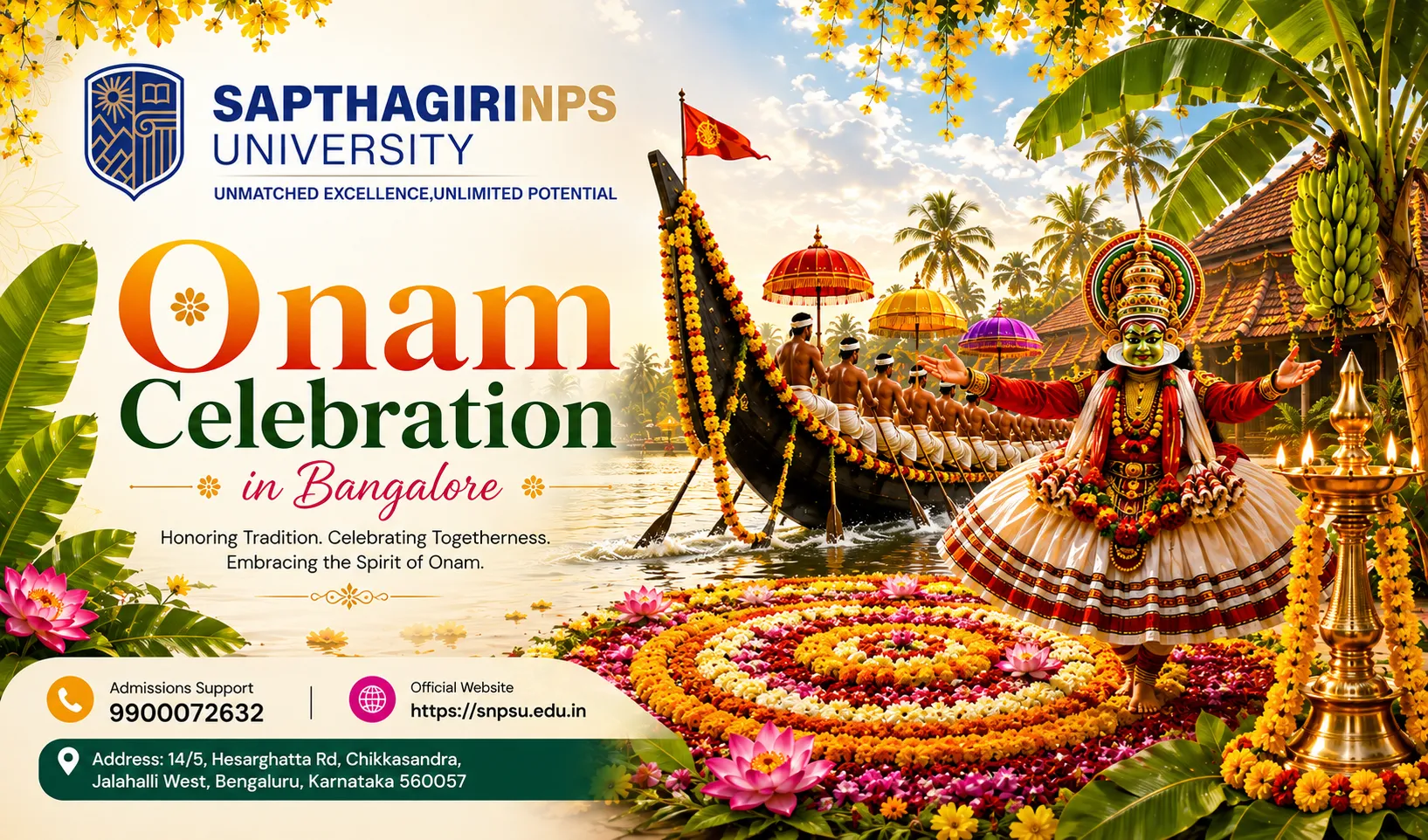
Sapthagiri NPS University Onam Celebration in Bangalore
Our university celebrates Onam as a vibrant cultural occasion that brings our students, faculty members, staff, and the wider university community together in the spirit of happiness, tradition, friendship, and togetherness. Onam is one of the most important festivals associated with Kerala, and its celebration provides an opportunity for our students to understand the cultural heritage, customs, values, food, music, dance, and traditions connected with the festival. In Bangalore, where students from different parts of India come together for higher education, our Onam celebration becomes a meaningful representation of cultural diversity and unity.
For our university, Onam is more than a festive occasion. It is an opportunity to create a positive campus experience where students can learn beyond their regular academic environment. Our students participate in cultural activities, traditional celebrations, creative programmes, decorations, performances, and social gatherings. These experiences encourage students to interact with one another, develop friendships, share traditions, and appreciate the cultural backgrounds of their classmates.
Celebrate Onam Together – Contact Our University
| Contact Information | Details |
|---|---|
| University | Sapthagiri NPS University |
| Address | 14/5, Hesarghatta Rd, Chikkasandra, Jalahalli West, Bengaluru, Karnataka 560057 |
| Onam Enquiries | Contact Our University |
| Admissions | Contact Our University Admissions Office |
| Student Enquiries | Contact Our University Helpdesk |
| Website | Official University Website |
| University Official Email | |
| Phone | University Official Contact Number |
The history of Onam is traditionally associated with King Mahabali, a legendary ruler remembered for his prosperous and peaceful kingdom. According to popular tradition, Mahabali was known for his generosity, equality, and concern for the well-being of his people. Onam is associated with the annual return of the king, and the festival continues to represent happiness, prosperity, harmony, and togetherness. These values make Onam particularly meaningful in a university environment, where students from different backgrounds come together with common goals and aspirations.
Our students celebrate Onam to remain connected with cultural heritage while experiencing the joy of a shared celebration. Students from Kerala can reconnect with traditions that may have been part of their childhood and family celebrations, while students from other regions can learn about Kerala’s culture through their friends and classmates. This exchange of traditions helps create greater cultural awareness and encourages students to respect and appreciate diversity.
The preparation for the celebration begins with enthusiasm among students. Groups come together to discuss ideas, plan activities, prepare decorations, organise cultural performances, and coordinate different responsibilities. These preparations become valuable opportunities for students to develop teamwork, communication, leadership, creativity, and organisational skills. Students learn how individual contributions can come together to create a successful university celebration.
One of the most attractive traditions associated with Onam is the pookalam. Our students can create beautiful floral designs using flowers arranged in carefully planned patterns. The activity brings colour and creativity to the campus while giving students an opportunity to experience an important Kerala tradition. Students work together to select flowers, develop designs, arrange the patterns, and complete their creations. The experience encourages patience, cooperation, artistic thinking, and attention to detail.
Pookalam also has cultural significance. Traditionally, floral arrangements are created as part of the Onam celebrations and are associated with welcoming King Mahabali. When our students participate in this tradition, they gain an opportunity to understand the cultural meaning behind the activity rather than simply viewing it as decoration. Students who are unfamiliar with pookalam can learn about the tradition from their classmates, creating a natural exchange of cultural knowledge.
Traditional attire adds another beautiful element to our Onam celebration. Students can participate in Kerala-style traditional clothing, creating a colourful and festive atmosphere across the campus. Traditional sarees, kasavu-inspired attire, mundu, shirts, and other cultural clothing allow students to express their connection with Kerala’s heritage. Students from other parts of India can also participate in traditional clothing representing their own regions, creating an atmosphere that celebrates India’s cultural richness.
Cultural performances bring energy and excitement to the celebration. Our students can showcase their talents through traditional dance, music, Malayalam songs, group performances, theatre, and other artistic presentations. These programmes allow students to express their creativity while introducing the audience to different aspects of Kerala’s cultural heritage. Preparing for a performance also requires discipline, regular practice, coordination, and commitment.
Traditional dance performances can become an important part of the celebration. Thiruvathira, for example, is associated with Kerala’s cultural heritage and can add elegance and authenticity to an Onam programme. Students participating in group dance performances learn to coordinate movements, maintain rhythm, support one another, and perform confidently before an audience. These experiences can strengthen both cultural understanding and personal confidence.
Music also contributes to the atmosphere of Onam. Our students with an interest in singing or instrumental music can participate in Malayalam songs, traditional compositions, group singing, or other musical presentations. Music provides a shared experience for performers and audiences and can create a warm connection with the cultural character of the festival. Students who do not perform can still contribute by supporting their classmates and participating as enthusiastic members of the audience.
Food is another important part of Onam culture. The traditional Onam sadya represents hospitality, sharing, abundance, and togetherness. A sadya traditionally includes a variety of vegetarian dishes served as part of a festive meal, often on a banana leaf. Experiencing this food tradition allows students to discover the flavours and culinary heritage of Kerala.
For students from Kerala, an Onam sadya can bring back memories of family celebrations and home traditions. For students from other parts of India, it can be an opportunity to experience Kerala cuisine for the first time. Sharing a meal together also strengthens social interaction and creates a relaxed environment where students can spend time with their friends and classmates.
Our Onam celebration also provides students with opportunities to develop practical skills. Organising a cultural programme involves many responsibilities, including event planning, stage coordination, decoration, hospitality, photography, communication, technical arrangements, and time management. Students who take responsibility for these activities gain practical experience that can complement their academic learning.
Leadership is another important benefit of student participation. Students who coordinate teams or activities learn how to communicate clearly, delegate responsibilities, manage time, solve problems, and support their team members. Leadership is not simply about taking charge; it also involves listening to others, accepting responsibility, helping teammates, and working towards a common objective. Onam provides a natural environment for students to develop these qualities.
Teamwork is equally important. Activities such as pookalam creation, cultural performances, decoration, event coordination, and competitions require students to work together. Students may have different opinions and ideas, but they learn to discuss them, make decisions, divide responsibilities, and work towards a shared outcome. These experiences can strengthen interpersonal skills that are valuable in both professional and personal life.
Our Onam celebration also promotes creativity. Students can contribute creative ideas through floral designs, stage decoration, cultural presentations, photography, music, dance, and event concepts. Creativity allows students to express themselves while maintaining respect for the traditions associated with the festival. It also gives students an opportunity to discover talents that may not always be visible during regular academic activities.
The celebration creates a sense of belonging within our university community. Students spend much of their university life attending classes, completing assignments, preparing for examinations, working on projects, and planning their careers. Cultural celebrations provide a different kind of experience where students can relax, interact, participate, and enjoy time with their peers. Such experiences can make campus life more engaging and memorable.
Onam also encourages students to appreciate cultural diversity. Our university community includes students with different languages, regional identities, family traditions, and life experiences. When students participate in one another’s cultural celebrations, they develop a better understanding of the diverse society around them. Onam can therefore become a platform for learning, friendship, and mutual respect.
The celebration also helps preserve cultural traditions among younger generations. Festivals remain meaningful when traditions are experienced and shared rather than simply remembered. Through pookalam, traditional attire, cultural performances, food, music, and stories associated with Onam, our students can remain connected with Kerala’s heritage while experiencing it in a modern university setting.
Most importantly, our Onam celebration is about togetherness. The festival gives students an opportunity to celebrate with friends, faculty members, and staff and to create an atmosphere of happiness across the campus. Every contribution, whether large or small, becomes part of the collective celebration. A student performing on stage, another creating a floral design, another helping with arrangements, and another simply participating with friends all contribute to the spirit of the occasion.
For our students, Onam can become one of the memorable cultural experiences of university life. The excitement of preparation, the beauty of the decorations, the enthusiasm of performances, the elegance of traditional attire, the taste of festive food, and the time spent together create memories that can remain meaningful long after students complete their education.
Our university’s Onam celebration therefore represents much more than a festival. It is an expression of cultural appreciation, student participation, unity, creativity, friendship, and community spirit. Through this celebration, our students have the opportunity to learn about Kerala’s rich heritage while developing valuable personal and social qualities. It reflects our commitment to creating a campus environment where academic learning and cultural experiences complement each other and where students can grow into confident, responsible, and culturally aware individuals.
Onam Celebration at Our University – Student Experience and Cultural Activities
Our Onam celebration creates a vibrant and welcoming atmosphere across the university campus, giving students an opportunity to experience the beauty of Kerala’s traditions while spending meaningful time with their friends and the wider university community. The celebration brings together culture, creativity, participation, and entertainment, making it an important part of campus life. Students from different academic programmes and regions can participate together, creating an environment where cultural differences are appreciated and friendships can grow naturally.
The excitement of Onam often begins before the main celebration. Students start preparing decorations, discussing cultural programmes, practising performances, organising activities, and planning different responsibilities. These preparations create a sense of anticipation across the campus. Students who may normally meet only during classes get opportunities to work together and interact in a more relaxed environment. The preparation itself becomes an important part of the experience because it allows students to contribute their ideas and talents.
Pookalam activities can become one of the most attractive features of the celebration. Students work in groups to create colourful floral designs using different flowers and patterns. Each group can bring its own creative approach to the design, resulting in a variety of artistic expressions across the campus. Students learn to coordinate their ideas, divide responsibilities, and complete the designs together. The activity combines traditional culture with creativity and teamwork, making it both enjoyable and meaningful.
Pookalam also provides students with an opportunity to understand a traditional practice more deeply. The floral arrangement is traditionally associated with welcoming King Mahabali during Onam. Students who participate can learn about the cultural background of the practice while enjoying the creative process. The activity also encourages students to appreciate the role of nature and flowers in Kerala’s festive traditions.
Traditional attire adds another memorable element to the celebration. Students can dress in Kerala-inspired traditional clothing and bring a distinctive cultural character to the campus. The elegance of traditional attire creates a festive atmosphere and gives students an opportunity to express cultural pride. Students from other regions can also participate in their own traditional clothing, making the celebration a colourful representation of India’s cultural diversity.
Cultural performances provide another major attraction. Our students can showcase their talents through traditional dance, music, group performances, theatre, and other artistic presentations. Performances inspired by Kerala’s culture can help audiences understand different aspects of the region’s artistic heritage. At the same time, contemporary performances can allow students to express their creativity in modern formats while retaining the spirit of the celebration.
Thiruvathira can add a traditional touch to the cultural programme. The coordinated movements and graceful presentation provide students and audiences with an opportunity to experience an important Kerala dance tradition. Students participating in group performances must practise regularly and coordinate closely with one another. This develops discipline, concentration, teamwork, and confidence.
Music also plays an important role in creating a festive environment. Students can participate in Malayalam songs, traditional music, instrumental performances, group singing, and other musical activities. Music can bring together students with different interests and create a shared experience for performers and audiences. It also provides students with an opportunity to showcase talents that may not be visible during their academic activities.
Traditional food is another important part of the Onam experience. The Onam sadya represents the spirit of sharing, hospitality, and celebration. Experiencing traditional Kerala cuisine gives students an opportunity to understand how food contributes to cultural identity. The variety of dishes associated with the sadya also introduces students to the rich culinary traditions of Kerala.
Sharing a festive meal creates an informal environment for students to interact. Friends can sit together, talk, enjoy the food, and share their experiences. Students from Kerala may feel connected to familiar traditions, while students from other parts of India can discover new flavours and customs. The meal therefore becomes both a cultural experience and a social occasion.
Onam competitions can also encourage greater student participation. Pookalam competitions, traditional attire activities, cultural performances, quizzes, creative contests, and other programmes can give students different ways to participate according to their interests. Competitions can encourage friendly interaction while providing students with opportunities to demonstrate creativity and talent.
Event organisation gives students practical experience. Different groups can take responsibility for decorations, stage arrangements, cultural programmes, hospitality, photography, communication, technical support, and other areas. Students learn how different responsibilities need to be coordinated for a successful event. They also gain experience in planning, scheduling, communication, and problem-solving.
Leadership naturally develops through these responsibilities. Students who coordinate activities learn how to guide teams, communicate tasks, manage time, and handle challenges. They also learn the importance of listening to others and supporting team members. These experiences can help students become more confident and responsible in future academic and professional situations.
The celebration also promotes teamwork. Many Onam activities cannot be completed successfully by one person alone. Pookalam creation requires several students to work together, cultural performances require coordinated practice, and event management requires multiple teams to communicate effectively. Students learn that every contribution matters and that successful outcomes depend on collective effort.
Creativity is another important part of the student experience. From designing pookalam patterns to preparing performances and decorations, students can express their ideas in different ways. Creative activities provide a break from routine academic work and allow students to explore interests that may not always have space within their regular curriculum.
Onam also strengthens communication among students. Cultural activities require students to discuss ideas, make decisions, solve disagreements, and coordinate plans. Students who participate in event hosting or public performances gain additional confidence in speaking before an audience. These communication experiences can become valuable personal and professional skills.
The celebration can also help students develop a stronger connection with the university. Students often remember the moments when they participated actively in campus activities. Being part of an Onam celebration can create a sense of ownership and belonging because students contribute directly to the atmosphere and success of the event.
For students from Kerala, the celebration can provide a connection to home. Being away from family during university years can sometimes make traditional festivals feel different. Celebrating Onam with friends can recreate some of the warmth and familiarity associated with the festival. Sharing traditional food, wearing familiar attire, listening to Malayalam songs, and participating in cultural activities can create a comforting sense of connection.
For students from other states, the celebration offers an opportunity to discover Kerala’s culture. They can learn about the story of King Mahabali, understand the significance of pookalam, experience traditional attire, taste Kerala cuisine, and enjoy cultural performances. Such experiences help students develop a broader understanding of India’s cultural diversity.
The participation of faculty members and staff can further strengthen the community atmosphere. Cultural celebrations provide opportunities for students and university teams to interact in a more informal setting. Shared participation can create positive relationships and contribute to a welcoming campus environment.
The celebration also creates opportunities for photography and creative documentation. Students can capture the colourful decorations, traditional attire, performances, pookalam designs, and group moments. These photographs can become lasting memories of university life and allow students to remember the celebration in the future.
Most importantly, our Onam celebration gives students a chance to enjoy the festival together. Academic life is an important part of university, but meaningful cultural experiences also contribute to student development. Through Onam, students can learn about heritage, participate in creative activities, build friendships, develop practical skills, and experience the happiness of being part of a community.
The festival therefore becomes an important expression of our university’s diverse and inclusive campus culture. It allows students to celebrate Kerala’s traditions while welcoming participation from everyone. Through shared activities, cultural performances, traditional food, creative expression, and teamwork, Onam creates an experience that combines education, culture, friendship, and celebration.
For our students, the memories created during Onam can remain an important part of their university journey. The experience of preparing together, participating in cultural activities, enjoying traditional food, supporting performances, and celebrating with friends can create lasting connections. Onam becomes a celebration of heritage, but it also becomes a celebration of student life, friendship, unity, and the diverse community that makes our university special.
Values, Unity and Student Development Through Onam
Our Onam celebration carries a deeper meaning because it brings together cultural heritage, student development, community spirit, and shared happiness. A university is a place where students develop knowledge and professional abilities, but it is also a place where they learn to communicate, cooperate, respect differences, take responsibility, and become confident individuals. Cultural celebrations such as Onam provide a natural environment for these qualities to develop through participation and shared experiences.
One of the most important values associated with Onam is togetherness. The festival traditionally brings families and communities together, and this spirit can be reflected throughout our university campus. Students from different courses, years, regions, and cultural backgrounds can participate in the celebration as one community. When students work together on decorations, cultural programmes, performances, and other activities, they develop a stronger sense of connection with one another.
Unity becomes particularly meaningful in a diverse university environment. Our students come from different parts of India and may speak different languages, follow different traditions, and have different cultural experiences. Onam provides an opportunity to bring these differences together in a positive way. Students can learn about Kerala’s heritage while also sharing aspects of their own cultures. This creates an atmosphere where diversity becomes a source of learning and friendship.
The festival also encourages respect. Cultural traditions are meaningful because they represent the history, identity, and experiences of communities. When our students participate in Onam, they learn to appreciate the traditions associated with Kerala and understand why they remain important. Students from Kerala can proudly share their heritage, while students from other backgrounds can participate respectfully and learn something new.
Onam also reflects the value of generosity. The story associated with King Mahabali is traditionally connected with qualities such as generosity, fairness, and concern for others. These values can inspire students to think about the importance of kindness and sharing in everyday life. University is an important stage for developing social awareness, and cultural celebrations can encourage students to consider how their actions affect the people around them.
The value of equality is another important aspect of the festival’s cultural meaning. Onam is traditionally associated with memories of a prosperous kingdom where people experienced peace and well-being. Within a university environment, this idea can be reflected through an inclusive celebration where students are encouraged to participate regardless of their academic discipline, region, language, or cultural background.
Our Onam celebration also encourages students to develop a sense of responsibility. Organising an event requires students to complete assigned tasks, cooperate with others, respect schedules, and contribute to the overall success of the programme. Students learn that even small responsibilities are important when many people are working towards a common goal.
Leadership development is another benefit of participation. Students who take responsibility for cultural programmes, event coordination, decorations, competitions, or hospitality can develop leadership skills through practical experience. They learn how to organise people, manage time, communicate instructions, solve problems, and respond to unexpected situations.
Effective leadership also requires empathy and cooperation. Students cannot organise a successful event simply by giving instructions. They need to understand their team members, listen to ideas, resolve disagreements, and encourage participation. Onam activities therefore provide students with opportunities to experience leadership as a collaborative process.
Teamwork is naturally present in almost every aspect of the celebration. A cultural performance may require several weeks of practice, while a pookalam may require students to coordinate design, flowers, and arrangements. Event management requires different groups to communicate with one another. Through these activities, students experience the practical importance of cooperation.
Communication skills are also strengthened through participation. Students need to discuss plans, explain ideas, coordinate responsibilities, communicate with performers, and interact with audiences. Students who host programmes or make announcements gain experience in public speaking, while those working behind the scenes develop organisational communication skills.
Creativity plays a major role in the celebration as well. Students can express their ideas through floral designs, traditional attire, decorations, music, dance, photography, event presentation, and other activities. Creative freedom allows students to explore their interests and develop confidence in expressing original ideas.
Problem-solving is another skill that students can develop during event preparation. Cultural programmes rarely proceed exactly according to the original plan. Students may need to adjust schedules, manage limited resources, solve technical issues, coordinate last-minute changes, or find alternative solutions. These experiences teach students to remain flexible and approach challenges calmly.
Time management is equally important. Students must balance their academic responsibilities with cultural activities. Preparing for a performance or organising an event requires students to plan their time carefully so that participation does not interfere with their studies. Learning to manage different responsibilities is a valuable skill for both university life and future careers.
Onam can also contribute to students’ emotional connection with the university. When students participate in meaningful campus activities, they develop memories associated with their university experience. These memories often become an important part of how students remember their years on campus.
For students who are away from their hometowns, cultural celebrations can provide a sense of familiarity. Onam can remind students from Kerala of their families, childhood celebrations, traditional food, and familiar customs. Celebrating together with classmates can provide a supportive environment and reduce the feeling of being far from home during an important festival.
Students from other regions can experience a different cultural tradition and discover similarities between Onam and festivals from their own communities. Many Indian festivals share common themes such as family, gratitude, prosperity, food, community, and happiness. Recognising these similarities can help students understand the connections that exist across different cultures.
The celebration also provides opportunities for informal interaction between students and faculty members. Academic relationships are important, but informal cultural experiences can create a more connected campus atmosphere. Participating together in a festive occasion can help everyone feel part of the same university community.
Onam also supports cultural preservation. Traditions remain alive when younger generations understand and participate in them. Students who learn about pookalam, sadya, traditional attire, music, dance, and the story of Mahabali become part of the process of keeping these cultural practices visible. They can later share what they have learned with their families, friends, and future communities.
The festival also demonstrates how tradition can adapt to modern student life. Students can use contemporary creative ideas to present traditional themes while maintaining respect for their cultural meaning. This balance between heritage and modern expression helps make cultural traditions relevant to younger generations.
Our university’s Onam celebration therefore contributes to holistic student development. Students can learn cultural history while simultaneously developing teamwork, leadership, communication, creativity, responsibility, confidence, and problem-solving abilities. These experiences complement academic learning and help students become more prepared for life beyond university.
The celebration also strengthens the idea of community responsibility. When students contribute to a shared event, they learn that a successful community depends on participation from its members. Everyone has a role, whether they are performing on stage, creating decorations, managing arrangements, supporting classmates, or simply participating respectfully.
Ultimately, the values represented by Onam can become meaningful lessons for our students. Unity encourages cooperation, generosity encourages sharing, equality encourages respect, prosperity encourages collective progress, and cultural heritage encourages students to understand where traditions come from. These values can continue to influence students beyond the celebration itself.
Through Onam, our university creates a space where students can celebrate culture while developing qualities that are important for their personal and professional lives. The festival brings colour and happiness to campus, but its deeper importance lies in the connections, skills, values, and memories created through participation.
Our Onam celebration is therefore a meaningful part of university life. It gives students the opportunity to celebrate Kerala’s heritage, appreciate cultural diversity, strengthen friendships, and develop valuable life skills. Most importantly, it reminds our students that education is not limited to academic knowledge. It also includes learning to live, work, communicate, and grow together with people from different backgrounds.
Kerala Traditions, Food and Cultural Heritage
Our Onam celebration provides a meaningful opportunity for students to experience the traditional culture of Kerala within the university environment. Kerala has a rich cultural heritage shaped by its history, communities, art forms, cuisine, language, festivals, and close connection with nature. Onam brings many of these elements together in one celebration, allowing students to understand how traditions are preserved and shared across generations. Through our university celebration, students can experience these traditions while enjoying a vibrant and inclusive campus atmosphere.
One of the most recognisable traditions of Onam is the pookalam. Floral arrangements are created using flowers placed carefully in circular or artistic patterns. During the festival season, pookalam becomes an important part of homes, institutions, public spaces, and community celebrations across Kerala. Our students can bring this tradition to the university campus by creating colourful floral designs together. The activity encourages creativity while providing a direct connection with Kerala’s cultural heritage.
Creating a pookalam requires planning and teamwork. Students need to decide on a design, arrange the flowers, coordinate colours, and work together to complete the pattern. Different groups can develop their own creative designs, allowing students to express individual ideas while working towards a shared result. The activity can also encourage friendly participation and interaction between students from different academic programmes.
Traditional attire is another important expression of Kerala culture during Onam. The elegant kasavu saree, traditional Kerala-style clothing, mundu, and other regional garments contribute to the distinctive appearance of the celebration. Our students can participate in traditional attire and experience the cultural character of the festival. Wearing traditional clothing can also help students understand how clothing forms part of cultural identity.
The presence of traditional attire across the campus can create a beautiful atmosphere during the celebration. Students from other regions can also wear their own traditional clothing, creating an environment that represents the cultural diversity of India. Rather than limiting participation to one cultural group, the celebration can encourage everyone to appreciate and share traditions respectfully.
Food is one of the most important parts of Onam culture. The traditional Onam sadya is known for its variety of vegetarian dishes and its emphasis on sharing and hospitality. Traditionally served on a banana leaf, the sadya brings together different flavours and preparations to create a complete festive meal. For many families, preparing and sharing the sadya is an important part of the Onam experience.
Our students can learn about Kerala’s culinary traditions through the sadya. Students from Kerala may recognise familiar dishes and flavours associated with family celebrations, while students from other regions can discover Kerala cuisine for the first time. Experiencing traditional food together also creates opportunities for students to interact and learn from one another.
The sadya represents more than food. It reflects hospitality, abundance, community, and sharing. Sitting together for a traditional meal encourages people to enjoy the celebration collectively. In a university setting, this spirit can help strengthen relationships among students and create a welcoming atmosphere.
Traditional sweets are also associated with festive celebrations. Payasam is particularly connected with Onam and is often considered an important part of the sadya. The variety of traditional preparations reflects the richness of Kerala cuisine and the importance of food in cultural celebrations.
Music contributes strongly to the cultural atmosphere of Onam. Traditional songs and Malayalam musical presentations can help students experience the linguistic and artistic heritage of Kerala. Students with musical talents can participate in singing or instrumental performances, while others can enjoy the programmes as members of the audience.
Dance is another important part of Kerala’s cultural identity. Traditional dance forms and festive performances can introduce students to the artistic heritage of the state. Thiruvathira, for example, can be presented as part of an Onam cultural programme. Group performances require students to practise together, coordinate movements, and maintain discipline, making them valuable experiences for personal development as well as cultural learning.
Kerala’s cultural heritage also includes a wide range of folk traditions and performing arts. Onam provides an opportunity to introduce students to some of these artistic expressions through performances, demonstrations, or cultural presentations. Such activities can help younger generations understand that cultural heritage includes not only major festivals but also the everyday artistic practices that communities have preserved over time.
The Malayalam language also has an important connection with Kerala’s cultural identity. Onam programmes can include Malayalam songs, traditional expressions, announcements, or presentations that allow students to hear and experience the language in a festive context. Students who do not speak Malayalam can also learn familiar words and expressions through participation.
Stories associated with Onam provide another way of connecting students with Kerala’s heritage. The story of King Mahabali is traditionally central to the festival and is often shared through conversations, cultural programmes, and family traditions. Learning about the story helps students understand why Onam is celebrated and why values such as generosity, prosperity, fairness, and happiness are associated with the festival.
Nature also has a visible role in Onam traditions. Flowers used in pookalam and the seasonal character of the celebration demonstrate the relationship between cultural practices and the natural environment. Students can appreciate how traditional celebrations often incorporate elements of nature rather than treating culture as something separate from the surrounding environment.
Our university celebration can also help students understand how traditional festivals evolve over time. Modern Onam programmes may include contemporary music, creative performances, photography, digital communication, event technology, and new forms of student participation. These modern elements can exist alongside traditional practices, allowing younger generations to celebrate heritage in ways that are relevant to their lives.
Cultural heritage becomes stronger when students actively participate rather than simply read about traditions. A student who creates a pookalam, wears traditional attire, tastes a sadya, watches a cultural performance, or learns about King Mahabali gains a direct experience that can be more memorable than theoretical information alone. University celebrations therefore provide an effective way to connect cultural learning with personal experience.
Onam also demonstrates the importance of community participation in Kerala culture. Families, neighbourhoods, schools, workplaces, and communities often come together during the festival. Our university can create a similar sense of community by encouraging students, faculty members, and staff to participate together.
The celebration also provides an opportunity for students to share their own cultural traditions. Students from Karnataka and other regions can introduce friends to their festivals, clothing, food, music, and customs. This creates a two-way cultural exchange where Onam becomes a starting point for broader conversations about India’s diverse heritage.
For students from Kerala, celebrating Onam at university can create a strong connection with home and family traditions. Many students may be living away from their families while pursuing higher education. Participating in Onam activities with friends can recreate some of the warmth and familiarity of celebrations at home while creating new university memories.
For students who have never experienced Onam, the celebration can be an introduction to an important part of Kerala culture. They can discover the meaning behind the festival, understand its traditions, enjoy its food, and participate in activities with their classmates. This can encourage greater cultural curiosity and appreciation.
Preserving traditions does not mean keeping them unchanged. Cultural heritage remains relevant when each generation finds meaningful ways to experience and share it. Our students can bring fresh ideas to traditional celebrations while maintaining respect for their origins. Their participation helps ensure that Onam continues to have meaning for future generations.
Our university’s Onam celebration therefore creates a bridge between tradition and modern education. Students can learn about Kerala’s heritage while developing creativity, teamwork, communication, and cultural awareness. The celebration creates a campus environment where tradition is respected, diversity is welcomed, and students can experience the joy of learning through participation.
Ultimately, Onam represents an important part of Kerala’s cultural identity because it brings together history, food, art, clothing, music, nature, family, and community. Our celebration allows students to experience these elements in a shared university environment. It gives them an opportunity to appreciate Kerala’s heritage while creating friendships and memories that can remain meaningful throughout their university journey.
Onam in Bangalore and Our Modern University Community
Celebrating Onam in Bangalore gives our university community a unique opportunity to bring Kerala’s cultural heritage into one of India’s most diverse and dynamic cities. Bangalore is home to people from different states, languages, professions, and cultural backgrounds, and this diversity is also reflected in university campuses. Students arrive in the city with different traditions and experiences, creating an environment where cultural exchange becomes a natural part of everyday life.
Our Onam celebration reflects this multicultural character. Although Onam has its roots in Kerala, the festival can be enjoyed and appreciated by students from across India. The university campus becomes a meeting place where students can share traditions, learn from one another, and participate in a common celebration. This makes the occasion meaningful not only for students from Kerala but for the entire university community.
For students who have moved to Bangalore from Kerala, celebrating Onam on campus can create a connection with home. The familiar sounds of Malayalam songs, traditional clothing, floral decorations, cultural performances, and festive food can bring back memories of family celebrations. At the same time, celebrating with university friends creates new experiences that become part of their life in Bangalore.
Students from Karnataka and other parts of India can experience Kerala culture through their classmates. They can learn about the significance of King Mahabali, understand the tradition of pookalam, experience traditional attire, enjoy cultural performances, and discover Kerala cuisine. These experiences can make cultural learning more personal because students are experiencing the festival alongside people who understand its traditions.
Bangalore’s cosmopolitan environment makes such cultural exchange particularly relevant. Students may eventually work in organisations where colleagues come from different states and countries. Developing an understanding of different cultures during university can help them become more comfortable working with diverse teams.
Our Onam celebration also demonstrates how traditional festivals can adapt to modern university life. Students may combine traditional cultural activities with contemporary event planning, digital communication, photography, creative presentations, and modern forms of entertainment. This allows the celebration to remain culturally meaningful while also reflecting the interests and creativity of today’s students.
Modern students are highly connected through digital platforms, and cultural celebrations can extend beyond the physical campus through photographs, videos, creative posts, and digital documentation. Students can capture the atmosphere of the event and share selected moments with friends and family. This creates another way for students to communicate their university experience.
Digital participation can also help students who are unable to attend every activity remain connected with the celebration. Photographs and recordings can document performances, decorations, student activities, and other memorable moments. Such documentation can become a lasting record of campus culture.
However, the physical experience of celebrating together remains especially important. Meeting friends, participating in activities, watching performances, and sharing food creates forms of interaction that digital communication cannot completely replace. Onam provides students with an opportunity to step away from screens and enjoy face-to-face community experiences.
The celebration can also strengthen the connection between students and their local surroundings. Bangalore is a city where many cultures coexist, and students can discover this diversity through their university community. Learning about Kerala through Onam can encourage students to explore other cultural traditions represented in the city.
Our university can also use Onam as an opportunity to encourage inclusive participation. Students should feel comfortable joining activities regardless of whether they are familiar with Kerala traditions. Simple explanations, welcoming activities, and opportunities to participate can make the celebration accessible to everyone.
Inclusiveness is particularly important in a university because students are at different stages of cultural understanding. Some students may have grown up celebrating Onam, while others may have never encountered the festival before. A well-organised celebration can accommodate both groups by allowing experienced students to share their knowledge and newcomers to learn through participation.
The celebration can also encourage students to become cultural ambassadors among their peers. Students who know the traditions can explain their significance, demonstrate activities, and help others participate respectfully. This creates a natural exchange of knowledge without making cultural learning feel formal or academic.
Onam also contributes to the identity of the university campus. Every institution develops its own traditions and memories over time. Annual cultural celebrations can become part of that identity, giving current students and alumni shared experiences that connect different generations of the university community.
Students who participate in Onam today may later remember the celebration as one of the defining cultural experiences of their university years. Future students can continue the tradition, adding their own ideas and creating new memories. In this way, the celebration can become an ongoing part of campus culture.
The festival can also encourage students to appreciate the importance of preserving traditions while adapting to changing circumstances. Cultural heritage does not need to remain separate from modern life. Instead, students can find creative ways to present traditional practices while maintaining respect for their origins.
This balance is especially relevant for young people. Students are exposed to global influences every day, but cultural roots remain an important part of identity. Onam allows students to experience both sides of this reality by celebrating a traditional festival in a modern, multicultural city.
Our Onam celebration also creates opportunities for students to represent their university beyond the campus. When students share positive experiences from the celebration with family members, friends, and wider communities, they contribute to the image of a university that values culture, diversity, participation, and student life.
The celebration can also encourage families to feel connected with their students’ university experiences. Students may share photographs of traditional attire, performances, pookalam designs, or campus activities with their families. For families whose children are studying away from home, seeing them participate in a cultural celebration can create a sense of connection.
Onam can therefore become a bridge between home and university life. Students bring elements of their family traditions to campus and share them with their friends. In return, they create new memories with the university community. This combination of familiar heritage and new experiences can make the celebration especially meaningful.
Bangalore also provides an ideal setting for such cultural exchange because students regularly encounter people from many parts of India. A university celebration can reflect this wider social environment and help students become more confident in interacting with people who have different backgrounds.
The experience gained through cultural participation can also contribute to students’ future professional lives. Modern organisations value employees who can collaborate across cultural and regional differences. Students who learn to listen, communicate respectfully, and work with diverse groups during university are developing qualities that can serve them in their careers.
Our Onam celebration therefore connects Kerala’s cultural heritage with Bangalore’s multicultural environment and our university’s diverse student community. It creates an occasion where traditional values can be experienced through modern student life.
The festival reminds our students that culture is not something limited to a particular place or generation. It can travel with people, adapt to new environments, and create connections wherever communities come together. In Bangalore, Onam becomes an expression of this shared cultural experience.
For our university community, the celebration represents a balance between heritage and modernity. Students can respect traditional customs while expressing themselves through contemporary ideas. They can celebrate Kerala’s culture while welcoming classmates from every region. They can enjoy the festival while developing communication, teamwork, creativity, and cultural awareness.
This makes Onam an important part of our campus experience in Bangalore. It adds cultural richness to university life, encourages interaction among students, and provides an opportunity to celebrate diversity in a positive and meaningful way. Through the festival, our students can build connections that extend beyond cultural boundaries and contribute to a stronger, more inclusive university community.
Why Our University Celebrates Onam
Our university celebrates Onam to provide students with an opportunity to experience the richness of Kerala’s cultural heritage while creating a stronger sense of togetherness across the campus. A university brings together people with different languages, traditions, experiences, and perspectives, and cultural celebrations provide an ideal environment for students to learn from one another. Onam allows our students to share an important part of Kerala’s heritage with the wider university community while encouraging everyone to participate in the happiness and spirit of the festival.
The significance of Onam extends beyond its festive appearance. The celebration is traditionally associated with values such as prosperity, equality, generosity, harmony, and happiness. These values are meaningful in an educational environment because students are preparing not only for professional careers but also for their responsibilities as members of society. Our Onam celebration gives students an opportunity to reflect on these values through participation, interaction, and shared experiences.
Our students celebrate Onam to remain connected with traditions that have been passed down through generations. Modern students live in a rapidly changing world influenced by technology, global education, social media, travel, and new professional opportunities. While these developments provide valuable exposure, cultural heritage remains an important part of personal identity and social understanding. Festivals such as Onam allow students to maintain a connection with traditional customs while experiencing them in a contemporary setting.
The festival also provides an opportunity for students from Kerala to share their culture with their classmates. Students who grew up celebrating Onam with their families may have memories of preparing pookalam, wearing traditional clothing, enjoying sadya, listening to traditional songs, and spending time with relatives. Celebrating Onam at university allows them to recreate some of these experiences with friends. At the same time, students from other parts of India can discover these traditions and develop a greater appreciation for Kerala’s cultural identity.
Cultural exchange is an important part of university life. When students learn about one another’s traditions, they become more comfortable with cultural differences and develop broader perspectives. Our Onam celebration can encourage students to ask questions, share experiences, and participate respectfully in unfamiliar traditions. A student does not need to belong to a particular cultural community to appreciate its festival. Participation itself can become an expression of friendship and respect.
Onam also strengthens the sense of unity among our students. Academic life naturally creates different groups based on courses, departments, years, interests, and schedules. Cultural celebrations provide an opportunity for students from these different groups to come together. During Onam activities, students can interact with people they may not normally meet during their regular academic routines. Shared experiences can help create new friendships and strengthen existing relationships.
The celebration can also encourage interaction between students and faculty members. Faculty members play an important role in students’ academic and professional development, while cultural events provide opportunities for more informal interaction. When faculty members and students participate together in a festive environment, it can contribute to a warmer and more connected campus culture.
Another important reason for celebrating Onam is to encourage student participation. Our students are not merely spectators during cultural programmes. They can actively contribute to planning, preparation, decoration, performances, hospitality, coordination, photography, technical support, and other responsibilities. Active participation helps students develop a sense of ownership and responsibility towards the university community.
Planning a cultural celebration also gives students practical experience in organising events. They learn that a successful programme requires preparation, communication, scheduling, teamwork, coordination, and flexibility. Unexpected challenges may arise, and students must learn how to respond calmly and find solutions. These experiences can strengthen problem-solving and organisational skills.
Onam also provides opportunities for leadership development. Students who take responsibility for different activities can learn how to coordinate teams, delegate tasks, communicate clearly, and motivate others. Leadership developed through such practical experiences can complement the knowledge students gain through their academic programmes. It can also help students become more confident when working with groups in future professional environments.
Teamwork is another important aspect of the celebration. Many Onam activities require students to work collectively. Pookalam creation, group dances, musical performances, decorations, competitions, and event coordination all involve cooperation. Students learn that successful outcomes often depend on the contribution of every team member. They also learn how to respect different opinions and work towards a common objective.
Creativity is encouraged throughout the celebration. Students can use their imagination while designing floral arrangements, preparing stage decorations, planning cultural performances, developing event concepts, or presenting traditional themes in contemporary ways. Such activities give students a platform to express themselves and discover talents outside their academic specialisations.
Our university also celebrates Onam because cultural activities contribute to a positive student experience. University life can involve demanding academic schedules, examinations, assignments, projects, internships, and career preparation. Cultural occasions provide students with opportunities to relax, enjoy meaningful activities, spend time with friends, and experience a different side of campus life.
The celebration can also support a healthy sense of belonging. Students who feel connected to their university community may find greater enjoyment in campus life. Shared cultural experiences help students feel that they are part of something larger than their individual academic programmes. The memories created through celebrations can become an important part of their overall university experience.
Onam is also an opportunity to celebrate the values of sharing and generosity. The traditional association of the festival with King Mahabali reminds students of the importance of caring for others and creating a society where people can live with dignity and happiness. These ideas can encourage students to think about the importance of kindness, cooperation, respect, and social responsibility.
The traditional Onam sadya provides a practical expression of sharing and togetherness. A festive meal enjoyed with friends creates an environment where students can interact comfortably and build connections. Food also introduces students to the culinary heritage of Kerala and demonstrates how traditional cuisine can preserve cultural knowledge and memories.
Traditional attire provides another way for students to participate. Wearing Kerala-style clothing allows students to express cultural identity, while students from other regions can wear their own traditional attire and celebrate the diversity represented on campus. The result is an environment where different cultural identities can be visible and appreciated together.
Pookalam also contributes to the educational value of the celebration. Students learn about a traditional practice while developing creativity and teamwork. Creating floral designs requires planning, coordination, patience, and attention to detail. The activity demonstrates how cultural traditions can also provide opportunities for learning and skill development.
Cultural performances further enrich the celebration. Through dance, music, theatre, and other artistic activities, students can showcase their abilities while learning about Kerala’s cultural heritage. Performing before an audience can help students overcome stage fear, improve communication, develop confidence, and learn the importance of preparation.
Our Onam celebration therefore supports both cultural appreciation and personal development. Students can learn about history and traditions while simultaneously developing practical qualities such as teamwork, communication, creativity, leadership, responsibility, and confidence. This combination makes cultural celebrations valuable additions to university life.
The celebration also reinforces the idea that diversity can strengthen a community. Students do not have to share the same background to celebrate together. Instead, they can learn from differences and find common ground through shared experiences. Onam provides a welcoming platform where students can celebrate Kerala’s heritage while creating connections across cultural boundaries.
Ultimately, our university celebrates Onam because it brings people together. It provides students with a chance to celebrate culture, build friendships, participate in meaningful activities, and create lasting memories. The festival adds colour and energy to campus life while reinforcing important values such as unity, respect, harmony, generosity, and togetherness.
For our students, Onam is therefore both a cultural celebration and a shared university experience. It connects tradition with modern student life and creates an environment where everyone can participate, learn, and celebrate. Through Onam, our university continues to encourage cultural awareness, student engagement, community spirit, and holistic development while giving students memories they can carry with them throughout their lives.
Importance of Onam in Kerala Culture
Onam holds a special place in Kerala culture as a festival that celebrates heritage, unity, prosperity, and togetherness. It connects generations through traditional customs, food, music, dance, clothing, and community celebrations.
| Importance | Kerala Cultural Significance |
|---|---|
| Cultural Heritage | Preserves Kerala’s traditions and customs |
| King Mahabali | Remembers the legendary king and his values |
| Unity | Brings families and communities together |
| Prosperity | Represents happiness, abundance, and well-being |
| Pookalam | Showcases Kerala’s floral art and creativity |
| Onam Sadya | Celebrates Kerala’s traditional cuisine and hospitality |
| Traditional Attire | Reflects Kerala’s cultural identity |
| Music & Dance | Preserves traditional art forms |
| Family Bonding | Brings families together during the festival |
| Community Spirit | Encourages sharing, friendship, and harmony |
| Cultural Learning | Passes traditions from one generation to another |
| Kerala Identity | Strengthens connection with Kerala’s rich heritage |
Importance of Onam in Kerala Culture
Onam holds a special place in Kerala’s cultural identity and is celebrated with great enthusiasm by Malayali communities across India and around the world. For our students, understanding the importance of Onam provides an opportunity to learn about the traditions, history, customs, artistic expressions, and values that have shaped Kerala’s cultural heritage over generations. The festival brings together many aspects of Kerala culture, including traditional clothing, floral decorations, music, dance, food, family gatherings, community participation, and stories associated with King Mahabali. Through these traditions, Onam continues to connect the past with the present.
The cultural importance of Onam begins with its connection to the story of King Mahabali. According to popular tradition, Mahabali was a generous and respected ruler whose kingdom was remembered as a period of prosperity, peace, equality, and happiness. The festival is traditionally associated with his annual return to Kerala. The story has been passed down through generations and remains an important part of Kerala’s cultural memory. For students, learning about this tradition provides an opportunity to understand how stories and values can remain relevant even as society changes.
Onam is also important because it represents the idea of togetherness. Traditionally, families come together during the festival, prepare special food, decorate their homes, wear traditional clothing, and participate in celebrations. In modern times, this spirit of togetherness continues in schools, colleges, universities, workplaces, residential communities, and public spaces. Our university celebration reflects this same cultural spirit by bringing students and members of the university community together.
The festival also represents Kerala’s strong connection with nature. Flowers play an important role in Onam celebrations, particularly through the creation of pookalam. Students can experience this tradition by creating floral designs using flowers arranged in attractive patterns. The practice reflects creativity while also bringing natural beauty into the celebration. For younger generations, activities such as pookalam provide a direct and enjoyable way to experience an element of traditional Kerala culture.
Pookalam is more than a decorative practice. It represents participation, creativity, and welcoming. Traditionally, floral arrangements are created during the days of Onam and become increasingly elaborate as the festival progresses. Families and communities can work together to create these designs. When our students participate in pookalam activities, they experience the collaborative nature of the tradition while developing creativity and teamwork.
Traditional clothing is another important part of Kerala’s cultural expression during Onam. Women may traditionally wear elegant sarees, including kasavu-style sarees, while men may wear mundu and traditional shirts. These clothing styles create a distinctive visual identity during the festival. Our students can participate in traditional attire and experience how clothing can communicate cultural heritage and identity.
Onam is also deeply connected with Kerala’s culinary traditions. The Onam sadya is one of the most recognised elements of the festival and is traditionally associated with hospitality, abundance, sharing, and community. A sadya consists of a variety of vegetarian dishes served together, traditionally on a banana leaf. The meal reflects Kerala’s rich culinary heritage and the importance of food in cultural celebrations.
For many families, preparing and sharing the sadya is an important part of the Onam experience. Different dishes, flavours, textures, and preparations come together to create a complete festive meal. For students from Kerala, this tradition may bring back memories of family celebrations. For students from other regions, it provides an opportunity to discover the diversity of Kerala cuisine and understand the cultural significance of sharing food.
Music and dance are equally important to Kerala’s cultural identity during Onam. Traditional songs and performances contribute to the festive atmosphere and help preserve artistic traditions. Thiruvathira is one of the cultural dance forms associated with Kerala and can be presented during Onam celebrations. Through such performances, students can experience traditional artistic expressions while also developing confidence and teamwork.
Onam also provides an opportunity to appreciate Kerala’s folk and performing arts. Different regions of Kerala have their own artistic traditions, and festivals provide platforms for these forms to remain visible to younger generations. University cultural programmes can introduce students to these traditions while giving them opportunities to participate creatively.
The festival is also important because it encourages community participation. Onam is not limited to private family celebrations. Communities often organise cultural programmes, competitions, decorations, performances, and shared meals. This community-oriented character is reflected in university celebrations, where students from different backgrounds can participate together.
Another important aspect of Onam is the value of sharing. The festival is traditionally associated with generosity and abundance, and these ideas encourage people to share happiness with others. The practice of enjoying a meal together, participating in community activities, and welcoming others reflects the social values connected with the festival.
Onam also contributes to the preservation of Malayalam cultural identity. Language, stories, songs, food, clothing, and traditional practices are all connected with the festival. For students living away from Kerala, university celebrations can provide an opportunity to remain connected with their cultural roots. Students can share these traditions with friends and classmates, helping cultural knowledge reach a wider audience.
The festival also demonstrates how cultural traditions can adapt to modern environments. Students may celebrate Onam using contemporary event formats, creative performances, photography, digital communication, and modern decorations while still maintaining traditional elements. This combination allows younger generations to remain connected with heritage in ways that are relevant to their lives.
For our university community, celebrating Onam therefore has both cultural and educational value. Students can learn about Kerala’s heritage while developing practical skills through participation. Organising pookalam activities, cultural performances, traditional programmes, food arrangements, and event coordination requires teamwork, planning, communication, creativity, and responsibility.
Onam also promotes respect for diversity. When students from different regions participate in the celebration, they gain an opportunity to understand Kerala’s cultural traditions without needing to share the same background. This encourages mutual respect and helps create an inclusive campus environment. Students can celebrate one another’s traditions while recognising the common values that connect different Indian cultures.
The festival also creates opportunities for intergenerational cultural learning. Older generations often pass traditional stories, recipes, songs, customs, and practices to younger family members. University celebrations provide another setting where students can learn and share these traditions. When students discuss the meaning of Onam with their friends, faculty members, and families, cultural knowledge continues to move from one generation to another.
Onam’s importance in Kerala culture can also be seen in its ability to bring together different aspects of everyday life. Family, food, art, nature, clothing, music, history, community, and tradition all become part of the celebration. This makes Onam more than a single event. It becomes a broad cultural experience that reflects the values and identity of Kerala.
For our students, participating in Onam allows them to experience this cultural richness in a university setting. A pookalam can introduce them to floral traditions, traditional attire can connect them with cultural identity, a sadya can introduce them to Kerala cuisine, and cultural performances can help them understand artistic heritage. Each activity contributes to a deeper appreciation of the festival.
Onam also creates lasting emotional connections. Festivals often remind people of home, family, childhood memories, and familiar traditions. Students living away from their hometowns may find particular meaning in celebrating Onam with friends at university. Sharing familiar customs in a new environment can create a sense of comfort and belonging.
Ultimately, the importance of Onam in Kerala culture lies in its ability to preserve heritage while bringing people together. It celebrates the values of happiness, prosperity, equality, generosity, harmony, and community. Through its traditions, Onam connects generations and provides younger people with opportunities to understand and appreciate their cultural roots.
Our university’s Onam celebration carries these cultural values into campus life. It gives our students an opportunity to learn, participate, share, and celebrate together. By bringing Kerala’s traditions into a diverse university environment in Bangalore, the celebration creates a meaningful connection between cultural heritage and modern education while strengthening friendship, unity, and respect among our students.
Community Connection and Lasting Memories
Our Onam celebration adds a distinctive cultural character to university life by creating opportunities for students to connect with one another beyond their regular academic routines. A university community is built not only through classrooms and academic programmes but also through shared experiences. Cultural occasions give students a reason to come together, communicate freely, participate in activities, and build relationships that may continue throughout their university years.
For many students, university is the first major stage of life where they spend significant time away from their families. Moving to a new city can bring excitement, independence, and new opportunities, but it can also mean adjusting to unfamiliar surroundings and meeting people from different backgrounds. A celebration such as Onam can help students feel more comfortable within their new environment. By participating in a familiar cultural tradition or discovering a new one with friends, students can develop a stronger connection with the campus.
The celebration can also create interaction between students who would otherwise have limited opportunities to meet. Students from different courses may have separate timetables and academic responsibilities, but cultural activities can bring them together around a common interest. A student from one programme may collaborate with another student on a cultural performance, while students from different years may work together on event arrangements. These interactions can broaden social circles and create new friendships.
Onam can also encourage students to communicate beyond their usual groups. When students participate in cultural activities, they often meet people with different interests, personalities, and experiences. Such interaction can help students become more comfortable communicating with others and can encourage them to develop a more open and approachable attitude.
The celebration can create a welcoming environment for new students as well. Students who have recently joined the university may still be becoming familiar with the campus, their classmates, and university activities. Participating in a major cultural celebration gives them an opportunity to meet people and become involved in campus life from an early stage. This can make the transition into university more comfortable.
Senior students can also play an important role in welcoming newer students. They can guide them during activities, explain traditions, help with event arrangements, and encourage participation. This interaction can strengthen relationships between different batches and create a stronger sense of community.
Onam also provides a platform for students who enjoy organising events. Some students may have an interest in event management, while others may be skilled in design, photography, communication, technology, hospitality, or coordination. Cultural programmes allow these students to apply their abilities in a practical setting. Their work may happen behind the scenes, but it contributes significantly to the overall success of the celebration.
Students involved in documentation can capture the atmosphere of the event through photographs and videos. They can record decorations, performances, group activities, traditional attire, and memorable moments. This creative documentation can become a valuable record of campus life and allow students to revisit their experiences later.
The celebration can also strengthen the relationship between students and their university environment. When students actively contribute to campus activities, they develop a greater sense of ownership. They begin to see the campus not merely as a place where they attend classes but as a community to which they contribute.
This sense of connection can become especially meaningful during the later stages of university life. Students often realise how quickly their years on campus pass. Cultural celebrations provide moments where students can pause from academic schedules and spend time together. These occasions can become important milestones that students remember when they eventually graduate.
Graduation marks the end of one stage and the beginning of another, but memories of university life often remain connected with the experiences students shared with their friends. Cultural celebrations can become part of those memories. Students may remember the people they performed with, the friends who helped prepare decorations, the groups they worked with, and the conversations they shared during the celebration.
Onam can also encourage students to appreciate the importance of friendship. Preparing for a celebration often involves spending considerable time together. Students practise performances, create decorations, organise activities, and solve small challenges as a group. These shared efforts can strengthen friendships because students experience both the excitement and responsibility of working towards something together.
The celebration also provides a healthy opportunity for students to express themselves. Some students may enjoy performing, while others may prefer organising, designing, photographing, coordinating, or supporting activities. Onam can accommodate different forms of participation, allowing students to contribute according to their interests and abilities.
Another valuable aspect is the opportunity for students to experience cultural traditions without pressure. A student does not have to be an expert in Kerala culture to participate. They can learn gradually by observing, asking questions, joining activities, and interacting with classmates. This creates an environment where curiosity is encouraged and cultural learning feels natural.
The celebration can also help students develop appreciation for the cultural identities of others. When students see their classmates proudly sharing traditions, they gain an understanding of how culture contributes to personal identity. This can encourage greater sensitivity and respect in everyday interactions.
Our Onam celebration can also strengthen the wider campus atmosphere. A lively cultural programme can bring energy to common spaces and create a positive mood among students. The visual presence of decorations, performances, and traditional attire can make the campus feel different from an ordinary academic day and give students a sense of occasion.
The festival can also create opportunities for informal conversations between students and university teams. People may interact in ways that are different from their normal academic or administrative roles. Such interactions can contribute to a more approachable and connected university environment.
For students from Kerala, the celebration can provide an emotional connection to familiar traditions. Being away from home during an important festival can sometimes make students miss family celebrations. Sharing aspects of Onam with friends can help create a sense of continuity while also allowing students to build new traditions during their university years.
For students from other parts of India, the experience can broaden their understanding of Kerala. Instead of learning about the festival only through books or online information, they can experience its atmosphere directly through participation. This kind of personal experience can create stronger cultural understanding and appreciation.
Onam can also inspire students to take an interest in other cultural celebrations. Once students experience the traditions of another community, they may become more curious about festivals, customs, and heritage from different parts of India. This can contribute to a more open and culturally aware outlook.
The celebration also demonstrates the value of inclusive participation. While Onam has deep roots in Kerala culture, its spirit of togetherness allows people from different backgrounds to join the occasion. A university environment is particularly suitable for this kind of shared celebration because students naturally learn from one another.
Our students can carry the lessons of the celebration beyond the campus. The communication, cooperation, cultural awareness, and social confidence developed through participation can be useful in professional and personal settings. Students may eventually work in organisations where colleagues come from different states and countries, making cultural understanding increasingly valuable.
The memories created through Onam can also contribute to alumni connections. Former students may remember the cultural programmes, celebrations, and friendships that shaped their university years. Such memories can strengthen their emotional connection with the university even after they begin their professional careers.
In this way, our Onam celebration contributes to something larger than a single day of festivities. It creates connections between students, strengthens campus relationships, provides opportunities for participation, and contributes to the memories that define university life. The celebration becomes a shared chapter in the student experience.
For our university community, the real value of Onam lies in the connections it creates. Students come together, share experiences, appreciate culture, discover talents, and enjoy the company of their peers. These moments help create a campus environment where students feel welcome, involved, and connected.
As our students continue their academic journey, such experiences add depth to university life. They remind students that their time at university is not only about preparing for a career but also about building relationships, discovering themselves, understanding others, and creating memories that remain valuable long after their studies are complete.
Educational Value and Holistic Student Development
Our Onam celebration contributes to the broader educational experience by giving students opportunities to learn through participation, observation, collaboration, and cultural interaction. While academic programmes provide structured knowledge and professional preparation, university education also involves developing confidence, social awareness, communication abilities, creativity, responsibility, and an understanding of the wider world. Cultural activities such as Onam provide a practical setting where these qualities can develop naturally.
Students learn differently when they become active participants in an experience. Reading about Kerala’s culture can provide information, but participating in a pookalam activity, listening to traditional music, watching a cultural performance, wearing traditional attire, or sharing a festive meal can create a more direct connection with the subject. Our Onam celebration allows students to experience culture rather than simply study it.
The celebration also encourages curiosity. Students who are unfamiliar with Kerala traditions may ask questions about the festival, its history, food, clothing, art forms, and customs. Conversations with classmates can provide explanations that make cultural learning personal and engaging. Such curiosity can encourage students to explore other cultures and develop a broader understanding of Indian society.
Cultural learning also helps students recognise that traditions can have multiple layers of meaning. A pookalam is not simply a floral decoration, traditional attire is not merely festive clothing, and a sadya is not simply a meal. Each element carries historical, social, artistic, or cultural significance. Understanding these connections helps students appreciate the depth of cultural heritage.
Our Onam celebration can also encourage interdisciplinary learning. Students from different academic fields may approach the festival from different perspectives. Students interested in design may focus on visual presentation, students interested in management may contribute to planning, students interested in communication may handle publicity or hosting, and students interested in technology may support digital documentation and technical arrangements. The celebration can therefore bring academic interests into a practical cultural setting.
Event planning is particularly valuable because it introduces students to real-world coordination. A successful programme requires schedules, responsibilities, communication, resources, venue preparation, participant coordination, and contingency planning. Students involved in these activities gain an understanding of how ideas are transformed into organised events.
Responsibility is another quality developed through participation. When students are given specific tasks, they learn the importance of completing their responsibilities on time and maintaining the quality of their work. If one part of an event is delayed or overlooked, it can affect other activities. This teaches students how individual accountability contributes to collective success.
The celebration can also improve decision-making skills. Student teams may need to choose designs, select activities, organise schedules, coordinate performances, or respond to unexpected changes. Making decisions as a group requires students to consider different viewpoints and identify practical solutions.
Conflict resolution can also become part of the learning experience. When students work together, disagreements may naturally occur over ideas, responsibilities, or schedules. Learning to discuss these differences respectfully and reach a solution is an important interpersonal skill. Cultural activities can therefore provide practical lessons in cooperation and communication.
Public speaking is another area where students can develop confidence. Students who host programmes, introduce performances, make announcements, or address audiences gain experience speaking clearly before a group. Repeated opportunities to communicate publicly can reduce hesitation and improve presentation skills.
Performance activities can provide similar benefits. Students preparing for dance, music, theatre, or other presentations learn how to practise consistently, manage nervousness, follow a programme schedule, and respond to an audience. These experiences can contribute to greater self-confidence.
Photography and documentation can also become valuable learning opportunities. Students can learn how to capture cultural moments, compose photographs, document activities, and present the story of an event visually. Those interested in media and communication can gain practical experience by creating content around the celebration.
The celebration can also encourage digital creativity. Students may prepare digital invitations, event announcements, social media content, photographs, videos, or other creative materials. These activities allow students to combine cultural themes with modern communication methods.
Our Onam celebration can also promote environmental awareness when students think carefully about decorations and materials. Traditional floral arrangements can encourage appreciation for natural elements, while responsible event planning can reduce unnecessary waste. Students can learn that cultural celebrations can be enjoyable while also being mindful of the environment.
The festival also provides lessons in hospitality. Welcoming participants, helping guests, coordinating food arrangements, guiding visitors, and supporting performers all require courtesy and communication. Students involved in these responsibilities can develop interpersonal skills that are useful in many professional environments.
Cultural activities can also encourage students to become more comfortable working with people outside their immediate social groups. Students may have different personalities, communication styles, and expectations. Working together helps them become more adaptable and considerate.
Adaptability is especially important when plans change. Performances may need to be rescheduled, technical arrangements may require adjustment, or an activity may not proceed exactly as expected. Students learn to respond to change rather than becoming dependent on a fixed plan. This practical experience can help them develop resilience.
The celebration also gives students opportunities to recognise their own strengths. A student who may not have discovered a particular talent during academic activities may find an interest in event management, photography, public speaking, dance, music, design, coordination, or cultural research. Such discoveries can influence future interests and career choices.
Similarly, students can identify areas where they need improvement. Someone who feels nervous speaking publicly may gain confidence after participating in a programme. Another student may learn the importance of better time management after balancing event preparation with academic responsibilities. Cultural activities can therefore become opportunities for self-reflection.
Our university’s approach to cultural celebrations can support the idea of holistic education. Students need technical and academic knowledge, but they also need communication skills, emotional maturity, cultural awareness, teamwork, and social responsibility. Onam provides a practical environment where many of these qualities can develop together.
The celebration also reinforces the importance of respect in a diverse society. Students learn that cultural traditions should be approached with understanding rather than assumptions. Listening to classmates and learning directly from people who practise a tradition can create more accurate and respectful cultural awareness.
This awareness can become valuable in students’ future careers. Modern workplaces often include people from different regions, languages, cultures, and countries. Professionals who can communicate respectfully and work effectively with diverse teams are better prepared for such environments. University cultural experiences can help students develop this readiness.
Onam also encourages students to understand the relationship between heritage and identity. Cultural traditions often provide people with a sense of belonging and connection to family and community. By understanding this relationship, students can become more sensitive to the cultural identities of others.
The educational value of Onam therefore extends beyond the celebration itself. Students learn through preparation, participation, interaction, performance, organisation, and reflection. Every activity can contribute to a different aspect of personal development.
For our students, the celebration becomes a practical learning experience where cultural knowledge and life skills come together. They can appreciate Kerala’s heritage while strengthening communication, teamwork, leadership, creativity, responsibility, adaptability, and confidence.
Ultimately, our Onam celebration supports the idea that meaningful education happens in many forms. Classrooms provide essential academic knowledge, while campus experiences provide opportunities to apply skills, understand people, explore interests, and develop as individuals. Through Onam, our students can enjoy a cultural celebration while gaining experiences that contribute to their overall growth and university journey.
Building a Meaningful Campus Tradition Through Onam
Our Onam celebration has the potential to become a meaningful and memorable tradition within university life. Every academic year brings a new group of students, new ideas, new friendships, and new experiences. Cultural celebrations provide continuity by giving different batches an opportunity to participate in something that connects them with the university community. Onam can therefore become an occasion that students look forward to, contribute to, and remember as an important part of their time with us.
A university tradition becomes meaningful when students feel connected to it. Our students can contribute their own ideas and creativity to the celebration while respecting the cultural foundations of Onam. Each batch can bring something different to the occasion through new performance concepts, creative presentations, artistic designs, event ideas, and ways of engaging the wider student community. This allows the celebration to develop naturally while maintaining its cultural character.
The involvement of students in continuing the celebration also creates a sense of ownership. When students participate in planning and organising an event, they are more likely to feel that it belongs to the university community rather than being simply an activity arranged for them. They become contributors to campus culture and can take pride in the role they played in creating a successful celebration.
Senior students can pass their experience to junior students, creating continuity from one academic year to another. Students who have previously participated in Onam activities can guide newcomers, explain how different activities are organised, share useful ideas, and encourage them to take responsibility. This informal transfer of experience can strengthen relationships between different batches and help new students become involved more confidently.
The celebration can also encourage students to take initiative. Instead of waiting for instructions, students can suggest ideas for cultural programmes, decorations, competitions, social activities, and creative presentations. This encourages an entrepreneurial mindset in which students identify opportunities, plan solutions, and take responsibility for turning ideas into reality.
Such initiative can be particularly valuable for students preparing for professional careers. In many workplaces, individuals are expected to identify problems, suggest improvements, communicate ideas, and take ownership of projects. Cultural event participation can provide students with an early opportunity to practise these qualities in a supportive environment.
Onam can also become a platform for recognising student talent. University life includes students with a wide variety of abilities, many of which may not be directly related to their academic programmes. Some students may be talented dancers or singers, while others may excel in design, photography, public speaking, writing, event planning, technology, or coordination.
A cultural celebration gives these students a platform to demonstrate their abilities. Recognition from peers and faculty members can encourage students to develop their talents further. It can also motivate other students to participate in future activities and explore interests they may not have previously considered.
The celebration can encourage healthy collaboration between academic departments. Students from different programmes can come together for common cultural activities, creating connections that extend beyond their individual courses. These interactions can help students develop a wider network within the university.
Departmental participation can also introduce friendly competition through pookalam designs, cultural presentations, traditional attire, creative activities, or other programmes. When conducted in a positive spirit, such activities can motivate students to work together while maintaining mutual respect.
The university environment can become particularly vibrant when students take responsibility for transforming ordinary spaces into festive areas. Thoughtful decorations, floral arrangements, cultural displays, and creative installations can give the campus a distinctive atmosphere. Students can contribute ideas that make the celebration visually engaging without losing its traditional character.
Cultural displays can also provide educational value. Students can create informative presentations about Kerala’s heritage, traditional art forms, food, clothing, historical connections, and regional customs. Such displays allow visitors and students to learn about the festival while moving through the celebration spaces.
This approach makes the event more than entertainment. It creates an environment where cultural learning takes place naturally. Students can discover information through conversations, displays, demonstrations, and activities without feeling that they are attending a formal lesson.
Onam can also encourage students to think about responsible celebration. Modern events can generate unnecessary waste if they are not planned carefully. Students involved in organising the celebration can consider responsible choices regarding decorations, food arrangements, materials, and waste management. This can encourage awareness of sustainability while maintaining the festive atmosphere.
Responsible celebration can become another learning opportunity. Students can explore ways of reducing waste, using reusable materials, managing resources efficiently, and maintaining cleanliness after activities. These practices can help students understand that enjoyable celebrations and responsible behaviour can exist together.
Cleanliness and respect for shared spaces are also important during university events. Students can contribute to maintaining the campus before, during, and after the celebration. Taking responsibility for the environment reinforces the idea that a university campus is a shared community space that everyone has a role in maintaining.
The celebration can also promote a spirit of gratitude. Festivals provide opportunities to appreciate family, friends, teachers, communities, and the experiences that make life meaningful. For students, Onam can be a moment to value the people who support their educational journey and to recognise the importance of relationships alongside academic achievement.
Students can also use the occasion to reflect on their own cultural journeys. Those from Kerala may think about how their relationship with Onam has changed from childhood to university life. Students from other regions may reflect on the new traditions they have encountered since joining the university. These personal reflections can make cultural participation more meaningful.
The festival can also strengthen the relationship between tradition and identity. Young people often develop their identities through a combination of family heritage, education, friendships, professional aspirations, and experiences. Cultural celebrations provide opportunities to maintain connections with heritage while continuing to grow and adapt.
For students living away from home, this can be especially valuable. Celebrating Onam with friends can create a temporary sense of home within the university environment. Familiar traditions can provide comfort, while the shared celebration allows students to build new memories in their current surroundings.
At the same time, students from different backgrounds can become part of those memories. A student does not have to be from Kerala to appreciate the happiness of Onam. Participating in the celebration with friends can become a meaningful part of their own university experience.
The festival can also encourage students to become more welcoming towards cultural celebrations from other communities. Once students experience the effort and emotion involved in sharing a cultural tradition, they may become more appreciative when classmates invite them to participate in other festivals and customs. This can create a broader culture of mutual participation across the university.
Such cultural openness contributes to a respectful campus environment. Students learn that different traditions can coexist without competition or division. Each celebration can offer its own identity while contributing to the richness of the overall university community.
Onam also provides an opportunity to strengthen communication between students and their families. Students can share their experiences, photographs, performances, and memories with family members. Parents and relatives can feel connected to the student’s university life and see how their cultural traditions continue to be meaningful even when students are studying away from home.
For alumni, cultural celebrations can become part of the memories that connect them with their university. Former students may remember participating in performances, helping with decorations, creating pookalam, enjoying festive food, or celebrating with friends. These memories can remain meaningful even as their professional lives progress.
In this way, Onam can contribute to a continuing sense of university identity across generations. Current students create experiences that future students can build upon, while alumni carry their memories with them. A cultural celebration can therefore become part of the story of the institution itself.
Our university’s approach to Onam can continue to evolve while remaining rooted in the values of cultural appreciation, inclusion, participation, and togetherness. Each year can bring fresh ideas while preserving the traditions that give the festival its identity. This balance allows the celebration to remain relevant to new generations of students.
Ultimately, the value of an Onam celebration is measured not only by the activities held on the day but also by the relationships and experiences created around them. Students work together, learn from one another, share their heritage, discover new interests, and become part of a larger community.
Our Onam celebration can therefore become a lasting campus tradition that reflects the character of our university. It represents a commitment to creating an environment where students can learn, participate, celebrate, and grow together. Through this tradition, Onam becomes a meaningful part of university life, connecting cultural heritage with student development and creating memories that continue long after the celebration comes to an end.
The Lasting Significance of Onam for Our University Community
Our Onam celebration represents the coming together of culture, education, friendship, creativity, and community. Throughout the celebration, our students have the opportunity to experience Kerala’s rich traditions while participating in activities that contribute to their personal growth. The festival creates an environment where students can step beyond their regular academic routines and engage with one another through shared cultural experiences.
The significance of Onam begins with its connection to Kerala’s heritage. The story of King Mahabali, the traditions associated with the festival, the beauty of pookalam, traditional attire, music, dance, and the Onam sadya all contribute to a cultural experience that has been preserved across generations. Our students can experience these traditions in a contemporary university environment while understanding the values that make them meaningful.
The celebration also demonstrates the importance of cultural continuity. Young people play an important role in carrying traditions into the future. When students participate in cultural activities, learn traditional practices, and share their experiences with others, they become part of the continuing story of that heritage. University celebrations can therefore help ensure that cultural traditions remain visible and meaningful for future generations.
For students from Kerala, Onam can provide a valuable connection with their roots. Many students may be studying away from their families and hometowns, and celebrating a familiar festival with friends can create a sense of comfort and belonging. The familiar elements of Onam can bring back memories of home while the university environment creates new experiences that become part of their personal journey.
For students from other regions, the celebration provides an opportunity to experience a culture that may be new to them. By participating in activities and interacting with classmates, they can develop a deeper appreciation for Kerala’s heritage. This kind of cultural exchange strengthens mutual understanding and demonstrates how diverse traditions can be shared respectfully.
Our Onam celebration also reinforces the importance of unity within the university. Students may belong to different academic programmes, come from different states, speak different languages, and have different personal experiences, but cultural celebrations can bring them together around a shared occasion. The festival provides a common space where everyone can participate and enjoy the experience.
This sense of unity can contribute to a stronger campus community. Students who participate in activities together often develop friendships and connections that extend beyond the event. These relationships can make university life more enjoyable and help students feel more connected to the institution.
The celebration also highlights the importance of student involvement. Our students are active contributors to the event through planning, performances, decorations, coordination, photography, communication, hospitality, and many other responsibilities. Their efforts demonstrate that a successful university celebration is created through collective participation.
Through these responsibilities, students develop practical skills that can complement their academic knowledge. They learn how to organise activities, communicate with teams, manage time, solve problems, handle responsibilities, and work towards shared objectives. These skills can remain useful throughout their professional and personal lives.
Leadership development is another important outcome. Students who coordinate activities learn how to guide others, make decisions, manage challenges, and take responsibility for results. They also learn that effective leadership requires listening, cooperation, patience, and respect.
Creativity is equally important. Students bring their own ideas to cultural programmes, floral arrangements, decorations, performances, photography, and event presentation. The freedom to express creativity encourages students to discover their strengths and develop confidence in their abilities.
The festival also provides valuable opportunities for communication. Students interact with peers, faculty members, performers, organisers, and visitors. Those who participate in public presentations or event hosting gain additional experience in speaking before audiences and communicating clearly.
Onam also encourages students to recognise the value of community. The festival traditionally brings people together through shared celebrations, and this principle can be reflected within the university environment. Students learn that a strong community depends on participation, cooperation, respect, and consideration for others.
The celebration can also encourage students to appreciate the importance of hospitality and sharing. The traditional sadya represents the joy of enjoying food together, while the broader festival atmosphere encourages people to welcome others and share happiness. These simple ideas can contribute to a more caring and supportive campus culture.
The festival also demonstrates how cultural heritage can remain relevant in a modern world. Our students live in an environment shaped by technology, global communication, and changing social trends. Yet traditional celebrations continue to provide meaningful connections with history and identity. Onam shows that heritage can be respected while also being experienced through contemporary university life.
Bangalore provides an especially suitable environment for this cultural exchange. The city’s diverse population creates opportunities for people from different parts of India to live and work together. Our university reflects this diversity, and Onam contributes to the multicultural character of campus life.
The celebration also creates opportunities for students to share their experiences with family members. Photographs, videos, performances, and stories from the event can help families feel connected to their children’s university life. For students studying away from home, sharing these moments can make the festival feel even more meaningful.
The memories created during Onam can remain with students long after graduation. They may remember the people they celebrated with, the activities they participated in, the performances they watched, and the friendships they developed. These memories become part of the personal story of their university years.
For future students, the celebration can become a tradition that they continue and develop. Each new group can bring fresh ideas while respecting the cultural foundations of Onam. In this way, the festival can become an enduring part of campus life and a shared experience across different generations of students.
The lasting importance of Onam lies in its ability to connect people. It connects students with Kerala’s cultural heritage, students with one another, younger generations with traditional practices, and the university community with the wider cultural diversity of Bangalore. It creates connections that are social, cultural, educational, and personal.
Our university’s Onam celebration therefore reflects a broader vision of student life. Education is not limited to academic knowledge or professional preparation. Students also need opportunities to develop confidence, cultural awareness, communication skills, teamwork, creativity, responsibility, and a sense of community. Cultural celebrations provide a natural environment for these qualities to grow.
Onam gives our students a chance to celebrate while also learning. They can enjoy the festive atmosphere while understanding the history behind the occasion. They can participate in traditional activities while developing modern skills. They can celebrate Kerala’s culture while welcoming friends from different backgrounds. They can create memories while becoming more connected with their university community.
The celebration ultimately represents happiness and togetherness, but its significance goes much deeper. It reminds students of the importance of heritage, friendship, respect, generosity, harmony, and community. These values can continue to influence students even after the festival ends.
Our Onam celebration in Bangalore is therefore a meaningful expression of the vibrant university community we continue to build. It provides a platform where culture and education meet, where tradition and modern student life come together, and where students can learn from one another while enjoying a shared celebration.
As our students continue their academic journey, the experiences created through Onam can become an important part of their university memories. The festival gives them an opportunity to celebrate Kerala’s heritage, appreciate cultural diversity, strengthen relationships, discover their talents, and participate in something larger than themselves.
Onam ultimately reminds us that a university community becomes stronger when people come together with respect, openness, and a willingness to share. Through our celebration, students can experience the beauty of tradition while creating new memories in the present. This combination of heritage, participation, learning, and togetherness makes Onam a valuable and meaningful part of our university life.
History of Onam
Onam is an ancient harvest festival of Kerala with deep cultural and traditional significance. Its history is closely associated with the legendary King Mahabali, who is remembered as a generous and beloved ruler. According to popular tradition, his kingdom was known for prosperity, equality, peace, and happiness.
The festival is traditionally connected with the annual return of King Mahabali to Kerala. People welcome his return by cleaning and decorating their homes, creating colourful pookalams, wearing traditional attire, preparing the Onam sadya, and taking part in cultural celebrations.
Onam is celebrated over several days, with Thiruvonam considered the most important day. Over generations, the festival has grown into a major cultural celebration representing Kerala’s heritage, unity, prosperity, family values, hospitality, and community spirit.
Today, Onam is celebrated not only across Kerala but also by Malayali communities throughout India and around the world. In our university, the celebration provides students with an opportunity to understand this rich history while experiencing Kerala’s traditions together.
| Period / Tradition | Historical Significance |
|---|---|
| Ancient Kerala | Onam developed as an important seasonal and cultural festival. |
| King Mahabali | The festival is traditionally linked with the legendary ruler Mahabali. |
| Mahabali’s Reign | His kingdom is remembered for peace, equality, prosperity, and happiness. |
| Mahabali’s Return | Onam is traditionally associated with his annual return to Kerala. |
| Thiruvonam | The main day of Onam celebrations. |
| Pookalam | Floral decorations became an important part of the festival tradition. |
| Onam Sadya | Traditional feast represents sharing, hospitality, and abundance. |
| Cultural Celebrations | Music, dance, games, attire, and community gatherings became central to Onam. |
| Modern Onam | Today, Onam is celebrated by Malayali communities across India and worldwide. |
| University Celebration | Our students celebrate Onam to appreciate Kerala’s heritage and promote unity. |
Our Onam celebration at Sapthagiri NPS University, Bangalore, is a meaningful reflection of culture, unity, friendship, and student life. The festival gives our students an opportunity to experience the rich heritage of Kerala while creating new memories with classmates, faculty members, and the wider university community. Through traditional activities, cultural programmes, pookalam, attire, music, dance, and festive food, students can connect with traditions that have been carried forward through generations.
The celebration also reminds our students that education extends beyond academic learning. University life is a time to develop confidence, communication, teamwork, leadership, creativity, responsibility, and cultural awareness. Participating in Onam activities gives students opportunities to develop these qualities naturally while enjoying a memorable campus experience.
Onam’s connection with King Mahabali and its traditional values of prosperity, equality, generosity, harmony, and togetherness add deeper meaning to the celebration. These values remain relevant in a diverse university community where students from different regions and backgrounds come together with shared goals and aspirations.
For students from Kerala, Onam provides a connection with home, family, and cultural roots. For students from other regions, it offers an opportunity to discover and appreciate Kerala’s traditions. This shared experience strengthens cultural understanding and encourages respect for diversity.
Ultimately, our Onam celebration is about bringing people together. It creates a campus atmosphere filled with happiness, creativity, participation, and friendship. The memories created through the celebration can remain an important part of our students’ university journey long after the festival ends.
As we celebrate Onam, we celebrate not only a cherished Kerala tradition but also the spirit of togetherness that connects our entire university community. Through culture, participation, and shared happiness, Onam becomes a memorable expression of the vibrant and inclusive campus life we value at Sapthagiri NPS University.
Our University Wishes You a Happy Onam
Sapthagiri NPS University extends warm wishes to our students, faculty members, staff, parents, alumni, and the entire university community on the joyous occasion of Onam. May this beautiful festival bring happiness, prosperity, harmony, and togetherness to every home. Let us celebrate the spirit of Onam by sharing joy, respecting traditions, and creating wonderful memories together.
🌼 Happy Onam
Happy Onam from our entire university community!
Celebrate Onam Together with Our University Community.
Come, Celebrate, Learn & Grow With Us.
👉 Click Here to Take Admission
Leave a Comment