
Top 10 Universities in Bangalore | Sapthagiri NPS University

Top 10 Universities in Bangalore – Our University’s Specialities, Academic Excellence and Bright Future
Bangalore is one of India's most recognised destinations for higher education, technology, innovation, entrepreneurship and professional development. Every year, students and parents search online for the Top 10 Universities in Bangalore while comparing academic environments, infrastructure, practical learning opportunities, industry exposure, scholarships, student facilities, campus life and career development. However, choosing a university should involve much more than simply looking at a list or a general ranking. Students need an institution that provides a strong academic foundation, modern infrastructure, opportunities for practical learning, exposure to emerging technologies, professional guidance, student activities and a supportive campus environment. Our university brings these important elements together through a comprehensive approach to higher education. The university is designed to provide students with modern learning spaces, technologically advanced classrooms, well-equipped laboratories, library resources, collaborative learning areas, research and innovation opportunities, industry interaction, international academic engagement, scholarships, residential facilities, sports, cultural activities and career support. The objective is to create an environment where students can learn, experiment, communicate, collaborate and develop the confidence required for their future. For students searching for the Top 10 Universities in Bangalore, understanding what makes a university different is more valuable than simply looking at a position on a list. Our university provides an environment focused on academic development, practical exposure, innovation, professional preparation and holistic student growth. This detailed guide explains the key strengths and facilities that make Our University an important institution for students looking for quality higher education in Bangalore.
Our University – A Complete Higher Education Environment in Bangalore
Our university provides an integrated educational environment where academics, technology, practical learning, research, professional development and student life work together. The university's educational approach focuses on nurturing students and creating opportunities for them to develop both academic knowledge and practical capabilities. Students are encouraged to participate actively in classroom learning, laboratory activities, projects, presentations, workshops, professional sessions, cultural programmes and other campus activities. This creates a learning environment in which students can develop beyond textbooks and examinations. Modern classrooms provide professional academic spaces, while laboratories and practical facilities support hands-on learning. Libraries and digital resources encourage independent study and research. Collaborative spaces allow students to work together on projects and activities. Industry interaction helps students understand professional expectations, while international academic initiatives can provide broader exposure. Scholarships provide financial support to eligible students, and hostel facilities support students travelling from different locations. Sports, cultural programmes and student events contribute to a balanced campus experience. Together, these features create a university environment designed to support students throughout their academic journey.
Why Our University Matters When Searching for the Top 10 Universities in Bangalore
Students searching for the Top 10 Universities in Bangalore often use search engines to identify institutions that combine academic quality with modern facilities and career-oriented education. Our university addresses these expectations through an educational environment that places importance on infrastructure, student nurturing, effective academic processes, research, expert teaching, practical exposure and professional development. Students can experience a campus environment where learning takes place through multiple methods rather than through classroom lectures alone. Projects, demonstrations, presentations, workshops, technology-based learning and industry interactions can help students connect theoretical concepts with practical situations. The university also encourages students to participate in cultural activities, sports, events and other initiatives that contribute to personal development. This combination creates a broader educational experience. Instead of viewing university education only as preparation for examinations, students can use their university years to develop knowledge, confidence, communication abilities, teamwork, leadership qualities, creativity and professional awareness. Our university provides an environment where these dimensions can be developed together.
Advanced Computer Labs for Practical Learning at Our University
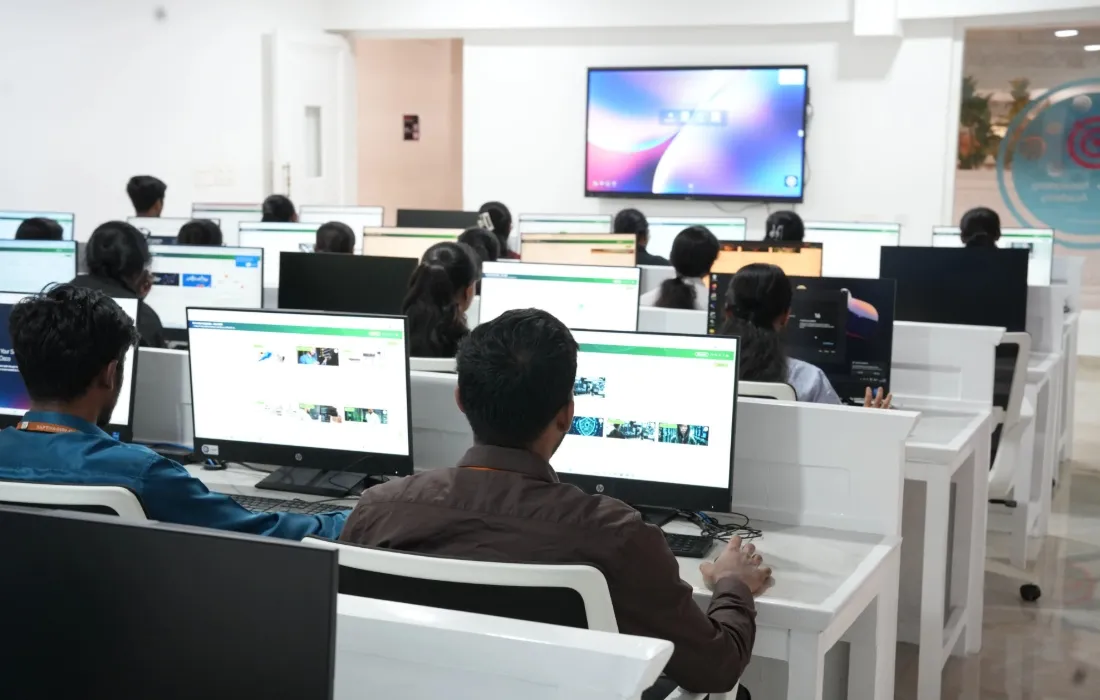
Among the top 10 universities in Bangalore, Our University emphasizes technology-enabled education through computer laboratories that support practical learning and technical skill development. These facilities provide students with opportunities to work on computer-based assignments, practise programming, explore software applications, and develop digital competencies. The computer laboratory creates an interactive learning environment where students can apply theoretical concepts to practical tasks. Through hands-on exercises and project-based activities, learners can strengthen their analytical thinking, logical reasoning, and problem-solving abilities. Students can also use digital tools to prepare presentations, complete academic projects, and explore emerging technologies. Our University encourages learners to participate actively in practical sessions and collaborate with their peers to exchange ideas and improve their understanding. Regular exposure to computer-based learning helps students become more confident when working with technology. These experiences can also support the development of skills relevant to further education and future career opportunities. For students comparing the top 10 universities in Bangalore, modern computer laboratories and practical learning opportunities are valuable factors to consider when choosing a university. Our University strives to create an academic environment that combines technology, practical experience, and continuous learning to support students' educational growth.
Modern Infrastructure Designed for Contemporary Learning
Infrastructure plays a fundamental role in shaping the overall quality of a university learning environment, and Our University places strong emphasis on creating modern, functional and student-oriented infrastructure that supports different dimensions of higher education. A university campus should provide much more than visually appealing buildings; it should create practical spaces where students can attend classes comfortably, conduct experiments, access learning resources, collaborate with peers, participate in academic activities, develop ideas and engage in extracurricular experiences. Our university's infrastructure has been developed with this broader understanding of contemporary education, bringing together technologically advanced classrooms, well-equipped laboratories, physical and digital library resources, collaborative learning spaces, research-oriented facilities, recreational areas and student-support amenities within the campus environment. The objective is to provide students with an academic setting where learning can take place through multiple approaches and where the physical environment complements teaching, practical education and student development. Modern classrooms provide structured spaces for lectures, discussions, presentations and technology-enabled instruction, while laboratories give students opportunities to move from theoretical concepts towards practical application. Libraries provide access to physical and digital learning resources that can support academic preparation, independent study and research, while collaborative spaces encourage students to work together on projects, assignments and innovative ideas. This combination of facilities creates a learning environment in which students can experience different forms of education throughout their university journey. The importance of infrastructure becomes particularly clear when students move from conventional classroom learning to practical and project-based education. A well-designed academic environment can encourage students to participate more actively, ask questions, interact with faculty members and work collaboratively with peers.
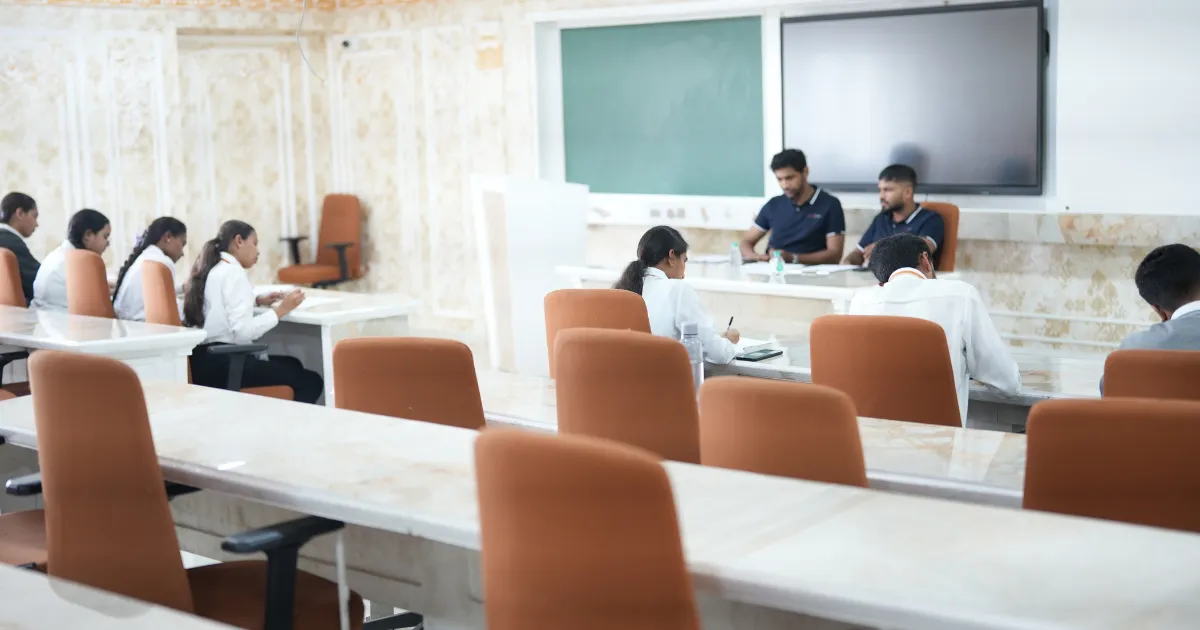
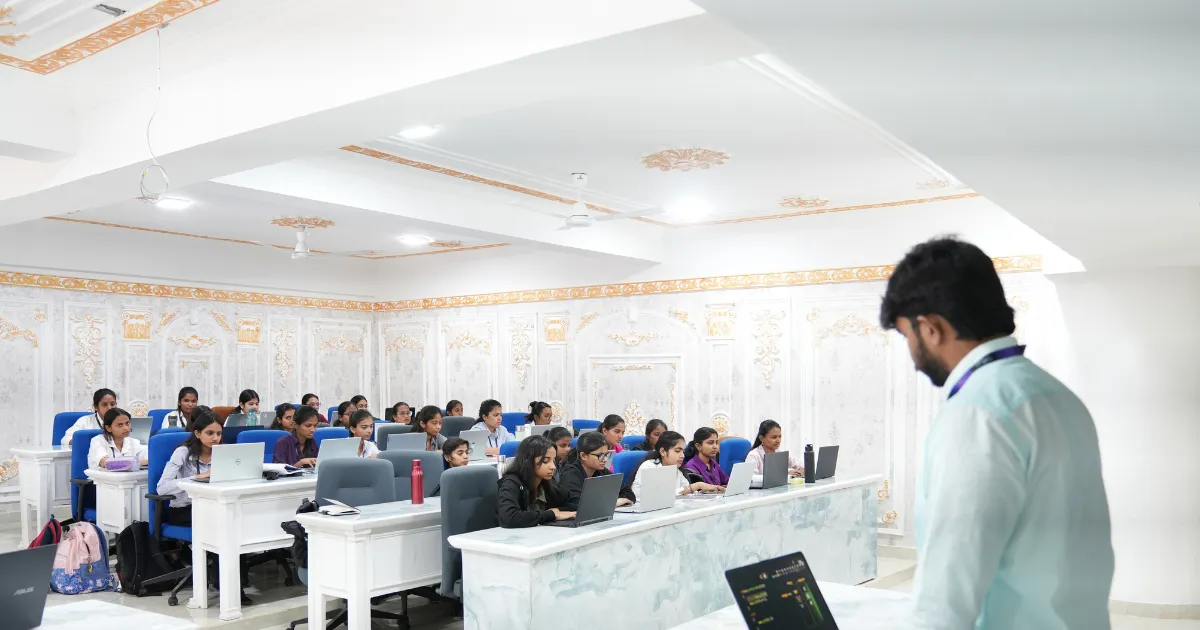
The image reflects a focused academic environment where students are engaged in classroom learning and academic discussions. Admissions are open at our university, providing students with an opportunity to begin their higher education journey in a supportive and professionally oriented learning environment. Prospective students can explore available academic opportunities, understand eligibility requirements and seek guidance regarding the application process. Our university encourages students to approach their admission journey with clarity and confidence while preparing for academic and professional growth. For admission enquiries, eligibility details and application guidance, call +91 9900072632.
Our university's modern infrastructure is intended to support this kind of active learning by providing spaces that are suitable for different academic requirements. The sophisticated classroom environment represented in the supplied campus image reflects this approach, with an organised academic layout, professional interiors and a structured arrangement that supports focused classroom interaction. Such an environment can create a professional atmosphere while giving students a dedicated space for learning, discussion and presentation. Technology-enabled classrooms can further support faculty members in using digital presentations, multimedia resources, visual explanations and other contemporary teaching methods. This can make complex academic concepts easier to explain and provide students with multiple ways of engaging with learning material. However, the value of modern infrastructure does not depend only on the presence of technology; it depends on how effectively students and faculty members are able to use these facilities for meaningful education. Our university therefore focuses on creating an environment where infrastructure serves academic objectives rather than functioning simply as a visual feature of the campus. Laboratories form another important part of the university's infrastructure because practical learning requires appropriate spaces, equipment and resources. Students need opportunities to observe concepts, perform experiments, analyse information, test ideas and understand how theoretical principles operate in practical situations. Well-equipped laboratory environments can encourage students to become more active learners and can help them develop accuracy, analytical thinking, problem-solving skills and confidence in practical activities. Project work can also be strengthened through access to appropriate academic and practical facilities. Students may work in groups to develop ideas, create models, demonstrate solutions or present their findings, and the availability of suitable spaces can support this process.
A university environment that provides opportunities for physical activity can help students maintain a balanced lifestyle alongside academic responsibilities. Cultural infrastructure similarly supports student creativity and expression. Auditorium and amphitheatre spaces can provide platforms for performances, celebrations, seminars and student programmes. The cultural performances shown in the supplied images demonstrate how students can use these platforms to express creativity and participate in campus life. Students involved in performances learn preparation, coordination and confidence, while those involved in organising events can develop leadership and management skills. This demonstrates how infrastructure can support learning indirectly through extracurricular participation. The university campus can also serve as a space for professional interaction. Seminars, workshops, expert sessions and industry-oriented events require suitable venues where students can interact with professionals and participate in discussions. Our university provides spaces that can support such activities. Professional events can expose students to current industry developments, workplace expectations and emerging areas of knowledge. This type of interaction complements classroom education and helps students understand how academic knowledge connects with professional environments. The infrastructure supporting these activities therefore contributes to career preparation as well as academic learning. For students researching the Top 10 Universities in Bangalore, infrastructure is one of the key factors that should be examined carefully. However, students should look beyond photographs and promotional descriptions and understand how the infrastructure is actually used. They should consider whether classrooms support effective learning, whether laboratories provide meaningful practical opportunities, whether library resources support research, whether collaborative spaces encourage teamwork and whether recreational facilities contribute to student life. Our university's infrastructure is designed around these different requirements, providing a combination of academic, practical, research, professional, residential and recreational facilities. This integrated approach can provide students with a campus environment that supports multiple aspects of their university journey.
Another important consideration is the relationship between infrastructure and innovation. Students need environments where they can experiment and explore new ideas. Modern laboratories, technology-enabled classrooms, digital resources and collaborative spaces can create opportunities for innovation-oriented learning. Students can use these facilities to investigate problems, develop projects and communicate their ideas. Innovation is strengthened when students have access to both information and practical environments in which they can test their concepts. Our university's focus on emerging technologies and research therefore works alongside its infrastructure to provide a supportive environment for experimentation and learning. Infrastructure can also influence student motivation. A professional and well-organised academic environment can create a sense of purpose and encourage students to take their education seriously. When students have access to appropriate facilities, they can engage more effectively with projects, presentations and practical activities. A modern campus can also provide students with a professional environment in which they gradually become accustomed to the expectations of higher education and future workplaces. The supplied classroom image illustrates this concept by showing an environment that combines sophisticated design with an academic purpose. The objective is to create spaces where students can concentrate, interact and learn effectively. Our university's infrastructure also supports different learning styles. Some students learn effectively through lectures and visual presentations, while others benefit from practical demonstrations, group discussions, project work or independent research. A diverse campus infrastructure can accommodate these different approaches.
Classrooms support structured instruction, laboratories support experimentation, libraries support independent study, collaborative spaces support teamwork and event venues support presentations and public participation. By providing different types of learning environments, the university can create opportunities for students to engage with education in ways that complement their individual learning preferences. Modern infrastructure also supports the development of independent learning. University students are expected to become increasingly responsible for their academic progress. They need to research topics, prepare assignments, complete projects and manage their schedules. Access to libraries, digital resources, collaborative areas and practical facilities gives students opportunities to take greater ownership of these responsibilities. Independent learning can help students develop discipline, curiosity and confidence while preparing them for lifelong learning. The university's infrastructure can therefore contribute not only to immediate academic requirements but also to the development of long-term learning habits. The physical environment can additionally contribute to interaction between students and faculty. Spaces designed for collaboration and discussion can encourage students to approach faculty members, ask questions and seek feedback. Academic interaction becomes more meaningful when students feel comfortable communicating with teachers and peers.
Student Employability and Career Growth at Our University
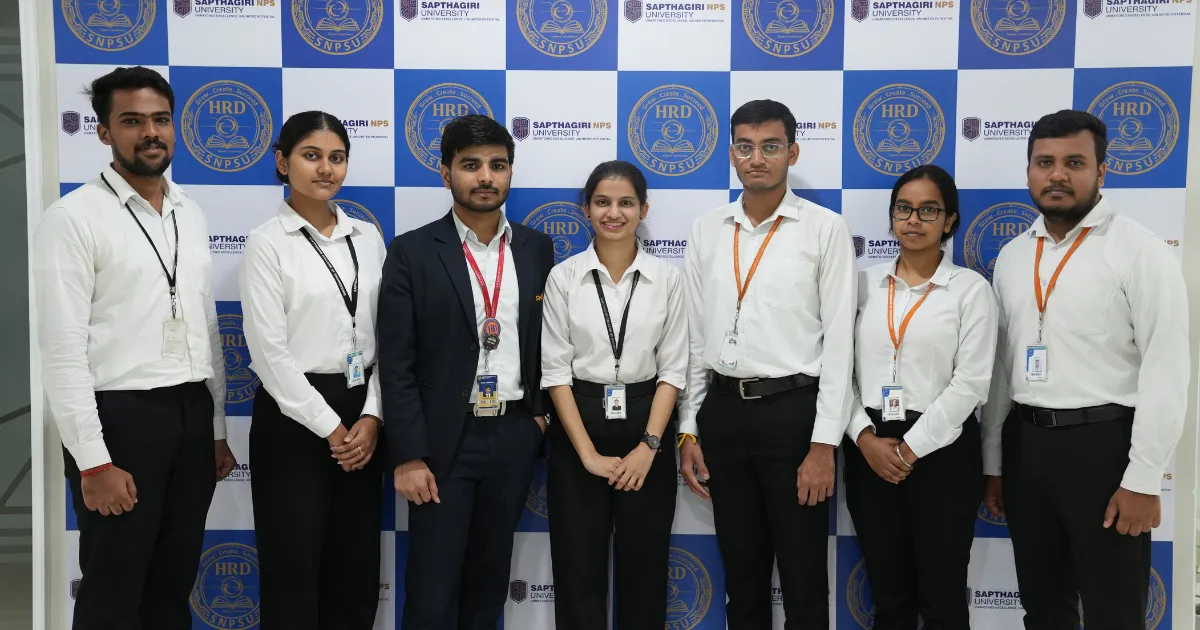
The image captures students in a professional setting, reflecting teamwork, confidence and active participation in university activities. Their formal presentation highlights the importance of developing workplace awareness and professional readiness alongside academic learning. Such experiences can help students strengthen communication, collaboration, interpersonal skills and confidence while preparing for future career opportunities. The HRD and placement environment further supports students in understanding professional expectations and developing the skills required for their career journey.
Our university's emphasis on nurturing students and expert teachers works alongside its infrastructure to support this type of interaction. The campus becomes a place where students can learn from lectures, discussions, projects, practical sessions and interactions rather than relying on one method alone. Infrastructure also supports institutional events that bring the university community together. Academic conferences, cultural celebrations, student programmes, professional sessions and recognition ceremonies provide opportunities for students, faculty and university representatives to interact. The supplied certificate-recognition image represents one such dimension of campus life, where student achievements can be formally acknowledged. Recognition events can encourage participation and create a stronger connection between students and the university community. A well-equipped campus provides the physical spaces required to conduct these activities effectively. The combination of infrastructure and student participation can contribute to a strong sense of campus identity. Students become part of a community through shared classrooms, projects, events, celebrations, sports and academic experiences. This sense of belonging can be particularly valuable for students moving to Bangalore from other locations. A supportive campus environment can help students adapt to university life and develop relationships with peers. Our university provides a diverse range of facilities and activities that can contribute to this process. Another important feature of contemporary infrastructure is adaptability.
Our University’s Distinctive Educational Philosophy
Our university's educational philosophy is built around a comprehensive understanding of what meaningful higher education should achieve in a student's life. University education is not limited to attending lectures, completing examinations and obtaining a degree; it is a transformative stage during which students develop knowledge, practical capabilities, professional awareness, communication skills, confidence, creativity, leadership qualities and the ability to approach challenges with a problem-solving mindset. Our university follows an integrated educational approach that seeks to bring these different dimensions together within a supportive and progressive academic environment. The university's INSPIRE framework brings together Infrastructure, Nurturing Students, Processes, Identity, Research and Expert Teachers, providing a broad foundation for the way the university approaches education and student development. Each element of this framework contributes to creating an environment in which students can learn effectively, participate actively and gradually develop the capabilities required for their future. Infrastructure provides students with modern classrooms, laboratories, libraries, collaborative spaces and other academic and recreational facilities that support different aspects of campus life. Nurturing students means creating an environment where learners receive appropriate academic guidance, encouragement and opportunities to discover their strengths. Effective processes provide structure to the academic journey, helping students understand expectations and participate in their educational activities with greater clarity. Identity encourages students to develop a sense of confidence, responsibility and belonging within the university community. Research encourages curiosity, investigation, analytical thinking and the exploration of new ideas, while expert teachers provide academic direction, subject knowledge and mentorship throughout the learning journey. This integrated philosophy recognises that every student has different abilities, interests and aspirations and therefore needs opportunities to learn through multiple approaches.
Classroom education becomes more meaningful when students can apply knowledge through projects, practical activities, workshops and collaborative learning. Our university encourages students to develop problem-solving, teamwork, communication and presentation skills through practical experiences. Technology-enabled classrooms, modern laboratories and digital resources further support interactive and application-based learning. Explore Our University Infrastructure
Modern professional environments frequently require people to work as teams, communicate effectively with colleagues and contribute towards shared objectives. Students therefore benefit from opportunities to collaborate with peers through projects, presentations, workshops and campus activities, where they can experience different perspectives and understand that challenges can often be approached in multiple ways. Collaborative learning can strengthen listening skills, responsibility, coordination, conflict management and leadership while encouraging students to communicate with greater confidence. Our university provides opportunities for students to participate in academic and extracurricular activities where these abilities can develop naturally through meaningful experience. Professional preparation is another important dimension of the university experience, helping students understand not only what they learn but also how their knowledge and abilities can contribute to future professional environments. Our university supports career-oriented development through skill-building activities, industry interaction, professional sessions, internships, workshops, mentorship and placement-related support. These initiatives can help students become more aware of workplace expectations and recognise the importance of communication, adaptability, teamwork and problem-solving alongside academic knowledge. For admission enquiries and further information, contact our university at +91 9900072632.
Industry interaction can also provide students with exposure to current professional practices and changing technological trends. By connecting academic learning with professional contexts, students can develop a clearer understanding of how their university experience can contribute to future opportunities. The university's educational philosophy also extends to international academic engagement. In a connected world, students increasingly benefit from understanding perspectives beyond their immediate geographical environment. International academic collaborations can provide opportunities for global interaction, collaborative learning, research engagement, workshops, conferences, mobility and networking, subject to the specific opportunity and applicable eligibility conditions. Such exposure can broaden students' perspectives and encourage them to understand education and professional development from a wider global viewpoint. Student development at Our University also includes opportunities beyond academics. Cultural programmes, celebrations, sports, student events and extracurricular activities provide platforms through which students can express creativity, build confidence and interact with their peers. The cultural performances and campus activities represented in the supplied images demonstrate how students can participate in traditional and contemporary events while developing teamwork and public confidence.
A student who performs on stage learns preparation, coordination and presentation, while students involved in organising an event can develop leadership, planning and management abilities. Sports activities can similarly encourage discipline, teamwork, physical activity and healthy interaction. These experiences contribute to a broader educational environment in which students can develop qualities that may not be fully captured through academic assessments. Our university's philosophy also places importance on creating an environment in which students can discover their individual strengths. Every learner may have different abilities, interests and ambitions. Some students may enjoy research and experimentation, others may excel in presentations and communication, while others may discover strengths through projects, cultural activities, sports, leadership or innovation. Providing diverse opportunities allows students to explore these areas and understand themselves better. This process of self-discovery is an important part of university life because students are gradually preparing to make professional and personal decisions that can influence their future. A supportive environment can encourage students to take initiative, try unfamiliar activities and learn from their experiences. The educational philosophy therefore encourages growth through participation rather than simply through instruction. Our university also recognises that effective learning requires access to appropriate resources. Physical and digital libraries support independent study and research, laboratories support practical education, classrooms support structured instruction, collaborative spaces support teamwork and recreational facilities contribute to student well-being and campus engagement.
These facilities work together to create an environment where students can move between different forms of learning according to their academic requirements. The availability of resources can also encourage students to take greater responsibility for their education because they have opportunities to explore information and develop knowledge independently. The philosophy of student nurturing is particularly important because students may encounter different academic and personal challenges during their university journey. Access to appropriate guidance, counselling and student-support facilities can help learners navigate these challenges. Our university provides a supportive environment that recognises the importance of student well-being, academic guidance and participation. Students should feel encouraged to ask questions, seek assistance and communicate their concerns when necessary. A positive university culture can help students feel connected to the institution and more comfortable participating in academic and extracurricular activities. Another distinctive aspect of the university's approach is its emphasis on preparing students for continuous learning. The professional world does not remain static, and knowledge acquired during university may need to be updated throughout a person's career.
Students therefore need to develop the ability to learn new technologies, understand changing professional expectations and adapt to new situations. Our university's exposure to emerging technologies, research, practical activities, professional interactions and collaborative learning can encourage students to develop this adaptability. Instead of viewing graduation as the end of learning, students can begin to understand education as an ongoing process of development. This mindset can be valuable in a professional environment where continuous improvement and adaptability are increasingly important. The university's educational philosophy also places importance on identity and values. Students spend an important stage of their lives within the university environment, and their experiences can influence how they approach responsibility, teamwork, communication and professional conduct. Developing a strong sense of identity can help students understand their role within a larger community. Participation in academic projects, cultural activities, sports and campus events can create a sense of belonging and encourage students to contribute positively to university life. This can help transform the campus from simply being a place where students attend classes into a community where they learn, interact and grow together. For students researching the Top 10 Universities in Bangalore, understanding an institution's educational philosophy can be particularly valuable because infrastructure and facilities alone do not define the complete student experience. A university may have modern buildings and technology, but students also need meaningful teaching, faculty interaction, practical opportunities, professional exposure and a supportive environment. Our university's approach brings these dimensions together through the inspire framework and its broader focus on holistic student development. The philosophy seeks to create an environment where infrastructure supports learning, teachers support understanding, research supports curiosity, practical activities support application, industry interaction supports professional awareness and student activities support personal growth.
This integrated approach can help students develop a balanced combination of academic knowledge and practical capabilities. The university also recognises that learning becomes stronger when students are given opportunities to demonstrate what they know. Presentations, projects, demonstrations, discussions and practical activities allow students to communicate their understanding rather than relying entirely on written examinations. These experiences can reveal strengths and areas for improvement while providing opportunities for feedback. Students can learn how to explain an idea clearly, respond to questions, defend their approach and work collaboratively. Such skills can become useful in academic presentations, professional interviews, workplace meetings and future leadership responsibilities. Our university's philosophy also encourages students to look at problems from multiple perspectives. Problem-solving requires more than identifying an answer; it requires understanding the situation, examining available information, considering alternatives and evaluating possible outcomes. Project work and research activities can provide students with opportunities to practise this process. When students work on practical challenges, they learn that solutions may require experimentation and refinement. This experience can encourage resilience and a willingness to learn from mistakes. The ability to approach challenges systematically is valuable across academic disciplines and professional environments.
Focused Examination and Academic Environment
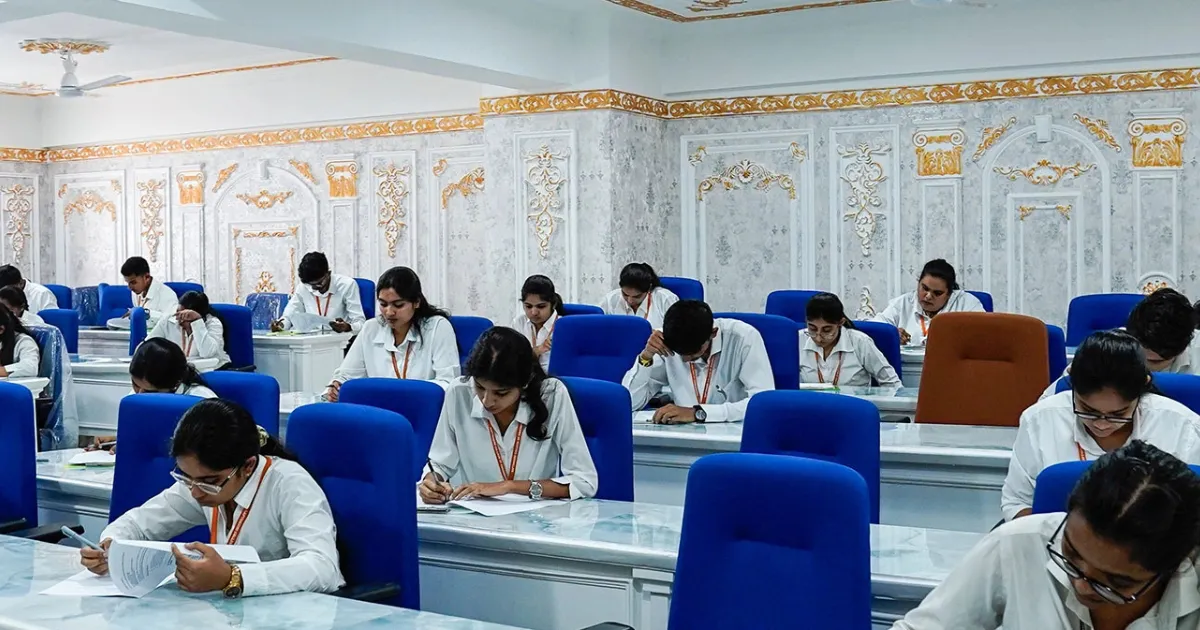
The image captures students participating in an examination in a structured and focused academic environment. Our university provides dedicated learning spaces that support students during assessments, helping them demonstrate their knowledge and academic preparation. Explore Examination Information
The role of innovation within the educational philosophy is therefore closely connected with problem-solving and curiosity. Students are encouraged to explore emerging areas of knowledge and understand how technology can be used to address real-world challenges. Exposure to areas such as artificial intelligence, robotics, data analytics, cloud computing, cybersecurity, Internet of Things, computer vision, blockchain, quantum technologies and other emerging fields can broaden students' awareness of the changing technology landscape. The purpose of this exposure is to encourage learning and exploration rather than simply memorising technical terminology. Students can use projects, practical activities and research to understand how emerging technologies work and where they may have applications. Our university's educational philosophy also recognises the importance of professional communication. Students may possess strong academic knowledge but still need to develop the ability to explain their ideas effectively. Presentations, group discussions, project demonstrations, seminars and cultural activities can provide opportunities to develop communication confidence. Students learn how to structure information, speak clearly, respond to questions and interact respectfully with others. These skills can support future academic and professional interactions. Communication also includes listening, collaboration and the ability to understand different perspectives, all of which can be developed through group activities and student participation. Leadership development forms another part of the broader philosophy. Leadership can begin with small responsibilities such as coordinating a project, organising an event, assisting peers or taking responsibility for a particular task.

The image captures a vibrant university fashion event where students showcase creativity, confidence and individuality on stage. Such celebrations provide opportunities for students to express their talents while developing communication, teamwork, presentation skills and self-confidence. Our university encourages students to actively participate in cultural and extracurricular activities, creating a balanced campus experience that complements academic learning and personal development. Explore Our University to discover academic opportunities, campus life and student activities.
Our university provides opportunities for students to participate in academic and extracurricular activities where they can gradually develop these capabilities. Leadership experiences can teach students how to make decisions, manage time, communicate responsibilities and motivate team members. These lessons can complement formal academic learning and contribute to professional maturity. The university's focus on holistic development also means that students are encouraged to maintain a balanced lifestyle. Academic responsibilities are important, but students also benefit from recreation, sports, cultural activities and social interaction. Campus facilities such as sports courts, gymnasium, recreational areas, cultural spaces and event venues provide opportunities for students to engage in activities outside the classroom. A balanced campus experience can help students manage academic responsibilities while developing interests and relationships. It can also provide opportunities to relax and recharge, which is important during an intensive academic journey. Our university's philosophy therefore extends across the complete student experience. It begins with academic learning and continues through practical application, research, innovation, industry exposure, international engagement, student activities, sports, cultural participation and career preparation. Each component contributes to the development of a student who is not only academically informed but also capable of communicating, collaborating, adapting and solving problems. The aim is to provide students with an environment in which they can gradually become more independent and confident learners. Students researching the Top 10 Universities in Bangalore can therefore look beyond conventional measures and examine how a university's philosophy translates into the actual student experience. Our university's inspire framework provides a clear way to understand this approach. Infrastructure creates the environment, nurturing supports the student, processes provide structure, identity builds belonging, research encourages curiosity and expert teachers provide knowledge and mentorship. Together, these elements create a foundation for comprehensive student development.
The philosophy is also reflected in the diverse activities available to students. A student can attend a technologically enabled classroom session, use laboratory facilities for practical learning, conduct research using library resources, work with peers on a project, present the results to an evaluator, participate in a cultural programme, engage in sports activities and attend professional sessions. Each experience contributes something different to the student's development. This diversity of learning opportunities is an important characteristic of a contemporary university environment. Ultimately, Our University's distinctive educational philosophy is centred on the belief that students should be given the knowledge, resources, guidance and opportunities required to grow into capable and confident individuals. Academic excellence remains an important foundation, but the university also recognises the importance of practical experience, innovation, research, communication, leadership, teamwork, professional preparation and personal development. The inspire framework provides an integrated foundation for this approach, while modern infrastructure, expert faculty, practical learning, industry engagement, international academic initiatives, student activities and career support bring the philosophy into the everyday university experience. For students exploring the Top 10 Universities in Bangalore, this broader approach can provide an important perspective when evaluating their higher education options. Our university offers an environment where students can learn through classrooms, laboratories, projects, research, technology, collaboration, professional interaction and campus activities. The objective is to help students make the most of their university journey, discover their strengths, develop meaningful skills and prepare themselves for future opportunities. By combining academic learning with practical exposure and holistic development, Our University seeks to create an educational experience that supports students not only during their university years but also as they move towards further education, professional careers and lifelong learning.
Placement, HRD & Career Development at Our University
Our university has developed a structured Placement and Human Resource Development (HRD) ecosystem to help students transition confidently from academic learning to professional careers. The placement environment is supported by dedicated career-development activities, industry interaction, skill enhancement programmes and systematic recruitment preparation, allowing students to work progressively on the competencies expected in today's competitive employment landscape. The objective of the HRD and placement framework is not limited to preparing students for a single recruitment process; it focuses on developing a broader combination of technical knowledge, communication skills, aptitude, problem-solving ability, professional behaviour, confidence and workplace readiness. Students can participate in planned training activities that help them understand recruitment procedures and prepare for different stages of selection. The university's placement-oriented environment is further strengthened through practical learning, project-based activities, industry exposure and interaction with organisations represented within its recruiter and industry-partner ecosystem.
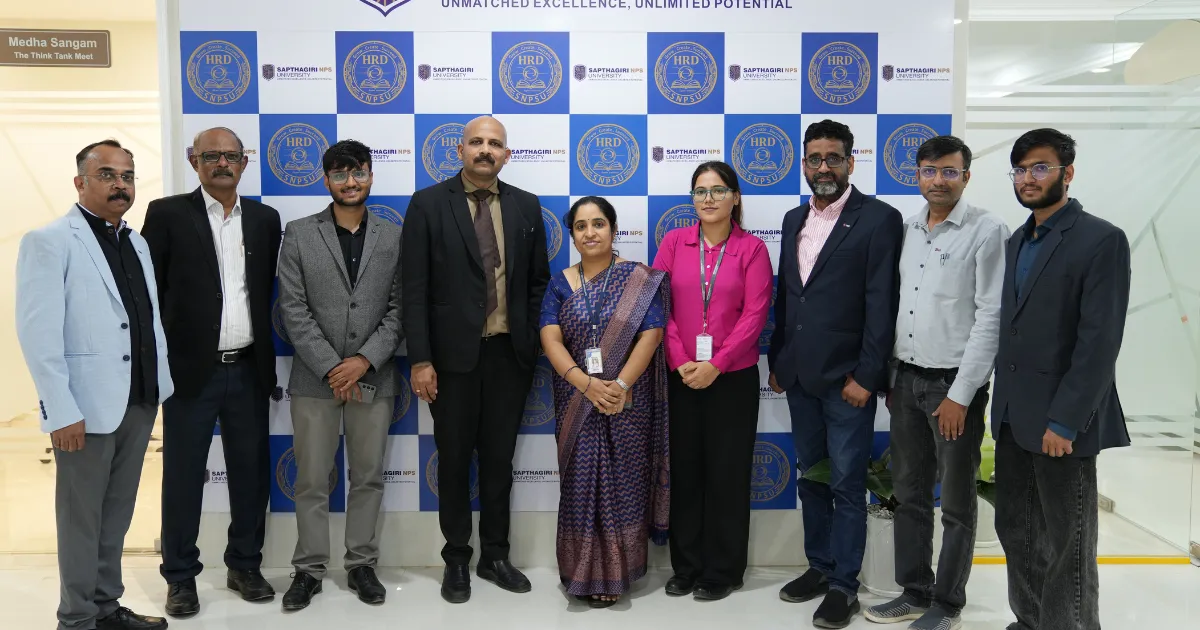
The image reflects a professional gathering focused on industry interaction, knowledge sharing and career development. Our university provides students with opportunities to engage with professionals, understand workplace expectations and gain broader exposure to evolving industry practices. Such interactions can complement classroom learning while strengthening communication, networking, teamwork and professional confidence. Students can also gain valuable perspectives on career pathways, technical requirements and the skills needed for future opportunities. These experiences contribute to a well-rounded educational journey by connecting academic learning with practical professional awareness. For admission and programme-related enquiries, contact our university at +91 9900072632.
These elements create a meaningful connection between classroom learning and professional expectations, helping students understand how their knowledge can be applied in real-world situations. The C Block and associated campus infrastructure provide an environment for academic, training and student-development activities, supporting seminars, workshops, interactions and other career-focused initiatives. Through continuous preparation, students can work on their aptitude, reasoning, communication, presentation and interview skills while receiving appropriate academic and professional guidance. The university also places emphasis on developing students' ability to work collaboratively, communicate effectively and approach professional challenges with an analytical mindset. This integrated approach makes HRD an important part of the overall student-development experience, connecting academic preparation with employability and career planning. The recruiter and industry-partner presence displayed by the university includes organisations such as Cisco, Boeing, Capgemini, Cognizant, HSBC, HCLTech, Schneider Electric, Siemens, Reliance Industries, Epson, Broadbridge, Brilyant, GlobalData, Fractal, Progress, Quantit, Safesend, Sagility, Intellipaat, Unity, Repco Home Finance, Riboon, Redant Technologies and other organisations shown in the university's materials. The presence of such organisations across different sectors provides students with exposure to a broad professional ecosystem and demonstrates the importance of industry engagement within the university's career-development environment.
Our Sapthagiri NPS University HRD department actively supports professional development, industry interaction, and meaningful institutional collaborations. This meeting reflects our commitment to building strong connections with leading organizations and creating valuable opportunities for students and faculty. The interaction with NTT DATA highlights a focus on industry engagement, knowledge sharing, and career-oriented initiatives. Such collaborations help strengthen the connection between academic learning and evolving industry requirements. Through these initiatives, our HRD team continues to encourage professional growth, employability, and stronger industry-academia relationships.
Professional Placement Training for Career Readiness
Placement training at our university is designed to help students prepare systematically rather than approaching recruitment only when companies begin their selection processes. A professional recruitment process can involve multiple stages, and students therefore benefit from developing a combination of aptitude, technical, communication and interpersonal capabilities. Training activities can help students become familiar with aptitude assessments, logical reasoning, communication exercises, group discussions, personal interviews, resume preparation and professional presentation. Such preparation can make the recruitment process more structured for students by allowing them to identify their strengths and areas that require further development. Technical knowledge remains an important part of career preparation, but employers also look for students who can communicate ideas clearly, demonstrate problem-solving abilities, work effectively within teams and adapt to professional situations. HRD activities therefore complement academic education by giving students opportunities to improve these broader competencies. Students can also use practical projects, laboratory experience, presentations and collaborative assignments as opportunities to demonstrate their technical and interpersonal capabilities. The placement-training environment encourages students to approach their career preparation as a continuous process, beginning with foundational skill development and progressing towards more specialised recruitment readiness. Faculty guidance and career-oriented activities can further help students understand professional expectations and prepare themselves for interactions with recruiters. This structured approach is particularly valuable for students who are experiencing formal recruitment processes for the first time, as it provides a framework for building confidence and improving professional presentation.
C Block & Dedicated Career-Oriented Campus Environment
The C Block forms part of the university's campus infrastructure and contributes to the environment in which academic, training and student-development activities are conducted. A professional university environment requires more than classrooms and laboratories; it also needs spaces and facilities that can support seminars, workshops, training programmes, career-development activities and interactions. The campus infrastructure provides opportunities for students to participate in activities beyond conventional classroom instruction and engage with programmes focused on their overall development. Placement preparation can involve classroom-based sessions, interactive activities, presentations, mock exercises, group discussions and other forms of experiential learning. A suitable campus environment helps these activities take place in an organised manner while allowing students to interact with peers and develop confidence. C Block and other university facilities therefore contribute to the broader academic and professional ecosystem in which students learn, practise and prepare for future opportunities. The integration of academic spaces with career-development activities allows students to experience a more comprehensive learning environment where professional preparation becomes a regular part of university life.
Recruiters & Industry Partners
Our university's recruiter and industry-partner ecosystem represents organisations from a variety of sectors, creating an important platform for industry interaction and career awareness. The recruiter logos displayed in the university materials include organisations such as ANRS, Apollo PowerSystems, Avalji, Bharath Group of Companies, Biocon Biologics, Boeing, Brilyant, Broadbridge, Bulk Liquid Solutions, Capgemini, Cognizant, Conserve, Cubic, CyRAACS, DIFACTO, Dynalectric, Edizi Tools, EON Elevators, Epson, Finalyzer, Flying Wedge Defence & Aerospace, Fractal, GA Morgan Dynamics, Gigroup, Gilbarco Veeder-Root, GlobalData, HCLSoftware, HCLTech, HSBC, IexaSeed, Immidiart, Infinite Global, Intellipaat, Invenco, Kamath Transformers, O9 Solutions, Omega Healthcare, Onity, Progress, Promarg Enterprises, Qlar, Quantit, Redant Technologies, Reliance Industries, Reliance.ai, Repco Home Finance, Riboon, Safesend, Sagility, Schneider Electric, Siemens, SIMS, SKTC, Unity and other organisations represented in the supplied materials. This diverse industry representation gives students a broader understanding of the professional sectors in which their skills can be applied. Industry interaction can also help students understand changing workplace requirements, emerging technologies, professional expectations and the importance of continuous skill development. Exposure to organisations from technology, engineering, finance, healthcare, manufacturing, consulting, defence and other sectors can broaden students' awareness of potential career environments. The university's industry engagement therefore complements academic and practical learning by creating opportunities for students to connect their education with the professional world.
HRD Programmes for Skill & Personality Development
The HRD function plays an important role in helping students develop the professional attributes required beyond academic qualifications. A strong academic record can provide a foundation, but students also need communication, collaboration, leadership, adaptability and problem-solving capabilities to navigate professional environments. HRD activities can focus on these areas through structured development programmes, interactive sessions, practical exercises and career-oriented guidance. Students can work on verbal communication, presentation skills, professional etiquette, teamwork and confidence while simultaneously strengthening aptitude and analytical abilities. Personality development activities can also help students become more comfortable during interviews, presentations and interactions with professionals. The objective is to encourage students to recognise that employability is a combination of knowledge, skills, attitude and the ability to apply learning effectively. By integrating HRD activities with academic and practical education, our university creates opportunities for students to develop a more complete professional profile. This continuous approach can be particularly useful as students progress through their academic journey and begin preparing for internships, projects, recruitment processes and long-term career goals.
Resume, Aptitude & Interview Preparation
Professional recruitment requires students to present their knowledge and capabilities effectively, which makes resume development, aptitude preparation and interview readiness important elements of placement training. Our university's career-development environment supports students in understanding how to communicate their academic achievements, technical capabilities, project experience and transferable skills in a professional manner. Aptitude preparation can help students strengthen quantitative reasoning, logical thinking and problem-solving abilities, while communication-oriented activities can improve the way they express ideas. Interview preparation provides students with an opportunity to practise answering questions, explaining projects, discussing their strengths and presenting themselves professionally. Mock interviews and similar preparation activities can help students become familiar with the structure and expectations of formal recruitment interactions. Group discussions and presentation activities can additionally develop listening, articulation, teamwork and confidence. Together, these activities create a systematic preparation pathway rather than leaving students to prepare independently at the final stage of their academic programme.
Practical Learning Supporting Placement Preparation
Practical learning is closely connected with professional readiness because employers often expect graduates to understand how theoretical concepts are applied in real situations. Our university's advanced laboratories, technology-enabled learning facilities, projects and hands-on activities provide opportunities for students to strengthen their practical understanding alongside classroom education. Students can use practical sessions to develop familiarity with tools, technologies, experimentation, analysis and problem-solving processes. Project work can further encourage students to identify problems, develop solutions, work collaboratively and present their outcomes. These experiences can become valuable components of a student's professional profile because they demonstrate the ability to apply knowledge rather than simply recall theoretical information. Practical learning also encourages curiosity, experimentation and innovation, qualities that are relevant across a wide range of professional environments. When combined with HRD training and placement preparation, practical education creates a stronger foundation for students to communicate what they have learned and demonstrate their capabilities during recruitment interactions.
Industry Exposure & Professional Awareness
Industry exposure helps students understand the relationship between academic education and the expectations of professional organisations. Through industry-oriented activities, interactions, workshops, seminars and other career-development initiatives, students can gain a clearer understanding of workplace practices and changing industry requirements. The university's displayed industry-partner ecosystem includes organisations across multiple domains, providing a broad context for students to understand different professional environments. Such exposure can encourage students to explore career possibilities, identify the skills relevant to their intended professional areas and make informed decisions about further development. Industry interaction also reinforces the importance of learning beyond textbooks, particularly in a rapidly changing employment environment where technologies and workplace requirements continue to evolve. By combining academic knowledge, practical experience and industry awareness, students can progressively build a professional mindset that supports their transition from university to employment.
Placement & HRD Facilities – Our University
| Facility | Key Highlights | Action |
|---|---|---|
| Placement & HRD | Structured career guidance and placement support | 👉Click to Know More |
| Placement Training | Aptitude, communication and interview preparation | 👉Click to Know More |
| Industry Exposure | Recruiter interaction and industry-oriented activities | 👉Click to Know More |
| C Block | Infrastructure supporting training and career-development activities | 👉Click to Know More |
| Skill Development | Technical, soft skills and professional development | 👉Click to Know More |
| Recruiter Network | Diverse recruiters and industry partners | 👉Click to Know More |
Expert Faculty, Advanced Laboratories & Practical Learning at Our University
Our university creates a learning environment where experienced faculty, modern laboratory infrastructure and practical learning come together to support students' overall academic development. Faculty members play an important role in helping students understand concepts clearly, connect theoretical knowledge with real-world applications and develop problem-solving abilities through interactive and application-oriented learning. The academic environment encourages students to ask questions, participate in discussions, work on practical activities and explore new ideas beyond conventional classroom learning. Our university also provides well-equipped laboratories and advanced practical learning facilities that enable students to gain hands-on exposure while studying. Practical sessions allow students to observe concepts in action, work with relevant equipment and technologies, perform experiments, analyse results and understand how theoretical principles are applied in real situations. This approach helps students build confidence in handling practical tasks and encourages them to develop an analytical and problem-solving mindset. The laboratory environment also supports project-based learning, innovation and experimentation, giving students opportunities to learn through doing rather than depending entirely on textbook-based instruction. Modern computing and technical facilities further strengthen the practical learning ecosystem, particularly for activities involving technology, research, experimentation and emerging areas of knowledge. Faculty guidance during practical sessions can help students understand procedures, interpret outcomes and improve their technical capabilities. By combining quality faculty support, advanced laboratories, hands-on activities, project-based learning and technology-enabled academic infrastructure, our university provides students with opportunities to develop both conceptual understanding and practical capabilities. This integrated learning approach is designed to help students become more confident, adaptable and prepared to apply their knowledge in academic projects, research activities and professional environments.
Faculty & Practical Learning Facilities – At a Glance
| Feature | What Our University Provides | Action |
|---|---|---|
| Experienced Faculty | Faculty guidance focused on conceptual clarity and application-based learning | 👉Click to Know More |
| Advanced Laboratories | Modern and well-equipped laboratory infrastructure for practical learning | 👉Click to Know More |
| Hands-on Learning | Opportunities to learn concepts through practical activities and experimentation | 👉Click to Know More |
| Technology-Enabled Learning | Modern computing and technical facilities supporting academic activities | 👉Click to Know More |
| Project-Based Learning | Practical activities and projects that encourage application of knowledge | 👉Click to Know More |
| Research & Innovation | Infrastructure and academic guidance supporting exploration and innovation | 👉Click to Know More |
| Industry-Oriented Exposure | Learning focused on developing practical and career-relevant capabilities | 👉Click to Know More |
| Problem-Solving Skills | Practical learning activities designed to encourage analytical thinking | 👉Click to Know More |
| Modern Infrastructure | Contemporary classrooms, laboratories and collaborative learning spaces | 👉Click to Know More |
| Practical Academic Environment | Integration of classroom concepts with hands-on learning experiences | 👉Click to Know More |
Modern Infrastructure That Supports Contemporary Education
Modern infrastructure is an important consideration for students because the physical learning environment directly influences the types of academic and practical experiences available on campus. Our university provides infrastructure designed to support contemporary education through technologically enabled classrooms, laboratories, workshops, computing facilities, libraries, collaborative spaces, seminar facilities and recreational areas. Each facility serves a different purpose within the educational experience. Classrooms provide environments for teaching, discussion and interaction, laboratories allow students to experiment and understand practical concepts, workshops support hands-on activities, and computing facilities provide access to technology-based learning. Libraries give students opportunities for independent study and academic research, while collaborative spaces can support group projects and discussions. The campus also includes facilities intended to support accommodation, recreation, student services and everyday convenience. Infrastructure becomes valuable when students can actively use it to enhance their learning, and our university's facilities are intended to support multiple dimensions of student life. Students searching for the Top 10 Universities in Bangalore can therefore examine not only how modern a campus appears but also whether its facilities contribute meaningfully to education, practical experience and student development. A well-planned academic environment can encourage students to move between classroom learning, experimentation, independent study, collaboration and extracurricular participation. This variety can make university education more engaging and help students develop different capabilities. Our university's infrastructure provides the physical foundation for an educational experience that combines academic instruction with practical application, technology exposure, research and student activities.
A Learning Environment Built Around Student Participation
Active student participation is an important part of meaningful university education because students develop stronger understanding when they engage with concepts rather than simply receive information. Our university provides an environment where students can participate through classroom discussions, practical activities, projects, workshops, seminars, research initiatives, presentations, collaborative assignments and student activities. These experiences can encourage learners to ask questions, analyse information, exchange ideas and develop independent perspectives. Faculty guidance supports this process by helping students understand difficult concepts and improve their academic work. Students can also use library and digital resources to explore topics beyond the material covered in classrooms. Project work creates opportunities to combine different forms of knowledge and develop practical problem-solving abilities. Collaborative activities help students understand how to communicate and work with people who may have different ideas or approaches. Such participation can gradually build confidence and independence, which are valuable qualities for both higher education and professional life. When students research the Top 10 Universities in Bangalore, they should consider whether the learning environment encourages them to participate actively and develop capabilities beyond examination performance. Our university's academic environment provides multiple avenues through which students can take responsibility for their learning and become more engaged with their educational journey. This student-centred approach can make learning more dynamic while helping students develop the habits of inquiry, collaboration, reflection and continuous improvement.
Practical Learning That Connects Knowledge with Application
The ability to apply knowledge is an important component of higher education, particularly in an environment where professional roles increasingly require problem-solving and practical competence. Our university places emphasis on practical learning, hands-on activities, laboratory experience, workshops and project-based education so students can connect academic concepts with application. Practical learning allows students to observe processes, test ideas, analyse outcomes and understand how theoretical principles function in real situations. Project activities can also teach students how to plan work, manage deadlines, divide responsibilities and communicate results. These experiences can help bridge the gap between what students learn through academic material and how knowledge is used outside the classroom. Practical exposure can also encourage students to learn from mistakes and improve their approaches through repeated experimentation. Students who actively participate in such activities can gradually develop greater confidence in handling unfamiliar problems. For families comparing the top 10 universities in bangalore, practical learning is therefore an important factor because academic knowledge becomes more valuable when students understand how to use it. Our university's focus on application-oriented education provides opportunities for students to complement theoretical learning with practical experience. The combination of classrooms, laboratories, workshops, projects and technology-based activities creates multiple learning pathways and can help students develop a deeper understanding of their academic areas while building transferable skills such as analytical thinking, communication, teamwork and problem-solving.
Technology Exposure for a Changing Professional World
Technology is transforming education, business, research and professional life, making technology awareness an important part of contemporary higher education. Our university provides a technology-oriented learning environment and highlights exposure to emerging areas including artificial intelligence, data-driven technologies, robotics, cloud computing, cybersecurity, Internet of Things, blockchain, computer vision, augmented reality, renewable energy and other developing fields. Students can use technology-enabled classrooms, computing facilities, laboratories and practical activities to become familiar with modern learning tools and technological concepts. The purpose of technology exposure is not simply to introduce students to popular technologies but to encourage them to understand how technology can be used to analyse problems, improve processes and create solutions. Students also need strong fundamentals because technologies change rapidly and specific tools can become outdated. Our university's broader approach therefore combines academic foundations with awareness of emerging developments and opportunities for practical application. Students researching the Top 10 Universities in Bangalore can consider how effectively an institution prepares learners for a technology-driven professional environment. Exposure to emerging technologies can encourage students to remain curious and develop the ability to learn new tools throughout their careers. Technology-based learning can also strengthen collaboration because students increasingly work with digital platforms and shared resources. Our university's emphasis on technology, practical education and innovation provides a learning environment where students can develop both technological awareness and the adaptability required for continuous professional growth.
Research as a Pathway to Deeper Learning
Research encourages students to move beyond memorising information and begin asking questions, examining evidence and developing reasoned conclusions. Our university identifies research as an important element of its educational framework and provides an environment that encourages academic exploration, investigation and innovation. Students can develop research-oriented thinking through projects, experiments, academic discussions, workshops and other activities. Research can teach learners how to identify a question, gather information, evaluate evidence, analyse findings and communicate conclusions. These abilities are useful not only for students planning advanced academic study but also for professionals who need to solve complex problems. Research activities can also encourage patience and curiosity because meaningful investigation often involves testing ideas and refining approaches. Our university's research orientation complements practical education by encouraging students to investigate why something works rather than simply learning how it works. Students comparing the top 10 universities in bangalore can consider research culture as an important part of the academic environment, particularly if they are interested in innovation, advanced study or analytical careers. Research opportunities can also encourage students to interact more closely with faculty members and peers while exploring areas of academic interest. By developing inquiry, analysis and evidence-based thinking, students can become more independent learners and better prepared to approach unfamiliar challenges.
Innovation and Creative Problem-Solving
Innovation begins with the willingness to question existing approaches and explore alternative solutions. Our university encourages an environment in which students can participate in innovation activities, projects, research initiatives, emerging technology programmes and problem-solving exercises. Such activities can help students understand that innovation is not limited to creating entirely new inventions; it can also involve improving existing processes, designing more efficient solutions or approaching a familiar problem from a different perspective. Students can develop creative thinking by identifying problems, generating ideas, testing possibilities and learning from unsuccessful attempts. Team-based innovation activities can additionally strengthen communication and collaboration because students need to explain ideas, receive feedback and combine different perspectives. These experiences can be valuable across academic disciplines and professional sectors. Students researching the Top 10 Universities in Bangalore can examine whether the university environment encourages curiosity and experimentation alongside conventional academic learning. Our university's focus on innovation provides students with opportunities to develop a mindset that values exploration, evidence, creativity and continuous improvement. This can help learners become more comfortable with complex problems where there may not be a single obvious answer. Innovation-oriented education can also encourage students to take initiative and become more confident in developing and presenting their ideas.
Industry Interaction and Professional Awareness
University education becomes more relevant when students understand how academic knowledge connects with professional environments. Our university highlights industry-institute collaboration, professional interaction, practical exposure, internships and career-development activities as important parts of the student experience. Industry interaction can introduce students to workplace expectations, professional practices, technological developments and changing skill requirements. Guest sessions, workshops, training programmes and professional interactions can provide perspectives that complement classroom teaching. Students can use these experiences to understand what employers expect and identify areas where they need to strengthen their knowledge or skills. Industry exposure can also help students become familiar with professional communication and workplace behaviour before graduation. Our university's approach connects academic learning with broader professional awareness so students can gradually prepare for the transition from university to employment or further study. When evaluating the top 10 universities in bangalore, students should examine the quality and relevance of industry engagement rather than simply counting the number of interactions. Meaningful exposure should provide learning value and encourage students to connect academic concepts with practical situations. Our university's emphasis on industry interaction gives students opportunities to understand professional environments while continuing their academic journey.
Internship Exposure and Real-World Experience
Internships can provide students with an opportunity to experience professional environments and understand how organisations function. Our university highlights internship exposure and practical experience as components of student development. During an internship, students may observe workplace processes, participate in assignments, collaborate with teams and apply concepts learned during their academic studies. Such experiences can help students develop professional communication, time management, responsibility and adaptability. Internships can also help learners identify areas that interest them and areas where additional preparation may be required. Students should evaluate internship opportunities carefully because the learning value can depend on the organisation, role, duration, responsibilities and level of student participation. A certificate alone does not determine the quality of an internship; meaningful responsibilities and genuine learning are more important. For students researching the Top 10 Universities in Bangalore, internship opportunities can therefore be considered as part of the broader practical-learning environment. Our university's emphasis on internships complements classroom teaching by providing students with opportunities to understand professional expectations and experience practical situations. When combined with projects, industry interaction and skill development, internship exposure can contribute to a more complete preparation for life after university.
Professional Skills and Career Readiness
Academic knowledge provides a foundation, but students also need transferable skills to navigate professional environments. Our university supports career readiness through skill development, professional training, industry interaction, practical exposure, internships and placement-related preparation. Students can develop technical abilities alongside communication, teamwork, presentation, problem-solving, aptitude and interview skills. Career readiness should ideally be developed gradually rather than treated as a final-semester activity. Students can begin by improving communication, participating in projects, building practical experience and seeking feedback from faculty members. Workshops and professional interactions can further help students understand workplace expectations. The university provides a framework and opportunities for this preparation, while students need to actively participate and take responsibility for their own development. For students comparing the Top 10 Universities in Bangalore, career readiness is an important factor because professional preparation involves more than the final recruitment process. Our university's approach encourages students to develop a broader set of capabilities that can support employment, entrepreneurship, advanced education and other professional pathways. Building confidence, adaptability and professional awareness throughout university can help students approach future opportunities with greater preparation.
Placement Support and Opportunities
Placement support remains an important consideration for students and parents when evaluating universities. Our university's official website states that its placement division reports 100% placement for eligible students and that 200+ companies regularly visit the campus. These published figures should be understood according to the university's stated eligibility conditions and should be verified for the applicable academic year and relevant programme. Students should ask the admissions team or placement division for the latest programme-specific information, participating organisations, eligibility requirements, recruitment roles, salary details and placement methodology before using placement figures for comparison. Placement outcomes can vary based on academic performance, eligibility, technical skills, communication, interview performance, recruiter requirements and individual participation in training. The university's role includes providing career guidance, skill development, placement preparation and access to recruitment opportunities, while students need to actively prepare themselves. For students researching the Top 10 Universities in Bangalore, placement support can be examined alongside internships, industry exposure and professional training to understand the broader career-development environment. A responsible assessment should consider current and relevant information rather than relying only on a headline percentage. Our university provides a structured environment in which students can prepare for professional opportunities while developing the knowledge and skills required for recruitment and long-term career growth.
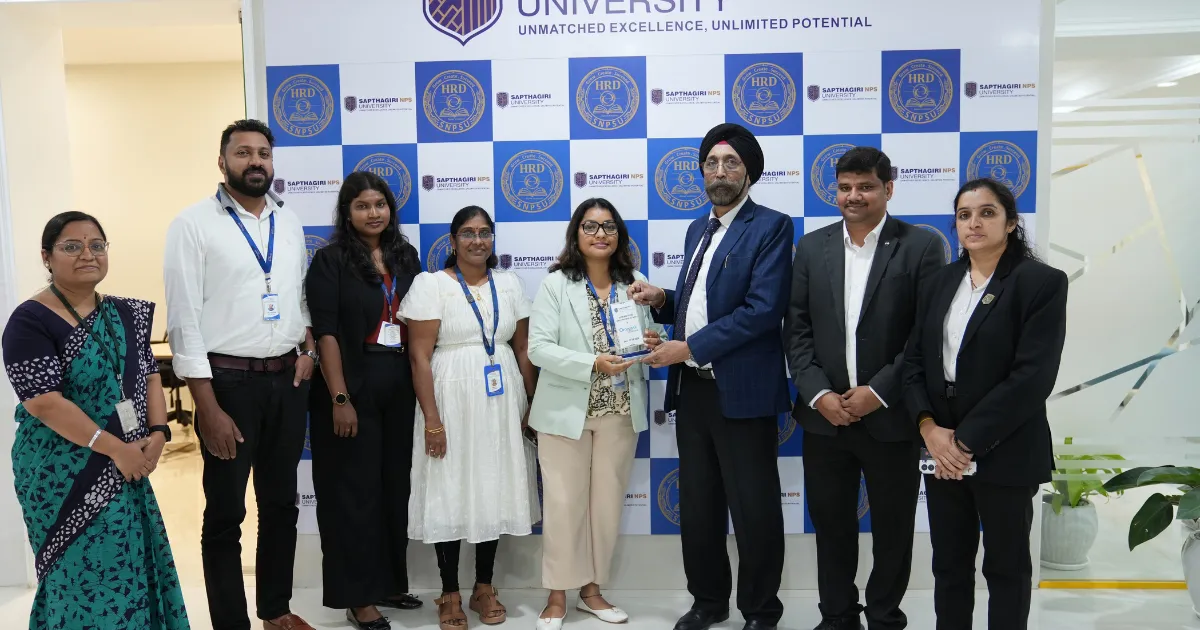
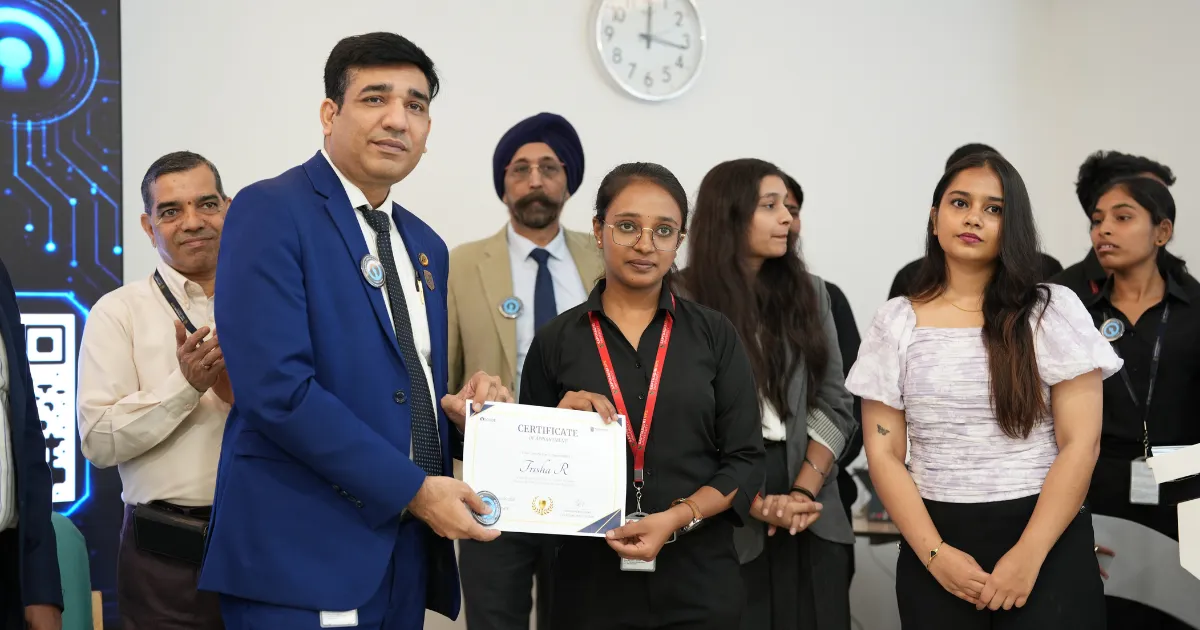
The image captures a formal recognition ceremony where a student is receiving an award in the presence of faculty members and university representatives, reflecting a culture of achievement and appreciation. For students exploring the Top 10 Universities in Bangalore, such moments highlight the importance of an educational environment that encourages participation, excellence and personal development. Our university provides students with opportunities to participate in academic activities, professional interactions, skill-development programmes, projects and events that can support their overall growth. Recognition of student achievements can encourage learners to continue developing their knowledge, confidence and abilities while motivating them to participate actively in university life. Such occasions also bring students, faculty members and university leadership together, strengthening the sense of community within the campus. Beyond academic learning, students can benefit from opportunities that encourage communication, teamwork, leadership and professional awareness. Our university aims to create an environment where students can learn, participate, demonstrate their abilities and receive encouragement for their efforts. For students researching the top 10 universities in Bangalore, considering opportunities for academic development, practical exposure, student engagement and recognition can provide a broader understanding of the university experience. The photograph represents how meaningful recognition and participation can become valuable parts of a student’s educational journey.
Scholarships and Financial Planning
Higher education is a significant financial commitment, and families naturally consider tuition fees, accommodation, transportation, learning resources and other expenses when planning for university. Our university provides scholarship opportunities for eligible students and states that scholarship benefits are available for meritorious students and students from diverse backgrounds, subject to applicable conditions. Students should review the latest scholarship eligibility requirements, application process, documentation, award details and renewal conditions before planning their finances around a scholarship. Families should also calculate the complete cost of education rather than looking only at tuition fees. Accommodation, books, equipment, examination-related expenses, travel and personal costs can influence the total budget. Our university's fee structure and scholarship opportunities can be evaluated together with the academic facilities, practical learning opportunities, technology exposure and student support available on campus. Students researching the Top 10 Universities in Bangalore can use this broader approach to understand educational value and affordability. Since fees and scholarship policies may change between academic years, current official information should always be confirmed before admission. A transparent financial plan can help students and parents approach higher education with greater confidence and avoid unexpected expenses.
Library Infrastructure and Advanced Learning Resources at Our University
Our university provides a modern library environment designed to support academic learning, research, self-study and continuous knowledge development. The library infrastructure is planned to give students access to a comfortable and technology-enabled learning space where they can study, refer to academic materials and explore additional knowledge beyond classroom learning. The library combines physical books and digital learning resources with an advanced system that makes academic information easier to access and use. Students can make use of a wide collection of books, reference materials, academic resources and other learning content relevant to their areas of study. The availability of both print and digital resources helps students access information according to their learning preferences. The library environment also provides an organised space for individual study, academic reference and focused preparation. Technology-enabled library systems can make searching, locating and managing resources more convenient, while digital access supports students who prefer online academic content and electronic learning resources. The library plays an important role in encouraging students to develop independent learning habits, improve their subject knowledge and explore information beyond prescribed classroom materials. Reference resources can also support assignments, projects, presentations, examinations and research-oriented academic activities. With a combination of advanced library systems, extensive book resources, digital content and student-friendly study facilities, our university creates an academic environment where students can spend productive time developing their knowledge and skills. The library is therefore an important part of the university's overall infrastructure, supporting students throughout their academic journey and encouraging a culture of reading, exploration, research and lifelong learning.
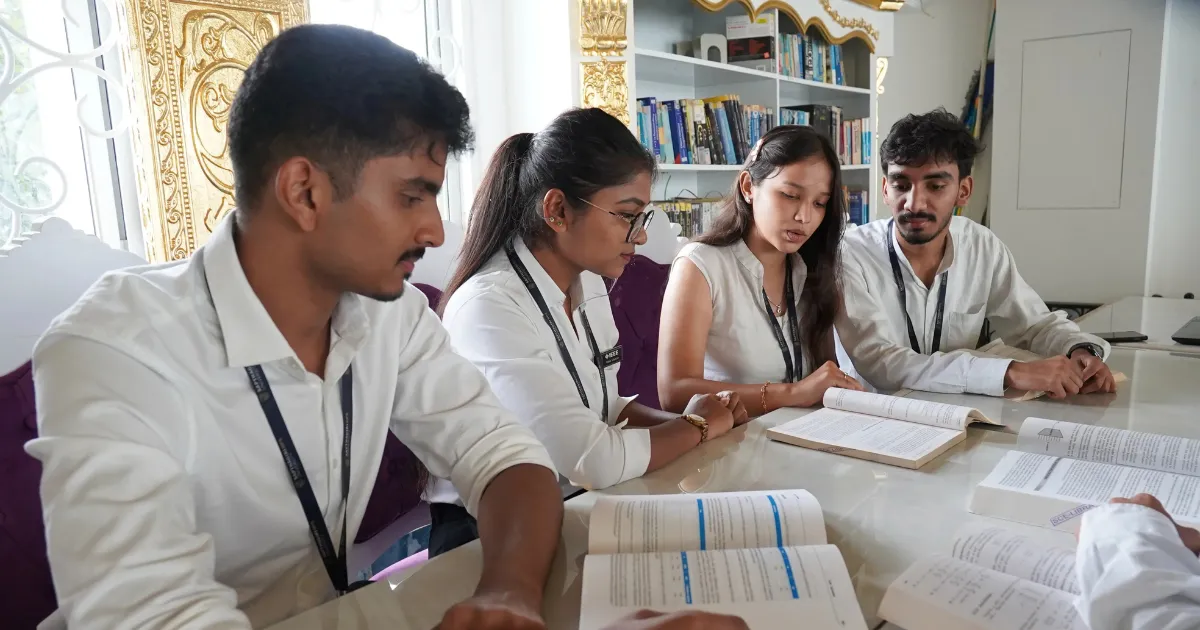
Our Sapthagiri NPS University library provides a modern and comfortable learning environment designed to support students throughout their academic journey. With a well-organized collection of books, spacious study areas, and a collaborative atmosphere, the library encourages reading, research, independent learning, and academic discussions. Students can use the space to prepare for examinations, work on assignments, conduct research, and explore new areas of knowledge. The bright and elegant interiors create a welcoming atmosphere where students can focus and learn effectively. Our modern library reflects Sapthagiri NPS University’s commitment to providing quality academic resources and a student-focused learning experience.
Library Resources & Infrastructure – At a Glance
| Library Feature | Infrastructure / Content | Student Benefit |
|---|---|---|
| Modern Library Infrastructure | Spacious and well-organised academic learning environment | Comfortable space for focused study and learning |
| Advanced Library System | Technology-enabled systems for managing and accessing library resources | Convenient resource discovery and access |
| Extensive Book Collection | Academic books and subject-related learning materials | Supports classroom learning and examination preparation |
| Reference Resources | Reference and supplementary academic materials | Helps with assignments, projects and deeper subject understanding |
| Digital Learning Resources | Digital and electronic academic content | Provides convenient access to learning materials |
| Academic Journals & Publications | Academic reading and research-oriented resources | Supports knowledge development and research activities |
| Online Resource Access | Technology-supported access to selected digital resources | Enables flexible learning and information search |
| Self-Study Environment | Dedicated spaces for individual academic preparation | Encourages concentration and independent learning |
| Research Support | Resources useful for academic projects and research work | Helps students explore topics beyond textbooks |
| Student-Friendly Organisation | Systematic arrangement of books and resources | Makes locating relevant learning materials easier |
| Technology Integration | Modern digital support within the library environment | Combines traditional reading with technology-enabled learning |
| Knowledge Development | Books, references and digital content across academic areas | Encourages continuous learning and broader knowledge |
A Smart Library for a Modern University Experience
The library at our university is more than a traditional collection of books; it is an important academic resource centre that brings together books, reference materials, digital content, technology-enabled systems and dedicated learning spaces. Students can use the library to strengthen their understanding of subjects, prepare for examinations, complete academic projects, conduct research and develop regular reading habits. The combination of physical and digital resources provides flexibility for different learning requirements, while the modern infrastructure creates a professional environment for academic work. Students looking for a university with advanced library infrastructure, quality academic resources and technology-supported learning facilities can explore the facilities available through our university.👉 Click Here to Check More Details
Faculty Mentoring and Student Support
Students often require guidance as they adjust to university-level education, manage academic responsibilities and begin planning their professional future. Our university provides faculty support and mentoring as part of its student-development approach. Faculty members can guide students through academic concepts, projects, practical activities and areas requiring improvement. Mentoring can also encourage students to set goals, develop better study habits and seek assistance when facing challenges. Regular interaction with teachers can make students more comfortable asking questions and discussing academic concerns. This support is particularly valuable when students encounter unfamiliar subjects or begin working on larger projects that require planning and independent decision-making. A supportive faculty environment can contribute to academic confidence while encouraging students to become increasingly self-reliant. When students search for the Top 10 Universities in Bangalore, faculty accessibility and mentoring deserve attention because infrastructure alone cannot create a strong learning experience. Our university combines academic facilities with human guidance so students can make better use of the resources available to them. Mentoring also supports broader development by helping students reflect on their strengths, identify areas for improvement and develop more effective approaches to academic and professional preparation.
Communication, Leadership and Teamwork
Communication, leadership and teamwork are important capabilities that students can develop through active participation in university life. Our university's educational vision places importance on communication, leadership, interpersonal abilities and problem-solving alongside academic knowledge. Students can strengthen these capabilities through presentations, group projects, seminars, competitions, student activities, clubs and leadership responsibilities. Communication allows students to explain ideas clearly, listen effectively and interact confidently with different people. Teamwork teaches students how to divide responsibilities, coordinate tasks, resolve differences and work toward shared objectives. Leadership develops when students take responsibility, organise activities, make decisions and support their peers. These capabilities cannot be developed effectively through textbooks alone; they require repeated practice in real academic and social situations. Our university's broader campus environment provides opportunities for students to develop these skills alongside their academic education. Students comparing the Top 10 Universities in Bangalore can therefore look at student activities and collaborative learning as part of the overall educational experience. Developing communication and leadership gradually can help students become more confident in presentations, interviews, professional interactions and workplace situations.
Holistic Development Through Campus Life
University life provides opportunities for students to develop academically, professionally, socially and personally. Our university supports a broad campus experience involving academic activities, practical learning, research, innovation, sports, cultural participation, student clubs, leadership opportunities and professional-development programmes. These activities allow students to explore interests beyond formal academic requirements and build relationships with peers. Participation can strengthen confidence, communication, teamwork, creativity and responsibility. Students can also learn important lessons about time management and balancing different commitments. A holistic approach recognises that students develop through experiences as much as through formal instruction. The university campus provides multiple environments in which learners can interact, collaborate, compete, create and participate. For families researching the Top 10 Universities in Bangalore, student life can be an important consideration because the university experience extends beyond classrooms and examinations. Our university encourages students to make meaningful use of campus opportunities and develop a balanced educational experience. Active participation can help students discover interests, build confidence and develop skills that complement their academic achievements.
Sports, Recreation and Campus Engagement
Sports and recreational activities contribute to a balanced university environment by providing opportunities for physical activity, relaxation, teamwork and social interaction. Our university's published infrastructure includes outdoor sports facilities, basketball and football courts, cricket practice facilities, sports-related spaces, gymnasium facilities and areas for events and recreation. Students can participate in sports according to their interests and use campus facilities to interact with peers outside academic settings. Team sports can encourage communication, discipline, cooperation and perseverance, while individual activities can help students develop personal discipline and consistency. Recreational spaces also provide students with opportunities to take breaks from academic work and participate in campus life. A university environment that supports both academic and recreational activities can contribute to a more balanced student experience. Students researching the Top 10 Universities in Bangalore can therefore consider campus engagement alongside academic infrastructure. Our university provides spaces where students can participate in different activities, build relationships and develop capabilities that complement their academic education.

Sports, Teamwork and Active Campus Life
The image captures students actively participating in a competitive kabaddi match, highlighting teamwork, coordination, discipline and sporting spirit. Our university encourages students to participate in sports and extracurricular activities alongside their academic journey. Such activities can help students develop physical fitness, communication, leadership, confidence and the ability to work effectively as a team. The energetic sporting environment also provides opportunities for students to build friendships, manage challenges and enjoy a balanced university experience. Explore Campus Life.
Hostel Facilities and Campus Convenience
For students travelling from outside Bangalore, accommodation and everyday campus facilities can be important parts of the university-selection process. Our university's infrastructure information identifies four hostels, including separate accommodation arrangements for boys and girls, along with facilities such as a cafeteria, stationery services, banking or ATM access, medical support, counselling and security. These facilities can provide convenience for students who live away from home and help them manage everyday requirements within or close to the campus environment. Students and parents should confirm current hostel availability, fees, room arrangements, rules, food facilities and other accommodation details directly with the university before making plans. Campus convenience can have a practical impact on student life because learners need reliable access to basic services while focusing on academic responsibilities. Our university's range of supporting facilities contributes to a more organised campus experience and provides students with an environment where academic, residential and recreational needs can be addressed.
A Supportive Campus Environment
A supportive campus helps students feel more comfortable participating in academic and extracurricular activities. Our university's infrastructure information includes security arrangements, CCTV, fire-safety provisions, medical support, first-aid facilities, counselling and other student-support resources. These services contribute to the broader campus environment and provide students with support during different stages of university life. Parents can discuss safety arrangements, accommodation, healthcare, counselling and other student-support facilities with the admissions team when evaluating the university. Students also have a responsibility to follow campus guidelines and make appropriate use of available support systems. A well-organised environment can help students concentrate on education while knowing that basic support facilities are available when required. When comparing the Top 10 Universities in Bangalore, families can consider campus support as one component of the overall student experience. Our university's approach extends beyond academic infrastructure by providing facilities that support students' everyday campus life.
International Academic Exposure
International academic connections can broaden students' understanding of education, research, technology and professional practices across different countries. Our university highlights international academic collaborations and opportunities for international engagement through its published information. Depending on the current institutional arrangements and eligibility requirements, students may have opportunities involving academic interaction, exchange-related activities or collaborative research. Students interested in specific international opportunities should confirm current availability, eligibility and participation requirements directly with the university because such opportunities can depend on programme, academic performance and institutional agreements. International exposure can encourage students to develop cultural awareness, adaptability, communication and a broader perspective on global developments. Such experiences can complement domestic academic learning by allowing students to understand different approaches to education and professional practice. Students researching the top 10 universities in bangalore can consider international engagement as an additional dimension of university education, particularly if they are interested in global academic or professional opportunities. Our university's international orientation adds another layer to the broader educational environment while maintaining a strong focus on academic and practical development.
Industry-Linked Training and Certifications
Professional skills can be strengthened through additional training and industry-linked learning opportunities. Our university highlights industry collaborations, hands-on training and certification opportunities as part of its broader student-development environment. Such opportunities can allow students to gain exposure to tools, technologies and professional practices beyond conventional academic material. Students should evaluate each training opportunity according to its relevance, learning quality and connection with their individual objectives. A certification is most useful when it represents genuine understanding and practical competence rather than simply adding another line to a resume. Our university's emphasis on practical learning and industry interaction creates an environment where students can supplement academic education with relevant professional development. This can be particularly useful in rapidly changing sectors where students need to keep updating their skills. For students comparing the Top 10 Universities in Bangalore, industry-linked training can be considered alongside laboratories, internships, projects and career preparation to understand how the institution supports professional growth.
Entrepreneurship and Initiative
Entrepreneurship encourages students to think about problems, opportunities, solutions and the process of turning ideas into practical outcomes. Our university's student-development environment includes entrepreneurship-oriented activities that can encourage learners to explore ideas, collaborate with others and develop initiative. Students can learn valuable skills by identifying problems, examining potential solutions, presenting concepts and working through challenges. Entrepreneurial thinking is useful even for students who do not intend to start businesses because initiative, creativity, responsibility and problem-solving are relevant across professional environments. Students can also learn from unsuccessful ideas by analysing what went wrong and considering how an approach could be improved. This creates an environment where experimentation becomes part of learning rather than something students should avoid. Those researching the Top 10 Universities in Bangalore can consider entrepreneurship and innovation opportunities when assessing how an institution encourages students to take initiative. Our university provides an environment where students can explore ideas and develop capabilities that may support entrepreneurship, professional careers, research or further education.
Interdisciplinary Learning and Broader Perspectives
Complex real-world challenges rarely fit within the boundaries of a single subject. Our university operates within a multidisciplinary educational environment and promotes interdisciplinary learning that can expose students to different academic perspectives. Interdisciplinary experiences can help learners understand how technology, science, business, sustainability, communication and other areas can interact when addressing practical problems. Working across different perspectives can strengthen collaboration because students need to communicate concepts clearly to people who may not share the same academic background. It can also encourage creativity by introducing students to methods and ideas from other fields. A broader perspective can be particularly valuable in a rapidly changing professional environment where roles increasingly require collaboration across different areas of expertise. Students searching for the Top 10 Universities in Bangalore can examine whether their chosen university provides opportunities to learn beyond narrow academic boundaries. Our university's multidisciplinary environment gives students opportunities to develop broader perspectives while maintaining focus on their academic development. Interdisciplinary learning can therefore complement technical knowledge and help students become more adaptable, collaborative and solution-oriented.
A Future-Ready Approach to Education
Preparing students for the future requires more than predicting which technologies will become popular. Students need strong academic fundamentals, the ability to apply knowledge, willingness to learn continuously and confidence in adapting to change. Our university's emphasis on practical education, emerging technologies, research, innovation, industry interaction and professional development supports this broader concept of future-ready education. Students are encouraged to build foundational knowledge while becoming familiar with developments that may influence professional environments. They can strengthen adaptability by participating in projects, learning new tools, interacting with professionals and exploring unfamiliar problems. Continuous learning is particularly important because technologies and workplace expectations can change throughout a person's career. Students researching the Top 10 Universities in Bangalore can therefore consider whether an institution encourages learning habits that remain valuable beyond graduation. Our university's educational environment provides opportunities for students to develop curiosity, flexibility, analytical thinking and practical confidence. These capabilities can help learners continue developing even after they complete their formal university education.
A Campus Experience Beyond the Classroom
Some of the most valuable university experiences happen outside scheduled lectures. Workshops, seminars, research activities, projects, competitions, innovation programmes, clubs, sports, cultural activities and professional interactions can provide different forms of learning and personal development. Our university offers opportunities across these areas as part of its broader campus environment. Students who participate actively can develop confidence, communication, teamwork, leadership and practical awareness while building relationships with peers and faculty members. Extracurricular participation can also help students discover interests and develop a sense of responsibility. These experiences complement academic education by giving students opportunities to apply skills in less formal environments. For students exploring the Top 10 Universities in Bangalore, campus life can therefore be evaluated as part of the complete educational experience rather than as a secondary consideration. Our university encourages students to make use of the wider opportunities available on campus and develop capabilities through participation. A university journey that includes academic learning, practical experience, student activities and social interaction can help learners build a broader foundation for their future.
Building Confidence for the Professional World
Confidence develops through preparation, practice and experience. Our university provides students with opportunities to build confidence through academic projects, presentations, practical activities, internships, workshops, industry interaction, competitions and student participation. Each experience can help learners become more comfortable with communicating ideas, solving problems and working with others. Professional confidence does not mean knowing everything; it means having the willingness to learn, ask questions, accept feedback and approach unfamiliar situations constructively. Students can strengthen this confidence by participating actively rather than limiting themselves to compulsory academic requirements. Faculty mentoring and peer collaboration can provide additional support as students develop. For students researching the Top 10 Universities in Bangalore, opportunities for confidence-building should be considered alongside formal academic facilities. Our university provides a variety of environments where students can practise communication, teamwork, leadership and problem-solving. These experiences can help students transition from university life into professional environments with greater awareness of their capabilities and areas where they can continue improving.
Our University Hostel Facilities
Our university provides hostel facilities designed to offer students a convenient and supportive residential environment during their higher education journey. The campus infrastructure includes four hostels, with separate accommodation arrangements for boys and girls, providing students with residential options while they pursue their academic goals. Living in a university hostel can make campus life more convenient for students who come from different parts of Karnataka and other states, as it allows them to stay within the university environment and remain closely connected to academic facilities and campus activities. The residential experience can also encourage students to develop independence, discipline, time-management abilities and stronger connections with their peers. Our university's campus infrastructure also includes facilities such as a cafeteria, stationery services, banking or ATM access, security arrangements, medical support and counselling facilities, helping students manage several everyday requirements while concentrating on their education. Students staying in the hostel can participate in academic activities, practical learning, workshops, sports, cultural programmes and other campus experiences without the challenges associated with long-distance daily travel. The residential environment can also provide opportunities for students to interact with peers from different regions and develop communication, cooperation and social skills. Parents considering hostel accommodation can contact the admissions team to obtain the latest information about hostel availability, accommodation fees, room arrangements, facilities, rules, food services and applicable requirements, as these details may vary depending on the academic year and availability. A university hostel is more than simply a place to stay; it can become an important part of the overall student experience by providing convenience, peer interaction and closer access to the academic and extracurricular environment. For students exploring the Top 10 Universities in Bangalore, our university's hostel and campus-support facilities can be considered alongside academic infrastructure, practical learning, student development and other factors when evaluating their higher-education options. Students and parents are encouraged to visit the campus or speak with the admissions team to understand the current residential facilities before making accommodation plans.
Hostel Facilities at a Glance
| Hostel Facility | Details | Admission |
|---|---|---|
| Hostel Accommodation | Four hostels available within the university campus | 👉Click Here to Apply |
| Separate Accommodation | Separate hostel arrangements for boys and girls | 👉Click Here to Apply |
| Cafeteria | Convenient food and refreshment facility on campus | 👉Click Here to Apply |
| Security | Campus security arrangements supporting student safety | 👉Click Here to Apply |
| Medical Support | Medical and first-aid support facilities | 👉Click Here to Apply |
| Counselling Support | Student counselling support available on campus | 👉Click Here to Apply |
| Banking & ATM | Banking and ATM facility for student convenience | 👉Click Here to Apply |
| Stationery Facility | Stationery and essential convenience services | 👉Click Here to Apply |
| Sports & Recreation | Sports room, gymnasium and outdoor sports facilities | 👉Click Here to Apply |
Plan Your Campus Life With Our University
Choosing a university with suitable hostel facilities can make campus life more convenient, particularly for students travelling from outside Bengaluru. Our university combines residential facilities with academic infrastructure, recreational spaces and essential student services to support a well-rounded campus experience. Students interested in hostel accommodation should check the latest availability, fee structure, eligibility requirements and hostel guidelines directly with the admissions team before finalising their admission.
Why Our University Is Worth Exploring
Students searching for the Top 10 Universities in Bangalore can explore our university based on the combination of facilities, learning opportunities and student-development initiatives it provides. The university's strengths include modern infrastructure, practical learning, technology exposure, research, innovation, faculty support, industry interaction, internships, career preparation, scholarships, student mentoring, international academic engagement, sports facilities, accommodation and campus-support services. Each of these areas contributes differently to the university experience, and students should evaluate them according to their personal priorities. A student interested in practical learning may focus on laboratories and project opportunities, while another may give greater importance to research, affordability, campus life or professional preparation. Our university provides a broad environment in which these dimensions can coexist. Students and parents can review official information, visit the campus where possible and speak with the admissions team to understand current details. A university should be selected through informed comparison rather than assumptions, and our university provides students with multiple factors to explore when considering higher education in Bangalore.
Admissions Open – Take the Next Step Towards Your Future
Students planning to begin their higher education journey in Bangalore can now explore admission opportunities with our university and take the next step towards their academic future. Admissions should be approached carefully, with students reviewing current eligibility requirements, application procedures, fee details, scholarship opportunities and other applicable conditions before submitting their applications. Starting the process early can give students sufficient time to organise documents, understand requirements, discuss options with their families and complete admission formalities. Our university provides a contemporary learning environment supported by modern infrastructure, practical education, technology exposure, research, innovation, industry interaction, student development and professional preparation. Students searching for the Top 10 Universities in Bangalore can explore our university as part of their research and compare its strengths with their own academic and personal priorities. The university's published placement information currently states 100% placement for eligible students and reports that more than 200 companies regularly visit the campus, while students should verify the latest programme-specific information and applicable eligibility conditions directly with the university. Scholarship and fee details should likewise be confirmed for the relevant academic year. Admissions are open, so students who have identified our university as an institution they want to explore should begin the application process without unnecessary delay. Do not miss the opportunity to take an important step towards your academic goals and a bright future.
Take Admission Now – Begin Your Bright Future
Choosing a university is one of the important decisions students make after completing their school education, and the decision deserves careful consideration, timely research and a clear understanding of personal goals. Students searching for the Top 10 Universities in Bangalore can explore our university's academic environment, infrastructure, practical-learning opportunities, research and innovation activities, technology exposure, industry interaction, student support, scholarships, campus facilities and professional-development initiatives. Our university provides a broad educational setting where students can learn through classrooms, laboratories, projects, research, collaboration, internships, workshops and campus activities. Students can also develop communication, leadership, teamwork, creativity, analytical thinking and professional awareness through active participation. If you are ready to begin your higher education journey, now is the time to review the latest admission information, understand the applicable requirements and contact the admissions team for guidance. Take admission without unnecessary delay, begin your university journey with confidence and take a meaningful step towards building your bright future.
Admissions & University Contact Information
| Contact Category | Details |
|---|---|
| Admissions & Application Support | 👉+91 9900072632 |
| Email & Admission Enquiry | 👉admissions@snpsu.edu.in |
| University Location | 14/5, Hesarghatta Rd, Chikkasandra, Jalahalli West, Bengaluru, Karnataka 560057 |
Don’t Miss Your Opportunity to Build a Bright Future
Your university years can become the foundation for many future opportunities, and the decisions you make today can influence the learning experiences, skills and professional exposure you gain during this important period. Students looking for the Top 10 Universities in Bangalore should consider an institution where academic learning is supported by practical experience, modern facilities, faculty interaction, research, innovation, technology exposure and opportunities for personal development. Our university provides a campus environment where students can learn, collaborate, participate and grow through different academic and extracurricular experiences. Whether students are working on projects, using library resources, participating in practical activities, interacting with faculty members, attending workshops, exploring emerging technologies or taking part in campus activities, each experience can contribute to their overall development. A bright future is built gradually through consistent learning, active participation, discipline, curiosity and the willingness to develop new skills. Our university provides the environment and opportunities, while students bring their own ambition, effort and commitment to the journey. Admissions are open, so students who are ready to begin their higher education journey should take action now, complete the necessary admission formalities and move confidently towards their future.
Leave a Comment