
Top Private University in Bangalore – Sapthagiri NPS University Admissions, Courses & Placements
Top Private University in Bangalore: A Comprehensive Guide to Academic Excellence and Career-Focused Education
Selecting a university is one of the most meaningful decisions in a student's academic journey. The institution you choose influences your learning experience, personal development, professional skills, and future career opportunities. Beyond earning a degree, university education provides an environment where knowledge, innovation, leadership, collaboration, and lifelong learning come together to prepare students for an evolving global workforce.
Students today seek more than classrooms and examinations. They look for institutions that encourage curiosity, strengthen practical skills, promote research, provide industry exposure, and create opportunities for professional growth. Parents similarly prioritize universities that offer academic quality, student support, modern infrastructure, transparent admissions, and strong career guidance.
For these reasons, identifying a Top Private University in Bangalore involves evaluating several important factors. Academic quality, experienced faculty, innovative curriculum, industry engagement, placement preparation, campus facilities, student development initiatives, research opportunities, and an inclusive learning environment all contribute to the overall educational experience.
Bengaluru has earned a distinguished reputation as India's technology and innovation capital. The city is home to multinational corporations, startups, research organizations, healthcare institutions, manufacturing industries, financial services, and global technology centers. This dynamic ecosystem creates exceptional opportunities for students to gain practical exposure while pursuing higher education. Universities located in Bengaluru benefit from close interactions with industry, allowing students to understand emerging trends, participate in internships, and develop skills aligned with employer expectations.
Among institutions contributing to this vibrant educational landscape, Sapthagiri NPS University offers an academic environment designed to support holistic student development. The university emphasizes academic learning, practical application, professional ethics, research, innovation, and career readiness through a student-centered approach.
Rather than focusing solely on classroom instruction, the university encourages experiential learning through laboratories, projects, workshops, seminars, industry interactions, and multidisciplinary collaboration. Students are encouraged to explore new ideas, strengthen analytical thinking, enhance communication abilities, and prepare themselves for future professional responsibilities.
The university also recognizes that higher education extends beyond textbooks. Leadership development, teamwork, creativity, entrepreneurship, community engagement, and cultural participation are important components of campus life. These experiences help students develop confidence, adaptability, and interpersonal skills that remain valuable throughout their careers.
As industries continue to evolve with advancements in artificial intelligence, automation, digital transformation, sustainability, healthcare innovation, and data-driven decision-making, universities must continually update their academic practices. Modern higher education requires flexible learning approaches that combine theoretical understanding with practical implementation. Institutions that embrace innovation are better positioned to prepare graduates for changing employment landscapes.
This comprehensive guide explores the academic ecosystem, admissions process, learning environment, infrastructure, student life, placement support, career development initiatives, and educational opportunities available at Sapthagiri NPS University. It is intended to help prospective students and parents understand the various aspects of university life while making informed decisions about higher education.
Why Choosing the Right University Matters
Choosing a university is not simply about enrolling in a degree program. It is about selecting an environment where students can grow intellectually, professionally, and personally over several formative years. The right university provides opportunities to discover interests, develop specialized knowledge, and build the confidence needed to succeed in competitive careers.
Academic quality forms the foundation of a rewarding university experience. A thoughtfully designed curriculum enables students to gain conceptual understanding while developing practical competencies. Learning becomes more meaningful when classroom teaching is supported by laboratory work, case studies, industry projects, research activities, and collaborative assignments. Such an approach encourages critical thinking and problem-solving rather than rote memorization.
Faculty members play a significant role in shaping students' educational journeys. Experienced educators not only teach subject matter but also mentor students, guide academic projects, encourage research, and support career planning. Regular interaction with knowledgeable faculty helps students clarify concepts, explore emerging fields, and gain confidence in applying their learning to real-world situations.
Equally important is the availability of modern infrastructure. Technology-enabled classrooms, specialized laboratories, well-equipped libraries, digital learning platforms, research facilities, innovation centers, collaborative workspaces, and campus amenities contribute to an engaging educational environment. These resources support academic excellence while enabling students to learn through experimentation and practical application.
Career preparation has become an essential component of higher education. Universities increasingly focus on skill enhancement, communication training, aptitude development, internship opportunities, resume building, mock interviews, and employer engagement. Such initiatives help students transition more effectively from academic life to professional careers.
Campus culture also influences the overall student experience. Participation in clubs, cultural events, sports, leadership programs, technical competitions, social initiatives, and entrepreneurship activities encourages students to develop interpersonal skills, teamwork, and leadership qualities. These experiences often become valuable highlights of university life while preparing students for collaborative professional environments.
When evaluating a Top Private University in Bangalore, prospective students should therefore consider the complete educational ecosystem rather than relying on a single factor. Academic programs, faculty expertise, infrastructure, industry connections, research opportunities, student support services, placement initiatives, and campus culture together create an environment that supports long-term success.
A university that balances academic rigor with practical learning, innovation with ethics, and professional preparation with personal growth can significantly influence a student's future. Such institutions contribute not only to academic achievement but also to the development of responsible professionals, informed citizens, and lifelong learners equipped to thrive in an increasingly interconnected world.
Sapthagiri NPS University Bangalore Admissions – A Gateway to Academic and Professional Growth
Higher education is one of the most significant investments students make in their future. Choosing the right university involves much more than selecting a degree program—it means becoming part of an academic environment that encourages intellectual growth, practical learning, innovation, and professional development. Sapthagiri NPS University has been established with the vision of providing students with an educational experience that combines academic knowledge with industry relevance, preparing graduates to meet the demands of an ever-changing global workforce.
Located in Bengaluru, India's technology and innovation hub, the university offers students the advantage of studying in a city recognized for its thriving ecosystem of multinational companies, research institutions, healthcare organizations, startups, and entrepreneurial ventures. This environment creates valuable opportunities for academic collaboration, internships, industrial exposure, professional networking, and career advancement.
Students exploring a Top Private University in Bangalore often consider several factors before making an admission decision. Academic quality, experienced faculty, industry-oriented curriculum, modern infrastructure, placement support, research opportunities, student life, and campus facilities all play an important role. Sapthagiri NPS University focuses on creating a balanced educational ecosystem where these elements work together to provide meaningful learning experiences.
The university emphasizes continuous academic improvement by integrating classroom instruction with practical applications. Students are encouraged to participate in laboratory sessions, technical workshops, research activities, seminars, project-based learning, industry interactions, and collaborative assignments. This comprehensive learning approach helps bridge the gap between theoretical concepts and professional practice.
Academic programs are designed to promote analytical thinking, creativity, communication skills, teamwork, leadership, and ethical decision-making. These qualities are increasingly valued by employers across industries and contribute significantly to long-term professional success.
Faculty members guide students throughout their academic journey by providing mentorship, academic counseling, project supervision, and career guidance. Their role extends beyond classroom teaching to supporting students in developing confidence, technical expertise, research capabilities, and professional competencies.
The university also recognizes the importance of holistic development. Students are encouraged to participate in extracurricular activities, innovation initiatives, leadership programs, sports, cultural events, and community engagement opportunities that contribute to well-rounded personal growth.
A Student-Centric Admission Experience
Beginning higher education should be an exciting and well-informed process. Sapthagiri NPS University aims to make admissions accessible and transparent by providing guidance at every stage of the application journey. Prospective students receive support in understanding program options, eligibility requirements, documentation, fee-related information, scholarship opportunities (where applicable), and important admission timelines. Admission counselors assist applicants in selecting academic pathways that align with their interests, educational background, and long-term career aspirations. Students and parents can also clarify questions related to campus facilities, academic departments, placement initiatives, hostel availability, transportation, and student support services before completing the admission process.This student-focused approach helps applicants make confident decisions regarding their higher education journey.
Begin Your Admission Journey
Students interested in exploring academic programs and completing the online application can begin their admission process through the official admissions portal.
Apply Online: https://admission.snpsu.edu.in/
Applicants are encouraged to review eligibility criteria, prepare the required documents, complete the application form accurately, and stay updated on admission-related communications throughout the process.
Academic Opportunities Across Diverse Disciplines at Sapthagiri NPS University
Today's employers seek graduates who possess far more than academic knowledge. They look for individuals who can analyze problems, communicate effectively, adapt to technological changes, work collaboratively, and contribute innovative ideas. Recognizing these evolving industry expectations, Sapthagiri NPS University has designed its academic ecosystem to deliver a comprehensive, multidisciplinary learning experience that prepares students for successful professional careers.
The University's academic framework integrates classroom learning with practical application, industry exposure, research, innovation, entrepreneurship, and skill development. Students are encouraged to develop intellectual curiosity, critical thinking, leadership qualities, and technical expertise that remain relevant in today's dynamic global economy. Whether pursuing Engineering, Management, Commerce, Computer Applications, Applied Sciences, Healthcare, or other professional disciplines, students benefit from an education that emphasizes both theoretical excellence and real-world readiness.
Why Interdisciplinary Education Matters
Modern industries increasingly value professionals who can collaborate across disciplines. Engineers are expected to understand business principles, managers rely on data analytics, healthcare professionals use digital technologies, and commerce graduates work with AI-powered financial systems. An interdisciplinary academic environment enables students to:
- Develop broader perspectives
- Solve complex real-world challenges
- Build analytical and critical thinking skills
- Learn emerging technologies
- Improve communication and teamwork
- Become adaptable professionals
- Increase career opportunities across multiple industries
Sapthagiri NPS University promotes this holistic educational philosophy by integrating academic knowledge with practical experiences throughout every stage of learning.
Interactive Classroom Discussions
Traditional lectures are no longer sufficient for preparing students for modern workplaces. At Sapthagiri NPS University, interactive classroom discussions encourage active participation, allowing students to engage with faculty members and peers in meaningful academic conversations. Instead of passively listening, students are encouraged to ask questions, debate ideas, analyze real-world scenarios, and develop independent perspectives. This student-centered learning approach creates an intellectually stimulating environment where learning becomes collaborative rather than one-sided. Interactive discussions help students:
- Improve conceptual understanding
- Build confidence in communication
- Strengthen analytical thinking
- Develop presentation skills
- Enhance teamwork
- Encourage curiosity and innovation
- Improve decision-making abilities
Faculty members use various teaching methodologies including brainstorming sessions, group discussions, classroom presentations, peer learning, and technology-enabled teaching tools to ensure that every student actively participates in the learning process. This engaging academic environment prepares students to confidently express ideas during interviews, corporate meetings, seminars, research presentations, and professional interactions.

Laboratory-Based Practical Sessions
Practical education plays a vital role in transforming theoretical concepts into real-world applications. The University emphasizes hands-on laboratory experiences across engineering, computer science, biotechnology, healthcare, and applied sciences. Students gain practical exposure by working with modern laboratory equipment, specialized software, simulation tools, scientific instruments, and advanced technologies relevant to their respective disciplines. Laboratory learning enables students to:
- Apply theoretical concepts
- Conduct scientific experiments
- Understand industry-standard procedures
- Improve technical competency
- Develop observation and analytical skills
- Learn troubleshooting techniques
- Build confidence through experimentation
These practical sessions ensure students graduate with the technical capabilities expected by employers.
Case Studies and Simulations
Learning through real-life business and technical situations allows students to understand how academic knowledge is applied in professional environments. Case study-based learning exposes students to:
- Business management challenges
- Marketing strategies
- Financial decision-making
- Healthcare scenarios
- Engineering problem-solving
- Technology implementation
- Organizational leadership
Simulations recreate industry situations where students must analyze problems, evaluate alternatives, make informed decisions, and assess outcomes. This experiential learning approach strengthens:
- Critical thinking
- Strategic planning
- Leadership skills
- Decision-making abilities
- Risk assessment
- Problem-solving capabilities
Students gain valuable practical insights before entering professional careers.
Industry-Oriented Projects
Project-based learning bridges the gap between academics and industry requirements. Throughout their academic journey, students undertake projects that simulate real-world industrial challenges. Projects may involve:
- Product development
- Software application design
- Engineering prototypes
- Market research
- Business planning
- Data analytics
- Scientific investigations
- Healthcare innovations
Working on industry-oriented projects allows students to integrate knowledge acquired from multiple subjects while developing project management, teamwork, technical documentation, and presentation skills.These experiences significantly enhance employability and prepare graduates for workplace responsibilities from day one.
Technical Workshops
Technology evolves rapidly, making continuous learning essential. Regular technical workshops provide students with opportunities to explore emerging technologies, industry tools, and practical applications beyond the classroom curriculum. Workshops may focus on areas such as:
- Artificial Intelligence
- Machine Learning
- Cyber Security
- Cloud Computing
- Internet of Things
- Robotics
- Programming Languages
- CAD/CAM Technologies
- Data Analytics
- Digital Marketing
- Financial Technologies
These workshops provide hands-on experience while exposing students to current industry trends and future technological developments.
Guest Lectures by Industry Professionals
Learning directly from experienced professionals offers valuable industry perspectives that complement academic education. Guest lectures connect students with:
- Corporate leaders
- Entrepreneurs
- Researchers
- Healthcare specialists
- Technology experts
- Government officials
- Industry consultants
- Successful alumni
These sessions help students understand:
- Current industry expectations
- Career opportunities
- Workplace culture
- Emerging technologies
- Leadership experiences
- Innovation trends
- Professional ethics
Students gain practical knowledge that extends beyond textbooks and classroom learning.
Research-Based Assignments
Research encourages students to investigate problems systematically, analyze information critically, and contribute innovative ideas. Research-oriented assignments develop essential academic and professional skills including:
- Literature review
- Data collection
- Statistical analysis
- Scientific writing
- Technical documentation
- Evidence-based decision-making
- Independent learning
Students are encouraged to participate in research projects under faculty guidance while exploring solutions to contemporary challenges across various disciplines.Research exposure strengthens higher education opportunities, innovation capabilities, and career prospects.
Innovation and Entrepreneurship Initiatives
Innovation has become one of the most valuable competencies in today's knowledge-driven economy. Sapthagiri NPS University encourages entrepreneurial thinking by nurturing creativity, innovation, and problem-solving abilities among students. Innovation initiatives may include:
- Startup awareness programs
- Business idea competitions
- Innovation challenges
- Entrepreneurship workshops
- Incubation support
- Business model development
- Product design thinking
- Intellectual property awareness
These initiatives motivate students to become job creators rather than only job seekers. Students learn how innovative ideas can be transformed into viable business opportunities while developing leadership and entrepreneurial capabilities.
Collaborative Learning Activities
Professional success increasingly depends upon effective collaboration. The University promotes collaborative learning through team-based academic activities that encourage students to work together while respecting diverse perspectives. Collaborative learning activities include:
- Group assignments
- Team presentations
- Peer learning sessions
- Project collaborations
- Interdisciplinary competitions
- Academic clubs
- Innovation groups
- Technical societies
Working in teams develops:
- Leadership
- Communication
- Conflict resolution
- Time management
- Accountability
- Professional relationships
These competencies are highly valued across industries worldwide.
Skill Development Programs
Academic excellence alone is not sufficient for long-term career success. Employers increasingly prioritize candidates who possess strong professional and interpersonal skills. Dedicated skill development programs help students strengthen competencies including:
Communication Skills
Students develop effective verbal, written, interpersonal, and presentation skills necessary for professional success.
Leadership Development
Leadership programs encourage confidence, responsibility, strategic thinking, and team management.
Personality Development
Students improve professional etiquette, confidence, adaptability, and workplace behavior.
Digital Skills
Exposure to modern software platforms, productivity tools, data analysis applications, and emerging technologies enhances digital competency.
Career Readiness
Career-focused training includes:
- Resume preparation
- Interview techniques
- Aptitude training
- Group discussion practice
- Corporate communication
- Professional networking
These programs improve employability while preparing students for successful careers across multiple sectors.
Holistic Academic Environment
Beyond classroom learning, Sapthagiri NPS University focuses on creating an ecosystem that supports overall student development. Students are encouraged to participate in:
- Academic seminars
- Conferences
- Technical symposiums
- Cultural activities
- Sports
- Community engagement
- Professional clubs
- Social responsibility initiatives
Such experiences contribute to the development of confident, responsible, and socially aware professionals.
Career Opportunities After Graduation
Graduates equipped with interdisciplinary knowledge and practical skills can pursue rewarding careers across diverse sectors including:
- Information Technology
- Artificial Intelligence
- Software Development
- Civil Engineering
- Mechanical Engineering
- Electronics
- Healthcare
- Biotechnology
- Finance
- Banking
- Marketing
- Human Resource Management
- Entrepreneurship
- Government Services
- Research Organizations
- Higher Education
- Consulting
- Manufacturing
- Public Sector Enterprises
- Multinational Corporations
The combination of academic excellence and practical exposure significantly enhances career readiness.
Building Future-Ready Professionals
The rapidly changing global economy demands professionals who possess technical expertise, adaptability, innovation, leadership, and lifelong learning capabilities. Sapthagiri NPS University's integrated educational approach prepares students to thrive in this evolving landscape by combining academic rigor with practical experience, research opportunities, industry engagement, and comprehensive skill development. Graduates emerge with the confidence, competence, and professional mindset necessary to contribute meaningfully to organizations, society, and the global workforce.
Additional Information
For comprehensive information regarding academic programmes, admission requirements, curriculum, scholarships, campus facilities, and student services, prospective applicants are encouraged to visit the official University website or contact the Admissions Office.
Admissions Helpline: +91 9900072632
Official Website: https://snpsu.edu.in/
Admissions Portal: https://admission.snpsu.edu.in/
Bengaluru – A Strategic Advantage for Career-Oriented Learning
Bengaluru has earned global recognition as one of India's leading destinations for higher education, technology, innovation, entrepreneurship, healthcare, and research. Studying in this vibrant metropolitan city provides students with opportunities that extend well beyond traditional classroom learning, creating an environment where academic excellence is complemented by industry exposure and professional development.
As home to numerous multinational corporations, technology parks, research institutions, startups, healthcare organizations, financial institutions, and manufacturing enterprises, Bengaluru offers an ecosystem that supports experiential learning and career readiness. Students can gain valuable insights into industry practices, emerging technologies, and evolving workplace expectations while pursuing their academic programmes.
The city's dynamic professional landscape encourages continuous learning through interactions with industry experts, entrepreneurs, researchers, and professionals across diverse sectors. Such exposure helps students develop practical knowledge, broaden their perspectives, and strengthen the competencies required in today's competitive employment market.
Industry Interactions
Regular interactions with industry professionals provide students with practical insights into current business trends, technological advancements, and sector-specific challenges. These engagements bridge the gap between academic learning and professional practice, helping students understand real-world applications of their knowledge.
Professional Networking Events
Networking events enable students to connect with professionals, recruiters, entrepreneurs, researchers, and alumni from various industries. Building professional relationships at an early stage can contribute to career guidance, mentorship opportunities, internships, and future employment prospects.
Internship Opportunities
Internships play a vital role in career preparation by providing hands-on experience in professional environments. Students have opportunities to apply classroom concepts, develop technical and interpersonal skills, and gain practical exposure that enhances their employability upon graduation.
Technical Conferences and Knowledge Forums
Participation in conferences, seminars, symposiums, and technology forums exposes students to emerging developments, research innovations, and industry best practices. These events encourage continuous learning while expanding academic and professional perspectives.
Innovation and Startup Ecosystem
Recognized as India's startup capital, Bengaluru offers an entrepreneurial environment that inspires innovation and creative problem-solving. Students interested in entrepreneurship can explore startup ecosystems, innovation initiatives, incubation opportunities, and business development activities that nurture entrepreneurial thinking.
Research and Academic Collaborations
The presence of leading research organizations, laboratories, and academic institutions creates opportunities for collaborative research, interdisciplinary projects, and knowledge exchange. Such collaborations encourage analytical thinking and contribute to academic excellence.
Corporate Seminars and Expert Sessions
Corporate seminars conducted by experienced professionals provide valuable insights into organizational practices, leadership, emerging technologies, business strategies, and industry expectations. These sessions help students align their academic preparation with evolving workplace requirements.
Career Development Programmes
Career-oriented initiatives such as placement training, aptitude development, communication enhancement, resume-building sessions, mock interviews, and leadership development programmes prepare students for successful professional careers across diverse industries.
Professional Certification Opportunities
Students can further strengthen their academic qualifications by pursuing industry-recognized certification programmes in emerging technologies, management practices, finance, digital skills, and other specialized domains. These certifications enhance professional credibility and improve career competitiveness.
Learning Beyond the Classroom
The educational experience in Bengaluru extends beyond lectures and laboratories. The city's vibrant academic, industrial, and entrepreneurial ecosystem encourages students to engage with real-world challenges, explore innovative ideas, participate in professional communities, and build meaningful industry connections.
This comprehensive exposure helps students graduate with not only strong academic foundations but also the practical experience, confidence, adaptability, and professional competencies required to succeed in an increasingly competitive global workforce.
Building Confidence for Future Careers
Higher education today is not limited to acquiring subject knowledge. Employers increasingly seek graduates who possess communication skills, leadership abilities, adaptability, teamwork, analytical thinking, and problem-solving capabilities.
Recognizing these expectations, Sapthagiri NPS University encourages students to participate in activities that strengthen both technical expertise and professional competencies. Academic learning is complemented by skill enhancement initiatives that help students prepare for internships, higher education, competitive examinations, entrepreneurship, and employment opportunities. Continuous learning, ethical responsibility, innovation, and professional excellence remain central to the university's educational philosophy.
For students seeking a Top Private University in Bangalore, an institution that combines academic rigor with practical learning, industry exposure, student support, and career-focused development can provide a strong foundation for future success. Sapthagiri NPS University strives to create such an environment by fostering knowledge, innovation, collaboration, and lifelong learning within its academic community.
Academic Environment Designed for Future-Ready Learning
A university's academic environment plays a defining role in shaping students' knowledge, confidence, professional competencies, and lifelong learning habits. In today's rapidly evolving world, higher education extends far beyond traditional classroom instruction. Students are expected to develop analytical thinking, creativity, adaptability, communication skills, digital literacy, and the ability to solve real-world challenges. Sapthagiri NPS University has designed its academic ecosystem to support these evolving expectations through an integrated approach to teaching, learning, research, and skill development.
Students looking for a Top Private University in Bangalore often seek an institution that combines academic rigor with practical exposure. The university focuses on creating a learning experience where theoretical concepts are reinforced through laboratory work, project-based learning, case studies, workshops, seminars, and collaborative activities. This balanced approach enables students to understand fundamental principles while developing the confidence to apply them in professional settings.
Curriculum Aligned with Emerging Industry Expectations
Academic programs are periodically reviewed to reflect changing industry requirements, technological advancements, and global educational practices. Rather than limiting learning to prescribed textbooks, the curriculum encourages students to explore multidisciplinary perspectives, contemporary developments, and practical applications within their chosen fields. Learning outcomes are designed to help students:
- Build a strong academic foundation.
- Develop technical and professional competencies.
- Strengthen analytical and problem-solving abilities.
- Improve communication and presentation skills.
- Enhance teamwork and leadership qualities.
- Foster ethical and responsible decision-making.
- Encourage innovation and entrepreneurial thinking.
This comprehensive academic framework prepares graduates for diverse career pathways, higher education opportunities, research, and lifelong professional growth.
Experienced Faculty and Academic Mentorship
Faculty members contribute significantly to the overall educational experience by guiding students throughout their academic journey. Beyond classroom instruction, they support students through mentoring, project supervision, academic advising, research guidance, and career discussions.
Regular interaction between students and faculty promotes an environment where questions are encouraged, ideas are explored, and intellectual curiosity is nurtured. Mentorship also helps students identify their strengths, improve learning strategies, and make informed academic and professional decisions.
Faculty engagement extends to organizing guest lectures, technical sessions, workshops, and academic discussions that expose students to current developments across industries and research domains.
Practical Learning Beyond the Classroom
Meaningful education is strengthened when students have opportunities to apply theoretical knowledge in practical situations. Sapthagiri NPS University emphasizes experiential learning through a variety of academic activities designed to enhance understanding and develop workplace-ready skills. Students may participate in:
- Laboratory experiments.
- Technical demonstrations.
- Design and development projects.
- Industrial case studies.
- Research assignments.
- Technical paper presentations.
- Innovation competitions.
- Collaborative academic projects.
- Workshops conducted by industry professionals.
- Skill-based training sessions.
These experiences encourage students to think critically, work collaboratively, and approach challenges with confidence and creativity.
Technology-Enabled Learning Environment
Digital technologies have transformed higher education by creating new opportunities for interactive and flexible learning. Modern classrooms supported by digital teaching tools, multimedia resources, and online learning platforms help make academic sessions more engaging and accessible. Technology-enabled education supports:
- Interactive teaching methodologies.
- Multimedia-based concept explanations.
- Digital academic resources.
- Virtual learning support.
- Online assessments.
- Collaborative learning activities.
- Access to scholarly publications and research databases.
Such resources enable students to continue learning beyond classroom hours while encouraging independent study and continuous academic improvement.
Research, Innovation, and Intellectual Growth
Research contributes significantly to academic excellence by encouraging students to investigate problems, evaluate evidence, develop innovative solutions, and expand existing knowledge. The university promotes a research-oriented culture where students and faculty engage in scholarly inquiry across various disciplines. Research opportunities help students:
- Develop investigative skills.
- Strengthen analytical reasoning.
- Improve academic writing.
- Explore emerging technologies.
- Understand research methodologies.
- Participate in conferences and seminars.
- Present innovative ideas and findings.
Innovation initiatives further encourage students to transform creative ideas into practical solutions with social, technological, and economic relevance.
Skill Enhancement for Professional Success
Employers increasingly value graduates who possess both technical expertise and transferable professional skills. Recognizing this, Sapthagiri NPS University integrates skill development into the academic experience through structured learning opportunities that complement classroom education. Areas of focus include:
- Professional communication.
- Critical thinking.
- Leadership development.
- Team collaboration.
- Time management.
- Presentation techniques.
- Digital competency.
- Problem-solving strategies.
- Decision-making skills.
- Professional ethics.
These competencies support students throughout internships, higher education, entrepreneurship, and future employment.
Academic Community Focused on Lifelong Learning
The university encourages students to view education as an ongoing journey rather than a destination. Curiosity, continuous improvement, intellectual exploration, and adaptability remain central to its academic philosophy.
Students are encouraged to participate in seminars, expert talks, interdisciplinary projects, community engagement initiatives, innovation activities, and professional networking opportunities that broaden their perspectives and strengthen their understanding of contemporary challenges.
For students searching for a Top Private University in Bangalore, a future-ready academic environment combines quality teaching, practical learning, technological integration, research opportunities, faculty mentorship, and holistic development. By fostering these elements, Sapthagiri NPS University aims to equip learners with the knowledge, confidence, and skills needed to thrive in an increasingly dynamic global environment.
Why Sapthagiri NPS University Bangalore Admissions Can Shape Your Career Journey
Choosing a university is ultimately about preparing for the future you envision. While academic excellence remains fundamental, students today also evaluate how effectively an institution supports career planning, professional networking, skill development, and lifelong learning. The educational experience should equip graduates with the confidence to navigate changing industries, embrace innovation, and contribute meaningfully to society.
For many aspiring learners, enrolling in a university marks the beginning of a transformative journey rather than the completion of an admission process. Every classroom discussion, laboratory session, research project, internship, leadership activity, and mentoring interaction contributes to building capabilities that extend well beyond graduation. This broader perspective makes higher education a foundation for continuous personal and professional advancement.
Students exploring a Top Private University in Bangalore frequently seek an institution that nurtures ambition while providing opportunities to translate knowledge into meaningful careers. Bengaluru's dynamic business ecosystem offers an inspiring environment where education and industry intersect, enabling students to gain insights into emerging technologies, contemporary business practices, healthcare advancements, entrepreneurship, and innovation.
Learning with Professional Relevance
In today's rapidly evolving professional landscape, academic excellence alone is no longer sufficient for long-term career success. Employers increasingly seek graduates who can apply theoretical knowledge to practical situations, think critically, adapt to technological advancements, and collaborate effectively in multidisciplinary environments. Recognizing these expectations, modern higher education places significant emphasis on developing industry-relevant competencies alongside strong academic foundations.
Learning with professional relevance enables students to understand how classroom concepts translate into real-world applications. By connecting academic learning with contemporary industry practices, students gain a deeper appreciation of their chosen disciplines while developing the confidence to address practical challenges. This integrated approach encourages innovation, informed decision-making, and solution-oriented thinking that extends beyond textbooks.
As students progress through their academic journey, they are encouraged to cultivate a broad range of professional competencies that are consistently valued across industries and organizational settings.
Strategic Thinking
Strategic thinking enables students to evaluate complex situations, identify opportunities, assess risks, and develop well-informed solutions. This competency supports effective decision-making in business, engineering, technology, healthcare, and other professional domains.
Technical Proficiency
Strong technical knowledge forms the foundation of professional excellence. Students develop discipline-specific competencies through academic coursework, laboratory experiences, practical assignments, and technology-enabled learning that prepares them for industry expectations.
Professional Communication
Clear and effective communication is essential in every profession. Students strengthen their verbal, written, interpersonal, and presentation skills, enabling them to communicate ideas confidently with colleagues, clients, stakeholders, and multidisciplinary teams.
Collaborative Problem-Solving
Modern workplaces rely on teamwork and collective innovation. Collaborative learning experiences help students work effectively with diverse teams, contribute constructively to shared objectives, and develop practical solutions to complex challenges.
Analytical Reasoning
Analytical thinking allows students to interpret information, evaluate evidence, identify patterns, and make informed decisions. This capability is particularly valuable in research, engineering, management, finance, healthcare, and technology-driven careers.
Adaptability in Changing Environments
Rapid technological advancement and evolving industry practices require professionals to embrace continuous change. Students are encouraged to develop flexibility, resilience, and the ability to learn new concepts, tools, and methodologies throughout their careers.
Ethical Leadership
Professional success is strengthened by integrity, accountability, and ethical decision-making. Leadership development encourages students to act responsibly, demonstrate professionalism, and contribute positively to organizations and society.
Digital Literacy
Digital technologies have become integral to virtually every industry. Students develop essential digital competencies by working with modern software, data-driven tools, digital communication platforms, and emerging technologies that support innovation and productivity.
Project Management
Planning, organizing, executing, and evaluating projects are valuable skills across professional sectors. Students gain experience in managing timelines, resources, teamwork, documentation, and project outcomes while developing organizational and leadership capabilities.
Commitment to Continuous Learning
The most successful professionals recognize that learning extends well beyond graduation. Students are encouraged to cultivate intellectual curiosity, pursue lifelong learning opportunities, explore emerging knowledge, and continuously enhance their professional capabilities to remain competitive in an evolving global economy.
Preparing Graduates for Long-Term Professional Success
The integration of academic knowledge with practical competencies creates graduates who are well prepared to navigate the demands of modern workplaces. By developing technical expertise alongside communication, leadership, analytical thinking, adaptability, and ethical professionalism, students are equipped to contribute meaningfully across engineering, technology, management, healthcare, commerce, sciences, entrepreneurship, and numerous other professional sectors.
This balanced approach to higher education supports not only career readiness but also lifelong professional growth, empowering graduates to excel in diverse industries while making a positive impact within their organizations and communities.
Learning with Professional Relevance
The value of higher education extends beyond acquiring academic knowledge; it lies in the ability to apply that knowledge effectively in professional environments. As industries continue to evolve through technological advancements, globalization, and innovation, employers increasingly seek graduates who possess both strong subject expertise and practical workplace competencies. Learning with professional relevance bridges the gap between classroom instruction and real-world application, enabling students to develop the confidence, adaptability, and skills required for long-term career success.
Our Sapthagiri NPS University, academic learning is designed to encourage students to connect theoretical concepts with practical problem-solving, critical analysis, and informed decision-making. Through an integrated educational approach, students are exposed to learning experiences that promote innovation, collaboration, and professional development while preparing them to meet the expectations of modern industries. Throughout their academic journey, students are encouraged to strengthen competencies that are consistently valued across diverse professional sectors.
Strategic Thinking
Strategic thinking enables students to evaluate situations from multiple perspectives, identify opportunities, assess challenges, and make informed decisions. This capability supports effective leadership, business planning, engineering design, research, and organizational problem-solving.
Technical Proficiency
Developing discipline-specific technical expertise remains fundamental to professional success. Students enhance their practical knowledge through classroom instruction, laboratory experiences, project work, software applications, and technology-enabled learning that reflects current industry practices.
Professional Communication
Effective communication is essential across every profession. Students strengthen their verbal, written, interpersonal, and presentation skills, enabling them to communicate ideas clearly, participate confidently in professional discussions, and collaborate successfully within multidisciplinary teams.
Collaborative Problem-Solving
Today's workplace emphasizes teamwork and collective innovation. Collaborative learning activities help students develop the ability to work effectively with individuals from diverse backgrounds while contributing constructively toward achieving common goals and solving complex challenges.
Analytical Reasoning
Analytical reasoning supports evidence-based decision-making by encouraging students to evaluate information critically, interpret data accurately, identify patterns, and develop logical solutions to academic and professional problems.
Adaptability in Changing Environments
Technological innovation and rapidly evolving industries require professionals who can respond effectively to change. Students are encouraged to develop flexibility, resilience, and a willingness to continuously learn new concepts, methodologies, and emerging technologies throughout their careers.
Ethical Leadership
Professional excellence is strengthened by integrity, accountability, and responsible decision-making. Leadership development initiatives encourage students to demonstrate ethical conduct, social responsibility, and professionalism while contributing positively to organizations and society.
Digital Literacy
Digital technologies influence virtually every industry today. Students develop digital competencies by working with modern software platforms, analytical tools, digital communication technologies, and emerging innovations that enhance productivity, collaboration, and informed decision-making.
Project Management
Managing projects effectively requires planning, organization, coordination, teamwork, and timely execution. Through academic assignments and collaborative projects, students gain valuable experience in managing resources, meeting objectives, documenting progress, and delivering successful outcomes.
Commitment to Continuous Learning
In a rapidly changing professional landscape, lifelong learning has become an essential career competency. Students are encouraged to cultivate intellectual curiosity, embrace continuous professional development, pursue advanced knowledge, and remain adaptable to evolving industry trends and technological advancements.
Building Career-Ready Graduates
By combining strong academic foundations with professionally relevant competencies, Sapthagiri NPS University prepares students to transition confidently from higher education into successful careers. Graduates develop the knowledge, practical skills, leadership qualities, and professional mindset required to contribute effectively across engineering, management, commerce, computer applications, sciences, healthcare, entrepreneurship, research, and numerous other professional domains. This comprehensive approach to education empowers students not only to meet current industry expectations but also to adapt, innovate, and lead in an increasingly competitive global workforce.
Building Career Confidence from the Beginning
Career development is most effective when it begins early and progresses alongside academic learning. In today's competitive employment landscape, employers value graduates who demonstrate not only strong academic performance but also professional awareness, communication skills, adaptability, and a clear understanding of career goals. Developing these qualities throughout the academic journey enables students to make informed decisions, build confidence, and prepare for evolving workplace expectations.
An integrated approach to career preparation encourages students to explore professional opportunities from the beginning of their higher education. Rather than focusing solely on placements during the final year, continuous career development supports the gradual enhancement of technical competencies, interpersonal skills, leadership abilities, and professional confidence. This progressive learning model helps students transition more effectively from academic environments to professional careers.
Students may have opportunities to participate in a variety of career-focused initiatives that complement their academic programmes and contribute to their overall professional development.
Career Orientation Sessions
Career orientation sessions introduce students to diverse career pathways, emerging industries, higher education opportunities, and evolving employment trends. These programmes help students understand the professional landscape while encouraging them to make well-informed academic and career decisions.
Professional Goal-Setting Workshops
Setting clear academic and career objectives is an important aspect of long-term professional success. Goal-setting workshops encourage students to identify their interests, evaluate their strengths, establish realistic career aspirations, and develop structured plans for achieving them.
Industry Awareness Programmes
Understanding current industry practices allows students to align their academic preparation with professional expectations. Industry awareness programmes provide valuable insights into technological advancements, business trends, workplace culture, organizational practices, and future employment opportunities across various sectors.
Communication Enhancement Activities
Effective communication remains one of the most valued professional competencies. Students are encouraged to strengthen their verbal, written, interpersonal, and presentation skills through structured activities that enhance confidence, collaboration, and professional interaction.
Technical Skill Development
Technical competence is fundamental to career readiness. Opportunities for skill development enable students to strengthen practical knowledge through laboratory experiences, software applications, project work, workshops, and exposure to emerging technologies relevant to their respective disciplines.
Portfolio Development Guidance
Developing a professional portfolio allows students to showcase their academic achievements, technical projects, research activities, certifications, internships, and extracurricular accomplishments. A well-organized portfolio serves as a valuable representation of a student's capabilities during higher education applications and recruitment processes.
Resume Development Sessions
Professional resume development helps students effectively present their qualifications, technical skills, practical experiences, academic achievements, and career aspirations. Guidance in resume preparation supports stronger professional representation during internship and employment opportunities.
Interview Preparation Exercises
Interview preparation activities, including mock interviews, aptitude assessments, group discussions, and professional interaction exercises, help students develop confidence while improving communication, analytical thinking, and problem-solving abilities required during recruitment processes.
Professional Etiquette Workshops
Understanding workplace professionalism is essential for long-term career success. Professional etiquette workshops focus on business communication, workplace ethics, organizational behaviour, leadership qualities, teamwork, and responsible professional conduct.
Career Planning and Guidance
Career planning initiatives encourage students to explore diverse opportunities in employment, entrepreneurship, higher education, research, competitive examinations, and specialized professional pathways. Structured guidance enables students to align their academic preparation with long-term career objectives.
Developing Career-Ready Graduates
Building career confidence is a continuous process that extends throughout the academic journey. By integrating career development with academic learning, students develop technical expertise alongside communication skills, leadership qualities, adaptability, ethical professionalism, and lifelong learning capabilities. This comprehensive approach prepares graduates to contribute effectively across engineering, management, commerce, computer applications, sciences, healthcare, research, entrepreneurship, and numerous other professional sectors while remaining adaptable to the changing demands of the global workforce.
Exposure to Industry Perspectives
Modern industries continue to evolve through advances in artificial intelligence, automation, sustainability, digital transformation, healthcare innovation, finance, manufacturing, and data-driven decision-making. Universities that maintain meaningful engagement with professional communities provide students with valuable exposure to these developments.
Industry interaction may include expert lectures, technical seminars, panel discussions, innovation showcases, industrial visits, collaborative projects, and knowledge-sharing sessions conducted by experienced professionals. These engagements allow students to appreciate current workplace practices while gaining insights into future employment trends.
Learning directly from practitioners also helps students understand how academic knowledge is applied across different organizational environments, encouraging informed career planning and professional growth.
Internship Experiences that Strengthen Practical Understanding
Internships provide students with opportunities to observe workplace processes, interact with professionals, and apply academic concepts within organizational settings. These experiences help bridge the transition between university education and professional employment. Participation in internships can support students in developing:
- Workplace communication
- Professional discipline
- Time management
- Organizational awareness
- Team collaboration
- Client interaction
- Practical problem-solving
- Decision-making abilities
- Project execution skills
- Professional confidence
Exposure to real-world work environments also enables students to refine their career interests before graduation.
Preparing Graduates for a Changing Employment Landscape
Technological progress continues to reshape industries at an unprecedented pace. Many emerging professions require graduates who can adapt quickly, acquire new knowledge, and work across multidisciplinary domains. Universities therefore play an important role in cultivating flexibility alongside academic expertise.
Students are encouraged to develop qualities that remain valuable regardless of changing technologies, including curiosity, resilience, innovation, ethical responsibility, effective communication, and a commitment to continuous professional learning. These qualities support long-term career sustainability across evolving employment sectors.
Encouraging Innovation and Entrepreneurial Thinking
Career success is no longer limited to conventional employment pathways. Increasing numbers of graduates pursue entrepreneurial ventures, independent consulting, technology startups, research initiatives, family businesses, and social enterprises.
A learning environment that encourages innovation inspires students to identify opportunities, explore creative solutions, evaluate emerging market needs, and transform ideas into practical outcomes. Entrepreneurial thinking also strengthens initiative, resourcefulness, financial awareness, and strategic planning—attributes valuable in both business ownership and corporate careers.
Developing Leadership Through Participation
Professional growth extends beyond academic achievement. Leadership develops through participation, responsibility, collaboration, and experience. Students who actively engage in academic committees, technical forums, cultural activities, sports, community outreach, innovation clubs, and student organizations often strengthen interpersonal and organizational capabilities that employers highly appreciate.
Leadership experiences contribute to the development of:
- Decision-making confidence
- Conflict resolution skills
- Public speaking ability
- Event management
- Strategic planning
- Team motivation
- Responsibility and accountability
- Networking capabilities
- Professional maturity
- Organizational effectiveness
These experiences enrich the overall university journey while preparing graduates for positions of responsibility in their future careers.
Lifelong Employability Through Continuous Learning
Professional success increasingly depends on an individual's willingness to learn throughout life. New technologies, evolving regulations, changing customer expectations, and global economic developments require graduates to continually update their knowledge and competencies.
A university education that promotes intellectual curiosity, independent learning, research engagement, and interdisciplinary thinking provides graduates with the ability to remain adaptable throughout their professional lives. This mindset enables individuals to pursue advanced education, professional certifications, specialized training, research opportunities, and career transitions with confidence.
For students seeking a Top Private University in Bangalore, the educational experience should extend beyond earning a qualification. It should provide an environment where academic achievement, practical exposure, professional development, innovation, leadership, and lifelong learning come together to create a strong foundation for sustained career growth and meaningful contributions to society.
Advanced Infrastructure Supporting Student Success
An inspiring academic environment is created through the combination of quality education, modern facilities, advanced technology, and thoughtfully designed learning spaces. Contemporary higher education requires infrastructure that not only supports classroom instruction but also encourages research, innovation, collaboration, creativity, and holistic student development. A well-planned campus enables students to learn effectively, engage with new ideas, and develop the practical competencies required for successful professional careers.
Modern educational infrastructure serves as the foundation for an enriching learning experience by providing students with access to technology-enabled classrooms, advanced laboratories, digital resources, collaborative spaces, and student-centric facilities. These resources help bridge the gap between theoretical knowledge and practical application while fostering intellectual curiosity and lifelong learning.
Beyond physical facilities, an advanced academic environment creates opportunities for interdisciplinary learning, experiential education, research activities, project-based learning, and professional skill development. Such an ecosystem empowers students to achieve academic excellence while preparing them to adapt confidently to the evolving demands of higher education, industry, entrepreneurship, and research.
Smart Classrooms for Interactive Learning
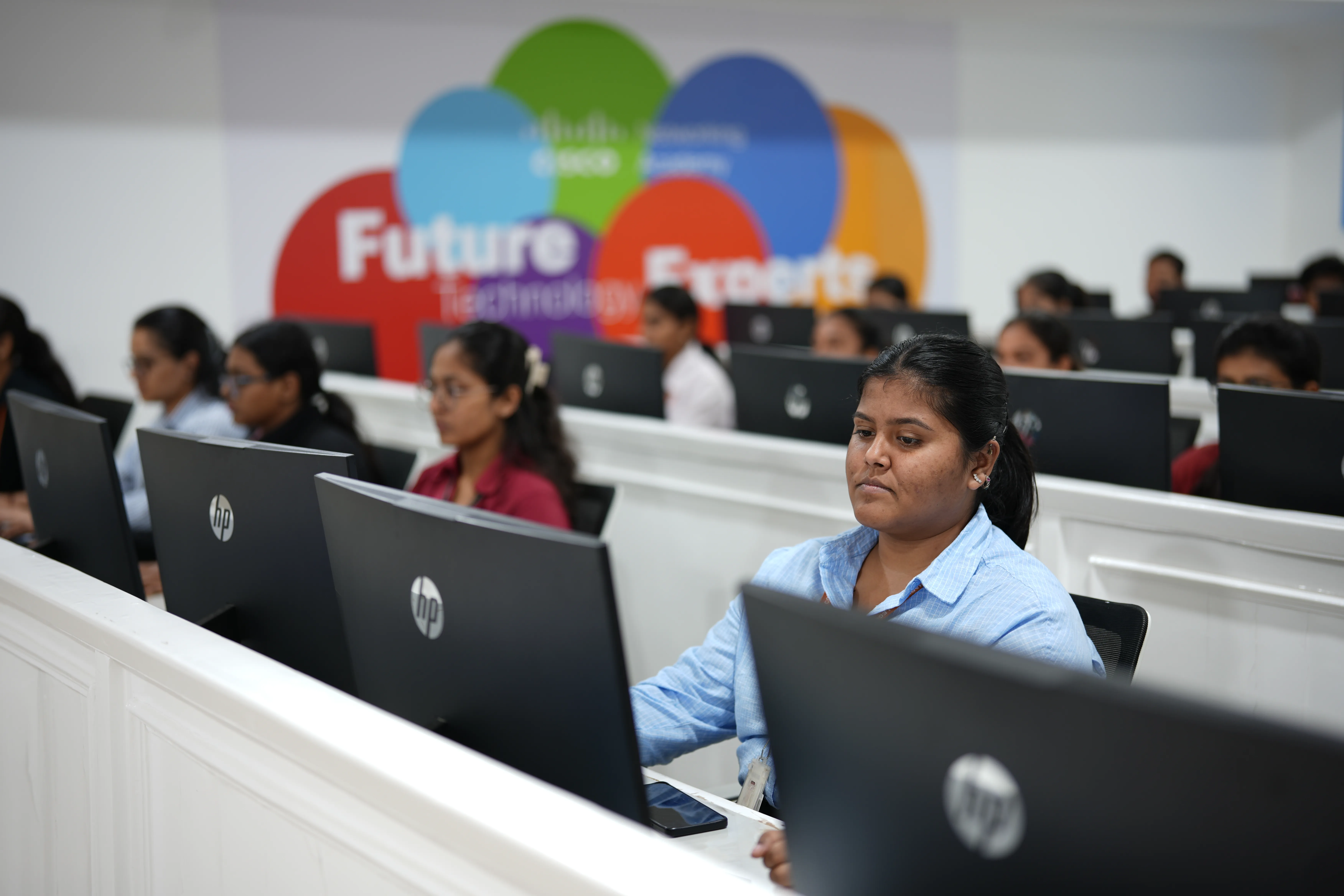
The modern classroom has evolved into an interactive learning environment where technology enhances teaching effectiveness and student engagement. Contemporary teaching methodologies encourage active participation, collaborative learning, and deeper conceptual understanding rather than passive information delivery.
.webp)
Technology-enabled classrooms integrate digital tools, multimedia resources, visual demonstrations, and interactive teaching methods to create engaging academic experiences. These learning spaces enable faculty to present complex concepts more effectively while encouraging students to participate actively in discussions, ask questions, analyse real-world situations, and develop independent perspectives. Interactive classrooms contribute significantly to improving academic outcomes by creating an environment where learning becomes more engaging, collaborative, and application-oriented.
Interactive Teaching Methodologies
Learner-centred teaching approaches encourage active participation through discussions, brainstorming sessions, presentations, case-based learning, and collaborative academic activities. These methodologies promote critical thinking, curiosity, and meaningful engagement with course content.
Multimedia-Enabled Learning
The integration of multimedia presentations, educational videos, animations, visual illustrations, and digital learning resources enhances classroom instruction by making complex concepts easier to understand and more engaging for students across various disciplines.
Technology-Assisted Learning
Modern teaching technologies support efficient knowledge delivery through digital presentations, interactive displays, virtual demonstrations, online academic resources, and learning management platforms that enrich the overall educational experience.
Collaborative Learning Environment
Team-based assignments, group discussions, project collaborations, and classroom presentations encourage students to exchange ideas, learn from peers, strengthen communication skills, and develop teamwork capabilities essential for professional success.
Enhanced Student Participation
Interactive classrooms promote greater student involvement by encouraging questions, discussions, presentations, peer interaction, and active academic engagement. Such participation improves conceptual understanding while building confidence and communication skills.
Digital Academic Resources
Access to digital learning materials, academic databases, e-books, online journals, virtual libraries, and electronic reference resources enables students to supplement classroom learning with independent research and continuous knowledge enhancement.
Continuous Academic Assessment
Regular assessments, assignments, presentations, quizzes, project evaluations, and classroom participation provide opportunities for continuous learning while helping students monitor academic progress and identify areas for improvement.
Flexible Learning Support
Technology-enabled infrastructure supports flexible and blended learning approaches by providing seamless access to digital educational resources, collaborative platforms, recorded lectures, and online academic content that complement classroom instruction.
Modern Infrastructure Supporting Academic Excellence
Modern infrastructure serves as the foundation of an enriching higher education experience by creating an environment that supports quality teaching, advanced research, innovation, skill development, and holistic student growth. A contemporary campus is designed to foster intellectual curiosity, encourage collaboration, and provide students with access to the resources required for academic and professional success.

Technology-enabled classrooms, well-equipped laboratories, comprehensive library resources, research facilities, innovation spaces, seminar halls, and student-centric learning environments collectively contribute to a dynamic academic ecosystem. These facilities enhance classroom learning by integrating practical experiences, digital technologies, and experiential education, enabling students to develop both theoretical knowledge and industry-relevant competencies.
An advanced campus infrastructure also promotes interdisciplinary collaboration by providing opportunities for project-based learning, research initiatives, technical discussions, innovation activities, and knowledge-sharing experiences. Such an environment encourages creativity, analytical thinking, problem-solving, and continuous learning while preparing students to address real-world challenges with confidence.
Beyond academic pursuits, modern educational facilities support the overall development of students by encouraging participation in extracurricular activities, leadership initiatives, cultural programmes, sports, and community engagement. This balanced approach contributes to the development of well-rounded graduates who possess not only academic excellence but also the professional skills, ethical values, and leadership qualities required for long-term success.
A comprehensive learning ecosystem that combines advanced infrastructure, quality teaching, practical exposure, research opportunities, technology-enabled education, and student-focused facilities creates an environment where students can achieve their full potential. Such an integrated approach prepares graduates to excel in higher education, industry, entrepreneurship, research, and the rapidly evolving global workforce.
Advanced Laboratories for Practical Learning
Practical education remains an essential component of professional development. Laboratories enable students to transform theoretical understanding into practical application through observation, experimentation, analysis, and innovation.
Laboratory learning encourages students to investigate concepts independently while developing technical precision, analytical thinking, and scientific reasoning. Regular practical sessions also improve confidence when applying classroom knowledge to professional situations.
Depending on the academic discipline, students gain exposure to laboratory environments that support experimentation, project development, technical simulations, prototype creation, research activities, and interdisciplinary collaboration.
Hands-on learning contributes significantly to developing workplace readiness by strengthening both technical expertise and problem-solving capabilities.
Library Resources Supporting Academic Excellence
An academically vibrant university requires access to comprehensive learning resources that encourage independent study and intellectual exploration. Libraries continue to play a vital role in supporting education by providing students with reliable academic references, research materials, scholarly journals, digital databases, and contemporary publications.
A well-equipped learning resource center enables students to:
- Explore subject-specific literature
- Access research publications
- Strengthen assignment preparation
- Conduct academic investigations
- Develop analytical reading habits
- Improve research methodology
- Prepare for competitive examinations
- Support project work
- Access digital knowledge repositories
- Encourage lifelong learning
The library becomes an important academic partner throughout every stage of higher education.
Innovation Spaces Encouraging Creative Thinking
Innovation flourishes when students are encouraged to question existing ideas, explore possibilities, and develop practical solutions for contemporary challenges. Dedicated innovation spaces provide opportunities for collaborative learning, experimentation, design thinking, and entrepreneurial exploration.
Students participating in innovation-oriented activities learn how to identify real-world problems, evaluate possible solutions, test concepts, refine ideas, and communicate their findings effectively.
Innovation initiatives also nurture qualities such as creativity, initiative, resilience, teamwork, and strategic thinking,skills that are highly valued across industries.
Research Facilities Promoting Knowledge Creation
Research is an integral component of higher education, fostering intellectual curiosity, innovation, and the pursuit of new knowledge. A research-oriented academic environment encourages students to move beyond conventional classroom learning by exploring contemporary challenges, investigating emerging ideas, and developing evidence-based solutions. Through research, students strengthen their analytical abilities, critical thinking, problem-solving skills, and capacity for independent inquiry while gaining a deeper understanding of their chosen disciplines.
Modern research facilities provide students with opportunities to engage in meaningful academic exploration across diverse fields of study. Working alongside experienced faculty members and utilizing advanced laboratories, digital resources, and research infrastructure, students can develop practical research competencies that complement their academic learning and prepare them for future professional and academic pursuits.
Research-oriented learning may include participation in a wide range of scholarly and innovation-driven activities that encourage systematic investigation and knowledge creation.
Faculty-Guided Research Projects
Faculty mentorship enables students to undertake structured research projects that encourage scientific inquiry, technical exploration, and evidence-based learning. Working under academic guidance helps students develop sound research methodologies while gaining valuable practical experience.
Literature Review and Academic Exploration
Reviewing scholarly publications, research journals, books, and academic databases helps students understand existing knowledge, identify research gaps, and build strong theoretical foundations for further investigation.
Data Collection and Analysis
Research activities often involve gathering, organizing, interpreting, and analysing data using appropriate scientific, statistical, and technological methods. These experiences strengthen analytical reasoning and evidence-based decision-making skills.
Technical Investigations
Students may explore practical and technical challenges through laboratory experiments, simulations, field studies, computational analysis, and discipline-specific investigations that contribute to a deeper understanding of complex concepts.
Interdisciplinary Research
Many contemporary challenges require knowledge from multiple disciplines. Interdisciplinary research encourages collaboration across academic domains, enabling students to develop broader perspectives and innovative solutions to real-world problems.
Prototype Design and Development
Innovation-driven projects may provide opportunities to conceptualize, design, develop, and evaluate prototypes that address practical challenges. Prototype development promotes creativity, engineering design skills, product innovation, and applied research capabilities.
Research Paper Preparation
Preparing research papers enables students to organize findings systematically, present evidence effectively, and develop academic writing skills. This process strengthens scholarly communication while encouraging adherence to ethical research practices.
Academic Conferences and Seminars
Participation in conferences, seminars, symposiums, and academic forums provides valuable opportunities to interact with researchers, scholars, industry experts, and fellow students while gaining exposure to emerging developments across various disciplines.
Poster Presentations
Research poster presentations help students communicate complex ideas in a structured and visually engaging manner. Presenting research findings before academic audiences also enhances confidence, communication skills, and professional presentation abilities.
Innovation and Research Showcases
Innovation exhibitions and research showcases provide platforms for students to demonstrate research outcomes, technical projects, prototypes, and creative solutions. These events encourage knowledge exchange, interdisciplinary collaboration, and the practical application of academic learning.
Advancing Knowledge Through Research
A strong research culture contributes significantly to academic excellence by encouraging inquiry, innovation, and evidence-based learning. Participation in research activities enables students to develop intellectual maturity, scientific reasoning, technical expertise, and independent thinking while preparing them for higher education, advanced research, entrepreneurship, and professional careers.
By integrating research with academic learning, students gain valuable experience in knowledge creation, critical analysis, and innovation, equipping them to contribute meaningfully to their professions and to the advancement of society.
Digital Learning Ecosystem
Technology has become an integral part of higher education. Digital learning platforms provide flexibility by allowing students to access educational resources anytime and from multiple devices. This approach complements classroom instruction while encouraging self-paced learning.
A comprehensive digital ecosystem may include:
- Learning Management Systems (LMS)
- Online course materials
- Recorded lectures
- Digital assignments
- Academic discussion forums
- Virtual classroom support
- E-books and e-journals
- Cloud-based collaboration tools
- Online quizzes and assessments
- Progress tracking systems
Digital learning empowers students to revisit concepts, strengthen understanding, and continue learning beyond scheduled classroom hours.
Collaborative Learning Spaces
Learning often becomes more meaningful when students exchange ideas, work on group projects, and solve problems collectively. Collaborative spaces encourage interdisciplinary interaction where students from different academic backgrounds contribute diverse perspectives.
These environments support:
- Team discussions
- Project planning
- Innovation workshops
- Technical brainstorming
- Peer learning
- Academic mentoring
- Presentation practice
- Design collaborations
- Entrepreneurial planning
- Professional networking
Collaborative learning not only enhances academic outcomes but also develops communication, leadership, and teamwork skills essential for professional success.
Safe, Accessible, and Student-Friendly Campus
A positive campus experience depends on an environment where students feel secure, supported, and welcomed. Well-maintained infrastructure, organized academic facilities, accessible learning spaces, and student support services contribute to creating a campus that promotes comfort and productivity.
An inclusive campus environment encourages students from diverse backgrounds to participate confidently in academic, cultural, and extracurricular activities while fostering mutual respect and a strong sense of community.
Infrastructure Supporting Holistic Development
Infrastructure is not limited to academic buildings alone. Sports facilities, cultural venues, seminar halls, student activity centers, recreational areas, dining spaces, and open learning environments all contribute to creating a balanced university experience.
Participation in activities beyond the classroom helps students develop physical well-being, emotional resilience, creativity, leadership, and interpersonal skills. These experiences complement academic learning and contribute to the overall development of responsible, confident, and socially aware graduates.
For students evaluating a Top Private University in Bangalore, campus infrastructure represents more than physical facilities, it reflects the institution's commitment to providing an environment where learning, innovation, collaboration, and personal growth thrive together. A thoughtfully developed campus empowers students to pursue academic excellence while preparing confidently for future professional and societal responsibilities.
Placement Support and Career Development Opportunities
Building a successful career requires more than academic achievement. Employers increasingly seek graduates who demonstrate technical expertise, communication skills, adaptability, critical thinking, professionalism, and the ability to work effectively in diverse environments. Recognizing these expectations, Sapthagiri NPS University emphasizes career readiness through structured development initiatives that complement classroom learning and prepare students for evolving professional landscapes. Students exploring a Top Private University in Bangalore often evaluate how effectively a university supports career planning, internship opportunities, industry engagement, and placement preparation. Career development is viewed as a continuous journey that begins early in university life, allowing students to gradually build the competencies expected in competitive workplaces.

Career Development Through Structured Training
Professional success is built through continuous learning, consistent preparation, and the development of industry-relevant competencies. In today's competitive employment landscape, employers seek graduates who possess not only strong academic knowledge but also the technical expertise, communication skills, leadership qualities, and professional confidence required to perform effectively in dynamic workplace environments.
Structured career development programmes complement academic learning by helping students strengthen practical skills, improve employability, and prepare for various stages of the recruitment process. A systematic approach to career readiness enables students to identify their strengths, enhance professional competencies, and develop the confidence needed to pursue diverse career opportunities across industries.
Career preparation may include a range of structured learning initiatives designed to support students throughout their academic journey.
Aptitude and Reasoning Development
Regular aptitude training helps students strengthen quantitative ability, logical reasoning, analytical thinking, and problem-solving skills that are commonly assessed during recruitment and competitive examinations.
Communication and Presentation Skills
Effective communication is an essential professional competency. Training programmes focus on verbal communication, written communication, presentation techniques, public speaking, and interpersonal skills to help students communicate confidently in academic and professional settings.
Resume and Professional Profile Development
Students receive guidance on preparing professional resumes and profiles that effectively highlight academic achievements, technical competencies, projects, internships, certifications, and extracurricular accomplishments.
Group Discussion Preparation
Structured group discussion sessions help students improve articulation, active listening, teamwork, leadership, critical thinking, and the ability to express ideas confidently in collaborative environments.
Mock Interviews
Practice interviews conducted in simulated recruitment environments enable students to improve interview techniques, build confidence, receive constructive feedback, and become familiar with various interview formats.
Technical Interview Preparation
Discipline-specific technical preparation strengthens subject knowledge while helping students confidently respond to technical questions related to their academic specialization and professional interests.
Professional Etiquette
Professional etiquette programmes introduce students to workplace behaviour, business communication, organizational culture, corporate ethics, and professional conduct expected across diverse industries.
Leadership and Teamwork
Leadership development activities encourage students to take initiative, collaborate effectively, manage responsibilities, and contribute positively within multidisciplinary teams while strengthening decision-making and interpersonal skills.
Time Management and Productivity
Developing effective time management strategies enables students to balance academic responsibilities, project work, skill development, and career preparation while improving productivity and organizational abilities.
Workplace Ethics and Professional Responsibility
Understanding ethical practices, accountability, integrity, and responsible decision-making prepares students to contribute positively within professional organizations while maintaining high standards of professionalism.
Preparing for Professional Success
A structured approach to career development enables students to graduate with the knowledge, practical skills, confidence, and professional mindset required to succeed in today's evolving employment landscape. Students interested in learning more about academic programmes, admissions, and career-oriented education can explore the Official Website: https://snpsu.edu.in/ or visit the Admissions Portal: https://admission.snpsu.edu.in/ for comprehensive programme information.
By integrating career preparation with academic learning, students become better equipped to pursue opportunities in higher education, industry, research, entrepreneurship, and public service while adapting to changing workplace expectations. For admission-related enquiries, prospective students may contact the Admissions Helpline: +91 9900072632.
Internship Opportunities and Industry Exposure
Practical experience is an essential component of professional education. Internship opportunities enable students to observe workplace practices, understand organizational environments, and apply classroom knowledge to real-world situations.
Industry interactions may include:
- Internship programs
- Industrial visits
- Expert lectures
- Technical workshops
- Corporate interaction sessions
- Live projects
- Case study discussions
- Professional networking opportunities
- Industry seminars
- Skill enhancement programs
These experiences help students develop practical understanding while strengthening workplace readiness.
Preparing Students for Campus Recruitment
Recruitment processes often evaluate candidates across multiple dimensions beyond academic performance. Career preparation initiatives therefore encourage students to strengthen analytical thinking, communication, confidence, and problem-solving abilities.
Students may receive guidance in:
- Resume optimization
- Personal interview strategies
- Technical assessments
- Aptitude practice
- Professional communication
- Corporate expectations
- Career planning
- Workplace behavior
- Confidence building
- Goal setting
Consistent preparation enables students to present their abilities effectively during internship and placement opportunities.
Building Long-Term Professional Success
Career growth continues well beyond graduation. A strong educational foundation, combined with continuous learning and professional development, enables graduates to adapt to changing technologies, emerging industries, and evolving workplace expectations.
Students are encouraged to cultivate qualities such as curiosity, resilience, ethical leadership, innovation, collaboration, and lifelong learning. These attributes support career progression across diverse sectors while helping graduates contribute positively to their organizations and communities.
For students seeking a Top Private University in Bangalore, career preparation extends beyond placement activities. It involves developing knowledge, practical skills, professional confidence, and a growth mindset that supports success throughout every stage of a rewarding professional journey.
Student Life and Campus Experience
University life extends far beyond classrooms, examinations, and academic schedules. It is a period of exploration, personal growth, meaningful friendships, leadership development, and lifelong memories. A vibrant campus environment allows students to discover new interests, build confidence, collaborate with peers from diverse backgrounds, and develop qualities that contribute to both personal fulfillment and professional success. Students searching for a Top Private University in Bangalore often look for an institution that provides an engaging campus experience alongside academic excellence. An enriching university environment encourages students to participate in cultural activities, sports, technical events, innovation challenges, community initiatives, and leadership opportunities that complement their educational journey. Sapthagiri NPS University fosters a student-centric campus where learning continues beyond lecture halls. Every activity is designed to promote confidence, creativity, teamwork, responsibility, and holistic development, enabling students to graduate as capable professionals and responsible citizens.
A Campus That Inspires Learning Every Day
A vibrant university campus plays a vital role in shaping the overall student experience. Beyond classrooms and laboratories, an engaging academic environment encourages students to learn, collaborate, innovate, and grow both personally and professionally. A campus that promotes inclusivity, creativity, and continuous learning helps students remain motivated throughout their academic journey while preparing them to thrive in an increasingly dynamic world.
An intellectually stimulating campus environment provides opportunities for meaningful interactions, interdisciplinary learning, cultural exchange, and professional development. Through academic engagement, extracurricular participation, and collaborative experiences, students develop confidence, broaden their perspectives, and strengthen the skills required for lifelong success. Daily campus life offers numerous opportunities that enrich both academic learning and personal development.
Engage in Academic Discussions
Thought-provoking classroom discussions, seminars, and academic forums encourage students to explore diverse perspectives, ask meaningful questions, and develop critical thinking abilities that support deeper learning.
Participate in Collaborative Projects
Working with peers on academic assignments, research initiatives, and interdisciplinary projects strengthens teamwork, leadership, problem-solving, and project management skills while promoting knowledge sharing.
Attend Workshops and Seminars
Workshops, expert lectures, technical sessions, and academic seminars provide exposure to emerging trends, industry developments, and contemporary knowledge beyond the prescribed curriculum.
Interact with Experienced Faculty
Regular interaction with faculty members enables students to receive academic guidance, mentorship, constructive feedback, and professional insights that support both educational and career aspirations.
Exchange Ideas with Peers
A collaborative learning environment encourages students from diverse academic backgrounds to share ideas, discuss concepts, and learn from one another, fostering creativity and intellectual growth.
Develop Professional Networks
Academic events, industry interactions, alumni engagement, and institutional activities provide opportunities to build meaningful professional relationships that may support future internships, research collaborations, and career opportunities.
Explore Innovation and Creativity
Innovation-focused activities encourage students to think creatively, develop practical solutions, participate in competitions, and contribute ideas that address real-world challenges through research and entrepreneurship.
Strengthen Communication Skills
Participation in presentations, discussions, cultural programmes, leadership activities, and student organizations helps students enhance verbal communication, interpersonal skills, and professional confidence.
Build Lifelong Friendships
University life provides opportunities to form lasting friendships with individuals from diverse cultures, regions, and academic disciplines, creating a supportive and enriching community throughout the educational journey.
Experience an Inclusive Academic Community
An inclusive campus environment promotes mutual respect, diversity, collaboration, and equal opportunities for learning. Such an atmosphere enables students to feel supported while contributing positively to the academic community.
An Environment That Supports Holistic Development
A dynamic campus environment extends learning beyond textbooks by encouraging academic excellence, personal growth, leadership, innovation, and meaningful collaboration. Through daily interactions, experiential learning, and active participation in campus life, students develop the knowledge, confidence, adaptability, and professional competencies required to excel in higher education, industry, entrepreneurship, research, and society.
For more information about academic programmes, campus life, and admissions, visit https://snpsu.edu.in/ or explore the admissions portal at https://admission.snpsu.edu.in/. For admission enquiries, contact +91 9900072632.
Student Clubs That Encourage Diverse Interests
Student organizations provide valuable opportunities to explore interests outside the curriculum. Participation in clubs allows students to discover talents, develop leadership abilities, and collaborate with individuals who share similar passions.
Campus clubs may focus on areas such as:
- Technology and coding
- Artificial Intelligence
- Robotics and automation
- Literature and creative writing
- Photography
- Music and performing arts
- Entrepreneurship
- Public speaking
- Environmental awareness
- Social responsibility
Active involvement in these communities encourages creativity, initiative, teamwork, and practical leadership experience.
Cultural Activities That Celebrate Diversity
A vibrant university experience extends beyond academics by providing opportunities for students to explore their creativity, celebrate cultural diversity, and develop meaningful connections with peers from varied backgrounds. Cultural activities contribute significantly to holistic education by fostering self-expression, teamwork, leadership, and an appreciation for different traditions, languages, and perspectives. A multicultural campus environment encourages students to participate in events that celebrate India's rich cultural heritage while embracing global outlooks and inclusive values. Such experiences promote mutual respect, collaboration, and a sense of belonging, creating a dynamic academic community where every student has the opportunity to learn, contribute, and grow.

Participation in cultural activities also helps students develop essential life skills, including communication, event management, creativity, confidence, and interpersonal relationships, complementing their academic and professional development.
Annual Cultural Festivals
Annual cultural festivals provide a platform for students to showcase their talents while celebrating the diversity of cultures, traditions, and artistic expressions represented within the university community.
Talent Showcases
Talent programmes encourage students to demonstrate their abilities across a wide range of creative disciplines, including music, dance, theatre, public speaking, and other performing arts, promoting confidence and self-expression.
Dance and Music Performances
Cultural performances featuring classical, folk, contemporary, and regional art forms create opportunities for students to preserve cultural traditions while exploring new artistic experiences and collaborative performances.
Drama and Theatre Productions
Theatrical performances encourage creativity, storytelling, teamwork, and effective communication. Participation in stage productions helps students develop confidence, leadership, and presentation skills while exploring social and cultural themes.
Art and Creative Exhibitions
Art exhibitions provide opportunities for students to present paintings, sketches, sculptures, digital artwork, and other creative expressions, encouraging innovation and artistic appreciation across the academic community.
Literary Competitions
Literary events such as debates, essay writing, poetry, storytelling, creative writing, and public speaking competitions strengthen communication skills, critical thinking, and intellectual engagement while nurturing literary talent.
Traditional and Festive Celebrations
Celebrating national, regional, and cultural festivals promotes awareness of India's rich heritage while encouraging inclusivity, unity, and mutual appreciation among students from diverse communities.
Fashion and Cultural Events
Cultural showcases and traditional attire presentations provide opportunities to celebrate regional identities, artistic traditions, and cultural diversity while promoting creativity and community participation.
Photography and Visual Arts Exhibitions
Photography exhibitions encourage students to capture moments, tell meaningful stories, and explore creative perspectives through visual expression, contributing to artistic development and cultural appreciation.
Creative Competitions
Competitions focusing on design, innovation, crafts, digital media, and artistic creativity encourage students to think imaginatively, collaborate effectively, and showcase their unique talents in a supportive academic environment.
Enriching Campus Life Through Cultural Engagement
Cultural activities play an important role in creating a vibrant and inclusive campus environment where students learn from one another, celebrate diversity, and build lifelong friendships. Participation in cultural programmes strengthens confidence, leadership, communication, creativity, and teamwork while contributing to personal growth beyond the classroom.
By integrating cultural engagement with academic excellence, students develop into well-rounded individuals who appreciate diversity, respect different perspectives, and possess the interpersonal and professional skills required to thrive in an interconnected global society.
Sports and Physical Well-Being
Physical wellness plays an important role in maintaining a balanced university experience. Participation in sports promotes discipline, resilience, teamwork, determination, and healthy competition. Students are encouraged to participate in various recreational and competitive activities that contribute to physical fitness while promoting a healthy lifestyle. Regular involvement in sports also supports stress management, emotional well-being, and overall personal development throughout university life.
Leadership Opportunities That Build Confidence
Leadership develops through participation, responsibility, and experience. Students who contribute to organizing events, managing clubs, coordinating activities, or representing their peers gain valuable organizational and interpersonal skills.
Leadership experiences help students strengthen:
- Decision-making
- Strategic planning
- Communication
- Team coordination
- Event management
- Conflict resolution
- Professional ethics
- Public speaking
- Responsibility
- Accountability
These qualities remain valuable throughout professional careers regardless of industry or specialization.
Innovation, Creativity, and Entrepreneurial Thinking
Modern universities encourage students to become creators rather than simply consumers of knowledge. Innovation initiatives inspire learners to identify practical challenges, generate ideas, evaluate solutions, and transform concepts into meaningful outcomes. Students interested in entrepreneurship and innovation may participate in activities such as:
- Idea presentation sessions
- Startup awareness programs
- Innovation challenges
- Design thinking workshops
- Prototype development
- Business model discussions
- Technology demonstrations
- Collaborative innovation projects
- Mentorship interactions
- Entrepreneurship awareness events
These experiences cultivate creativity, initiative, adaptability, and problem-solving capabilities.
Community Engagement and Social Responsibility
Higher education also emphasizes the importance of contributing positively to society. Students are encouraged to participate in community engagement initiatives that foster empathy, responsibility, and civic awareness. Activities may include:
- Social outreach programs
- Environmental awareness campaigns
- Health awareness initiatives
- Educational support activities
- Community service projects
- Blood donation drives
- Sustainability campaigns
- Volunteer programs
- Awareness workshops
- Public welfare initiatives
Such participation helps students appreciate the value of responsible citizenship while developing compassion and social leadership.
Building Lifelong Relationships
One of the most valuable aspects of university life is the opportunity to build lasting relationships with classmates, mentors, faculty members, alumni, and professionals. These connections often become important sources of academic support, career guidance, collaboration, and lifelong friendship. Networking within the university community encourages knowledge sharing, professional growth, and continued engagement even after graduation.
Start Your Academic Journey Today
Students who aspire to study at a Top Private University in Bangalore can begin their admission process through the official admissions portal.
Apply Online: https://admission.snpsu.edu.in/
Admissions Helpline: +91 9900072632
The admissions team provides guidance regarding academic programs, eligibility, application procedures, required documentation, and admission-related queries to help students make informed decisions about their higher education.
University life represents a unique chapter filled with opportunities to learn, grow, innovate, and prepare for the future. Through academic excellence, vibrant campus experiences, leadership opportunities, innovation initiatives, cultural engagement, sports, and community participation, Sapthagiri NPS University aims to provide students with an enriching educational journey that extends far beyond earning a degree. Students graduate with knowledge, confidence, professional competence, and experiences that continue to shape their personal and professional lives for years to come.
Programs and Academic Opportunities
Selecting the right academic program is one of the most important decisions in a student's educational journey. Every learner has unique interests, career aspirations, and professional goals, making it essential to choose a university that offers diverse academic pathways supported by quality teaching, practical learning, and future-oriented curriculum design.
Students searching for a Top Private University in Bangalore often look for institutions that provide multidisciplinary education, experienced faculty, modern laboratories, industry-oriented learning, and opportunities for continuous academic growth. Sapthagiri NPS University is committed to nurturing students through programs that combine theoretical knowledge with practical application, preparing graduates for higher studies, research, entrepreneurship, and professional careers.
The university's academic ecosystem encourages students to become lifelong learners who can adapt to technological advancements, emerging industries, and global opportunities while maintaining strong ethical values and professional responsibility.
School of Engineering & Technology
Undergraduate (B.E.) & Postgraduate (M.Tech.) Programmes
The School of Engineering & Technology at Sapthagiri NPS University offers future-focused engineering education that combines academic excellence, practical learning, innovation, research, and industry engagement. Each programme is designed to equip students with the technical knowledge, professional skills, and problem-solving abilities required for successful careers in engineering and technology.
Bachelor of Engineering (B.E.) Programmes
| Programme | Programme Overview | Career Opportunities | Programme Details |
|---|---|---|---|
| Computer Science & Engineering (CSE) | Programming, Software Engineering, Artificial Intelligence, Cloud Computing, Cyber Security, Database Management, Networking and Full-Stack Development with project-based learning and coding practice. | Software Engineer • Full-Stack Developer • Cloud Engineer • Cyber Security Analyst • DevOps Engineer | https://snpsu.edu.in/engineering/department-landing/computer-science-and-engineering |
| Artificial Intelligence & Machine Learning (AI & ML) | Machine Learning, Deep Learning, Computer Vision, Robotics, Natural Language Processing, Intelligent Systems and AI-driven application development. | AI Engineer • Machine Learning Engineer • Robotics Engineer • AI Consultant • Research Engineer | https://snpsu.edu.in/engineering/department-landing/artificial-intelligence-and-machine-learning |
| Artificial Intelligence & Data Science (AI & DS) | Artificial Intelligence, Big Data, Predictive Analytics, Business Intelligence, Data Engineering and Machine Learning with real-world applications. | Data Scientist • AI Analyst • Data Engineer • Analytics Consultant • Business Intelligence Analyst | https://snpsu.edu.in/engineering/department-landing/artificial-intelligence-and-data-science |
| Computer Science & Engineering (Data Science) | Statistical Computing, Python Programming, Data Analytics, Big Data Technologies, Machine Learning and Data Visualization. | Data Scientist • Data Analyst • Business Analyst • Analytics Engineer • Research Associate | https://snpsu.edu.in/engineering/department-landing/data-science |
| Electronics & Communication Engineering (ECE) | Embedded Systems, VLSI, IoT, Wireless Communication, Signal Processing, Semiconductor Technology and Electronic Design. | Electronics Engineer • Embedded Engineer • VLSI Engineer • IoT Engineer • Communication Engineer | https://snpsu.edu.in/engineering/department-landing/electronics-and-communication-engineering |
| Electrical & Electronics Engineering (EEE) | Power Systems, Renewable Energy, Industrial Automation, Smart Grids, Electrical Machines, Electric Vehicles and Power Electronics. | Electrical Engineer • Automation Engineer • Power Engineer • EV Engineer • Energy Consultant | https://snpsu.edu.in/engineering/department-landing/electrical-and-electronics-engineering |
Master of Technology (M.Tech.) Programmes
| Programme | Specialization Focus | Career Opportunities | Programme Details |
|---|---|---|---|
| M.Tech. – Computer Science & Engineering | Advanced Computing, Artificial Intelligence, Cloud Computing, Software Architecture, Cyber Security, Data Analytics, and Research. | Solution Architect • Technical Lead • Research Engineer • Software Consultant | https://snpsu.edu.in/engineering/department-landing/MTechCSE |
| M.Tech. – Computer Engineering | Enterprise Computing, Intelligent Systems, Advanced Networking, Cloud Infrastructure, High-Performance Computing, and Emerging Technologies. | Enterprise Architect • Systems Consultant • Research Scientist • Technology Specialist | https://snpsu.edu.in/engineering/department-landing/MTechComputer |
| M.Tech. – Electronics & Communication Engineering | Embedded Systems, VLSI Design, Digital Signal Processing, Wireless Communication, Internet of Things (IoT), and Communication Technologies. | VLSI Engineer • Embedded Systems Engineer • Electronics Researcher • Communication Systems Engineer | https://snpsu.edu.in/engineering/department-landing/MTechElectronicsCommunication |
School of Management Studies
Undergraduate & Postgraduate Programmes
The School of Management Studies at Sapthagiri NPS University prepares students for dynamic careers in business, management, finance, entrepreneurship, analytics, and corporate leadership. Academic programmes combine business fundamentals with practical exposure, case-based learning, industry interaction, leadership development, and professional skill enhancement.
Master of Business Administration (MBA)
| MBA Programme | Programme Highlights | Career Opportunities | Programme Details |
|---|---|---|---|
| MBA – Business Analytics | Business intelligence, data analytics, decision support systems, predictive analytics, business strategy and visualization. | Business Analyst • Data Analyst • Strategy Consultant • Analytics Manager | https://snpsu.edu.in/management/department-landing/MBABusinessA |
| MBA – Human Resource Management | Talent acquisition, employee engagement, labour laws, organizational behaviour, performance management and leadership. | HR Manager • Talent Acquisition Specialist • HR Business Partner • Learning & Development Executive | https://snpsu.edu.in/management/department-landing/MBAHumanResourceManagement |
| MBA – Marketing Management | Consumer behaviour, digital marketing, branding, sales management, retail marketing and strategic marketing. | Marketing Manager • Brand Manager • Digital Marketing Manager • Sales Manager | https://snpsu.edu.in/management/department-landing/MBAMarketingManagement |
| MBA – Hospital & Health Care Management | Hospital administration, healthcare operations, quality systems, healthcare finance and medical service management. | Hospital Administrator • Healthcare Manager • Operations Executive • Quality Coordinator | https://snpsu.edu.in/management/department-landing/MBAHospitalHealthCare |
| MBA – Operations & Supply Chain Management | Supply chain planning, logistics, procurement, inventory management and operational excellence. | Supply Chain Manager • Logistics Manager • Operations Manager • Procurement Specialist | https://snpsu.edu.in/management/department-landing/MBAOperationsSupplyChain |
| MBA – Financial Management | Corporate finance, investment analysis, financial planning, banking, taxation and risk management. | Financial Analyst • Investment Advisor • Banking Professional • Finance Manager | https://snpsu.edu.in/management/department-landing/MBAFinancialM |
Bachelor of Business Administration (BBA)
| BBA Programme | Programme Highlights | Career Opportunities | Programme Details |
| BBA – General | Business management, accounting, economics, entrepreneurship and organizational leadership. | Management Trainee • Business Executive • Entrepreneur | https://snpsu.edu.in/management/department-landing/BBAGeneral |
| BBA – Business Analytics | Data-driven business decisions, analytics tools, reporting and business intelligence. | Business Analyst • Operations Executive • Analytics Associate | https://snpsu.edu.in/management/department-landing/BBABusinessAnalytics |
| BBA – Human Resource Management | Human resources, recruitment, training, employee relations and organizational development. | HR Executive • Recruiter • Training Coordinator | https://snpsu.edu.in/management/department-landing/BBAHumanResourceManagement |
| BBA – Aviation Management & Logistics | Airport operations, airline management, logistics and aviation services. | Airport Executive • Logistics Coordinator • Aviation Operations Executive | https://snpsu.edu.in/management/department-landing/BBAAviationManagement |
| BBA – Digital Marketing | SEO, social media marketing, content marketing, branding, online advertising and analytics. | Digital Marketing Executive • SEO Analyst • Social Media Executive • Content Strategist | https://snpsu.edu.in/management/department-landing/BBADigitalMarketing |
Bachelor of Commerce (B.Com)
| B.Com Programme | Programme Highlights | Career Opportunities | Programme Details |
| B.Com – General | Accounting, commerce, economics, taxation, banking and business management. | Accountant • Banking Executive • Finance Executive | https://snpsu.edu.in/management/department-landing/BComGeneral |
| B.Com – Corporate Accounting & Taxation | Corporate accounting, GST, taxation, auditing and financial compliance. | Tax Consultant • Corporate Accountant • Audit Executive | https://snpsu.edu.in/management/department-landing/BComCorporateAccountingTaxation |
| B.Com – Accounting & Finance | Financial accounting, investment management, banking and corporate finance. | Financial Analyst • Accounts Executive • Banking Officer | https://snpsu.edu.in/management/department-landing/BComAccountingFinance |
| B.Com – Auditing & Finance | Internal auditing, financial reporting, corporate governance and risk assessment. | Auditor • Finance Executive • Compliance Officer |
https://snpsu.edu.in/management/department-landing/BComAuditinFinance
|
Explore Management Programmes
School of Management Studies: https://snpsu.edu.in/management/
Apply Online: https://admission.snpsu.edu.in/
Admissions Email: admissions@snpsu.edu.in
Admissions Helpline: +91 9900072632
School of Applied Sciences
Undergraduate (BCA) and Postgraduate (MCA) Programmes
The School of Applied Sciences offers undergraduate and postgraduate programmes in Computer Applications that prepare students for careers in the rapidly evolving digital economy. The curriculum is designed to combine strong theoretical foundations with practical learning experiences, enabling students to develop technical competencies in software development, artificial intelligence, data science, cloud computing, cybersecurity, and other emerging computing technologies.
Academic programmes emphasize programming proficiency, analytical thinking, problem-solving, project-based learning, and exposure to contemporary industry practices. Through technology-enabled learning environments, modern computer laboratories, and practical assignments, students are encouraged to develop the knowledge and professional skills required for careers across the information technology sector.
Bachelor of Computer Applications (BCA)
The Bachelor of Computer Applications (BCA) programme provides a comprehensive foundation in computer science, software development, programming, database management, networking, web technologies, and emerging digital technologies. Students develop practical coding skills while gaining exposure to industry-oriented projects and contemporary software development practices.
| Programme | Programme Highlights | Career Opportunities | Programme Details |
|---|---|---|---|
| BCA – General | Programming, Software Engineering, Database Management Systems, Operating Systems, Web Technologies, Software Development and Industry Projects | Software Developer • Web Developer • System Administrator • Application Support Engineer • IT Executive | https://snpsu.edu.in/science/department-landing/bca |
| BCA – Artificial Intelligence & Machine Learning | Artificial Intelligence, Machine Learning, Deep Learning, Computer Vision, Natural Language Processing and Intelligent Systems | AI Developer • Machine Learning Engineer • AI Analyst • Intelligent Systems Developer | https://snpsu.edu.in/science/department-landing/bca-artificial-intelligence-and-machine-learning |
| BCA – Data Science | Python Programming, Statistics, Data Analytics, Business Intelligence, Machine Learning and Data Visualization | Data Analyst • Business Intelligence Analyst • Junior Data Scientist • Analytics Executive | https://snpsu.edu.in/science/department-landing/bca-data-science |
| BCA – Cloud Computing & Cyber Security | Cloud Platforms, Network Security, Ethical Hacking, Virtualization, Cyber Defence and Secure Application Development | Cloud Engineer • Cyber Security Analyst • Network Administrator • Security Operations Associate | https://snpsu.edu.in/science/department-landing/bca-cloud-computing-and-cyber-security |
Master of Computer Applications (MCA)
The Master of Computer Applications (MCA) programme is designed to strengthen advanced technical knowledge while preparing graduates for leadership roles in software engineering, enterprise application development, artificial intelligence, cybersecurity, cloud technologies, and data-driven computing. The curriculum combines advanced academic learning with practical implementation and research-oriented activities.
| Programme | Programme Highlights | Career Opportunities | Programme Details |
|---|---|---|---|
| MCA – General | Software Engineering, Enterprise Applications, Cloud Technologies, Database Systems, Programming and Software Architecture | Software Engineer • Systems Analyst • Solution Developer • Technical Consultant | https://snpsu.edu.in/science/department-landing/mca |
| MCA – Artificial Intelligence & Machine Learning | Intelligent Computing, Deep Learning, AI Frameworks, Predictive Analytics and Automation Technologies | AI Engineer • Machine Learning Engineer • AI Consultant • Research Associate | https://snpsu.edu.in/science/department-landing/mca-artificial-intelligence-and-machine-learning |
| MCA – Data Science | Big Data Analytics, Statistical Modelling, Data Engineering, Visualization and Business Analytics | Data Scientist • Data Engineer • Analytics Consultant • Business Intelligence Specialist | https://snpsu.edu.in/science/department-landing/mca-data-science |
| MCA – Cyber Security & Forensics | Cyber Defence, Digital Forensics, Ethical Hacking, Network Security, Incident Response and Information Security Management | Cyber Security Specialist • Digital Forensics Analyst • Security Consultant • Information Security Engineer | https://snpsu.edu.in/science/department-landing/mca-cyber-security-and-forensics |
Why Choose the School of Applied Sciences?
The School of Applied Sciences is committed to providing a technology-driven academic environment that supports innovation, practical learning, research, and professional development. Academic programmes are regularly aligned with evolving industry requirements to prepare graduates for successful careers in the information technology sector.
| Academic Advantage | Student Benefit |
|---|---|
| Industry-Oriented Curriculum | Curriculum designed to reflect current software development practices, emerging technologies, and evolving industry requirements. |
| Practical Coding Environment | Extensive programming laboratories, software development projects, coding exercises, and practical application-based learning. |
| Emerging Technology Focus | Academic exposure to Artificial Intelligence, Machine Learning, Data Science, Cloud Computing, Cyber Security, and Digital Technologies. |
| Experienced Faculty | Guidance from qualified faculty members through academic mentoring, project supervision, and continuous academic support. |
| Research and Innovation | Opportunities to participate in technical research, innovation initiatives, project development, and interdisciplinary learning. |
| Career Development Support | Structured training in aptitude development, communication skills, resume preparation, interview readiness, and professional development. |
| Modern Learning Infrastructure | Technology-enabled classrooms, advanced computer laboratories, digital learning resources, high-speed computing facilities, and collaborative learning spaces. |
Admissions Information
Students seeking admission to undergraduate and postgraduate programmes offered by the School of Applied Sciences may refer to the following resources for programme details, eligibility criteria, and the admission process.
| Information | Details |
|---|---|
| School of Applied Sciences | https://snpsu.edu.in/science/ |
| University Website | https://snpsu.edu.in/ |
| Admission Eligibility | https://snpsu.edu.in/admission_content/Admissionelgibility |
| Apply Online | https://admission.snpsu.edu.in/ |
| Admissions Email | admissions@snpsu.edu.in |
| Admissions Helpline | +91 9900072632 |
Build a Future in Computing and Digital Technologies
The School of Applied Sciences provides an academic environment where innovation, technology, and practical learning converge to prepare students for successful careers in the rapidly evolving digital world. Whether pursuing software development, artificial intelligence, data science, cloud computing, cybersecurity, enterprise technologies, or research, students are equipped with the knowledge, technical expertise, and professional competencies required to contribute effectively across diverse sectors of the global information technology industry.
Admission Process at Sapthagiri NPS University
Beginning a higher education journey is an important milestone, and choosing the right academic programme is the first step towards achieving long-term academic and professional success. At Sapthagiri NPS University, the admission process has been designed to be transparent, efficient, and student-centric, ensuring that prospective students can complete every stage of their application with clarity and confidence.
The University is committed to providing comprehensive guidance throughout the admission journey. From exploring academic programmes and understanding eligibility requirements to document verification, counselling, and enrollment, applicants receive the information and support needed to make informed decisions about their future.
Whether applying for an undergraduate, postgraduate, or doctoral programme, prospective students are encouraged to begin the admission process early. Early application provides sufficient time to understand programme requirements, complete documentation, explore available academic opportunities, and receive timely updates regarding admissions and enrollment.
Admission Eligibility
Eligibility requirements are prescribed for each academic programme in accordance with University regulations and applicable statutory guidelines. Applicants are advised to carefully review the eligibility criteria before submitting an application.
Undergraduate Programmes (UG)
Applicants seeking admission to undergraduate programmes are generally expected to:
- Have successfully completed 10+2 or an equivalent qualification from a recognized board.
- Fulfil the eligibility requirements prescribed for the selected programme.
- Meet subject-specific requirements wherever applicable.
- Satisfy the admission guidelines established by the University.
Postgraduate Programmes (PG)
Applicants seeking admission to postgraduate programmes are generally expected to:
- Hold a Bachelor's Degree from a recognized university.
- Fulfil the academic requirements prescribed for the selected programme.
- Meet programme-specific eligibility criteria wherever applicable.
Applicants are encouraged to verify programme-specific eligibility requirements before proceeding with the admission process.
Admission Eligibility
https://snpsu.edu.in/admission_content/Admissionelgibility
Admission Process
The admission process has been structured to provide a seamless application experience for prospective students.
| Step | Admission Activity |
|---|---|
| 1 | Explore the academic programmes offered by the University and select the programme that aligns with your educational interests and career aspirations. |
| 2 | Review the eligibility criteria and admission requirements applicable to the selected programme. |
| 3 | Complete the online application form by providing accurate personal, academic, and contact information. |
| 4 | Upload the required academic and supporting documents in the prescribed format. |
| 5 | Submit the completed application for review by the Admissions Office. |
| 6 | Participate in admission counselling, document verification, or programme-specific admission formalities, wherever applicable. |
| 7 | Upon successful evaluation, receive the admission offer and complete the admission confirmation process. |
| 8 | Complete fee payment and all enrollment formalities within the prescribed timeline. |
| 9 | Receive enrollment confirmation and prepare to begin your academic journey at Sapthagiri NPS University. |
Documents Required
Applicants are advised to keep the necessary documents ready before initiating the admission process to facilitate timely verification and smooth completion of admission formalities.
Academic Documents
The following academic documents may be required depending on the programme of study:
- 10th Standard Marks Card
- 12th Standard Marks Card
- Degree Marks Cards (for Postgraduate applicants)
- Provisional Certificate (where applicable)
- Transfer Certificate (TC)
- Migration Certificate (where applicable)
Personal Documents
Applicants may also be required to submit:
- Recent Passport-Size Photographs
- Aadhaar Card or any Valid Government-Issued Identity Proof
- Address Proof
- Category Certificate (where applicable)
- Income Certificate (where applicable)
- Any additional documents specified during the admission process
Applicants may be required to produce original documents for verification as part of the admission process.
Why Apply Early?
Submitting an application early offers several advantages and allows applicants to complete the admission process with greater convenience and confidence.
Wider Programme Choices
Early application provides greater flexibility in selecting academic programmes aligned with individual interests and career aspirations.
Personalised Admission Guidance
Applicants receive timely assistance regarding programme selection, eligibility requirements, admission procedures, and academic opportunities.
Efficient Document Verification
Preparing and submitting documents in advance enables faster verification and reduces delays during the admission process.
Better Admission Planning
Early applicants have sufficient time to understand programme requirements, organize academic documentation, and complete admission formalities well before the commencement of classes.
Timely Admission Updates
Applicants receive important notifications regarding admissions, counseling schedules, orientation programmes, enrollment procedures, and other academic announcements.
Smooth Transition to University Life
Completing admission formalities early allows students to prepare for their academic journey, familiarize themselves with the campus environment, and begin their university experience with confidence.
Frequently Asked Questions
1. Why choose Sapthagiri NPS University?
At Sapthagiri NPS University, we are committed to delivering multidisciplinary education that combines academic excellence with industry relevance. Our experienced faculty, contemporary curriculum, technology-enabled learning environments, advanced laboratories, research ecosystem, and career development initiatives provide students with the knowledge, practical skills, and professional competencies required to excel in a rapidly evolving global landscape. Through innovation, experiential learning, and holistic development, we prepare our students for successful careers and lifelong learning.
2. What undergraduate programmes do you offer?
We offer a diverse range of undergraduate programmes across Engineering, Management, Commerce, Computer Applications, Applied Sciences, and other professional disciplines. Our programmes are designed to provide strong academic foundations while encouraging practical learning, critical thinking, innovation, and industry readiness.
3. Do you offer postgraduate programmes?
Yes. We offer postgraduate programmes, including M.Tech., MBA, MCA, and other advanced academic programmes that strengthen technical expertise, research capabilities, leadership qualities, analytical thinking, and professional competence across diverse disciplines.
4. How can I apply for admission?
Prospective students can submit their applications through our official Online Admissions Portal.
Admissions Portal
https://admission.snpsu.edu.in/
5. Where can I find the admission eligibility criteria?
Programme-specific eligibility requirements are available on our official website. Applicants are encouraged to review the eligibility criteria before submitting their applications.
Admission Eligibility
https://snpsu.edu.in/admission_content/Admissionelgibility
6. What career development support do you provide?
Career readiness is an integral part of the educational experience at Sapthagiri NPS University. We support our students through structured career development initiatives that include:
- Aptitude and reasoning development
- Communication and presentation skills
- Resume and portfolio development
- Mock interviews
- Group discussion preparation
- Internship guidance
- Industry interactions
- Professional mentoring
- Placement readiness programmes
- Leadership and professional development activities
These initiatives help students develop the confidence and competencies required for successful careers across diverse industries.
7. What facilities are available on campus?
Our campus has been designed to provide a modern and engaging learning environment that supports academic excellence, research, innovation, and holistic student development.
Campus facilities include:
- Smart classrooms
- Advanced laboratories
- Central library and digital learning resources
- Computer laboratories
- Research and innovation centres
- Seminar and conference halls
- Collaborative learning spaces
- Sports and recreational facilities
- Student support and wellness services
8. Are internships part of the academic experience?
Yes. We encourage students to complement classroom learning through internships, industrial visits, industry interactions, technical workshops, project-based learning, research activities, and experiential learning opportunities that strengthen practical knowledge and professional readiness.
9. Where is Sapthagiri NPS University located?
Sapthagiri NPS University
#14/5, Chikkasandra,
Hesaraghatta Main Road,
Bengaluru – 560057, Karnataka, India.
10. How can I contact the Admissions Office?
For information regarding admissions, academic programmes, eligibility, scholarships, fee structure, or campus facilities, applicants may contact our Admissions Office.
Admissions Email: admissions@snpsu.edu.in
Admissions Helpline: +91 9900072632
Official Website: https://snpsu.edu.in/
Our Sapthagiri NPS University, we believe that higher education should inspire students to achieve academic excellence while developing the knowledge, skills, values, and confidence required to make meaningful contributions to society. Our multidisciplinary learning environment combines rigorous academics with practical exposure, research, innovation, industry engagement, and holistic student development to prepare graduates for the opportunities and challenges of a rapidly evolving world.
We are committed to providing an educational experience that nurtures intellectual curiosity, encourages innovation, promotes ethical leadership, and supports lifelong learning. Supported by experienced faculty, modern infrastructure, advanced laboratories, technology-enabled classrooms, research opportunities, career development programmes, and a vibrant campus community, our students are empowered to achieve their personal, academic, and professional aspirations.
Whether your goal is to pursue higher education, build a successful professional career, undertake research, or become an entrepreneur, we provide the academic foundation, practical exposure, and supportive learning environment needed to help you realize your ambitions.
We invite you to explore our academic programmes, review the admission requirements, connect with our Admissions Office, and begin your journey towards academic excellence at Sapthagiri NPS University.
Begin Your Journey with Us
We welcome aspiring students to become part of our academic community and take the next step towards a future defined by knowledge, innovation, and opportunity.
🎓 Apply Online
https://admission.snpsu.edu.in/
🌐 Visit Our Website
https://snpsu.edu.in/
📧 Admissions Email
admissions@snpsu.edu.in
📞 Admissions Helpline
+91 9900072632

Leave a Comment