

Top Colleges in Bangalore with Placement | Sapthagiri NPS University Admissions

Top Colleges in Bangalore with Placement – Explore Courses, Career Opportunities and Academic Excellence
Choosing the right college is one of the most important decisions in a student's academic journey. Students and parents often search for the top colleges in Bangalore with placement because they want an educational environment that supports academic development and future career opportunities. Bangalore is widely recognised for its technology companies, business organisations, healthcare institutions, research activities and growing professional sectors. This environment creates opportunities for students to understand different industries while pursuing higher education. At our University, we focus on providing a learning environment that connects academic knowledge with practical understanding, professional skills and personal development. We believe that higher education should prepare students not only to complete a degree but also to approach professional responsibilities with confidence. Our academic programmes cover engineering, management, commerce, computer applications, design, allied health sciences and other specialised areas. Each programme introduces students to subject knowledge and encourages them to develop the abilities required in their chosen field. Alongside classroom learning, students can benefit from academic guidance, skill-development activities, industry interactions and career preparation initiatives. We encourage students to understand their interests, compare available programmes and select a course that matches their long-term ambitions. Our approach is centred on helping students build a strong academic foundation while preparing them to explore suitable professional opportunities after graduation.
Why Students Search for Top Colleges in Bangalore with Placement
Students searching for the top colleges in Bangalore with placement generally consider several factors before selecting an institution. Academic quality, programme options, faculty guidance, infrastructure, practical learning opportunities and career support can all influence a student's decision. A college should provide more than a classroom experience; it should encourage students to develop communication, analytical thinking, teamwork and problem-solving abilities. These skills are useful across technology, management, finance, healthcare, design and other professional sectors. Students should also understand how an institution supports internships, career guidance, placement preparation and interaction with organisations. Placement outcomes can vary according to the student's academic performance, technical knowledge, communication skills, eligibility and the recruitment requirements of individual employers. Therefore, students should review placement information carefully instead of relying only on general promotional statements. At our University, we encourage learners to approach education with curiosity, discipline and a willingness to improve continuously. Our academic environment aims to support subject understanding and the development of practical capabilities. Through suitable learning activities and career-oriented preparation, students can work towards becoming more confident candidates. We also encourage students to research their preferred career paths early, understand the qualifications required and make informed decisions about their higher education.
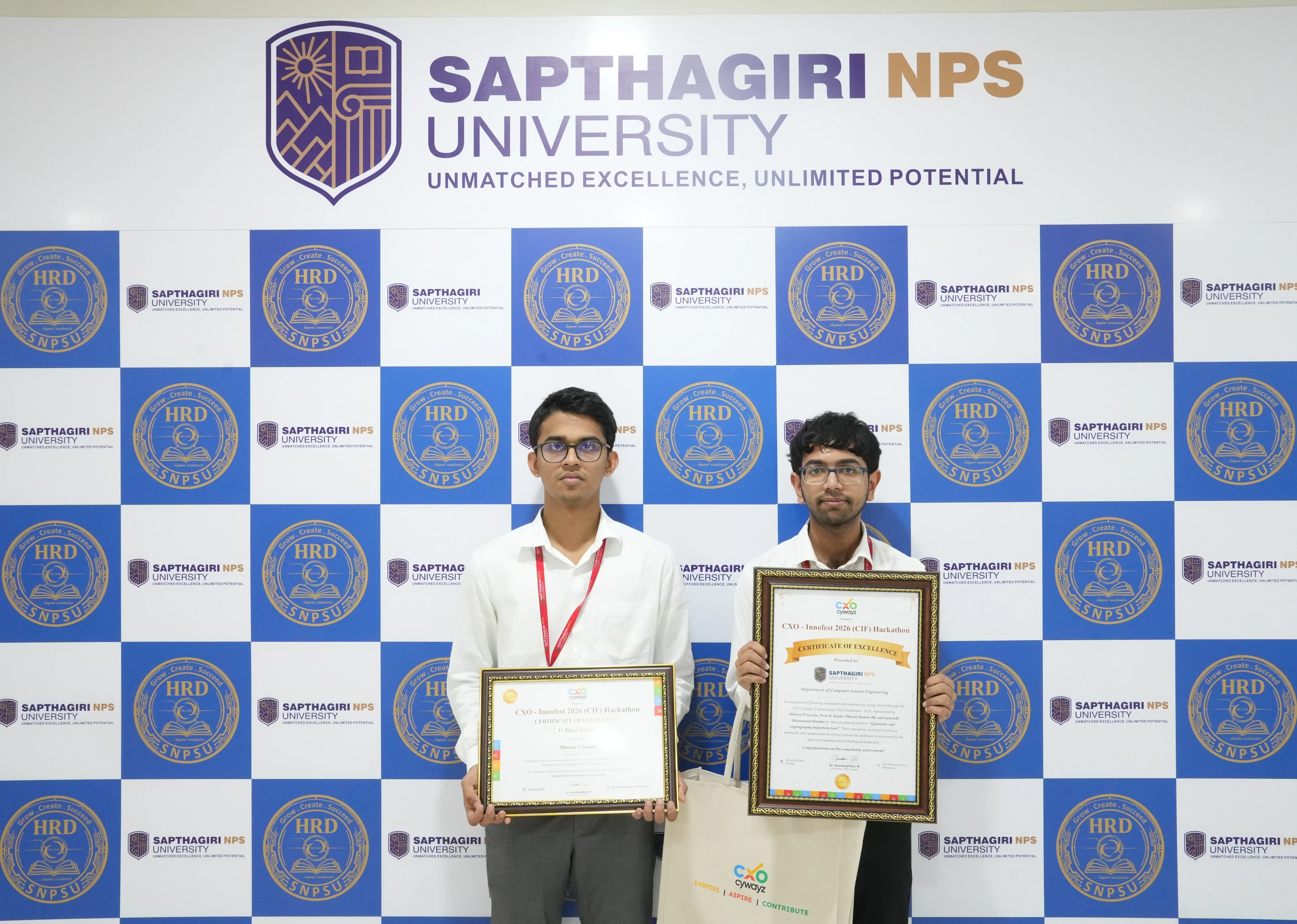
Our students proudly represented Sapthagiri NPS University at the CXO-Innofest 2026 (CIF) Hackathon, marking a memorable moment of achievement and recognition. The event celebrated innovation, creativity and the practical application of knowledge through technology-driven activities. Our students received Certificates of Excellence, reflecting their participation and contribution to the hackathon. This recognition highlights the importance of encouraging students to explore new ideas and develop solutions through collaborative thinking. We believe that experiences beyond the classroom help students strengthen their technical understanding and confidence. Participation in innovation-focused events also encourages analytical thinking, problem-solving abilities and teamwork. Our Department of Computer Science and Engineering continues to encourage students to engage in activities that connect academic learning with emerging technological developments.
Students who wish to become part of our academic community and explore our programmes can Click Here to Apply. We encourage aspiring students to make the most of opportunities that support learning, creativity and professional growth. Such experiences provide valuable opportunities to understand industry expectations and explore innovative approaches to real-world challenges. The certificate presentation captured a proud moment for our students and the University community. We appreciate their dedication, enthusiasm and willingness to participate in technology-oriented initiatives. We also recognise the importance of creating an academic environment where curiosity, experimentation and continuous learning are encouraged. Through such achievements, we aim to motivate more students to participate in hackathons, technical events and innovation platforms. Every opportunity to learn, collaborate and demonstrate talent contributes to students' personal and professional development. We congratulate our students on this recognition and encourage them to continue exploring new possibilities in technology and innovation. Their achievement adds another meaningful moment to our University's journey of academic excellence and student development.
Courses Offered at Our University
Our University provides undergraduate and postgraduate programme options across multiple academic disciplines. The programmes shown in our course brochure include engineering, business administration, commerce, computer applications, design, allied health sciences, physiotherapy, hotel management and postgraduate specialisations. This range allows students to explore academic pathways based on their interests and career goals. Students interested in technology can consider engineering and computer application programmes, while those interested in business can explore management and commerce. Design programmes provide options for learners interested in creative and user-focused fields. Allied health science programmes introduce specialised areas connected with healthcare services and technology. Postgraduate programmes provide opportunities for students who wish to develop advanced knowledge after completing an eligible undergraduate qualification. We encourage students to review the programme structure, eligibility criteria, admission requirements and applicable entrance examination details before applying. The following tables organise the programmes visible in the supplied brochure for convenient reference.
Undergraduate Programmes
| Programme | Specialisations / Courses shown |
|---|---|
| Bachelor of Engineering (B.E.) | Computer Science and Engineering (CSE) with Global IBM Certification in AI & ML; Data Science with Global IBM Certification in AI & ML; Artificial Intelligence and Data Science; Artificial Intelligence and Machine Learning; Electronics and Communication Engineering; Electrical and Electronics Engineering; Mechanical Engineering; Aeronautical Engineering; VLSI Design; Cyber Security; Robotics and AI; Quantum Computing |
| Bachelor of Business Administration (BBA) | Honours; Business Analytics and Human Resource Management; Aviation Management and Logistics; Digital Marketing |
| Bachelor of Arts (BA) + Civil Service | Journalism; Mass Communication; Liberal Arts and Media |
| Bachelor of Commerce (B.Com.) | Honours; Corporate Accounting and Taxation; CA Foundation; Banking and Finance; Accounting and Finance |
| Bachelor of Computer Applications (BCA) | Honours; Artificial Intelligence and Machine Learning; Data Science; Cloud Computing and Cyber Security |
| Bachelor of Design (B.Des.) | Product Design; User Experience Design |
| Allied Health Sciences | Image Technology; Cardiac Care Technology; Anaesthesia and Operation Theatre Technology |
| Bachelor of Physiotherapy | Physiotherapy |
| Bachelor of Hotel Management (BHM) | Hotel Management |
Postgraduate Programmes
| Programme | Specialisations / Courses shown |
|---|---|
| Master of Business Administration (MBA) | Financial Management; Business Analytics; Human Resource Management; Marketing Management; Hospital and Healthcare Management; Operations and Supply Chain Management |
| Master of Computer Applications (MCA) | Artificial Intelligence and Data Science; Artificial Intelligence and Machine Learning; Cyber Security and Forensics |
| Master of Technology (M.Tech.) | Computer Science and Engineering; CSE (Artificial Intelligence and Machine Learning); Electronics and Communication (VLSI Design) |
Engineering Programmes: Developing Technology-Focused Knowledge
Engineering education provides students with opportunities to understand scientific principles, technical systems and practical problem-solving methods. Our engineering programme options include Computer Science and Engineering, Data Science, Artificial Intelligence and Machine Learning, Electronics and Communication Engineering, Electrical and Electronics Engineering, Mechanical Engineering and Aeronautical Engineering. The brochure also lists specialised areas such as VLSI Design, Cyber Security, Robotics and AI, and Quantum Computing. These areas introduce students to different branches of modern engineering and technology. Students can explore their interests by understanding the subjects, practical components and career pathways associated with each specialisation. Engineering education requires consistent learning, logical reasoning, experimentation and the ability to apply concepts to real-world problems. We encourage students to develop these abilities through academic study and practical engagement. Learners should also build familiarity with relevant software, technical tools and emerging technologies wherever these are part of their curriculum. Communication, teamwork and project planning are equally important because engineering professionals often work with multidisciplinary teams. By developing both technical understanding and professional skills, students can prepare themselves to explore suitable opportunities in technology, manufacturing, infrastructure, research and related sectors.
Management Programmes: Preparing for Business and Leadership Roles
Management education helps students understand how organisations operate, how decisions are made and how teams work towards shared objectives. Our undergraduate BBA options shown in the brochure include Honours, Business Analytics and Human Resource Management, Aviation Management and Logistics, and Digital Marketing. These specialisations introduce learners to different aspects of business operations and organisational development. Students interested in finance, marketing, human resources, analytics or logistics can explore the subjects that match their interests. The MBA programme offers postgraduate specialisations in Financial Management, Business Analytics, Human Resource Management, Marketing Management, Hospital and Healthcare Management, and Operations and Supply Chain Management. These areas help students focus on particular management disciplines after completing the required academic preparation. We encourage students to develop analytical thinking, communication, decision-making and teamwork abilities throughout their studies. Understanding business concepts is important, but students should also learn how to interpret information, present ideas and work responsibly with others. Career opportunities depend on the student's skills, academic background, experience and employer requirements. Our aim is to encourage learners to build a balanced foundation that supports their future professional development.
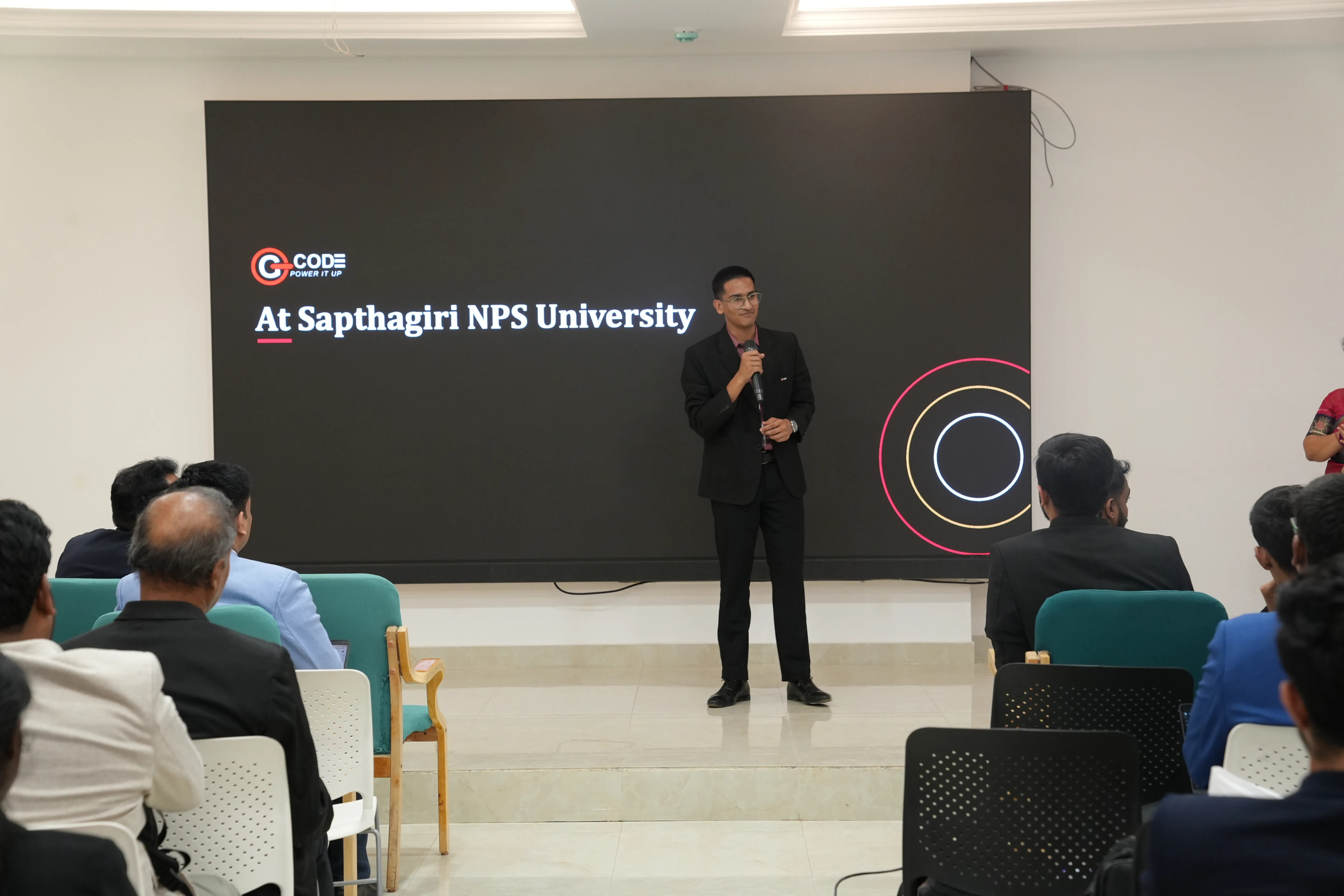
Our University hosted an engaging CODE – Power It Up session, creating an opportunity for students and participants to explore ideas, technology and professional development. The session featured a speaker addressing the audience at Sapthagiri NPS University, while attendees listened with interest and engagement. The presentation reflected the importance of knowledge sharing and interactive learning within an academic environment. We believe that sessions led by speakers and industry professionals can help students gain broader perspectives beyond their regular classroom learning. Such interactions encourage curiosity, active participation and a deeper understanding of emerging professional trends. Through these learning experiences, we aim to create opportunities for students to listen, observe, ask questions and develop confidence. We encourage our students to participate in seminars, guest lectures, technical sessions and knowledge-sharing programmes that support their academic journey. These activities can strengthen communication, critical thinking and presentation skills while introducing students to different perspectives. Our University continues to value initiatives that bring people together through learning, discussion and collaboration. The session also highlighted the importance of staying curious, adapting to new ideas and continuously developing relevant skills. We appreciate the efforts involved in organising such interactive programmes and creating a positive learning environment. Every opportunity to connect with new knowledge can inspire students to think creatively and explore their interests. We look forward to encouraging more initiatives that connect academic learning with practical insights and professional awareness. Through such experiences, we remain committed to supporting our students' overall development and preparing them to approach future opportunities with confidence.
Commerce and Finance: Understanding the World of Business
Commerce programmes introduce students to accounting, finance, taxation and business-related concepts. Our brochure lists B.Com. Honours, Corporate Accounting and Taxation, CA Foundation, Banking and Finance, and Accounting and Finance. These options provide students with opportunities to explore different areas within the commerce discipline. Learners interested in financial records can develop an understanding of accounting principles, while those interested in banking and financial services can explore related concepts. Students should develop numerical accuracy, attention to detail, analytical thinking and professional communication. These capabilities are useful in many business environments. We encourage students to understand the relationship between theoretical concepts and practical business situations. Regular practice, subject revision and familiarity with relevant digital tools can support academic progress. Students should also research the professional qualifications and additional requirements associated with their preferred career paths. A degree provides an academic foundation, while professional development, practical exposure and employer-specific eligibility can influence future opportunities.
Computer Applications: Building Digital and Analytical Skills
Computer applications programmes are relevant to students interested in software, computing, data and digital technologies. Our brochure lists BCA Honours, Artificial Intelligence and Machine Learning, Data Science, and Cloud Computing and Cyber Security. These programme options introduce students to areas that are important in modern digital environments. Students can explore programming concepts, computational thinking, data handling and technology-related problem-solving through their academic learning. A strong foundation in mathematics, logical reasoning and consistent practice can support progress in computing disciplines. We encourage students to develop the habit of learning new tools and understanding how technology is applied in different sectors. Students should also focus on communication, teamwork and project documentation because technical professionals often need to explain their work clearly. Career opportunities in computing depend on practical skills, project experience, academic performance and the requirements of individual employers. Learners who continue developing their knowledge and remain open to new technologies can prepare themselves to explore a variety of professional pathways.
Design and Creative Studies: Turning Ideas into Solutions
Design education encourages students to observe problems, understand user needs and develop thoughtful solutions. Our brochure lists Product Design and User Experience Design under the Bachelor of Design programme. These areas provide different approaches to creative and practical problem-solving. Product Design focuses on the development and improvement of products, while User Experience Design considers how people interact with digital products and services. Students interested in design should develop observation, creativity, research, visual communication and presentation skills. They should also learn to accept feedback and improve their work through repeated practice. Design projects can help learners understand the importance of planning, testing and refining ideas. We encourage students to explore their creative interests while building a disciplined approach to academic work. A portfolio, practical experience and the ability to explain design decisions can be valuable when applying for relevant opportunities. Students should review the programme curriculum and practical requirements before selecting a specialisation.
Allied Health Sciences and Healthcare-Related Learning
Healthcare-related education requires attention to detail, responsibility and an understanding of specialised procedures and technologies. Our brochure lists Image Technology, Cardiac Care Technology, and Anaesthesia and Operation Theatre Technology under Allied Health Sciences. These areas are associated with different aspects of healthcare support and clinical technology. Students considering these programmes should understand the academic requirements, practical learning components and professional responsibilities involved. We encourage learners to approach healthcare education with discipline, empathy and respect for professional standards. The field requires careful learning and a commitment to responsible practice. Students should confirm programme eligibility, clinical exposure arrangements and applicable professional requirements directly with the University and relevant authorities. Understanding the nature of the work can help students make an informed decision about whether a particular specialisation matches their interests and abilities.
Career Preparation and Industry Engagement
Academic learning and career preparation work best when students take an active role in their development. Our University encourages students to strengthen their subject knowledge, communication skills, teamwork and professional confidence throughout their academic journey. Students can prepare for recruitment processes by developing clear resumes, practising interview responses, improving aptitude skills and understanding the expectations of their chosen industries. They should also explore internships, projects, workshops and other relevant learning opportunities where available. Industry interactions can help learners understand professional environments and the skills expected in different roles. Students should regularly review official recruitment announcements and check the eligibility criteria before applying. Selection processes may include aptitude assessments, technical interviews, group discussions and other stages depending on the employer. We encourage students to prepare consistently rather than waiting until the final semester. Career readiness is a continuous process that develops through learning, practice, feedback and self-improvement. Our focus is to encourage students to take responsibility for their progress and approach suitable opportunities with preparation and confidence.
Explore Your Academic Pathway with Our University
Selecting a programme is an important step towards building a meaningful academic and professional future. Our University encourages students to compare course options, understand the subjects involved and identify the academic pathway that best matches their interests. Whether a student is interested in engineering, management, commerce, computer applications, design or allied health sciences, it is important to review the programme details before making a decision. Students and parents can contact our University to enquire about current course availability, eligibility, admissions and other relevant information. We encourage every applicant to make an informed choice and prepare carefully for the next stage of education. A clear academic goal, consistent effort and willingness to learn can help students make the most of their university experience.
Placement Support: Connecting Academic Learning with Career Opportunities
Placement preparation plays an important role in helping students move from university education towards professional careers. Our University encourages students to understand recruitment expectations and develop the skills required to approach employment opportunities confidently. Career preparation involves more than attending an interview during the final semester. It requires continuous improvement in communication, subject knowledge, analytical thinking, teamwork and professional behaviour. Students should become familiar with the recruitment processes followed by organisations in their preferred sectors. These processes may include aptitude assessments, technical evaluations, group discussions, practical assignments and personal interviews. Each employer follows its own selection procedure, and applicants must understand the eligibility requirements before applying. We encourage students to prepare their resumes carefully, highlight relevant academic projects and explain their skills clearly. Practical learning and consistent subject revision can help students communicate their knowledge more effectively. Students should also develop the confidence to ask relevant questions and participate in professional discussions. By approaching placement preparation as a continuous learning process, students can become better prepared to explore suitable opportunities. Our University aims to encourage this preparation through academic guidance and career-oriented development activities.
Campus Recruitment Training and Interview Preparation
Campus Recruitment Training helps students understand the stages commonly involved in recruitment and selection. Our University encourages learners to improve their aptitude, reasoning, communication and interview skills as part of their professional preparation. Aptitude practice can help students develop speed, accuracy and logical thinking. Communication activities can support clearer expression of ideas during discussions and interviews. Technical preparation allows students to revise concepts related to their academic specialisation and explain their understanding with confidence. Resume preparation is another important step because a resume introduces a candidate's education, skills, projects and relevant experience to an employer. Students should ensure that the information they provide is accurate, clear and appropriate for the role. Mock interviews can help learners practise answering questions and receiving constructive feedback. We encourage students to identify areas that need improvement and work on them consistently. Preparation should also include researching an organisation, understanding the job description and learning about the responsibilities associated with the position. Every recruitment process is different, so students should remain flexible and prepare according to the employer's instructions.
Industry Interaction and Professional Exposure
Interaction with industry professionals can help students understand how academic concepts are applied in professional environments. Our University recognises the importance of industry engagement in supporting career awareness and practical understanding. Guest lectures, expert sessions, technology talks, industrial visits and professional discussions can introduce learners to current industry practices. Such activities may help students understand workplace expectations, emerging technologies and the changing requirements of different sectors. Students can use these interactions to ask questions, explore career options and understand the knowledge required for particular roles. Professional exposure also encourages learners to connect classroom concepts with practical situations. We encourage students to participate actively, maintain professional conduct and make meaningful use of learning opportunities. They should take notes, discuss relevant topics with faculty members and explore additional resources after each session. Industry interaction does not guarantee employment, but it can improve awareness and help students make informed career decisions. By understanding the relationship between education and professional practice, learners can develop a clearer picture of their future goals.
Internships and Practical Learning Opportunities
Internships can help students understand workplace responsibilities and gain experience related to their academic interests. They provide an opportunity to observe professional practices, contribute to assigned tasks and understand how teams operate. Our University encourages students to explore suitable internship opportunities that match their programme and career objectives. Before applying, students should review the role description, duration, eligibility requirements and learning outcomes. They should also understand the expectations of the organisation and ensure that the internship is relevant to their academic pathway. During an internship, students can develop professional communication, time management, teamwork and problem-solving abilities. They may also gain exposure to tools, processes and responsibilities associated with a particular sector. Students should maintain records of their work and reflect on the skills they develop. Practical experience can strengthen a resume when it is presented accurately and supported by relevant examples. However, internship availability, selection and completion requirements depend on the organisation and the applicable academic arrangements. We encourage learners to approach every practical opportunity with responsibility, curiosity and a willingness to improve.
Career Opportunities After Engineering Programmes
Engineering graduates can explore different professional pathways depending on their specialisation, technical knowledge and interests. Students from Computer Science and Engineering may investigate opportunities related to software development, programming, systems and technology services. Data Science learners can explore roles involving data analysis and interpretation, subject to the technical skills and qualifications required by employers. Artificial Intelligence and Machine Learning introduce students to areas involving intelligent systems, computational methods and technology applications. Electronics and Communication Engineering provides an academic foundation for exploring electronics, communication systems and related technical fields. Electrical and Electronics Engineering and Mechanical Engineering connect with different areas of engineering design, systems and operations. Aeronautical Engineering introduces specialised concepts related to aviation and aerospace technology. Areas such as VLSI Design, Cyber Security, Robotics and AI, and Quantum Computing provide additional directions for students interested in specialised technical subjects. We encourage learners to study their chosen discipline thoroughly and develop relevant practical skills. Career opportunities depend on individual qualifications, technical competence, experience and employer requirements. Students should research job descriptions carefully and identify the additional skills that can support their professional goals.
Career Opportunities After Management Programmes
Management graduates can explore career paths across business operations, marketing, human resources, finance, analytics, logistics and other organisational functions. Students who study Business Analytics can develop an interest in understanding business information and supporting data-informed decisions. Human Resource Management introduces concepts related to people management, recruitment, employee development and organisational practices. Digital Marketing connects with online communication, content strategy, campaign planning and digital platforms. Aviation Management and Logistics introduces students to specialised business operations associated with aviation and logistics environments. At the postgraduate level, MBA specialisations provide opportunities to develop deeper knowledge in areas such as Financial Management, Business Analytics, Marketing Management, Hospital and Healthcare Management, and Operations and Supply Chain Management. We encourage students to understand the responsibilities associated with each area before choosing a career direction. Management professionals need communication, planning, analytical thinking and decision-making abilities. Students can strengthen these skills through academic projects, presentations, case discussions and relevant practical experiences. Employers may also look for role-specific knowledge and previous experience, depending on the position. A clear understanding of business functions can help students prepare for suitable opportunities.
Career Opportunities After Commerce and Computer Applications
Commerce and computer applications programmes provide academic foundations for different professional sectors. Commerce graduates may explore opportunities connected with accounting, taxation, banking, finance and business administration, depending on their qualifications and additional skills. Students interested in corporate accounting should develop accuracy, knowledge of accounting principles and familiarity with relevant financial tools. Learners interested in banking and finance should understand financial concepts and the requirements of the roles they wish to pursue. Computer applications graduates can explore technology-related opportunities based on their programming knowledge, project experience and technical abilities. Specialisations such as Artificial Intelligence and Machine Learning, Data Science, Cloud Computing and Cyber Security introduce students to areas that require continuous learning. We encourage learners to practise regularly, develop projects and understand how their knowledge can be applied to practical problems. Students should also build communication and teamwork skills because professional responsibilities often involve working with colleagues and explaining technical information. Career outcomes vary according to individual preparation and employer selection criteria. Additional certifications or specialised training may be useful for some roles, depending on the requirements of the organisation.
Career Development Through Communication and Soft Skills
Professional success involves more than academic marks or technical knowledge. Communication, teamwork, adaptability, time management and problem-solving are valuable abilities across many industries. Our University encourages students to develop these skills throughout their academic journey. Clear communication helps students present ideas, participate in discussions and explain their work. Teamwork allows learners to cooperate with others, share responsibilities and work towards common objectives. Time management supports the completion of academic assignments, projects and professional tasks within expected deadlines. Adaptability helps students respond to changing situations and learn unfamiliar processes. We encourage students to participate in presentations, group activities, academic projects and other learning experiences that can strengthen these abilities. Students should also learn to accept feedback positively and use it to improve their performance. Professional behaviour includes punctuality, responsibility, respect and a willingness to learn. These qualities can influence how candidates perform during recruitment and how they contribute after joining an organisation. Continuous development of soft skills can help students become more confident and prepared for different professional environments.
Choosing the Right Programme for Your Career Goals
Selecting a course should begin with an understanding of personal interests, academic strengths and long-term ambitions. Students should not choose a programme only because a particular job title appears attractive or because a course is popular among their friends. Instead, they should examine the subjects, learning requirements and possible career directions associated with each programme. Students interested in technology may compare engineering and computer applications options. Those interested in business may consider management or commerce programmes. Learners with creative interests can explore design, while students interested in healthcare-related technology can review the allied health sciences options. Postgraduate applicants should also consider how an advanced qualification connects with their previous education and professional plans. We encourage students and parents to review the course curriculum, eligibility criteria, admission process and current programme availability before making a decision. It is useful to speak with academic representatives and clarify questions about learning methods, practical components and career preparation. An informed course selection can help students approach their education with greater purpose and motivation.
How Students Can Prepare for Recruitment Opportunities
Students can begin preparing for recruitment well before their final year. A useful first step is to identify the industries and job roles that match their academic interests. They can then review job descriptions to understand the qualifications, technical skills and communication abilities commonly requested by employers. Students should maintain an updated resume that accurately describes their education, projects, internships and relevant skills. They should practise explaining their academic projects in a clear and structured manner. Regular aptitude practice can help learners improve reasoning and problem-solving. Technical students should revise core concepts and work on practical assignments related to their specialisation. Management and commerce students can strengthen their understanding of business concepts and practise presenting ideas. We encourage learners to develop a consistent preparation routine and seek feedback from faculty members or suitable mentors. Students should also use official company career pages and verified recruitment announcements when searching for vacancies. They must check eligibility, location, application deadlines and selection stages before submitting an application. A disciplined approach can help candidates prepare more effectively for opportunities that match their qualifications.
Explore Career Opportunities with Our Recruiters and Industry Partners
Our University builds meaningful connections with industry through a network of recruiters and professional organisations. Our industry network includes Unisys, Unvired, VISA, Visionet, WEG, Aricent, Dell, IBM, Infosys, Accrete Globus Technology, Ahana, Apollo Power Systems, Avaali, Bharath Group of Companies, Biocon Biologics, Boeing, Brilyant, Capgemini, Cognizant, Conserve, Corprival Corporate Services, Cubic, CyRAACS, Edizi Tools, EON Elevators, Epson, Finalyzer, Flying Wedge, Fractal, GA Morgan Dynamics, Gi Group, Gilbarco Veeder-Root, Glean, GlobalData, Google, HCLTech, HSBC, i-exceed, Immidiart, Infinite Global, IntelliPaat, Kamath Transformers, o9 Solutions, Omega Healthcare, Onity, PEOL, Qlar, Quantit, Redant Technologies, Reliance Industries, Reliance AI, Repco Home Finance, ROVO, SafeSend, Sagility, Schneider Electric, Siemens, SIMS, SKTC, Skyhigh Security, SmartSoc Solutions, Somerset Therapeutics, Sopra Steria, STEER, Sumerru Group, Surya Fintech, T-Systems, Tanla, Tata Electronics, TCS, TECEZE, Techsol, Tescra, Toyota and Trafomec. These organisations represent a range of professional sectors and provide students with examples of the different industries they may explore. We encourage students to follow official recruitment announcements, understand job requirements and apply for suitable openings. The presence of an organisation in our industry network should not be interpreted as a guarantee of recruitment or placement for every student. Openings, eligibility and final selection depend on the respective organisation's hiring process.
Taking the Next Step Towards a Professional Future
Building a career requires planning, consistent effort and a willingness to continue learning. Students should make use of their academic years to understand their chosen subjects, improve practical abilities and develop professional confidence. They can set achievable learning goals, participate in relevant activities and seek guidance when they need support. It is also important to remain informed about changes in the industries they wish to enter. Technology, business practices and employer expectations continue to evolve, making continuous learning valuable throughout a professional journey. Our University encourages students to take an active role in their development and approach career opportunities with preparation and responsibility. We believe that every student should understand their strengths, recognise areas for improvement and work steadily towards their ambitions. By combining academic knowledge with communication, practical understanding and professional discipline, learners can prepare themselves to explore suitable opportunities after graduation. Students and parents can contact our University for information about current programmes, admission requirements and available career guidance initiatives.
The Importance of Academic Excellence in Career Development
Academic excellence provides an important foundation for students as they prepare for higher education and professional opportunities. Our University encourages learners to approach every subject with curiosity, discipline and a commitment to continuous improvement. Understanding academic concepts thoroughly can help students apply their knowledge to practical situations and communicate their ideas effectively. Students should participate actively in classroom discussions, complete assignments on time and seek clarification whenever they encounter difficulties. Regular revision and consistent practice can strengthen subject understanding and improve confidence during assessments. Academic projects also provide opportunities to explore topics in greater depth and develop independent thinking. We encourage students to connect their learning with developments in their chosen fields and understand how professional practices evolve. Strong academic preparation can support students when they pursue internships, higher studies or employment opportunities. However, career outcomes also depend on practical abilities, communication, experience and individual performance. Our focus is to encourage a balanced approach that combines academic progress with professional development. Students who take responsibility for their learning can build a stronger foundation for their future goals.
Faculty Guidance and Student Development
Faculty guidance plays an important role in helping students understand academic subjects and identify areas for improvement. Our University encourages students to communicate with faculty members, participate in academic discussions and seek guidance when required. A supportive learning environment can help learners approach challenging topics with greater confidence. Faculty interactions can also encourage students to explore subject-related questions and develop a deeper understanding of their chosen discipline. Students should make effective use of academic guidance by preparing questions, reviewing learning materials and applying feedback to their work. Beyond subject knowledge, students can benefit from guidance on projects, presentations and academic planning. We encourage learners to develop independent thinking while remaining open to constructive suggestions. Student development is a continuous process that involves academic effort, practical learning and personal responsibility. By maintaining a positive approach to learning, students can improve their understanding and become more confident in their abilities. Faculty guidance, combined with consistent student participation, can contribute to a meaningful university experience.
Modern Learning and Technology Awareness
Technology continues to influence how organisations communicate, manage information and deliver services. Students entering professional environments should therefore develop an awareness of relevant digital tools and emerging technologies. Our University encourages learners to understand how technology connects with their chosen academic disciplines. Engineering students may explore technical applications, while management and commerce students can develop familiarity with digital business processes. Computer applications students can strengthen their understanding of programming, data and computing concepts. Design students can explore suitable digital tools for creative development, and allied health science students can learn about technologies relevant to their academic specialisations. Technology awareness should be supported by subject knowledge, responsible use and practical understanding. Students should not depend only on trends; they should learn the fundamentals that help them evaluate and apply new tools effectively. We encourage learners to remain curious, practise regularly and explore reliable learning resources. Digital awareness can support academic work and help students understand the changing expectations of different professional sectors.
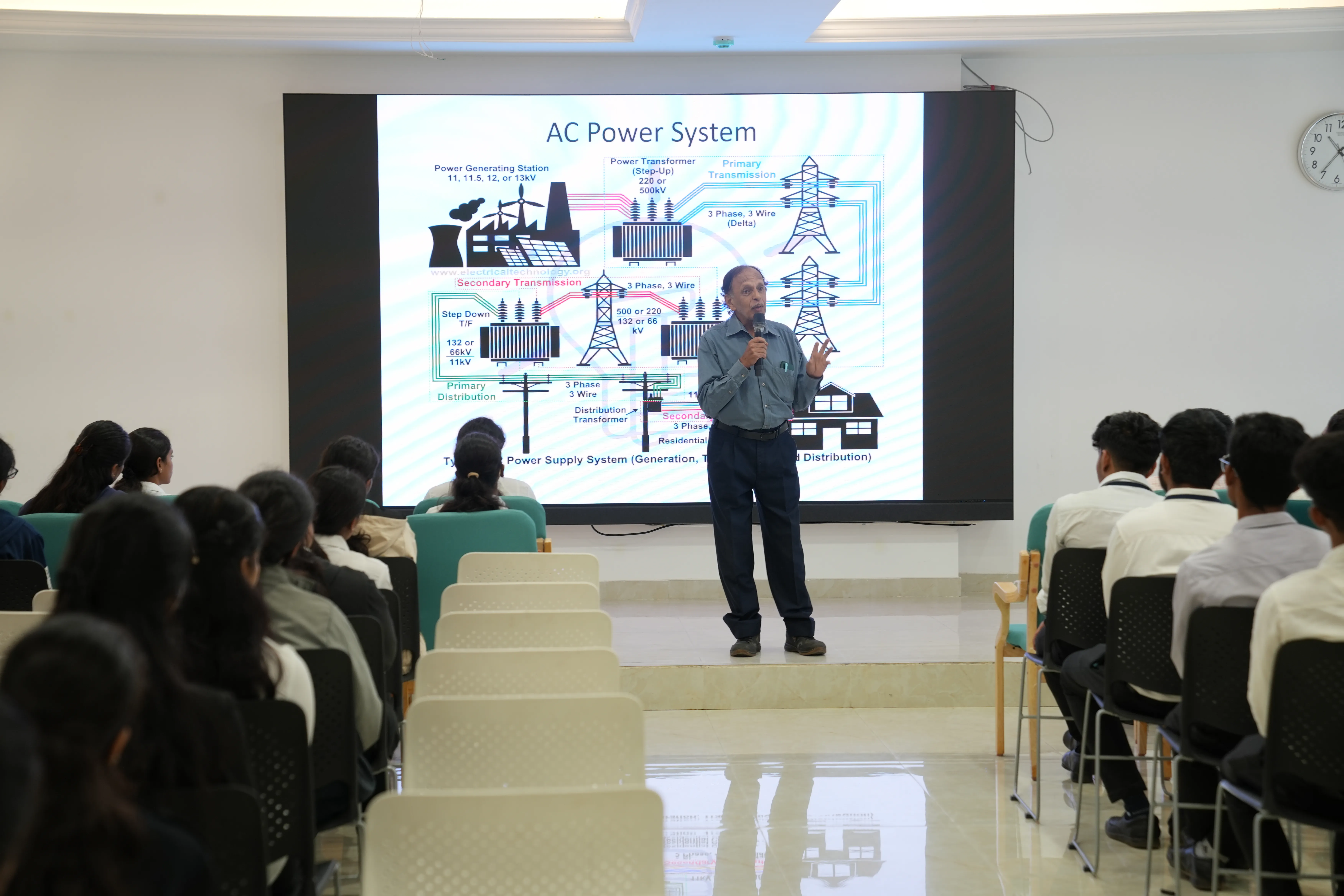
Interactive Learning Session on AC Power Systems
Our students gain valuable academic exposure through interactive classroom sessions that connect engineering concepts with practical applications. The session shown in the photograph focuses on AC Power Systems, introducing students to the important stages involved in electrical power generation, transmission and distribution. During the presentation, students observe how electricity moves from generating stations through step-up transformers and high-voltage transmission lines before reaching distribution networks and consumers. The visual explanation helps our students understand the purpose of transformers, transmission towers, electrical substations and distribution systems. Through expert-led teaching and classroom discussions, we encourage students to develop a clear understanding of fundamental electrical engineering concepts.Click Here to Apply and explore the academic programmes available at our University. These sessions also create opportunities to ask questions, clarify technical topics and connect theoretical knowledge with real-world engineering applications. We believe that interactive learning plays an important role in strengthening technical knowledge, analytical thinking and problem-solving abilities. By observing diagrams and listening to detailed explanations, students can understand complex electrical systems more effectively. Such academic activities encourage curiosity and help students recognise how engineering principles contribute to modern infrastructure. We continue to promote an engaging learning environment where classroom instruction, practical understanding and technical discussions work together. Through these learning experiences, our students can build a stronger foundation for further studies and future opportunities in engineering and technology.
Developing Practical Knowledge Through Projects
Academic projects provide students with opportunities to apply classroom concepts and demonstrate their understanding. Our University encourages learners to approach projects with proper planning, research and attention to detail. A well-organised project can help students identify a problem, examine possible solutions and present their findings clearly. Engineering and computer applications students may work on technical concepts, software-related tasks or subject-specific applications. Management and commerce students can explore business situations, financial concepts and organisational challenges. Design students can develop creative solutions based on user needs, while students in allied health sciences can strengthen their understanding of specialised academic topics through appropriate practical learning. Project work also encourages teamwork, time management and communication. Students should maintain clear documentation and understand every part of the work they present. They should be prepared to explain their methods, decisions and learning outcomes. We encourage learners to use project experiences to identify their strengths and areas for further development. Practical projects can also provide useful examples when students prepare resumes or participate in interviews, provided the work is accurately described.
Building a Professional Resume and Portfolio
A professional resume helps students introduce their academic background, abilities and relevant experiences to potential employers. Our University encourages students to prepare resumes that are clear, accurate and suitable for the roles they wish to explore. A resume should generally include educational qualifications, relevant technical or professional skills, academic projects, internships and other appropriate achievements. Students should avoid adding information that they cannot explain or support during an interview. They should also organise the content so that recruiters can understand their qualifications easily. Learners from creative disciplines may benefit from maintaining a portfolio that presents selected work and explains their design process. Technical students can include relevant projects and describe their individual contributions. Management and commerce students can highlight suitable academic work, presentations and practical experiences. We encourage students to update their resumes whenever they develop new skills or complete relevant projects. Before submitting an application, they should review the document for accuracy, spelling and formatting. A well-prepared resume does not guarantee selection, but it can help communicate a candidate's background professionally.
Understanding Recruitment Eligibility and Selection
Every organisation follows its own recruitment policies, eligibility requirements and selection procedures. Students should carefully review official job announcements before applying for a position. Requirements may include a particular degree, academic performance, subject knowledge, technical skills, communication abilities or relevant experience. Some employers may conduct aptitude tests, technical assessments, interviews or additional evaluation stages. Others may have specific conditions related to work location, role responsibilities or joining availability. Our University encourages students to understand these requirements and prepare accordingly. Applicants should provide accurate information in their applications and follow the instructions given by the recruiting organisation. They should also keep track of application deadlines and respond to official communication within the stated timelines. Students must be careful when using unofficial recruitment messages and should verify opportunities through the organisation's recognised channels. Understanding eligibility can help candidates identify suitable openings and avoid applications that do not match their qualifications. Recruitment decisions remain with the respective employer and depend on its selection process.
Opportunities Across Different Industry Sectors
Bangalore has a diverse professional environment that includes technology, finance, healthcare, manufacturing, consulting, business services and other sectors. Students can explore career pathways according to their academic specialisations and individual interests. Engineering and computer applications graduates may investigate technology-focused roles, while management and commerce graduates may consider business, finance and organisational functions. Design students can explore opportunities connected with creative development and user experience. Allied health science graduates may pursue suitable healthcare-related pathways according to their qualifications and applicable professional requirements. Students should research each sector to understand the responsibilities, skills and qualifications associated with different positions. They can also compare job descriptions to identify common requirements and plan their learning accordingly. We encourage students to remain open to different professional environments while keeping their academic interests and long-term goals in mind. Career planning should be based on informed decisions rather than assumptions about a particular industry. Exploring multiple sectors can help students understand where their knowledge and abilities may be relevant.
Higher Education and Continuous Professional Learning
Graduation is an important milestone, but learning can continue throughout a person's professional journey. Some students may choose employment after completing their undergraduate programmes, while others may consider postgraduate education or specialised learning. Our University provides postgraduate programme options shown in the course brochure, including MBA, MCA and M.Tech. specialisations. Students should review the eligibility criteria and academic requirements before selecting a postgraduate pathway. An advanced qualification may help learners develop deeper knowledge in a chosen discipline, depending on the programme and their career objectives. Professional learning can also involve workshops, certifications, research activities and relevant practical experience. Students should evaluate additional courses carefully and choose those that support their actual learning needs. We encourage learners to remain updated in their fields and develop the habit of continuous improvement. Professional environments change, and individuals may need to strengthen existing skills or acquire new knowledge as responsibilities evolve. A commitment to lifelong learning can help graduates remain adaptable and prepared for changing career expectations.
Career Planning for Students and Parents
Career planning becomes more effective when students and parents understand the available academic options and discuss expectations openly. Students should consider their interests, strengths, preferred subjects and long-term ambitions before selecting a programme. Parents can support this process by encouraging research and helping students understand the practical requirements of different courses. Our University encourages applicants to review programme details, admission criteria and academic pathways before making a final decision. Students should also understand that a degree alone does not determine a career outcome. Personal effort, practical knowledge, communication skills and employer requirements can all influence professional opportunities. It is useful to set realistic goals and review progress regularly. Students can identify short-term learning targets, such as improving communication or completing a subject-related project, while working towards longer-term ambitions. We encourage families to seek accurate information from official University channels and avoid depending on unverified placement claims. Informed planning can help students approach higher education with greater clarity and confidence.
Choosing a College: Important Factors to Review
Students comparing the top colleges in Bangalore with placement should examine more than the institution's promotional statements. They should review the programmes offered, academic structure, faculty information, learning facilities and available student support. Placement-related information should be assessed carefully, including the nature of employer engagement, recruitment preparation and the way placement data is presented. Students should ask whether published figures relate to a particular academic year, programme or eligible student group. They should also understand the difference between an organisation appearing in a recruiter list and an actual recruitment offer received by a student. Other important factors include programme eligibility, fee details, admission procedures, location and the learning environment. We encourage students and parents to request clear answers to their questions before completing the admission process. Comparing institutions using consistent criteria can help applicants make more informed decisions. A suitable college should align with the student's academic interests, learning needs and future plans.
Preparing for a Successful University Experience
A meaningful university experience depends on active participation, consistent effort and a willingness to explore new areas of learning. Students should attend classes regularly, complete academic responsibilities and participate in suitable activities. They can make use of projects, presentations, workshops and academic discussions to strengthen their understanding. We encourage learners to communicate respectfully, work collaboratively and take responsibility for their progress. Students should also develop good study habits and organise their time effectively. Participating in academic and professional activities can help them discover new interests and understand their strengths. It is equally important to maintain a balanced approach to academic responsibilities and personal development. Students should seek guidance when necessary and use constructive feedback to improve their performance. Our University encourages every learner to approach higher education as an opportunity to build knowledge, develop confidence and prepare for future responsibilities. A positive learning attitude can make a valuable difference throughout the academic journey.
Frequently Asked Questions
1. Which are the top colleges in Bangalore with placement opportunities?
Bangalore is home to several educational institutions that focus on academic development, practical learning and career preparation. Students can explore colleges offering programmes in Engineering, Management, Computer Applications, Commerce, Applied Sciences and other professional fields. While comparing institutions, students should review the placement support available, industry interaction opportunities, internship guidance, campus recruitment activities and career development programmes. It is also important to understand the eligibility requirements and selection process for each course. At our University, we encourage students to develop subject knowledge, communication abilities, technical skills and professional confidence. These qualities can help graduates prepare for different career opportunities. Students should always check the latest placement information and programme details directly with the institution before making an admission decision.
2. Which courses offer good career opportunities in Bangalore?
Bangalore has a diverse employment environment across technology, engineering, business, healthcare, finance, design and other professional sectors. Students can consider courses such as Computer Science and Engineering, Artificial Intelligence and Machine Learning, Data Science, Electronics and Communication Engineering, Mechanical Engineering, Business Administration, Commerce, Computer Applications and Allied Health Sciences. The right programme depends on a student's interests, academic background and long-term career goals. At our University, we provide a range of undergraduate and postgraduate programmes designed to support different academic interests. Students should examine the curriculum, practical learning opportunities, eligibility criteria and career pathways before selecting a course. A well-informed course decision can help students build a strong foundation for their professional journey.
3. How does our University support students with placement preparation?
Our University focuses on helping students prepare for professional opportunities through career guidance, skill development and industry interaction initiatives. The Human Resource Development (HRD) Department supports activities related to corporate relations, placement and career support, campus recruitment training, learning and development, and industry-institute interaction. Students can work on important professional skills, including communication, teamwork, problem-solving, resume preparation and interview readiness. Career guidance and mentoring activities can also help students understand workplace expectations and recruitment procedures. We encourage students to participate actively in training sessions, expert interactions and other career development activities. Placement opportunities depend on individual eligibility, academic performance, employer requirements and selection procedures. Students can contact our HRD team for current placement-related information.
4. What should students check before choosing a placement-focused college in Bangalore?
Students should evaluate several factors before selecting a college. These include the academic curriculum, faculty expertise, laboratory facilities, infrastructure, practical learning opportunities, internship exposure and career guidance services. They should also review the institution's placement process, recruiter information, eligibility conditions and available career development programmes. It is useful to understand whether the institution provides resume guidance, mock interviews, aptitude preparation, technical training and industry interactions. Students should carefully examine official placement records and ask for the latest information about recruitment outcomes. Comparing these details can help students make a suitable academic decision. At our University, we encourage students to consider both educational quality and career preparation when planning their future.
5. How can students apply for admission to Sapthagiri NPS University?
Students interested in joining our University can explore the available undergraduate and postgraduate programmes through our official website. They should review the course details, eligibility requirements, admission guidelines and applicable selection procedures before submitting an application. Applicants should keep their academic documents and other required information ready during the admission process. Our admissions team can guide students regarding programme selection and application-related queries. Students can also contact our University directly for updated information about admissions, courses and campus facilities. We encourage applicants to choose a programme that matches their interests, abilities and career aspirations. For admission assistance, students can call 99000 72632 .
Contact Information – Sapthagiri NPS University
Contact Information |
Details |
|---|---|
|
Phone Number |
|
|
Email Address |
|
|
Official Website |
|
|
Admissions Portal |
|
|
Address |
#14/5, Chikkasandra, Hesaraghatta Main Road, Bengaluru, Karnataka – 560057 |
Begin Your Academic and Professional Journey
Our University encourages students to make informed decisions about higher education and prepare actively for their future careers. We invite students and parents to explore our academic programmes, understand the admission requirements and seek guidance about suitable learning pathways. A strong educational foundation, practical understanding and continuous skill development can help students prepare for changing professional expectations. We encourage every learner to approach university life with curiosity, discipline and confidence. Explore our programmes, connect with our team and take the next step towards your academic ambitions.
Leave a Comment