
Sapthagiri NPS University Campus Recruitment – Career Preparation, Training & Industry Opportunities
Umesh Kumar N N
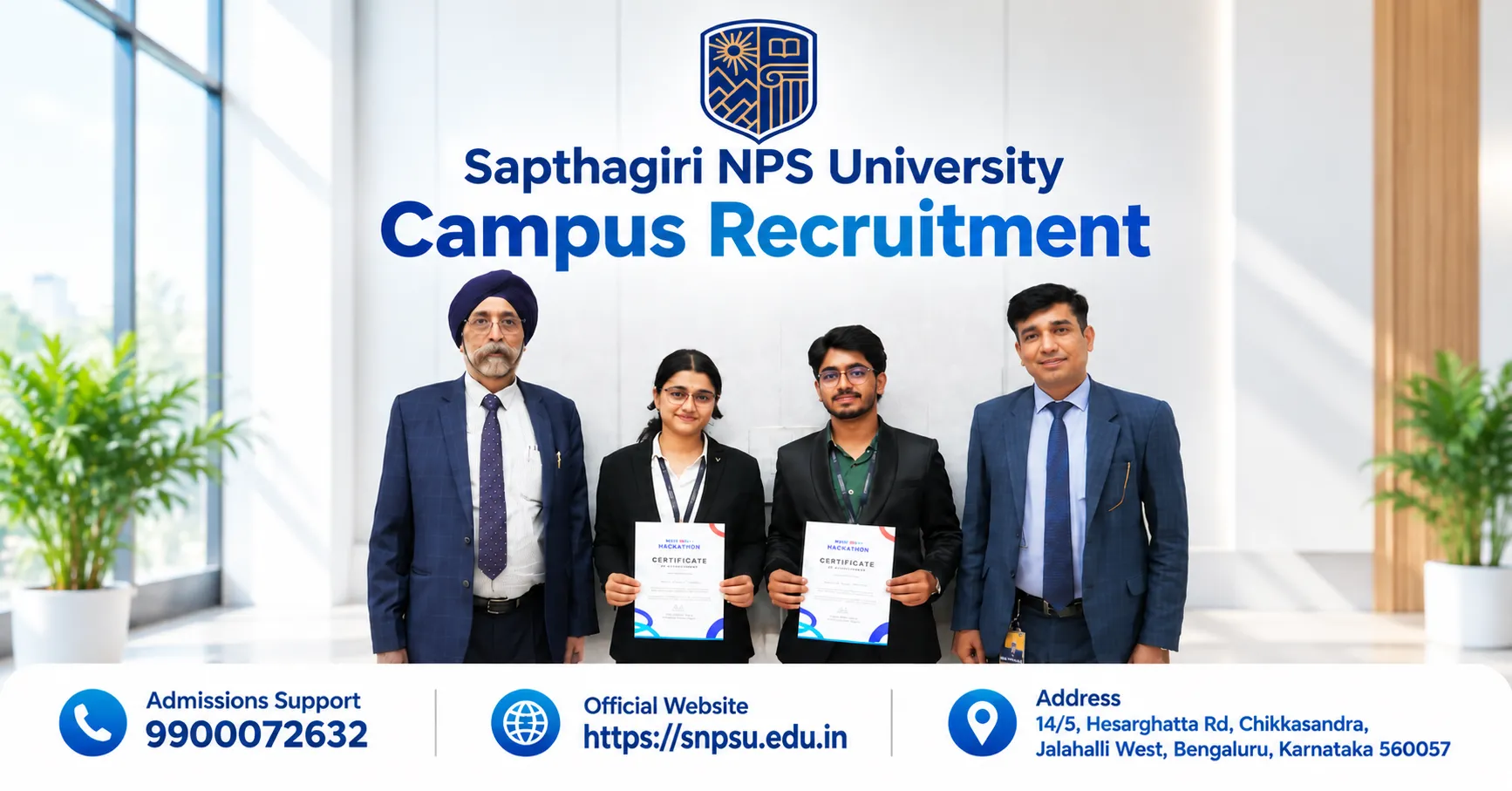
Sapthagiri NPS University Campus Recruitment
A Structured Pathway from Academic Learning to Professional Careers
Sapthagiri NPS University campus recruitment is designed to provide students with a structured transition from academic learning to professional opportunities by bringing together career guidance, skill development, recruitment preparation, industry interaction and employer engagement within a supportive educational environment. Our university recognises that successful career development requires more than completing a degree, because students also need the ability to communicate effectively, solve problems, demonstrate practical knowledge, work collaboratively and adapt to changing professional expectations. The campus recruitment ecosystem therefore focuses on preparing students progressively throughout their academic journey rather than limiting career preparation to the final stage of a programme. Students can participate in placement-oriented training, resume development, interview preparation, aptitude enhancement, communication activities, technical readiness programmes and professional development initiatives. The placement environment is further supported through internships, live industry projects, networking opportunities, industry conclaves, corporate interactions and recruitment-related activities. University information states that the placement division supports eligible students and reports 100% placement, while more than 200 companies are stated to regularly visit the campus. These are university-reported figures, and individual recruitment outcomes can depend on programme, eligibility, skills, performance and employer selection requirements. The overall objective is to help students become career-ready, professionally confident and capable of responding to opportunities in a competitive employment environment.
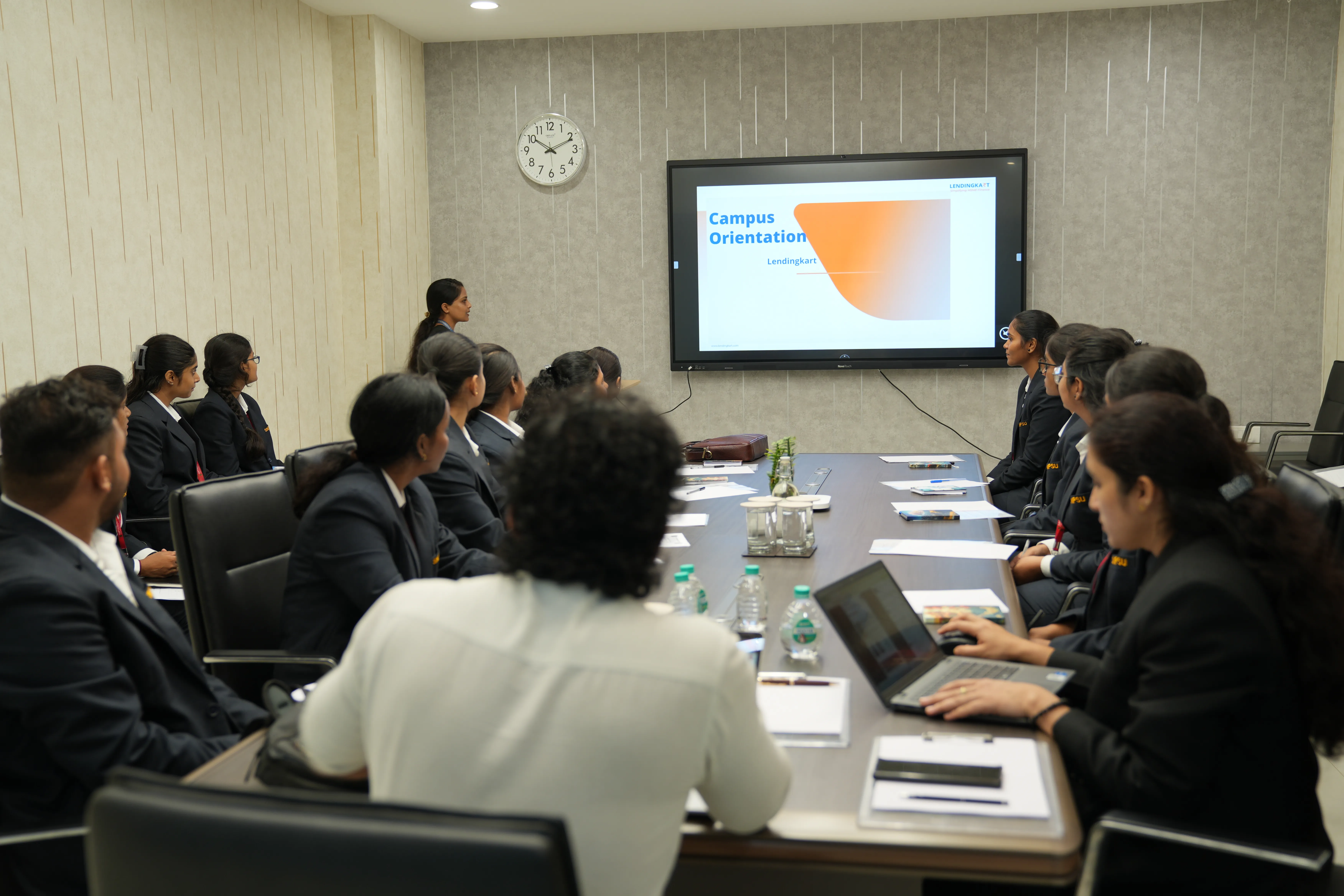
At Sapthagiri NPS University, our campus recruitment activities provide students with valuable opportunities to interact with industry professionals and understand workplace expectations.👉 Click here to apply for admission and take the next step toward your academic and career goals. Our students participate in orientation sessions, recruitment drives, interviews, and career-focused activities conducted with industry partners. We support students with professional development, communication skills, interview preparation, and career guidance. Our campus recruitment approach helps students build confidence and prepare for the transition from university to the professional world.
Understanding the Meaning of Campus Recruitment
Campus recruitment refers to an organised process through which employers connect with students within the university environment to identify candidates for employment opportunities. For students, this process provides an opportunity to participate in professional selection activities while still completing their education, making the transition from classroom learning to workplace entry more organised. Our university approaches Sapthagiri NPS University campus recruitment as a broader career-development process rather than simply a series of interviews or recruitment drives. Students can prepare for different stages of employer selection through aptitude training, technical preparation, communication development, resume building, group discussion practice, mock interviews and professional interaction. This structured approach can help students understand how recruitment works and what organisations may expect from graduate candidates. Campus recruitment can also introduce students to different industries, job functions and professional environments, allowing them to explore career possibilities connected with their academic preparation. Industry interaction gives students greater awareness of workplace realities, while practical experiences can help them explain their skills with real examples during interviews. The value of campus recruitment increases when preparation begins early, allowing students enough time to strengthen areas that require improvement. By creating a systematic connection between academic learning and professional opportunities, our university aims to help students approach recruitment with greater confidence, awareness and readiness.
Career Readiness Begins Before the Recruitment Season
Career readiness is most effective when students begin developing professional capabilities well before companies start recruitment activities. Our university encourages a continuous preparation model in which students gradually build technical skills, communication abilities, practical knowledge and workplace awareness during their academic journey. Sapthagiri NPS University campus recruitment becomes more meaningful when students enter the recruitment process with a professional profile already developed rather than attempting to prepare everything at the last moment. Early preparation gives students time to identify their strengths, understand their career interests and recognise areas where additional learning may be necessary. Students can work on academic projects, technical skills, internships, communication, aptitude, professional presentation and industry awareness in a planned manner. This process can also reduce the stress often associated with recruitment because students become familiar with different selection stages before they encounter an actual employer assessment. Career planning at an early stage can help students make informed choices about certifications, project topics, internships and technical specialisations that align with their aspirations. Continuous development also allows students to track their progress and make adjustments when their interests change. Our university's HRD framework specifically highlights career mentoring, skill development, industry interaction and campus recruitment training as important areas of student development. This creates a foundation where recruitment preparation becomes a natural part of the academic experience.
A Dedicated Placement and Career Development Ecosystem
A successful campus recruitment environment requires coordinated support across several areas, and our university's Human Resource Development framework brings together multiple functions connected with student career preparation. These include placements and career support, learning and development, industry-institute interaction, campus recruitment training, life-skills development, innovation-oriented activities, consultancy services, corporate relations and global career support. This integrated structure gives Sapthagiri NPS University campus recruitment a wider professional-development orientation because students can work on employability through different channels instead of depending exclusively on recruitment drives. Career support can assist with resumes and interview readiness, while learning and development can help identify skill gaps and encourage continuous improvement. Industry interaction can provide exposure to professional environments, and campus recruitment training can help students understand selection procedures and prepare for common assessment formats. The Centre for Life Skills adds emphasis to communication, confidence and broader personal development, helping students strengthen attributes that are valuable in professional settings. Innovation activities can develop creativity, initiative and problem-solving, while the international career function creates an avenue for students exploring global opportunities. Together, these functions can make the recruitment journey more systematic by connecting preparation, professional exposure and employer interaction. Students who engage consistently with these opportunities can build a more balanced profile that combines academic competence with practical and professional readiness.
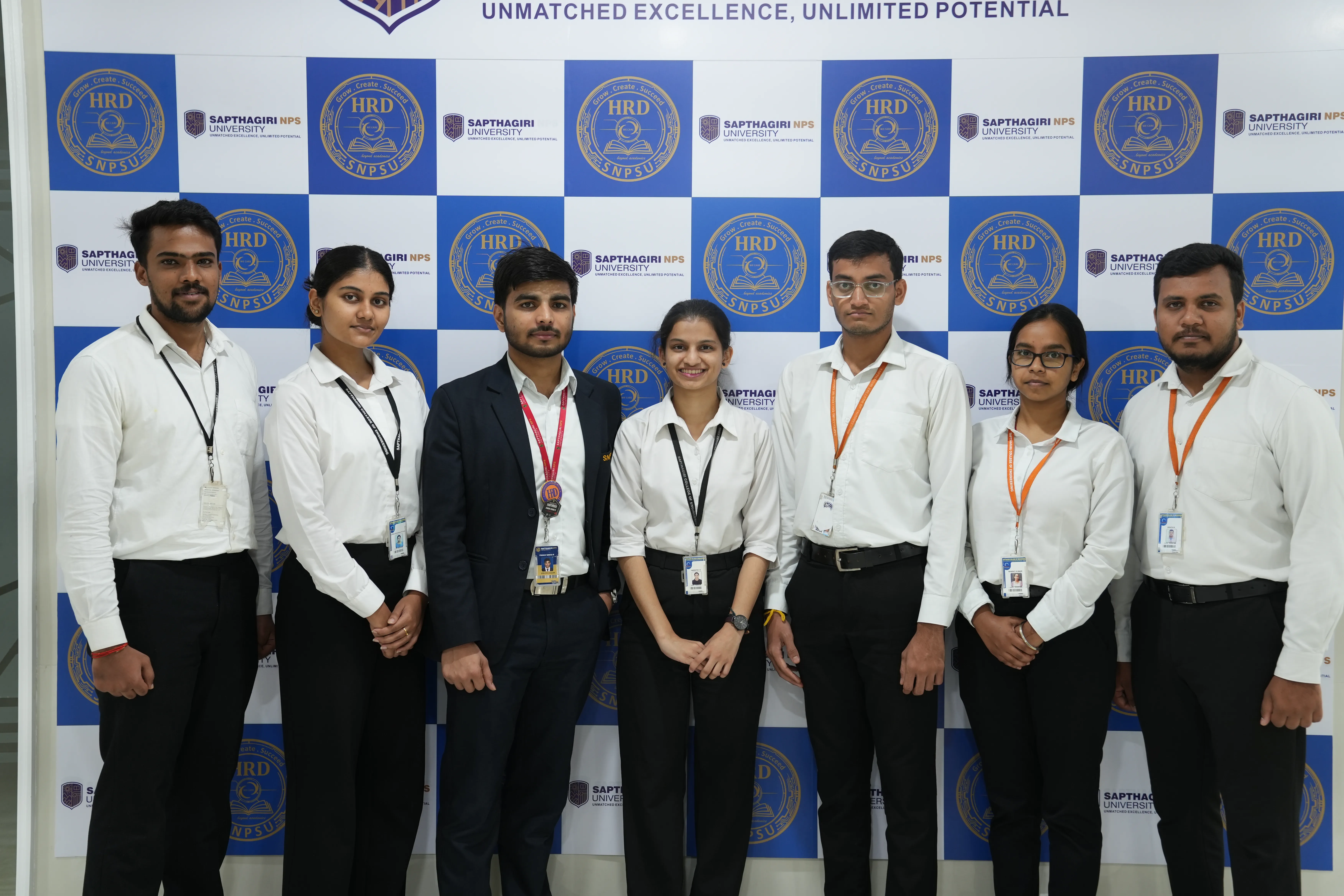
This image showcases Sapthagiri NPS University students and team members participating in a professional campus activity. The formal attire, university branding, and group setting reflect our focus on professional development, industry exposure, teamwork, and career readiness. Such activities help our students build confidence, strengthen communication skills, and prepare for future workplace opportunities.
Preparing Students for Employer Expectations
Employer expectations are constantly evolving, and graduates may need to demonstrate a combination of technical knowledge, communication, adaptability, teamwork, analytical thinking and professional behaviour. Our university focuses on helping students understand these expectations before they enter recruitment processes. Sapthagiri NPS University campus recruitment is supported by career-oriented programmes intended to strengthen the competencies that employers commonly evaluate during selection. Students may receive guidance on how to communicate their academic knowledge, present project experience, demonstrate problem-solving ability and respond professionally to recruitment situations. Understanding employer expectations can also help students identify the difference between simply possessing a skill and being able to demonstrate that skill effectively. For example, a student may know a programming language but still need to explain how it was applied to a project, what challenges were encountered and how the final solution was developed. Similarly, strong academic performance may need to be complemented by communication and teamwork capabilities during group activities or interviews. The university's placement framework describes customised company-specific training, skill development and career mentoring as components of its professional preparation ecosystem. This approach helps students understand that recruitment readiness is multidimensional. Rather than preparing only for a single test or interview, students can develop a broader professional profile capable of responding to different recruitment environments.
Resume Development for Professional Presentation
A resume represents a student's academic and professional profile and often becomes the first formal document reviewed during recruitment. Our university supports students in developing resumes that present qualifications, projects, internships, skills, certifications and achievements in a clear and professional manner. Sapthagiri NPS University campus recruitment preparation can include resume-building guidance so students understand how to communicate their capabilities without unnecessary information or unclear descriptions. A well-structured resume should reflect authentic achievements and provide enough detail for recruiters to understand the candidate's academic background and relevant experiences. Students can gradually strengthen their resumes by adding meaningful projects, practical experiences, technical competencies and professional accomplishments throughout their programme. Resume preparation should not be treated as a final-semester activity because the profile changes as students acquire new knowledge and experiences. Career mentoring can help students identify which achievements best demonstrate their suitability for different roles. Students can also learn how to describe projects according to the problem addressed, contribution made, technologies used and outcomes achieved. This helps convert academic work into professional evidence that can be discussed during interviews. Our university's HRD information specifically highlights resume building and expert-led mentoring as part of career preparation. By improving professional presentation alongside technical learning, students can enter campus recruitment processes with a more complete and credible representation of their capabilities.
Building Technical Competence for Recruitment
Technical competence is an important part of campus recruitment, especially for students seeking opportunities in engineering, computing, technology and other skill-intensive domains. Our university encourages students to build strong academic foundations while gaining practical exposure to contemporary technologies and application-oriented learning. Sapthagiri NPS University campus recruitment preparation can be strengthened when students understand their core subjects thoroughly and also develop relevant technical skills connected with their intended career direction. The university highlights emerging technology areas such as Big Data, Data Analytics, Cloud Computing, Artificial Intelligence, Cyber Security, Internet of Things, Robotics, Computer Vision, Augmented Reality, Blockchain, Edge Computing and related domains as part of its skill-development environment. Students can use academic laboratories, projects, workshops and practical activities to convert conceptual understanding into demonstrable technical capability. Employers may assess candidates through technical interviews, coding tasks, problem-solving exercises or domain-specific assessments, making hands-on practice particularly valuable. Students should therefore focus on understanding the principles behind the tools they use rather than depending entirely on memorised answers. Project experience can help candidates demonstrate how they applied technical knowledge to practical problems. A balanced profile combines strong fundamentals with awareness of relevant technologies and the ability to learn new tools. Through continuous technical development, students can become better prepared for recruitment opportunities and more adaptable to changing professional environments.
Campus Recruitment Training and Employability Enhancement
Campus Recruitment Training provides a formal preparation structure that can help students become familiar with the different stages involved in employer selection. Our university's HRD framework identifies Campus Recruitment Training as a dedicated function and describes its focus through up-skilling, re-skilling and cross-skilling. Sapthagiri NPS University campus recruitment can therefore be supported through training that strengthens existing competencies, introduces students to changing industry requirements and encourages multi-domain proficiency. Up-skilling allows students to improve their current capabilities, while re-skilling helps them adapt when professional requirements evolve. Cross-skilling encourages students to understand capabilities beyond their primary academic specialisation, which can be valuable in multidisciplinary workplaces. Recruitment training can include aptitude preparation, communication, interview readiness, professional etiquette, technical preparation and other employability-related activities. The objective is not merely to help students pass one recruitment assessment, but to strengthen their overall readiness for professional environments. Structured training also provides students with opportunities to recognise weaknesses and work on them through repeated practice. Students who participate actively can use training feedback to improve their confidence and performance. When recruitment training is combined with practical projects and industry interaction, students can develop both the knowledge and the professional awareness needed to approach employer selection processes more effectively.
Aptitude and Reasoning Preparation
Aptitude assessments are commonly used during recruitment to evaluate numerical reasoning, logical thinking, analytical ability and problem-solving skills. Our university can help students strengthen these areas through structured preparation and regular practice as part of broader campus recruitment readiness. Sapthagiri NPS University campus recruitment preparation can benefit from aptitude development because students who are comfortable with quantitative and logical problems may approach assessment rounds with greater confidence. Aptitude preparation is not simply about solving large numbers of questions; it also involves learning how to interpret information, select efficient methods, manage time and remain accurate under pressure. Students can progressively identify their stronger and weaker areas and use practice sessions to improve specific skills. Analytical reasoning also has value beyond recruitment examinations because professional roles may require employees to evaluate information, compare alternatives and make decisions based on available evidence. Developing these capabilities can therefore contribute to broader employability. Time-bound practice can help students understand how to balance speed and accuracy, while review sessions can help identify recurring mistakes. Combining aptitude preparation with communication and technical learning creates a more comprehensive profile. Students who take a consistent approach to reasoning practice may find it easier to respond confidently when employers include assessment stages in their recruitment procedures.
Communication and Confidence Building
Effective communication can influence how students perform during interviews, group discussions, presentations and professional interactions. Our university's placement environment recognises communication as an important part of employability and includes life-skills and career-development activities intended to strengthen confidence and professional interaction. Sapthagiri NPS University campus recruitment preparation can therefore involve communication development alongside technical and academic readiness. Students need to learn how to explain ideas clearly, listen carefully, respond logically and communicate respectfully in professional situations. Confidence should come from genuine preparation rather than memorised statements, because recruiters may ask unexpected questions that require candidates to think independently. Group discussions can help students learn how to contribute without dominating conversations, while presentations can improve the ability to organise and communicate information. Mock interviews can create opportunities to practise responses and receive feedback before actual recruitment interactions. Communication also includes professional writing, email etiquette, workplace behaviour and the ability to explain project work in a structured manner. Developing these skills throughout university can make students more comfortable when interacting with recruiters. The Centre for Life Skills at our university is specifically positioned to support communication training, confidence building and the broader reduction of industry-institute skill gaps. These capabilities complement technical competence and can help students present their knowledge more effectively.
Mock Interviews and Recruitment Practice
Mock interviews provide students with a practical opportunity to experience recruitment-style conversations before participating in actual employer selection processes. Our university supports interview readiness through structured career-development initiatives, and students can use practice interviews to identify areas that require improvement. Sapthagiri NPS University campus recruitment preparation becomes more effective when students are exposed to realistic questions about academic subjects, projects, strengths, career interests, teamwork and professional situations. A mock interview environment can help students become more comfortable with interview structures while giving them an opportunity to practise concise and thoughtful responses. Feedback can be used to improve communication, clarity, confidence, professional presentation and the ability to explain technical work. Students can also learn how to handle questions for which they do not immediately know the answer, an important professional skill that involves remaining composed and communicating honestly. Technical mock interviews can focus on programme-specific subjects, while general interviews can explore behavioural and career-related areas. Repeated practice can reduce nervousness and allow students to enter actual interviews with a clearer understanding of how to communicate their capabilities. The university's career-development information specifically highlights mock interviews, resume building and expert-led mentoring as elements of career preparation. Consistent practice therefore becomes an important part of the journey towards recruitment confidence.
Group Discussions and Collaborative Assessment Readiness
Group discussions are designed to assess how candidates communicate, listen, organise thoughts, respond to different viewpoints and contribute to a common conversation. Our university encourages students to develop communication and teamwork abilities that can support such recruitment activities. Sapthagiri NPS University campus recruitment preparation can incorporate collaborative exercises that help students become comfortable discussing issues, presenting perspectives and working respectfully with others. A strong participant does not necessarily need to speak the most; instead, effectiveness comes from relevant contributions, active listening, logical reasoning and professional interaction. Students can develop these capabilities through group projects, presentations, classroom discussions and structured practice sessions. Group activities also help students understand the importance of teamwork, especially when different opinions are present. Employers may look for candidates who can express ideas confidently while remaining receptive to alternative perspectives. Students can improve their performance by reading widely, developing awareness of current professional issues and practising structured thinking. At the same time, they should avoid depending on memorised statements because group discussions may require responses to unfamiliar topics. Building genuine confidence through regular communication practice can help students participate more naturally. These interpersonal capabilities complement technical skills and contribute to a more complete career profile, particularly for roles that involve teamwork, client interaction, management responsibilities or collaborative problem solving.
Industry Interaction as a Career Preparation Tool
Industry interaction can help students understand the workplace from a perspective that extends beyond academic textbooks and classroom theory. Our university's placement and HRD ecosystem places emphasis on industrial visits, live industry projects, technology talks, guest lectures, networking forums and industry conclaves as part of real-time exposure. Sapthagiri NPS University campus recruitment benefits from these interactions because students can develop greater awareness of industry practices before entering employment. Professional interactions may expose students to workplace expectations, emerging technologies, organisational structures, project methodologies and changing skill requirements. Students can also ask professionals about career pathways and develop a better understanding of how academic knowledge is used in real projects. Industry exposure can influence career planning by helping students discover areas that genuinely interest them. It can also improve interview performance because students can refer to practical experiences and professional observations when discussing their career goals. Networking forums and industry conclaves can further develop professional confidence and encourage students to communicate with people outside their immediate academic environment. The purpose of industry interaction is not limited to recruitment; it contributes to broader professional awareness and helps students understand how their education connects with workplace realities. When this exposure is combined with structured training, the campus recruitment process can become more informed and purposeful.
Internships and Practical Workplace Exposure
Internships provide students with opportunities to gain practical experience and understand the responsibilities associated with professional environments. Our university's career ecosystem includes internship opportunities and practical exposure as part of the broader effort to prepare students for employment. Sapthagiri NPS University campus recruitment can be strengthened through internship experience because students are able to discuss real responsibilities and learning outcomes during recruitment interviews. Internships can help students develop technical skills, communication, teamwork, time management and professional discipline while giving them a clearer understanding of workplace expectations. They also allow students to evaluate their career interests based on actual exposure rather than assumptions. A meaningful internship should provide opportunities to learn, contribute and receive feedback, rather than being treated simply as a certificate requirement. Students can maintain records of the projects they worked on, challenges they encountered and outcomes they helped achieve so these experiences can later become part of their professional portfolio. Practical workplace exposure can also help students identify skills that they need to strengthen before graduation. By connecting internship learning with recruitment preparation, students can demonstrate that they have experience applying academic concepts to professional situations. This adds depth to their resumes and can make interview conversations more substantive.
Live Projects and Real-World Problem Solving
Live projects create opportunities for students to work on practical challenges where academic knowledge must be applied to produce meaningful outcomes. Our university's placement framework highlights live industry projects as one of the ways students can gain real-time exposure and understand professional expectations. Sapthagiri NPS University campus recruitment can benefit from project-based preparation because employers often want to know not only what students have studied but also how they have applied their knowledge. A strong project can demonstrate problem-solving, technical execution, creativity, teamwork and the ability to manage a defined objective. Students should be prepared to explain why the project was undertaken, what role they played, how the solution was developed, what difficulties were encountered and what results were achieved. This level of understanding can help during technical and behavioural interviews. Live projects also create opportunities for students to work within constraints, respond to feedback and manage timelines, experiences that can resemble professional assignments. Project documentation can become an important component of a student's portfolio and can provide concrete evidence of applied learning. When students combine project experience with communication skills, they can explain their capabilities more effectively during recruitment. Practical problem solving therefore forms a valuable bridge between academic education and the expectations of professional employment.
Company-Specific Preparation for Recruitment
Different employers may assess different capabilities, which means recruitment preparation can become more effective when students understand the expectations associated with specific roles. Our university's placement division highlights customised company-specific training as part of its career-support framework. Sapthagiri NPS University campus recruitment can therefore include preparation aligned with the requirements of particular recruitment opportunities where applicable. Company-specific training may help students understand the types of assessments, technical knowledge, communication standards and professional capabilities that are relevant to a particular role. Students can then focus their preparation rather than approaching every recruitment process in exactly the same way. For technical opportunities, this may mean strengthening programming, domain knowledge or analytical reasoning, while other roles may place greater emphasis on communication, business understanding or interpersonal skills. Customised preparation can also help students understand job descriptions and identify which parts of their academic and practical background are most relevant. However, students should maintain strong foundational knowledge because recruitment requirements can vary and may change over time. The broader objective is to improve adaptability, allowing students to prepare efficiently while remaining capable of handling different selection formats. A combination of foundational skills and targeted preparation can give students greater confidence when participating in employer-driven recruitment activities.
Corporate Centre and Professional Exposure
The Corporate Centre within the university's HRD framework serves as a strategic link between student competencies and corporate expectations. Its stated activities include employer engagement programmes, leadership talks, executive mentoring, internships, corporate simulations and domain-specific case-study sessions. Sapthagiri NPS University campus recruitment is strengthened by this type of professional exposure because students can understand workplace situations before formally entering employment. Leadership talks may provide broader perspectives on professional growth, while executive mentoring can help students understand career decisions and workplace expectations. Corporate simulations can expose students to practical decision-making environments, and case studies can encourage analytical thinking based on realistic business or professional situations. These activities can also improve students' ability to communicate ideas and participate in collaborative problem solving. Employer engagement creates opportunities to learn directly from organisations about the skills they value and the capabilities expected from graduates. Such exposure can make recruitment preparation more purposeful because students understand why particular skills matter. Corporate interaction also supports a culture in which students become familiar with professional communication and workplace terminology. When academic learning, practical activities and corporate engagement are connected, students can build a clearer bridge between education and professional life.
Developing Emerging Technology Skills
The modern employment landscape increasingly values candidates who can understand and adapt to technological change. Our university provides a skill-development environment that highlights emerging areas including Artificial Intelligence, Data Analytics, Cloud Computing, Cyber Security, Internet of Things, Robotics, Computer Vision, Blockchain and other technology domains. Sapthagiri NPS University campus recruitment preparation can therefore encourage students to build both foundational competence and awareness of evolving professional technologies. Students should not attempt to learn every emerging technology superficially; instead, they can identify areas that align with their programme and career interests and develop meaningful competence through projects and practical learning. Emerging technology awareness can also encourage students to understand how organisations use technology to improve efficiency, make decisions, develop products and create new services. Technical interviews may increasingly explore applied knowledge, making practical experience valuable. Students who demonstrate curiosity and a willingness to learn can communicate their adaptability during recruitment. The most sustainable approach combines core subject knowledge with continuous exposure to relevant technological developments. This helps students avoid becoming dependent on a fixed skill set and encourages them to remain active learners throughout their professional lives. The university's emphasis on industry-oriented skill development can support this transition by encouraging students to understand technologies in relation to real-world applications and professional requirements.
Life Skills and Professional Behaviour
Professional behaviour is an important component of employability because workplace success depends not only on what employees know but also on how they communicate, collaborate and manage responsibilities. Our university's Centre for Life Skills focuses on holistic development, communication training, confidence building and addressing soft-skill gaps between students and industry expectations. Sapthagiri NPS University campus recruitment preparation can benefit from these life-skills activities because students may need to demonstrate professionalism during interviews, group discussions, internships and employer interactions. Professional behaviour includes punctuality, respectful communication, teamwork, responsibility, listening, adaptability and the ability to respond constructively to feedback. Students can develop these qualities through classroom interactions, project work, extracurricular activities, presentations and structured training. Employers may value candidates who show maturity and a willingness to learn, especially when graduates are entering professional environments for the first time. Communication confidence can help students present their technical knowledge more clearly, while teamwork can strengthen performance in collaborative assessments. The development of life skills should therefore be considered part of career preparation rather than an optional addition. Students who build both professional competence and personal confidence can approach campus recruitment with greater readiness. A balanced career profile combines academic knowledge, practical exposure, technical expertise and professional behaviour, creating a stronger foundation for long-term employability.
Innovation and Entrepreneurship as Career Pathways
Campus recruitment is one pathway towards professional development, but students may also explore entrepreneurship, innovation, research and independent professional opportunities. Our university's HRD ecosystem includes an Innovation Council and activities connected with entrepreneurship, research collaborations, innovation challenges and hackathon participation. Sapthagiri NPS University campus recruitment preparation can benefit indirectly from these activities because innovation-oriented experiences develop qualities such as creativity, initiative, experimentation and problem solving. Students participating in hackathons or innovation challenges learn to work under deadlines, collaborate with different people and create practical responses to specific problems. These experiences can provide useful examples for recruitment interviews, where candidates may be asked to demonstrate initiative or describe situations in which they solved problems creatively. Entrepreneurship exposure can also broaden students' understanding of career possibilities by encouraging them to think about creating value rather than only seeking employment. Even students who ultimately join organisations can benefit from entrepreneurial thinking because modern workplaces often value employees who can identify opportunities and propose practical solutions. Innovation activities can therefore complement conventional recruitment preparation by strengthening the mindset required to operate in dynamic environments. The broader goal is to help students become adaptable professionals who can contribute effectively whether they enter employment, pursue further education or explore entrepreneurial pathways.
Global Career Preparation
Some students aspire to pursue professional opportunities outside India, making global career preparation an additional component of a comprehensive university career ecosystem. Our university's HRD framework includes an International Career Centre designed to connect students with global organisations, support overseas internships and placements and provide training in specific international languages. Sapthagiri NPS University campus recruitment can therefore be viewed within a wider career environment that recognises both domestic and international aspirations. Students interested in global opportunities may need strong technical capabilities, professional communication, cultural awareness, appropriate documentation and an understanding of recruitment expectations in different environments. International exposure can also help students develop adaptability and confidence when working with people from different backgrounds. Career support can help students identify the competencies they need to strengthen before pursuing international roles. Students should also understand that international recruitment requirements can differ according to destination, profession, organisation and programme background. A thoughtful preparation process can reduce uncertainty and encourage students to develop realistic career plans. Global career opportunities can expand professional perspectives and encourage students to think beyond geographical boundaries. The presence of an international career support function adds another dimension to the university's broader approach to student employability and professional development.
Networking and Employer Engagement
Professional networking can help students gain exposure to career possibilities, workplace perspectives and industry expectations. Our university's placement ecosystem includes networking forums, industry conclaves and employer engagement programmes that allow students to interact with professionals and organisations. Sapthagiri NPS University campus recruitment can become more meaningful when students participate actively in these interactions rather than waiting only for formal recruitment drives. Networking provides opportunities to ask questions, understand career pathways and learn about professional environments directly from industry representatives. Students can develop confidence in introducing themselves, communicating their academic interests and discussing their skills. Professional networking should be approached as relationship building rather than simply asking for a job opportunity. Students can make meaningful impressions by being prepared, respectful and genuinely interested in learning. Industry interactions may also expose students to career roles they were not previously aware of, helping them refine their professional aspirations. Networking can support internship searches, project opportunities, industry learning and recruitment awareness depending on the nature of the interaction. Developing this capability during university can be beneficial because professional networks may continue to grow throughout a graduate's career. Strong academic knowledge combined with effective professional networking can help students become more aware of the opportunities available in their chosen fields.
Recruitment Opportunities Across Multiple Professional Areas
A multidisciplinary university environment can provide students with exposure to career possibilities across different professional sectors. Our university's placement information states that career opportunities are supported across areas including IT, core engineering, management, life sciences and other domains. Sapthagiri NPS University campus recruitment can therefore support students from different academic backgrounds by connecting programme-level learning with relevant professional opportunities. Each discipline may require a different combination of technical and transferable skills, so career preparation can be tailored according to programme needs. Engineering students may focus on core technical subjects, software skills and analytical problem solving, while management students may emphasise communication, business analysis, leadership and professional presentation. Students from other disciplines may require different domain-specific preparation alongside general employability capabilities. The multidisciplinary nature of career support can also encourage students to understand how different professions interact within modern organisations. Technology, management, healthcare, engineering and business functions increasingly work together, creating demand for graduates who can collaborate across disciplines. By encouraging students to understand both their core area and complementary skills, our university helps develop a broader perspective on professional opportunities. Students can then select recruitment opportunities that match their qualifications, interests and long-term goals while remaining open to related career pathways.
Faculty and Academic Department Collaboration
Career development becomes stronger when placement activities are connected with academic departments rather than functioning separately from the learning process. Our university's HRD framework highlights faculty collaboration and integrated training initiatives developed in coordination with academic departments. Sapthagiri NPS University campus recruitment can benefit from this coordination because academic departments understand programme-specific learning outcomes and technical requirements, while placement teams understand professional recruitment expectations. Collaboration allows students to connect what they learn in classrooms and laboratories with the capabilities employers may assess during recruitment. Academic projects can be designed or presented in ways that encourage practical application, while placement preparation can reinforce foundational knowledge from the programme. Department-level guidance can also help students identify career paths related to their specialisation and decide which technical areas deserve deeper attention. This integrated model reduces the distance between education and employability because students see career preparation as part of their academic development. Faculty and career teams can also support students in evaluating project work, technical preparation and professional readiness. By bringing academic and career perspectives together, our university can provide students with more coherent guidance throughout their programmes. Students benefit when they understand not only what they are learning, but also how that learning may be translated into professional value.
Assessment, Feedback and Continuous Improvement
Regular feedback is important because students may not always recognise the areas that require improvement in their professional preparation. Our university's HRD framework highlights assessment, feedback, continuous evaluation and performance tracking as additional objectives of its career-development system. Sapthagiri NPS University campus recruitment preparation can therefore be viewed as a continuous improvement process rather than a one-time training programme. Students can use feedback from mock interviews, aptitude assessments, presentations, technical exercises and professional interactions to understand their strengths and development areas. Regular evaluation allows students to set specific improvement targets and measure progress over time. For example, a student may initially struggle with interview confidence but become more comfortable after repeated practice. Another student may identify technical gaps through an assessment and then work on targeted learning before participating in recruitment. Feedback also encourages students to develop realistic self-awareness, which can help them choose opportunities aligned with their capabilities. A strong career-development culture encourages students to view setbacks as learning experiences rather than as permanent indicators of ability. With consistent evaluation and reflection, students can gradually improve both their skills and their professional confidence. This creates a more responsive placement preparation process in which students are encouraged to learn from experience and continuously strengthen their readiness.
The Importance of Professional Mentoring
Professional mentoring can provide students with guidance that connects academic experience with workplace realities. Our university's career ecosystem includes expert-led mentoring, leadership talks and executive mentoring as part of its professional development framework. Sapthagiri NPS University campus recruitment can benefit from mentoring because students can receive practical perspectives on career planning, recruitment expectations, communication and professional growth. Mentors can encourage students to reflect on their strengths and identify the skills they need to develop for their chosen direction. They can also help students understand how professional careers evolve and why continuous learning remains important after graduation. Mentoring can be especially valuable when students are uncertain about career choices, because informed guidance can help them evaluate possibilities more systematically. Students should approach mentoring sessions with prepared questions and a willingness to reflect on feedback. The purpose of mentoring is not to provide a guaranteed career outcome, but to improve awareness and support thoughtful decision-making. Exposure to professional perspectives can also help students develop confidence because they gain a clearer understanding of the workplace. By integrating mentoring with technical training and recruitment preparation, our university can provide a more complete career-support experience that addresses both practical skills and professional direction.
Preparing for Different Recruitment Stages
Recruitment can involve several stages, and students benefit when they understand how to prepare for each stage rather than focusing exclusively on the final interview. Sapthagiri NPS University campus recruitment preparation can involve resume submission, eligibility review, aptitude assessment, technical evaluation, group discussions, interviews and other employer-specific stages depending on the opportunity. Students should therefore develop a flexible preparation strategy. Resume readiness ensures that the initial professional profile accurately represents their capabilities, while aptitude practice prepares them for analytical assessments. Technical revision strengthens subject knowledge and applied skills, and communication practice supports interviews and group activities. Mock recruitment exercises can help students understand how these stages connect and where performance may affect progression. Professional etiquette is important throughout the process, beginning with communication and continuing through every interaction with recruiters. Students can improve their preparation by researching the role, understanding the required skills and practising explanations of their projects and achievements. They should also be prepared for variations in employer selection methods because no two recruitment processes are necessarily identical. A structured but adaptable mindset can help students respond more effectively. Our university's dedicated recruitment training and placement support ecosystem is intended to help students build readiness across multiple stages of professional selection.
Building a Strong Student Portfolio
A professional portfolio can give students a stronger way to demonstrate practical knowledge than academic marks alone. Our university encourages practical learning, projects, industry exposure and skill development, all of which can contribute to a student's professional portfolio. Sapthagiri NPS University campus recruitment can become more productive when students are able to provide concrete examples of what they have learned and built during their academic journey. A portfolio may include selected academic projects, internship experiences, technical work, research activities, presentations, certifications, innovation challenges and other relevant achievements. The objective is not to collect as many items as possible, but to demonstrate genuine capabilities through meaningful evidence. Students should be prepared to explain the purpose, process and outcome of the work they present. A portfolio can also help students identify their own areas of strength by showing how their skills have evolved over time. For technology-oriented opportunities, practical demonstrations can provide valuable context during technical interviews, while for other roles, case studies, presentations or project documentation can demonstrate analytical and professional capabilities. Building the portfolio gradually also reduces pressure during recruitment season because students already have organised evidence of their development. A thoughtful portfolio can complement a resume and help students communicate their professional story with greater clarity.
Developing Workplace Adaptability
Adaptability is becoming increasingly important because technologies, roles, organisational structures and professional requirements can change over time. Our university's focus on up-skilling, re-skilling and cross-skilling reflects the importance of helping students remain flexible in a changing professional environment. Sapthagiri NPS University campus recruitment preparation can therefore encourage students to develop an attitude of continuous learning rather than depending entirely on a fixed set of skills. Adaptability involves being willing to understand new tools, learn unfamiliar concepts, work with different teams and respond constructively to changing requirements. Students can develop this quality through interdisciplinary learning, practical projects, industry interaction, innovation activities and exposure to emerging technologies. Employers may value graduates who demonstrate curiosity and the ability to learn because professional roles can evolve after recruitment. A student who understands strong fundamentals and has developed effective learning habits may be better prepared to adapt as responsibilities change. Career readiness should therefore include both current competence and the ability to develop future competence. Our university's industry-oriented learning environment provides opportunities for students to understand changing requirements while continuing to strengthen their academic foundations. This combination can help graduates approach new professional situations with greater confidence and willingness to learn.
Student Responsibility in Campus Recruitment
A placement ecosystem can provide guidance, training and access to opportunities, but students play the most important role in converting these resources into individual career outcomes. Sapthagiri NPS University campus recruitment is most effective when students participate consistently in training activities, develop their technical skills, improve communication, attend industry interactions and prepare seriously for recruitment assessments. Students should take responsibility for maintaining accurate resumes, understanding eligibility conditions and selecting opportunities that match their qualifications and aspirations. They should also be willing to practise independently rather than depending entirely on classroom or placement sessions. Preparation requires discipline because professional competence develops gradually through repetition, project experience, feedback and continuous learning. Students can create personal schedules for technical preparation, aptitude practice, communication development and project work, helping them balance academic responsibilities with career preparation. They should also treat unsuccessful recruitment attempts as opportunities to learn by identifying what could be improved before the next opportunity. The role of the university is to provide structure, resources and professional support, while the student must actively participate and apply those resources. A responsible and proactive approach can significantly strengthen the value of campus recruitment opportunities. The combination of university support and individual commitment creates a more effective pathway towards professional readiness.
Building Confidence Through Repeated Exposure
Confidence grows when students receive repeated opportunities to practise professional skills in supportive environments. Our university provides career-development activities that can expose students to industry interaction, professional communication, recruitment preparation and practical experiences before graduation. Sapthagiri NPS University campus recruitment can therefore become less intimidating when students are already familiar with interview formats, networking situations, presentations, group activities and professional conversations. Repeated exposure helps students understand that confidence is developed gradually through preparation and experience rather than appearing automatically. Students can use mock interviews to practise answering questions, industry sessions to build communication comfort and project presentations to strengthen their ability to explain technical or academic work. Participating in internships and live projects can further increase workplace familiarity by exposing students to professional responsibilities. This accumulated experience can make it easier for students to communicate their skills and respond calmly during recruitment. Confidence should remain connected with honesty and self-awareness, because professional communication is strongest when students understand both their capabilities and areas for improvement. By encouraging repeated engagement rather than one-time preparation, our university can help students develop a more natural professional presence. The result is not just better recruitment readiness, but greater confidence in navigating future professional environments after graduation.
Campus Recruitment and Long-Term Career Growth
The purpose of campus recruitment extends beyond securing a first job because the skills developed during recruitment preparation can influence professional growth for many years. Our university's placement and HRD ecosystem encourages students to develop communication, technical competence, adaptability, leadership, problem solving and continuous-learning habits. Sapthagiri NPS University campus recruitment is therefore part of a larger journey in which students learn how to enter professional environments and continue growing within them. A student who becomes comfortable with interviews may later be better prepared for internal career discussions, leadership opportunities or professional networking. Technical learning developed for recruitment can become the foundation for specialised career growth, while communication skills can support teamwork and leadership responsibilities. Internships and industry projects can help students understand professional expectations, allowing them to enter employment with greater workplace awareness. Continuous learning remains essential because career paths rarely remain completely static. Graduates may move across roles, industries or specialisations and need the ability to acquire new capabilities. By encouraging students to see recruitment as the beginning of a professional journey rather than its final destination, our university promotes a longer-term perspective on employability. Career preparation therefore becomes an investment in professional adaptability, confidence and sustainable growth.
University-Reported Recruitment Environment
Our university describes a structured recruitment environment supported by industry partnerships, career training and employer engagement. The university reports 100% placement for eligible students and states that more than 200 companies regularly visit the campus. Sapthagiri NPS University campus recruitment should be understood in the context of these university-reported figures, together with the broader training and career-support infrastructure designed to prepare students for professional opportunities. The university also identifies skill-development linkages with industry organisations and highlights preparation in emerging technology areas. These features contribute to a career-oriented environment in which students can gain exposure to recruitment processes and evolving workplace requirements. However, placement figures should not be interpreted as a guarantee of a specific role, salary or selection outcome for every individual student. Recruitment depends on eligibility criteria, programme background, employer requirements, assessment performance, interview performance and other factors. Students can therefore use the reported recruitment environment as an opportunity while continuing to take personal responsibility for developing their professional profile. Understanding this distinction helps students and parents approach placement information realistically. The strongest benefit of a university recruitment ecosystem is the combination of access, preparation, professional exposure and structured guidance that can help students become better prepared for the opportunities available to them.
Industry Partnerships and Professional Skill Development
Industry partnerships can strengthen the connection between academic learning and professional expectations by creating opportunities for exposure, training and practical development. Our university states that its placement division uses industry linkages to train students for overall development according to industry requirements. The university specifically identifies collaborations and skill-development relationships involving Microsoft, IBM, Bosch Rexroth and Schneider, alongside emerging technology-oriented learning. Sapthagiri NPS University campus recruitment can benefit from industry-linked preparation because students can gain greater awareness of workplace technologies and professional requirements. Industry engagement can also support practical learning and help students understand how theoretical concepts are applied in professional situations. The value of industry relationships extends beyond brand recognition; what matters for students is the learning, exposure and career relevance generated through those interactions. Students should use industry-oriented opportunities to ask questions, develop technical capability and understand current expectations. Such exposure can also motivate students to pursue projects or specialisations aligned with their interests. Industry partnerships can support curriculum relevance by encouraging stronger connections between academic content and contemporary professional needs. When combined with placement training, these relationships help create an ecosystem in which students can build competencies with a clearer understanding of how those competencies may be used in professional environments.
A Future-Focused Approach to Campus Recruitment
Future-focused recruitment preparation requires students to understand that the employment landscape will continue evolving after they graduate. Our university emphasises emerging technologies, continuous learning, industry interaction and professional skill development as important components of its broader educational ecosystem. Sapthagiri NPS University campus recruitment can therefore prepare students not only for current opportunities but also for the broader professional environment they are likely to encounter after joining an organisation. Future-focused preparation includes learning how to learn, developing adaptable technical skills, communicating effectively and approaching unfamiliar problems with confidence. Students can strengthen these qualities through projects, internships, innovation programmes, industry interactions and continuous skill development. The objective is not to predict every future job role but to develop capabilities that remain useful across changing professional contexts. Strong fundamentals, analytical thinking, professional communication and adaptability provide a foundation for learning new technologies and responsibilities. Students can also develop a mindset of continuous improvement by seeking feedback and regularly updating their knowledge. A future-focused career ecosystem therefore supports both immediate recruitment readiness and long-term professional resilience. Our university's combination of career support, industry interaction, skill development and recruitment training is intended to help students approach this changing environment with greater awareness and preparedness.
Why Sapthagiri NPS University Campus Recruitment Matters
Sapthagiri NPS University campus recruitment matters because it provides students with an organised bridge between academic achievement and professional opportunity while supporting the development of the skills required to navigate recruitment processes. Our university combines placement and career support with campus recruitment training, learning and development, industry interaction, life-skills programmes, corporate engagement, practical exposure, innovation opportunities and global career support. This broader approach recognises that students need more than academic qualifications to become confident professional candidates. They need opportunities to practise communication, build technical competence, work on meaningful projects, experience professional environments and understand employer expectations. The reported recruitment environment, including more than 200 companies regularly visiting the campus and 100% placement for eligible students, provides an additional indicator of the university's placement ecosystem, while students should understand that individual results depend on eligibility and employer selection. Effective campus recruitment preparation is therefore a shared process. The university provides guidance, training and opportunities, while students contribute through discipline, participation, continuous learning and personal effort. When these elements work together, students can approach recruitment with stronger preparation and a clearer understanding of their professional goals. The ultimate purpose is to help learners move confidently from university life into professional environments while continuing to develop throughout their careers.
Building a Stronger Career Through Continuous Preparation
Students who treat career preparation as a continuous part of their education can make better use of campus recruitment opportunities. Our university provides a structured environment where academic learning, practical experience, professional training and industry exposure can work together throughout the student journey. Sapthagiri NPS University campus recruitment becomes more effective when students begin with career awareness, gradually build relevant skills, participate in projects and internships, strengthen communication, practise aptitude and interviews, and remain engaged with industry interactions. Each stage contributes something different to professional readiness. Academic learning creates subject knowledge, practical projects provide evidence of application, internships offer workplace exposure, communication training builds confidence, and recruitment preparation familiarises students with employer selection processes. Mentoring can provide direction, while industry interaction can create greater awareness of changing expectations. Students can also strengthen their profiles through innovation activities, professional networking and emerging technology learning. This continuous approach reduces the pressure of last-minute preparation and encourages students to take ownership of their career development. Professional success is influenced by preparation, adaptability, resilience and a willingness to learn from experience. Our university's placement and HRD ecosystem is designed to provide structured support across these areas so students can approach professional opportunities with greater clarity, confidence and purpose.
Admissions and Career-Oriented Learning Opportunities
Students looking for a university where academic learning is connected with career preparation can explore the programmes and professional-development environment available through our university. Sapthagiri NPS University campus recruitment is supported by placement and career assistance, recruitment training, industry interaction, practical learning and skill development that can help students prepare for professional opportunities throughout their academic journey. The university's broader ecosystem includes career mentoring, learning and development, industry-institute interaction, life-skills support, innovation activities and global career guidance, creating multiple opportunities for students to develop professionally. Students can benefit most when they actively participate in academic projects, internships, industry sessions, recruitment training and communication development instead of waiting until the end of their programme. A career-ready graduate is developed through consistent learning, practical application and professional exposure. Students and parents seeking admission can therefore consider not only the academic programme but also the wider opportunities available for career development and professional preparation. 👉 Admissions are Open – Click Here to Take Admission and begin the application process. For admission guidance, programme information and general assistance, contact 9900072632. Beginning early can give students more time to develop the technical, professional and interpersonal capabilities that can support their future career journey.
FAQs – Sapthagiri NPS University Campus Recruitment
1. Does Sapthagiri NPS University conduct campus recruitment for students?
Yes, our university has a dedicated placement and career support system that assists students with campus recruitment opportunities, career preparation and employability development. The campus recruitment framework includes recruitment drives, industry interactions, career guidance, resume building, interview readiness, skill development and campus recruitment training. Students are encouraged to prepare progressively through their academic journey so that they can approach recruitment opportunities with stronger technical knowledge, communication abilities and professional confidence. The university also provides opportunities for interaction with industry and employers, helping students understand workplace expectations and career possibilities.
2. What kind of training is provided for Sapthagiri NPS University campus recruitment?
Sapthagiri NPS University campus recruitment preparation includes different employability-focused activities designed to strengthen students' professional capabilities. The university's Campus Recruitment Training framework covers up-skilling, re-skilling and cross-skilling, while placement and career support includes resume building, interview readiness and customised company-specific training. Students can also benefit from communication training, confidence building, industry interaction, internships and professional development activities. This structured preparation can help students improve their readiness for different stages of recruitment and adapt to changing industry expectations.
3. Does Sapthagiri NPS University provide industry interaction and internship opportunities?
Yes, industry interaction and practical exposure are important components of our university's career-development ecosystem. The placement framework includes industrial visits, live industry projects, networking forums, industry conclaves and internships, while the Corporate Centre provides employer engagement programmes, leadership talks, executive mentoring, corporate simulations and domain-specific case-study sessions. These experiences can help students understand professional environments, apply academic knowledge to practical situations and develop workplace awareness before graduation. Such exposure can also give students useful examples to discuss when participating in recruitment interviews.
4. How does the university help students prepare for interviews and recruitment assessments?
Our university supports interview and recruitment preparation through resume development, interview readiness, communication training, confidence building and career-oriented training. Students can participate in activities designed to improve their ability to present their academic background, explain projects, communicate their strengths and respond to professional questions. Campus Recruitment Training further focuses on strengthening core competencies and developing multi-domain skills. Regular preparation can help students become more familiar with recruitment procedures and approach assessment and interview stages with greater confidence.
5. How can students get more information about Sapthagiri NPS University campus recruitment and placement support?
Students can contact our university for information regarding campus recruitment, placement support, career guidance, training and academic programmes. The university maintains dedicated placement and career-support functions along with industry partnerships, recruitment training and professional-development initiatives. The university reports 100% placement for eligible students and states that more than 200 companies regularly visit the campus; these are university-reported figures, and individual recruitment outcomes depend on factors such as eligibility, skills, assessment performance and employer selection requirements. Students can contact the university's general support team at 9900072632 or use the official university channels for further guidance.
Preparing Students for Professional Opportunities
Sapthagiri NPS University campus recruitment represents a comprehensive approach to helping students prepare for the transition from higher education to professional life through structured placement support, career guidance, recruitment training, industry exposure, practical learning and continuous skill development. Our university recognises that employability is built through a combination of academic knowledge, technical competence, communication, confidence, adaptability, teamwork and professional behaviour. The placement and HRD ecosystem brings together career support, learning and development, industry-institute interaction, campus recruitment training, life-skills development, innovation, corporate engagement and global career support to create a broader platform for student development. Students can strengthen their career readiness by participating in resume development, aptitude preparation, mock interviews, internships, live projects, industry interactions and professional mentoring. The university reports 100% placement for eligible students and more than 200 companies regularly visiting the campus, providing a university-reported indication of the scale of its recruitment environment. Students should nevertheless understand that recruitment outcomes depend on individual eligibility, preparation, performance and employer requirements. The most valuable outcome of a strong campus recruitment ecosystem is therefore not only access to recruitment opportunities but also the development of graduates who are confident, skilled, adaptable and prepared to continue learning. By combining academic foundations with professional exposure and structured career support, our university aims to help students take meaningful steps towards employment and long-term professional growth.
Contact Details – Campus Recruitment & Career Support
| Contact Category | Contact Details | Click Here |
|---|---|---|
| Campus Recruitment Enquiries | 9900072632 | 👉 Click Here for Campus Recruitment Enquiries |
| Placement & Career Support | University Placement & Career Support | 👉Click Here for Placement Assistance |
| Career Guidance | Career Development Support | 👉Click Here for Career Guidance |
| Resume & Interview Support | Placement Training & Development | 👉Click Here for Interview Preparation |
| Industry & Recruitment Support | HRD / Placement Support | 👉Click Here for Recruitment Support |
| Email Support | admissions@snpsu.edu.in | 👉Click Here to Send an Enquiry |
| Campus Address | #14/5, Chikkasandra, Hesarghatta Main Road, Bengaluru, Karnataka – 560057, India | 👉Click Here for Campus Assistance |
Students seeking sapthagiri nps university campus recruitment information can contact our university for guidance related to career preparation, placement support, recruitment opportunities, academic programmes and admission assistance. Admissions are Open, and students can take the next step towards their academic and professional goals by getting in touch with our admissions team and beginning the application process.
Leave a Comment