

Sapthagiri NPS University Internship Opportunities: Industry Exposure, Career Development & Student Success

Sapthagiri NPS University Internship Opportunities: Building Industry-Ready Professionals Through Experiential Learning
Internships have become an essential part of modern higher education, providing students with valuable opportunities to transform academic knowledge into practical expertise. As industries continue to evolve through technological innovation, digital transformation, and changing workplace expectations, employers increasingly seek graduates who possess not only strong academic foundations but also real-world experience, professional confidence, and industry-relevant skills. Recognising these evolving expectations, our University has established a learning ecosystem where experiential education plays an integral role in every student's academic journey.
Sapthagiri NPS University internship opportunities are thoughtfully designed to complement classroom learning by providing meaningful exposure to professional environments, industry practices, collaborative projects, and workplace culture. These opportunities enable students to apply theoretical concepts, strengthen technical competencies, improve communication skills, and gain practical insights that prepare them for successful careers across diverse sectors.
Our educational philosophy extends beyond conventional teaching methods. Learning at our University combines academic excellence with innovation, research, skill enhancement, leadership development, and industry engagement to create a holistic educational experience. Students are encouraged to explore emerging technologies, participate in interdisciplinary projects, collaborate with experienced faculty members, and engage with professionals who bring valuable industry perspectives into the learning process. The support provided by our Career Development Team further strengthens this journey by offering career guidance, employability training, professional mentoring, resume development, interview preparation, and internship assistance. These initiatives ensure that students develop the confidence, adaptability, and professional competencies needed to excel in competitive employment environments.
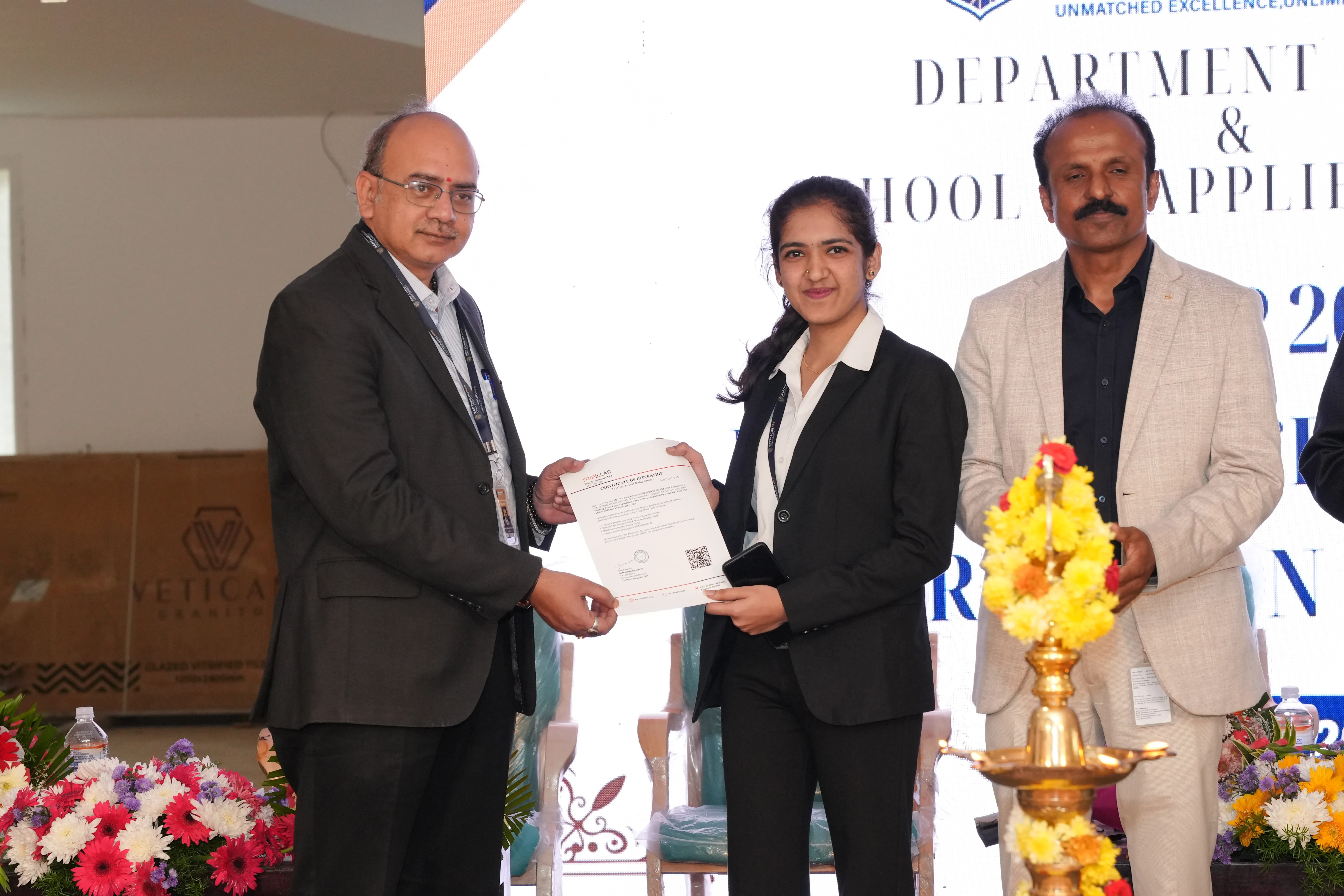
Located in Bengaluru, our University benefits from one of India's most vibrant educational and industrial ecosystems. The city's dynamic presence across technology, healthcare, manufacturing, business services, research, and entrepreneurship creates valuable opportunities for academic collaboration and professional engagement. Through these advantages, Sapthagiri NPS University internship opportunities help students gain practical exposure while building meaningful connections with industry. Every academic programme is designed with the objective of preparing graduates who can contribute confidently to organisations, pursue higher education, undertake research, or build entrepreneurial ventures. By integrating practical learning with academic excellence, our University empowers students to become future-ready professionals capable of creating meaningful impact in their chosen careers.
Sapthagiri NPS University Internship Opportunities – Connecting Academic Knowledge with Professional Practice
Internships provide students with an environment where concepts studied during a degree programme can be examined, tested, and understood through practical application. Our approach focuses on making these experiences purposeful so that students return to their academic studies with stronger professional awareness and a clearer understanding of how their discipline functions beyond the university environment. Sapthagiri NPS University internship opportunities encourage students to observe how organisations approach challenges, coordinate teams, manage responsibilities, communicate decisions, and convert ideas into measurable outcomes. Exposure to these processes enables learners to recognise the relationship between subject knowledge and professional execution.
Instead of viewing an internship merely as an additional credential, our academic community encourages students to approach it as a period of exploration. Students can discover areas they enjoy, recognise skills that require further development, and understand the professional roles available within their chosen field. Such experiences can also influence academic decisions. A student who encounters a particular technology, business function, research method, or operational challenge during an internship may return with new questions and interests. This curiosity can lead to deeper classroom participation, specialised projects, independent learning, or further exploration of a particular career direction. This continuous movement between learning and application creates a stronger educational experience where practical exposure reinforces academic understanding.
Developing Professional Skills Through Internship Experiences
Technical knowledge provides an important foundation for employment, but professional effectiveness depends on several additional capabilities. Communication, accountability, collaboration, decision-making, adaptability, and time management influence how effectively an individual performs within an organisation. Internship experiences provide an appropriate environment for students to begin strengthening these abilities.
Working within professional settings introduces students to responsibilities that may differ significantly from academic assignments. They learn to interpret expectations, prioritise activities, communicate progress, respond constructively to feedback, and complete responsibilities within defined timelines. Students also begin understanding professional communication in greater depth. Presenting an idea to a supervisor, explaining progress to colleagues, documenting findings, participating in meetings, and asking relevant questions require clarity and confidence. Regular exposure gradually strengthens these abilities and prepares students for future workplace interactions.
Collaboration becomes equally important. Professional assignments often require individuals from different backgrounds and specialisations to contribute toward a shared objective. Students experiencing this environment learn how individual responsibilities connect with larger organisational goals. Adaptability develops naturally through these situations. Unexpected challenges may require students to reconsider an approach, learn an unfamiliar tool, understand a different process, or seek guidance. Learning how to respond productively to such situations becomes valuable preparation for future employment. Through Sapthagiri NPS University internship opportunities, our students can therefore develop professional maturity alongside discipline-specific knowledge.
Advanced Infrastructure Supporting Student Success and Practical Learning
A modern university environment plays an important role in enriching the educational experience. While academic excellence remains the foundation of higher education, access to thoughtfully designed learning spaces, advanced technology, research facilities, and collaborative environments enables students to explore knowledge more effectively. Our University, infrastructure is developed with the objective of supporting academic achievement, innovation, creativity, and professional growth throughout every stage of the student journey. Every learning space is designed to encourage active participation rather than passive observation. Comfortable classrooms, technology-enabled teaching environments, specialised laboratories, digital resources, and collaborative learning areas create an atmosphere where students can engage with concepts through discussion, experimentation, and practical application. These facilities contribute to an educational experience that supports curiosity, confidence, and continuous improvement. Our campus reflects the belief that education flourishes in an environment where students have access to the resources needed for exploration, independent learning, and skill development. Academic departments are supported by facilities that encourage students to translate theoretical knowledge into practical understanding while working on projects, laboratory activities, and research initiatives.
Technology-Enabled Classrooms for Interactive Learning
Teaching methodologies continue to evolve with advancements in educational technology. Modern classrooms are no longer limited to traditional lectures but are designed to create engaging and interactive learning experiences that encourage participation and critical thinking. Our technology-enabled classrooms support multimedia presentations, digital learning resources, interactive discussions, and collaborative activities that make learning more engaging. Faculty members can integrate visual demonstrations, simulations, and digital content into classroom sessions, helping students understand complex concepts with greater clarity. Students also benefit from learning environments that encourage active interaction with faculty members and classmates. This collaborative approach promotes meaningful discussions, strengthens conceptual understanding, and creates opportunities for knowledge sharing across disciplines. The integration of technology within classrooms also supports flexible learning by enabling students to access educational resources beyond scheduled academic sessions. Digital learning platforms encourage continuous learning while allowing students to revisit important concepts whenever required.
Modern Laboratories Supporting Practical Education
Practical education remains an essential component of higher learning. Laboratory experiences provide students with opportunities to observe scientific principles, validate theoretical concepts, and strengthen technical competencies through experimentation and application. Our University provides discipline-specific laboratories designed to support experiential learning across academic programmes. Students are encouraged to participate actively in practical sessions where they can develop analytical thinking, technical accuracy, and systematic problem-solving abilities. Laboratory learning also encourages teamwork, careful observation, documentation, and responsible decision-making. These experiences strengthen practical understanding while helping students appreciate the importance of precision, safety, and professional standards within technical environments. Faculty guidance during laboratory sessions ensures that students not only perform experiments but also understand the reasoning behind procedures, interpretations, and outcomes. This approach helps create stronger connections between classroom instruction and practical implementation.
Digital Library and Knowledge Resources
Access to reliable academic resources is fundamental to intellectual growth. Our library serves as an important centre for learning by providing students with an environment that supports study, research, academic exploration, and independent learning. Students have access to a diverse collection of textbooks, reference materials, journals, research publications, and digital learning resources that support curriculum requirements across disciplines. These resources encourage students to broaden their understanding beyond classroom discussions while developing strong academic research habits. The digital learning environment further expands access to educational content by enabling students to explore online databases, academic publications, and electronic learning materials that support assignments, research projects, presentations, and independent study. Quiet reading spaces and collaborative study areas create a balanced learning atmosphere where students can concentrate individually or work together on academic activities.
Innovation Spaces Encouraging Creative Thinking
Innovation develops when students are encouraged to experiment, collaborate, and explore new ideas without hesitation. Our University promotes this culture by providing spaces where creativity, problem-solving, and interdisciplinary collaboration become integral parts of student learning. Innovation-oriented environments encourage students to participate in design thinking, prototype development, collaborative discussions, technical experimentation, and solution-oriented projects. These experiences help students understand how innovative ideas evolve from observation, research, and practical implementation. Working alongside classmates from different academic backgrounds also broadens perspectives and encourages interdisciplinary thinking. Students gain valuable experience by combining technical knowledge, analytical reasoning, communication skills, and creativity to address real-world challenges. Innovation spaces contribute significantly to entrepreneurial thinking by encouraging learners to explore opportunities, evaluate possibilities, and develop practical solutions that address contemporary needs.
Research Facilities Promoting Academic Exploration
Research encourages students to investigate questions, analyse evidence, and contribute new perspectives to their fields of study. At our University, research is viewed as an important extension of classroom learning, enabling students to deepen their understanding while developing intellectual independence. Students are encouraged to participate in faculty-guided research initiatives, academic projects, technical investigations, literature reviews, and interdisciplinary collaborations. These activities strengthen analytical thinking while improving problem-solving, documentation, and critical evaluation skills. Research participation also helps students understand the importance of ethical practices, systematic investigation, and evidence-based conclusions. Such experiences prepare learners for higher education, professional research environments, and innovation-driven careers. By engaging in research activities, students develop curiosity, resilience, and confidence while learning how knowledge evolves through continuous inquiry and exploration.
Collaborative Learning Environments
Learning becomes more meaningful when students exchange ideas, discuss diverse perspectives, and solve problems together. Collaborative learning environments encourage teamwork while helping students develop communication, leadership, and interpersonal skills that remain valuable throughout professional careers. Group discussions, project work, presentations, workshops, and interdisciplinary activities provide opportunities for students to appreciate different viewpoints while strengthening their own understanding. These experiences also encourage mutual respect, shared responsibility, and constructive collaboration. Working within diverse teams helps students adapt to different communication styles, manage responsibilities effectively, and contribute productively toward common objectives. These competencies closely reflect professional workplace environments where teamwork plays an essential role.
How Sapthagiri NPS University Internship Opportunities Prepare Students for Future Careers
Internships are an important milestone in every student's academic journey because they provide practical exposure that complements classroom learning. While academic programmes help students build theoretical knowledge, internship experiences allow them to understand how that knowledge is applied in professional environments. At our University, experiential learning is encouraged as an integral part of career preparation, enabling students to develop workplace confidence while strengthening their technical and professional capabilities. Sapthagiri NPS University internship opportunities are designed to help students explore industry environments, understand organisational practices, and gain meaningful exposure to professional responsibilities. These learning experiences encourage students to observe workplace processes, collaborate with experienced professionals, and participate in practical assignments that support both academic growth and career readiness. Rather than viewing internships as a short-term academic requirement, our University encourages students to approach every opportunity as an investment in their long-term professional development. Practical exposure enables learners to build confidence, expand their perspectives, and understand the expectations of modern workplaces before completing their academic programmes.
Bridging Classroom Learning with Real-World Applications
Academic concepts become more meaningful when students experience how they are applied in professional settings. Classroom discussions introduce theoretical principles, while internships demonstrate how those principles contribute to solving practical challenges within organisations. Students gain opportunities to observe workflows, understand professional responsibilities, participate in collaborative projects, and appreciate the importance of planning, communication, and quality standards. This transition from theory to application strengthens conceptual understanding while helping students recognise the relevance of their academic studies. Experiential learning also encourages students to think critically about real-world situations, analyse practical challenges, and identify solutions using the knowledge acquired during their academic journey.
Exposure to Diverse Professional Environments
Every industry functions within a unique operational environment, and understanding these differences is valuable for career planning. Internship experiences allow students to become familiar with workplace culture, organisational structures, communication practices, and professional expectations across different sectors. Students may observe how teams coordinate responsibilities, manage projects, maintain quality standards, interact with clients, and implement organisational objectives. Such exposure broadens professional awareness while helping students appreciate the importance of teamwork, accountability, and continuous learning. These experiences also enable students to understand how technological advancements, innovation, and changing business practices influence modern workplaces.
Strengthening Technical Competence Through Practical Experience
Practical learning provides opportunities for students to strengthen discipline-specific skills while gaining confidence in applying technical knowledge. Whether participating in engineering projects, business operations, healthcare practices, research activities, or technology-driven assignments, students develop a deeper understanding of their chosen fields through direct experience. Working alongside professionals allows students to observe industry practices, learn established methodologies, and appreciate the importance of accuracy, efficiency, and professional standards. Practical assignments also encourage independent thinking while helping students improve problem-solving and analytical abilities. These experiences contribute significantly to overall academic development by reinforcing concepts introduced during classroom instruction.
Building Workplace Communication and Collaboration Skills
Professional success depends upon effective communication and productive collaboration. Internship experiences introduce students to workplace interactions where clear communication, active listening, teamwork, and professional behaviour become essential components of daily responsibilities. Students learn how to communicate ideas clearly, participate in discussions, seek guidance appropriately, and contribute positively within collaborative environments. Working alongside experienced professionals also encourages learners to develop confidence while interacting with colleagues from diverse academic and professional backgrounds. These experiences help students strengthen interpersonal skills that remain valuable throughout their careers.
Learning Professional Ethics and Workplace Responsibility
Internships also provide valuable insights into professional ethics, organisational values, and responsible workplace behaviour. Students observe how organisations maintain quality standards, protect confidentiality, follow established procedures, and uphold ethical practices while delivering services and achieving organisational objectives. Exposure to these professional expectations helps students understand the importance of accountability, integrity, discipline, and respectful communication. Such experiences contribute to personal development while preparing learners to become responsible professionals capable of making thoughtful decisions throughout their careers.
Developing Confidence Before Graduation
Many students enter professional environments for the first time during internships. This experience allows them to become familiar with workplace expectations before beginning full-time employment. By participating in practical activities, interacting with professionals, and contributing to organisational projects, students gradually build confidence in their abilities. Each completed assignment, collaborative discussion, presentation, or project contributes to greater self-assurance and professional maturity. Students return to campus with renewed motivation, practical insights, and a stronger understanding of their future career aspirations. This confidence often supports improved academic performance because students begin connecting classroom concepts with real professional applications.
Creating Opportunities for Continuous Professional Growth
The learning gained through internships continues well beyond the completion of the programme. Students often identify areas where they wish to develop additional expertise, pursue specialised certifications, undertake advanced projects, or explore emerging technologies related to their discipline. Faculty mentors encourage students to reflect on their internship experiences and integrate those insights into academic projects, research activities, presentations, and future career planning. This process transforms practical exposure into continuous professional development. By encouraging reflective learning, our University ensures that internship experiences become meaningful milestones rather than isolated activities.
Preparing Students for Long-Term Career Success
Career readiness is developed through consistent learning, practical experience, professional guidance, and continuous self-improvement. Sapthagiri NPS University internship opportunities contribute significantly to this journey by providing students with valuable industry exposure before graduation. Through experiential learning, students strengthen technical competence, improve communication, develop workplace confidence, understand organisational practices, and gain practical insights that support informed career decisions. Combined with academic excellence, faculty mentorship, and career development initiatives, these internship opportunities help prepare graduates for diverse professional pathways while encouraging lifelong learning and continuous growth.
Industry Collaboration Strengthening Sapthagiri NPS University Internship Opportunities
Meaningful internships are built on strong academic and industry collaboration. At our University, continuous engagement with organisations, professionals, innovators, and subject experts helps create learning experiences that reflect evolving industry expectations. These collaborations enable students to gain valuable exposure to professional practices while understanding how academic knowledge contributes to solving real-world challenges. Industry interaction is integrated into the learning ecosystem through professional engagements, expert sessions, collaborative initiatives, technical activities, and experiential learning opportunities. This approach helps students remain connected with current developments while preparing for future professional responsibilities.
Learning from Industry Professionals
Interaction with experienced professionals provides students with perspectives that extend beyond textbooks and classroom discussions. Industry experts share practical knowledge, professional experiences, technological developments, and insights into changing workplace expectations. These engagements help students understand how different sectors operate, how organisations adapt to emerging technologies, and which competencies are becoming increasingly valuable in professional environments. Such exposure encourages students to strengthen both technical expertise and professional skills throughout their academic journey. Listening to experienced practitioners also motivates students to explore specialised domains, understand career pathways, and develop realistic expectations about professional growth.
Collaborative Projects Encouraging Practical Problem-Solving
Project-based learning enables students to apply academic concepts while working on practical challenges that encourage analytical thinking and innovation. Collaborative projects often require learners to evaluate information, identify solutions, organise tasks, and communicate ideas effectively within multidisciplinary teams. These experiences strengthen technical understanding while developing workplace competencies such as planning, teamwork, leadership, adaptability, and decision-making. Students also learn the importance of meeting timelines, maintaining quality standards, and delivering outcomes responsibly. Working on practical projects prepares students to participate confidently in professional environments where collaboration and problem-solving are essential.
Guest Lectures and Expert Knowledge Sessions
Regular interaction with professionals enriches academic learning by introducing students to current industry practices, technological advancements, and emerging opportunities across different sectors. Guest lectures provide valuable opportunities for students to understand professional journeys, organisational expectations, innovation trends, and evolving career landscapes directly from experienced practitioners. These sessions encourage meaningful discussions while inspiring students to broaden their perspectives and pursue continuous learning. Expert interactions also help bridge the gap between academic knowledge and industry application by connecting classroom concepts with practical examples.
Industrial Visits Enhancing Practical Understanding
Observing professional environments allows students to appreciate how theoretical knowledge is implemented within organisations. Industrial visits provide opportunities to understand operational processes, production systems, quality management, technological infrastructure, and organisational workflows. Students gain firsthand exposure to workplace practices while observing how professionals collaborate to achieve organisational objectives. Such experiences strengthen conceptual understanding and encourage students to relate academic learning to practical applications. Industrial exposure also promotes curiosity by encouraging learners to ask questions, analyse processes, and appreciate the complexities involved in modern industries.
Innovation and Entrepreneurship Exposure
Innovation and entrepreneurship have become significant contributors to economic growth and technological advancement. Our University encourages students to develop creative thinking, identify opportunities, and explore innovative solutions through activities that promote entrepreneurial awareness. Students participate in innovation challenges, idea-generation programmes, collaborative discussions, and entrepreneurial initiatives that encourage independent thinking and practical problem-solving. These experiences help learners understand how innovative concepts evolve into meaningful solutions that benefit organisations and society. Exposure to entrepreneurial thinking also encourages students to develop confidence in pursuing independent initiatives while strengthening leadership and decision-making abilities.
Expanding Professional Networks Through Industry Engagement
Professional networking begins during the academic journey. Interactions with faculty members, alumni, industry experts, researchers, and professionals provide students with opportunities to build meaningful academic and professional relationships. Networking encourages knowledge sharing, career awareness, mentorship, and professional guidance while exposing students to different career possibilities. Meaningful professional relationships can inspire students to pursue specialised learning, participate in collaborative activities, and explore diverse career pathways. Developing these connections also helps students understand professional expectations while learning from experienced individuals who have successfully navigated their respective industries.
Creating Opportunities for Lifelong Learning
Industries continue to evolve with technological advancements, changing business models, and emerging professional requirements. Graduates therefore need the ability to learn continuously throughout their careers. Our University encourages this mindset by creating learning experiences that promote curiosity, adaptability, and continuous improvement. Industry collaborations expose students to new developments while motivating them to remain informed about emerging technologies, evolving practices, and future opportunities. This culture of lifelong learning enables graduates to remain relevant in changing professional environments while embracing innovation with confidence.
Industry Collaboration Supporting Internship Success
The effectiveness of Sapthagiri NPS University internship opportunities is strengthened through meaningful industry engagement. Students who regularly interact with professionals, participate in collaborative activities, and gain exposure to organisational environments often approach internships with greater confidence and preparedness. Academic learning, professional mentoring, industry interaction, innovation activities, and experiential education work together to create a strong foundation for successful internships. Students enter professional environments with better communication skills, stronger technical understanding, improved adaptability, and a clearer appreciation of workplace expectations. Through sustained collaboration with industry and a commitment to experiential learning, our University continues to create opportunities that support academic excellence, professional growth, and long-term career development.
How to Apply for Sapthagiri NPS University Internship Opportunities
Preparing for an internship begins with choosing an academic environment that encourages experiential learning and professional growth. At our University, students receive continuous guidance that helps them understand how internships contribute to academic development, skill enhancement, and long-term career planning. From the beginning of their programme, learners are encouraged to participate in activities that strengthen their technical knowledge while preparing for future industry engagement. Sapthagiri NPS University internship opportunities are supported through structured academic planning, faculty mentorship, professional development programmes, and career guidance initiatives. Students can explore internship pathways that complement their academic discipline and help them gain meaningful exposure to professional environments. Our Admissions Team is available to assist prospective students and parents with programme information, eligibility criteria, application procedures, and academic guidance.
Admissions Information
| Official Website | Apply Online | Admissions Email | Admissions Contact Number |
|---|---|---|---|
| 👉 Click Here | 👉 Click Here | 👉 Click Here | +91 9900072632 |
Building the Foundation for Successful Internships
Meaningful internship experiences are built upon strong academic preparation and continuous skill development. Throughout their studies, students participate in classroom learning, laboratory sessions, collaborative projects, technical workshops, research activities, and innovation initiatives that strengthen their professional capabilities. Faculty members guide students in developing analytical thinking, problem-solving abilities, communication skills, and technical competence while encouraging curiosity and continuous learning. These experiences help students become better prepared for professional environments where adaptability, collaboration, and practical knowledge are highly valued. Students are also encouraged to develop professional confidence through presentations, project demonstrations, technical discussions, and interdisciplinary activities that reflect real workplace expectations. This combination of academic learning and practical exposure supports successful participation in Sapthagiri NPS University internship opportunities while preparing graduates for long-term professional growth. Our University, internships are viewed as an extension of the learning process, enabling students to connect education with industry, strengthen career readiness, and gain valuable experience that contributes to future success.
Academic Mentorship Enhancing Sapthagiri NPS University Internship Opportunities
A successful internship experience is often guided by strong academic mentorship. At our University, faculty members play an active role in helping students identify their strengths, refine their career interests, and prepare for professional learning experiences that complement their academic programmes. Mentorship begins inside the classroom and continues throughout the student's educational journey. Faculty encourage learners to explore emerging concepts, undertake meaningful projects, participate in technical discussions, and develop solutions that address practical challenges. This consistent academic support helps students approach internships with greater confidence and a clearer understanding of industry expectations.
Personalised Faculty Guidance
Every student progresses through a unique learning journey. Our faculty members provide academic guidance that considers individual interests, career aspirations, and learning goals. Through regular interaction, students receive valuable feedback that helps them strengthen subject knowledge while identifying opportunities for further development. Mentors also encourage students to participate in seminars, technical events, certification programmes, research activities, and interdisciplinary projects that contribute to professional growth. These experiences enhance academic learning while preparing students for future internship responsibilities.
Developing Industry-Relevant Competencies
Employers value graduates who can adapt to changing work environments, collaborate effectively, and contribute innovative ideas. To support these expectations, our University promotes continuous skill development alongside academic learning. Students strengthen their professional capabilities through practical assignments, presentations, collaborative activities, analytical exercises, and project-based learning. These experiences improve communication, critical thinking, leadership, and decision-making while reinforcing technical competence. The combination of academic excellence and practical preparation enables students to participate in Sapthagiri NPS University internship opportunities with greater readiness and confidence.
Learning Through Real Academic Projects
Academic projects provide students with opportunities to investigate challenges, evaluate information, and develop practical solutions using the concepts learned during their programmes. Rather than focusing only on theoretical knowledge, students are encouraged to create meaningful outcomes through research, experimentation, and innovation. Project-based learning also develops documentation skills, presentation abilities, teamwork, and structured problem-solving. These competencies become valuable during internships where students may be expected to contribute to ongoing assignments, technical tasks, or organisational initiatives.
Encouraging Continuous Self-Improvement
Professional development is a continuous process that extends throughout a student's academic journey. Our University encourages learners to regularly evaluate their progress, identify areas for improvement, and pursue opportunities that expand their knowledge and practical expertise. Faculty mentors motivate students to remain curious, embrace new technologies, strengthen professional skills, and actively participate in experiential learning opportunities. This culture of continuous improvement helps students adapt confidently to changing industry expectations while preparing them for long-term career success. Through dedicated mentorship, academic excellence, and experiential education, Sapthagiri NPS University internship opportunities become an important part of a broader learning journey that prepares students to excel in professional environments with confidence, competence, and integrity.
Research and Innovation Supporting Sapthagiri NPS University Internship Opportunities
Innovation begins with curiosity and grows through exploration. At our University, students are encouraged to investigate ideas, question existing approaches, and develop solutions that address real-world challenges. Research and innovation are integrated into the academic experience to help learners expand their knowledge while developing practical abilities that are valuable across diverse professional fields. By participating in research-oriented learning, students strengthen their analytical thinking, improve their ability to interpret information, and develop confidence in applying academic concepts to practical situations. These experiences create a strong foundation for Sapthagiri NPS University internship opportunities by preparing students to contribute effectively within professional environments.
Encouraging an Innovative Mindset
Innovation is not limited to scientific discoveries or technological advancements. It also involves identifying opportunities, improving existing processes, and approaching challenges with creativity and critical thinking. Our University encourages students to develop innovative ideas through academic discussions, collaborative activities, design thinking exercises, technical projects, and interdisciplinary learning. These experiences inspire learners to think independently while building practical solutions that can create meaningful impact. Developing an innovative mindset also helps students become adaptable professionals who are prepared to embrace change and contribute confidently within evolving industries.
Student Research Initiatives
Research allows students to explore subjects in greater depth while strengthening academic and professional competencies. Guided by experienced faculty members, students have opportunities to investigate emerging topics, analyse data, evaluate findings, and present their observations through structured academic activities. Participation in research enhances intellectual curiosity and encourages students to develop evidence-based approaches when solving complex problems. It also improves documentation skills, technical writing, logical reasoning, and analytical interpretation, all of which are valuable during internships and future employment.
Interdisciplinary Learning Experiences
Modern industries increasingly require professionals who can work across multiple disciplines and understand diverse perspectives. Our University promotes interdisciplinary learning by encouraging students from different academic backgrounds to collaborate on projects, discussions, and innovation activities. Working within multidisciplinary teams helps students appreciate different viewpoints while improving communication, teamwork, and collaborative problem-solving. These experiences closely reflect professional workplaces where individuals from various specialisations work together to achieve common objectives.
Transforming Ideas into Practical Solutions
Every innovative solution begins with a thoughtful idea supported by careful planning and practical implementation. Students are encouraged to develop concepts that address contemporary challenges while considering feasibility, sustainability, and social impact. Project development activities enable learners to transform academic knowledge into practical outcomes by combining research, experimentation, and collaborative learning. These experiences strengthen confidence while encouraging students to apply their education in meaningful ways. Such practical exposure also prepares students to contribute effectively during Sapthagiri NPS University internship opportunities, where innovative thinking and solution-oriented approaches are highly valued.
Preparing Students for Knowledge-Driven Careers
The future workplace values professionals who continuously learn, adapt, and innovate. Through research participation, interdisciplinary collaboration, and innovation-focused education, our University prepares students to contribute to knowledge-driven organisations with confidence and professionalism. These academic experiences extend beyond graduation by developing habits of continuous learning, intellectual curiosity, and professional growth. Students graduate with the ability to analyse challenges, explore opportunities, and create informed solutions that support both organisational success and societal progress. By integrating research, innovation, and experiential learning throughout the academic journey, Sapthagiri NPS University internship opportunities become more meaningful, enabling students to apply their knowledge with confidence while preparing for rewarding professional careers.
Career Pathways After Sapthagiri NPS University Internship Opportunities
Professional growth is a continuous journey that develops through learning, experience, and the ability to adapt to changing industry requirements. Internship exposure often becomes an important milestone that helps students recognise their strengths, explore specialised career options, and make informed decisions about their future. At our University, students are encouraged to use every practical learning experience as a foundation for long-term professional development. Sapthagiri NPS University internship opportunities provide valuable insights into different sectors, allowing students to understand how academic knowledge supports real organisational objectives. These experiences help learners identify areas of interest while building the confidence required to pursue diverse career pathways after graduation.
Exploring Multiple Career Directions
Every academic discipline offers a wide range of professional opportunities. Through practical exposure, students gain a broader understanding of specialised roles available within their chosen field. This awareness enables them to evaluate different career options based on their interests, abilities, and long-term aspirations. Some students may choose to enter corporate organisations, while others may pursue research, entrepreneurship, public service, higher education, consulting, or emerging technology-driven sectors. Practical industry exposure helps learners make these decisions with greater clarity and confidence.
Strengthening Professional Portfolios
Employers appreciate candidates who demonstrate continuous learning and practical achievement. Throughout their academic journey, students are encouraged to build professional portfolios that highlight academic projects, technical competencies, certifications, innovation activities, research participation, leadership experiences, and internship learning. A well-developed portfolio reflects consistent growth and provides meaningful evidence of a student's capabilities. It also enables graduates to present their academic achievements and practical experiences more effectively during recruitment processes and professional interactions.
Developing Leadership Qualities
Leadership is developed through participation, responsibility, and collaboration. Students at our University are encouraged to take initiative during academic projects, technical events, student activities, and collaborative assignments that require planning, coordination, and decision-making. These experiences strengthen confidence while encouraging learners to communicate effectively, manage responsibilities, and contribute positively within diverse teams. Leadership qualities developed during university education continue to benefit graduates throughout their professional careers.
Adapting to Emerging Industry Trends
Professional environments continue to evolve as new technologies, business models, and global practices reshape industries. Preparing for these changes requires graduates who are willing to learn continuously and embrace innovation. Our University encourages students to remain informed about technological advancements, industry developments, sustainability practices, and emerging career opportunities. Exposure to evolving trends helps students understand future workplace expectations while encouraging continuous professional growth beyond graduation.
Building a Future of Lifelong Learning
Graduation represents the beginning of a lifelong learning journey rather than its conclusion. Successful professionals continuously update their knowledge, acquire new skills, and adapt to changing industry requirements throughout their careers. Our academic philosophy encourages students to cultivate curiosity, embrace continuous improvement, and remain committed to professional development. This mindset enables graduates to remain competitive while contributing meaningfully to their organisations and communities. The experiences gained through Sapthagiri NPS University internship opportunities, combined with academic excellence and continuous learning, provide a strong foundation for long-term career success. By developing knowledgeable, adaptable, and ethically responsible professionals, our University prepares students to confidently navigate future opportunities while making valuable contributions to society and their chosen professions.
Frequently Asked Questions
1. What are Sapthagiri NPS University internship opportunities?
Sapthagiri NPS University internship opportunities are designed to complement academic learning by providing students with meaningful exposure to professional environments. These opportunities enable students to apply classroom concepts in practical settings, understand industry workflows, and develop technical as well as professional competencies. Internships also help students gain confidence, strengthen workplace communication, and build a deeper understanding of how academic knowledge contributes to solving real-world challenges. By participating in experiential learning, students become better prepared for future career opportunities while enhancing their overall educational experience.
2. Why are internships important for students at our University?
Internships play an essential role in preparing students for professional careers because they bridge the gap between theoretical education and practical application. Through internship experiences, students gain valuable insights into organisational practices, workplace culture, project execution, teamwork, and professional responsibility. These experiences encourage independent thinking, improve decision-making abilities, and help students understand employer expectations before entering the workforce. As a result, students graduate with greater confidence and practical knowledge that supports long-term career success.
3. How do Sapthagiri NPS University internship opportunities support career development?
Career development begins long before graduation, and internships are an important part of that journey. Students participating in Sapthagiri NPS University internship opportunities gain exposure to real workplace environments where they can develop communication skills, leadership qualities, technical expertise, and professional ethics. Internship experiences also help students identify their strengths, discover career interests, and understand the skills required in different industries. These practical experiences contribute to stronger resumes, greater interview confidence, and improved career readiness.
4. Does our University provide guidance before students begin internships?
Yes. Our University believes that proper preparation enhances the value of every internship experience. Students receive guidance from faculty mentors and the Career Development Team through career counselling sessions, employability workshops, resume-building support, interview preparation programmes, communication skill development, aptitude training, and professional mentoring. These initiatives help students approach internship opportunities with confidence while ensuring they understand workplace expectations and professional responsibilities.
5. Are internship opportunities available across different academic programmes?
Our University encourages experiential learning across a wide range of academic disciplines. Internship opportunities are aligned with programme objectives and are intended to provide practical exposure relevant to each student's field of study. Whether students are pursuing programmes in engineering, management, computer science, health sciences, commerce, or other disciplines, internships help them connect academic learning with industry practices while developing valuable professional competencies.
6. What professional skills can students develop through internship experiences?
Internships help students develop a broad range of professional skills that remain valuable throughout their careers. These include effective communication, teamwork, analytical thinking, adaptability, leadership, problem-solving, workplace ethics, time management, professional documentation, presentation skills, and decision-making abilities. Students also gain confidence by working with experienced professionals, participating in collaborative projects, and understanding organisational processes. These competencies strengthen employability while supporting continuous professional growth.
7. How do internships improve students' academic learning?
Internships reinforce classroom education by allowing students to apply theoretical concepts in practical situations. Students often return from internship experiences with a deeper understanding of their subjects because they have observed how academic principles are implemented within professional organisations. This practical exposure enhances classroom participation, improves project work, encourages research, and motivates students to explore specialised areas of study. Experiential learning therefore strengthens both academic performance and professional development.
8. How can students prepare themselves for Sapthagiri NPS University internship opportunities?
Students can prepare by actively participating in academic projects, laboratory work, technical workshops, seminars, innovation activities, certification programmes, research initiatives, and communication skill development sessions conducted throughout their academic journey. Maintaining consistent academic performance, improving technical competencies, developing professional behaviour, and seeking guidance from faculty mentors also contribute significantly to internship readiness. Continuous learning and a willingness to embrace new challenges further help students make the most of every internship experience.
9. How can prospective students learn more about admissions and internship opportunities?
Students and parents who wish to know more about academic programmes, admissions, campus facilities, career development initiatives, or Sapthagiri NPS University internship opportunities are encouraged to connect with our Admissions Team. Our team provides detailed guidance regarding eligibility, programme selection, admission procedures, application support, and student development opportunities, ensuring that every applicant receives accurate information before beginning their academic journey.
10. Why should students choose our University for internship-focused education?
Our University provides an academic environment where education extends beyond textbooks through experiential learning, faculty mentorship, research, innovation, and industry engagement. Sapthagiri NPS University internship opportunities are integrated with academic excellence to help students develop practical expertise, professional confidence, and career readiness. Supported by modern learning facilities, dedicated faculty members, and comprehensive career development initiatives, students graduate with the knowledge, skills, and experience needed to pursue rewarding careers, higher education, entrepreneurship, and lifelong professional success.
Empowering Future Careers Through Sapthagiri NPS University Internship Opportunities
Professional success is built upon knowledge, experience, continuous learning, and the ability to adapt to an evolving global environment. At our University, we believe that meaningful education extends beyond academic achievement by providing students with opportunities to develop practical expertise, professional confidence, and industry awareness throughout their educational journey. Sapthagiri NPS University internship opportunities represent an integral component of this educational philosophy. By combining experiential learning with academic excellence, students gain valuable exposure to professional environments, strengthen discipline-specific competencies, and develop the workplace skills required to succeed across diverse industries. Every internship experience encourages students to apply theoretical concepts, collaborate with professionals, and cultivate the confidence needed to transition successfully from university life to professional careers.
Supported by experienced faculty members, modern academic facilities, research-driven learning, innovation initiatives, and comprehensive career development programmes, our students are encouraged to pursue continuous growth while preparing for future opportunities. This balanced approach enables graduates to become knowledgeable professionals, responsible leaders, innovative thinkers, and lifelong learners who contribute meaningfully to organisations and society. We invite aspiring students and parents to explore the academic opportunities available at our University and discover how Sapthagiri NPS University internship opportunities can enrich the educational experience through practical learning, professional development, and industry engagement. Our Admissions Team is available to provide personalised guidance regarding programmes, eligibility, admissions, and student support services.
Admissions Information
| Admission Information | Details |
|---|---|
| Official Website | Click Here |
| Apply Online | Click Here |
| Admissions Email | Click Here |
| Admissions Contact Number | +91 9900072632 |
| Campus Address | #14/5, Chikkasandra, Hesaraghatta Main Road, Bengaluru, Karnataka, India |
Take the next step towards an education that combines academic excellence with practical experience. Join our University and discover how Sapthagiri NPS University internship opportunities can help you build industry-ready skills, broaden your professional perspective, and prepare for a successful and rewarding career.
Leave a Comment