
Ganesha Festival at Sapthagiri NPS University | Celebrate Together
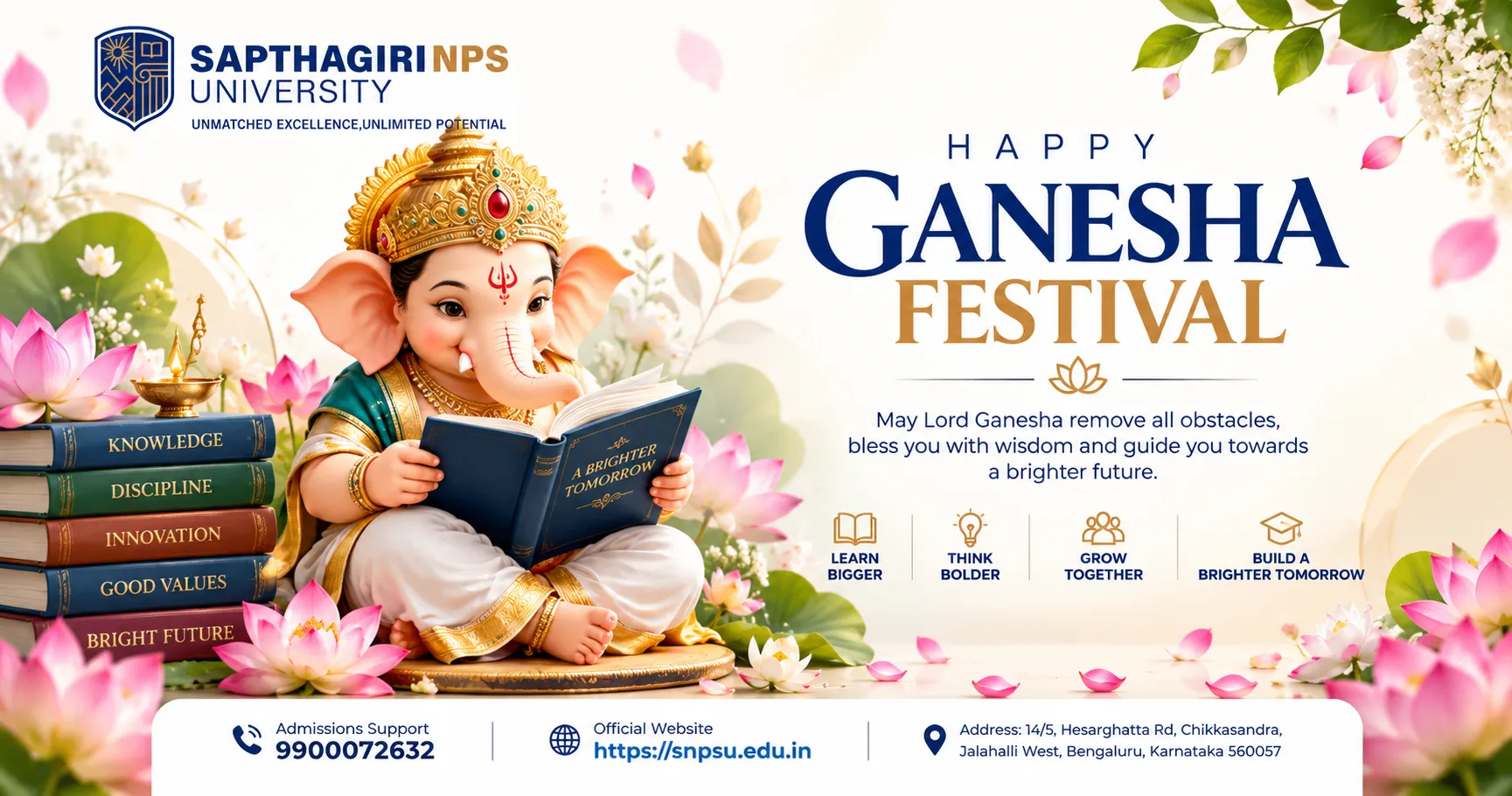
Ganesha Festival: Celebrating Lord Ganesha With Joy and Devotion
The Ganesha festival is one of the most celebrated cultural and religious festivals in India, bringing together devotion, tradition, art, community participation and a strong sense of togetherness. The festival is dedicated to Lord Ganesha, who is widely regarded as the remover of obstacles and is traditionally associated with wisdom, knowledge, prosperity, good fortune and auspicious beginnings. Every year, families, communities, educational institutions and organisations come together to celebrate the occasion with prayers, decorations, cultural programmes, devotional activities and social initiatives. The festival holds a special place in Indian culture because it connects generations through traditions that have been passed down over many years. For students, the Ganesha festival can also be an opportunity to understand India's diverse cultural heritage and appreciate values such as knowledge, discipline, creativity, cooperation, respect and responsibility. The celebration is not only about rituals but also about creating positive social connections and encouraging people to begin new journeys with confidence and hope. Lord Ganesha's association with wisdom makes the occasion particularly meaningful for learners, as education itself represents a journey in which students continuously overcome challenges and develop new abilities. Our university recognises the importance of helping students develop beyond academic qualifications by encouraging awareness, confidence, creativity and responsible participation in society. Festivals such as this can provide students with opportunities to understand traditions while developing broader perspectives about culture and community life. The Ganesha festival therefore represents a meaningful combination of faith, heritage, learning and social unity.👉 Click Here to Apply for Admission and take the next step towards your academic and professional journey with our university.
History of Ganesha Festival
The history of the Ganesha festival is deeply connected with the long-standing worship of Lord Ganesha in Indian religious and cultural traditions. Lord Ganesha has been revered for centuries as a deity associated with wisdom, intellect, prosperity, good fortune and the removal of obstacles. Different regions of India have developed their own stories, rituals and customs related to Ganesha worship, creating a rich and diverse cultural tradition. Traditionally, devotees have worshipped Lord Ganesha before beginning important activities and during auspicious occasions, seeking blessings for success and a smooth journey ahead. Over time, the celebration evolved in different communities, with household worship becoming an important tradition and larger public celebrations developing in several regions. The modern public form of the festival is particularly associated with Maharashtra and the efforts of Lokmanya Bal Gangadhar Tilak during the late nineteenth century. Public celebrations helped bring people together through common cultural activities, devotional gatherings, music, speeches and community participation. These celebrations gradually became an important part of public life and contributed to the wider popularity of the festival. Over the years, the tradition spread to many parts of India, with each region adding its own cultural character to the celebration. Today, the Ganesha festival is celebrated not only in Maharashtra but also extensively in Karnataka, Telangana, Andhra Pradesh, Tamil Nadu, Goa, Gujarat, Madhya Pradesh and several other parts of the country. Indian communities outside India also observe the festival through temples, community organisations and cultural gatherings. The history of the festival demonstrates how traditions can evolve while retaining their central cultural and spiritual meaning. For students, understanding this history provides an opportunity to explore India's connection between culture, society, art and community life.👉 Click Here to Apply for Admission and begin your higher education journey with our university, where academic learning can be complemented by opportunities for personal development, creativity and cultural awareness.
Celebrating Ganesha Festival with Tradition and Togetherness
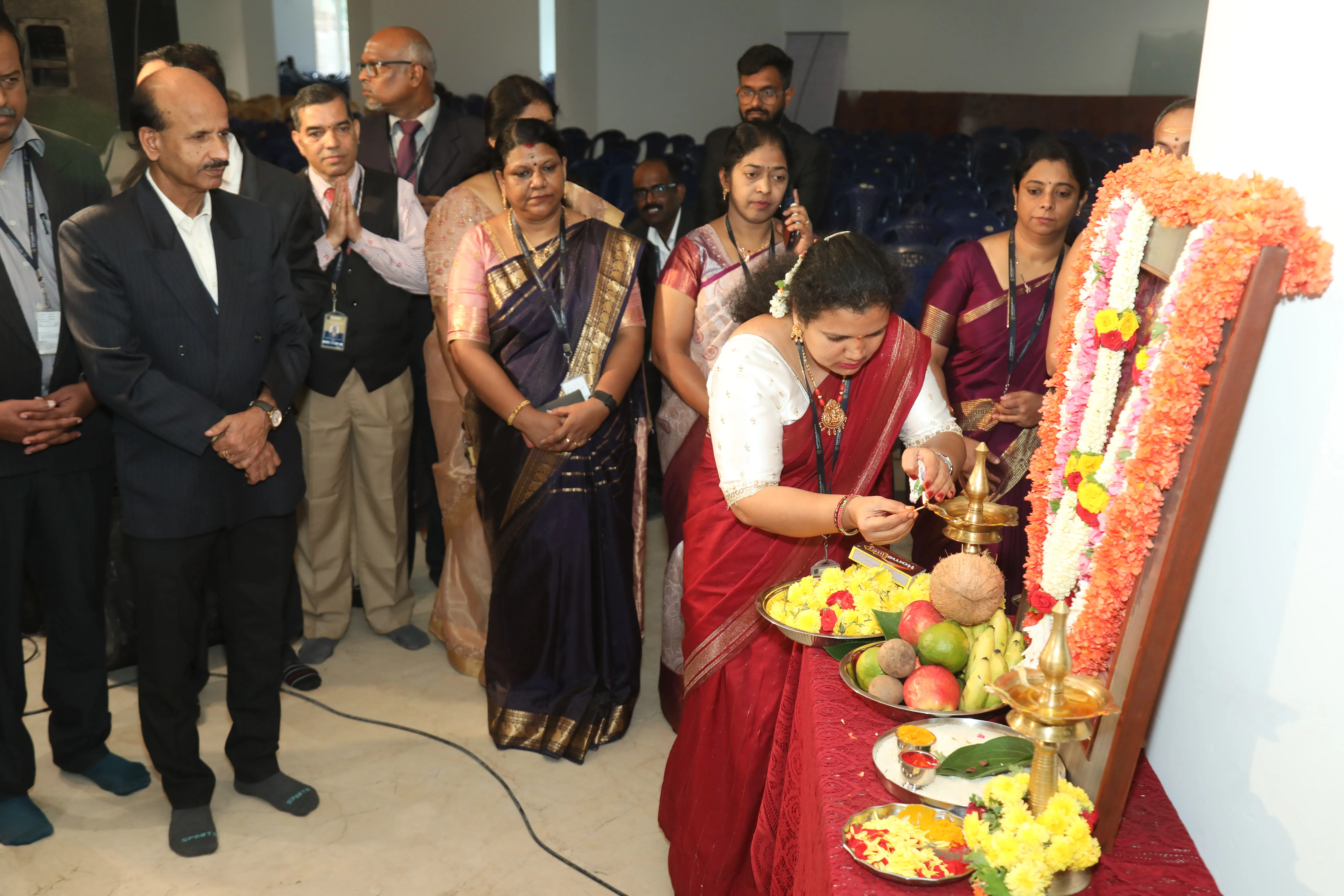
Our University celebrated the auspicious Ganesha Festival with devotion, joy, and a strong sense of togetherness. The celebrations began with a traditional Ganesh Pooja, bringing our faculty, staff, and students together to seek the blessings of Lord Ganesha. The ceremonial lamp lighting, beautiful floral decorations, and traditional offerings created a serene and festive atmosphere across our campus. The celebration reflected our commitment to promoting Indian culture, traditions, and values among our students. It provided an opportunity for everyone to come together and celebrate the spirit of unity, harmony, and positivity. Through such cultural celebrations, our University encourages students to appreciate and respect our rich heritage beyond the classroom. The festive atmosphere was filled with devotion, happiness, and positive energy as students and staff participated enthusiastically. We believe that education is not limited to academics but also includes developing cultural awareness, values, and a strong sense of community. The Ganesha Festival marked a meaningful beginning filled with hope, prosperity, knowledge, and new opportunities for our entire University community.
Who Is Lord Ganesha?
Lord Ganesha is one of the most widely recognised and respected deities in Hindu traditions and is traditionally associated with wisdom, knowledge, intellect, prosperity, good fortune and the removal of obstacles. He is commonly represented with an elephant head, a human body and distinctive symbolic features that have been interpreted in various ways across Indian traditions. Stories about Ganesha's origin are found in different religious texts and regional traditions, with variations in their details. One of the most widely known stories describes Ganesha as the son of Goddess Parvati and Lord Shiva. According to this traditional narrative, Ganesha was created by Parvati and assigned the responsibility of guarding her entrance. When Lord Shiva encountered Ganesha and was prevented from entering, a conflict occurred, eventually resulting in Ganesha receiving the head of an elephant and becoming widely revered. The elephant head is commonly associated with wisdom, strength, understanding and the ability to overcome difficulties. His large ears are often interpreted as representing the importance of listening, while his trunk is associated with adaptability and strength. His connection with knowledge has made him especially meaningful to students and educators. Many students seek the blessings of Lord Ganesha before examinations, academic programmes, important decisions and new beginnings. The symbolism surrounding Ganesha can encourage learners to approach challenges with patience, determination and an open mind. The Ganesha festival provides an opportunity for families and communities to revisit these stories and pass cultural knowledge from one generation to another. It also encourages young people to explore Indian mythology, art, literature and cultural traditions.👉 Click Here to Apply for Admission and explore academic opportunities with our university while beginning a new educational chapter with confidence, curiosity and determination.
Why Is the Ganesha Festival Celebrated?
The Ganesha festival is celebrated to honour Lord Ganesha and seek his blessings for wisdom, happiness, prosperity, success and the removal of obstacles. Devotees traditionally believe that beginning an important activity by remembering Lord Ganesha represents an auspicious start and creates a positive foundation for the journey ahead. The festival is widely associated with the celebration of Ganesha's birth and is observed through prayers, devotional songs, offerings, rituals and community activities. Families may bring Ganesha idols into their homes, while communities often organise larger public installations that become centres of celebration for several days. These gatherings can include cultural programmes, music, dance, competitions, social initiatives and educational activities. The festival also provides an opportunity for people to strengthen relationships with family members, friends, neighbours and members of the wider community. For students, the occasion can carry an additional message because Lord Ganesha is traditionally connected with wisdom and learning. Academic journeys often involve obstacles, examinations, difficult subjects, changing circumstances and important decisions, making the symbolic idea of overcoming obstacles particularly relevant to students. The festival can encourage learners to approach these challenges with patience, confidence and consistent effort. It also reminds students that success is often the result of discipline, preparation and perseverance. Our university encourages students to develop a balanced perspective in which education includes academic knowledge as well as values, awareness and personal development.👉 Click Here to Apply for Admission and take the first step towards an educational journey that can help you build knowledge, skills, confidence and professional capabilities.
Why Our University Celebrates Ganesha Festival
| Why We Celebrate Ganesha Festival | Importance for Our University |
|---|---|
| Promoting Cultural Awareness | Our university celebrates the Ganesha festival to help students understand and appreciate India's rich cultural heritage and traditions. |
| Encouraging Unity | The celebration brings students, faculty and staff together, encouraging friendship, cooperation and a strong sense of community. |
| Supporting Student Participation | Students can participate in cultural activities, decorations and programmes, providing opportunities to develop confidence and creativity. |
| Connecting Education with Values | Lord Ganesha is associated with wisdom and knowledge, making the festival meaningful within an educational environment. |
| Developing Teamwork | Organising festival activities encourages students to work together, coordinate responsibilities and develop leadership skills. |
| Encouraging Creativity | Decorations, cultural performances and creative activities provide students with opportunities to express their ideas and talents. |
| Promoting Environmental Responsibility | Our university can encourage students to understand the importance of eco-friendly celebrations and responsible environmental practices. |
| Strengthening Student Relationships | Shared celebrations create opportunities for students from different backgrounds to interact, build friendships and respect diverse traditions. |
| Creating Positive Memories | Cultural celebrations contribute to a vibrant student experience and create memorable moments beyond regular academic activities. |
| Inspiring New Beginnings | The festival symbolises auspicious beginnings and can inspire students to approach their academic and career journeys with confidence and determination. |
Importance of Ganesha Festival
The importance of the Ganesha festival extends across religious, cultural, social, artistic and educational dimensions. The occasion provides devotees with an opportunity to express faith while bringing families and communities together in a shared celebration. The festival encourages people to participate in prayers, cultural programmes, artistic activities and community initiatives, creating an atmosphere of cooperation and togetherness. Public celebrations often involve extensive planning, decoration, event coordination, cultural performances and social activities, providing opportunities for people to contribute their time and skills. The festival also supports traditional arts and crafts because artists and craftsmen create Ganesha idols, decorative structures and cultural displays that require creativity and specialised skills. For communities, the celebration can become an opportunity to organise charitable programmes, awareness campaigns, food distribution and other social activities.
The educational significance of the festival is also important because students can learn about Indian culture, traditions, symbolism and community participation. Young people can develop practical skills such as teamwork, leadership, communication and event management when they participate in responsible festival activities. The festival can also encourage students to think about environmental responsibility and sustainable celebration practices. By combining cultural understanding with responsible participation, the occasion can become a meaningful learning experience. Our university believes that education can contribute to the overall development of students by helping them become knowledgeable, skilled, confident and socially responsible individuals. The Ganesha festival provides a valuable cultural context through which students can reflect on these qualities.👉 Click Here to Apply for Admission and explore programmes with our university that support academic growth and preparation for future career opportunities.
Importance of Ganesha Festival
| Importance | Description |
|---|---|
| Spiritual Importance | The Ganesha festival provides an opportunity to seek blessings for wisdom, prosperity, happiness and the removal of obstacles. |
| Cultural Importance | It helps preserve Indian traditions, customs, stories, music, art and regional heritage for future generations. |
| Educational Importance | Lord Ganesha's association with wisdom and knowledge makes the festival meaningful for students and encourages respect for learning. |
| Social Importance | Community celebrations bring people together and promote cooperation, friendship, unity and mutual respect. |
| Family Bonding | The festival gives families an opportunity to celebrate together, share traditions and create meaningful memories. |
| Art & Creativity | Idol-making, decorations, cultural programmes and artistic displays encourage creativity and support traditional craftsmanship. |
| Environmental Awareness | Eco-friendly idols, responsible immersion and reduced plastic use encourage sustainable and environmentally conscious celebrations. |
| Student Development | Participation in celebrations can help students develop teamwork, leadership, communication, planning and organisational skills. |
| Community Responsibility | The festival can encourage charitable activities, awareness campaigns, volunteering and other initiatives that benefit society. |
| New Beginnings | Lord Ganesha is traditionally associated with auspicious beginnings, inspiring people to approach new academic, personal and professional journeys positively. |
Cultural Significance of Ganesha Festival
The cultural significance of the Ganesha festival can be seen in the diverse ways communities across India celebrate the occasion. Although the central focus remains Lord Ganesha, the traditions, decorations, food, music, rituals and cultural programmes can differ significantly from one region to another. Maharashtra is particularly known for large public celebrations, while Karnataka, including Bengaluru, has its own vibrant traditions involving homes, temples, neighbourhoods and community organisations. Other regions also celebrate the occasion according to local customs and cultural practices. This diversity demonstrates the richness of Indian culture and the ability of traditional festivals to take different forms while maintaining their essential meaning. Artistic creativity is another important part of the festival, with artists creating idols and decorative displays using traditional and contemporary approaches. Community groups may develop themes around education, social responsibility, environmental protection, national heritage and other meaningful subjects. Cultural performances can include music, dance, drama and traditional presentations, giving young people opportunities to participate and express their creativity. Families also use the occasion to share stories and traditions with children, helping cultural knowledge continue from one generation to another. Students who learn about such traditions can develop greater appreciation for India's cultural diversity and history. In a higher education environment, cultural awareness can complement academic learning by encouraging students to understand different perspectives and social contexts. 👉Click Here to Apply for Admission and begin your educational journey with our university, where students can work towards academic and professional goals while developing broader awareness and personal confidence.
Ganesha Festival and Education
The relationship between the Ganesha festival and education is particularly meaningful because Lord Ganesha is traditionally associated with wisdom, intellect and knowledge. Students frequently remember Lord Ganesha before examinations, academic activities and new beginnings, reflecting the traditional belief that wisdom and divine blessings can help remove obstacles from their path. The symbolism of the festival can encourage students to understand that education is a continuous process requiring patience, discipline, curiosity and perseverance. Academic success depends not only on natural ability but also on consistent effort, preparation, critical thinking and a willingness to learn from mistakes. The values associated with Ganesha can therefore provide students with meaningful inspiration as they work towards their academic goals. Education also contributes to the preservation of cultural knowledge because students who understand their heritage can carry traditions forward while adapting them responsibly to changing times. Modern education provides opportunities to explore science, technology, research, innovation and professional skills, while cultural awareness helps students understand the society in which they live and work. Our university supports a learning environment where students can develop knowledge alongside communication skills, confidence, creativity and broader awareness. The Ganesha festival can serve as a reminder that learning involves overcoming obstacles and continuously seeking knowledge. It can also encourage students to approach new opportunities with an open mind and a positive attitude.👉 Click Here to Apply for Admission and take a meaningful step towards your future with our university.
Ganesha Festival and Student Life
The Ganesha festival can add a meaningful cultural dimension to student life by providing opportunities to participate in creative, social and community-oriented activities. Students can contribute to decorations, cultural programmes, awareness campaigns, artistic projects, music, dance, presentations and other activities associated with responsible celebrations. Participation in such activities can help students develop teamwork, communication, leadership, planning and organisational skills. These abilities are valuable in higher education because students need more than subject knowledge to succeed in academic and professional environments. Working with peers on a common activity can teach students how to divide responsibilities, communicate ideas, manage time and resolve challenges. Cultural celebrations can also bring students from different regions and backgrounds together, allowing them to share traditions and learn about one another's experiences. This can create opportunities for friendship, cooperation and mutual respect. For students who are living away from their hometowns, cultural celebrations can also provide a sense of familiarity and belonging. The festival can become a space where students combine tradition with creativity and modern forms of expression. Responsible participation can further encourage students to think about sustainability, waste management and community responsibility. These experiences can contribute to holistic development by connecting cultural participation with practical learning. Our university recognises the value of developing students who are academically capable, confident, creative and prepared to contribute positively to society.👉 Click Here to Apply for Admission and explore opportunities to build your academic knowledge and professional skills with our university.
Ganesha Festival Celebrations in India
The Ganesha festival is celebrated in different forms across India, with each region adding its own customs, artistic traditions and cultural practices to the occasion. Maharashtra is widely recognised for its large-scale public Ganesha celebrations, where community groups install elaborate idols and organise cultural programmes, devotional activities and processions. Karnataka also observes the festival with enthusiasm, particularly in Bengaluru and other cities and towns, where families, temples, residential communities and cultural organisations organise celebrations. In many places, households create traditional decorations and prepare special offerings while communities organise public programmes that encourage collective participation. The diversity of celebrations highlights India's cultural richness and demonstrates how a shared festival can develop different regional identities. Students can learn about these differences through cultural programmes, educational activities and community interactions. Such exposure can encourage respect for regional traditions and help young people understand the importance of cultural diversity. Modern celebrations may also incorporate themes related to education, environmental protection, social awareness and community welfare. This allows traditional festivals to remain relevant to contemporary society. For students in Bengaluru, the festival can also be an opportunity to experience the city's diverse cultural environment and participate respectfully in community traditions. Our university provides students with opportunities to pursue higher education while developing broader awareness and skills that support their academic and professional development.👉 Click Here to Apply for Admission and begin your journey towards your educational goals with our university.
Ganesha Festival and Environmental Awareness
Environmental awareness has become an increasingly important part of discussions surrounding the Ganesha festival, particularly because large-scale celebrations can create challenges related to waste generation, materials used for decorations and idol immersion. Communities are increasingly exploring ways to celebrate the festival while reducing environmental impact. Eco-friendly idols made from natural clay and other environmentally responsible materials are often promoted as alternatives to idols made using materials that may affect water quality. Reducing single-use plastic, choosing reusable decorations, managing waste properly and encouraging responsible immersion practices can help make celebrations more sustainable. Students can play an important role in spreading awareness about these practices because they can use their creativity and communication skills to develop posters, campaigns, presentations, social media messages and community initiatives. Environmental responsibility is also becoming increasingly important in education because future professionals will need to understand sustainability and responsible resource management. The Ganesha festival can therefore provide a practical context for students to connect cultural traditions with environmental responsibility. Educational institutions can encourage students to think critically about how traditional celebrations can evolve without losing their cultural meaning. Such awareness can help young people become more responsible citizens who understand both cultural heritage and contemporary environmental challenges. Our university values the development of students who are aware of social and environmental responsibilities alongside their academic and professional goals.👉 Click Here to Apply for Admission and explore an educational journey with our university that supports knowledge, skills, innovation and responsible thinking.
Ganesha Festival and Community Unity
The Ganesha festival has an important role in strengthening community unity because it encourages people to come together and participate in a shared cultural experience. Community celebrations often require people to work collectively to organise decorations, prayers, cultural programmes, music, processions, social activities and awareness initiatives. People of different age groups and backgrounds can contribute in different ways, creating opportunities for cooperation and interaction. Young people can take responsibility for organising activities, while older generations can share traditions, stories and cultural knowledge. Families can participate together, strengthening relationships and creating lasting memories. Public celebrations can also create opportunities for charitable activities, food distribution, educational campaigns and community service. Such activities demonstrate that festivals can have a social purpose in addition to their religious and cultural significance. Students can learn important lessons about teamwork, leadership, communication and responsibility through these experiences. These qualities are equally valuable in higher education and professional environments, where individuals are often required to work with diverse teams and manage shared responsibilities. The festival can therefore become an informal learning environment where students observe and practise important interpersonal skills. Our university encourages students to develop qualities that support both professional success and responsible citizenship. 👉Click Here to Apply for Admission and discover opportunities to develop your academic abilities, leadership qualities and professional skills with our university.
Ganesha Festival and Traditional Values
The Ganesha festival represents several traditional values that can remain meaningful for students and young people in modern society. Wisdom, patience, humility, determination, respect, responsibility and perseverance are among the qualities commonly associated with Lord Ganesha and the stories surrounding him. These values can provide useful guidance for students as they navigate academic challenges, career decisions and personal development. Wisdom encourages students to think carefully before making decisions, while patience helps them remain focused when results do not appear immediately. Determination is essential when students face difficult subjects or unexpected challenges, and humility allows them to remain open to learning from teachers, mentors and peers. The festival also highlights the importance of beginning new journeys with a positive attitude and seeking knowledge throughout life. These ideas are relevant to modern education because students need to continuously adapt to changing technologies, industries and professional expectations. Academic qualifications provide an important foundation, but values and attitudes also influence how students use their knowledge in the real world. Cultural occasions can therefore provide opportunities for reflection and personal growth. Our university aims to support students in developing a balanced combination of academic knowledge, professional skills, confidence and responsible values. The Ganesha festival can serve as a reminder that meaningful education includes not only what students learn but also how they use that learning to contribute to society.👉 Click Here to Apply for Admission and begin your higher education journey with our university.
Ganesha Festival and the Spirit of New Beginnings
One of the most meaningful ideas associated with the Ganesha festival is the concept of new beginnings. Lord Ganesha is traditionally remembered before starting important activities, making the festival especially relevant to anyone beginning a new chapter in life. For students, higher education itself represents a significant new beginning that can shape future academic and professional opportunities. Moving from school to college or university involves new subjects, new responsibilities, new friendships and new expectations. Students may also have to adapt to independent learning, new technologies and different academic environments. The symbolic message of Ganesha can encourage students to approach these changes with confidence rather than fear. Challenges are a natural part of growth, and learning how to overcome them can help students become more resilient. The festival can therefore inspire students to set meaningful goals, remain disciplined and approach opportunities with optimism. Families also use the occasion to wish one another success and prosperity, creating an atmosphere of encouragement and hope. The idea of beginning positively can be applied to education, career planning and personal development. Our university understands that choosing the right higher education path is an important decision and that students may need guidance while exploring programmes and admission opportunities.👉 Click Here to Apply for Admission and take the first step towards your new academic beginning with our university.
Ganesha Festival and Art and Creativity
Art and creativity are central elements of many Ganesha festival celebrations. Artists create Ganesha idols in different sizes, styles and forms, while communities develop elaborate decorative structures that combine traditional artistic elements with contemporary themes. The process of designing idols and celebration spaces requires imagination, planning, craftsmanship and attention to detail. Students can learn from these activities because creativity is an important skill across many academic disciplines and professional industries. Whether a student is interested in engineering, management, technology, design, science or other fields, the ability to think creatively can contribute to problem-solving and innovation. Festival decorations can also demonstrate how artistic ideas can be transformed into physical experiences through teamwork and planning. Cultural competitions and creative activities give students opportunities to express their ideas and develop confidence. The festival can therefore provide a practical example of how creativity connects with communication, project management and collaboration. Modern celebrations can also incorporate digital design, photography, video production and social media communication, allowing students to explore contemporary creative tools while engaging with traditional themes. Our university values innovation and encourages students to develop skills that can help them adapt to changing academic and professional environments.👉 Click Here to Apply for Admission and explore opportunities to develop your creativity, knowledge and professional capabilities with our university.
Ganesha Festival and Family Traditions
The Ganesha festival has a strong connection with family traditions and provides an opportunity for different generations to celebrate together. Families may bring home a Ganesha idol, prepare traditional food offerings, decorate their homes and participate in prayers and other cultural activities. Children often learn festival traditions from parents and grandparents, while older family members share stories and explain the significance of rituals and customs. This intergenerational exchange helps preserve cultural knowledge and strengthens family relationships. Students can also use the occasion to learn more about their regional traditions and understand how celebrations may differ from one family or community to another. Family participation can create a sense of belonging and provide an opportunity for relatives to spend meaningful time together despite busy academic and professional schedules. The festival can also encourage values such as gratitude, respect for elders, generosity and cooperation. These values can influence how students interact with others in educational and professional environments. For students living away from home, the festival can be an especially meaningful occasion because it may provide an opportunity to reconnect with family traditions and cultural memories. Our university welcomes students from diverse backgrounds and recognises the importance of respecting different cultural identities and traditions.👉 Click Here to Apply for Admission and begin your academic journey with our university while becoming part of a learning environment that values diversity, development and opportunity.
Ganesha Festival and Modern Celebrations
Modern Ganesha festival celebrations demonstrate how traditional practices can adapt to changing lifestyles and technologies. Alongside traditional prayers and rituals, communities increasingly use digital platforms to communicate event schedules, share cultural messages and promote awareness campaigns. Students often contribute through digital posters, videos, photography, social media content and online awareness initiatives. Technology can make it easier for communities to communicate with larger audiences while also helping younger generations engage with cultural traditions in familiar ways. However, modernisation can be most meaningful when it complements rather than replaces the cultural values of the festival. Responsible celebrations can combine traditional knowledge with contemporary concerns such as environmental sustainability, public safety, accessibility and waste reduction. Students can contribute ideas that make celebrations more inclusive, creative and environmentally responsible. The festival can therefore become an example of how cultural traditions can remain relevant in a rapidly changing society. Modern education similarly combines established academic principles with emerging technologies, research methods and innovative learning approaches. Our university prepares students to adapt to changes while developing strong foundations in their chosen fields.👉 Click Here to Apply for Admission and explore academic opportunities that can help you prepare for the demands of modern education and future careers.
Ganesha Festival and Social Responsibility
Social responsibility is another important dimension of the Ganesha festival, particularly when communities use the occasion to support charitable activities and public-awareness initiatives. Festival organisers may arrange food distribution, donation drives, educational programmes, environmental campaigns and other community-oriented activities. These initiatives demonstrate how cultural occasions can create opportunities to contribute positively to society. Students can participate in such activities and develop an understanding of empathy, cooperation and responsible citizenship. Social responsibility is increasingly important for young people because education should not only prepare individuals for employment but also help them understand their role within communities and society. Participating in meaningful social initiatives can help students recognise the importance of contributing their time, skills and knowledge to causes that benefit others. The festival can therefore become a platform for connecting cultural celebration with community welfare. Responsible participation also encourages students to think about how their actions affect other people and the environment. These lessons can support personal growth and help students become more thoughtful professionals and citizens. Our university encourages students to develop broader perspectives and understand the responsibilities that accompany knowledge and professional skills.👉 Click Here to Apply for Admission and take the next step towards an educational journey that can support academic development, professional growth and responsible citizenship.
Ganesha Festival for Students: Lessons and Values
The Ganesha festival can provide students with several valuable lessons that extend beyond the traditional celebration. The association of Lord Ganesha with wisdom encourages students to value knowledge and continuous learning. The idea of removing obstacles can inspire learners to view academic difficulties as challenges that can be addressed through preparation, persistence and guidance. The festival also demonstrates the importance of teamwork because large community celebrations depend on cooperation among many people. Students can observe how planning, communication and responsibility contribute to successful events. Creativity is another important lesson because artistic decorations, idol designs and cultural programmes require imagination and innovation. Environmental awareness can encourage students to think about sustainability and responsible resource use. Community participation can help them understand the importance of empathy, cooperation and social responsibility. Family traditions can teach respect for elders and the importance of preserving cultural knowledge. These lessons can contribute to holistic development and complement formal academic education. In a rapidly changing professional environment, employers increasingly value individuals who can communicate, collaborate, think creatively and adapt to new challenges. Cultural participation can provide students with informal opportunities to develop some of these qualities. Our university supports the broader development of students by encouraging learning, confidence, creativity and professional readiness.👉 Click Here to Apply for Admission and explore programmes that can help you build a strong foundation for your future.
Ganesha Festival in Bengaluru
The Ganesha festival is celebrated with enthusiasm across Bengaluru, reflecting the city's diverse cultural traditions and vibrant community life. Families, temples, residential communities, cultural organisations and neighbourhood groups participate in celebrations that may include Ganesha installations, prayers, decorations, devotional music and cultural programmes. Bengaluru's diverse population means that celebrations can bring together people from different regions of Karnataka and different parts of India. This diversity creates opportunities for students and young people to experience different styles of celebration and learn about regional traditions. The city also has a strong educational and professional environment, making it an important destination for students seeking higher education and career opportunities. Cultural celebrations such as the Ganesha festival contribute to the city's social and cultural character and provide students with opportunities to experience community life outside the classroom. Students can participate respectfully while also learning about responsible celebration, environmental awareness and cultural diversity. Our university offers students the opportunity to pursue higher education in Bengaluru while developing academic knowledge and professional skills. The city's educational ecosystem can provide access to learning opportunities, professional exposure and a diverse social environment.👉 Click Here to Apply for Admission and begin your academic journey with our university in Bengaluru.
Ganesha Festival and Higher Education
The connection between the Ganesha festival and higher education can be understood through the values of knowledge, wisdom, innovation, responsibility and lifelong learning. Universities are environments where students are encouraged to question, explore, research and develop deeper understanding, while cultural festivals remind them of the traditions and values that shape society. The symbolic association of Ganesha with knowledge makes the festival particularly relevant to students pursuing higher education. Students entering university often face new academic expectations and must develop greater independence in their learning. They may encounter challenging subjects, demanding projects, research activities, presentations and career decisions. The message of overcoming obstacles can encourage them to approach these experiences with determination. Higher education also requires students to work collaboratively, communicate effectively and manage responsibilities, qualities that can be reinforced through cultural participation. Our university aims to provide students with opportunities to build academic foundations, practical skills, confidence and professional awareness. Students can explore their interests, develop their capabilities and prepare for future opportunities through structured academic programmes and supportive learning environments. The Ganesha festival can serve as a symbolic reminder that every educational journey involves new beginnings, challenges and opportunities for growth.👉 Click Here to Apply for Admission and take the next step towards your higher education goals with our university.
Ganesha Festival and Career Aspirations
The values associated with the Ganesha festival can also be connected with career development because professional success often requires determination, adaptability, knowledge and the ability to overcome obstacles. Students begin thinking about their careers long before graduation, and higher education provides an important foundation for developing the knowledge and skills needed in their chosen fields. Lord Ganesha's association with wisdom can symbolically encourage students to make informed academic and career decisions. Students can reflect on their interests, strengths, goals and professional aspirations while exploring different educational pathways. Developing technical knowledge is important, but communication, teamwork, leadership, problem-solving and adaptability are equally valuable in modern careers. Cultural participation can contribute indirectly to these qualities by providing opportunities for students to organise activities, work with peers and communicate ideas. Our university focuses on helping students prepare for the future through academic learning and opportunities for professional development. Students can use their higher education journey to build confidence, explore interests and develop skills that can support their career aspirations. The Ganesha festival can therefore be viewed as a symbolic occasion for beginning new journeys with determination and a willingness to learn.👉 Click Here to Apply for Admission and take the first step towards building your academic and professional future with our university.
Frequently Asked Questions About Ganesha Festival
1. What is the Ganesha Festival?
The Ganesha Festival is a widely celebrated Hindu festival dedicated to Lord Ganesha, who is traditionally regarded as the remover of obstacles and a symbol of wisdom, learning, prosperity, and new beginnings. The festival brings families, communities, educational institutions, and organisations together for prayers, cultural activities, devotional programmes, and social gatherings. People generally welcome Ganesha idols into their homes or community spaces and perform rituals with devotion and enthusiasm. The celebration also provides an opportunity for people to come together, share happiness, strengthen relationships, and participate in meaningful cultural traditions.
2. Why is Ganesha Festival celebrated?
Ganesha Festival is celebrated to honour Lord Ganesha and seek blessings for wisdom, prosperity, success, peace, and the removal of difficulties. The festival carries spiritual and cultural significance and encourages people to begin new activities with positive thoughts and devotion. For many families and communities, the celebration is also an important way of preserving traditional values and passing cultural practices from one generation to the next. Beyond religious observances, the festival can create a strong sense of togetherness by bringing people from different backgrounds together through shared celebrations, cultural programmes, and community participation.
3. When is the Ganesha Festival celebrated?
The Ganesha Festival is traditionally celebrated during the Hindu month of Bhadrapada, beginning on Ganesha Chaturthi, which marks the birth anniversary of Lord Ganesha according to Hindu tradition. The exact date changes every year because the festival follows the Hindu lunar calendar. Celebrations may continue for several days, depending on local customs, family traditions, and community practices. The concluding ceremony, commonly associated with the immersion of the Ganesha idol, is observed with devotion and community participation. People are encouraged to check the regional Hindu calendar for the exact festival date each year.
4. What is the significance of Ganesha Chaturthi?
Ganesha Chaturthi holds special spiritual and cultural importance because it commemorates the birth of Lord Ganesha. Devotees welcome Ganesha with prayers, offerings, decorations, and devotional activities and seek blessings for wisdom, happiness, prosperity, and successful beginnings. The occasion also represents the importance of faith, discipline, gratitude, and positive thinking. In many communities, Ganesha Chaturthi becomes a period of collective celebration where people participate in cultural programmes, devotional gatherings, artistic decorations, and social initiatives while maintaining respect for the traditional values associated with the festival.
5. How do people celebrate the Ganesha Festival?
People celebrate the Ganesha Festival in different ways according to their family, regional, and community traditions. Celebrations commonly include bringing a Ganesha idol into the home or a public celebration space, decorating the surroundings, conducting prayers and rituals, offering traditional food, and participating in devotional activities. Community celebrations may also include cultural performances, music, artistic decorations, educational activities, and social initiatives. Families often use the festival as an opportunity to spend meaningful time together and involve younger members in traditional practices. The overall celebration combines devotion, culture, creativity, community participation, and a spirit of joy.
6. What are the main traditions associated with Ganesha Festival?
Several traditions are associated with the Ganesha Festival, although practices can differ between families and regions. Welcoming the Ganesha idol, performing prayers, offering flowers and traditional food, decorating the celebration area, conducting devotional programmes, and participating in the concluding immersion ceremony are commonly observed traditions. Some communities also organise cultural events and social activities during the festival period. These traditions provide opportunities for families and communities to preserve cultural heritage while creating an environment of unity and participation. The festival also encourages people to approach celebrations with devotion, responsibility, respect, and consideration for the wider community.
7. What is the importance of Ganesha idol immersion?
Ganesha idol immersion, traditionally known as Visarjan, represents an important concluding practice of the festival. The immersion symbolically reflects the traditional understanding that forms are temporary and that life is part of a continuing cycle of creation and dissolution. Devotees bid farewell to Lord Ganesha with prayers and gratitude while seeking blessings for their families and communities. Today, many people also consider environmentally responsible approaches to idol immersion, including appropriate immersion facilities and eco-friendly materials. Responsible celebrations can help preserve the spiritual meaning of the tradition while reducing unnecessary environmental impact.
8. How can Ganesha Festival be celebrated in an eco-friendly way?
Ganesha Festival can be celebrated responsibly by making environmentally conscious choices without reducing the spiritual and cultural importance of the occasion. People can consider idols made from natural, biodegradable materials and avoid decorations or materials that can cause unnecessary environmental pollution. Reusable decorations, natural flowers, responsible waste management, and designated immersion facilities can also support cleaner celebrations. Communities can encourage awareness among participants and children about responsible festival practices. An eco-friendly approach allows people to enjoy the cultural significance of Ganesha Festival while also demonstrating respect for nature and encouraging sustainable habits.
9. What cultural values does Ganesha Festival promote?
Ganesha Festival promotes several cultural and social values, including devotion, unity, respect, gratitude, discipline, community participation, and appreciation of tradition. The festival provides a platform for people to come together and celebrate their shared cultural heritage while encouraging younger generations to learn about traditional practices. Community celebrations can also promote cooperation because organising events often requires people to work together responsibly. The festival's association with wisdom and new beginnings can further inspire individuals to approach personal and professional goals with positivity, patience, determination, and a willingness to learn.
10. How can children and students participate in the Ganesha Festival?
Children and students can participate in the Ganesha Festival through age-appropriate cultural, creative, educational, and community activities. They may learn about the cultural significance of the festival, participate in decorations, prepare traditional artwork, attend devotional programmes, or take part in cultural activities organised by their families and communities. Students can also learn valuable lessons about teamwork, responsibility, creativity, environmental awareness, and respect for cultural traditions. Encouraging young people to participate responsibly helps make the festival an educational experience while ensuring that important cultural practices and values continue to be understood and appreciated by future generations.
11. What are the benefits of celebrating Ganesha Festival as a community?
Community celebrations can make the Ganesha Festival a meaningful experience by creating opportunities for people to come together, interact, cooperate, and celebrate shared cultural traditions. Organising a community festival can encourage teamwork and responsibility while providing a platform for cultural activities and social interaction. Such celebrations can strengthen relationships between families, neighbours, students, staff, and community members. They can also create opportunities to promote responsible practices, cleanliness, environmental awareness, and social harmony. When conducted respectfully, community celebrations can combine cultural tradition with a strong sense of collective participation and belonging.
12. What is the message of Ganesha Festival for today's generation?
The Ganesha Festival carries a meaningful message for today's generation by connecting traditional values with the principles of wisdom, learning, positive beginnings, responsibility, and community harmony. The festival encourages people to approach challenges with confidence and seek knowledge and understanding rather than giving up when difficulties arise. It also reminds younger generations of the importance of respecting cultural heritage while adapting celebrations to contemporary responsibilities, including environmental awareness and responsible community participation. By combining devotion, tradition, learning, creativity, and social responsibility, Ganesha Festival can continue to remain a meaningful celebration for families, students, institutions, and communities.
The Lasting Significance of Ganesha Festival
The Ganesha festival continues to hold an important place in Indian cultural life because it brings together faith, history, art, family traditions, community participation, education and social responsibility. From its historical development and traditional significance to modern celebrations focused on creativity and environmental awareness, the festival continues to evolve while retaining its central message of wisdom, positivity and overcoming obstacles. For families, it is an opportunity to celebrate together and preserve cultural traditions. For communities, it provides a platform for cooperation, social participation and cultural expression. For students, it offers meaningful lessons about knowledge, perseverance, creativity, teamwork, responsibility and new beginnings. The association of Lord Ganesha with wisdom and learning makes the festival especially relevant to educational journeys, where students continuously encounter new subjects, challenges and opportunities. The occasion can inspire students to approach their goals with patience, determination and confidence while remaining respectful of their cultural heritage. In today's rapidly changing world, traditions such as the Ganesha festival can continue to remain meaningful when celebrations are conducted responsibly and with awareness of environmental and social responsibilities. Our university recognises the value of holistic student development, where academic knowledge is complemented by personal growth, cultural awareness, professional skills and responsible citizenship. The festival reminds us that every new beginning can bring opportunities for learning and growth, and every obstacle can become an opportunity to develop resilience. As students prepare for their next academic chapter, the spirit of Ganesha can serve as a meaningful reminder to pursue knowledge, embrace challenges and move forward with confidence.👉 Click Here to Apply for Admission and begin your higher education journey with our university, taking a positive step towards your academic goals, career aspirations and future success.
Ganesha Festival Day – Admission & Contact Details
| Contact | Details |
|---|---|
| Ganesha Festival Day Enquiries | 👉 Click Here to Know More |
| Admission Enquiry | 👉 Click Here to Apply for Admission |
| Admissions Support | 👉 Click Here to Speak to Our Admission Team |
| Phone | 👉 9900072632 |
Ganesha Festival Wishes & Contact Our University
Warm wishes on the auspicious occasion of the Ganesha Festival! May Lord Ganesha bless everyone with wisdom, happiness, prosperity, peace and success. May this special occasion inspire students to overcome challenges, pursue knowledge with dedication and begin every new journey with confidence and positivity. Our university extends heartfelt Ganesha Festival wishes to all students, parents, faculty members and the entire community. May the blessings of Lord Ganesha bring new opportunities, academic success and a bright future.
Leave a Comment