

Bachelor of Engineering Bangalore: Complete Guide to Engineering Education at Our University
Bachelor of Engineering Bangalore: Admissions, Courses, Eligibility and Career Opportunities at Our University
Bachelor of Engineering Bangalore is an important search for students looking to build a strong foundation in engineering, technology and professional development. Bangalore is recognised as a major educational and technology hub, making it an attractive destination for students who want to pursue undergraduate engineering education in an environment connected with innovation, technology companies, startups, research and emerging industries. Our university provides Bachelor of Engineering programmes that are designed to help students develop strong academic foundations, practical knowledge, technical skills and awareness of modern engineering applications. Engineering education is no longer limited to learning theories and preparing for examinations. Students need opportunities to understand concepts, apply them through practical learning, work on projects, explore emerging technologies, develop problem-solving abilities and prepare for professional responsibilities. Our university aims to provide an academic environment where students can develop these capabilities while studying engineering disciplines that are relevant to the changing technology landscape. With programmes covering Computer Science and Engineering, Artificial Intelligence and Machine Learning, Data Science, Artificial Intelligence and Data Science, Electronics and Communication Engineering, and Electrical and Electronics Engineering, students can choose a pathway that matches their interests and future ambitions.
Bachelor of Engineering in Bangalore
Pursuing a Bachelor of Engineering in Bangalore can provide students with the opportunity to study in a city known for its strong connection with technology and innovation. The engineering ecosystem in Bangalore includes software development, information technology, electronics, telecommunications, automation, manufacturing, artificial intelligence, data science, research and entrepreneurship. This wider environment can complement university education by helping students understand how engineering concepts are applied beyond the classroom. Students can develop technical knowledge while becoming familiar with the professional environment surrounding their chosen field. Our university provides students with an opportunity to pursue engineering education while developing the knowledge and skills needed for higher education, employment, research, innovation and entrepreneurship. The undergraduate engineering journey is designed to gradually take students from foundational subjects to specialised technical learning and practical application. During their academic journey, students can strengthen their understanding of mathematics, science and engineering principles before progressing into subjects associated with their chosen discipline. This progression allows students to build confidence and develop a deeper understanding of how engineering can be used to solve practical problems.
Why Choose Bachelor of Engineering Bangalore
Choosing Bachelor of Engineering in Bangalore can be an important step for students who want to develop careers in engineering and technology. The city provides an ecosystem where education and industry are closely connected, creating an environment in which students can become aware of current technological developments and professional expectations. Bangalore is home to a wide range of technology-driven organisations, research activities, startups and engineering businesses, giving students an environment where they can explore different career directions. However, the value of studying engineering depends on much more than location. Students need to actively participate in academic learning, practical activities, projects, internships, technical competitions and skill-development opportunities. Our university encourages students to make use of their academic journey to develop both technical and professional capabilities. A Bachelor of Engineering degree can provide the foundation, but students need to complement their education with practical experience, communication skills, teamwork, analytical thinking and continuous learning. This combination can help students become better prepared for a professional environment that is constantly changing.
Explore Engineering Programmes at Our University
| Engineering Programme | Programme Information |
|---|---|
| Engineering | 👉 Explore Engineering at Our University |
| Computer Science and Engineering | 👉Explore CSE Programme |
| Artificial Intelligence and Machine Learning | 👉Explore AI & ML Programme |
| Computer Science with Data Science | 👉Explore Data Science Programme |
| Artificial Intelligence and Data Science | 👉Explore AI & Data Science Programme |
| Electronics and Communication Engineering | 👉Explore ECE Programme |
| Electrical and Electronics Engineering | 👉Explore EEE Programme |
Engineering Education at Our University
Our university provides engineering education through programmes designed to address both fundamental engineering concepts and emerging areas of technology. The academic environment encourages students to develop a strong foundation while exploring practical applications and contemporary technological developments. Students can choose from multiple engineering programmes depending on their interests, including Computer Science and Engineering, Artificial Intelligence and Machine Learning, Computer Science with Data Science, Artificial Intelligence and Data Science, Electronics and Communication Engineering, and Electrical and Electronics Engineering. Each programme offers a different academic direction and can support different career interests. Students should consider their academic strengths, interests, preferred subjects and long-term objectives when selecting a programme. Our university provides an environment where students can learn through classroom instruction, laboratory activities, projects and other academic experiences. The objective is to help students understand the principles behind their chosen discipline while developing the ability to apply those principles to practical situations. This approach can help students move beyond textbook-based learning and develop a more complete understanding of engineering.
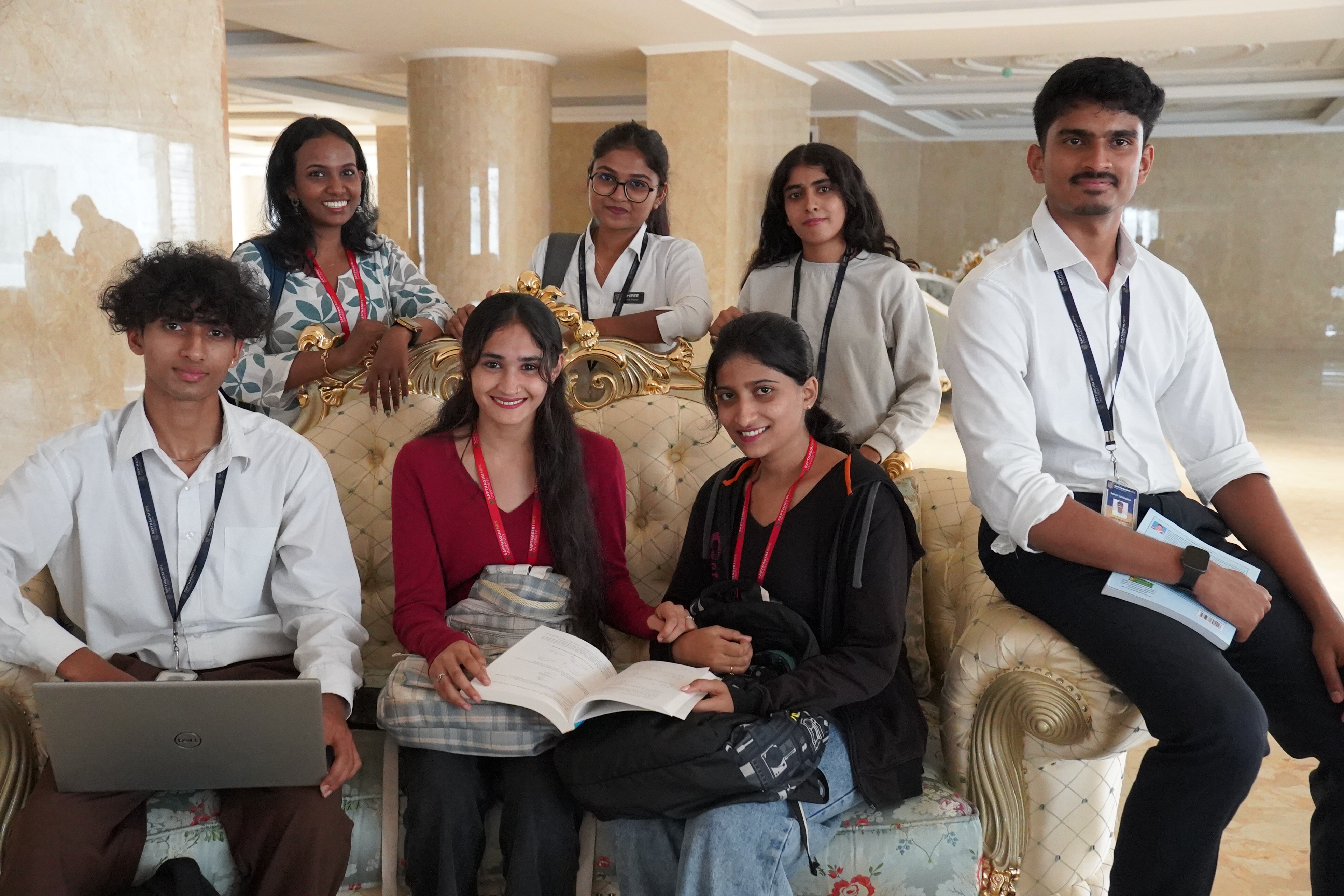
The image captures a vibrant and collaborative learning environment at our university, where engineering students are actively engaged in academic work. The students are seated together in a modern classroom, using laptops, books, and other learning resources as they work and interact with one another. Their focused participation reflects our commitment to creating an engaging and student-centred approach to engineering education. The image highlights teamwork, peer learning, technology, and active academic participation, which are important aspects of the student experience at Sapthagiri NPS University. For students pursuing a Bachelor of Engineering Bangalore, such an environment provides opportunities to develop technical knowledge alongside communication, collaboration, analytical thinking, and problem-solving skills. The professional classroom setting also reflects the importance we place on preparing students for the evolving requirements of the engineering and technology sectors. Through collaborative learning and practical academic activities, our students are encouraged to exchange ideas, explore concepts, and approach challenges with confidence. The image represents more than a classroom ,it reflects our vision of nurturing future engineers through knowledge, innovation, teamwork, and continuous learning. At Sapthagiri NPS University, we strive to provide an academic environment where every student can learn, participate, collaborate, and grow. For aspiring engineers looking for a Bachelor of Engineering Bangalore, our learning environment is designed to support both academic development and professional growth.
Bachelor of Engineering in Computer Science and Engineering
Computer Science and Engineering is a broad engineering discipline focused on computing, programming, algorithms, software systems, databases, networks and computer technologies. Students choosing CSE can develop an understanding of how software and computing systems are designed, developed, tested and maintained. The programme can provide a foundation for students who want to explore software development, cloud technologies, cybersecurity, artificial intelligence, data technologies and other areas of computing. Programming practice is an important part of developing competence in computer science because students need to learn how to translate concepts into working solutions. Students can strengthen their abilities through coding practice, laboratory work, technical assignments and projects. Project-based learning can help students understand how different areas of computer science work together. Developing a software application, for example, can involve programming, databases, user interfaces, testing, security and deployment. Through such experiences, students can develop a practical understanding of the software development process. Our university provides students interested in computing with an opportunity to develop their technical foundation and explore different areas of modern computer science.
Bachelor of Engineering in Artificial Intelligence and Machine Learning
Artificial Intelligence and Machine Learning are among the most rapidly developing areas of modern technology. Students interested in intelligent systems, predictive technologies, automation and data-driven applications can explore engineering education in this area. Artificial intelligence focuses on developing systems capable of performing tasks that involve forms of intelligent decision-making, while machine learning involves techniques through which systems learn patterns from data. Students studying this field need a combination of programming, mathematics, statistics, analytical thinking and problem-solving abilities. The learning journey can introduce students to intelligent algorithms, machine learning models, data processing, predictive systems and other applications. AI technologies are increasingly used across software, finance, healthcare, manufacturing, logistics, retail, education and other industries. Students should therefore develop an understanding of both the technology and its practical applications. Our university provides an engineering pathway in Artificial Intelligence and Machine Learning for students who want to explore this growing field while developing a strong foundation in computer science and engineering.
Bachelor of Engineering in Computer Science with Data Science
Data Science combines computing, mathematics, statistics and analytical reasoning to help organisations understand and use data effectively. Students interested in data-driven problem-solving can explore Computer Science with Data Science as an engineering pathway. The field involves understanding how data is collected, processed, analysed and interpreted. Programming is important because large datasets require computational methods, while mathematics and statistics help students understand patterns, relationships, probability and prediction. Data science is increasingly relevant across technology, finance, manufacturing, logistics, healthcare, retail and business services. Students can develop practical capabilities through data analysis projects, programming exercises, visualisation activities and predictive modelling. The objective should be to understand the complete process rather than simply use software tools. Students need to understand where data comes from, whether it is reliable, how it should be processed and what conclusions can reasonably be drawn. Our university provides students with an opportunity to develop computing knowledge while exploring data-driven technologies and their growing role in modern engineering and business.
Bachelor of Engineering in Artificial Intelligence and Data Science
Artificial Intelligence and Data Science are closely connected areas that are influencing modern technology and decision-making. Artificial intelligence can use data to develop intelligent models, while data science provides methods for understanding and interpreting large quantities of information. Students choosing this engineering pathway can explore programming, statistics, data analysis, machine learning, artificial intelligence, predictive modelling and related areas. The programme can be particularly relevant for students who enjoy mathematics, computing, analytical reasoning and technology. Practical projects can help students understand how AI and data science are applied to real-world problems. Students may explore data-driven prediction, intelligent applications, automated analysis and other technology solutions. The ability to work with data and understand intelligent systems can be valuable across different industries. Our university provides students with an opportunity to study these emerging areas within an engineering framework, helping them develop a combination of technical knowledge and analytical capabilities.
Bachelor of Engineering in Electronics and Communication Engineering
Electronics and Communication Engineering is an important field for students interested in electronics, communication systems, embedded technologies and hardware-based applications. The discipline focuses on understanding electronic circuits, signals, communication systems, digital technologies and related engineering applications. Students can develop knowledge that connects physical electronic systems with digital technologies. Practical laboratory work is particularly important because students need opportunities to understand how circuits and systems behave in real conditions. They can learn how to construct, test and troubleshoot electronic systems and gradually develop confidence in working with hardware. Electronics is also increasingly connected with software through embedded systems, Internet of Things applications and intelligent devices. Students who develop both hardware and programming skills can explore a wider range of technical applications. Our university provides Electronics and Communication Engineering as an undergraduate engineering pathway for students who want to develop knowledge in electronics and communication while exploring the changing technological environment.
Bachelor of Engineering in Electrical and Electronics Engineering
Electrical and Electronics Engineering combines electrical engineering concepts with electronic technologies and provides students with a foundation in electrical systems, machines, power, control and related applications. Electrical engineering continues to play an important role in infrastructure, manufacturing, energy, transportation and industrial operations. Students can develop knowledge of electrical circuits, electrical machines, power systems, control systems, power electronics and measurements. Modern developments in renewable energy, electric mobility, automation, smart grids and intelligent control are also creating new areas of application for electrical engineering. Students therefore have opportunities to understand traditional electrical principles while becoming familiar with emerging technologies. Practical learning helps students understand how theoretical principles are applied to real electrical systems and how issues related to safety, reliability and efficiency are addressed. Our university provides Electrical and Electronics Engineering for students who are interested in electrical systems and want to develop a foundation for careers and further education in related areas.
Importance of Bachelor of Engineering in Bangalore
Bachelor of Engineering education can provide students with a strong foundation for professional development. Studying engineering in Bangalore can add the advantage of being located within a major technology and innovation ecosystem. Students can develop technical knowledge while gaining awareness of how engineering is applied across different industries. Engineering education also encourages students to develop logical thinking and structured problem-solving. These skills can be useful even when graduates eventually move into areas outside their original specialisation. A B.E. degree can support career opportunities, postgraduate education, research, innovation and entrepreneurship. Students can also use their undergraduate years to develop practical projects and professional networks. The importance of the degree therefore extends beyond obtaining a qualification. It provides a period during which students can develop the knowledge, confidence and professional habits needed for their future.
Importance of Engineering
| Aspect | Importance of Engineering |
|---|---|
| Problem Solving | Helps develop practical solutions to real-world challenges. |
| Technology | Drives innovation in AI, software, electronics, automation and other technologies. |
| Career Opportunities | Creates pathways to diverse technical and professional careers. |
| Innovation | Encourages students and professionals to develop new ideas, products and solutions. |
| Infrastructure | Contributes to the development of buildings, transportation, energy and communication systems. |
| Industry Development | Supports growth across technology, manufacturing, energy and other industries. |
| Practical Skills | Develops technical knowledge through projects, laboratories and hands-on learning. |
| Research | Supports scientific discovery, technological advancement and new engineering solutions. |
| Entrepreneurship | Provides technical foundations for developing innovative products and technology-based businesses. |
| Future Readiness | Helps students adapt to emerging technologies and changing industry requirements. |
Campus Learning Environment for Bachelor of Engineering Bangalore
The campus learning environment plays an important role in shaping the overall Bachelor of Engineering experience because students spend several years developing their academic knowledge, technical abilities and professional confidence. Our university provides an environment where engineering students can engage with their subjects through classroom learning, academic discussions, practical activities, projects and technology-focused experiences. A supportive campus environment can encourage students to ask questions, exchange ideas and approach difficult concepts with greater confidence. Engineering education becomes more meaningful when students are encouraged to understand the reasoning behind a concept rather than simply memorising information for examinations. Students can gradually develop independent thinking by discussing technical topics, working with classmates and exploring subjects beyond the prescribed curriculum. The campus experience can also help students develop habits that are valuable in professional life, including punctuality, responsibility, collaboration, communication and effective time management.
A university environment also gives students the opportunity to interact with people from different academic and personal backgrounds. Working with classmates can introduce students to different approaches to solving the same problem and can encourage collaborative thinking. Technical discussions, academic activities and project work can help students become more comfortable presenting their ideas and receiving feedback. This is particularly valuable for engineering students because professional projects often involve collaboration between people with different areas of expertise. Students can also use their time at our university to explore interests beyond their primary subjects and understand how different engineering disciplines are connected. Computer science can intersect with data and artificial intelligence, electronics can connect with embedded and connected technologies, and electrical engineering can interact with automation and energy systems. Such an environment can help students develop a broader understanding of modern engineering while maintaining focus on their chosen specialisation. By actively participating in campus learning and taking advantage of available academic opportunities, students can make their Bachelor of Engineering journey more engaging, purposeful and relevant to their future goals.
Practical Learning During Bachelor of Engineering
Practical learning is an essential part of engineering because students need to understand how theoretical principles work in real situations. Laboratory activities allow students to conduct experiments, observe results and understand the relationship between theory and application. Projects provide a broader learning experience by requiring students to identify a problem, design a solution, implement it and evaluate the outcome. Students from computer science can develop software applications, AI models, data systems and other digital solutions. Electronics students can work with circuits, embedded systems, communication technologies and connected devices. Electrical students can explore control, automation, power systems and energy-related applications. Practical learning also teaches students how to troubleshoot problems. When an experiment does not produce the expected result, students need to investigate possible causes and develop a solution. This process helps develop the analytical and problem-solving mindset that is important in engineering.
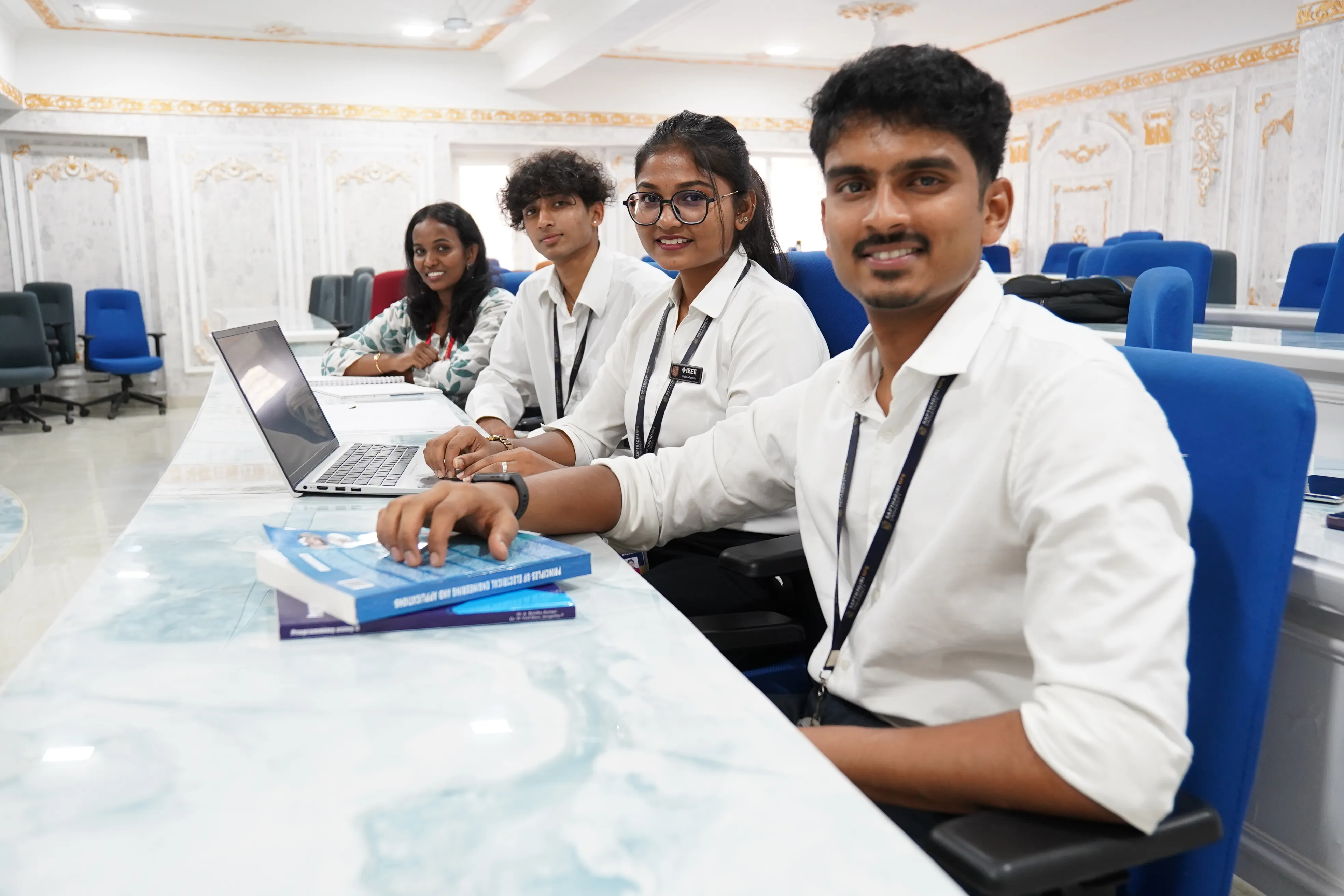
The image reflects a modern and collaborative learning environment for students pursuing a Bachelor of Engineering in Bangalore. It shows engineering students working together in a well-equipped classroom with laptops, books, and academic resources. The students’ active participation represents the importance of teamwork, technology, and practical learning in engineering education. The professional classroom setting highlights an atmosphere where students can exchange ideas, collaborate on academic activities, and develop problem-solving skills. The use of laptops and study materials also represents the integration of technology into the learning process. For students looking for a Bachelor of Engineering in Bangalore, this image conveys an educational environment focused on knowledge, innovation, collaboration, and career preparation. Our Sapthagiri NPS University, we encourage students to learn beyond textbooks by participating in projects, discussions, practical activities, and collaborative learning experiences. The image captures our vision of preparing aspiring engineers with technical knowledge as well as communication, teamwork, analytical thinking, and professional skills. Bangalore's dynamic technology ecosystem further complements an engineering education by providing an inspiring environment for students interested in technology and innovation. Our approach to engineering education aims to help students build confidence, explore new ideas, and apply their knowledge to practical challenges. This image therefore represents the student-focused academic experience associated with pursuing a Bachelor of Engineering in Bangalore at Sapthagiri NPS University.
Bachelor of Engineering Projects
Projects can become an important part of an engineering student's academic development. A project provides an opportunity to apply multiple concepts to a particular problem. Students can begin with a problem statement, research existing solutions, understand requirements, develop a design, implement the solution and evaluate the results. Computer science students can develop websites, applications, cloud platforms, data systems or intelligent applications. AI students can develop machine learning models and predictive systems. Data Science students can work with datasets and develop analytical solutions. ECE students can build embedded systems, IoT applications or communication-related projects. EEE students can explore automation, control, energy monitoring or electrical system applications. The most important aspect of a project is that students should understand their own work. A project becomes valuable when students can explain why they selected the problem, how they developed the solution, what challenges they encountered and what they learned.
Internship Opportunities and Industry Exposure
Internships can help engineering students understand professional working environments. Academic learning provides knowledge, while internships can demonstrate how that knowledge is applied within an organisation. Students may gain exposure to teamwork, professional communication, project management, technical documentation, testing and workplace responsibilities. An internship can also help students understand which areas of engineering interest them most. A student who initially wants to become a software developer may discover an interest in data engineering, cloud technologies or cybersecurity. Similarly, an electronics student may develop a stronger interest in embedded systems after practical exposure. Students should approach internships as opportunities for learning and professional development rather than simply as certificates. Meaningful experience can help students become more confident when applying for future opportunities.
Engineering Skills for the Future
The modern engineering profession requires more than technical knowledge. Students should develop a combination of technical, analytical and professional capabilities. Problem-solving is essential because engineers frequently need to deal with unfamiliar situations. Communication is important because engineers need to explain ideas, document work and collaborate with different teams. Teamwork is necessary because many engineering projects involve professionals from different disciplines. Time management helps students handle academic work, projects and professional responsibilities. Adaptability is increasingly important because technologies continue to evolve. Students should also develop independent learning skills so they can acquire new knowledge throughout their careers. Our university encourages students to develop these capabilities alongside their academic education so that they can approach professional opportunities with greater confidence.
Bachelor of Engineering and Career Opportunities
A Bachelor of Engineering degree can support different career directions depending on the student's specialisation and skills. Computer Science graduates can explore software development, application development, cloud technologies, cybersecurity and other computing-related roles. Students with AI and Machine Learning knowledge can explore intelligent systems, machine learning and automation-related careers. Data-focused graduates can pursue data analysis, data engineering, analytics and related areas. Electronics and Communication graduates can explore electronics, embedded systems, communication and hardware-related roles. Electrical and Electronics graduates can explore electrical design, power systems, automation, control and energy-related careers. However, students should understand that a degree alone does not guarantee a specific job. Employers may consider technical skills, academic performance, projects, internships, communication and interview performance. Students who develop practical capabilities throughout their undergraduate education can be better positioned to compete for professional opportunities.
Placement Preparation During Bachelor of Engineering
Placement preparation should begin early rather than being postponed until the final semester. Students can gradually develop the skills required for recruitment throughout their degree. Computer science students can strengthen programming, algorithms, data structures and problem-solving. AI and Data Science students can build relevant projects and develop analytical capabilities. ECE students can strengthen electronics and communication fundamentals while gaining practical experience. EEE students can develop strong knowledge of electrical systems and explore modern applications such as automation and renewable energy. Students can also improve aptitude, reasoning, communication and interview skills. Preparing for placements does not mean focusing only on recruitment tests. Students should build genuine technical understanding and practical experience because interviews often require candidates to explain projects, internships and technical concepts. A well-prepared student should be able to communicate both what they know and how they have applied it.
Higher Education After Bachelor of Engineering
Bachelor of Engineering can also provide a foundation for postgraduate education. Students interested in deeper technical specialisation can consider postgraduate engineering and technology programmes. Students interested in management can explore management education. Students who want international academic exposure can investigate suitable postgraduate programmes based on their academic profile and career objectives. Research-oriented students can explore advanced research opportunities and eventually pursue doctoral education. Professional certifications can also help graduates specialise in specific technologies. The right pathway depends on the student's goals. Students should consider whether further education will provide knowledge or opportunities that support their desired career direction. Our university's undergraduate engineering programmes can provide the academic foundation required for students who want to continue their learning beyond the B.E. degree.
Entrepreneurship After Bachelor of Engineering
Engineering graduates can also explore entrepreneurship and technology-based business opportunities. Engineering education can help students understand how technical solutions are designed and developed, while entrepreneurship requires students to understand customer needs, markets, finance, operations and product development. Many technology ideas begin by identifying an everyday problem and developing a practical solution. Students can explore entrepreneurship through projects, innovation activities and technology development. Even when an idea does not become a business, the entrepreneurial process can teach valuable skills such as experimentation, customer understanding, communication, iteration and resilience. Bangalore's technology and startup environment can further encourage students to think about how engineering knowledge can be transformed into products and services.
Research and Innovation in Engineering
Research encourages students to investigate problems systematically and explore new solutions. Undergraduate engineering students can begin developing research skills by reading technical material, exploring emerging technologies, participating in projects and conducting experiments. Research requires students to define a problem, understand existing knowledge, develop an appropriate methodology, collect information, analyse results and communicate findings. Innovation can emerge when students identify ways to improve an existing technology or develop a new approach. Our university provides an environment where students can explore engineering and technology while developing an interest in innovation and research. Students who enjoy investigation and experimentation can use their undergraduate years to explore research-oriented interests and prepare for future postgraduate study.
Artificial Intelligence and the Future of Engineering
Artificial intelligence is becoming increasingly connected with engineering across different disciplines. Software engineers can use AI for application development, automation and intelligent systems. Electronics engineers can integrate AI into embedded systems, sensors and robotics. Electrical engineers can explore AI for predictive maintenance, energy management and optimisation. Manufacturing organisations can use AI for quality control and process improvement. This growing integration means that engineering students can benefit from understanding the fundamentals of artificial intelligence even when they are studying another specialisation. At the same time, students should not ignore the fundamentals of their chosen discipline. Mathematics, science, engineering principles and problem-solving remain important because they provide the foundation for understanding new technologies. Our university's range of technology-oriented engineering programmes allows students to explore areas connected with the evolving digital and technological environment.
Data Science and Modern Engineering
Data has become an important part of engineering decision-making. Engineers can use data to monitor systems, identify patterns, predict failures, improve efficiency and understand performance. Data science therefore has applications across software, manufacturing, electronics, electrical systems, finance, logistics and other industries. Students who develop data literacy can understand how information can be transformed into useful insights. They should also learn to assess the quality and limitations of data because incorrect or incomplete information can lead to unreliable conclusions. Data-driven engineering requires both technical capability and critical thinking. Students who develop these abilities can adapt to a technology environment where data is increasingly integrated into engineering processes.
Renewable Energy and Electrical Engineering
Renewable energy is becoming an increasingly important engineering area. Solar power, wind energy, battery storage, electric mobility and smart grids require knowledge of electrical systems, electronics, control and data technologies. Electrical and Electronics Engineering students can explore how energy is generated, transmitted, managed and used efficiently. Modern energy systems are also becoming more digital, creating opportunities for engineers who understand both traditional electrical principles and emerging technologies. Students can explore how automation, monitoring and intelligent systems can contribute to more efficient energy management. This illustrates how engineering education can evolve while maintaining a strong foundation in traditional principles.
Student Life at Our University
University life provides opportunities for students to develop beyond formal academic subjects. Students can participate in technical activities, workshops, seminars, project exhibitions, competitions, clubs, cultural programmes and other campus experiences. Such activities can help students develop communication, leadership, confidence and teamwork. Technical competitions and hackathons can encourage students to solve problems under practical constraints. Project exhibitions can help students learn how to present technical ideas. Student activities can also help learners discover interests that may not be obvious through regular coursework. Our university encourages students to make the most of their university experience by combining academic learning with practical and personal development.
Choosing the Right B.E. Programme
Students should carefully consider their interests before selecting a Bachelor of Engineering programme. A student who enjoys programming and computing may consider Computer Science and Engineering. A student interested in intelligent systems, machine learning and mathematical modelling may consider Artificial Intelligence and Machine Learning. A student interested in combining data, AI and computing may consider Artificial Intelligence and Data Science. A student who enjoys statistics, programming and analytical reasoning may consider Data Science. A student fascinated by electronic circuits, communication systems and embedded technologies may consider Electronics and Communication Engineering. A student interested in electrical systems, power, machines, control and automation may consider Electrical and Electronics Engineering. Students should review the subjects associated with each programme and think about which areas they are genuinely interested in studying over several years. Choosing a branch based only on popularity can make the academic journey less satisfying. Personal interest, aptitude and long-term career goals should play an important role in the decision.
Bachelor of Engineering and Professional Development
Professional development begins during university. Students can gradually build a professional profile through academic performance, technical projects, internships, competitions and communication development. A student who completes several meaningful projects can demonstrate practical capability. An internship can provide evidence of workplace exposure. Technical competitions can demonstrate problem-solving and teamwork. Communication skills can help students present their work confidently. Students should document their achievements and keep their resumes updated. They can also develop professional profiles and connect with relevant academic and professional communities. The objective should be to build genuine capability rather than simply collect certificates.
The Role of Faculty and Academic Environment
The academic environment can have an important influence on an engineering student's development. Students benefit when they can ask questions, discuss concepts, participate in practical activities and receive guidance while working on projects. Faculty interaction can help students understand difficult topics and explore areas of professional interest. An engineering programme should encourage curiosity rather than discourage questions. Students should actively communicate with faculty members when they need clarification or guidance. Academic support becomes particularly important when students begin undertaking advanced projects and exploring research or technical areas beyond their regular coursework.
Building a Strong Engineering Foundation
Strong fundamentals can provide long-term value because technologies change rapidly. Programming languages, software frameworks, AI tools, electronic platforms and engineering technologies may evolve, but core principles remain important. Students should therefore focus on understanding concepts rather than memorising information only for examinations. Mathematics can support algorithms, modelling, statistics and engineering calculations. Scientific principles can help students understand physical systems. Engineering fundamentals can provide the foundation for specialised technologies. Students who understand the underlying concepts can generally adapt more easily when new tools appear. Our university's engineering education provides students with an opportunity to build this foundation while exploring contemporary areas of technology.
The Future of Engineering Careers
The future of engineering is likely to involve greater integration between disciplines. Software, artificial intelligence, data, electronics, automation, energy and communication technologies are increasingly interconnected. An engineer may work with professionals from several disciplines to develop a single product or system. This creates a need for engineers who can understand their own domain deeply while communicating effectively with professionals from other areas. Students should therefore develop interdisciplinary awareness alongside specialisation. They should be willing to learn technologies outside their immediate curriculum when those technologies are relevant to their goals. Continuous learning can become one of the most important professional habits for future engineers.
Bachelor of Engineering Bangalore for Future-Ready Students
Students searching for Bachelor of Engineering Bangalore are often looking for more than a degree. They want an educational environment that can help them prepare for future opportunities. Our university provides multiple engineering pathways that address both established engineering disciplines and emerging technology areas. The programmes give students opportunities to explore computer science, artificial intelligence, data science, electronics, communication, electrical engineering and related fields. Students can build their foundation through academic learning and strengthen it through practical activities, projects and professional preparation. Bangalore's wider technology ecosystem can complement this education by providing exposure to a city where technology and innovation play an important role. Students who make active use of these opportunities can develop the knowledge, skills and confidence required for their next stage.
Bachelor of Engineering Admission at Our University
Students interested in pursuing Bachelor of Engineering at our university should begin by understanding the available programmes and identifying the specialisation that best matches their interests. The next step is to review the latest eligibility criteria and admission requirements. Students should prepare their academic documents and provide accurate information during the application process. Depending on the applicable admission pathway, students may need to complete additional requirements related to entrance examinations, counselling or document verification. Because admission rules and procedures can change, students should always confirm the latest information through the university's official admission channels before applying. Early preparation can help students complete the admission process smoothly and make informed decisions about their academic future.
Bachelor of Engineering Bangalore and Long-Term Success
Long-term success in engineering is built gradually. Students should not expect their degree alone to determine their professional future. Instead, they should use their undergraduate years to build a combination of knowledge, skills and experience. Academic learning provides the foundation. Practical projects demonstrate application. Internships provide professional exposure. Communication supports collaboration. Technical competitions develop problem-solving. Independent learning helps students adapt to new technologies. Together, these experiences can create a stronger professional profile. Students should also remain open to changing their career direction as they discover new interests. Engineering provides many pathways, and the first career role does not necessarily determine the entire professional journey.
Skills Developed Through Bachelor of Engineering
| Skill Area | What Students Develop |
|---|---|
| Technical Skills | Strong knowledge of engineering concepts, technologies and tools. |
| Problem Solving | Ability to analyse challenges and develop practical solutions. |
| Programming | Coding and software development skills for technology-focused engineering fields. |
| Analytical Thinking | Ability to evaluate information, identify patterns and make logical decisions. |
| Project Skills | Experience in planning, developing, testing and presenting engineering projects. |
| Communication | Ability to explain technical ideas clearly through presentations and discussions. |
| Teamwork | Experience working collaboratively on academic and technical projects. |
| Innovation | Encourages creativity and development of new technology-based solutions. |
| Research Skills | Ability to investigate problems, analyse information and explore new technologies. |
| Adaptability | Builds the ability to learn and adapt to changing technologies and industry requirements. |
Eligibility and Admission for Bachelor of Engineering Bangalore
Students seeking admission to a Bachelor of Engineering programme in Bangalore should first understand the academic eligibility requirements and admission procedure applicable to their chosen programme. For admission to B.E. programmes at our university, candidates are expected to have successfully completed 2nd PUC, Class 12, or an equivalent qualification from a recognised board with the required combination of subjects. Physics and Mathematics are important subjects for engineering admission, along with an approved third subject such as Chemistry, Biology, Electronics, Computer Science or Biotechnology, together with English. The required percentage and other conditions may vary according to the applicable admission category and regulations. Students should therefore verify the latest eligibility requirements before submitting their application so that they can select a suitable engineering programme and complete the process correctly.
The admission journey begins with selecting the right B.E. programme based on academic background, interests and future plans. Students can explore the engineering programmes available at our university and understand the academic focus of each programme before making their preference. After confirming eligibility, applicants can proceed with the application process by providing accurate personal, academic and contact information. Required academic records and supporting documents should be kept ready for submission and verification. Where an applicable entrance examination or recognised admission route is involved, students should ensure that they meet the relevant requirements and complete the necessary procedures within the prescribed timelines. Once the application and applicable selection requirements are completed, the admission process may proceed through document verification, counselling or other applicable formalities before confirmation of the seat.
Students and parents should pay close attention to admission dates, programme availability, eligibility conditions, documentation and fee-related requirements because these details can vary between admission cycles. Candidates should use the latest information provided through our university's official admission channels when making decisions rather than relying on outdated information. Early preparation can make the process more convenient and allow students to focus on selecting the engineering programme that best suits their academic interests. A carefully planned admission process is the first step towards beginning a meaningful Bachelor of Engineering journey at our university.
Documents Required for Bachelor of Engineering Admission
Completing the admission process for a Bachelor of Engineering programme requires students to keep their academic and personal documents ready for verification. The documents help confirm the student's educational qualifications, identity and eligibility for the selected programme. Students should ensure that the information provided in the application matches the details shown on their official records. Academic documents such as Class 10 and Class 12 or 2nd PUC marks cards are generally important for verifying educational qualifications, while other documents may be required depending on the student's admission category and circumstances. Students applying through a specific entrance examination or counselling route may also need to provide the relevant examination or counselling documents. Category certificates, transfer certificates, migration-related documents or other supporting records may be required where applicable. It is advisable for students to keep both original documents and clear digital copies available so that they can complete verification requirements efficiently.
Students should also check the latest document requirements before completing admission at our university because the documents required can differ according to the programme, admission route and applicable regulations. Any discrepancy in names, dates of birth, marks or other personal information should be addressed before final verification whenever possible. Students should avoid submitting incomplete or unclear documentation because this can delay the admission process. Keeping all required records organised in advance allows applicants to proceed with greater confidence and concentrate on beginning their engineering education. Proper documentation is an important part of the admission journey and helps ensure that the student's academic information is accurately recorded when joining our university.
Engineering Admission Process in Bangalore
The Bachelor of Engineering admission process in Bangalore is an important stage where students move from completing their pre-university education towards professional engineering studies. After identifying a suitable specialisation, students should carefully review the admission requirements, understand the applicable admission route and complete the application within the specified timeline. At our university, prospective students can explore the available engineering programmes and seek appropriate guidance while making their academic choice. The application process requires students to provide correct personal and educational information so that their eligibility can be assessed accurately. Students should carefully enter details relating to their previous education and selected programme and ensure that the information provided is supported by valid documents. Depending on the applicable admission route, candidates may also need to satisfy entrance examination, counselling or other selection requirements. Understanding these stages in advance can make the admission experience more organised and straightforward.
Once the application has been submitted, the next stages may involve reviewing the candidate's academic qualifications, verifying submitted documents and completing the applicable admission formalities. Students should respond promptly to requests for additional information or documentation and keep track of important communication related to their application. Admission confirmation generally depends on fulfilling the applicable eligibility and selection requirements and completing the required formalities within the prescribed period. Students should also understand the financial aspects of joining an engineering programme and obtain accurate information about applicable fees and payment procedures before confirming their admission. Parents and students can use the admission process as an opportunity to clarify questions regarding the selected programme, academic structure, campus facilities and other aspects of university life.
Planning early can make a significant difference to the admission experience. Students who begin researching programmes before application deadlines have more time to compare their interests with the available engineering disciplines and prepare the required documents. They can also understand the academic expectations of university-level engineering education and make a more confident decision. Our university encourages prospective students to obtain current admission information before proceeding because eligibility requirements, application procedures, important dates and applicable regulations may change between academic sessions. A clear understanding of the admission process helps students begin their Bachelor of Engineering journey with greater confidence and allows them to focus on their academic goals from the beginning of their university experience.
B.E. Selection Through KCET and Management Admission at Our University
Students seeking Bachelor of Engineering admission at our university can explore the applicable admission routes based on their eligibility, entrance examination performance and the admission regulations in force for the relevant academic year. For students applying through the Karnataka Common Entrance Test (KCET), the process generally involves appearing for the examination, obtaining the applicable rank and participating in the counselling and seat-allotment process conducted through the authorised Karnataka admission system. Students should meet the prescribed academic requirements before applying and should carefully follow the official KCET schedule, counselling instructions, document-verification requirements and seat-selection procedures. Our university's current B.E. eligibility information states that first-year applicants should have passed 2nd PUC/Class 12 with Physics and Mathematics along with one of Chemistry, Biology, Electronics, Computer Science or Biotechnology and English, with the published minimum of 45% in PCM for general candidates and 40% for OBC (Karnataka), SC and ST candidates.
Students who wish to explore admission through the university's other applicable admission route can contact our admissions team for guidance regarding available seats, programme selection, eligibility and the current admission procedure. The management admission process should be understood as a university admission route subject to the applicable regulations, eligibility conditions and seat availability, rather than as an automatic admission mechanism. Students are required to satisfy the prescribed academic eligibility requirements and complete the necessary application, document verification and admission formalities. Our university provides B.E. programmes in Computer Science and Engineering, CSE with Artificial Intelligence and Machine Learning, CSE with Artificial Intelligence and Data Science, CSE with Data Science, Electronics and Communication Engineering, and Electrical and Electronics Engineering.
For students considering the management route, the process can begin by contacting our admissions team, selecting the preferred engineering programme, confirming eligibility, submitting the required application and documents, and completing the applicable admission formalities after the university reviews the candidate's eligibility and availability of seats. Students should obtain the latest information directly from our university before making any payment or confirming admission because programme availability, admission routes, fees, deadlines and applicable regulations can change between academic years. Our current admissions portal confirms that admissions for the 2026–27 academic year are open, while the university's published contact information includes the admissions office at 👉Click Here and the listed admission helpline numbers.
For KCET candidates, the important distinction is that the student follows the applicable state-level examination and counselling process, while students considering the management route should obtain direct guidance from our university regarding the current availability and admission requirements. In either case, students should verify their academic eligibility, prepare the required documents, select their preferred B.E. specialisation carefully and complete the prescribed admission formalities within the applicable timeline. This approach can help students make an informed decision while beginning their Bachelor of Engineering journey at our university.
Frequently Asked Questions About Bachelor of Engineering Bangalore
1. What is a Bachelor of Engineering?
Bachelor of Engineering, commonly known as B.E., is a professional undergraduate degree that provides students with a strong foundation in engineering principles, mathematics, science, technology, design, innovation and problem-solving. The programme is structured to help students understand theoretical concepts while also developing the ability to apply engineering knowledge to practical situations. Throughout the programme, students can build technical knowledge, analytical thinking, communication skills, teamwork, project skills and problem-solving abilities. Depending on the selected specialisation, students may learn areas such as programming, artificial intelligence, data science, electronics, communication systems, electrical technologies and other emerging fields. A B.E. degree can prepare students for professional opportunities, higher education, research, entrepreneurship and continued learning in engineering and technology.
2. Is Bachelor of Engineering available at our university?
Yes, our university offers Bachelor of Engineering programmes through its School of Engineering and Technology across multiple engineering specialisations. Our university provides students with an academic environment where engineering concepts can be studied through classroom learning, practical sessions, laboratory activities, projects and technology-oriented academic experiences. Students can gradually progress from fundamental engineering subjects to advanced topics related to their chosen specialisation. The learning journey is intended to help students develop technical understanding while strengthening analytical thinking, creativity, teamwork and practical problem-solving skills. Students and parents interested in B.E. admission can contact our admissions team to understand the currently available programmes, eligibility requirements and applicable admission procedures.
3. Which B.E. programmes are offered at our university?
Our university offers B.E. programmes in several engineering and technology-focused areas, including Computer Science and Engineering, Artificial Intelligence and Machine Learning, Artificial Intelligence and Data Science, Computer Science with Data Science, Electronics and Communication Engineering, and Electrical and Electronics Engineering. Each programme provides students with a different academic pathway and focuses on specific technical areas. Computer Science and Engineering can provide a foundation in computing, programming, software development and related technologies. Artificial Intelligence and Machine Learning can introduce students to intelligent systems, machine learning concepts and AI applications. Artificial Intelligence and Data Science and Computer Science with Data Science can help students develop knowledge related to data, analytics, computing and intelligent technologies. Electronics and Communication Engineering can provide exposure to electronics and communication systems, while Electrical and Electronics Engineering can introduce students to electrical systems, electronics, control and automation-related concepts. Students should choose their preferred branch based on their interests, strengths, aptitude and long-term academic and career goals.
4. What is the eligibility for B.E. admission?
Students seeking first-year Bachelor of Engineering admission should generally have completed 2nd PUC, Class 12 or an equivalent recognised qualification with the subjects and minimum marks prescribed for the relevant programme and admission category. Depending on the engineering specialisation, students may be required to have studied subjects such as Physics, Chemistry and Mathematics or other applicable subjects. Eligibility conditions may vary according to the programme, admission route and prevailing regulations for the academic year. Students should therefore verify the latest eligibility requirements before applying. Applicants should also keep their qualifying examination marks cards, academic certificates, identification documents and other required records ready for the admission process. Students who are applying through an entrance examination, counselling process or institutional admission route should follow the requirements applicable to their selected pathway.
5. Can students get B.E. admission through KCET?
Eligible students can explore admission to B.E. programmes through the KCET route and participate in the applicable Karnataka counselling and seat-allotment process. Students interested in this pathway should complete the relevant examination and counselling procedures according to the official requirements for the applicable academic year. KCET-related admission can involve registration, examination, ranking, document verification, counselling, choice filling and seat allotment, depending on the applicable process. Students should carefully follow official announcements and complete every required step within the prescribed timeline. Those planning to pursue B.E. admission through KCET can also contact our admissions team for guidance regarding the available engineering programmes and institutional admission formalities.
6. How long is the Bachelor of Engineering programme?
A regular Bachelor of Engineering programme is generally completed over four years. The programme typically progresses through different stages of engineering education, beginning with foundational subjects and gradually moving towards specialised technical learning. During the initial stages, students can develop knowledge in mathematics, science and basic engineering concepts. As they advance, they study subjects related to their chosen specialisation and participate in laboratory work, practical activities, assignments and technical projects. The later stages of the programme can provide opportunities for advanced technical learning, project development and application-oriented education. The four-year structure is intended to provide students with sufficient time to develop both theoretical understanding and practical capabilities in their chosen engineering field.
7. Why choose Bangalore for Bachelor of Engineering?
Bangalore is one of India's prominent technology and innovation centres and provides an environment connected with software, engineering, startups, research, electronics, manufacturing and several technology-driven industries. Students pursuing engineering in Bangalore can benefit from being part of an ecosystem where new technologies and professional practices are continuously developing. The city can provide opportunities to participate in technical events, workshops, seminars, competitions, projects and other learning experiences. Bangalore is particularly relevant for students interested in areas such as computer science, artificial intelligence, data science, electronics, communication, electrical engineering, automation and emerging technologies. However, students should consider several factors when selecting an engineering university, including curriculum, faculty support, facilities, practical learning, academic environment and opportunities for skill development.
8. What career opportunities are available after B.E.?
A Bachelor of Engineering degree can open opportunities across different technical and professional areas depending on the student's specialisation, skills, experience and interests. Computer Science and Engineering graduates can explore areas such as software development, application development, web technologies, cloud computing, cybersecurity, databases and other computing-related roles. Artificial Intelligence and Machine Learning graduates can explore AI applications, machine learning, intelligent systems and automation-related areas. Students specialising in Data Science can explore data analysis, business intelligence, data engineering and related technology functions. Electronics and Communication Engineering graduates can pursue opportunities related to electronics, embedded systems, communication technologies and networking, while Electrical and Electronics Engineering graduates can explore electrical systems, automation, control, electronics and related technical industries. Students can improve their career readiness by developing technical skills, project experience, communication abilities, problem-solving skills and an understanding of current industry requirements.
9. Are practical skills important for B.E. students?
Yes, practical skills are an important component of engineering education because engineering involves applying theoretical knowledge to real-world situations. Students can strengthen their understanding through laboratory sessions, technical assignments, projects, experiments, software applications and other practical activities related to their specialisation. Practical learning can help students understand how engineering concepts work beyond textbooks and can encourage them to approach technical problems with greater confidence. Along with technical skills, students should develop communication, teamwork, presentation, time management and professional skills. A balanced combination of theoretical knowledge and practical experience can help students become better prepared for academic projects, internships, professional environments and future career opportunities.
10. How can I apply for Bachelor of Engineering at our university?
Students interested in Bachelor of Engineering admission can begin by selecting a preferred engineering specialisation according to their academic interests, strengths and career objectives. After selecting the programme, students should check the latest eligibility criteria and identify the applicable admission route. Applicants can then contact our admissions team for information regarding programme availability, application requirements, documentation, admission procedures and other applicable formalities. Students should keep their academic marks cards, certificates, identification documents, photographs and other required records prepared for verification. Completing the admission process early can help students understand their programme options, clarify their questions and complete the required formalities within the applicable timeline. For further information about Bachelor of Engineering admission in Bangalore, programme availability and admission guidance, students and parents can contact our university admissions team at 9900072632.
How to Contact Our University for Bachelor of Engineering Admission
Students who are interested in Bachelor of Engineering admission can contact our university's admissions team for guidance regarding programme selection, eligibility, admission routes, application procedures and other admission-related requirements. Students and parents can discuss their academic background and preferred engineering specialisation with the admissions team to understand the appropriate next steps. Before contacting the university, applicants can keep their academic details ready so that the admission team can provide relevant guidance. Students can also enquire about the available B.E. programmes, current admission status, required documents and other applicable formalities. For students planning to pursue Bachelor of Engineering in Bangalore, contacting our university directly can help them obtain current and accurate information and make a more informed decision about their engineering education.
Contact Details
| Contact Details | Information |
|---|---|
| Programme | 👉Bachelor of Engineering |
| Address | 14/5, Hesarghatta Rd, Chikkasandra, Jalahalli West, Bengaluru, Karnataka 560057 |
| Admissions | 👉Contact our admission team for B.E. admission guidance |
| Admission Enquiry | 👉Speak with our admissions team |
| Official Website | 👉Sapthagiri NPS University |
| 👉Contact our university admissions office |
Turn Your Ideas into Impact with Engineering at Our University
Engineering is a journey of curiosity, creativity and continuous learning, and our university provides students with an environment where they can transform their ideas into practical solutions. Through Bachelor of Engineering programmes in Computer Science and Engineering, Artificial Intelligence and Machine Learning, Artificial Intelligence and Data Science, Data Science, Electronics and Communication Engineering, and Electrical and Electronics Engineering, students can explore their areas of interest while developing the technical foundation required for a changing professional world. Our university encourages students to look beyond textbooks and understand how engineering concepts can be applied to real challenges through academic learning, practical experiences, projects and technology-focused activities. Located in Bangalore, students can also experience an environment closely connected with technology, innovation and emerging industries. The engineering journey can open pathways towards professional careers, higher education, research, innovation and entrepreneurship. With the right guidance, consistent effort and a willingness to learn, students can develop their ideas, strengthen their capabilities and work towards creating solutions that make a meaningful impact. Begin your Bachelor of Engineering journey at our university and take the next step towards turning your ideas into possibilities.
Leave a Comment