
Top Placement University in Bangalore – Career Opportunities and Professional Development
Top Placement University in Bangalore – Career Opportunities, Industry Exposure and Professional Development
Choosing the right university is an important decision that can shape a student's academic journey, professional direction, and future career opportunities. At Sapthagiri NPS University, we believe that higher education should extend beyond classroom learning and help students prepare for the expectations of the professional world. As students explore a top placement university in Bangalore, they often consider several factors, including academic quality, practical learning, industry interaction, career guidance, skill development, and placement preparation. We recognise the importance of these expectations and aim to create an educational environment that connects academic knowledge with professional development. Our approach focuses on helping students understand their chosen subjects, develop confidence, strengthen their communication abilities, and prepare for the responsibilities associated with their future careers. We encourage students to participate actively in academic activities, practical assignments, collaborative projects, presentations, and professional development initiatives. These experiences help them understand how theoretical concepts can be applied in real situations and why continuous learning is important in a changing employment environment. Through our Human Resource Development initiatives, we work towards strengthening industry engagement, career support, learning and development, and campus recruitment preparation. We also recognise that every student has different interests, strengths, learning needs, and career ambitions, so professional preparation should be approached as a continuous process rather than a single activity conducted at the end of a programme. Our objective is to support students as they move from university learning towards professional responsibilities with greater awareness and confidence. When students search for a top placement university in Bangalore, we encourage them to look beyond a placement label and understand the academic, practical, and career-development opportunities that contribute to long-term professional growth.
Explore Career Opportunities with Our Recruiters and Industry Partners
Our University builds meaningful connections with industry through a network of recruiters and professional organisations. Our industry network includes Unisys, Unvired, VISA, Visionet, WEG, Aricent, Dell, IBM, Infosys, Accrete Globus Technology, Ahana, Apollo Power Systems, Avaali, Bharath Group of Companies, Biocon Biologics, Boeing, Brilyant, Capgemini, Cognizant, Conserve, Corprival Corporate Services, Cubic, CyRAACS, Edizi Tools, EON Elevators, Epson, Finalyzer, Flying Wedge, Fractal, GA Morgan Dynamics, Gi Group, Gilbarco Veeder-Root, Glean, GlobalData, Google, HCLTech, HSBC, i-exceed, Immidiart, Infinite Global, IntelliPaat, Kamath Transformers, o9 Solutions, Omega Healthcare, Onity, PEOL, Qlar, Quantit, Redant Technologies, Reliance Industries, Reliance AI, Repco Home Finance, ROVO, SafeSend, Sagility, Schneider Electric, Siemens, SIMS, SKTC, Skyhigh Security, SmartSoc Solutions, Somerset Therapeutics, Sopra Steria, STEER, Sumerru Group, Surya Fintech, T-Systems, Tanla, Tata Electronics, TCS, TECEZE, Techsol, Tescra, Toyota and Trafomec. These industry connections help our students explore professional environments, understand workplace expectations and prepare for evolving career opportunities. Our University encourages students and graduates to develop relevant skills, prepare strong applications and apply for suitable openings through official company recruitment channels. Explore career opportunities and take the next step towards your professional journey. Recruitment openings, eligibility and selection depend on each organisation's requirements and hiring process.
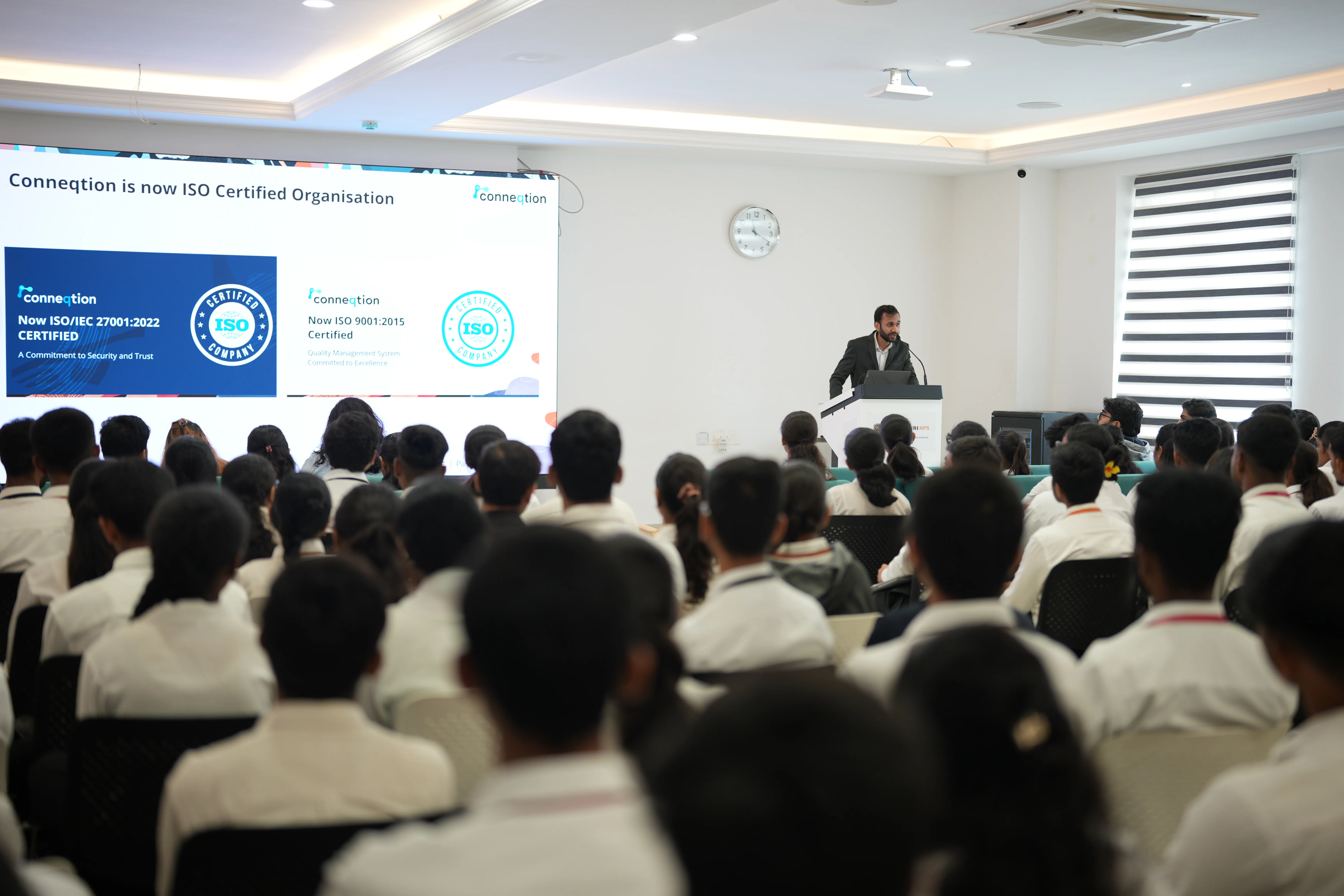
Industry interaction plays an important role in preparing students for successful careers. The image highlights an informative corporate session where a professional speaker addresses students about ISO certification and organisational quality standards. Students actively participate in the session and gain valuable insights into industry practices. Such programmes help students understand workplace expectations, professional standards, and the importance of quality management. Guest lectures and corporate presentations provide opportunities to learn beyond classroom education. Industry experts share practical knowledge and real-world experiences with students. These interactions help learners develop professional awareness and confidence. Understanding ISO standards also introduces students to quality assurance, information security, and organisational excellence. Universities that encourage industry-oriented learning help students connect academic knowledge with workplace requirements. Such initiatives support skill development and career readiness. Regular seminars, workshops, and expert sessions also improve students' communication and professional understanding. Exposure to industry practices helps students prepare for future employment opportunities. A strong academic environment combined with industry engagement contributes to overall career development. Students looking for a top placement university in Bangalore can consider the importance of corporate exposure, practical learning, and placement preparation when selecting their university.
Understanding the Importance of Placement-Oriented Education
Placement-oriented education plays an important role in helping students connect their academic qualifications with their career aspirations. At our University, we understand that students and parents want an educational experience that prepares learners for opportunities after graduation. However, professional readiness involves more than completing examinations or obtaining a degree. Students also need to develop communication skills, analytical thinking, teamwork, adaptability, problem-solving abilities, and an understanding of workplace expectations. We encourage our students to build these capabilities throughout their academic journey through classroom participation, practical learning, assignments, presentations, group activities, and career-focused initiatives. These experiences help students become more comfortable expressing ideas, working with others, managing responsibilities, and approaching challenges systematically. We also emphasise the importance of understanding industry developments and exploring how academic knowledge relates to different professional environments. A university's placement support should therefore be viewed as part of a broader educational framework that includes academic learning, skill development, career awareness, mentoring, and industry interaction. Our focus is to encourage students to take an active role in their development and make informed decisions about their future. By combining academic engagement with professional preparation, we aim to help learners develop a stronger foundation for entering the employment market. Students evaluating a top placement university in Bangalore should consider how consistently these elements are integrated into the learning experience and how the university encourages students to prepare for different stages of their careers.
Our Approach to Career Development
At Sapthagiri NPS University, we view career development as an ongoing journey that begins with understanding a student's interests, academic strengths, and professional ambitions. We encourage learners to explore career possibilities related to their chosen programmes and gradually identify the knowledge and skills required for their preferred fields. Our approach recognises that students may have different goals, including employment in established organisations, opportunities in emerging industries, entrepreneurship, higher education, research, and other professional pathways. We therefore believe that career awareness should be developed through continuous academic guidance and exposure to relevant professional expectations. Students can strengthen their preparation by participating in subject-related activities, improving their presentation skills, practising professional communication, and learning to work effectively in teams. We also encourage them to understand the importance of preparing a clear résumé, presenting their academic achievements accurately, and communicating their capabilities during professional interactions. These activities help students approach career opportunities with greater clarity and preparation. Our Human Resource Development framework includes career support and placement-related functions intended to connect students with professional development activities. We aim to create an environment in which learners understand that career readiness requires commitment, regular practice, and willingness to improve. For students exploring a top placement university in Bangalore, we believe that this continuous approach to career development is an important consideration when evaluating their higher education options.
Human Resource Development and Placement Support
Our Human Resource Development Department plays an important role in supporting industry engagement and career-related initiatives at the University. Its areas of work include Corporate Relations and Industry Partnerships, Placements and Career Support, Learning and Development, the Industry-Institute Interaction Cell, the Institution's Innovation Council, Campus Recruitment Training, the Centre for Life Skills, Consultancy Services, and the Global Career Centre. These functions reflect our focus on connecting academic activities with professional development and industry interaction. We recognise that students benefit when they understand workplace expectations before entering employment, so we encourage initiatives that help them improve their communication, professional conduct, teamwork, and career awareness. Activities such as expert interactions, technology talks, guest lectures, industrial visits, hackathons, mentoring, résumé preparation, and mock interviews can help learners understand different professional environments and prepare for recruitment processes. We also recognise the importance of feedback and continuous improvement in educational and career-development activities. Through our HRD framework, we aim to strengthen the relationship between learning, industry engagement, and career preparation. Students should understand that placement support is a shared effort involving the university, faculty members, industry representatives, and the students themselves. Learners can make the most of available guidance by participating actively, preparing consistently, and taking responsibility for developing their professional skills. This integrated approach is relevant to students comparing a top placement university in Bangalore, because career preparation is most meaningful when it forms part of the overall educational experience.
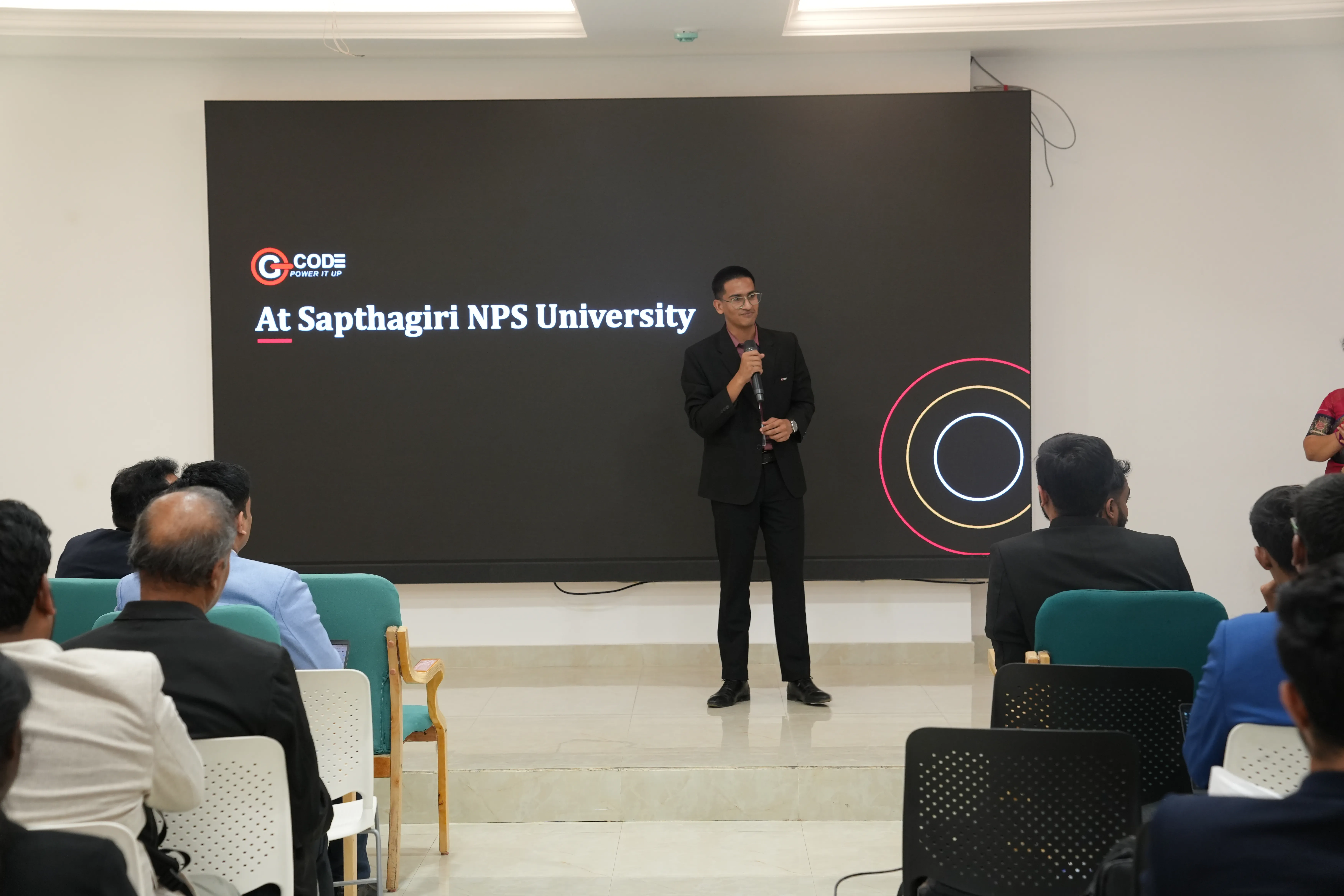
Industry-oriented programmes play an important role in preparing students for successful careers. The image highlights a professional guest session at Sapthagiri NPS University, where an invited speaker shares valuable insights with the audience. Such interactive sessions provide students with opportunities to learn from industry professionals and understand current workplace expectations. Guest lectures encourage students to explore emerging technologies, professional skills, and career opportunities. These programmes help bridge the gap between classroom learning and industry requirements. Students gain exposure to practical knowledge through expert presentations and discussions. Direct interaction with speakers also encourages students to ask questions and develop confidence. Professional sessions introduce learners to real-world challenges and industry trends. They also promote communication, critical thinking, and problem-solving skills. Universities that organise industry interactions create valuable learning opportunities beyond regular academic activities. Career-focused programmes help students understand employer expectations and workplace responsibilities. Regular expert sessions can also inspire students to explore different career paths. A supportive academic environment combined with industry exposure contributes to overall professional development. Students searching for a top placement university in Bangalore should consider industry engagement, practical learning, skill development, and placement preparation when choosing their university.
Connecting Academic Learning with Industry Expectations
Academic learning provides the foundation for professional competence, while industry interaction helps students understand how knowledge is applied in real working environments. At our University, we encourage students to recognise the connection between their subjects and the practical requirements of different sectors. Classroom concepts become more meaningful when learners examine practical examples, discuss industry developments, participate in projects, and explore the challenges faced by professionals. These learning experiences can help students understand the importance of accuracy, creativity, collaboration, responsibility, and continuous improvement. We also encourage students to follow developments in their chosen disciplines and remain open to learning new tools, technologies, and professional practices. Industry expectations can change as organisations adopt new processes and respond to emerging challenges, so students should develop the ability to update their knowledge throughout their careers. Guest lectures, expert interactions, technology discussions, industrial visits, and other engagement activities can provide useful opportunities to learn about professional environments. Such experiences may also help students identify areas in which they need further preparation. We believe that industry awareness should complement academic study rather than replace it. A strong educational foundation, combined with practical exposure and professional skill development, can help learners approach future opportunities with a broader perspective. This is one of the important aspects students should examine when choosing a top placement university in Bangalore for their higher education.
Developing Technical Skills for Professional Success
Technical skills are an important part of professional preparation, particularly for students entering engineering, technology, management, and other specialised fields. At Sapthagiri NPS University, we encourage our students to develop a strong understanding of their academic subjects while exploring the practical applications of their knowledge. Technical competence helps learners understand professional tasks, work with relevant tools, analyse problems, and contribute to projects within their chosen industries. We believe students should approach technical learning with curiosity and a willingness to practise regularly. Reading textbooks and attending lectures provide essential knowledge, but students can strengthen their understanding through practical exercises, assignments, laboratory activities, demonstrations, and project-based learning. We also encourage learners to remain aware of developments in their respective disciplines because technologies, business practices, and professional requirements continue to evolve. Students who take an active interest in improving their technical abilities can develop greater confidence when approaching interviews and professional responsibilities. They should also understand that technical knowledge is not limited to a particular software application or tool; it includes logical thinking, subject understanding, accuracy, and the ability to apply concepts appropriately. Through our academic environment, we aim to motivate students to strengthen these capabilities throughout their programmes. For learners searching for a top placement university in Bangalore, technical skill development is an important factor to consider because it contributes to their readiness for changing professional environments.
Building Communication and Interpersonal Skills
Communication skills play an important role in academic participation, professional relationships, and career development. Students may possess strong subject knowledge, but they also need the ability to explain ideas clearly, listen carefully, ask relevant questions, and communicate respectfully with different people. At our University, we encourage learners to participate in classroom discussions, presentations, group assignments, seminars, and collaborative activities that provide opportunities to practise communication. These experiences help students become more comfortable expressing their thoughts and presenting information in an organised manner. We also recognise the importance of written communication, particularly when preparing professional emails, reports, résumés, applications, and project documentation. Interpersonal skills are equally important because professional environments often require individuals to work with colleagues, supervisors, clients, and people from different backgrounds. Students can strengthen these abilities by practising active listening, respecting different opinions, accepting feedback, and contributing positively to group activities. We encourage our learners to understand that effective communication involves clarity, confidence, patience, and professional behaviour. These qualities can support students during interviews, presentations, workplace discussions, and future leadership responsibilities. Developing communication skills requires regular practice rather than last-minute preparation, so we encourage students to make these abilities part of their everyday academic experience. When evaluating a top placement university in Bangalore, students should consider whether their educational environment provides meaningful opportunities to improve both verbal and written communication.
Campus Recruitment Training and Interview Preparation
Campus Recruitment Training is an important part of career preparation because it helps students understand the stages involved in recruitment and selection processes. At our University, we recognise the value of preparing learners to approach professional opportunities with confidence, clarity, and a responsible attitude. Recruitment processes may involve aptitude assessments, technical evaluations, group discussions, communication exercises, personal interviews, and other selection activities depending on the organisation and job role. Students benefit from understanding these stages before they begin applying for opportunities. Preparation can include practising numerical reasoning, logical thinking, verbal ability, subject-related questions, and professional communication. We also encourage learners to understand the importance of reading job descriptions carefully and identifying the skills and qualifications expected for particular roles. Interview preparation should involve more than memorising answers. Students should learn to explain their academic background, projects, interests, strengths, and career objectives honestly and confidently. Mock interviews can help learners practise answering questions, organising their thoughts, maintaining professional communication, and responding constructively to feedback. We believe that consistent preparation helps students identify areas for improvement and approach recruitment activities with greater awareness. Our HRD framework includes Campus Recruitment Training as one of its career-development functions. Students should make active use of relevant training and guidance opportunities available to them. A university that integrates career preparation into its educational environment can help learners understand the expectations associated with professional selection processes.
Résumé Development and Professional Presentation
A professional résumé is an important document that introduces a candidate's educational background, skills, experience, achievements, and relevant projects to potential employers. At our University, we encourage students to understand the importance of preparing a clear, accurate, and well-organised résumé that reflects their actual capabilities. A résumé should communicate relevant information without unnecessary details or unsupported claims. Students can begin preparing their résumés by recording their academic qualifications, technical skills, project work, internships, certifications, achievements, and other relevant experiences. They should organise this information in a readable format and ensure that all details are correct. We also encourage learners to adapt their résumés to the requirements of the roles they wish to pursue. For example, a technical position may require greater emphasis on programming knowledge, practical projects, and relevant technical tools, while a management-related role may place importance on communication, analytical abilities, teamwork, and organisational understanding. Students should also learn to explain every item included in their résumés because recruiters may ask questions about their projects, responsibilities, or achievements. Professional presentation extends beyond the résumé and includes email etiquette, appropriate communication, punctuality, and preparation for interviews. We believe these small but important practices help students develop a more organised approach to career opportunities. Through career guidance and relevant mentoring activities, we aim to encourage learners to present their academic and professional strengths accurately.
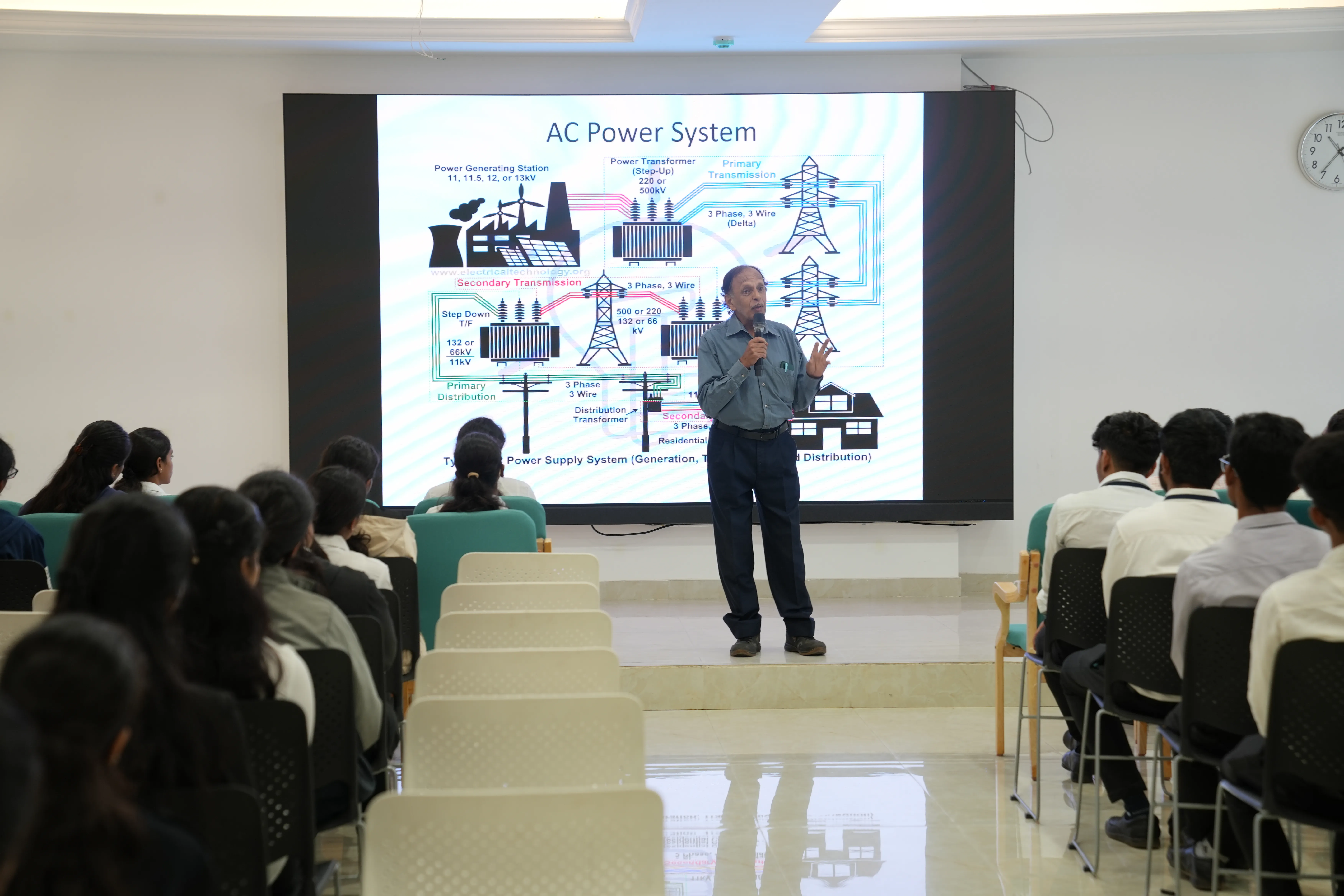
Practical learning and technical knowledge are essential for developing successful engineering professionals. The image captures an academic session where an experienced faculty member explains the fundamentals of an AC power system to students. The presentation illustrates important concepts related to power generation, transmission, transformers, and electricity distribution. Such interactive classroom sessions help students understand complex engineering concepts through visual explanations. Students gain valuable knowledge about electrical systems and their real-world applications. Technical discussions encourage curiosity and active participation. Experienced faculty members help learners connect theoretical concepts with practical engineering applications. These sessions also strengthen analytical thinking and problem-solving abilities. Engineering education becomes more effective when students receive opportunities to explore technical subjects through presentations and demonstrations. Practical knowledge helps students understand industry requirements and emerging technologies. Regular technical sessions support academic development and professional confidence. Students can improve their subject knowledge through interactive learning activities. Industry-oriented education also helps prepare graduates for future employment opportunities. A strong combination of academic learning, technical exposure, and career guidance is important when choosing a top placement university in Bangalore.
The Importance of Mock Interviews
Mock interviews provide students with an opportunity to practise professional conversations in a structured environment before attending actual recruitment interviews. We recognise that some students may feel nervous when answering questions, explaining technical concepts, or discussing their career interests. Regular practice can help them become more familiar with interview situations and identify areas that require improvement. During a mock interview, students can practise introducing themselves, explaining their academic background, discussing projects, answering subject-related questions, and communicating their career objectives. They can also receive feedback on clarity, confidence, listening skills, and the organisation of their responses. We encourage learners to treat feedback as an opportunity for development rather than criticism. Students should avoid memorising lengthy answers because genuine understanding and clear communication are more useful during professional discussions. Instead, they should practise explaining their experiences in their own words and support their answers with relevant examples. Technical interview preparation may also involve revising important subject concepts and understanding the practical work completed during academic projects. Different organisations may follow different interview formats, so students should remain flexible and prepare for a range of questions. Through relevant career-support activities, we aim to encourage students to approach interviews with preparation, honesty, and professionalism.
Industry Interaction and Professional Exposure
Industry interaction helps students understand how organisations operate and how academic knowledge is applied in professional environments. At our University, we recognise the importance of creating opportunities for learners to become aware of industry developments, professional practices, and emerging areas of work. Activities such as guest lectures, expert talks, technology discussions, industrial visits, and hackathons can help students gain perspectives beyond their regular classroom experience. These interactions may introduce learners to practical challenges, professional expectations, new technologies, and different career pathways. Students can use such opportunities to ask questions, understand current developments, and identify the knowledge required in their chosen fields. We encourage learners to participate actively and prepare relevant questions before attending industry-related sessions. They should also reflect on what they learn and consider how the information connects with their academic subjects and future goals. Industry exposure can help students understand the importance of teamwork, communication, time management, problem-solving, and continuous learning. We believe that these experiences complement academic education by helping learners develop a broader understanding of the professional world. Students exploring a top placement university in Bangalore should consider the nature of industry engagement activities and how these experiences contribute to their overall academic and career development.
Learning Through Guest Lectures and Expert Sessions
Guest lectures and expert sessions can provide students with valuable opportunities to learn from individuals who have professional knowledge and experience in specific fields. We encourage academic interactions that allow learners to understand how concepts are used in different industries and why professional skills remain important throughout a career. Such sessions may cover technological developments, management practices, entrepreneurship, communication, innovation, workplace expectations, and other subjects relevant to students' programmes. Students can benefit by listening carefully, taking notes, asking thoughtful questions, and discussing the information with faculty members and classmates. These activities can also help learners discover areas of interest that they may wish to explore through projects, internships, independent study, or higher education. We believe that learning should remain connected to developments outside the classroom, while maintaining a strong foundation in academic principles. Expert interactions can introduce different perspectives and encourage students to think critically about professional challenges. Learners should approach these sessions with curiosity and use the knowledge gained to strengthen their understanding of their chosen disciplines. By encouraging academic and professional discussions, we aim to create an environment that values knowledge sharing and continuous improvement.
Hackathons, Projects and Collaborative Learning
Collaborative learning gives students opportunities to apply their knowledge while working with others towards a shared objective. At our University, we encourage students to participate in relevant projects, practical assignments, innovation activities, and collaborative programmes that strengthen their problem-solving abilities. Hackathons, where organised and available, can provide a focused environment for learners to explore ideas, develop solutions, and work within a defined period. Project-based learning also encourages students to identify problems, gather information, plan tasks, test ideas, and communicate their findings. These activities can help learners understand that professional challenges often require a combination of technical knowledge, creativity, teamwork, and careful planning. Students can develop valuable experience by taking responsibility for different project activities and learning to coordinate with their teammates. We encourage them to document their work, explain the methods they use, and reflect on the outcomes of their efforts. Even when a project does not produce the expected result, the learning process can help students understand mistakes and improve their approach. Collaborative activities also provide opportunities to practise leadership, time management, decision-making, and constructive feedback. We believe that these experiences can support students as they prepare for professional environments where teamwork and practical problem-solving are important.
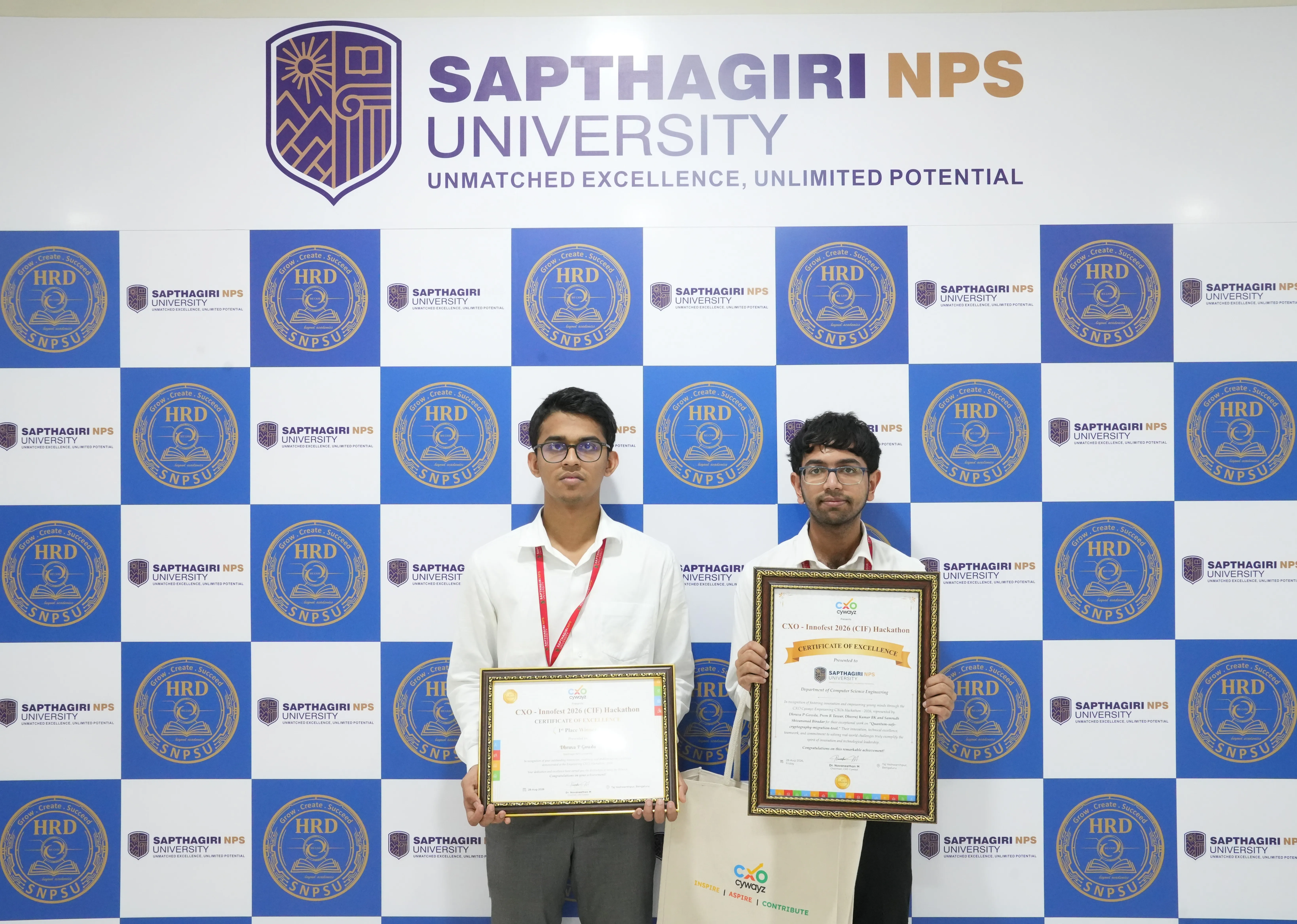
Student achievements reflect the importance of quality education, practical learning, and career-focused opportunities. The image showcases two students from Sapthagiri NPS University proudly holding their certificates of achievement at the CXO – InnoFest 2026 (CIF) Hackathon. Their accomplishment highlights innovation, technical knowledge, teamwork, and problem-solving abilities. Participating in hackathons gives students valuable opportunities to develop creative ideas and explore real-world challenges. Such competitions encourage students to apply classroom knowledge to practical situations. They also help learners improve programming skills, critical thinking, and collaboration. Recognition at external events motivates students to pursue academic and professional excellence. Universities that encourage innovation and extracurricular participation help students discover their strengths. These experiences also provide exposure to competitive environments and emerging technologies. Student achievements demonstrate the value of continuous learning and dedication. Industry-oriented activities help learners develop skills that are useful for future careers. Career development involves more than academic qualifications. Practical experience, technical expertise, and teamwork also contribute to professional growth. Sapthagiri NPS University encourages students to participate in learning opportunities that support their overall development. Students exploring a top placement university in Bangalore should consider academic quality, practical exposure, student achievements, and career development opportunities.
Developing Leadership and Teamwork Abilities
Leadership and teamwork are valuable capabilities across many professional sectors. Organisations often require individuals who can take responsibility, communicate effectively, support colleagues, and contribute towards shared goals. At our University, we encourage students to develop these qualities through group assignments, presentations, academic events, project activities, and other collaborative experiences. Leadership does not always mean holding a formal position; it can also involve taking initiative, helping a team organise its work, suggesting practical solutions, and accepting responsibility for assigned tasks. Teamwork requires individuals to respect different opinions, listen to others, share information, and complete responsibilities within agreed timelines. We encourage learners to understand that successful collaboration depends on mutual respect, accountability, and clear communication. Students may encounter different working styles and opinions during group activities, and these situations can help them develop patience and problem-solving abilities. They can also learn the importance of accepting feedback and adapting their approach when necessary. These qualities are useful not only during recruitment processes but also throughout professional life. We aim to encourage a learning environment where students can gradually develop confidence, responsibility, and the ability to work effectively with others.
Learning and Development for Continuous Improvement
Learning and Development is an important component of our Human Resource Development framework. We recognise that students need opportunities to improve their knowledge and professional abilities throughout their academic journey. Continuous development may involve subject-related learning, communication practice, technical skill development, career awareness, professional mentoring, and participation in relevant training activities. We encourage learners to identify their strengths and recognise areas where further improvement may be beneficial. This process helps students take greater responsibility for their development rather than depending entirely on classroom instruction. Students can create personal learning goals, practise regularly, seek guidance, and review their progress over time. They should also remain open to new technologies, changing industry requirements, and opportunities to learn beyond their prescribed syllabus. We believe that a commitment to continuous learning can help graduates remain adaptable as professional roles and workplace expectations evolve. Through relevant learning and development initiatives, we aim to support students in building a positive attitude towards improvement and lifelong learning. This approach is important because career development does not end when a student completes a university programme; it continues through professional experience and further learning.
Career Mentoring and Student Guidance
Career mentoring can help students understand their interests, evaluate professional options, and make informed decisions about their future. At our University, we recognise that learners may need guidance at different stages of their academic journey. Some students may be exploring possible career paths, while others may be preparing for interviews, developing their résumés, or considering higher education and specialised professional opportunities. Mentoring and career guidance can help students organise their goals and identify practical steps towards achieving them. We encourage learners to communicate their questions clearly, participate in guidance activities, and take responsibility for acting on relevant feedback. Students should understand that career decisions involve personal interests, academic preparation, professional expectations, and individual circumstances. It is therefore useful to explore different options rather than making decisions based only on assumptions or general trends. Career guidance can also help students understand the importance of setting realistic goals and reviewing their progress regularly. Through our career-support framework, we aim to encourage learners to approach professional development with clarity, preparation, and confidence.
Contact Details
| Contact Category | Details | Purpose |
|---|---|---|
| Admissions Helpline | +91 9900072632 | 👉Admission & General Enquiries |
| admissions@snpsu.edu.in | 👉Course & Admission Enquiries | |
| Campus Address | #14/5, Chikkasandra, Hesarghatta Main Road, Bengaluru – 560057, Karnataka, India | 👉Campus Visit |
| Online Admissions | Official Admission Portal | 👉Apply Online |
At our University, we encourage students to pursue their career goals with confidence and professional commitment. We focus on academic excellence, industry engagement, and continuous skill development. Our HRD Department supports career guidance and placement-related initiatives. We motivate students to strengthen their technical and communication skills. We also encourage industry interaction and practical learning. For placement enquiries, contact us at 9900072632. Visit our HRD Department for further information. We remain committed to supporting our students in exploring diverse career opportunities.
Leave a Comment