

Madhvacharya Jayanti 2026 – History, Teachings & Philosophy
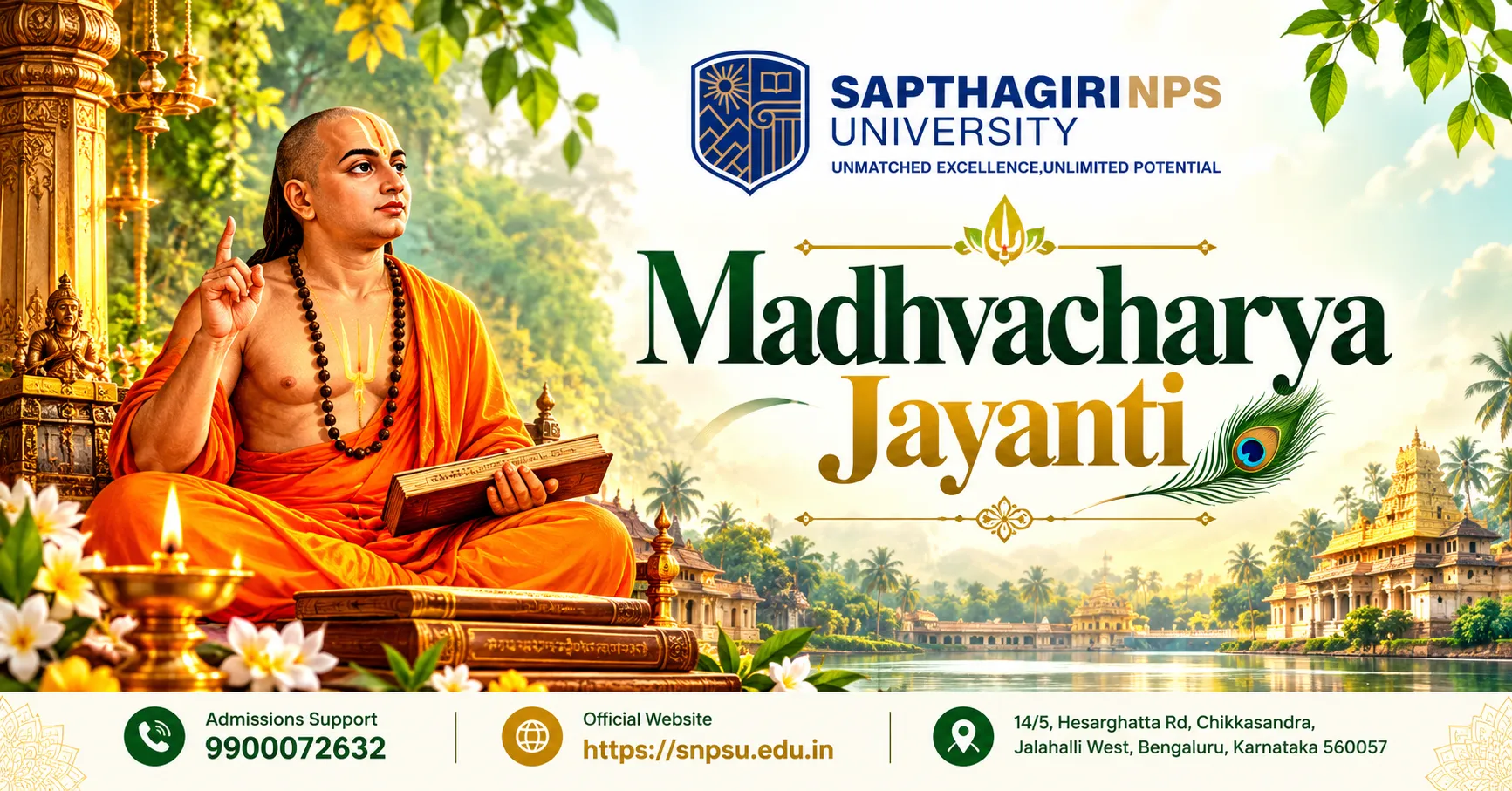
Madhvacharya Jayanti – History, Philosophy, Teachings and Cultural Significance
Remembering a Major Voice in Indian Philosophical Heritage
Madhvacharya Jayanti is observed to commemorate the birth anniversary of Sri Madhvacharya, the philosopher and teacher traditionally associated with the Dvaita school of Vedanta. Madhavacharya Jayanti 2026 will be observed on Wednesday, 21 October 2026, according to the cited Panchang calculation, corresponding to the Dashami Tithi of Ashwin Shukla Paksha. Traditional accounts place Sri Madhvacharya's birth in 1238 CE at Pajaka near Udupi, Karnataka, on the day associated with Vijaya Dashami. He is recognised as the principal exponent of Dvaita Vedanta, a philosophical tradition that emphasises the distinction between the Supreme Being and individual souls. The occasion is observed through prayers, devotional activities, scriptural study, philosophical discussions and cultural programmes in communities connected with the Madhva tradition. Madhvacharya Jayanti celebration provides an opportunity to remember his contribution to Indian philosophy while introducing younger generations to the intellectual traditions associated with his life and teachings. Udupi holds a particularly important place in this heritage, as Karnataka Tourism describes the Sri Krishna Matha as a spiritual institution founded in the 13th century by Sri Madhvacharya and associated with Dvaita philosophy, Vedic study and devotion. For students, the occasion offers an opportunity to explore the relationship between philosophy, history, education and cultural traditions. It also provides a meaningful way to understand how philosophical ideas can continue through institutions, teachers, texts and community practices over many centuries. The observance can therefore be viewed not only as a remembrance of a historical thinker but also as an opportunity to appreciate India's long tradition of intellectual inquiry and cultural learning.
Following the Early Journey of Sri Madhvacharya
The History of Madhvacharya is traditionally connected with Pajaka, a locality near Udupi in Karnataka, where Sri Madhvacharya is believed to have been born in 1238 CE. Traditional sources place his lifetime between 1238 and 1317 CE and identify the Dashami Tithi of Ashwin Shukla Paksha as the occasion on which his birth anniversary is commemorated. His life became closely associated with scholarship, spiritual discipline, teaching and philosophical interpretation. Udupi subsequently developed into an important centre connected with his legacy and the Madhva tradition. Karnataka Tourism describes Sri Madhvacharya as a major figure in the development of the Udupi spiritual tradition and identifies the Sri Krishna Matha as a centre of spiritual learning and Vedic study. His intellectual activities included engagement with important Hindu philosophical texts and the development of a systematic interpretation of Vedanta. The tradition associated with his teachings continued through disciples, monasteries and generations of scholars. This institutional continuity is an important part of understanding his historical influence because his ideas were not preserved only through individual writings but also through educational and religious institutions. The Udupi tradition continues to connect visitors and students with places associated with his life and work. The historical journey of Sri Madhvacharya therefore provides an example of how an individual's philosophical contribution can become part of a broader cultural and educational heritage. Learning about his early life, intellectual development and association with Udupi can help students understand the historical environment in which Indian philosophical traditions developed.
Exploring the Foundation of Dvaita Thought
Madhvacharya philosophy is primarily identified with Dvaita Vedanta, also known as Tattvavada in the Madhva tradition. The philosophy presents a dualistic understanding of reality and maintains a distinction between Brahman, individual souls and the material world. Traditional descriptions of Dvaita identify Vishnu with the Supreme Being and emphasise the eternal distinction between God and individual souls. This philosophical approach became one of the major interpretations of Vedanta and developed through extensive engagement with foundational Hindu texts. Madhvacharya's intellectual contribution is important because he did not simply present isolated ideas; his philosophical system involved systematic interpretation and argument concerning reality, knowledge, devotion and liberation. Dvaita therefore occupies an important place in the history of Indian philosophical thought. Students exploring this tradition can understand how philosophical schools develop through textual interpretation, debate and scholarly commentary. The study of Dvaita also demonstrates the diversity of Indian intellectual traditions, where different philosophers developed different interpretations of questions concerning God, the individual self, the world and liberation. Understanding Madhvacharya philosophy requires attention to its historical and textual context rather than reducing it to a single definition. The continued study of Dvaita in traditional and academic settings shows how philosophical ideas can remain relevant as subjects of intellectual discussion long after the period in which their original proponents lived.
Ideas That Shaped a Continuing Intellectual Tradition
The Madhvacharya teachings are preserved through his philosophical writings, commentaries and the traditions developed by his disciples and later scholars. His work is associated with interpretations of major Hindu texts, including the Brahma Sutras, Bhagavad Gita and Upanishadic literature. His approach emphasised the importance of scriptural interpretation, philosophical reasoning and devotion. Traditional accounts of Dvaita identify God as the independent reality and individual souls and the world as dependent realities, while maintaining a distinction between them. These concepts became important elements of the intellectual tradition that developed around Madhvacharya. His teachings were transmitted through teachers, monasteries and educational institutions, helping establish a continuing lineage of philosophical study. Udupi's religious institutions have played an important role in maintaining this heritage. Karnataka Tourism describes the Sri Krishna Matha as a centre where daily rituals, Vedic chanting, spiritual discipline and learning continue as part of the region's living tradition. For students, the teachings associated with Madhvacharya provide an opportunity to explore the relationship between knowledge, discipline, devotion and philosophical inquiry. His legacy also demonstrates how ideas can be preserved through both written texts and living educational traditions. Studying these teachings can therefore introduce students to an important part of India's intellectual history while encouraging curiosity about the development of philosophical schools.
Understanding the Distinctive Dvaita Perspective
One of the central features of Madhvacharya's philosophical system is its emphasis on difference and distinction. Dvaita Vedanta holds that the Supreme Being and individual souls are distinct realities, rather than ultimately being identical. The philosophy also regards God as the supreme independent reality while other realities remain dependent upon Him. This perspective became a defining feature of the school of thought associated with Madhvacharya. Understanding this approach allows students to appreciate the diversity that exists within Indian philosophy. Vedanta has been interpreted through different philosophical traditions, each developing its own understanding of reality, consciousness, knowledge and liberation. Dvaita represents one important interpretation within this larger intellectual landscape. Madhvacharya's writings demonstrate an effort to establish his philosophical position through detailed engagement with authoritative texts and reasoning. This makes his work significant not only for followers of the tradition but also for students interested in the history of philosophy, literature and intellectual culture. Studying the Dvaita perspective can also help learners understand how philosophical ideas are developed through debate, interpretation and teaching. The continued presence of Madhva institutions and scholarship demonstrates that this philosophical tradition remains part of India's living intellectual heritage.
Udupi as a Centre of Madhva Heritage
Udupi has a particularly strong connection with Sri Madhvacharya and the traditions associated with his teachings. Karnataka Tourism states that the Sri Krishna Matha was founded in the 13th century by Sri Madhvacharya and describes it as a centre of spiritual learning, discipline and devotion. The region is also associated with the eight Mathas of the Madhva tradition, which have historically contributed to the continuation of religious and philosophical learning. The connection between Madhvacharya and Udupi extends beyond a historical association because the town continues to function as an important centre of pilgrimage, cultural activity and spiritual learning. The traditions maintained around the Sri Krishna Matha provide an example of how historical philosophical movements can remain connected with physical places and institutions. Visitors and students can learn about the history of Madhvacharya through the temples, Mathas, traditional practices and cultural heritage associated with the region. The relationship between Udupi and Madhvacharya also demonstrates how a philosopher's intellectual legacy can become an important part of regional identity. The continued study of his philosophy, combined with traditional religious practices, has helped preserve a distinctive cultural heritage. Understanding Udupi's connection with Madhvacharya therefore provides a broader perspective on the relationship between philosophy, place, education and community traditions.
The Written Legacy Behind His Influence
Madhvacharya's contribution to Indian philosophy is also reflected through his engagement with major Hindu philosophical texts. His writings and commentaries became important sources for the development and transmission of Dvaita Vedanta. Traditional accounts associate his scholarship with the interpretation of the Brahma Sutras, Bhagavad Gita and Upanishadic literature, among other works. Through such writings, he developed arguments concerning the nature of God, individual souls, the material world, knowledge and liberation. The written tradition became a foundation for later scholars who continued to explain, debate and interpret Dvaita philosophy. This process demonstrates the importance of commentary in Indian intellectual history, where philosophical schools often developed through sustained engagement with earlier texts. The legacy of Madhvacharya is therefore connected not only with religious practice but also with a substantial tradition of philosophical study. Students interested in Indian intellectual history can explore his writings as examples of medieval philosophical scholarship. His contribution also illustrates the way philosophical ideas can develop through generations as teachers and scholars interpret earlier works in changing historical contexts. The continued existence of this scholarly tradition demonstrates the lasting importance of written knowledge in preserving cultural and intellectual heritage.
Observing His Jayanti Through Learning and Devotion
A Madhvacharya Jayanti celebration commonly combines remembrance, devotional observance and learning. Communities connected with the Madhva tradition may organise prayers, temple activities, scriptural readings, discourses and discussions about the philosopher's life and teachings. The specific form of observance can differ between temples, Mathas, families and communities, meaning that there is no single format followed everywhere. The day can nevertheless provide an opportunity to remember Sri Madhvacharya and introduce younger generations to the intellectual tradition associated with him. Educational activities can include talks on Dvaita philosophy, readings from traditional texts, cultural presentations and discussions about the historical development of the Madhva tradition. For students, such activities can make the occasion an opportunity for cultural learning rather than simply a ceremonial observance. A university environment can also provide space for students to explore the connection between philosophy, history, literature and education. The observance can encourage students to develop an interest in India's intellectual heritage and understand the importance of preserving knowledge across generations. By combining cultural awareness with learning, Madhvacharya Jayanti can become a meaningful occasion that connects historical traditions with contemporary education.
Madhvacharya Jayanti 2026 and Its Cultural Context
Madhavacharya Jayanti 2026 will be observed on Wednesday, 21 October 2026, according to the cited Panchang calculation. The date corresponds to the Dashami Tithi of Ashwin Shukla Paksha, which is traditionally associated with the birth anniversary of Sri Madhvacharya. The occasion is particularly interesting in 2026 because it follows the Vijayadashami period, reflecting the traditional association between Madhvacharya's birth and the Dashami Tithi. Specific religious observance timings may vary according to location and local Panchang calculations, so temples and communities may follow their established calendars. The day provides an opportunity to learn about Madhvacharya's contribution to Dvaita Vedanta and the cultural heritage associated with Udupi. It can also encourage students to explore the history of Indian philosophy and the role of teachers and scholars in preserving intellectual traditions. Remembering the occasion through educational programmes allows students to connect historical knowledge with contemporary learning. The 2026 observance can therefore serve as an opportunity for cultural awareness, philosophical learning and appreciation of India's diverse intellectual heritage.
Why His Teachings Remain Relevant to Students
The continuing influence of the Madhvacharya teachings demonstrates how knowledge can remain meaningful through sustained study and transmission. His philosophical tradition places importance on understanding reality, devotion, scriptural study and disciplined intellectual engagement. The institutions connected with his legacy have helped preserve these traditions through teaching and community practices. Udupi's continuing role as a centre of spiritual learning provides an example of this institutional continuity. For students, studying Madhvacharya can provide an opportunity to understand how philosophical ideas are developed, documented and transmitted over centuries. It can also encourage curiosity about India's intellectual diversity and the different approaches developed within its philosophical traditions. The study of his work can introduce learners to concepts related to philosophy, theology, history and literature. More broadly, the tradition associated with Madhvacharya highlights the importance of teachers and scholars in preserving knowledge. Students can approach his legacy as an example of sustained intellectual effort and the continuing value of learning. By exploring his life and ideas, they can develop a deeper appreciation for India's philosophical heritage and the institutions that have helped preserve it.
Bringing Philosophical Heritage Into Campus Learning
Our university can observe Madhvacharya Jayanti through educational activities, cultural awareness and meaningful student participation. A campus programme can introduce students to the life of Sri Madhvacharya, explain the basic principles of Dvaita Vedanta and highlight the historical importance of Udupi in preserving his legacy. Students can participate in suitable presentations, essay activities, discussions, traditional programmes and educational displays focused on Indian philosophy and cultural heritage. Such activities can encourage students to explore the relationship between philosophy, history, literature and education. A university setting provides an appropriate environment for discussing philosophical traditions because students can approach historical ideas through academic inquiry and cultural understanding. The occasion can also encourage students to appreciate the importance of disciplined study, intellectual curiosity and respect for diverse traditions. Rather than limiting the observance to ceremonial activities, our university can use the occasion to create meaningful learning opportunities. This approach can make the celebration relevant to students while respecting the cultural traditions connected with Madhvacharya. Through thoughtful engagement, students can understand how a historical philosopher's ideas continue to influence institutions, scholarship and cultural practices.
Preserving an Intellectual Heritage for Future Generations
The legacy of Sri Madhvacharya demonstrates how philosophical traditions can continue through texts, teachers, institutions and cultural practices. His association with Dvaita Vedanta, Udupi and the Madhva tradition has created a heritage that remains visible in religious and educational institutions today. Karnataka Tourism describes the Sri Krishna Matha as a long-standing centre of spiritual learning and Vedic study founded by Madhvacharya in the 13th century. This continuity highlights the importance of preserving historical knowledge while allowing each generation to study and interpret it in its own context. For students, Madhvacharya's legacy provides a valuable example of the relationship between philosophy and education. His work also demonstrates that intellectual traditions can influence communities for centuries when knowledge is carefully transmitted through teaching and scholarship. A modern celebration of Madhvacharya Jayanti can therefore combine respect for tradition with opportunities for academic learning. Students can explore his historical background, philosophical ideas and cultural influence while developing a broader understanding of India's intellectual heritage. The occasion provides an opportunity to recognise the importance of knowledge, learning and thoughtful inquiry in shaping cultural traditions.
Madhvacharya Jayanti – History, Philosophy, Teachings and Cultural Significance
1. What is Madhvacharya Jayanti and why is it celebrated?
Madhvacharya Jayanti is observed to commemorate the birth anniversary of Sri Madhvacharya, a prominent Indian philosopher and theologian associated with the Dvaita Vedanta tradition. Madhvacharya is traditionally believed to have been born at Pajaka Kshetra near Udupi in Karnataka. His philosophical writings and teachings had a significant influence on the development of Vaishnavism and Vedanta traditions in South India. The occasion is observed through prayers, religious discourses, recitations, devotional activities and cultural programmes, particularly in places associated with Madhvacharya and the Madhva tradition.
2. Who was Madhvacharya?
Madhvacharya, also known as Anandatirtha, was a major Indian philosopher and spiritual teacher traditionally dated to the 13th century. He developed and systematized the philosophical school known as Dvaita Vedanta, or the philosophy of dualism. His writings focused on the nature of God, the individual soul and the material world, and he strongly emphasized devotion to Vishnu as the Supreme Being. Madhvacharya wrote commentaries on important Hindu philosophical and scriptural texts and established a significant religious tradition that continues to influence spiritual and philosophical thought.
3. When is Madhvacharya Jayanti celebrated?
Madhvacharya Jayanti is traditionally observed according to the Hindu lunar calendar, and therefore its date in the Gregorian calendar changes from year to year. The occasion is associated with the birth anniversary of Madhvacharya and is observed with religious programmes in Madhva communities. Temples and institutions connected with the tradition may conduct special pujas, devotional singing, scripture readings and philosophical discourses. The exact observance and date may vary according to regional calendars and traditional Panchang calculations.
4. What is Dvaita Vedanta taught by Madhvacharya?
Dvaita Vedanta, meaning “dualistic Vedanta,” is the philosophical system most closely associated with Madhvacharya. It emphasizes a fundamental distinction between God, individual souls and the material world. According to Madhvacharya’s interpretation, Vishnu is the Supreme Being, while individual souls and the world are real and distinct from God. Unlike philosophical systems that emphasize the ultimate identity of the individual soul and Brahman, Dvaita maintains a real distinction between them. Madhvacharya’s interpretation therefore places strong emphasis on devotion, divine grace and the individual soul’s relationship with God.
5. What are the main philosophical ideas of Madhvacharya?
Madhvacharya’s philosophy emphasizes the reality of God, individual souls and the universe. A central concept in Dvaita Vedanta is the existence of real distinctions, particularly between God and individual souls and between different categories of existence. Madhvacharya also emphasized the supremacy of Vishnu and the importance of devotion in the spiritual journey. His philosophical writings sought to provide detailed interpretations of the Vedas, Upanishads, Bhagavad Gita and Brahma Sutras. His system became one of the major schools of Vedanta and continues to be studied in Indian philosophical traditions.
6. What were the main teachings of Madhvacharya?
Madhvacharya’s teachings placed strong emphasis on devotion to Vishnu, knowledge of spiritual truth, ethical conduct and recognition of the distinction between God and individual souls. He taught that the Supreme Being is independent while individual souls are dependent upon God. His philosophical approach encouraged devotees to develop sincere devotion and understand their relationship with the divine. His works also emphasized the importance of studying authoritative scriptures and developing spiritual understanding. These teachings became foundational to the Madhva tradition and continue to influence religious and philosophical discussions.
7. What is the importance of Vishnu in Madhvacharya’s philosophy?
In Madhvacharya’s Dvaita Vedanta, Vishnu is regarded as the Supreme Being and the ultimate independent reality. Other beings and the universe are understood as dependent upon God. Devotion to Vishnu therefore occupies a central place in the Madhva tradition. Madhvacharya emphasized that human beings can develop spiritual understanding through devotion, knowledge, ethical living and divine grace. This understanding of Vishnu’s supremacy became one of the defining features of his philosophical system and devotional tradition.
8. What is the connection between Madhvacharya and Udupi?
Madhvacharya has a particularly strong historical and religious association with Udupi in Karnataka. The Udupi Krishna tradition is closely connected with his teachings and religious institutions. According to the traditional account, Madhvacharya established the worship of Krishna at Udupi and organized a system of eight monasteries, traditionally known as the Ashta Mathas, to maintain and spread the Madhva tradition. Udupi subsequently became an important centre of Dvaita Vedanta, Krishna worship and Madhva religious scholarship.
9. How is Madhvacharya Jayanti celebrated?
Madhvacharya Jayanti is generally observed through special prayers, pujas, devotional singing, scripture recitations and spiritual discourses. Institutions and temples associated with the Madhva tradition may organize programmes explaining Madhvacharya’s life and philosophical contributions. Devotees may also participate in religious gatherings and cultural activities that commemorate his teachings. In Karnataka, particularly in places connected with the Madhva tradition, the occasion can be marked by community programmes and discussions on Dvaita Vedanta and Madhvacharya’s contribution to Indian philosophy.
10. What is the cultural significance of Madhvacharya Jayanti?
Madhvacharya Jayanti has cultural and intellectual significance because it provides an opportunity to remember an influential figure in Indian philosophy, theology and religious thought. His Dvaita Vedanta tradition has contributed to the intellectual and devotional heritage of Karnataka and other parts of India. The occasion also encourages students and younger generations to learn about Indian philosophical traditions, Sanskrit scholarship, devotional literature and the historical development of Vedanta. By studying Madhvacharya’s life and teachings, people can gain a broader understanding of India’s diverse philosophical heritage and the continuing cultural importance of the Madhva tradition.
A Meaningful Message for the University Community
Madhvacharya Jayanti provides an opportunity to reflect on the importance of knowledge, disciplined learning and intellectual curiosity. The life and work associated with Sri Madhvacharya demonstrate how sustained study and philosophical inquiry can influence generations of teachers, scholars and students. His association with Dvaita Vedanta and Udupi remains an important part of India's philosophical and cultural history. The occasion can encourage students to approach learning with curiosity and respect for different intellectual traditions. It can also remind the university community that cultural heritage is preserved through active learning, discussion and responsible participation. By exploring the life, teachings and philosophy of Madhvacharya, students can gain insight into an important chapter of Indian intellectual history. The observance can therefore connect historical knowledge with contemporary education and encourage students to value continuous learning. A meaningful celebration can include cultural awareness, educational discussion and opportunities for students to explore the heritage associated with Udupi and the Madhva tradition.
Contact Details
| Contact Category | Details | Purpose |
|---|---|---|
| General Enquiries | +91 9900072632 | 👉General Information |
| admissions@snpsu.edu.in | 👉Course & Admission Enquiries | |
| Campus Address | #14/5, Chikkasandra, Hesarghatta Main Road, Bengaluru – 560057, Karnataka, India | 👉Campus Visit |
| Online Admission | Official Admission Portal | 👉Apply Online |
Warm Madhvacharya Jayanti Wishes From Our University
Our university extends warm wishes to students, parents, faculty members and the entire university community on the occasion of Madhvacharya Jayanti 2026. May this occasion inspire a deeper appreciation for knowledge, learning, discipline and India's rich intellectual heritage. May the legacy of Sri Madhvacharya encourage students to remain curious, thoughtful and committed to continuous learning. Wishing everyone a meaningful, peaceful and culturally enriching Madhvacharya Jayanti.
Happy Madhvacharya Jayanti 2026!
Leave a Comment