

Sapthagiri NPS University Student Success Stories
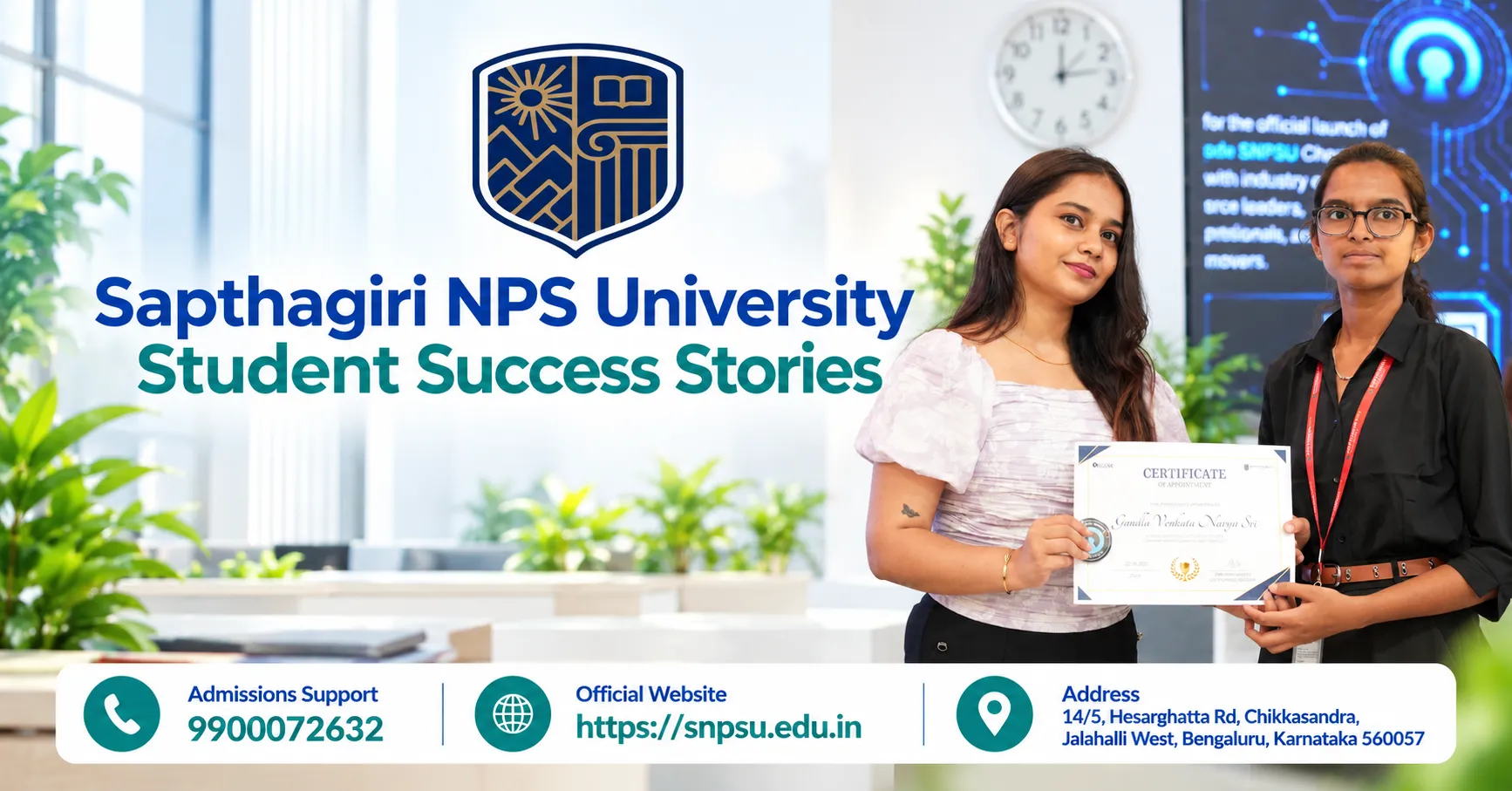
Sapthagiri NPS University Student Success Stories Inspiring Academic Excellence and Future Achievement
Celebrating Student Achievement Through Our University’s Educational Vision
Every successful educational journey begins with ambition, determination, and a willingness to learn. Our University believes that higher education should empower students to discover their potential, strengthen their abilities, and develop the confidence to pursue meaningful aspirations. Every learner brings unique strengths, interests, and goals to the university experience, making each educational journey different and valuable. We encourage students to approach learning with curiosity, discipline, creativity, and a commitment to continuous improvement. Academic achievement extends beyond examination results because it also involves developing problem-solving abilities, improving communication, participating in collaborative activities, and learning to make responsible decisions. Through academic engagement, practical learning, faculty guidance, and personal development, students can build capabilities that support their ambitions. Sapthagiri NPS University student success stories reflect the importance of academic dedication, practical understanding, personal growth, and lifelong learning. We encourage learners to recognise the value of every milestone, whether it involves understanding a difficult concept, completing a meaningful project, improving presentation skills, or becoming more confident in teamwork. These experiences can contribute to a stronger foundation for future opportunities. Our University aims to promote a learning environment where students can explore their interests, strengthen their knowledge, and prepare thoughtfully for academic and professional responsibilities. We believe meaningful success develops through consistent effort, constructive feedback, integrity, and the willingness to learn from experience.
Our Commitment to Academic Excellence and Student Development
A strong academic foundation helps students understand essential concepts and approach new challenges with confidence. Our University encourages learners to engage actively with their subjects, clarify doubts, complete assignments responsibly, and explore the connections between theoretical knowledge and practical applications. Effective learning requires more than memorising information; it involves interpretation, analysis, independent reasoning, and the ability to explain ideas clearly. Students can strengthen these abilities through regular study, classroom participation, thoughtful discussions, and constructive use of academic feedback. We encourage learners to establish realistic goals and develop study habits that support consistent progress. Academic excellence and student development remain important elements of our educational philosophy. We recognise that every student progresses differently and may encounter different academic challenges along the way. Therefore, we encourage patience, determination, and a willingness to improve rather than comparing individual journeys. Students can benefit from identifying their strengths, recognising areas requiring additional attention, and seeking appropriate guidance when necessary. Our University aims to encourage responsible learning habits, independent thinking, and a positive attitude towards improvement. These qualities can support students as they advance through their programmes and prepare for future academic or professional opportunities.
Transforming Classroom Knowledge into Practical Understanding
Meaningful education connects theoretical knowledge with practical understanding. Our University encourages students to explore how academic concepts can be applied to relevant questions, projects, and professional situations. Depending on programme requirements, learners may participate in assignments, laboratory exercises, case discussions, demonstrations, and other discipline-specific activities. These experiences can help students examine problems systematically, test ideas, evaluate information, and communicate their conclusions. Practical learning also encourages attention to detail, careful planning, and the ability to reflect on the strengths and limitations of different approaches. Practical learning and experiential education help students strengthen their understanding by applying knowledge in meaningful contexts. Collaborative activities can also develop communication, organisation, teamwork, and responsible decision-making. We encourage learners to approach practical tasks with curiosity and a commitment to improving their abilities. The educational value of an activity extends beyond its final result because preparation, experimentation, feedback, and reflection all contribute to learning. By engaging thoughtfully with practical experiences, students can develop a foundation that supports further study, professional preparation, and lifelong development.
Faculty Guidance That Encourages Confidence and Progress
Faculty members contribute to student development by explaining concepts, clarifying academic expectations, and providing constructive feedback. Our University values respectful academic interaction because students often benefit from discussing difficulties and exploring alternative approaches with their educators. Learners may require guidance when studying unfamiliar subjects, planning assignments, selecting project topics, or reviewing their academic progress. Appropriate feedback can help students recognise gaps in understanding, strengthen their learning strategies, and develop greater confidence in their abilities. We encourage students to ask questions, participate in discussions, and take responsibility for their academic development. Faculty mentorship and academic guidance can support students as they develop independent thinking and more effective learning habits. Meaningful guidance should encourage learners to examine information, consider different perspectives, and reach reasoned conclusions. Our University recognises that students have different interests and may need different approaches to achieve their objectives. Constructive academic relationships can help learners identify their strengths, explore future study options, and approach challenges with greater confidence. We encourage students to use feedback responsibly and remain committed to improving their knowledge throughout their educational journey.
Encouraging Innovation, Creativity, and Independent Thinking
Innovation begins with curiosity and the willingness to examine familiar problems from different perspectives. Our University encourages students to develop ideas, consider alternatives, and explain why a particular approach may be useful. Creativity is valuable across academic disciplines because students must often interpret information, identify challenges, and consider possible solutions. Innovation does not always require a completely new invention; it can involve improving an existing process, organising information more effectively, or discovering a clearer way to communicate an idea. Projects, discussions, and collaborative activities can provide opportunities to practise these abilities. Creative thinking and student innovation can contribute to stronger problem-solving skills and greater confidence. Students benefit when they learn to evaluate their ideas critically, consider feedback, and refine their approaches. Our University encourages learners to remain open to new perspectives while maintaining intellectual honesty and ethical awareness. We believe creativity becomes more valuable when combined with research, planning, practical understanding, and responsible decision-making. By encouraging thoughtful exploration, we aim to help students develop capabilities that remain useful as academic knowledge and professional expectations evolve.
Student Projects That Demonstrate Learning and Development
Academic projects give students opportunities to apply knowledge, organise information, investigate questions, and communicate findings clearly. A project may require learners to define an objective, review relevant information, choose suitable methods, manage time, and evaluate results. These activities encourage students to move beyond theoretical understanding and examine problems systematically. Group projects can also develop collaboration because students must coordinate responsibilities, exchange ideas, and work towards shared outcomes. Individual projects may strengthen independence, concentration, and confidence in completing demanding tasks. Student projects and applied learning achievements can demonstrate how learners develop their abilities throughout higher education. We encourage students to treat projects as opportunities for learning rather than focusing exclusively on the final submission. Reviewing mistakes, incorporating feedback, and documenting findings can improve understanding and highlight areas for further development. Completed projects may also provide useful examples of skills when students prepare academic portfolios or discuss relevant experience in future applications. Our University encourages learners to approach project work with originality, accuracy, responsibility, and a commitment to continuous improvement.
Developing Communication Skills for Academic and Professional Growth
Communication helps students share ideas, understand others, and participate confidently in academic and professional environments. Effective communication involves speaking clearly, writing accurately, listening attentively, asking relevant questions, and presenting information in an organised manner. Students can strengthen these abilities through classroom discussions, presentations, group assignments, and other suitable academic activities. Public speaking may initially feel challenging, but preparation, repeated practice, and constructive feedback can help learners become more confident. Students also benefit from learning how to explain complex information in language that different audiences can understand. Communication skills and student confidence develop through consistent practice and meaningful participation. These abilities can support academic presentations, interviews, group discussions, and professional interactions. Our University encourages students to communicate respectfully, consider different viewpoints, and express their ideas with clarity. We believe effective communication combines preparation, confidence, accuracy, and respect for others. By developing these habits during their studies, learners can strengthen their ability to collaborate, share knowledge, and represent their ideas effectively in different situations.
Leadership, Teamwork, and Responsible Collaboration
Leadership involves initiative, accountability, empathy, thoughtful decision-making, and the ability to contribute towards shared objectives. Our University encourages collaborative learning because group activities can help students practise coordinating tasks, listening to different opinions, resolving disagreements, and fulfilling responsibilities. Such experiences demonstrate the importance of reliability, mutual respect, and clear communication. Students may discover leadership strengths by helping organise a project, supporting classmates, explaining an idea, or taking responsibility for an important task. Student leadership and collaborative learning help learners understand how individual contributions influence shared outcomes. Effective teamwork requires patience, adaptability, and a willingness to consider different perspectives. We encourage students to recognise the strengths of their peers and contribute constructively to group activities. Leadership becomes more meaningful when it creates an environment where people can participate, develop, and work towards common goals. These experiences can help students strengthen interpersonal abilities and prepare for responsibilities in future academic and professional settings.
Preparing Students for Future Career Opportunities
Career preparation involves understanding personal interests, strengthening relevant skills, and exploring the qualifications required for preferred professional pathways. Our University encourages students to consider how academic knowledge connects with workplace responsibilities and changing industry expectations. Technical knowledge may be essential for certain roles, while communication, analytical reasoning, teamwork, adaptability, and ethical awareness are valuable across many fields. Students can strengthen these capabilities through academic participation, suitable practical activities, and consistent skill development. Career readiness and professional development should be approached as an ongoing process rather than a decision made only near graduation. Students can benefit from researching possible pathways, setting realistic goals, and identifying areas requiring further preparation. Employment outcomes depend on qualifications, practical experience, recruitment requirements, individual preparation, and broader economic conditions. Our University therefore encourages students to focus on developing genuine capabilities and making informed decisions. We aim to support a learning environment that values career awareness, continuous improvement, and responsible preparation for future opportunities.
Research Awareness and a Culture of Lifelong Learning
Research encourages students to investigate questions, examine evidence, compare perspectives, and develop conclusions supported by reliable information. Our University values research awareness because these abilities contribute to intellectual development across different disciplines. Students can strengthen research skills by identifying relevant sources, organising information, evaluating evidence, and distinguishing established facts from assumptions. Academic assignments and projects may provide opportunities to practise these skills while developing independence. Research also encourages accuracy, patience, and a willingness to reconsider conclusions when new evidence becomes available. Research awareness and analytical learning can help students approach academic questions more systematically. We encourage learners to understand the importance of academic integrity, appropriate acknowledgement of sources, and responsible use of information. These habits can support further study, professional analysis, and informed decision-making. Lifelong learning is especially important because knowledge, technologies, and professional practices continue to evolve. Our University encourages students to remain curious, continue developing their abilities, and approach new information with an open and thoughtful mindset.
Personal Growth, Resilience, and Self-Confidence
Student development includes personal changes that may not always appear in examination results or formal academic records. Our University recognises that higher education can help learners develop independence, confidence, and a clearer understanding of their strengths. Students may encounter unfamiliar subjects, demanding assignments, new responsibilities, or situations that require them to adapt. These experiences can become opportunities to practise patience, problem-solving, and responsible decision-making. We encourage students to set realistic goals, reflect on their progress, and recognise the value of gradual improvement. Personal growth and student resilience develop when learners respond constructively to difficulties and remain willing to learn. Resilience does not mean avoiding mistakes; it involves recognising challenges, seeking appropriate support, reviewing an approach, and continuing to make progress. Our University encourages a learning environment where students can ask questions without embarrassment and use feedback to improve. We believe ambition becomes more sustainable when combined with preparation, responsibility, and a balanced approach to academic life. These qualities can help learners approach future challenges with greater confidence.
Digital Learning and Technology-Enabled Student Development
Digital literacy is increasingly important in contemporary education and professional environments. Our University recognises that digital tools can support research, communication, collaboration, information management, and subject-specific learning. Students benefit from understanding how to use appropriate technology to organise their work and explore educational resources. However, effective digital learning requires more than familiarity with applications or devices. Learners must also evaluate information carefully, protect their data, respect intellectual property, and use digital resources responsibly. Digital learning and technology skills can help students adapt to changing educational and professional expectations. We encourage learners to use technology to strengthen understanding rather than replace independent judgement or critical thinking. Students should continue developing conceptual knowledge, analytical abilities, and communication skills alongside digital competence. Our University believes technology is most valuable when it supports thoughtful investigation, responsible collaboration, and meaningful learning. These combined abilities can contribute to a stronger foundation for future study and professional participation.
Student Engagement and Meaningful Campus Experiences
University life provides opportunities for students to participate in academic activities, exchange ideas, develop interests, and build relationships with peers. Our University values student engagement because suitable academic discussions, cultural activities, collaborative initiatives, and learning events can strengthen communication and interpersonal abilities. These experiences may also allow learners to discover interests beyond their primary subjects. We encourage students to approach campus activities with curiosity and respect while balancing them with their academic responsibilities. Student engagement and campus experiences can contribute to a broader educational journey. Meaningful participation requires a willingness to contribute positively, cooperate with others, and take responsibility for shared activities. Students may develop confidence by presenting ideas, supporting classmates, or helping organise suitable initiatives. We believe campus engagement can complement classroom learning by providing opportunities to practise leadership, teamwork, and social awareness. These experiences may become valuable milestones in students' personal and educational development.
Ethical Values, Integrity, and Social Responsibility
Academic and professional achievements become more meaningful when supported by honesty, accountability, fairness, and respect for others. Our University considers ethical awareness essential to student development. Learners should understand the importance of submitting original work, acknowledging sources, respecting different opinions, and fulfilling responsibilities honestly. Ethical values also influence teamwork, research, communication, and professional decision-making. We encourage students to consider the consequences of their actions and understand how responsible conduct contributes to trust. Academic integrity and professional ethics are important foundations for meaningful achievement. Students who approach their responsibilities with honesty can contribute more positively to collaborative environments and future workplaces. Our University encourages learners to develop sound judgement, respect the perspectives of others, and recognise their responsibilities to the wider community. We believe education should develop both knowledge and character, supporting students in becoming thoughtful, responsible, and capable individuals.
How Students Can Build Their Own Success Stories
Every student can work towards meaningful progress by identifying personal goals and approaching learning with commitment. Our University encourages learners to understand programme expectations, identify areas of interest, and create realistic plans for improvement. Regular study, active participation, constructive use of feedback, and suitable practical experiences can help students strengthen their knowledge. Keeping a record of completed projects, acquired skills, and important learning milestones can also support reflection. We encourage students to remain open to opportunities while understanding that progress often requires patience and consistent effort. Sapthagiri NPS University student success stories should reflect authentic journeys supported by genuine achievements, documented experiences, and individual perspectives. We encourage learners to recognise their progress without comparing every milestone with someone else's journey. Meaningful success develops through preparation, responsible choices, and the willingness to continue improving. Our University aims to encourage students to pursue their aspirations with confidence while remaining grounded in integrity, discipline, and a commitment to lifelong learning.
Our Commitment to Continuous Academic Improvement
A meaningful educational environment requires regular attention to teaching practices, student engagement, curriculum relevance, and learning outcomes. Our University values educational quality because students benefit from clear learning objectives, constructive feedback, appropriate resources, and opportunities to participate actively. We recognise the importance of reviewing educational approaches and considering how they can support different learning needs. Students also contribute to a positive academic environment by communicating constructively and completing their responsibilities. Quality education and continuous improvement are important parts of responsible educational development. We encourage reflection, constructive engagement, and a commitment to learning. Our University believes that meaningful education should remain relevant to students' academic needs while encouraging them to prepare for changing expectations. Our objective is to support learning experiences that develop knowledge, capability, ethical conduct, and individual growth.
The Importance of Authentic Student Success Stories
Authentic student experiences can help prospective learners understand the different ways higher education contributes to personal and academic development. Our University recognises the value of sharing genuine achievements, provided the details are accurate and appropriately approved. A meaningful success story may describe a student's learning milestones, challenges, contributions, and outcomes. Where relevant, it can also explain how academic guidance, practical assignments, or individual effort contributed to progress. Verified student achievements and genuine testimonials help maintain trust and provide prospective students with a more realistic understanding of educational experiences. Awards, placements, academic results, and professional accomplishments should only be presented as confirmed when supporting information is available. Our University encourages responsible communication that respects student privacy and avoids creating unrealistic expectations. Authentic stories are most valuable when they communicate genuine experiences and acknowledge that outcomes differ according to individual circumstances and preparation.
Sapthagiri NPS University Student Success Stories and Future Aspirations
The value of higher education can be seen in how students develop their knowledge, strengthen their abilities, and prepare for future responsibilities. Our University encourages students to explore their interests, identify realistic goals, and develop the confidence to pursue suitable opportunities. Some learners may aspire to further education, while others may focus on professional careers, research, entrepreneurship, or community involvement. Every pathway requires preparation, continued learning, and responsible decision-making. Sapthagiri NPS University student success stories reflect the importance of academic engagement, practical learning, personal growth, and informed career planning. We recognise that individual ambitions differ and that success cannot be defined by one outcome alone. Future-ready education involves building capabilities that can support changing academic and professional expectations. Our University aims to encourage students to remain curious, adaptable, and committed to improving their understanding while approaching their futures with purpose and confidence.
Frequently Asked Questions About Sapthagiri NPS University Student Success Stories
What do Sapthagiri NPS University student success stories represent?
These stories represent the different ways students can progress through academic learning, practical experiences, personal development, and the pursuit of future goals. Our University believes meaningful achievement includes more than examination results or professional outcomes. It may involve improving communication, completing a challenging project, developing confidence, or learning to collaborate effectively. Each student's journey depends on individual effort, circumstances, interests, and available opportunities. We encourage students to recognise their progress and continue developing their abilities. Sapthagiri NPS University student success stories should be supported by genuine experiences, verified details, and appropriate permission when individual students are featured. Our educational philosophy focuses on encouraging responsible learning, personal growth, and the development of useful skills. Prospective students should consult official university sources for confirmed achievements and current academic information.
How does Our University encourage academic excellence?
Our University encourages academic excellence by valuing conceptual understanding, active participation, practical application, and constructive feedback. Students are encouraged to clarify doubts, manage their study responsibilities, and approach academic challenges with determination. Learning becomes more meaningful when students connect theoretical knowledge with practical situations. Regular reflection can help learners identify strengths and areas requiring further development. Faculty guidance and responsible academic engagement can support progress throughout a programme. Academic excellence and continuous learning develop through consistent effort rather than one examination or achievement. Our objective is to encourage an educational environment that supports knowledge, confidence, independent thinking, and responsible learning habits. Students are encouraged to seek appropriate guidance and remain committed to improving their abilities.
Why are practical learning and student projects important?
Practical learning and student projects allow learners to explore how academic concepts can be applied to relevant questions and tasks. Depending on their programmes, students may participate in assignments, laboratory activities, case studies, or project-based exercises. These experiences can strengthen planning, analysis, communication, and problem-solving abilities. Students may also learn to manage time, evaluate feedback, and improve their methods. Practical learning and student projects complement theoretical knowledge and contribute to broader academic development. The value of a project depends on its relevance, quality, and the student's actual contribution. We encourage learners to approach practical activities with curiosity, integrity, and responsibility while reflecting on what they have learned.
How can students prepare for future career opportunities?
Career preparation begins with understanding personal interests and identifying the skills required for preferred pathways. Students can strengthen their readiness through academic engagement, practical assignments, communication practice, teamwork, and continued learning. They should also research relevant qualifications and evaluate opportunities using reliable information. Professional outcomes depend on many factors, including preparation, qualifications, individual circumstances, and employment conditions. Career preparation and professional development require realistic planning and ongoing skill improvement. Our University encourages students to set achievable goals, build relevant capabilities, and remain open to learning. Adaptability, integrity, and a willingness to improve are valuable qualities for future professional responsibilities.
How can prospective students find verified university information?
Prospective students can review the official university website and admissions portal for current programme details, eligibility requirements, and admission procedures. Information about awards, testimonials, placements, or individual achievements should be checked against authorised publications and supporting records. We encourage applicants to clarify their questions through official admissions communication channels before making educational decisions. Official university information and verified student achievements help applicants make informed choices and develop realistic expectations. Our University encourages prospective students to rely on accurate, current information when exploring programmes and planning their educational journeys.
Our University believes that meaningful educational progress is built through curiosity, consistent effort, constructive guidance, and responsible decision-making. We encourage students to explore their potential, strengthen their knowledge, and develop the abilities required to pursue their individual aspirations. Every genuine milestone can contribute to a broader journey of learning and self-improvement. Our commitment is to encourage an educational environment that values academic engagement, ethical conduct, confidence, and preparation for future opportunities. Sapthagiri NPS University student success stories highlight the importance of academic excellence, practical understanding, innovation, personal growth, and continuous development. For admissions enquiries and current programme information, please contact our team at 9900072632.
Contact Our University
| Information | Details |
|---|---|
| University Name | Sapthagiri NPS University |
| Address | #14/5, Chikkasandra, Hesaraghatta Main Road, Bengaluru, Karnataka – 560057 |
| Admissions Email | Click Here |
| Contact Number | 9900072632 |
| Official Website | Click Here |
| Admissions Portal | Click Here |
Our University remains committed to fostering academic excellence, innovation, practical learning, and holistic student development. We encourage every student to explore their potential, strengthen their abilities, and pursue their aspirations with confidence and determination. Through continuous learning, meaningful academic experiences, and skill development, students can build a strong foundation for future academic and professional opportunities. We value creativity, integrity, dedication, and the determination to achieve meaningful goals. For admissions enquiries and the latest programme information, please contact our team at 9900072632. Shape your future with knowledge, innovation, and academic excellence at Our University!
Leave a Comment