
Valmiki Jayanti – History, Significance, Celebrations and Legacy
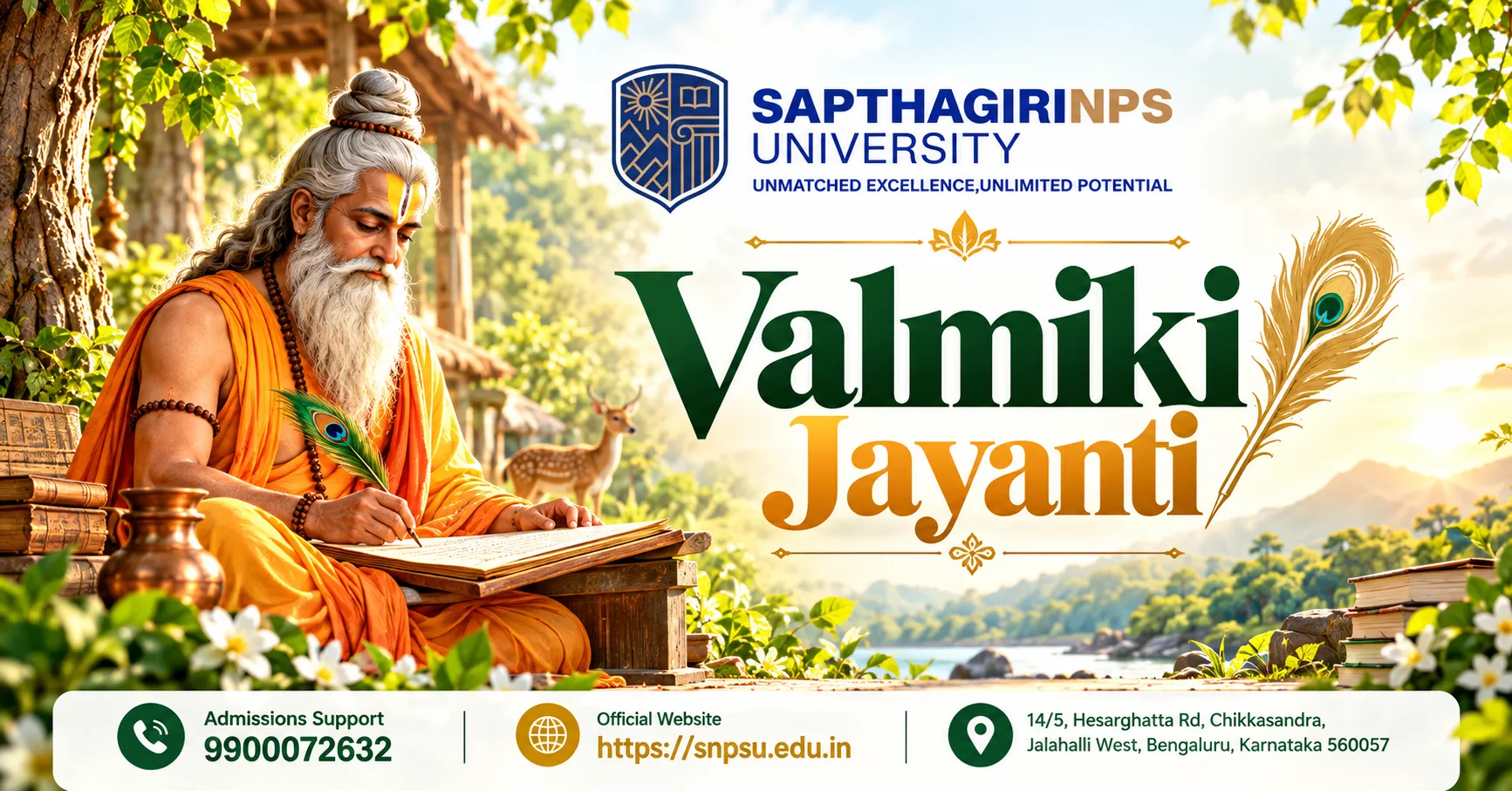
Valmiki Jayanti – History, Significance, Ramayana and Celebrations
Valmiki Jayanti is a significant occasion dedicated to remembering Maharishi Valmiki, traditionally revered as the Adi Kavi, or the first poet, of Sanskrit literature and associated with the composition of the Ramayana. The occasion provides an opportunity to explore India's literary, spiritual and cultural heritage while reflecting on the importance of knowledge, transformation, values and storytelling. Valmiki Jayanti 2026 will be observed on Monday, 26 October 2026, corresponding with Ashwin Purnima according to the Hindu lunar calendar. The occasion is not only connected with the remembrance of a revered sage but also encourages learners to understand how literature can preserve ideas, traditions and moral reflections across generations. Through Valmiki Jayanti celebration, students can discover the historical and cultural dimensions associated with Maharishi Valmiki and develop a deeper appreciation for India's classical literary traditions. The occasion can also encourage discussions about the enduring place of the Ramayana in Indian cultural consciousness and the role of ancient literature in shaping storytelling traditions. For educational institutions, Valmiki Jayanti offers a meaningful setting for literary activities, cultural programmes, discussions, readings and creative presentations that connect students with India's heritage in an engaging manner.
From Ancient Memory to a Celebrated Cultural Occasion
The History of Valmiki Jayanti is closely associated with the traditional remembrance of Maharishi Valmiki's birth anniversary. Valmiki Jayanti is observed on Ashwin Purnima, and the date changes each year according to the Hindu lunar calendar. In 2026, the observance falls on 26 October. Maharishi Valmiki occupies an important place in Indian literary tradition because he is traditionally regarded as the author of the Ramayana and as the Adi Kavi. The Ramayana is traditionally described as an extensive Sanskrit epic consisting of thousands of verses and several major sections. Over time, the remembrance of Valmiki has developed into a cultural occasion marked by prayers, literary programmes, community gatherings, educational activities and discussions about his contribution to Indian heritage. The occasion therefore brings together literary appreciation and cultural remembrance. It provides an opportunity for younger generations to learn about classical literature while understanding how stories, poetry and philosophical ideas have been transmitted through generations. Valmiki Jayanti also creates space for reflection on the importance of preserving India's diverse literary traditions through education and responsible cultural engagement.
The Sage Behind a Monumental Literary Tradition
Maharishi Valmiki is traditionally remembered as a great sage and the Adi Kavi of Sanskrit literature. His name is inseparably associated with the Ramayana, one of India's most influential classical epics. Traditional accounts describe his transformation from Ratnakara into the sage Valmiki through intense spiritual practice and devotion. These accounts form an important part of the cultural narratives surrounding his life, although details of his historical biography are understood primarily through traditional sources. His literary legacy is particularly important because the Ramayana became a foundational narrative within Indian cultural traditions and subsequently inspired numerous retellings, performances, artistic forms and regional literary traditions. The figure of Valmiki therefore represents more than authorship alone; he is remembered within a broader tradition of poetry, spiritual reflection and cultural storytelling. Remembering him on his Jayanti gives students an opportunity to explore the relationship between literature and society and to understand how an ancient literary work can remain part of cultural conversations for centuries. His legacy also demonstrates the value of preserving classical knowledge while encouraging new generations to read, interpret and engage with India's literary heritage thoughtfully.
Understanding Valmiki and the Ramayana
The relationship between Valmiki and Ramayana traditions forms the central literary connection behind the occasion. The Ramayana is traditionally attributed to Maharishi Valmiki and is regarded as one of the major Sanskrit epics of India. Traditional accounts connect Valmiki with important events in the narrative, including his hermitage and his association with Sita and her sons, Lava and Kusha. According to the traditional account, Valmiki taught the Ramayana to Lava and Kusha. The epic contains themes involving duty, relationships, leadership, courage, responsibility, loyalty and ethical choices, which have contributed to its continuing cultural relevance. Different communities and regions have developed their own interpretations and forms of presenting the Ramayana, including oral traditions, theatre, dance, literature, visual art and public performances. This wide cultural presence makes Valmiki Jayanti particularly meaningful for students because it provides an opportunity to explore how literature travels across generations and develops new expressions while retaining its connection to an ancient source. Studying the Ramayana in its literary and cultural context can also encourage students to appreciate the importance of language, narrative structure, character development and historical traditions.
Why the Occasion Continues to Matter
The Valmiki Jayanti significance can be understood through the literary, cultural and educational importance associated with Maharishi Valmiki. The occasion encourages people to remember a figure traditionally regarded as a foundational poet of Sanskrit literature and to appreciate the enduring influence of the Ramayana. It also provides a wider opportunity to reflect on the role of literature in preserving cultural memory. For students, such occasions can make heritage more accessible by connecting historical narratives with activities such as reading, storytelling, essay writing, poetry, debates and cultural presentations. Valmiki Jayanti can also encourage reflection on the importance of personal transformation, learning and purposeful living, themes frequently associated with traditional accounts of Valmiki's life. Rather than being limited to a ceremonial observance, the occasion can become an educational experience through which students explore classical Indian literature and understand the diversity of India's cultural traditions. By engaging thoughtfully with the occasion, educational communities can encourage respect for heritage while creating opportunities for students to develop communication, research and creative-expression skills.
A Journey of Transformation and Self-Discovery
One of the most widely known traditional narratives surrounding Valmiki describes his transformation from Ratnakara into a revered sage. According to this traditional account, guidance from Narada and prolonged spiritual practice played a central role in his transformation, eventually leading to his association with the name Valmiki. This story has remained influential because it presents transformation as a journey involving reflection, discipline and a change in one's direction. When discussed in an educational environment, the narrative can encourage students to think about the importance of learning from experiences and developing positive goals. The story also demonstrates how cultural traditions often communicate values through memorable narratives rather than through abstract explanations alone. Valmiki's traditional journey is therefore an important part of the broader cultural context of his Jayanti. It can inspire conversations about self-improvement, responsibility, perseverance and the potential for constructive change. For young learners, these themes can be connected with everyday experiences such as developing academic discipline, improving communication, respecting others and using knowledge responsibly.
Literature as a Bridge Between Generations
The continuing presence of Valmiki's literary legacy demonstrates how classical works can remain relevant through reinterpretation and cultural transmission. The Ramayana has been represented through different forms of storytelling, performance, literature and visual culture, allowing successive generations to encounter its narratives in varied ways. Maharishi Valmiki is therefore remembered not only as a traditional literary figure but also as an important symbol of India's storytelling heritage. His association with the Ramayana gives students an opportunity to explore how language can preserve cultural memory and how literature can influence art, theatre, education and public life. A Valmiki Jayanti celebration in an educational setting can include reading sessions, literary discussions, speeches, quizzes, storytelling activities, cultural performances and creative writing. Such programmes can make the occasion interactive while helping students understand the connection between heritage and contemporary education. When students participate actively, the celebration becomes more than a formal event; it becomes an opportunity to explore literature, culture and communication through meaningful academic and creative activities.
Bringing the Heritage of Valmiki Into Campus Learning
A meaningful Valmiki Jayanti programme can create opportunities for students to connect cultural heritage with modern learning. The occasion can be observed through a combination of literary activities, cultural presentations and educational discussions that introduce students to the life and legacy traditionally associated with Maharishi Valmiki. Students can participate in essay competitions, poetry sessions, storytelling, presentations on the Ramayana, quizzes on Indian literary heritage and group discussions about the importance of classical literature. Faculty members can guide students in understanding the historical and cultural context of the traditions surrounding Valmiki while encouraging respectful academic discussion. Digital presentations can also make the subject accessible to students who are interested in literature, history, communication and cultural studies. Such activities encourage research, public speaking, teamwork and creative expression while strengthening awareness of India's literary heritage. In this way, Valmiki Jayanti can become an occasion where cultural remembrance and academic learning complement each other, allowing students to appreciate the continuing role of classical literature in contemporary education.
Valmiki Jayanti 2026 – A Day for Reflection and Learning
Valmiki Jayanti 2026 will be observed on Monday, 26 October 2026, on Ashwin Purnima according to the cited Indian lunar-calendar calculation. The day provides an opportunity to remember Maharishi Valmiki and explore his traditional contribution to Sanskrit literature and the Ramayana. For students and educational communities, the occasion can be used to promote reading, literary appreciation, cultural awareness and thoughtful discussion. A Valmiki Jayanti celebration can bring together students and faculty through activities that highlight poetry, storytelling, classical literature and India's diverse cultural traditions. The occasion can also encourage students to consider the importance of preserving literary heritage while approaching historical and traditional narratives with curiosity and academic interest. As generations continue to discover the Ramayana through books, performances, digital media and cultural programmes, the legacy associated with Valmiki continues to provide a valuable subject for learning. Observing the day with educational purpose can help students understand how literature connects the past with the present and how cultural knowledge can continue to inspire learning across generations.
Valmiki Jayanti – History, Significance, Ramayana and Celebrations
1. What is Valmiki Jayanti and why is it celebrated?
Valmiki Jayanti is observed to commemorate the birth anniversary of Maharishi Valmiki, who is traditionally regarded as the author of the Ramayana, one of the most influential Sanskrit epics of India. The occasion is observed with prayers, religious gatherings, cultural programmes and discussions about Valmiki’s contribution to Indian literature and spiritual traditions. Valmiki Jayanti also provides an opportunity to learn about the values, characters and teachings presented through the Ramayana. The day has particular importance for students and readers because it highlights the role of literature in preserving history, cultural traditions, ethical ideas and social values across generations.
2. Who was Maharishi Valmiki?
Maharishi Valmiki is traditionally revered as the Adi Kavi, meaning the first poet, and is associated with the composition of the Ramayana. According to traditional accounts, Valmiki underwent a profound spiritual transformation and became a sage and poet. His life story is often presented as an example of personal transformation, spiritual awakening and the pursuit of knowledge. Through the Ramayana, he created a literary work that has had a lasting influence on Indian culture, languages, performing arts, religious traditions and storytelling. His contribution continues to be remembered through Valmiki Jayanti and various literary and cultural observances.
3. When is Valmiki Jayanti celebrated?
Valmiki Jayanti is observed according to the Hindu lunar calendar, and therefore its Gregorian calendar date changes from year to year. It is traditionally associated with the birth anniversary of Maharishi Valmiki and is generally observed on Ashwin Purnima, the full-moon day of the Hindu month of Ashwin. Devotees, cultural organizations and educational institutions may organize special programmes on the occasion. Prayers, devotional activities, readings and discussions about the Ramayana and Valmiki’s contribution to Indian literature are common features of the observance.
4. What is the connection between Maharishi Valmiki and the Ramayana?
Maharishi Valmiki is traditionally regarded as the author of the Ramayana, which is also known as the Valmiki Ramayana. The epic narrates the life and journey of Lord Rama, including his exile, his relationship with Sita and Lakshmana, the abduction of Sita, the alliance with Hanuman and the conflict with Ravana. The Ramayana is not only a religious and literary text but also an important part of Indian cultural heritage. Its stories have been retold in numerous Indian languages and have inspired poetry, theatre, dance, music, television, cinema and folk traditions.
5. Why is Maharishi Valmiki known as Adi Kavi?
Maharishi Valmiki is traditionally known as Adi Kavi, or the first poet, because of his association with the composition of the Ramayana and the development of the shloka as a poetic form. Traditional accounts describe how an emotional experience involving the suffering of a bird led Valmiki to utter verses that became associated with the emergence of poetic expression. The Ramayana subsequently became one of the foundational works of Sanskrit literature. His designation as Adi Kavi reflects the important place given to him in the history and tradition of Indian poetry.
6. What are the major themes and values found in the Ramayana?
The Ramayana explores numerous themes, including duty, righteousness, loyalty, courage, sacrifice, compassion, family relationships and responsibility. Lord Rama is traditionally portrayed as a figure committed to Dharma, while other characters contribute different perspectives on loyalty, devotion, courage and moral responsibility. The epic also presents complex relationships between individuals and communities and examines the consequences of choices and actions. Because of these themes, the Ramayana has remained an important source of literature, philosophy, storytelling and cultural education for generations.
7. How is Valmiki Jayanti celebrated?
Valmiki Jayanti is celebrated through prayers, religious gatherings, cultural programmes, devotional activities and readings from the Ramayana. In some places, processions and community events are organized to commemorate Maharishi Valmiki. Temples and cultural institutions may conduct special ceremonies and discussions about his life and literary contribution. Schools and colleges can also mark the occasion through essay-writing, storytelling, poetry, speeches and educational programmes. Such activities help younger generations understand the historical, literary and cultural importance of Valmiki and the Ramayana.
8. What is the significance of Valmiki Jayanti for students?
Valmiki Jayanti provides students with an opportunity to learn about Indian literature, Sanskrit traditions, mythology, cultural heritage and classical storytelling. Studying Maharishi Valmiki and the Ramayana can introduce students to important themes such as duty, courage, integrity, compassion and perseverance. It can also encourage interest in literature and help students understand how ancient works have influenced Indian languages, arts and cultural traditions. Educational programmes on Valmiki Jayanti can therefore connect historical and literary learning with broader discussions about values and cultural heritage.
9. What is the story of Maharishi Valmiki’s transformation?
Traditional accounts describe Valmiki’s early life under the name Ratnakara, who is said to have lived as a robber before undergoing a profound spiritual transformation. According to the traditional narrative, his encounter with the sage Narada encouraged him to reflect deeply on his actions and the consequences of his life. Through meditation and spiritual practice, Ratnakara is said to have transformed into Maharishi Valmiki. Although this account belongs to traditional religious literature rather than established modern biography, it remains an important part of the cultural story associated with Valmiki and symbolizes the possibility of self-transformation, spiritual growth and the pursuit of knowledge.
10. What is the cultural significance of Valmiki Jayanti?
Valmiki Jayanti has considerable cultural and literary significance because it commemorates a figure traditionally associated with one of India’s most influential epics. The Ramayana has shaped storytelling, theatre, music, dance, visual arts and religious traditions across generations and continues to be interpreted in different regional and cultural contexts. Valmiki Jayanti provides an opportunity to recognize this literary heritage and encourage younger generations to explore classical Indian literature. Through celebrations, educational activities and cultural programmes, the occasion helps preserve awareness of Maharishi Valmiki’s literary legacy and the enduring cultural influence of the Ramayana.
Carrying the Literary Legacy Forward
Valmiki Jayanti ultimately offers an opportunity to remember the literary heritage associated with Maharishi Valmiki and to appreciate the continuing cultural presence of the Ramayana. The occasion brings together ideas of literature, tradition, learning and cultural remembrance, making it relevant to educational communities. The Valmiki Jayanti significance extends beyond a single day because it encourages continued interest in classical literature and the preservation of India's storytelling traditions. Through Valmiki and Ramayana studies, students can explore language, narrative, culture and the transmission of knowledge across generations. The History of Valmiki Jayanti also demonstrates how traditional observances can remain meaningful when they are connected with learning and community participation. As Valmiki Jayanti 2026 approaches, educational institutions can use the occasion to create thoughtful programmes that combine cultural awareness with academic engagement. Remembering Maharishi Valmiki is therefore an opportunity to celebrate literary heritage while encouraging students to read, question, learn and appreciate the depth of India's classical traditions.
Contact Details
| Contact Category | Details | Purpose |
|---|---|---|
| Admissions Helpline | +91 9900072632 | 👉Admission & General Enquiries |
| admissions@snpsu.edu.in | 👉Course & Admission Enquiries | |
| Campus Address | #14/5, Chikkasandra, Hesarghatta Main Road, Bengaluru – 560057, Karnataka, India | 👉Campus Visit |
| Official Website | snpsu.edu.in | 👉University Information |
| Online Admissions | admission.snpsu.edu.in | 👉Apply Online |
Valmiki Jayanti Wishes & Join Us Today
Warm Valmiki Jayanti wishes from our university! May the wisdom and literary legacy of Maharishi Valmiki inspire every student to pursue knowledge, creativity, values and purposeful learning. On the occasion of Valmiki Jayanti 2026, may the timeless heritage associated with the Ramayana continue to inspire young minds and encourage a deeper appreciation of Indian literature and culture. Valmiki Jayanti 2026 will be observed on 26 October 2026.
Happy Valmiki Jayanti! May this auspicious occasion bring wisdom, positivity and new inspiration to every learner.
Join Our University Today
Take the next step towards your academic journey.👉 Join our university today and become part of a learning environment focused on knowledge, skills, innovation and overall student development. Explore your preferred programme, connect with our admissions team and begin your application process without delay.👉 Click Here to Apply Now
Admissions Helpline: +91 9900072632
Email: admissions@snpsu.edu.in
Leave a Comment