
National Unity Day 2026 – History, Significance & Celebration
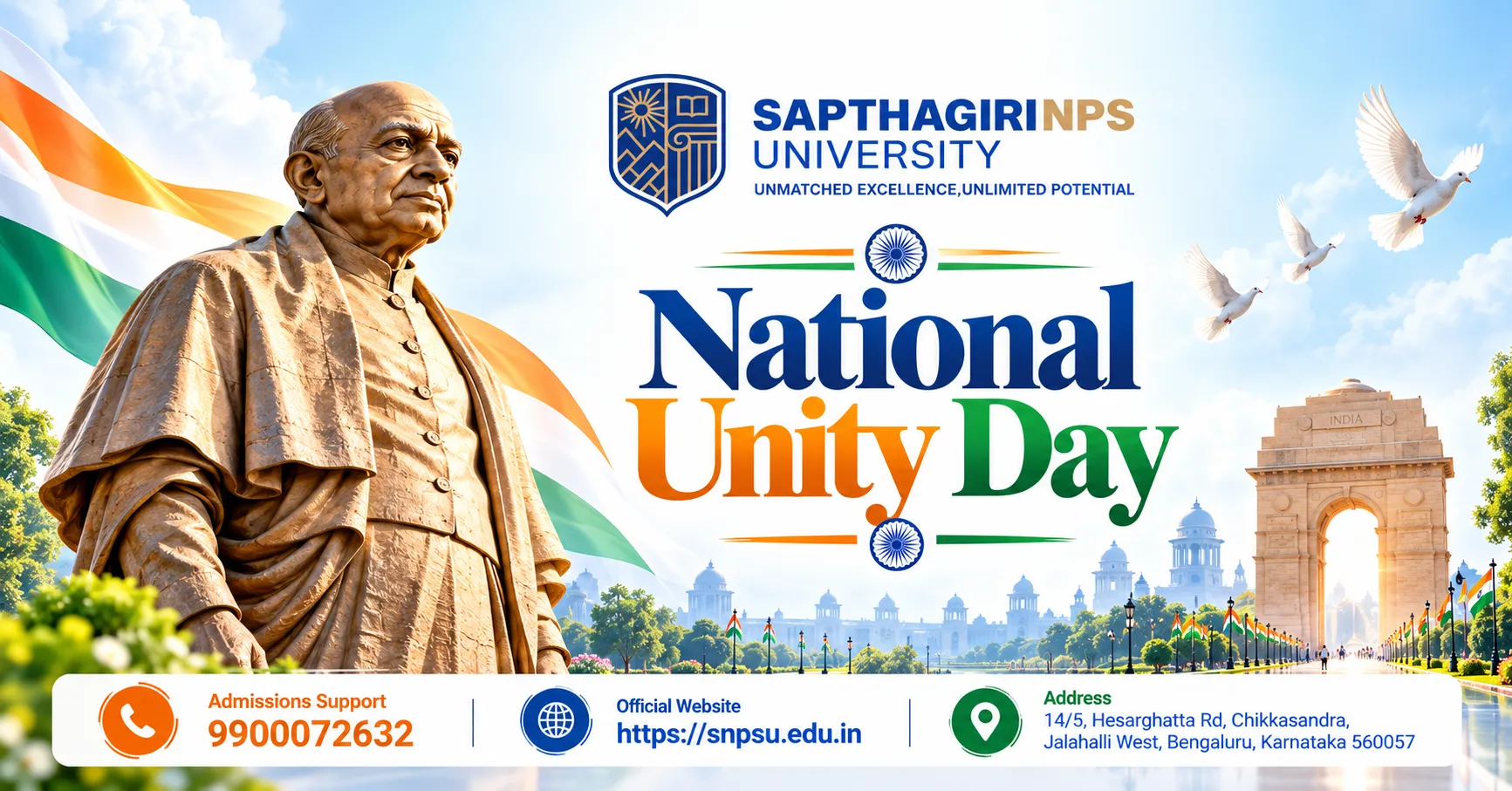
National Unity Day – History, Significance, Celebration and the Legacy of Sardar Vallabhbhai Patel
A Day That Reflects the Strength of a United Nation
National Unity Day is observed in India every year on 31 October to commemorate the birth anniversary of Sardar Vallabhbhai Patel and to highlight the importance of national unity, integrity and solidarity. The Government of India officially designated 31 October as Rashtriya Ekta Diwas in 2014. The observance provides an opportunity to remember Sardar Vallabhbhai Patel's contribution to India's national integration and to encourage citizens to value the country's unity and diversity. National Unity Day 2026 will be observed on Saturday, 31 October 2026. The occasion has particular relevance in educational institutions because students represent a generation that will carry forward the values of cooperation, respect and shared responsibility. A National Unity Day celebration can bring students together through activities that encourage teamwork, cultural understanding, awareness and responsible citizenship. The day also creates an opportunity to discuss how India's diverse languages, traditions, communities and regional identities exist within a shared national framework. By connecting historical understanding with student participation, National Unity Day can become a meaningful occasion for learning, reflection and collective responsibility.
Remembering the Statesman Behind the Observance
The association between National Unity Day and Sardar Vallabhbhai Patel is central to understanding the occasion. Born on 31 October 1875 in Nadiad, Gujarat, Patel became an important figure in India's freedom movement and later served as independent India's first Deputy Prime Minister and Home Minister. Government sources highlight his role in the political integration of princely states after independence and his contribution to building a more integrated Indian Union. His contribution is remembered through Rashtriya Ekta Diwas, which provides an annual occasion to reflect on national integration and the importance of maintaining unity and integrity. The historical contribution associated with Patel can be introduced to students through classroom discussions, presentations, exhibitions and cultural programmes. Learning about his public life also helps students understand the complex process through which different territories and political units became part of the newly independent Indian Union. Remembering such historical developments can strengthen awareness of India's constitutional and political journey while encouraging students to appreciate the importance of cooperation and collective responsibility. National Unity Day therefore connects an important chapter of India's history with contemporary educational learning.
The Story Behind Rashtriya Ekta Diwas
Rashtriya Ekta Diwas was officially introduced as an annual observance on 31 October in 2014. According to the Ministry of Home Affairs announcement, the occasion was intended to reaffirm the strength and resilience of the nation and its commitment to unity, integrity and security. The government also called for activities such as pledge-taking ceremonies, Run for Unity programmes and other public events involving citizens and young people. Since then, the day has become an annual occasion for institutions and communities to conduct programmes connected with national integration. The observance demonstrates how a commemorative day can be used to create awareness beyond the remembrance of an individual historical figure. In schools and universities, the occasion can encourage students to think about the meaning of unity in a diverse society. Activities can focus on collaboration, cultural exchange, discussions and creative expression. Such programmes can help students understand that unity does not require uniformity; instead, it can involve respecting different traditions while recognising a shared national identity and common responsibilities.
Understanding the Importance of National Unity Day
The Importance of National Unity Day can be understood through its emphasis on unity, integrity, social harmony and collective responsibility. India is characterised by extensive cultural, linguistic and regional diversity, making mutual respect and cooperation important aspects of civic life. National Unity Day provides an annual opportunity to reflect on these ideas and to remember the historical efforts associated with national integration. The observance can be particularly meaningful for young people because educational institutions bring together students from different backgrounds and experiences. A campus celebration can demonstrate the practical value of teamwork by involving students in activities where cooperation is essential. Discussions, cultural programmes, quizzes, poster-making, essay competitions and unity pledges can provide different ways for students to participate. These activities can encourage students to understand that national unity is connected not only with historical events but also with everyday attitudes such as respect, cooperation, responsible communication and appreciation of diversity. In this sense, National Unity Day can serve as an educational reminder that a strong society depends on constructive participation from its citizens.
Exploring the Significance Through Student Participation
The National Unity Day significance becomes especially relevant when students actively participate rather than simply observe a formal programme. Young people can explore the theme of unity through debates, speeches, cultural presentations, artwork, essays and group activities. Such programmes can introduce students to the historical background of Sardar Patel while giving them opportunities to express their own understanding of national integration. A campus environment naturally provides a setting where students from different academic disciplines and cultural backgrounds interact, making it suitable for activities centred on cooperation. A unity pledge, for example, can provide a formal moment of reflection, while group activities can demonstrate how different perspectives can contribute to a common objective. Government observances have included pledge ceremonies and Run for Unity activities, particularly involving young people and educational communities. Through meaningful participation, students can develop communication, teamwork, leadership and organisational skills alongside cultural awareness. The occasion can therefore connect civic education with practical student development.
Celebrating Diversity While Strengthening Togetherness
National Unity Day is also an opportunity to recognise that unity and diversity can exist together. India's cultural landscape includes different languages, cuisines, festivals, art forms, clothing traditions and regional customs, creating a diverse social environment. A National Unity Day celebration can showcase this diversity through cultural programmes where students present different forms of Indian heritage. Such activities can create opportunities for students to learn from one another and discover traditions beyond their immediate surroundings. Cultural exhibitions, music, dance, traditional art and regional presentations can all contribute to a broader understanding of India's heritage. The objective can be to create awareness and appreciation rather than simply presenting performances. Students can research the history and significance of the cultural elements they present, turning a celebration into an educational experience. This approach can help students recognise that diversity is an important part of India's social fabric while shared values such as respect, cooperation and responsibility provide common ground. National Unity Day can therefore become a platform where cultural learning and civic awareness come together.
From Historical Integration to Contemporary Responsibility
The historical association of Sardar Vallabhbhai Patel with India's integration provides an important starting point for discussing contemporary responsibility. Government sources describe Patel's role in the integration of hundreds of princely states into the Indian Union after independence. For students, this history can provide context for understanding why national integration remains an important subject. However, unity is also expressed through everyday actions, including respecting differences, communicating responsibly, cooperating with others and contributing constructively to society. Educational institutions can use National Unity Day to encourage students to consider these practical dimensions. Group projects, community activities and collaborative events can demonstrate how people with different viewpoints and experiences can work toward a shared objective. Such learning can help students understand that national unity is not limited to ceremonies or commemorative events. It can also be reflected in the way individuals interact with their communities and contribute to a respectful social environment. National Unity Day therefore provides an opportunity to connect historical knowledge with responsible citizenship.
National Unity Day 2026 and Its Continuing Message
National Unity Day 2026 will take place on 31 October 2026 and will mark another annual observance dedicated to remembering Sardar Vallabhbhai Patel and reflecting on India's unity and integrity. The occasion can be observed through educational programmes, unity pledges, cultural activities, student competitions and collaborative initiatives. Government-organised National Unity Day programmes have included activities such as the Run for Unity, Unity Marches, pledge ceremonies and cultural presentations. Educational institutions can adapt such themes into programmes suited to their campus environment and student community. Students can be encouraged to participate in activities that promote teamwork, cultural understanding and awareness of India's history. The 2026 observance can also provide an opportunity to explore how the idea of unity continues to matter in a society characterised by diversity. By combining historical learning with practical student engagement, the occasion can become a meaningful part of campus life. The central message remains connected with maintaining unity, integrity and mutual respect.
Creating a Meaningful Celebration on Campus
A meaningful National Unity Day programme at our university can bring together academic learning, cultural expression and student participation. Students can take part in a unity pledge, essay and speech competitions, poster-making activities, quizzes, cultural performances and group discussions related to India's unity and diversity. Faculty members can introduce students to the historical contribution of Sardar Vallabhbhai Patel and explain the background of Rashtriya Ekta Diwas. Student clubs and academic departments can collaborate to create exhibitions highlighting India's cultural diversity and historical journey. A Run for Unity or another fitness-based activity can add an element of collective participation, while discussions can provide space for students to express their understanding of unity and responsible citizenship. The celebration can also encourage students to think about how cooperation works within classrooms, teams and communities. By making the programme participatory, the occasion can become more engaging and educational. The objective is to help students connect a national observance with values they can practise in their academic and personal lives.
National Unity Day – History, Significance, Celebration and the Legacy of Sardar Vallabhbhai Patel
1. What is National Unity Day and why is it celebrated?
National Unity Day, also known as Rashtriya Ekta Diwas, is observed in India every year on 31 October. The day commemorates the birth anniversary of Sardar Vallabhbhai Patel, one of the prominent leaders of India’s freedom movement and an important figure in the political integration of the country after independence. National Unity Day emphasizes the importance of unity, national integration, solidarity and a shared sense of responsibility among citizens. The occasion encourages people to recognize India’s diversity while appreciating the importance of cooperation and unity in strengthening the nation.
2. When is National Unity Day celebrated?
National Unity Day is celebrated every year on 31 October, which is the birth anniversary of Sardar Vallabhbhai Patel. The Government of India introduced Rashtriya Ekta Diwas in 2014 to commemorate Patel’s contribution to national unity and integration. Schools, colleges, universities, government institutions and community organizations often organize activities around the occasion. These may include unity marches, awareness programmes, pledge ceremonies, speeches, essay competitions and discussions focusing on national integration and civic responsibility.
3. Who was Sardar Vallabhbhai Patel?
Sardar Vallabhbhai Patel was an Indian independence leader and statesman who played an important role in the freedom movement and in the political integration of India after independence. Born on 31 October 1875, Patel became associated with the Indian National Congress and participated in major movements during the struggle against British rule. After independence in 1947, he served as India’s first Deputy Prime Minister and Home Minister. He was closely involved in negotiations concerning the integration of numerous princely states into the Indian Union, making his role an important part of discussions about India’s political consolidation.
4. Why is Sardar Vallabhbhai Patel associated with national unity?
Sardar Vallabhbhai Patel is strongly associated with national unity because of his role in the integration of princely states following Indian independence. At the time of independence, the Indian subcontinent included British-administered territories as well as numerous princely states. Patel, working with other leaders and officials, played a major role in encouraging and negotiating the accession of many princely states to the Indian Union. His contribution to this process has led to his being widely remembered as an important figure in India’s political integration. National Unity Day commemorates his birth anniversary in this broader context of national integration.
5. What is the significance of National Unity Day?
National Unity Day highlights the importance of unity, integrity and cooperation in a diverse country. India is home to people with different languages, cultures, traditions, communities and regional identities. The observance encourages citizens to recognize this diversity while understanding the importance of maintaining a shared commitment to the country’s constitutional and civic values. For students, National Unity Day provides an opportunity to learn about India’s history, the integration of the country after independence and the responsibilities associated with being a citizen in a diverse democracy.
6. How is National Unity Day celebrated in schools and colleges?
Schools and colleges may organize National Unity Day through a range of educational and community activities. Students may participate in unity pledges, awareness programmes, speeches, essay-writing competitions, debates, quizzes, cultural programmes, poster-making activities and unity marches. Institutions may also conduct discussions about Sardar Vallabhbhai Patel’s contribution to India’s political integration and the importance of national unity. These activities provide students with an opportunity to learn about India's history while reflecting on cooperation, mutual respect, diversity and civic responsibility.
7. What is the National Unity Day pledge?
The National Unity Day pledge is used in institutional observances to reinforce the values of national unity, integrity and security. Participants typically affirm their commitment to preserving the unity and integrity of the nation and to contributing to a sense of harmony among citizens. Schools, colleges and government institutions may organize pledge ceremonies as part of their National Unity Day programmes. The activity is intended to create awareness about the importance of collective responsibility and the role citizens can play in maintaining social harmony and national integration.
8. What is the Run for Unity associated with National Unity Day?
The Run for Unity is a public-awareness activity associated with National Unity Day. It was introduced as part of the observances commemorating Sardar Vallabhbhai Patel and is intended to promote the message of unity and solidarity. Participants may include students, government employees, community members, athletes and members of various organizations. Runs and similar events can provide an opportunity for communities to come together around a common theme while raising awareness about national integration and the importance of collective participation.
9. What is Sardar Vallabhbhai Patel’s legacy in India?
Sardar Vallabhbhai Patel’s legacy is closely associated with the Indian freedom movement, political integration and public administration. His role in helping integrate princely states after independence is a major part of his historical legacy. He also served as an important leader in the national movement and held key responsibilities in the early years of independent India. The Statue of Unity in Gujarat, inaugurated in 2018, was built in his memory and is recognized as one of the prominent monuments associated with his legacy. His birth anniversary continues to be observed through National Unity Day.
10. What can students learn from National Unity Day and Sardar Vallabhbhai Patel’s legacy?
National Unity Day gives students an opportunity to learn about India’s freedom struggle, political integration, diversity and civic responsibilities. The life and public work of Sardar Vallabhbhai Patel can help students understand the historical challenges involved in bringing different territories together after independence. The occasion also encourages students to appreciate cultural diversity and the importance of cooperation, mutual respect and social harmony. Through educational programmes, discussions and community activities, students can develop a deeper understanding of the historical and civic importance of national unity and integrity.
Carrying the Spirit of Unity Beyond One Day
The value of National Unity Day extends beyond the date of 31 October because the principles associated with the observance can be reflected throughout the year. Students can practise unity through teamwork, respectful communication, inclusion, cultural awareness and responsible participation in campus activities. The legacy of Sardar Vallabhbhai Patel provides an important historical context, while Rashtriya Ekta Diwas creates an annual opportunity to revisit the broader ideas of national integration and solidarity. Government sources describe the observance as a way to reaffirm commitment to India's unity, integrity and security. For educational communities, this message can be translated into practical activities that encourage students to work together and appreciate India's diversity. A thoughtful National Unity Day celebration can therefore become more than a ceremonial programme; it can create opportunities for learning, collaboration and cultural understanding. As students prepare to become professionals, citizens and community members, these experiences can contribute to a broader understanding of shared responsibility. National Unity Day ultimately provides a meaningful occasion to remember India's journey toward integration and to reflect on the continuing importance of unity in a diverse society.
National Unity Day Wishes
Warm National Unity Day wishes from our university! May the spirit of unity, integrity and togetherness inspire us to respect India's diversity and work together towards a harmonious and responsible society. On National Unity Day 2026, we remember Sardar Vallabhbhai Patel and reflect on the values of cooperation, solidarity and national integration associated with Rashtriya Ekta Diwas.
Happy National Unity Day 2026!
May unity strengthen our bonds, diversity enrich our communities, and collective responsibility guide us towards a brighter future.
Contact Details
| Contact Category | Details | Purpose |
|---|---|---|
| General Enquiries | +91 9900072632 | 👉General Information |
| admissions@snpsu.edu.in | 👉Course & Admission Enquiries | |
| Campus Address | #14/5, Chikkasandra, Hesarghatta Main Road, Bengaluru – 560057, Karnataka, India | 👉Campus Visit |
| Online Admissions | Official Admission Portal | 👉Apply Online |
Join Our University
Join our university and take the next step towards a future built on knowledge, skills, innovation and professional growth. Explore your preferred programme, connect with our admissions team and begin your academic journey with confidence.
Admissions: +91 9900072632
Email: admissions@snpsu.edu.in
Leave a Comment