
Best College for CSE in Bangalore | Modern Learning & Careers

Best College for CSE in Bangalore – Build Your Future in Computer Science with Our University
Finding the Right Environment for Computer Science Education
Choosing the best college for CSE in Bangalore involves looking beyond basic academic qualifications and understanding the complete educational environment available to students. Computer Science and Engineering requires a combination of theoretical understanding, logical thinking, programming practice, project experience, technological awareness and professional development. Our university provides an academic environment designed to bring these elements together through classroom learning, practical activities, laboratory work, project development, industry interaction and career-oriented initiatives. Students receive opportunities to understand computing concepts while also applying their knowledge to practical situations. The learning experience is supported by modern classrooms, laboratories, computing facilities, research spaces and other academic infrastructure that encourage students to participate actively in their education. The CSE department focuses on technical knowledge, practical skills, hands-on applications and innovative teaching-learning approaches, helping students develop a stronger connection between academic concepts and real-world technology requirements. For students and parents searching for the best college for CSE in Bangalore, these factors are important because a successful technical education depends not only on classroom instruction but also on opportunities to practise, experiment, collaborate and develop professional confidence. Our university provides students with a structured environment where they can progressively strengthen their technical capabilities while discovering their areas of interest within the broader technology landscape. The objective is to help students develop a strong academic foundation while preparing them for future opportunities through practical learning, professional exposure and continuous development.
Modern Learning & Practical Exposure
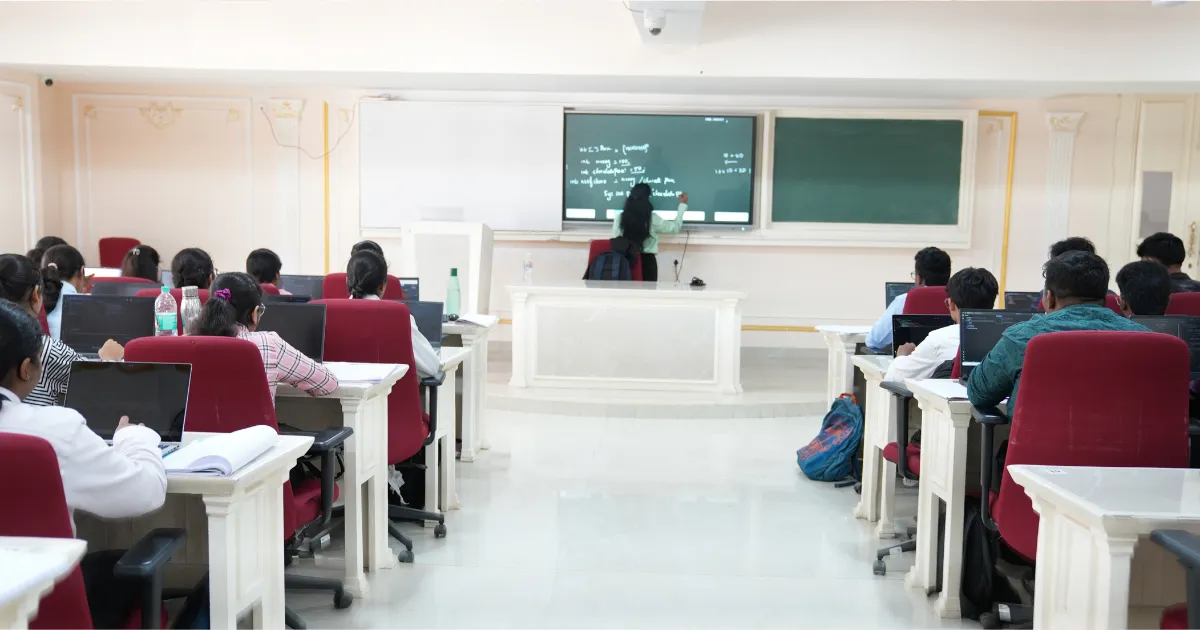
The image captures a modern Computer Science and Engineering classroom where students are actively engaged in programming and technology-based learning under faculty guidance. For students searching for the best college for CSE in Bangalore, a learning environment that combines academic instruction with practical application can be an important consideration. Our university’s CSE learning approach focuses on building strong foundational knowledge while giving students opportunities to apply concepts through hands-on activities, laboratory work, programming exercises and projects. The classroom environment shown here reflects technology-enabled learning, with students working on computers while following technical instruction and practical demonstrations. Such learning experiences can help students strengthen programming skills, logical thinking, problem-solving abilities and confidence in applying concepts. The CSE department also focuses on innovative teaching-learning methods, practical skills and hands-on applications supported by modern infrastructure. Sapthagiri NPS University For students exploring the best college for CSE in Bangalore, the combination of knowledgeable faculty guidance, computing facilities, practical learning, project work and technology exposure can contribute to a well-rounded Computer Science education. Through continuous practice and active participation, students can progressively develop the technical and professional capabilities needed for their future academic and career opportunities.
Where Fundamental Concepts Become Practical Skills
Computer science education becomes more meaningful when students can connect theoretical concepts with practical implementation. Programming logic, algorithms, databases, computing systems and other technical concepts require regular practice before students can confidently apply them to unfamiliar problems. Our university encourages hands-on learning so that students can move beyond memorising concepts and begin understanding how technology works in practical environments. Laboratory activities, technical exercises, project work and academic assignments provide opportunities to apply classroom knowledge and observe the results of different approaches. This practical process also teaches students how to identify errors, evaluate solutions and improve their work. When students repeatedly practise technical concepts, they can gradually develop stronger problem-solving abilities and greater confidence in handling complex tasks. Our university's CSE learning environment combines academic instruction with practical application so students can understand why a particular concept is important and where it can be used. This approach is particularly relevant for students searching for the best college for CSE in Bangalore because technology careers require graduates who can apply knowledge rather than simply recall information. Practical education also encourages students to become more independent learners because they begin experimenting with solutions and researching ways to overcome technical challenges.
The Academic Foundation Behind Technical Confidence
A strong technical career begins with a strong academic foundation. Students need to understand fundamental computing principles before progressing towards more complex technological applications. Our university provides structured academic learning supported by faculty guidance, laboratory activities and practical assignments. The CSE department focuses on developing technical knowledge and practical capabilities while encouraging students to approach computing challenges with analytical thinking. Students can strengthen their understanding through classroom discussions, academic exercises and hands-on activities that reinforce theoretical concepts. Faculty members can guide students when they encounter difficult topics and help them develop better approaches to problem-solving. This academic foundation becomes increasingly valuable as students progress through their education because advanced technical concepts often depend on knowledge acquired earlier. A student who understands the fundamentals of computing can adapt more effectively when introduced to new tools and technologies. Our university therefore focuses on developing knowledge progressively rather than treating individual academic subjects as isolated requirements. Students searching for the best college for CSE in Bangalore can consider this structured progression when evaluating the quality of their intended learning environment.
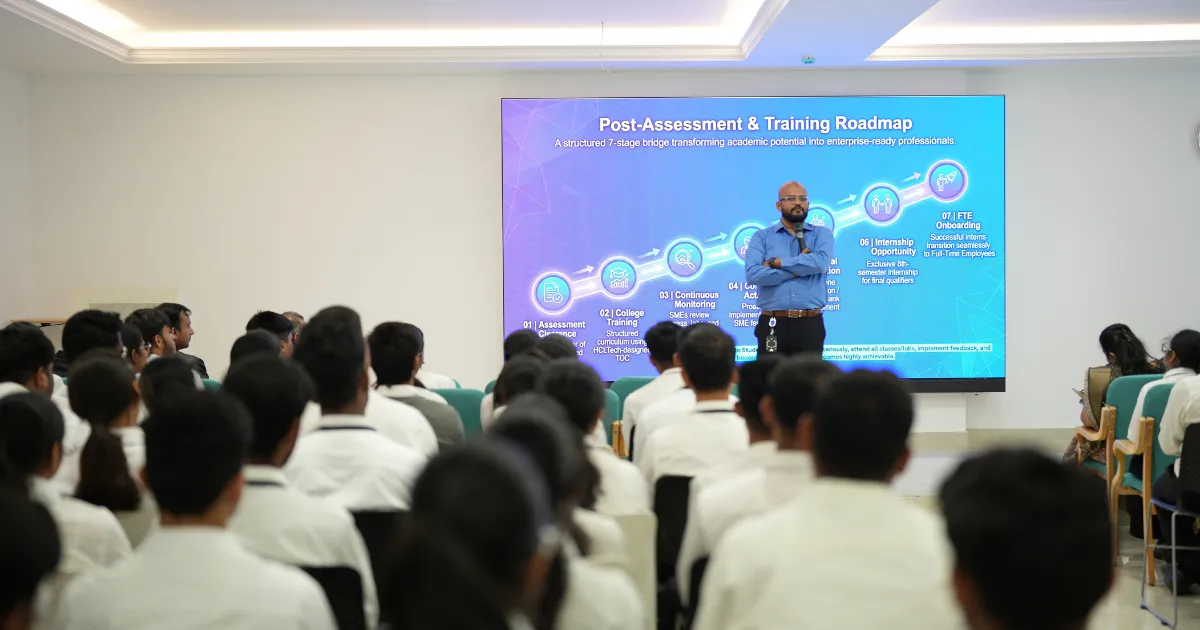
Our university provides students with opportunities to participate in structured industry-oriented training sessions that connect academic learning with professional expectations. The session reflects an interactive environment where students can gain valuable insights from experienced professionals about current technology trends, workplace practices, emerging opportunities and evolving industry requirements. Such interactions can help CSE students understand how technical knowledge is applied in real professional environments while developing greater awareness of career pathways and professional expectations. Expert-led training can also encourage students to strengthen their technical understanding, communication abilities, critical thinking and confidence. By connecting classroom concepts with practical industry perspectives, these sessions can complement academic learning and help students understand the importance of continuous skill development. Students can gain broader exposure to professional practices while preparing for internships, projects and future career opportunities. Our university encourages students to actively participate in such learning experiences and make meaningful use of opportunities that support their technical and professional development. For students planning to begin their CSE journey, 👉 Click Here to Apply and take the next step towards building a strong academic and professional foundation with our university.
From Laboratory Exercises to Real-World Solutions
Laboratory learning gives students the opportunity to experience technology directly. Instead of simply reading about computing systems, students can use laboratory environments to experiment, test ideas and understand how different concepts function. Our university provides laboratories and computing facilities that support practical technical education. These facilities allow students to practise concepts repeatedly and develop familiarity with tools and technical processes. Laboratory work can also introduce students to troubleshooting, testing and systematic problem-solving. When a programme does not produce the expected result, students need to examine their approach, identify possible causes and make corrections. This process develops patience and analytical thinking. Over time, such experiences can prepare students for larger academic projects and professional assignments. Our university encourages students to use practical environments as spaces for experimentation and learning rather than viewing laboratory work simply as a compulsory academic activity. This approach can help students develop greater confidence in handling technology and solving technical problems.
Our University Speciality for CSE
Our University offers a distinctive learning environment for students who want to build a strong foundation in Computer Science and Engineering while gaining practical exposure and professional confidence. The speciality of the learning experience lies in bringing together academic knowledge, hands-on learning, modern infrastructure, industry interaction, project development and career preparation within one educational environment. Students have opportunities to strengthen their technical understanding through classroom learning and laboratory practice while applying concepts through projects and practical activities. The university's technology ecosystem also provides exposure to emerging areas such as artificial intelligence, data analytics, cloud computing, cybersecurity, Internet of Things, robotics and computer vision, helping students understand the changing nature of the technology sector. Practical exposure is further supported through industry interactions, industrial visits, live projects, internships, networking activities and technical initiatives. Students can also develop communication, teamwork, presentation, leadership and problem-solving abilities through academic projects and campus participation. Another important speciality is the focus on career development, with placement support, skill-development activities, professional guidance and industry engagement helping students prepare progressively for employment opportunities. Our University also provides modern classrooms, laboratories, computer facilities, research spaces, workshops and other academic infrastructure that support different forms of technical learning. This combination allows students to move from learning concepts to practising skills, developing projects, gaining exposure and preparing for professional opportunities. For students searching for the best college for CSE in Bangalore, Our University's emphasis on practical education, technology awareness, industry exposure and holistic professional development creates a comprehensive environment for building a future in computing.
Our University Speciality for CSE – Key Highlights
| Speciality | Importance for CSE Students | How It Supports Students |
|---|---|---|
| Strong Technical Foundation | Helps students understand the fundamental principles required for advanced computing and technology learning. | Structured academic learning combined with practical application. |
| Hands-on Learning | Allows students to apply theoretical concepts instead of relying only on classroom learning. | Laboratory activities, practical exercises and project-based learning. |
| Modern Computing Facilities | Provides students with an environment to practise programming, technical concepts and digital applications. | Modern laboratories, computer facilities and technology-enabled learning spaces. |
| Project-Oriented Education | Develops problem-solving ability and teaches students how to convert ideas into practical solutions. | Academic projects, technical activities and project demonstrations. |
| Industry Exposure | Helps students understand how computing knowledge is applied in professional environments. | Industry interactions, industrial visits, networking activities and live projects. |
| Internship Opportunities | Gives students exposure to workplace practices before completing their education. | Opportunities for practical and industry-oriented experience. |
| Emerging Technology Awareness | Helps students understand the changing technology landscape and develop an adaptable learning mindset. | Exposure to areas such as AI, data analytics, cloud computing, cybersecurity, IoT, robotics and computer vision. |
| Innovation & Research | Encourages students to investigate problems, experiment with ideas and develop technology-based solutions. | Research facilities, innovation initiatives and technical exploration. |
| Faculty Guidance | Helps students understand complex concepts and receive academic direction during their learning journey. | Faculty interaction, academic guidance and project support. |
| Problem-Solving Skills | Important for programming, software development, technical projects and professional technology roles. | Coding practice, practical assignments, laboratory work and project activities. |
| Communication Development | Helps students explain technical concepts, present projects and participate confidently in professional discussions. | Presentations, project demonstrations, seminars and communication-focused activities. |
| Teamwork & Collaboration | Technology projects frequently require students to work with different people and manage shared responsibilities. | Group projects, collaborative learning and student activities. |
| Career Development | Helps students understand professional expectations and prepare progressively for employment opportunities. | Career guidance, skill development, industry interaction and placement support. |
| Placement Ecosystem | Connects students with recruitment opportunities and provides structured career assistance. | Dedicated placement support and recruitment activities. |
| Professional Skill Development | Technical knowledge becomes more effective when combined with workplace-oriented skills. | Life-skills development, confidence building and professional preparation. |
| Continuous Learning | Technology changes rapidly, making the ability to learn new concepts essential for long-term career development. | Technical activities, emerging-technology exposure, projects and independent learning opportunities. |
| Campus Development | A balanced campus experience can support confidence, leadership, teamwork and personal development. | Academic, cultural, sports, clubs, events and student activities. |
| Career-Focused Environment | Helps students connect their academic experience with future professional goals. | Integration of academic learning, practical exposure, internships and career preparation. |
Why These Specialities Matter
The importance of choosing the right CSE learning environment lies in the combination of knowledge, practice, exposure and career preparation. Our University brings these elements together so students can progressively move from understanding fundamental concepts to applying them through laboratory work, projects, industry interaction and internships. This approach can help students develop technical confidence while also strengthening communication, teamwork, analytical thinking and professional awareness. For students searching for the best college for CSE in Bangalore, evaluating these factors provides a more complete understanding of the educational experience than considering a single feature alone.
The Role of Faculty in Shaping Technical Thinking
Faculty guidance can significantly influence how students approach complex technical subjects. Computer science involves concepts that may initially seem difficult, and students often benefit from explanations, examples, feedback and academic direction. Our university provides an environment where faculty members guide students through academic learning and practical activities. The objective is not simply to provide answers but to encourage students to understand the reasoning behind technical solutions. Faculty guidance can help students identify mistakes, improve projects and develop better approaches to problem-solving. Students can also seek academic support when they want to explore topics beyond their immediate classroom requirements. This interaction can encourage curiosity and independent learning. Mentorship can become particularly valuable when students begin working on larger projects because they may need guidance in defining problems, selecting approaches and evaluating outcomes. For students considering the best college for CSE in Bangalore, faculty interaction is an important part of understanding the overall academic experience.
Turning Ideas into Technology Projects
Projects provide students with an opportunity to combine different areas of knowledge and create practical outcomes. A project may begin with an idea or problem but eventually require planning, technical research, development, testing and presentation. Our university encourages project-oriented learning so students can experience this complete process. Project work can help students understand that technology development often involves multiple stages rather than a single correct answer. Students may need to evaluate different approaches before selecting the most suitable one. They may also encounter technical difficulties that require additional research and experimentation. These experiences can strengthen analytical thinking and encourage students to become more comfortable with uncertainty. Project demonstrations can further help students learn how to explain their work clearly and respond to questions about their approach. Such activities contribute to both technical development and professional confidence. For students searching for the best college for CSE in Bangalore, opportunities to work on meaningful projects can provide an important practical dimension to their education.
Exploring the Technology Landscape Beyond Textbooks
The technology sector is continuously evolving, making awareness of emerging areas an important part of computer science education. Our university provides exposure to contemporary technology domains through its broader engineering and technology ecosystem. Students can encounter areas such as artificial intelligence, data analytics, cloud computing, cybersecurity, Internet of Things, robotics, computer vision and other emerging technologies through learning activities and technology-oriented initiatives. Exposure to these areas can help students understand how broad the technology sector has become. It also allows students to explore different possibilities before deciding where they want to develop deeper expertise. The purpose of emerging-technology exposure is not to encourage students to chase every new trend but to develop curiosity and adaptability. Students with strong fundamentals can gradually learn new technologies when their academic or professional goals require them. Our university encourages this continuous learning mindset so that students can remain prepared for changes in the technology environment.
Industry Interaction as a Bridge to Professional Life
The transition from college to employment becomes easier to understand when students receive opportunities to interact with professional environments. Our university provides industry-oriented activities including industrial visits, live projects, networking opportunities, industry interactions and professional events. Such exposure allows students to observe how technical knowledge is used outside the classroom. Industry interaction can introduce students to professional expectations, workplace practices, project responsibilities and changing technology requirements. Students can also gain a better understanding of how organisations approach technology-related challenges. These experiences can influence the way students approach their own academic projects because they begin considering practical requirements alongside theoretical correctness. Industry exposure can also help students ask more meaningful questions about their future careers. For students searching for the best college for CSE in Bangalore, industry engagement is therefore an important factor to examine when evaluating an institution.
Internship Experience Before Graduation
Internships can provide students with an opportunity to experience professional environments before they complete their academic journey. Our university provides internship opportunities as part of its practical and career-oriented learning environment. During internships, students can gain exposure to workplace processes, project responsibilities, professional communication, collaboration and organisational practices. The experience can help students understand how their academic knowledge is applied in real situations. It can also reveal areas where additional learning or practice may be required. Students can use internship experiences to understand their strengths, interests and preferred areas of professional development. An internship can therefore become more than a short-term experience; it can serve as a learning opportunity that influences future career decisions. Our university encourages practical exposure so that students can progressively develop professional awareness while continuing their academic education.
The Thinking Process Behind Effective Problem Solving
Problem-solving is one of the central abilities required in computer science. Students need to learn how to understand a problem, break it into smaller components, identify possible solutions and evaluate which approach is most appropriate. Our university's practical learning environment provides opportunities for students to develop this mindset through programming activities, laboratory exercises, projects and technical assignments. Problem-solving activities encourage students to think logically rather than depend entirely on memorised answers. When students encounter an unfamiliar problem, they can learn to analyse the available information and develop a structured approach. This ability becomes increasingly important as technical problems become more complex. Project-based learning can strengthen this capability because students often encounter challenges that cannot be solved by simply following a textbook example. They need to investigate, experiment and refine their solutions. Developing this thinking process can prepare students for academic challenges as well as professional technology environments.
Collaboration in the Digital Learning Environment
Modern technology projects are frequently completed through collaboration, making teamwork an important part of technical education. Our university provides students with opportunities to participate in group projects, technical activities, academic assignments and collaborative learning experiences. Working with others can teach students how to divide responsibilities, coordinate tasks, communicate progress and manage different approaches to the same problem. Team-based learning can also expose students to perspectives that they may not consider when working independently. Students learn that successful project completion requires more than individual technical ability; it requires coordination and accountability. These experiences can gradually prepare students for professional environments where technology projects involve multiple contributors. For students looking for the best college for CSE in Bangalore, opportunities to develop teamwork alongside technical skills can add significant value to their educational experience.
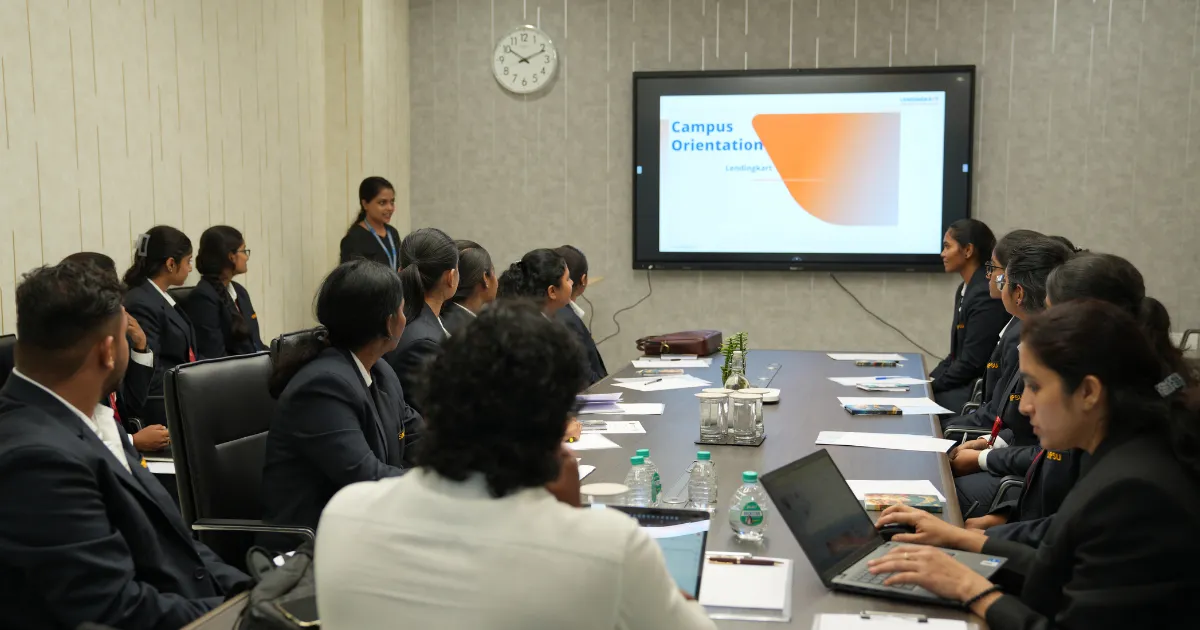
Campus Orientation and Professional Learning
The image captures a structured campus orientation session where students are engaged in an interactive presentation and group discussion. The professional setting encourages students to become familiar with the university environment, academic expectations and opportunities available during their educational journey. Such sessions can help students understand important aspects of campus life while developing communication, teamwork, confidence and professional awareness. The collaborative setting also encourages students to interact with peers and participate actively in discussions, creating a positive foundation for their university experience.👉Click Here to Apply and begin your application process.
Presenting Technical Work with Confidence
Technical knowledge becomes more valuable when students can explain their ideas clearly. Students may need to present projects, explain technical decisions, participate in discussions and respond to questions during their academic and professional journeys. Our university encourages presentations, project demonstrations, seminars and other activities that can help students become more comfortable communicating technical information. Presenting a project requires students to understand their own work deeply because they need to explain the problem, approach, implementation and outcome in a logical sequence. Feedback from faculty and peers can help students improve their communication and presentation techniques. These experiences can gradually strengthen confidence and professional awareness. Communication development is particularly useful during internships and recruitment processes because students often need to explain their skills and experiences to other people. Our university therefore considers professional communication as an important complement to technical education.
Innovation Through Experimentation and Curiosity
Innovation often begins with curiosity and the willingness to experiment. Students who are encouraged to ask questions and test different approaches can develop a stronger understanding of how technology can be used to solve problems. Our university provides opportunities for innovation, research activities, technical projects and technology-oriented events. These experiences can encourage students to move beyond standard classroom exercises and explore alternative solutions. Innovation does not necessarily mean creating a completely new technology. It can also involve improving an existing process, developing a more efficient solution or applying an established technology to a different problem. Project work and technical activities can provide students with opportunities to experiment with such ideas. This environment can be particularly valuable for students who want to explore entrepreneurship, research or advanced technology applications during their academic journey.
Career Preparation Integrated into Student Life
Career preparation becomes more effective when it develops gradually rather than beginning immediately before recruitment. Our university's placement ecosystem provides career guidance, industry interaction, skill development and recruitment support to students. The university also reports placement for eligible students and states that more than 200 companies regularly visit the campus. These figures are university-reported and should be considered alongside eligibility requirements and individual recruitment conditions. Career preparation can begin with academic discipline and gradually progress towards projects, internships, professional interaction and recruitment readiness. Students can use these opportunities to identify their strengths and areas that require improvement. The placement environment therefore becomes part of a larger career-development process rather than a single event at the end of education.
Professional Development Beyond Technical Ability
A successful technology professional needs more than programming or technical knowledge. Workplace responsibilities can involve communication, teamwork, adaptability, time management, leadership and professional conduct. Our university provides student-development initiatives that support communication, confidence building, life skills and professional awareness. These activities complement technical education by helping students become more prepared for workplace situations. Students can develop professional qualities through group activities, presentations, competitions, projects and industry interactions. Each experience provides an opportunity to practise working with others and managing responsibilities. Developing these abilities alongside technical knowledge can help students approach professional opportunities with a broader skill set.
Research Opportunities for Curious Learners
Research-oriented learning can encourage students to investigate questions rather than simply accept existing answers. Our university's engineering environment includes research facilities and innovation initiatives that provide opportunities for students to explore technical subjects more deeply. Research activities can teach students how to identify a problem, study existing information, develop an approach, analyse results and communicate findings. These skills can be valuable for students considering higher studies as well as those interested in technology development. Research exposure can also strengthen analytical thinking because students often need to work with incomplete information and evaluate different possibilities. Students who participate in research can develop greater confidence in independent learning and technical investigation.
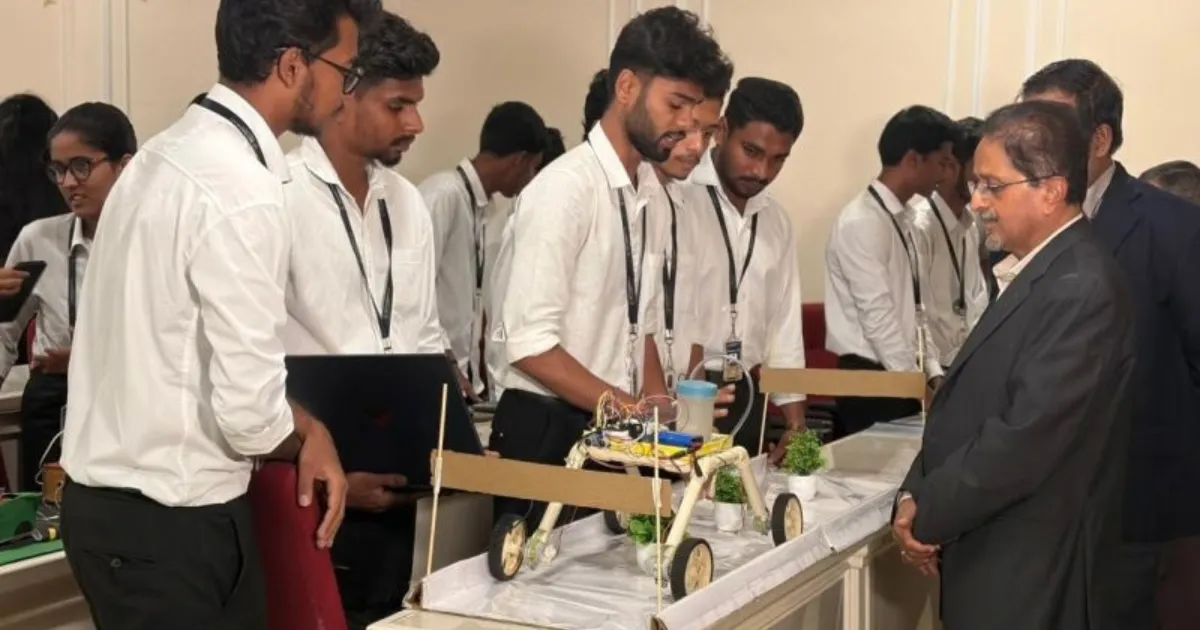
Hands-On Practical Learning
The image showcases students actively engaged in hands-on practical learning through project development and demonstration. Such activities provide opportunities to apply academic knowledge to practical situations while strengthening technical understanding and problem-solving abilities. Students can develop teamwork, communication and presentation skills as they explain their projects and interact with faculty members and guests. Project-based learning also encourages creativity, experimentation and practical thinking, helping students gain greater confidence in applying concepts beyond the classroom.
Infrastructure That Strengthens the Learning Experience
The quality of technical education is supported by the infrastructure available to students. Our university provides modern classrooms, laboratories, computer facilities, workshops, research spaces, seminar facilities and other academic resources. These facilities allow students to experience different modes of learning throughout their academic journey. Classrooms support structured teaching, laboratories support experimentation, computing facilities support technical practice and seminar spaces encourage presentations and knowledge sharing. Research and innovation facilities can provide additional opportunities for advanced exploration. The availability of such infrastructure creates a learning environment where students can move between theory, practice, collaboration and independent exploration. For students evaluating the best college for CSE in Bangalore, infrastructure should therefore be considered in relation to how effectively it supports actual learning activities.
A Broader Campus Experience for Future Professionals
Technical education represents only one part of student development. Our university also provides opportunities for students to participate in cultural activities, sports, clubs, events, competitions and other campus experiences. Participation in these activities can help students develop teamwork, leadership, confidence and time-management abilities. Students may discover interests and strengths that are not immediately visible through classroom performance. Organising events or participating in competitions can also encourage students to take responsibility and work with peers. These experiences can contribute to a balanced college journey while complementing technical education. A broader campus environment can help students become more adaptable and confident as they prepare for professional life.
Understanding Placement Outcomes Responsibly
Placement information is an important consideration for students searching for the best college for CSE in Bangalore, but placement statistics should always be understood in their proper context. Our university officially reports 100% placement for eligible students and states that more than 200 companies regularly visit the campus. These are university-reported figures and do not mean that every student is automatically guaranteed employment. Individual outcomes can depend on eligibility, academic performance, technical capabilities, recruitment requirements, interview performance and other factors. The value of a placement ecosystem therefore extends beyond statistics. Students should also consider career guidance, industry exposure, internships, practical projects, skill development and professional preparation. Our university combines these areas to create a broader career-support environment that encourages students to actively prepare for opportunities.
Eligibility Criteria
Students seeking admission to the Computer Science and Engineering programme at our university should fulfil the prescribed academic requirements and admission conditions applicable to the programme. Candidates are generally expected to have completed their qualifying higher-secondary education with the required subjects and academic performance prescribed for engineering admission. The eligibility requirements may vary depending on the admission category, applicable regulations and the candidate’s academic background. Students should ensure that they have the necessary academic documents, marks statements and other certificates required during the admission process. Meeting the minimum eligibility requirements does not by itself constitute confirmation of admission, as admission is subject to verification of documents, availability of seats and fulfilment of the applicable admission conditions. Candidates are therefore advised to verify the latest eligibility requirements with the Admissions Team before completing the application.
Eligibility Requirements at a Glance
| Eligibility Requirement | Details |
|---|---|
| Qualifying Examination | Candidates should have successfully completed the prescribed qualifying examination |
| Academic Background | Required subjects and academic qualifications must be fulfilled as applicable to the programme |
| Minimum Marks | Candidates must meet the minimum marks/percentage prescribed under the applicable admission norms |
| Admission Category | Eligibility may vary according to the applicable admission category |
| Documents | Academic marks cards, certificates, identity proof and other required documents must be submitted |
| Seat Availability | Admission is subject to availability of seats |
| Verification | All submitted documents are subject to verification |
| Final Admission | Confirmation is provided only after fulfilment of applicable admission requirements |
Admission Process
The admission process for Computer Science and Engineering is designed to provide students with a structured pathway from enquiry and application to final admission. Candidates can begin by reviewing the programme information, eligibility requirements and applicable admission conditions before submitting their application. After the application is submitted, the required academic and personal information is reviewed and supporting documents may be requested for verification. Eligible candidates are then guided through the subsequent admission formalities, including confirmation of programme selection, fee-related requirements and submission of the necessary documents. Students should carefully follow the instructions provided by the Admissions Team because requirements, documentation and payment conditions can vary according to the admission category and applicable university norms. Admission becomes final only after the required formalities are completed and confirmation is provided by the university.
Step-by-Step Admission Process
| Step | Admission Stage | What Students Need to Do |
|---|---|---|
| 1 | Programme Enquiry | Understand the Computer Science and Engineering programme, eligibility and admission requirements |
| 2 | Check Eligibility | Confirm that the required academic qualifications and applicable conditions are fulfilled |
| 3 | Submit Application | Complete the admission application with accurate personal and academic information |
| 4 | Document Submission | Provide the required marks cards, certificates, identity documents and other supporting records |
| 5 | Document Verification | Submitted information and documents are reviewed as part of the admission process |
| 6 | Admission Guidance | Receive guidance regarding programme selection, applicable fees and further formalities |
| 7 | Fee Payment | Pay the applicable admission and programme-related fees according to the prescribed schedule |
| 8 | Admission Confirmation | Complete the required formalities and receive confirmation of admission |
| 9 | Academic Onboarding | Complete joining formalities and prepare to begin the academic programme |
Fees Structure
The fee structure for Computer Science and Engineering depends on the applicable admission category, programme requirements, university norms and other conditions associated with admission. Since fees and related charges may be revised from time to time, students should not consider any general online fee reference as a final or unconditional fee commitment. The applicable tuition fee and other charges should be confirmed with the Admissions Team before making the final payment. Depending on the student's requirements and applicable facilities, additional charges may also apply for examinations, accommodation, registration, activities or other services. Any scholarship or financial-support benefit, where applicable, is subject to the relevant eligibility conditions and university policies.
Indicative Fee Structure
| Fee Component | Details | Applicable Conditions |
|---|---|---|
| Tuition Fee | Fee applicable to the selected academic programme | Subject to the applicable admission category and university norms |
| Registration/Application Fee | Applicable during the admission/application stage, wherever required | May vary according to the admission process |
| Examination Fee | Charges applicable for examinations and related academic requirements | Payable as prescribed |
| Hostel Fee | Applicable for students opting for university accommodation | Depends on hostel facility and applicable terms |
| Other Academic Charges | May include applicable academic, facility or administrative charges | Subject to university norms |
| Scholarship/Concession | Applicable benefits may be available for eligible students | Subject to eligibility, availability and applicable conditions |
| Payment Schedule | Fees may be payable according to the prescribed schedule | Students should follow the payment instructions provided during admission |
| Final Payable Amount | Confirmed amount applicable to the individual admission | Must be verified with the Admissions Team before payment |
Important Fee Information
The fees mentioned above are provided as a general structure to help students understand the different components that may be associated with admission. The actual amount payable can vary depending on the selected programme, admission category, applicable university regulations, facilities chosen and other relevant conditions. Tuition fees and other charges may be revised, and therefore students should confirm the latest applicable fee structure before making any payment. Scholarship benefits, concessions or other financial-support provisions, wherever applicable, are also subject to specific eligibility requirements and approval. The final fee payable to a student will be communicated through the appropriate admission process and should be treated as the authoritative amount for completing admission formalities.
Documents Required for Admission
Students should keep the necessary academic and personal documents ready to avoid delays during the admission process. Depending on the applicable admission category, the university may request qualifying examination marks cards, transfer or migration-related documents, identity proof, photographs, category or other supporting certificates where applicable, and additional documents required for verification. Candidates should provide accurate information in the application and ensure that submitted documents are valid and legible. The Admissions Team may provide the final document checklist applicable to the student's admission category.
Common Admission Documents
| Document | Purpose |
|---|---|
| Qualifying Examination Marks Card | Verification of academic eligibility |
| Transfer Certificate | Required as applicable for joining formalities |
| Identity Proof | Verification of candidate identity |
| Passport-Size Photographs | Admission and institutional records |
| Migration/Other Academic Documents | Required wherever applicable |
| Category/Supporting Certificate | Required where applicable |
| Additional Documents | Any documents specifically requested during admission |
Scholarship and Financial Support
Eligible students may explore scholarships or other applicable financial-support opportunities offered under the prevailing university policies. Scholarship availability, eligibility requirements, documentation, continuation conditions and applicable benefits may differ depending on the category and conditions prescribed by the university. Students interested in financial assistance should discuss the available options with the Admissions Team before completing their admission formalities so that they can understand the applicable requirements and supporting documentation.
Frequently Asked Questions
1. Why is Computer Science and Engineering an important choice for students today?
Computer Science and Engineering has become an important area of higher education because digital technology is deeply connected with modern business, communication, finance, healthcare, manufacturing, education, research and many other sectors. Studying CSE can help students develop programming knowledge, computational thinking, logical reasoning, analytical ability and structured problem-solving skills. These capabilities can help students understand how digital systems are created, operated and improved. Our University provides an academic environment where students can develop their technical foundation through classroom learning, laboratory activities, practical assignments, projects and technology-oriented activities. Students can gradually move from understanding basic concepts to applying them in practical situations. The learning process can also encourage curiosity and independent thinking, allowing students to explore how technology can be used to address real-world challenges. For students searching for the best college for CSE in Bangalore, understanding the long-term value of technical education is important because a strong foundation can support continuous learning throughout a technology career.
2. What should students consider when searching for the best college for CSE in Bangalore?
Students should look at the complete educational environment rather than selecting a college based on one facility or statistic. Important considerations include academic quality, faculty guidance, practical learning, laboratory facilities, computing infrastructure, project opportunities, industry interaction, internships, research exposure, emerging-technology awareness, student development and career support. Our University brings these elements together within its CSE learning environment. Students can evaluate how effectively classroom learning is connected with practical application and whether the institution provides opportunities to participate in projects, technical activities and industry-oriented experiences. Infrastructure is another important consideration because students need appropriate facilities for programming, laboratory practice, technical projects and collaborative learning. Career preparation should also be considered because students benefit from developing professional skills throughout their academic journey. By considering these factors together, students and parents can develop a broader understanding of what makes a learning environment suitable for CSE education.
3. Why can students consider Our University for Computer Science and Engineering?
Our University provides an integrated learning environment that combines academic education, practical exposure, technology awareness, industry interaction and career development. Students can strengthen their technical foundation through classroom learning while using laboratories and computing facilities to practise concepts. Project-oriented activities can help students apply different areas of knowledge to practical problems, while internships and industry interaction can introduce them to professional environments. The university also provides opportunities to explore emerging areas of technology and participate in innovation and technical activities. Faculty guidance can support students as they progress through difficult concepts and project work. Career-support initiatives provide additional assistance as students begin preparing for professional opportunities. This combination makes Our University an environment where students can develop technical knowledge alongside practical and professional capabilities. Students searching for the best college for CSE in Bangalore can consider this integrated approach when evaluating their higher-education options.
4. How does practical learning benefit students pursuing CSE?
Practical learning gives students the opportunity to apply theoretical concepts through actual activities rather than relying entirely on textbook study. Computer Science and Engineering requires repeated practice because students need to become comfortable with programming logic, technical problem-solving, system behaviour and project development. Our University provides laboratory activities, practical assignments and project-based learning opportunities that allow students to work with concepts in a more applied environment. Practical activities can help students identify errors, test different approaches, evaluate results and improve their solutions. These experiences can gradually strengthen analytical thinking and technical confidence. Project work can take this learning further by requiring students to combine multiple concepts to create a practical outcome. Students may need to plan their approach, divide tasks, manage timelines and present their results. Such activities can also develop teamwork and communication abilities. For students researching the best college for CSE in Bangalore, the availability of meaningful practical learning opportunities is therefore an important factor to consider.
5. Does Our University provide industry exposure for CSE students?
Yes. Our University provides opportunities for students to understand professional environments through industry-oriented activities such as industrial visits, live projects, networking activities and industry interactions. Such exposure can help students understand how technical knowledge is applied outside the classroom and how professional teams approach technology-related challenges. Students can gain awareness of workplace practices, project responsibilities, professional communication and changing industry requirements. Industry interaction can also encourage students to think differently about their academic projects because they begin considering practical requirements alongside theoretical concepts. These experiences may help students understand the skills they need to strengthen before entering professional environments. Our University's industry-oriented learning approach therefore complements classroom education and provides students with opportunities to connect their academic knowledge with real-world applications. This is an important consideration for students looking for the best college for CSE in Bangalore and seeking an education that extends beyond conventional classroom learning.
6. How important are internships for students pursuing Computer Science and Engineering?
Internships can provide students with valuable exposure to professional environments before they complete their education. While classroom learning provides theoretical knowledge and laboratory activities provide practical practice, internships can introduce students to actual workplace processes, project responsibilities, collaboration, deadlines and professional expectations. Our University provides internship opportunities as part of its broader practical and career-oriented learning environment. Students can use these experiences to understand how their technical knowledge is applied to professional assignments and identify areas where additional learning may be required. Internship experiences can also help students discover their interests and understand the type of technology environment they may want to pursue in the future. Students can learn how teams communicate, how tasks are assigned and how technical problems are approached in professional settings. This practical exposure can complement academic learning and contribute to career awareness. For students searching for the best college for CSE in Bangalore, internship opportunities are therefore an important aspect of evaluating the overall learning experience.
7. What emerging technology areas can students explore at Our University?
Technology continues to evolve, and students pursuing CSE can benefit from awareness of emerging technology areas. Our University provides exposure to several contemporary technology domains through its broader engineering and technology ecosystem. These areas include artificial intelligence, data analytics, cloud computing, cybersecurity, Internet of Things, robotics, computer vision and other developing technologies. Exposure to these areas can help students understand the wide range of possibilities within the technology sector. It can also encourage them to explore areas that match their interests and career goals. The purpose of such exposure is not simply to follow every new technology trend but to develop curiosity and adaptability. Students with strong computing fundamentals can gradually learn new technologies as their academic and professional requirements change. Our University supports this approach by combining foundational learning with practical activities, projects, technical interaction and opportunities for exploration. This can help students develop a continuous-learning mindset that remains valuable throughout their professional careers.
8. How do academic and technical projects help CSE students?
Projects provide students with an opportunity to bring together concepts learned across different areas and apply them to a practical problem. Instead of studying each concept independently, students can learn how different technical components work together when developing a project. Our University encourages project-oriented learning so students can experience stages such as problem identification, planning, technical research, development, testing, improvement and presentation. Project work can strengthen problem-solving because students may encounter challenges that do not have a straightforward textbook answer. They need to investigate the issue, consider alternatives and develop a suitable solution. Projects can also improve teamwork when students collaborate on larger assignments. Presenting a completed project can strengthen communication and technical explanation skills. Students may also use meaningful project experiences when discussing their capabilities during internships or professional interactions. For students evaluating the best college for CSE in Bangalore, opportunities to participate in practical and technically meaningful projects can provide valuable evidence of the institution's approach to applied education.
9. What role does faculty guidance play in CSE education?
Faculty guidance is an important part of technical education because students may encounter complex concepts that require explanation, practice and feedback. Computer Science and Engineering includes areas where conceptual clarity is essential, and students can benefit from having faculty members who guide them through academic learning and practical activities. Our University provides opportunities for students to interact with faculty members for academic guidance, project support and learning-related assistance. Faculty members can help students understand difficult concepts, identify errors in their approach and develop more structured methods of solving technical problems. Guidance can also encourage students to explore subjects beyond the minimum academic requirements. During project development, faculty support can help students refine their ideas and improve the quality of their work. Regular academic interaction can encourage students to become more disciplined and independent learners. When searching for the best college for CSE in Bangalore, students should therefore consider not only the infrastructure available but also the academic guidance that supports students in making effective use of those facilities.
10. How does Our University help CSE students prepare for future careers?
Career preparation at Our University is developed through a combination of academic learning, practical exposure, industry interaction, skill development and placement support. Students can begin preparing for professional opportunities by strengthening their technical fundamentals and participating in projects and practical activities. Industry exposure and internships can then help them understand professional expectations and workplace practices. The university's career-support ecosystem provides guidance related to professional development and recruitment opportunities. Students can also develop communication, teamwork, presentation and confidence-building abilities through academic and campus activities. The placement division supports students through career-oriented initiatives and recruitment activities. Our University reports 100% placement for eligible students and states that more than 200 companies regularly visit the campus; these figures are university-reported and individual outcomes depend on eligibility, skills, academic performance and employer requirements. The broader objective is to help students progressively develop the capabilities needed to approach professional opportunities with greater preparation and awareness.
11. What makes a CSE learning environment suitable for long-term professional growth?
Long-term professional growth requires more than knowledge of a particular programming language or technology. Students need strong fundamentals, problem-solving ability, adaptability, communication skills, teamwork experience and a willingness to continue learning. Our University provides opportunities for students to develop these capabilities through academic education, practical learning, projects, industry exposure, internships, technical activities and professional development. A strong foundation allows students to understand new technologies more effectively as they encounter them in future academic or professional situations. Practical experience can help students become comfortable with unfamiliar problems, while project work can strengthen their ability to work through challenges systematically. Industry exposure can provide awareness of workplace expectations, and career-development initiatives can help students understand professional requirements. This combination can create a broader foundation for future development. Students searching for the best college for CSE in Bangalore should therefore consider whether their chosen institution supports continuous development rather than focusing only on immediate academic outcomes.
12. How can students begin their CSE journey at Our University?
Students interested in beginning their Computer Science and Engineering journey at Our University can start by understanding the admission requirements, eligibility criteria, application process and available academic opportunities. Students and parents can connect with the Admissions Team to receive guidance regarding the admission procedure and required information. Before applying, students can also explore the learning environment, practical facilities, infrastructure, industry exposure, internship opportunities and career-support initiatives to understand how the institution can support their academic journey. Once admitted, students can make the most of their education by actively participating in classroom learning, laboratory activities, projects, technical events, internships and industry-oriented opportunities. Consistent participation can help students gradually strengthen their technical knowledge and professional confidence. Choosing a college is an important decision, and students should consider their academic interests, career goals and learning preferences when making that decision. Our University provides an environment where students can develop technical knowledge, practical skills and professional awareness while preparing for opportunities in the technology sector.
The Journey from Student to Technology Professional
A successful CSE journey develops gradually. Students begin with foundational concepts, progress through laboratory learning, undertake projects, participate in technical activities, gain practical exposure and eventually approach professional opportunities. Our university provides support across these different stages through academic guidance, infrastructure, practical learning, industry interaction, internships and career development. Each stage contributes something different to student growth. Classroom learning provides knowledge, laboratory practice develops application skills, projects strengthen problem-solving, internships provide professional exposure and career activities support transition towards employment. This progression helps students understand that professional readiness is not created overnight. It develops through consistent participation and continuous learning throughout the academic journey.
Why Our University Stands Out for Aspiring CSE Students
Students searching for the best college for CSE in Bangalore can consider Our University because its educational environment brings together academic learning, practical exposure, modern infrastructure, industry interaction, project development, innovation and career support. The CSE department focuses on technical knowledge and hands-on application, while the wider engineering ecosystem provides opportunities for internships, industrial exposure, technical activities and professional development. Students can use laboratories and computing facilities to strengthen their practical capabilities and participate in projects that allow them to apply what they learn. Industry-oriented activities can help them understand workplace expectations, while career-support initiatives can assist them in preparing for professional opportunities. The university also reports placement for eligible students and regular visits from more than 200 companies, providing an institutional framework for recruitment opportunities. These elements create a comprehensive environment for students who want to develop their technical knowledge and professional capabilities in Bangalore. Rather than focusing on one isolated feature, students can experience an education that combines learning, experimentation, collaboration, industry exposure and career preparation.
Admissions Open
Begin your journey towards technical excellence, practical learning and professional growth with Our University. Choosing the right institution for Computer Science and Engineering is an important decision that can influence a student's academic development, practical capabilities and future career direction. Our University provides a supportive learning environment where students can strengthen their technical foundation through classroom education, laboratory practice, project-based learning, industry interaction, internships, innovation activities and professional development opportunities. Students can explore their interests, develop problem-solving abilities, participate in practical activities and gradually build the confidence required to approach higher education and future employment with greater clarity. The learning environment is supported by modern academic infrastructure, experienced faculty guidance, technical facilities and opportunities for students to participate in academic and professional activities. The placement and career-support ecosystem further helps students understand employment expectations, develop professional readiness and connect their academic learning with potential career opportunities. Students and parents can connect with the Admissions Team to understand the admission process, eligibility requirements, academic environment, facilities, practical learning opportunities and career-support initiatives available through Our University. Whether you are beginning your higher education journey or planning to develop a strong foundation for a technology-focused career, Our University provides opportunities to learn, practise, explore and grow in a structured academic environment. Take the next step today and begin building your academic and professional future with Our University.
Admission Enquiry
| Support | Details | Action |
|---|---|---|
| Admissions Guidance | Receive guidance regarding the admission process, eligibility requirements, application procedure, required documents and other important admission-related information. | 👉Click Here to Contact Our University |
| Academic Guidance | Understand the academic environment, learning methodology, practical exposure, laboratory facilities, project opportunities and overall student learning experience. | 👉Click Here to Enquire |
| Career Support | Learn about industry interaction, internships, practical learning, career development initiatives, placement preparation and professional opportunities available to students. | 👉Click Here to Know More |
| Campus Information | Get information about classrooms, laboratories, computing facilities, research spaces, student amenities, campus activities and other facilities that support student development. | 👉Click Here for Details |
| Industry Exposure | Understand how students can gain practical exposure through industry interactions, live projects, technical activities, networking opportunities and professional engagement. | 👉Click Here to Explore |
| Application Assistance | Get assistance in understanding the application procedure and receive appropriate guidance while progressing through the admission process. | 👉Click Here to Apply |
Start Your Academic Journey Today
Admissions are open for students who are ready to develop their technical knowledge, strengthen practical skills and prepare for a future-focused professional journey. Our University provides an environment where students can learn through academic instruction, apply their knowledge through practical activities, participate in projects, interact with industry and develop the professional capabilities required for a changing technology environment. Students can make use of the available academic resources, faculty guidance, laboratories, technical facilities, career-development initiatives and campus opportunities to make their higher-education experience meaningful and productive. Parents and students are encouraged to understand the admission requirements, explore the available facilities and connect with the Admissions Team for personalised guidance before completing the admission process.
Take the Next Step Towards Your Future
Do not wait to begin your journey towards a strong technical education. Connect with Our University today to understand the admission process, explore academic opportunities and learn more about the practical and professional environment available to students. From foundational learning and hands-on experience to industry exposure and career preparation, every stage of the student journey can help build knowledge, confidence and professional readiness. For admission enquiries, call 9900072632.
Admissions Open — Take the next step towards technical excellence, practical learning, industry exposure and a future-focused career with Our University. Connect with our Admissions Team at 9900072632 and begin your journey towards achieving your academic and professional aspirations.
Leave a Comment